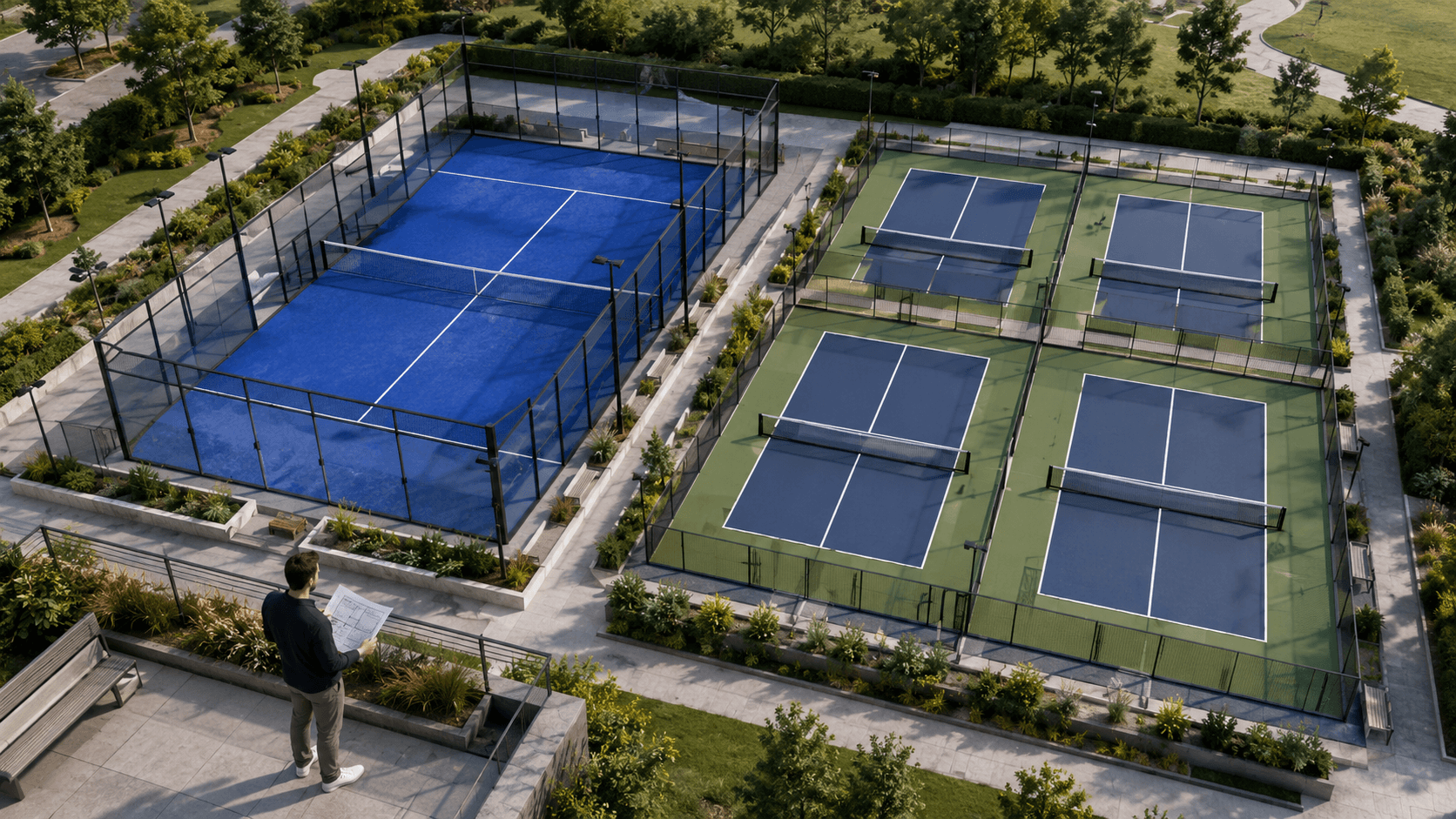
To maximize space efficiency, you must choose pickleball for the smallest footprint or padel to capitalize on high-density social play within enclosed walls. Many facility owners struggle to decide which sport offers the better return on their limited acreage. This uncertainty leads to wasted land and missed revenue opportunities in the booming racket sports market. By comparing padel vs pickleball court size, you can design a high-performance venue that perfectly fits your specific plot and budget.
How does the padel vs pickleball court size influence planning?
The padel vs pickleball court size dictates your total land utilization and determines how many players you can accommodate simultaneously. When you are mapping out a new sports club or a backyard project, every square inch counts toward your final budget. Choosing between these two sports requires a deep understanding of how their footprints differ.
Understanding standard dimensions
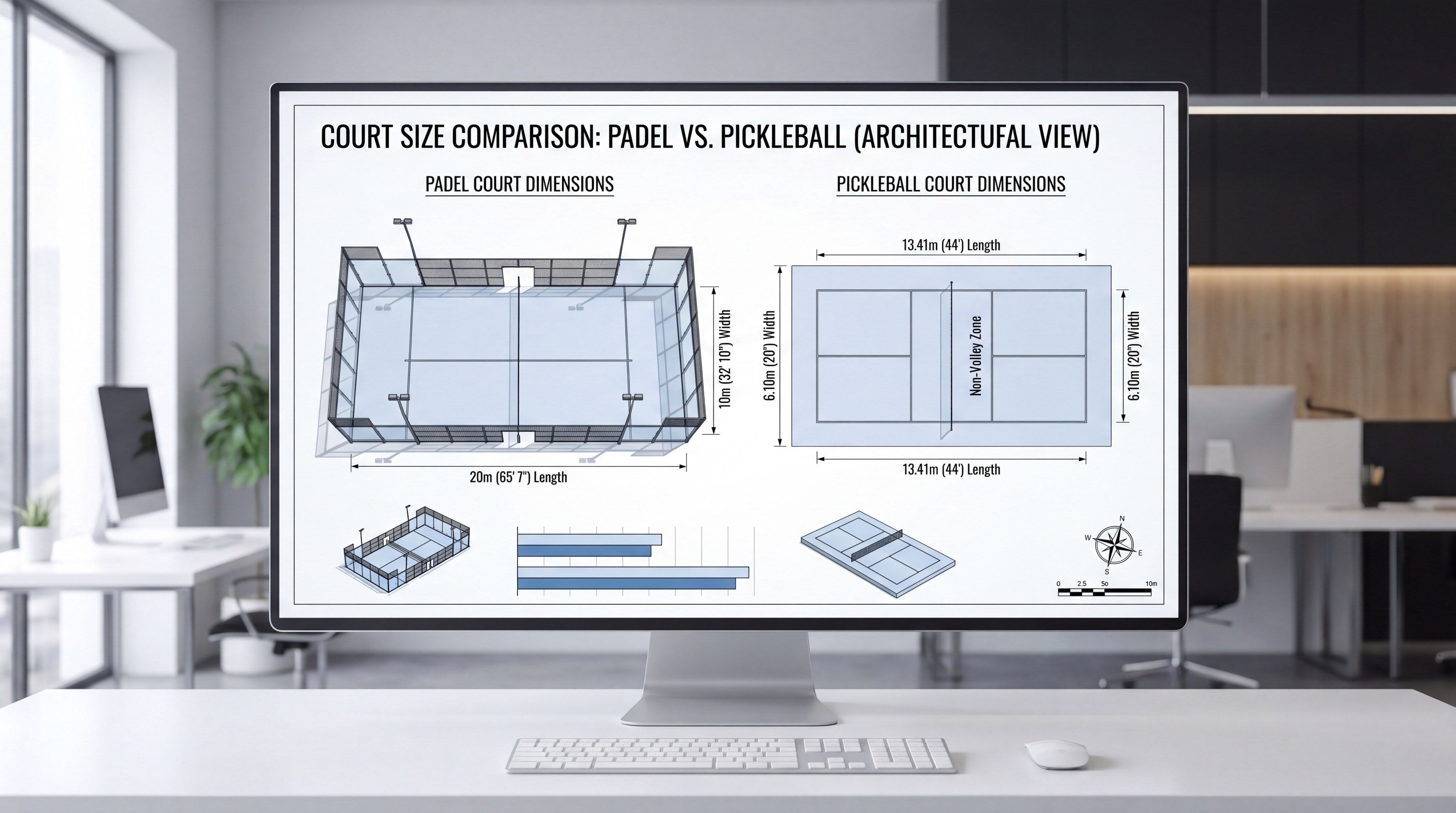
Think about it: the rectangular shape of these courts might look similar from a distance, but the measurements are vastly different. A padel court typically measures 10 meters wide by 20 meters long, creating a 200-square-meter playing area. In contrast, a pickleball court is significantly smaller, usually fitting into a 20-foot by 44-foot rectangle.
- Padel: 20m x 10m (65’7″ x 32’10”)
- Pickleball: 44ft x 20ft (13.41m x 6.10m)
- Net Height: Varies slightly between the two sports.
Comparing the total footprints
Here is the deal: you cannot just look at the internal lines; you must consider the “run-off” and safety zones. While padel is enclosed, you still need access paths and structural clearance. Pickleball requires extra space beyond the lines for players to chase deep balls without hitting fences.
Key Takeaway: Selecting the right court size ensures you don’t overspend on land while providing a safe and professional environment for your players.
| Feature | Padel Court | Pickleball Court |
|---|---|---|
| Playing Area | 200 sq meters | ~81 sq meters |
| Ideal Total Space | 200-230 sq meters | 150-180 sq meters |
| Player Capacity | 4 (Doubles) | 2 or 4 |
This comparison highlights that you can almost fit three pickleball courts in the space required for one and a half padel courts.
What defines the padel vs pickleball court size and layout?
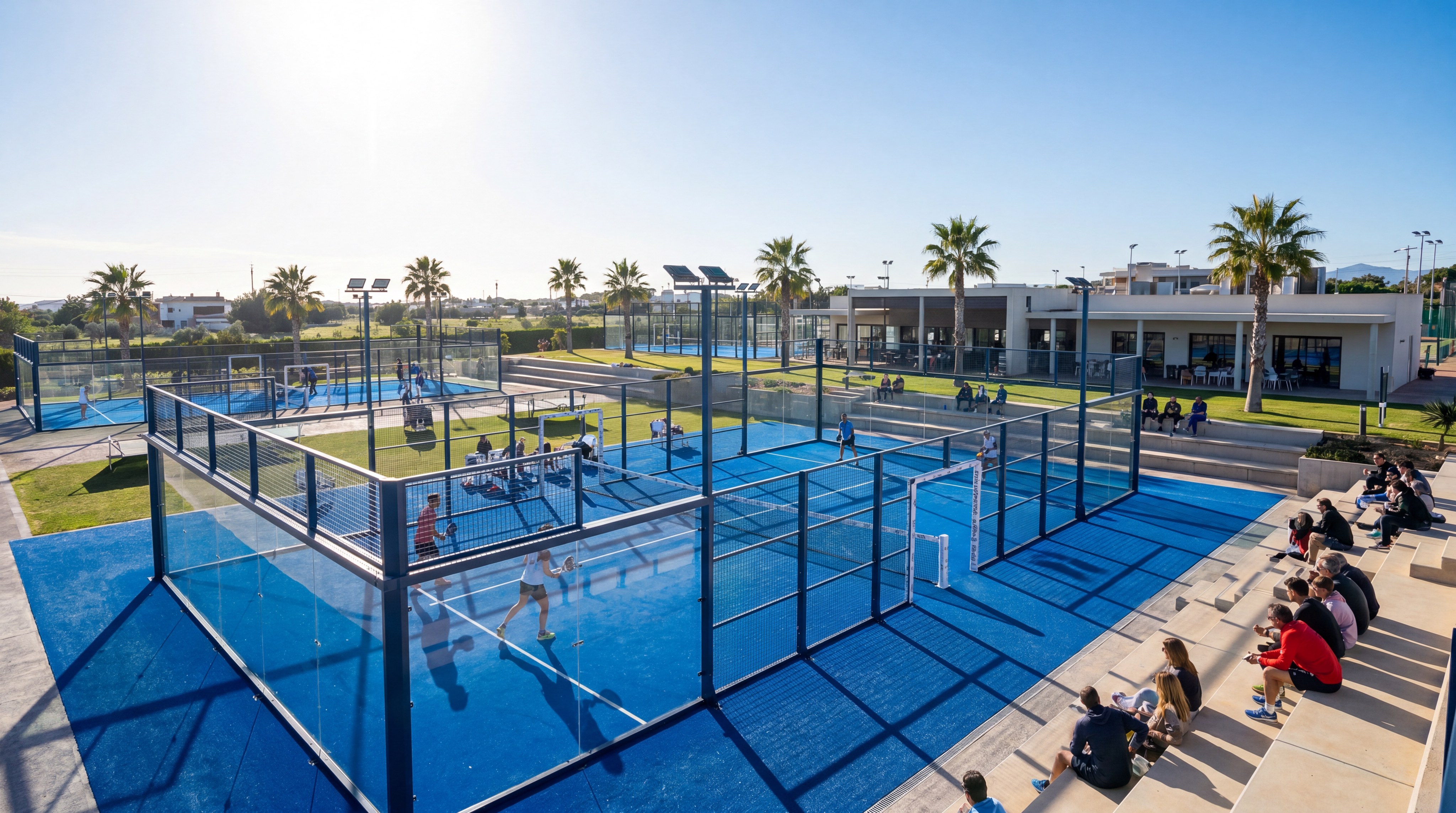
A padel court is defined by its 20m x 10m area and surrounding glass walls, whereas pickleball relies on a 20ft x 44ft layout with a specialized non-volley zone. These boundaries change the flow of the game entirely for you. If you choose a Standard Padel Court, you are committing to a specific structural layout. The padel vs pickleball court size is only the beginning of the design differences.
The role of glass walls
But that’s not all. Padel courts are unique because they are fully enclosed by a combination of tempered glass and metallic mesh. This setup allows the ball to remain in play after hitting the wall, effectively making the “out of bounds” zone part of the court.
- Wall height is usually 3 to 4 meters.
- Glass provides transparency for spectators.
- Mesh sections allow for specific rebound angles.
Identifying the kitchen zone
Pickleball features a unique “non-volley zone” often called the kitchen. This 7-foot area on both sides of the net prevents players from smashing volleys right at the net. It forces a more tactical game of dinks and patience within the smaller padel vs pickleball court size constraints.
Key Takeaway: The structural components like glass walls and kitchen zones define how players move and interact with the court space.
| Layout Element | Padel Court | Pickleball Court |
|---|---|---|
| Boundaries | Glass/Mesh Walls | Painted Lines/Fences |
| Special Zone | Service Boxes | Non-Volley Zone (Kitchen) |
| Wall Usage | Integral to play | Not permitted |
Understanding these layout specifics helps you determine which construction materials will be necessary for your project.
How does padel vs pickleball court size affect gear choices?
The padel vs pickleball court size directly influences the aerodynamics and materials of the rackets and balls used. Because the spaces vary in length and enclosure, manufacturers design gear to handle specific bounce and impact patterns. You cannot simply swap a tennis racket for either of these sports.
Racket and paddle types
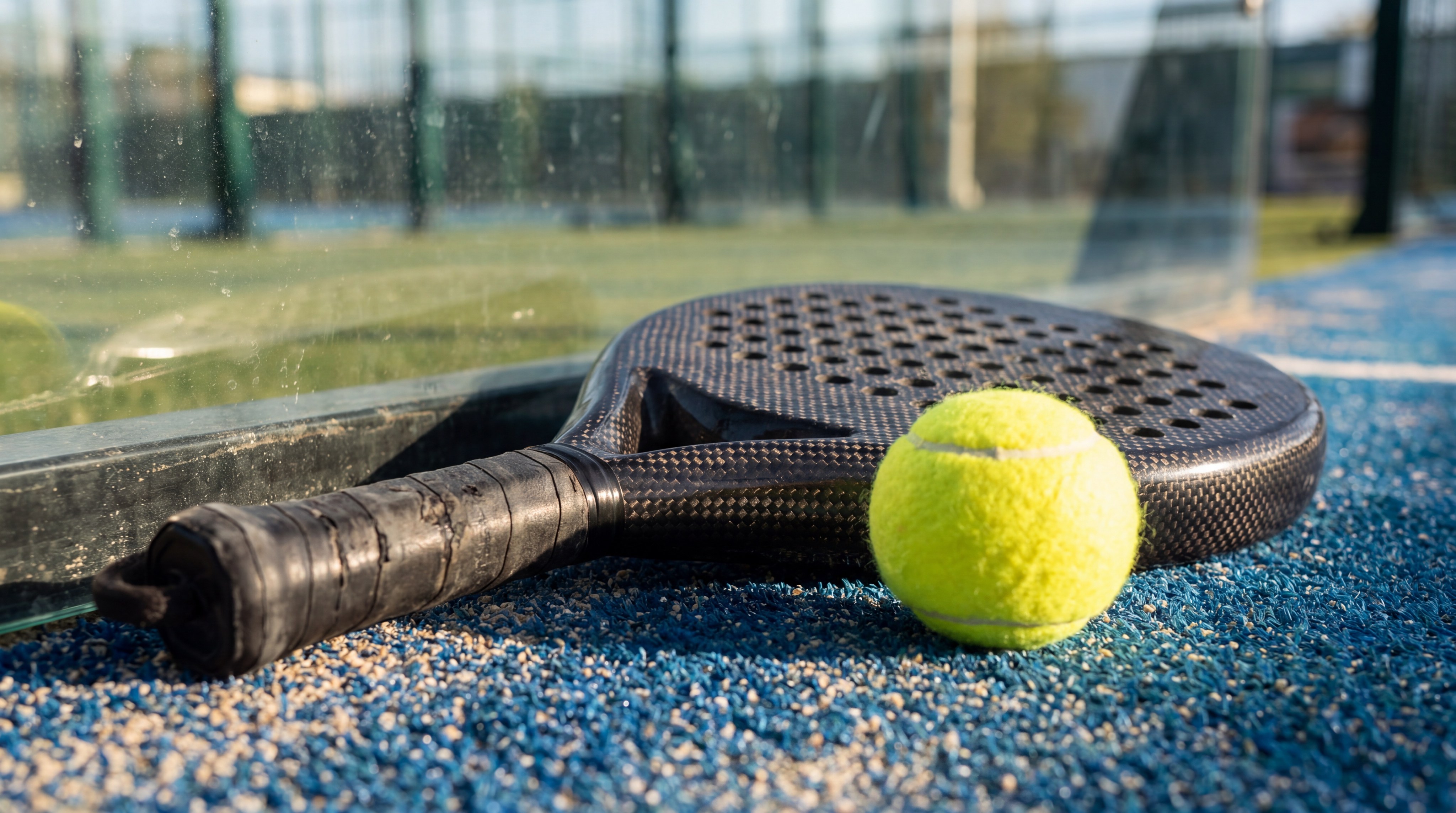
Check this out: Padel rackets are solid with holes, usually made of carbon fiber or fiberglass to handle the high-impact rebounds off the walls. Pickleball paddles are flat, thin, and rectangular, designed for precision in a smaller, open-air environment.
- Padel: Perforated, thick, and shorter than tennis rackets.
- Pickleball: Light, solid surface, often made of honeycomb composite.
- Grip size: Varies based on the weight distribution of the gear.
Choosing the right balls
While both look like tennis balls at first glance, they are engineered differently. Padel balls have lower internal pressure to ensure they don’t bounce too high off the glass walls. Pickleball uses a hard plastic ball with holes to slow down the game within its compact court dimensions.
Key Takeaway: Matching your equipment to the specific court size ensures optimal performance and prevents premature wear on your gear.
| Equipment | Padel | Pickleball |
|---|---|---|
| Racket Style | Solid with holes | Flat paddle |
| Ball Material | Felt/Rubber (Low pressure) | Hard plastic with holes |
| Durability | High impact resistant | Lightweight and rigid |
Investing in the correct professional-grade equipment will significantly enhance the player experience on your courts.
Which rules change based on padel vs pickleball court size?
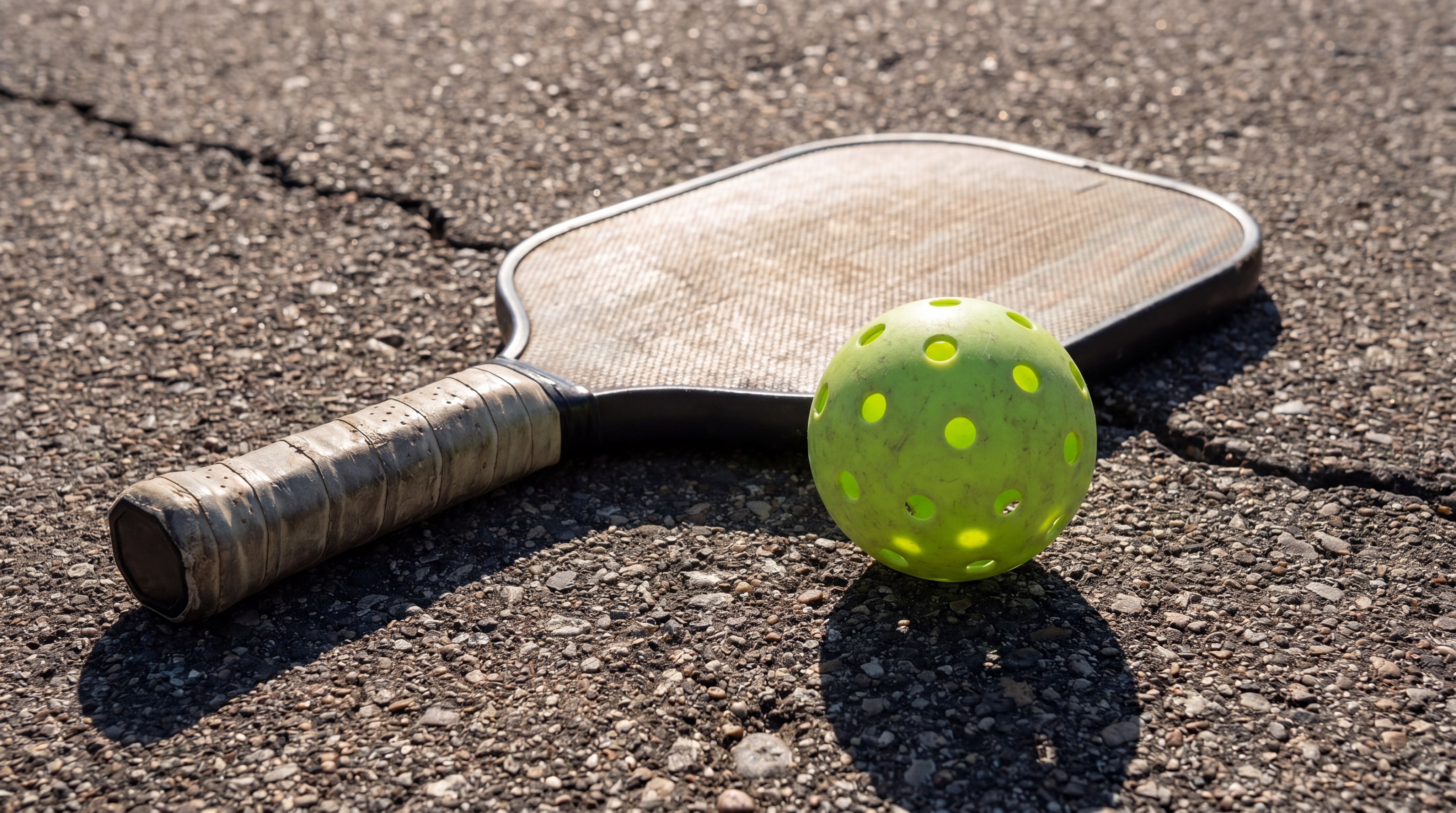
Rules differ significantly because padel utilizes the surrounding walls as part of the field of play, whereas pickleball is strictly limited to the lines on the ground. The padel vs pickleball court size creates two distinct styles of movement and scoring logic. You must learn which lines are “in” and which walls are “out” to play effectively.
Scoring systems used
Here is the kicker: Padel uses traditional tennis scoring (15, 30, 40, game). Pickleball uses a side-out scoring system where you can only score points when you are the serving team, typically playing to 11 points.
- Padel: Best of three sets, deuce/advantage rules apply.
- Pickleball: Must win by 2 points, score called in three numbers (Server, Receiver, Serve #).
- Serve: Both sports require an underhand serve.
Doubles vs singles play
Padel is almost exclusively a doubles sport because the 10m x 20m area is too large for most people to cover alone effectively. Pickleball is widely played in both singles and doubles formats due to its much smaller 20ft x 44ft footprint.
Key Takeaway: Understanding the rules related to court size allows you to manage matches and tournaments with professional accuracy.
| Rule Type | Padel | Pickleball |
|---|---|---|
| Scoring | Tennis style (Set/Game) | Point-per-serve (to 11) |
| Wall Play | Allowed after bounce | Prohibited |
| Player Count | Primarily 4 players | 2 or 4 players |
The difference in scoring and play format makes each sport appeal to different types of competitive and social athletes.
What shots fit the padel vs pickleball court size best?
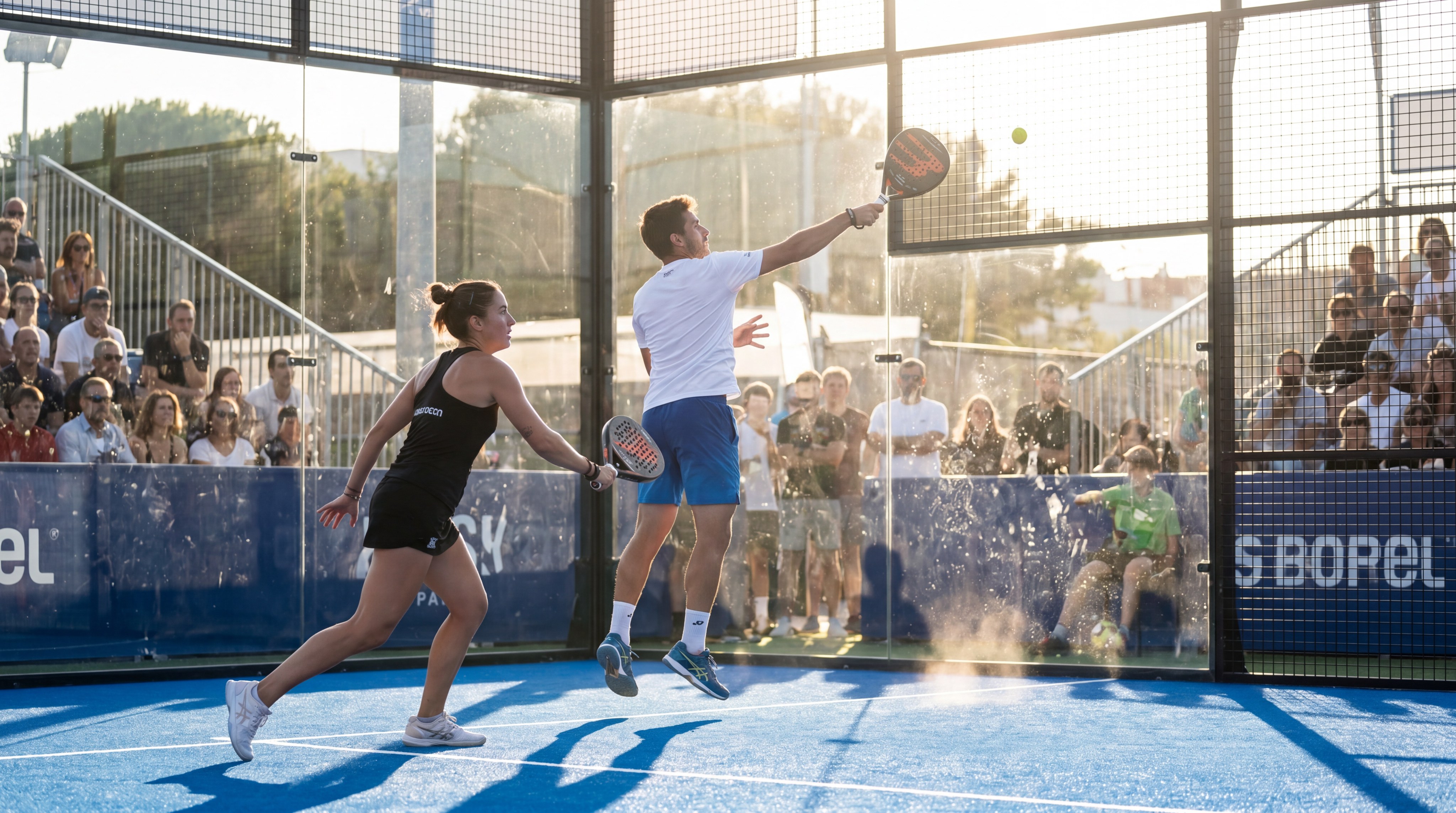
The padel vs pickleball court size dictates whether you should focus on power smashes or soft, tactical dinks. In a confined padel court, the wall becomes your best friend for defensive lobs. In pickleball, the short distance to the net makes the “kitchen” shot the most lethal weapon in your arsenal.
Master the dink and chiquita
And the best part? These sports reward finesse over raw strength. In pickleball, the “dink” is a soft shot that drops into the kitchen, forcing the opponent to hit upward. In padel, the “chiquita” is a similar soft shot aimed at the feet of an opponent approaching the net.
- Dink: Soft, low trajectory, lands in the kitchen.
- Chiquita: Tactical slow shot in padel to regain the net.
- Lob: Used in both to reset the pace of the point.
Using walls for rebounds
In padel, you can let the ball pass you, hit the glass, and then strike it on the rebound. This adds a 3D element to the game that isn’t present in pickleball. Learning the angles of the padel vs pickleball court size will help you predict where the ball will land.
Key Takeaway: Adapting your technique to the specific dimensions of the court is the fastest way to improve your win rate.
| Shot Type | Best for Padel | Best for Pickleball |
|---|---|---|
| Soft Shot | La Chiquita | The Dink |
| Overhead | Bandeja (Spin/Control) | Smash (Power) |
| Defensive | Wall Rebound | Deep Groundstroke |
Mastering these specific shots ensures you maximize the tactical advantages provided by each court’s unique layout.
How to optimize land for padel vs pickleball court size?
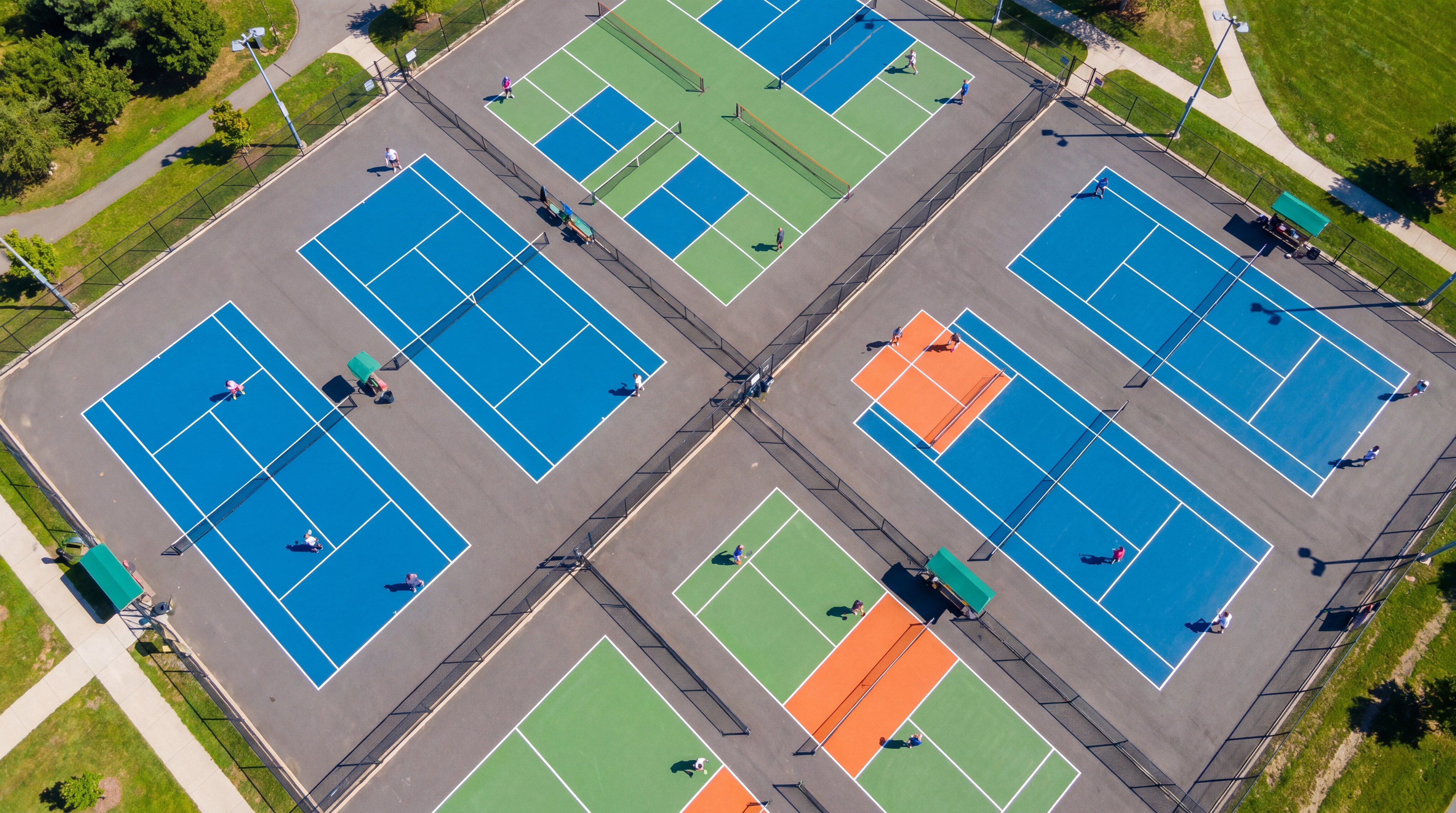
To optimize land, you should calculate how many courts can fit into your available square footage while maintaining comfortable player flow and spectator areas. The padel vs pickleball court size differences mean you can pack more pickleball courts into a small urban plot. However, padel courts often generate higher revenue per hour due to their “premium” social appeal.
Fitting multiple courts
Look at the numbers: A standard tennis court can be converted into either one padel court or up to four pickleball courts. If your goal is high volume, pickleball wins every time on space efficiency. If your goal is a high-end club experience, padel is the way to go.
- 1 Tennis Court = 1 Padel Court (with extra social space).
- 1 Tennis Court = 4 Pickleball Courts.
- Total Area needed: ~650 sq meters for a tennis court.
Maximizing player capacity
If you have a 1,000-square-meter warehouse, you could fit 4 padel courts (16 players) or roughly 8-10 pickleball courts (up to 40 players). This density makes a huge difference in your operational planning.
Key Takeaway: Strategic land optimization requires balancing the number of courts with the expected revenue per player.
| Property Type | Padel Optimization | Pickleball Optimization |
|---|---|---|
| Tennis Conversion | 1 Padel + Lounge | 4 Pickleball Courts |
| Small Backyard | Tight fit/Difficult | Ideal Fit |
| Large Warehouse | Premium Social Club | High-Volume Center |
Choosing the right sport for your land size ensures you don’t leave potential revenue on the table by underutilizing your space.
Where can you fit each padel vs pickleball court size?
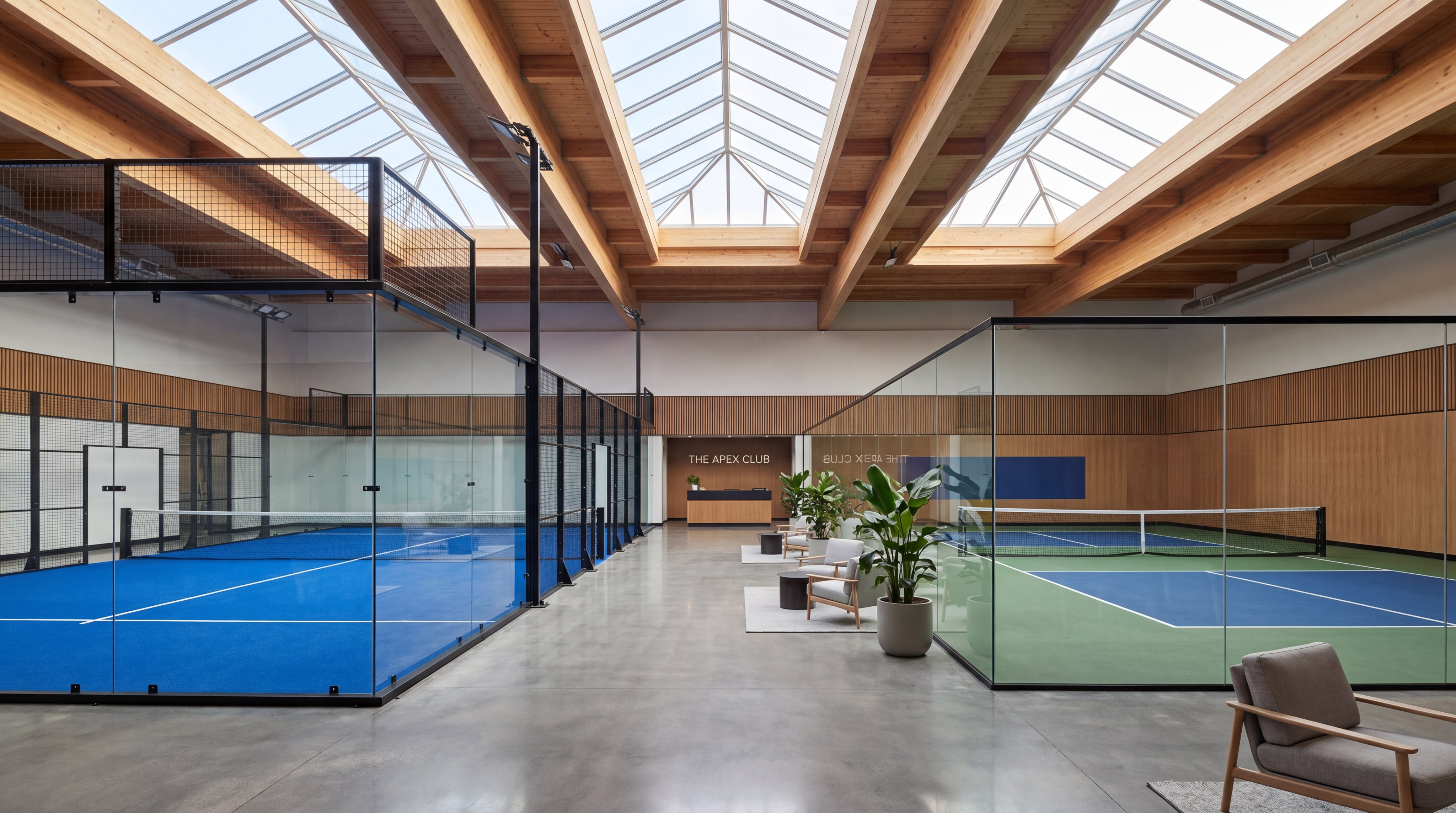
You can fit pickleball courts in almost any small flat space, whereas padel courts require more height clearance and structural integrity, often favoring Roofed Padel Court solutions. The padel vs pickleball court size and height requirements determine if your indoor ceiling is tall enough. Most padel facilities require at least 6 to 8 meters of clear height for lobs.
Indoor vs outdoor options
Now, consider this: Pickleball is extremely flexible and can be played on converted parking lots, gym floors, or dedicated outdoor courts. Padel requires a heavy-duty concrete base to support the glass structure, making it a more permanent and costly installation.
- Pickleball: Portable nets allow for multi-use spaces.
- Padel: Requires permanent structural foundations.
- Lighting: Both require professional LED setups for night play.
Residential vs club use
For residential use, pickleball is often the favorite because it doesn’t require a 4-meter tall cage that might block your neighbor’s view. Clubs, however, love the enclosed nature of padel because it keeps balls within the court, reducing the need for high perimeter fencing.
Key Takeaway: The choice between padel and pickleball often depends more on your ceiling height and foundation strength than just the ground area.
| Location | Padel Suitability | Pickleball Suitability |
|---|---|---|
| Low Ceiling Indoor | Poor (Needs height) | Excellent |
| Backyard | Challenging (Glass/Height) | Excellent (Small/Flat) |
| High-End Resort | Excellent (Aesthetic) | Good (Social) |
Selecting the location based on structural requirements will save you thousands in potential renovation or site-prep costs.
How does padel vs pickleball court size impact construction?
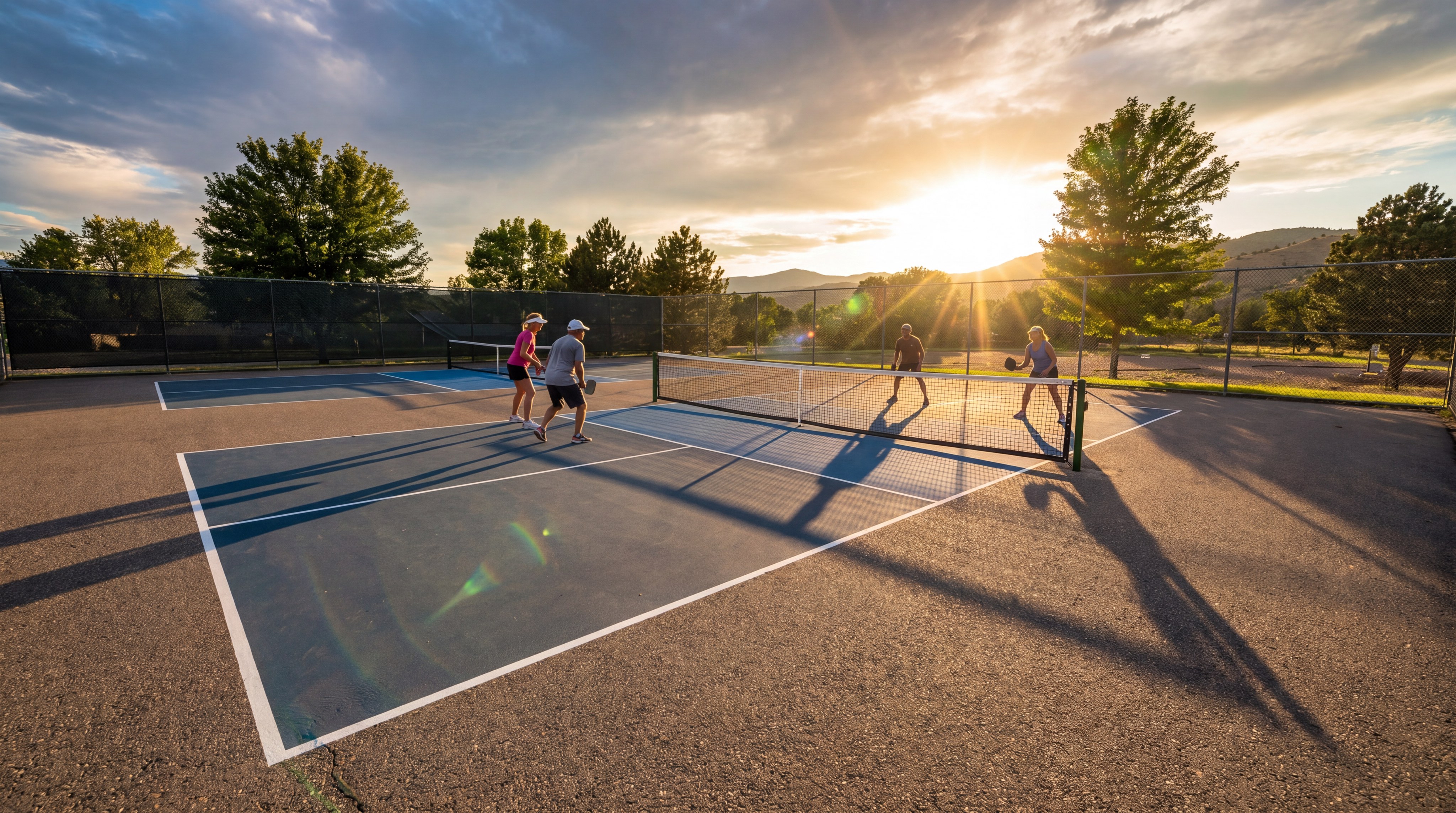
Construction requires specific foundations for both, but padel necessitates heavy-duty concrete for its glass walls while pickleball can often be built on converted tennis surfaces. If you are installing Padel Glass, you need a perfectly level and reinforced perimeter. The padel vs pickleball court size determines the volume of materials like turf and paint you will need to order.
Foundation requirements
Want to know a secret? The longevity of your court depends entirely on what is underneath the surface. Padel courts exert significant wind load on the glass walls, requiring reinforced footings. Pickleball is lighter but requires a perfectly smooth acrylic or asphalt finish to ensure a consistent ball bounce.
- Padel: Reinforced concrete ring beam.
- Pickleball: Asphalt or concrete slab with acrylic coating.
- Drainage: Essential for all outdoor installations.
Installing glass and fences
Padel construction is a specialized engineering task. You must handle 10mm or 12mm tempered glass panels that weigh over 100kg each. Pickleball typically uses standard chain-link fencing, which is much easier and cheaper to install for a DIY or local contractor.
Key Takeaway: High-quality construction materials and professional installation are non-negotiable for the safety and durability of padel courts.
| Build Component | Padel Court | Pickleball Court |
|---|---|---|
| Main Material | Glass & Steel Mesh | Acrylic & Chain-link |
| Installation Time | 10-15 Days | 3-7 Days |
| Difficulty Level | High (Specialized) | Moderate |
Properly planning your construction phase will prevent structural failures and ensure your facility meets international playing standards.
Why analyze ROI for padel vs pickleball court size?
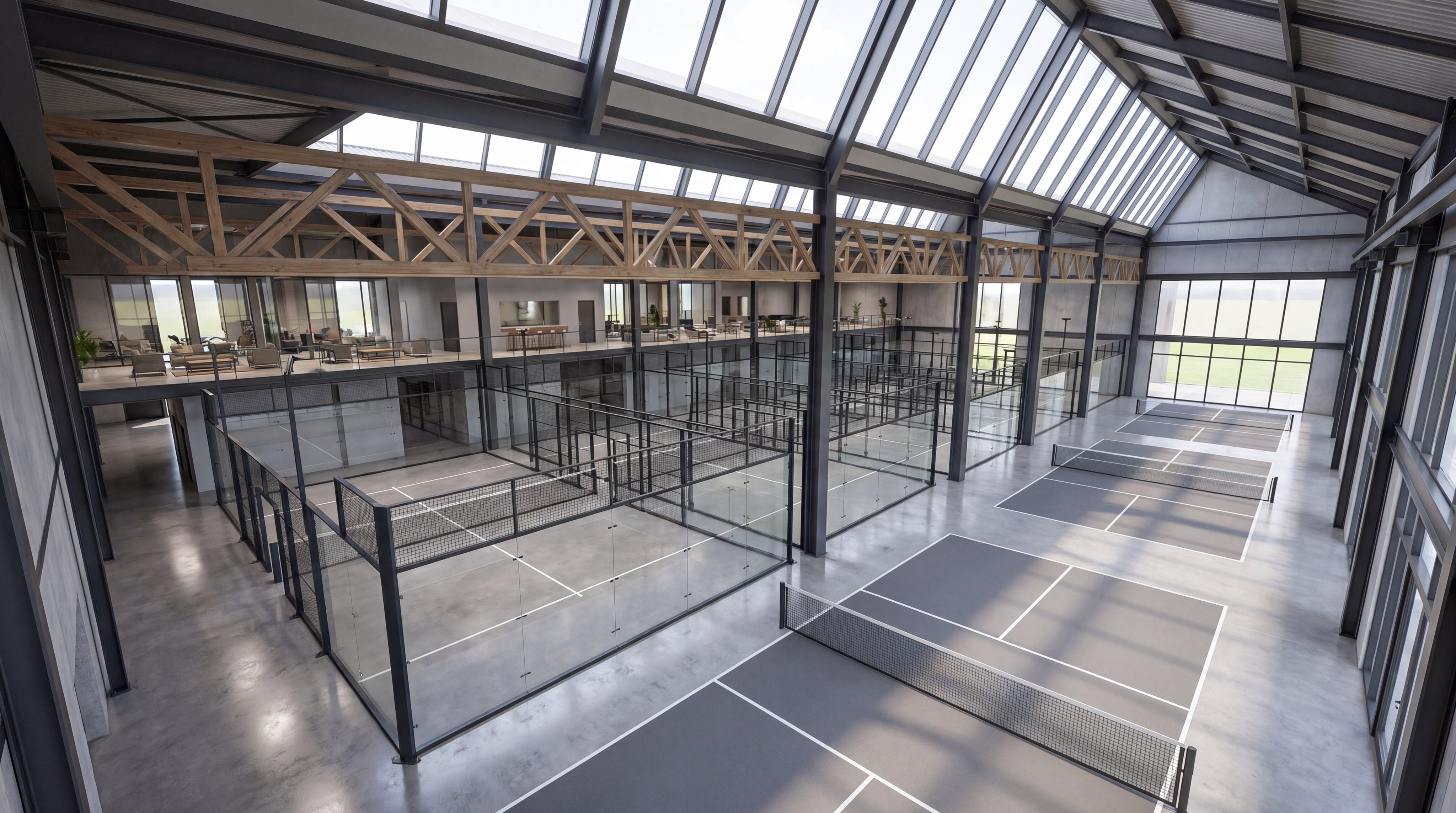
Analyzing ROI means looking at the higher initial investment for padel’s Padel Structure against the lower cost but potentially lower rental rates of pickleball. The padel vs pickleball court size affects how much you can charge per hour. Because padel is seen as a premium, social “event” sport, it often commands a higher price point in major cities.
Cost per square foot
Believe it or not: While a padel court costs more to build, it often uses its 200 sq meters more efficiently in terms of “social buzz.” Pickleball is cheaper to start, making it the better choice for public parks or budget-conscious schools where the goal is participation over profit.
- Padel Build Cost: $25,000 – $40,000+
- Pickleball Build Cost: $5,000 – $15,000 (Conversion)
- Maintenance: Padel glass requires regular cleaning.
Revenue potential per court
In a busy city, a padel court can rent for $60-$100 per hour for four players. A pickleball court might rent for $20-$40 per hour. When you factor in the padel vs pickleball court size, you have to decide if the “premium” margin of padel outweighs the “volume” margin of pickleball.
Key Takeaway: A detailed ROI analysis should include your local market demand and the specific demographics of your target players.
| Financial Metric | Padel Court | Pickleball Court |
|---|---|---|
| Upfront Cost | High | Low to Moderate |
| Hourly Rate | High ($$$) | Moderate ($$) |
| ROI Period | 18 – 36 Months | 12 – 24 Months |
Calculating your potential earnings before breaking ground ensures your sports facility remains a sustainable business for years to come.
Is the padel vs pickleball court size the only big difference?
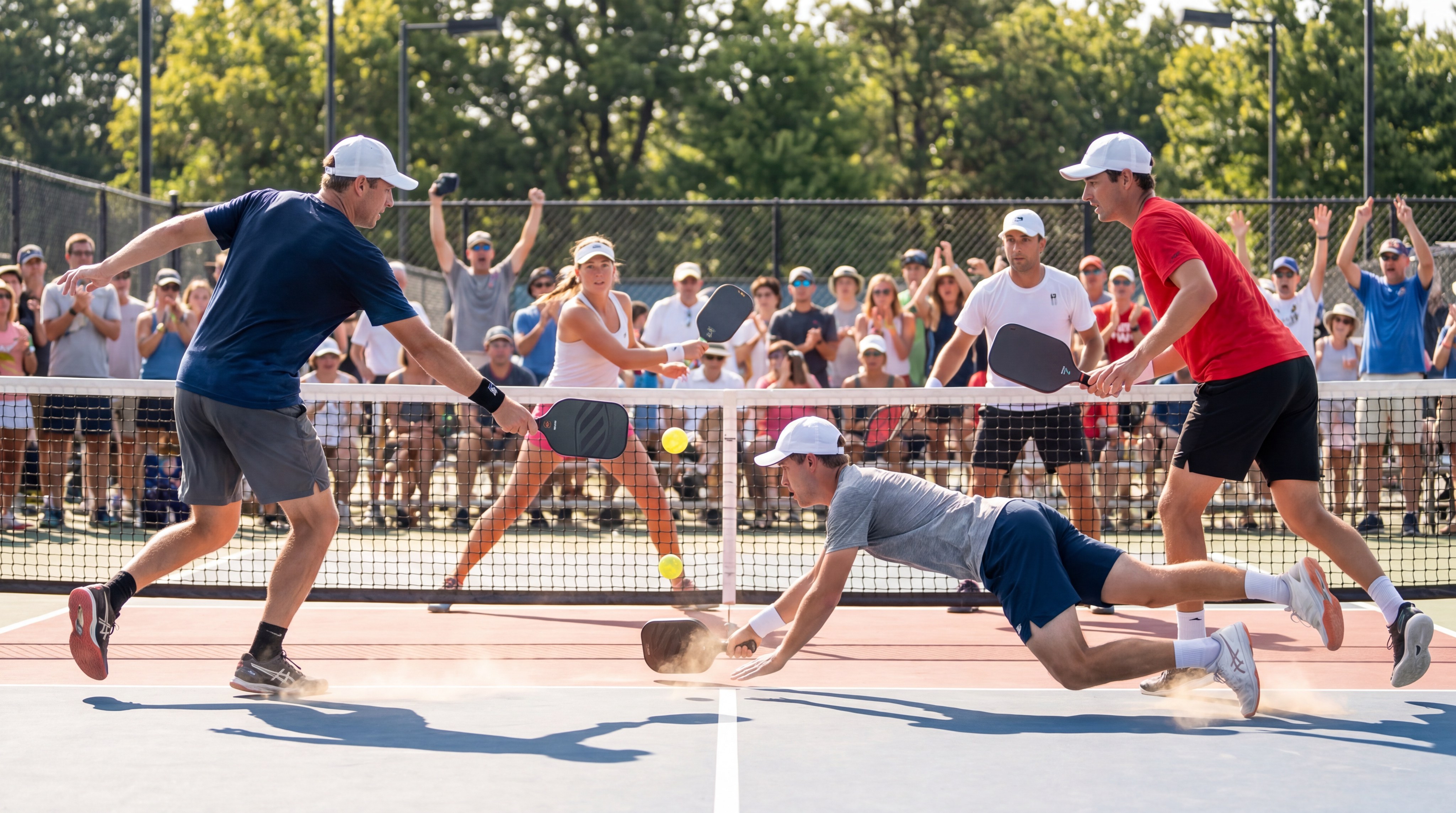
While the padel vs pickleball court size is the most visible difference, the culture, speed of play, and social atmosphere of each sport offer unique benefits. Padel is often described as “chess on grass” due to the complex wall rebounds. Pickleball is a fast-paced “game of reflexes” that is incredibly easy for seniors and children to pick up in minutes.
Which is easier to learn?
The bottom line? Both are much easier to learn than tennis. Pickleball has a shorter learning curve because there are no walls to worry about. Padel takes a few more sessions to understand how the ball bounces off the glass, but once you master it, the rallies are incredibly long and exciting.
- Pickleball: Playable by almost anyone on day one.
- Padel: High engagement for social groups.
- Community: Both foster very strong local communities.
Choosing the right sport
If you have a young, active demographic that loves social media and “cool” aesthetics, padel is the winner. If you have an older population or a family-focused community looking for healthy, low-impact fun, pickleball is the safer bet for your space.
Key Takeaway: The best sport for your space is the one that aligns with your community’s fitness levels and social expectations.
| Factor | Padel Sport | Pickleball Sport |
|---|---|---|
| Learning Curve | 2-3 sessions | 1 session |
| Physical Demand | Moderate (Agility) | Low to Moderate (Reflexes) |
| Social Vibe | High-end / Trendy | Friendly / Community |
By considering the cultural fit alongside the physical court dimensions, you will create a sports destination that people love to visit.
Conclusion
In this article, we solved the confusion surrounding the choice between padel and pickleball by comparing their dimensions, construction requirements, and financial potential. You now know exactly how to maximize your land whether you have a small backyard or a large commercial warehouse. At Superbpadel, our vision is to empower facility owners with factory-direct, high-performance courts that stand the test of time. We can provide you with everything from panoramic glass structures to high-density turf systems to ensure your project is a success. If you are ready to transform your space into a world-class sports venue, contact us today for a custom quote and expert consultation.
FAQ
Can I convert a tennis court into a padel or pickleball court?
Yes, a single tennis court can easily be converted into one padel court or up to four pickleball courts.
What’s the best way to handle limited space for a sports club?
It depends on your goal; pickleball offers the highest player density per square foot, while padel offers a higher premium revenue potential per court.
How do I know if my ceiling is high enough for indoor padel?
No, a standard gym ceiling may not be enough; you typically need a minimum of 6 meters of clear height to accommodate the lobs that are essential to the game.
Can I install a padel court on grass?
No, you must have a solid, reinforced concrete foundation to support the heavy glass walls and ensure the turf remains flat and safe for play.
How do I know if I should choose a panoramic or standard court?
It depends on your audience; panoramic courts are better for televised matches and high-end clubs with many spectators, whereas standard courts are more cost-effective for private or residential use.