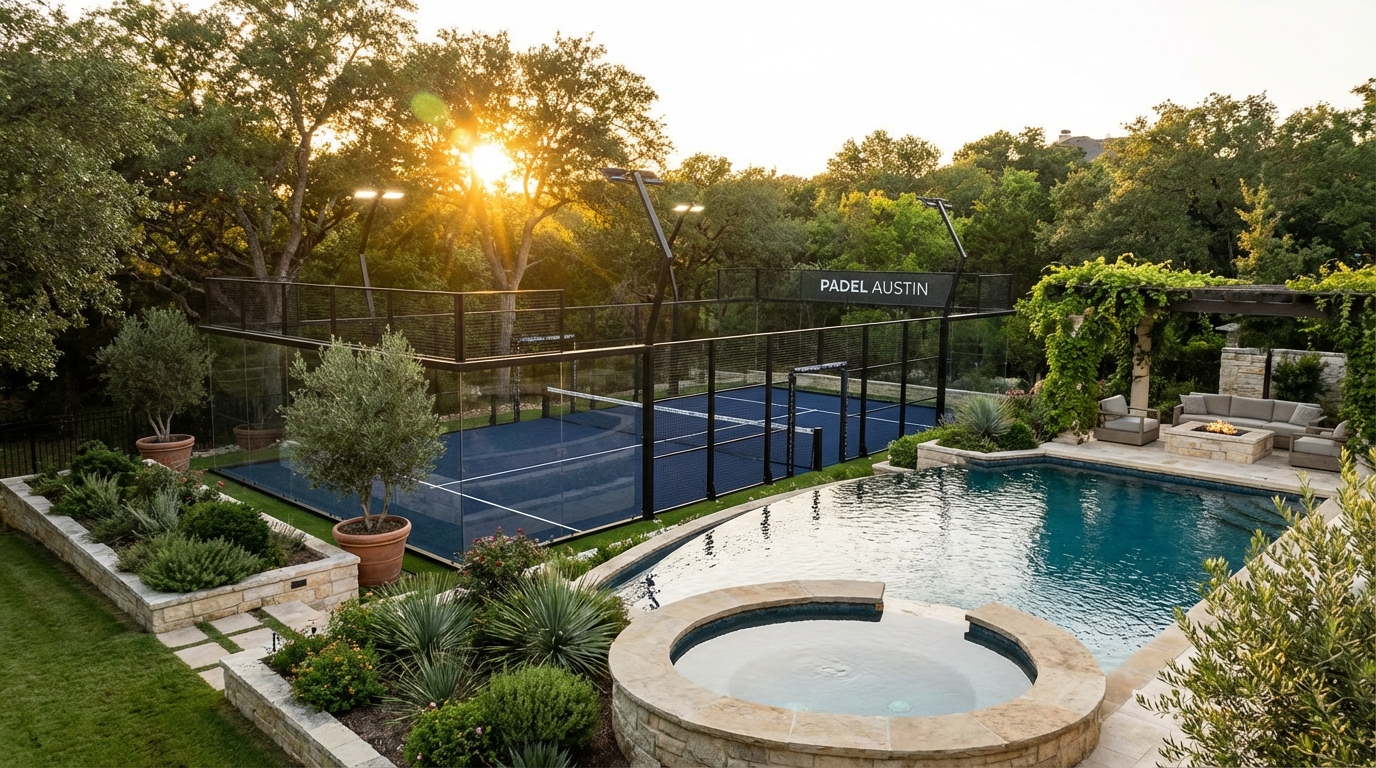
Padel Austin is a high-octane, social racket sport played on glass-enclosed courts that is rapidly becoming the city’s favorite way to stay active. You likely find your current fitness routine stagnant and socially isolating, struggling to find court time in overbooked tennis centers. By embracing padel austin, you solve the problem of repetitive workouts by joining an addictive, community-driven sport that is easy to pick up but offers endless tactical depth.
Why is padel austin the city’s newest sports obsession?
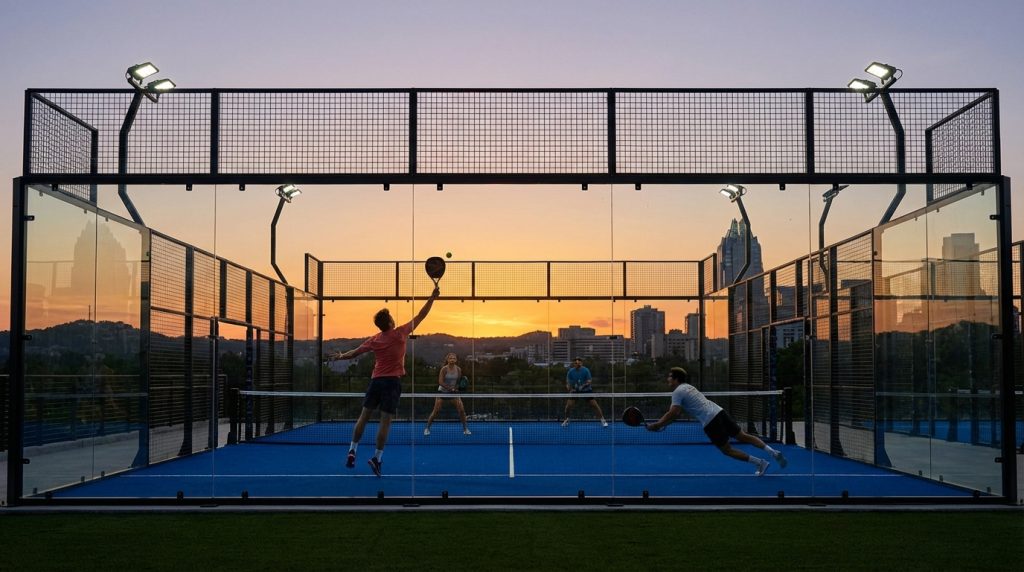
Padel Austin has captured the local imagination because it perfectly blends physical exertion with the city’s vibrant social culture. You will find that the game provides a much faster pace than traditional racket sports while remaining remarkably accessible to newcomers. This balance ensures that your sessions are both a rigorous workout and a social highlight.
Is it easy for beginners to learn?
Think about it: most racket sports require years of technical training before you can enjoy a competitive rally. Padel Austin changes this by utilizing underhand serves and a smaller court area that minimizes the need for explosive sprinting.
- Underhand serves are much easier to master than tennis serves.
- The ball stays in play longer due to the surrounding walls.
- Double-only play reduces the ground you need to cover.
- Solid rackets provide more control than stringed versions.
Key Takeaway: The low barrier to entry makes Padel Austin the most inclusive racket sport for the city’s diverse fitness community.
| Metric | Detail |
|---|---|
| Learning Curve | Low (Competitive in 1 hour) |
| Players Required | 4 (Doubles format) |
| Equipment | Solid carbon/fiberglass racket |
This structural accessibility is why local clubs are seeing a massive surge in membership across all age groups.

Premium technical specifications for Padel Austin prioritize durability against the Texas heat and consistent ball response for high-level play. When selecting materials, you should focus on reinforced glass walls and hot-dipped galvanized steel frames to ensure the structure survives the elements. These components are vital for maintaining the safety and performance standards expected by professional players.
Does the glass thickness matter?
Believe it or not, the thickness of the glass panels is the single most important factor for player safety and bounce consistency. You should always opt for 10mm or 12mm tempered safety glass to handle the impact of players and balls during intense matches.
- 12mm glass provides a more professional, consistent rebound.
- Tempered safety glass shatters into small blunted pieces if broken.
- High-quality mounting prevents vibration and noise during play.
- Clear views enhance the spectator experience in commercial settings.
Key Takeaway: Investing in high-grade tempered glass is a non-negotiable requirement for any durable Austin installation.
| Component | Standard Specification |
|---|---|
| Glass Type | Tempered Safety Glass |
| Glass Thickness | 10mm – 12mm |
| Frame Material | Galvanized Steel |
Choosing the right glass thickness ensures your court remains a premium asset that provides a safe and predictable playing environment.
What are the standard dimensions for padel austin play?
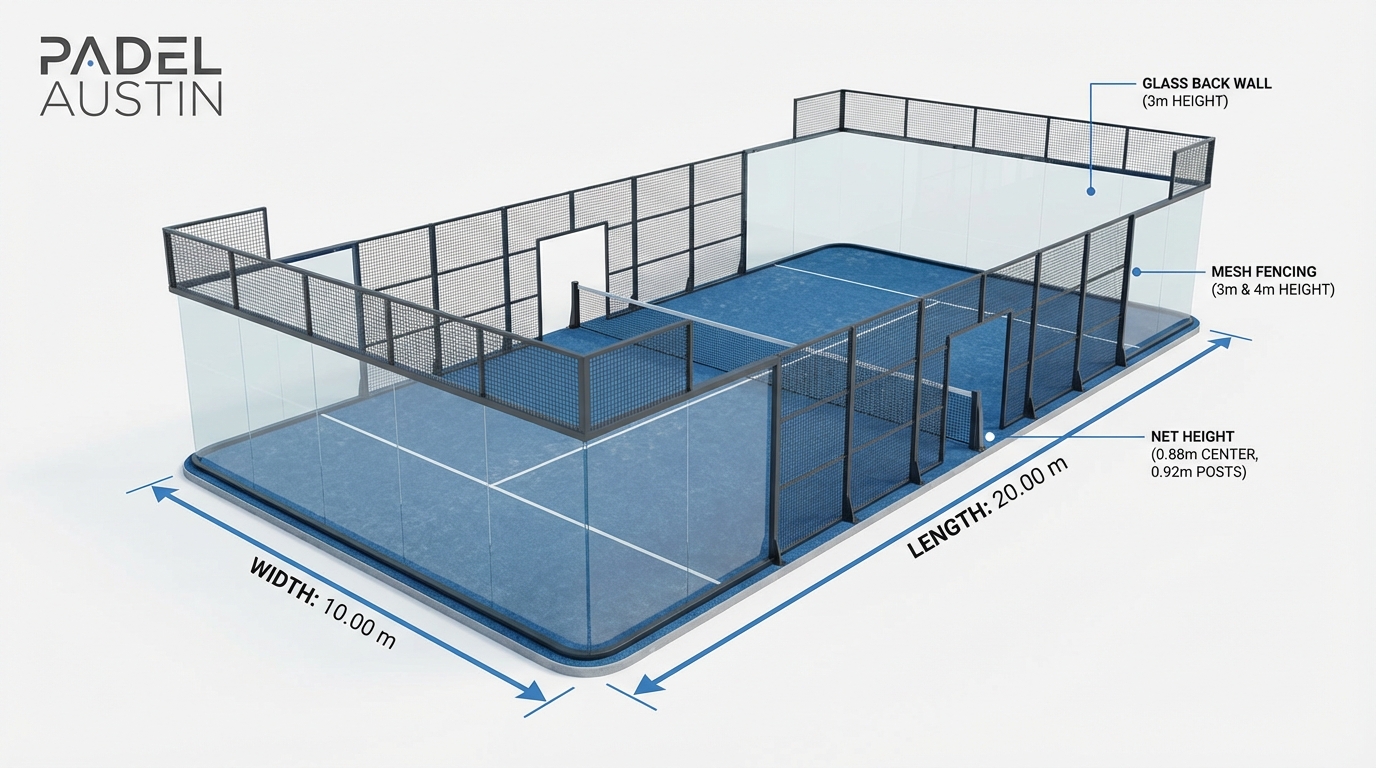
Standard dimensions for Padel Austin follow international regulations to ensure that your skills translate perfectly to any competitive environment. You need a rectangular area measuring exactly 10 meters wide and 20 meters long, divided into two halves by a central net. This compact footprint allows you to fit multiple courts in spaces where only a single tennis court would typically reside.
How much height clearance do you need?
Let’s be honest: the lob is a fundamental defensive shot in padel, so vertical space is just as critical as the floor dimensions. You should aim for a minimum height of 6 meters, though 8 meters is preferred for professional-grade facilities to allow for high-arcing defensive plays.
- Net height is 0.88m at the center and 0.92m at the posts.
- Service lines are located 6.95m from the net.
- Back walls must be 3 meters high.
- Side mesh panels range from 3 to 4 meters in height.
Key Takeaway: Precise adherence to the 10x20m layout is essential for creating a court that meets official tournament standards.
| Zone | Measurement |
|---|---|
| Total Length | 20 Meters |
| Total Width | 10 Meters |
| Net Center Height | 0.88 Meters |
These dimensions maximize the tactical use of the walls, forcing players to focus on positioning rather than just power.
How do you plan a commercial padel austin facility?
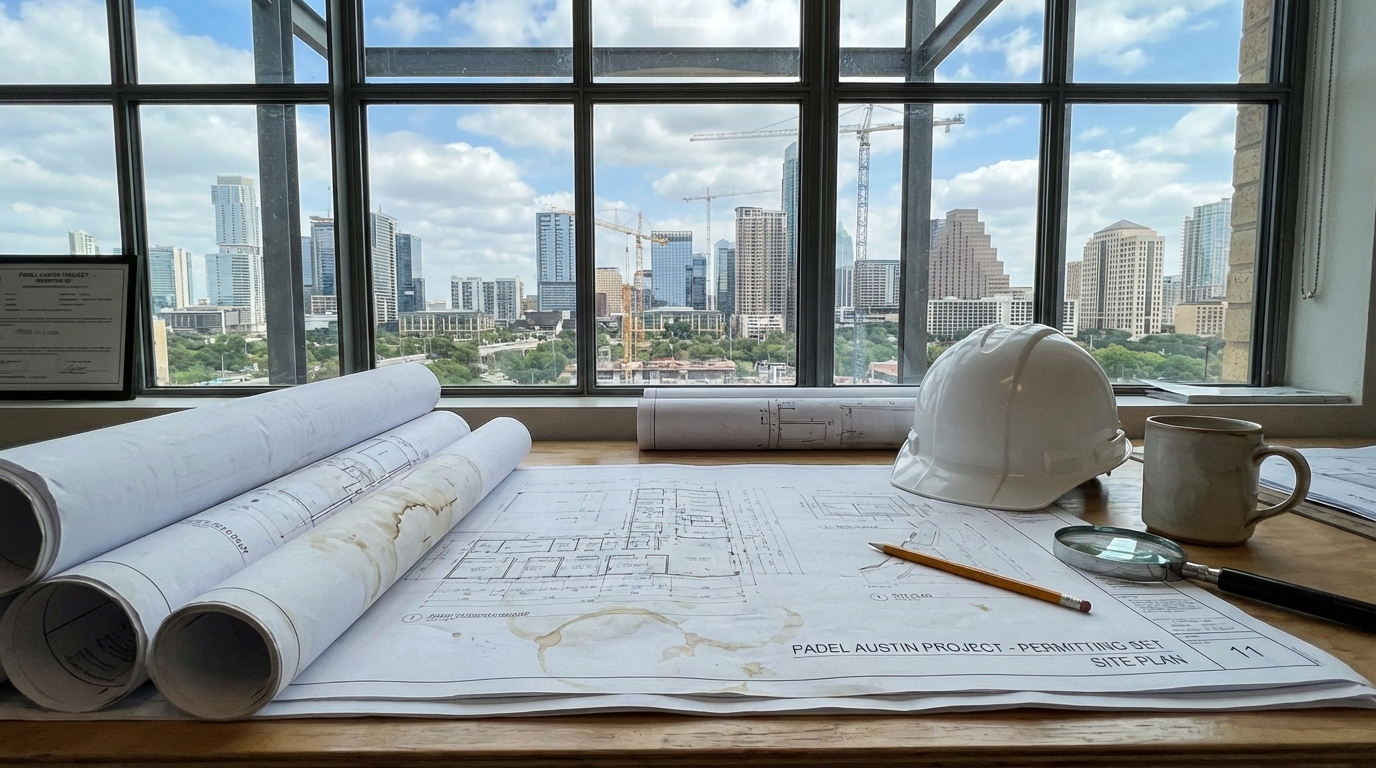
Planning a commercial Padel Austin facility requires a strategic focus on court density, player flow, and essential secondary amenities. You must map out the installation process from the foundation stage to final turf placement to ensure your project stays on schedule and within budget. A well-planned facility acts as a lifestyle destination, keeping players engaged long after their match has concluded.
Is drainage a major concern?
But wait, there is more. Because Austin is prone to sudden heavy rainfall, your facility planning must include advanced sub-surface drainage systems to prevent court flooding. You want a porous concrete or asphalt base that allows water to escape quickly so play can resume minutes after a storm.
- Sloped foundations ensure water moves toward external drains.
- Specialized turf allows for high permeability.
- Perimeter gutters prevent runoff from surrounding landscapes.
- Regular maintenance keeps drainage holes clear of debris.
Key Takeaway: Effective drainage planning is the difference between a year-round revenue stream and a weather-dependent facility.
| Planning Stage | Focus Area |
|---|---|
| Site Selection | Accessibility and Zoning |
| Foundation | Leveling and Drainage |
| Amenities | Lounge, Pro Shop, and Cafe |
Proper planning ensures that your facility can handle the high traffic and environmental stresses typical of the local sports market.
How does padel austin compare to local pickleball?

Padel Austin offers a more dynamic, vertical, and physically demanding experience than pickleball while maintaining the same high level of social engagement. You will notice that while pickleball is often played on a flat court, padel utilizes the entire 3D space provided by the glass walls. This distinction makes the game more appealing to those who want a hybrid of squash’s intensity and tennis’s strategy.
Which sport provides a better workout?
Here is the kicker: because the ball stays in play longer in padel, your heart rate remains elevated for extended periods compared to the shorter rallies of other sports. You will cover more ground and engage your core more frequently due to the constant 360-degree awareness required by the walls.
- Longer rallies lead to higher caloric burn.
- Vertical play (lobs and smashes) improves shoulder mobility.
- Wall rebounds require rapid changes in direction.
- Strategic depth keeps you mentally engaged throughout the match.
Key Takeaway: Padel Austin provides a superior cardiovascular challenge for athletes who find pickleball too static.
| Feature | Padel Austin | Pickleball |
|---|---|---|
| Wall Use | Active Participation | Out of Bounds |
| Rally Length | Long (10-20 strokes) | Short to Medium |
| Movement | Multidirectional/Dynamic | Linear/Lateral |
The tactical complexity of the walls ensures that every point is a puzzle to be solved, keeping the game fresh for years.
What gear do you need for a padel austin match?
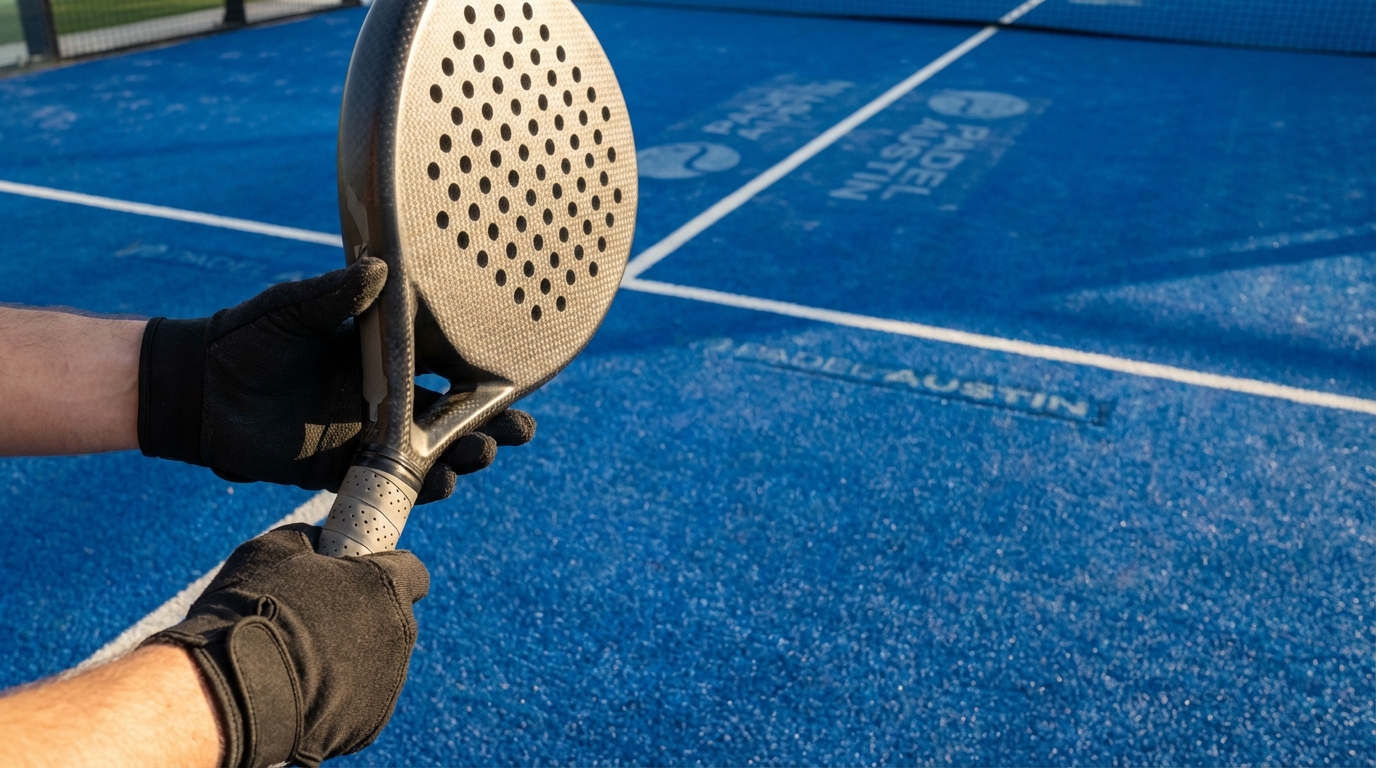
Starting your journey in Padel Austin requires only a few pieces of specialized equipment, most of which can be rented at local clubs. Before your first match, understanding padel rules is vital, but having the right racket and shoes will drastically improve your performance. Using the correct gear prevents injuries and ensures you can control the ball’s unique rebound characteristics.
Should you buy a carbon or fiberglass racket?
Let’s be honest: while fiberglass is cheaper and more forgiving for beginners, carbon fiber provides the precision and power that intermediate players crave. You should start with a round-shaped racket to maximize the “sweet spot,” allowing you to maintain control even when your technique is still developing.
- Round rackets provide the most control for novices.
- Teardrop rackets offer a balance of power and precision.
- Diamond rackets are reserved for advanced power hitters.
- Padel-specific balls have lower pressure than tennis balls.
Key Takeaway: A round fiberglass racket is the perfect starting point for your first six months of Padel Austin play.
| Gear Item | Recommended Type |
|---|---|
| Racket | Round-shaped (Control focus) |
| Shoes | Clay-court grip (Herringbone pattern) |
| Balls | Official pressurized padel balls |
Investing in high-grip court shoes is just as important as the racket for maintaining your balance on the artificial turf.
How does the padel austin community foster connection?
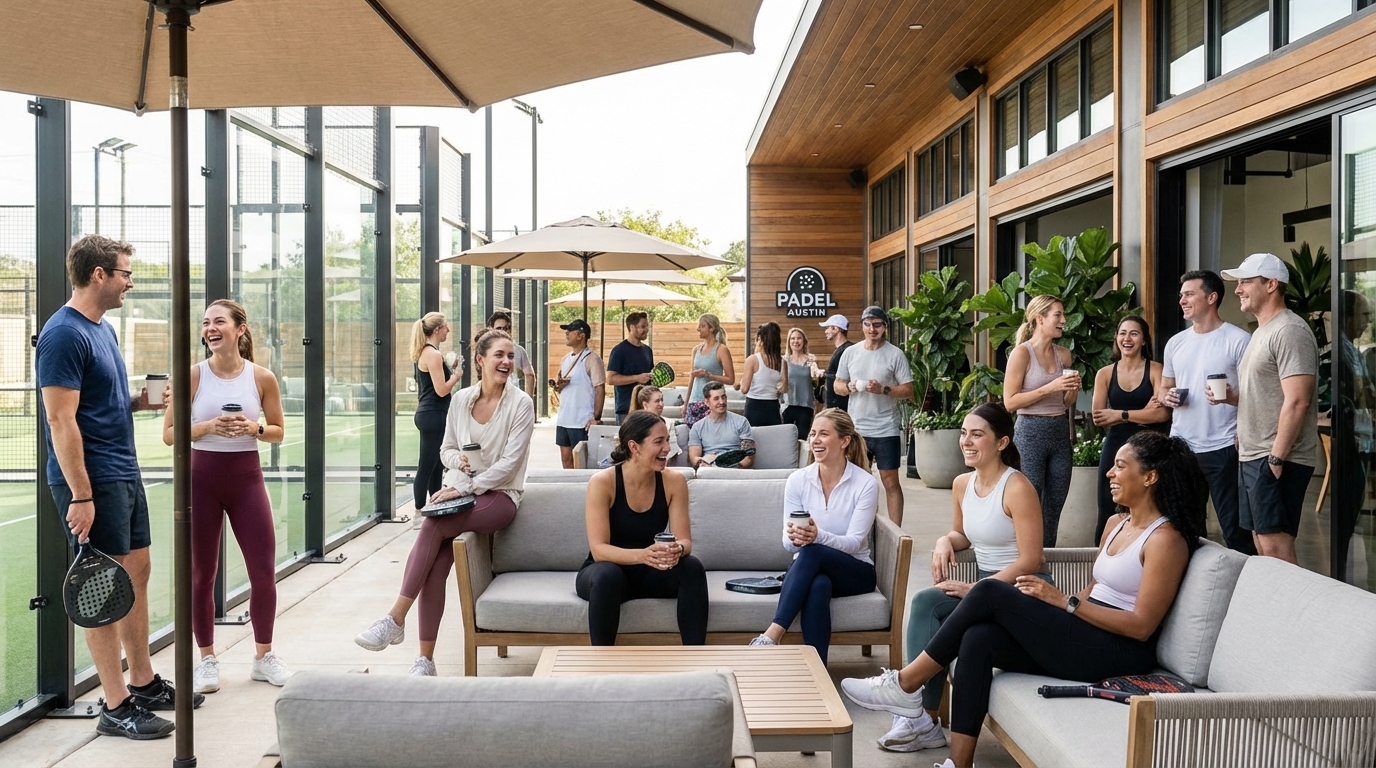
The Padel Austin community is built on a foundation of inclusive play and post-match socialization that turns strangers into teammates. You will find that the doubles-only format forces constant communication, naturally breaking down the barriers often found in more solitary sports. This focus on togetherness has made the sport a favorite for local networking and building deep friendships.
Think about it: the court is smaller than a tennis court, which means you are physically closer to both your partner and your opponents. This proximity encourages banter, strategic discussion, and a shared sense of fun that extends well beyond the final point of the match.
- Every game requires four people, fostering group coordination.
- Mixed-gender and mixed-skill sessions are standard.
- Clubs often feature lounge areas for post-game drinks.
- Tournament events emphasize community over competition.
Key Takeaway: Padel Austin is more than a sport; it is a social ecosystem that combats the isolation of urban life.
| Social Factor | Impact |
|---|---|
| Format | Mandatory Doubles |
| Interaction | Constant during play |
| Culture | Relaxed and Welcoming |
The local community pride themselves on welcoming new players, ensuring the sport’s growth remains sustainable and friendly.
Can you build a private padel austin court at home?
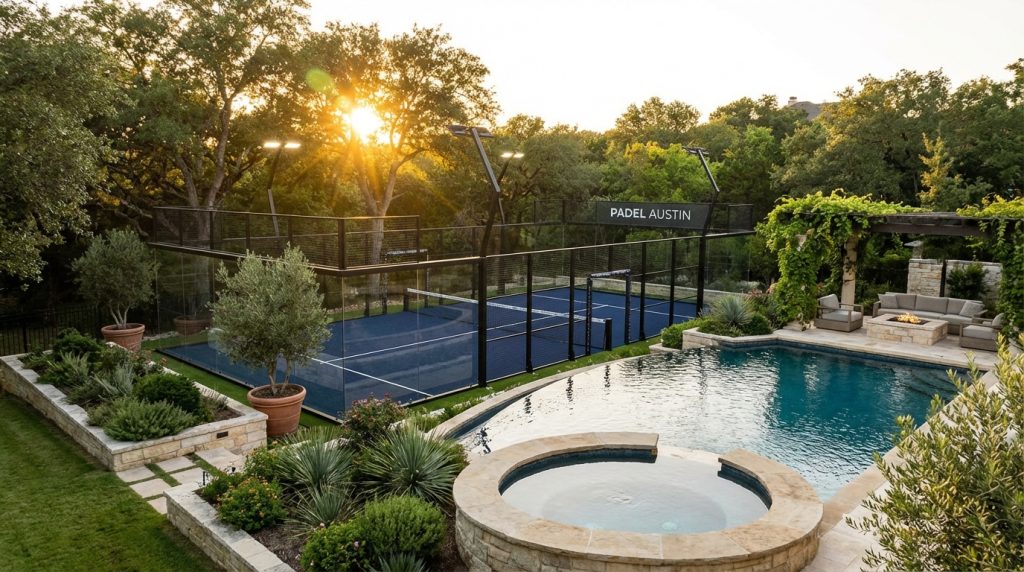
Building a private Padel Austin court is a highly viable way to increase your property value while creating a personal fitness sanctuary. Beyond the luxury appeal, the health and social benefits of having a court at home mean you can host family tournaments and stay active on your own schedule. You just need a level surface and a clear space that can accommodate the standard 10m x 20m footprint.
Is an outdoor court feasible in Austin?
But wait, there is more. While the summer heat is intense, installing a private court with a canopy or high-powered LED lighting allows you to play comfortably during the cooler mornings and evenings. You can also customize the turf and frame colors to blend seamlessly with your existing backyard landscape.
- LED lighting masts extend your playing hours significantly.
- High-quality artificial turf stays cool underfoot.
- Canopy covers protect the court from the sun and rain.
- Panoramic glass options provide unobstructed views of your garden.
Key Takeaway: A home court transforms your backyard into a premier social and athletic hub for your entire neighborhood.
| Requirement | Specification |
|---|---|
| Base | Reinforced concrete (15cm) |
| Area | 11m x 21m (with surrounds) |
| Power | 220V for LED lighting |
A residential court offers the ultimate convenience for busy professionals who want to maintain a high level of fitness without the commute.
How do you maintain a high-quality padel austin court?
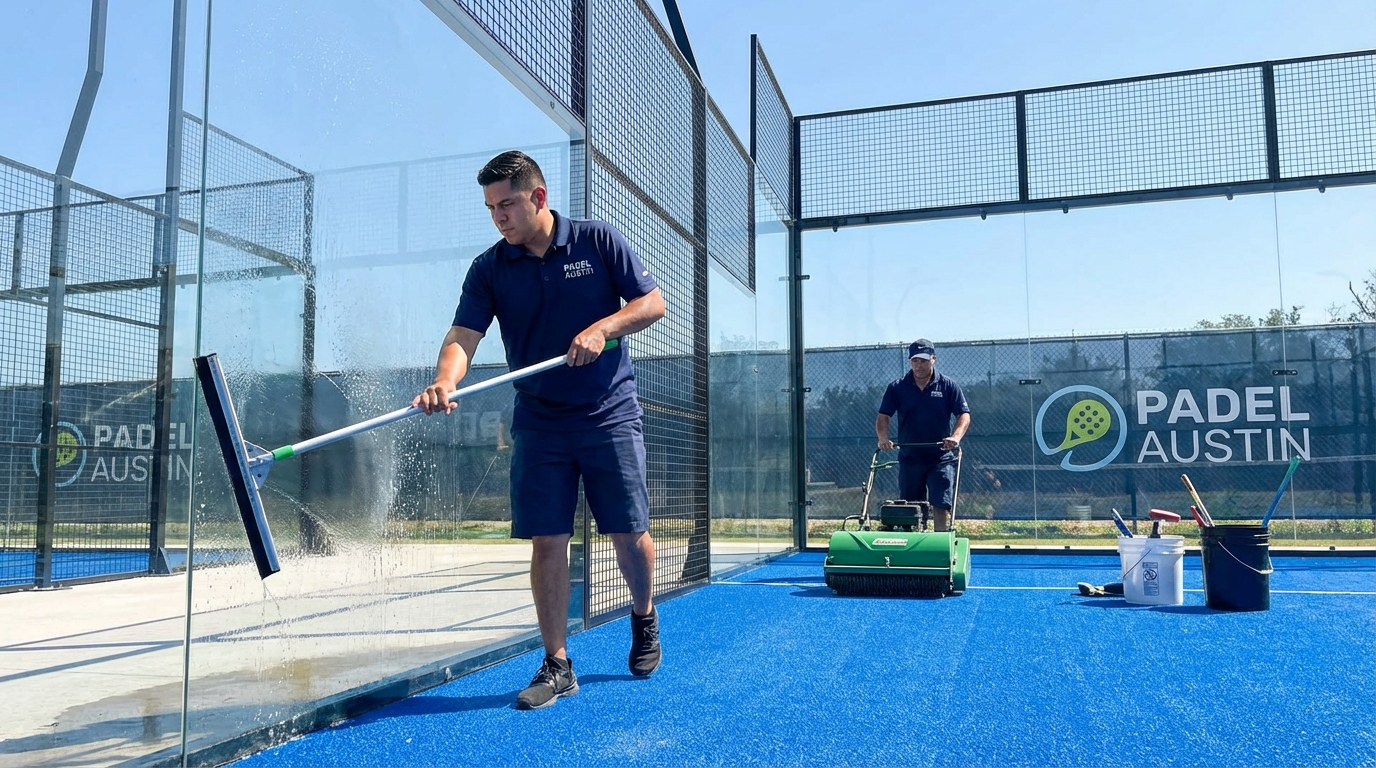
Maintaining your Padel Austin court is a straightforward process that ensures the longevity of the materials and the safety of the players. You should perform regular tasks like redistribution of the sand infill and cleaning the glass walls to keep the court in “like-new” condition. Proper maintenance prevents the turf from matting and keeps the ball bounce predictable for high-level play.
How often should you brush the turf?
Here is the kicker: the silica sand within the turf acts as a lubricant for your joints and a stabilizer for the fibers, but it tends to migrate to the corners over time. You should brush the surface at least once every two weeks to redistribute the sand evenly across the entire court area.
- Brushing prevents the turf from flattening and wearing out.
- Cleaning glass walls ensures perfect visibility for spectators.
- Checking bolt tension prevents structural vibrations.
- Removing debris keeps the drainage system functional.
Key Takeaway: A simple bi-weekly maintenance routine can double the lifespan of your court’s artificial turf.
| Task | Frequency |
|---|---|
| Turf Brushing | Every 2 Weeks |
| Glass Cleaning | Weekly |
| Structure Check | Every 6 Months |
Consistent care protects your investment and ensures that every match played on the court is of professional quality.
Why choose professional padel austin construction?

Choosing professional Padel Austin construction ensures that your facility meets international safety standards and delivers a world-class playing experience. You should work with professional builders who understand the nuances of foundation engineering and glass installation. Experts in the field also provide essential guidance on court maintenance to help you preserve your investment for years to come.
Can professionals handle the permitting?
Let’s be honest: navigating the local zoning laws and building permits in Austin can be a daunting task for a private individual or new business owner. Professional contractors handle all the red tape, ensuring your court is compliant with noise regulations, lighting ordinances, and structural safety codes.
- Experts manage soil testing and foundation stability.
- Precision installation prevents glass misalignment.
- Professional lighting systems eliminate player glare.
- Long-term warranties provide peace of mind for owners.
Key Takeaway: Professional construction is the only way to guarantee a safe, compliant, and high-performance padel facility.
| Benefit | Impact |
|---|---|
| Expertise | Faster project completion |
| Safety | Certified materials and assembly |
| Value | Higher ROI for commercial projects |
By partnering with experts, you transform a complex building project into a seamless journey toward owning a premier sports asset.
*
Padel Austin FAQ
Can I play padel in Austin if I’ve never played a racket sport?
Absolutely, you can start playing immediately because the underhand serve and glass walls make the game incredibly forgiving for total beginners. The learning curve is significantly gentler than tennis, allowing you to have fun rallies in your very first session.
What’s the best way to meet other padel players in the city?
The best way is to join local club “mixers” or use social booking apps that let you join open matches with players of a similar skill level. Austin has a very welcoming community, and most clubs facilitate player matching for those who don’t have a regular group of four.
Can I build a padel court on a standard residential lot?
Yes, you can usually fit a padel court on a standard lot as it only requires a 10m x 20m footprint, which is much smaller than a tennis court. You should check your local HOA and zoning regulations first to ensure you have the necessary clearances for the structure and lighting.
Is it possible to play padel during the hot Austin summers?
It is definitely possible if you choose an indoor facility or a court with a professional canopy and high-end LED lighting for evening play. Many local players prefer early morning or late evening slots to stay cool while enjoying the game.
What is the most important piece of gear for a new player?
The most important piece is a pair of padel-specific or clay-court shoes because they provide the necessary grip to prevent slipping on the artificial turf. While you can rent a racket, having the right shoes is critical for your safety and agility on the court.
*
At SuperbPadel, our vision is to lead the global expansion of this incredible sport by providing the highest quality infrastructure to communities around the world. We are dedicated to helping you create spaces that foster connection, health, and athletic excellence. If you are ready to start your journey, contact us today to bring a professional court to your facility or home.