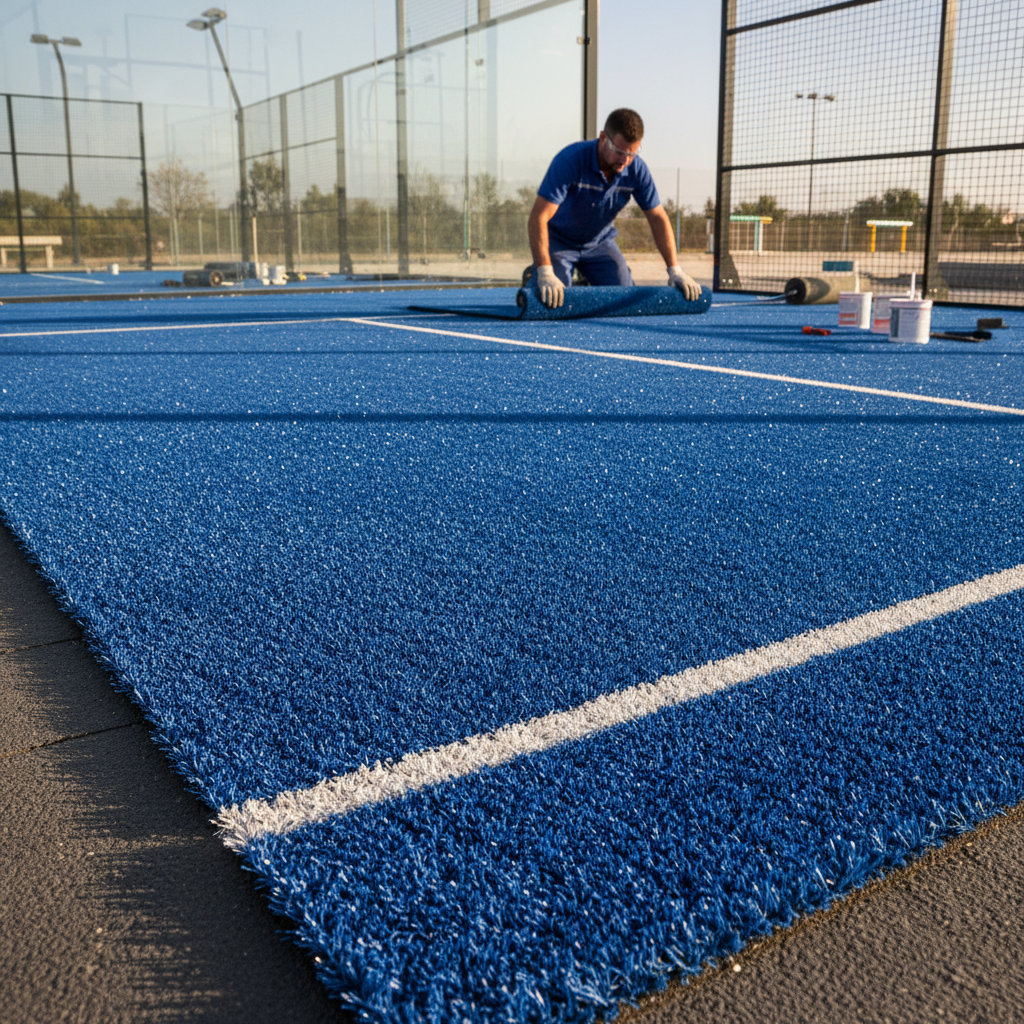
A padel court is a 20-meter by 10-meter sports arena enclosed by tempered glass and metallic mesh, and building it involves a multi-stage engineering process including foundation curing, structural assembly, and synthetic turf installation. Transforming underutilized real estate into a high-revenue facility requires adherence to professional construction standards and precise technical specifications.
What is a padel court and why is it growing so fast?
A padel court is a specialized hybrid environment that combines elements of tennis and squash within a compact, glass-enclosed footprint designed primarily for doubles play. You might be wondering why it is surging; the sport’s social nature and shorter learning curve allow facility owners to engage a much broader demographic than traditional racquet sports.
Facility managers often see higher player density and revenue per square meter because these courts require significantly less space than tennis. Analysis of global market trends shows that the lower physical entry barrier encourages lifelong participation across all age groups.
| Metric | Padel Facility | Tennis Facility |
|---|---|---|
| Players per Court | 4 | 2-4 |
| Space Required | 200 sqm | 650+ sqm |
| Revenue Potential | High | Moderate |
| Social Engagement | Very High | High |
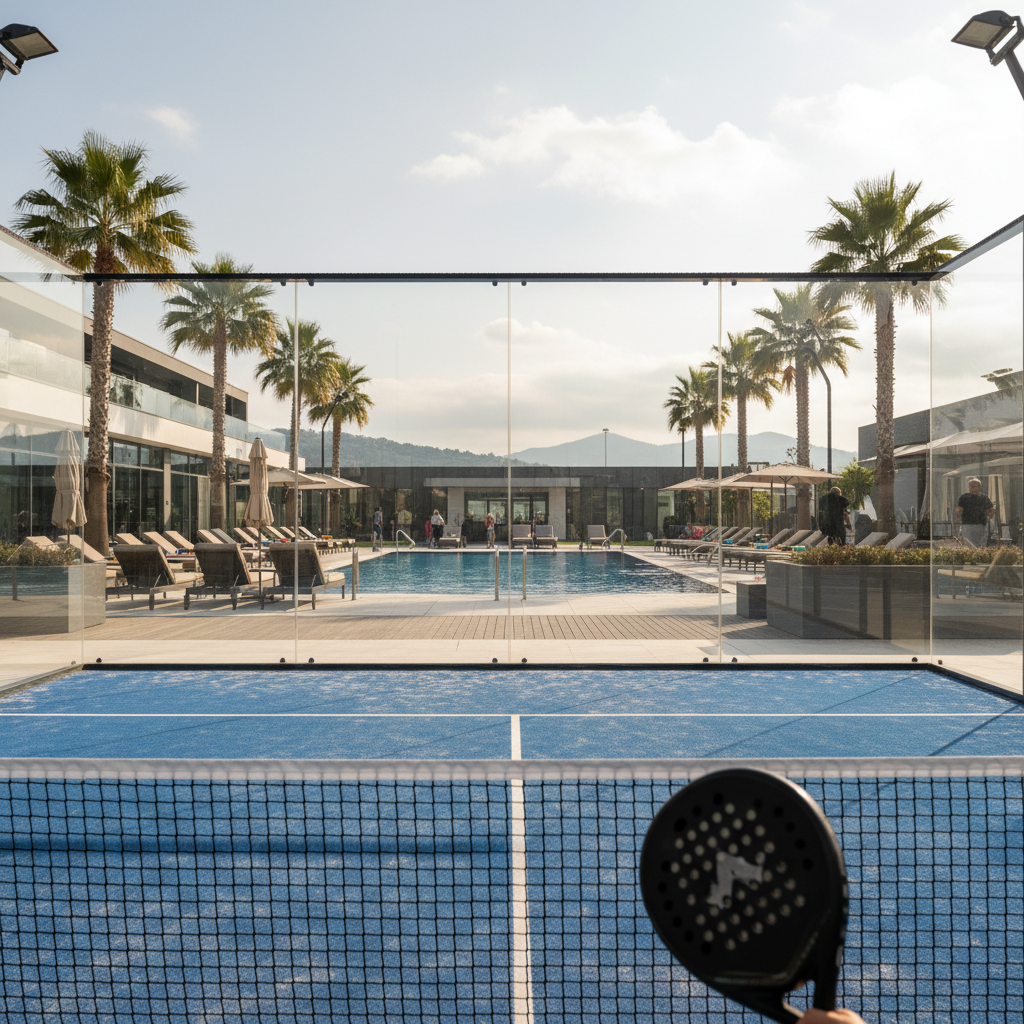
- Key Takeaway: Maximizing player density per square meter is the primary driver for high ROI in modern sports club development.
What are the official dimensions of a padel court?
Official dimensions for a standard padel court are strictly 20 meters long by 10 meters wide, maintaining a precise 2:1 internal playing ratio. Adhering to these specific metrics is non-negotiable for hosting sanctioned tournaments and attracting competitive members who expect professional-grade play.
Engineers must also account for a four-meter high enclosure at the back walls and a minimum of six meters of vertical clearance for overhead shots. Analysis of the footprint reveals that even slight deviations in line placement can disrupt the specific rebound geometry required for the sport. You should consult the Comprehensive Engineering Guide: How Big Is a Padel Court for exact structural tolerances and blueprint requirements.
| Dimension | Standard Metric | Tolerance | Purpose |
|---|---|---|---|
| Length | 20 Meters | +/- 0.5% | Standard play area |
| Width | 10 Meters | +/- 0.5% | Standard play area |
| Net Height | 0.88m (center) | Fixed | Ball clearance |
| Service Lines | 6.95m from net | Fixed | Serving regulation |
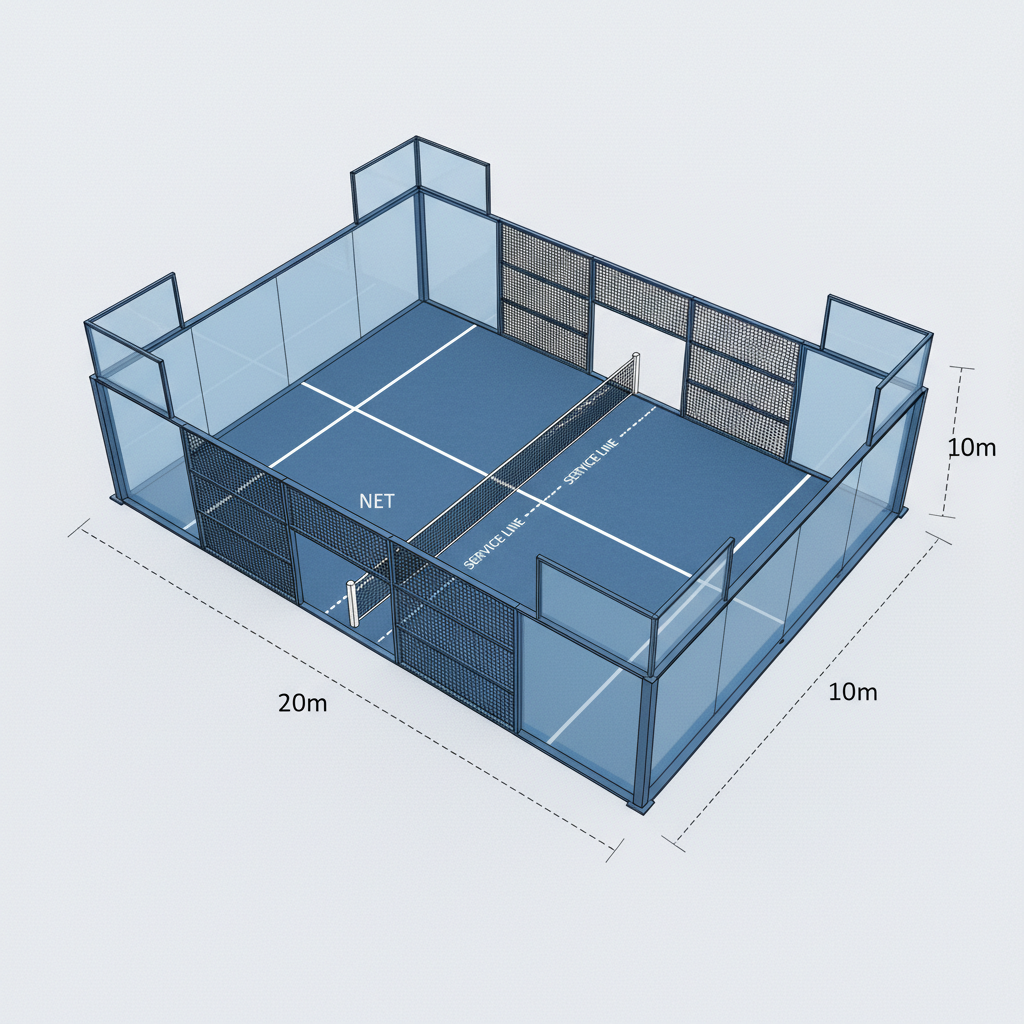
- Key Takeaway: Precision in the 200-square-meter footprint ensures the court meets FIP (International Padel Federation) certification standards.
How do you choose the right padel court surface?
Choosing the right surface requires balancing traction, ball bounce, and player comfort, typically through the use of monofilament or textured synthetic turf. Most modern facilities utilize these fibers filled with fine silica sand to provide the perfect balance of traction for quick lateral movements and controlled sliding.
High-quality fibers significantly reduce the risk of friction-related injuries while ensuring consistent ball speeds throughout the lifecycle of the court. Analysis of material durability suggests that monofilament turf offers a more “natural” bounce preferred by professional-tier players. Detailed material specifications are available in the Padel Court Surface: What It Is and How to Build It guide for club developers.
| Surface Type | Durability | Bounce Quality | Maintenance | Safety |
|---|---|---|---|---|
| Monofilament | High | Professional | Weekly | High |
| Textured Turf | Very High | Fast | Bi-weekly | Moderate |
| Acrylic Hardcourt | Moderate | Extremely Fast | Low | Moderate |
| Concrete | Low | Poor | Low | Low |
- Key Takeaway: Silica sand distribution is as critical as the turf quality for maintaining optimal friction levels and preventing joint strain.
What is the standard padel court construction process?
The standard construction process consists of a sequence involving site clearing, reinforced concrete foundation pouring, structural steel assembly, and finally the installation of glass panels and synthetic turf. Your project begins with a precision-leveled slab that must be cured perfectly to prevent future misalignment of the heavy glass walls.
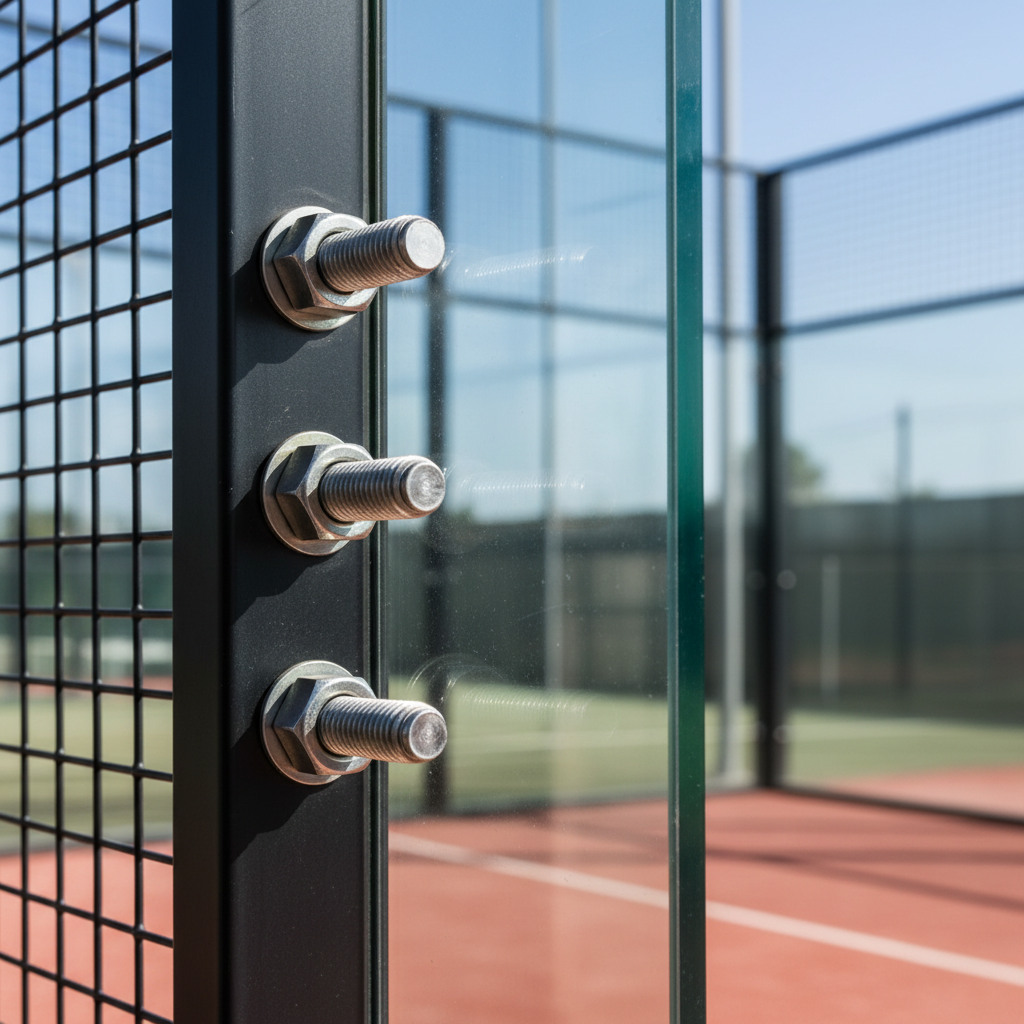
Once the base is ready, specialized teams install the galvanized steel frame and 12mm tempered glass panels using high-torque hardware. Analysis of failed installations often points to improper foundation curing as the root cause of shattered glass panels years after construction. Review the How to Plan a Professional Padel Tennis Court Installation for a step-by-step project timeline and contractor checklist.
| Phase | Duration | Critical Task | Tooling |
|---|---|---|---|
| Foundation | 14-21 Days | Concrete Curing | Leveling lasers |
| Steel Frame | 2 Days | Anchor Bolting | Torque wrenches |
| Glass Fitting | 1 Day | Panel Alignment | Suction lifters |
| Turf & Net | 1 Day | Sand Infill | Mechanical brushes |
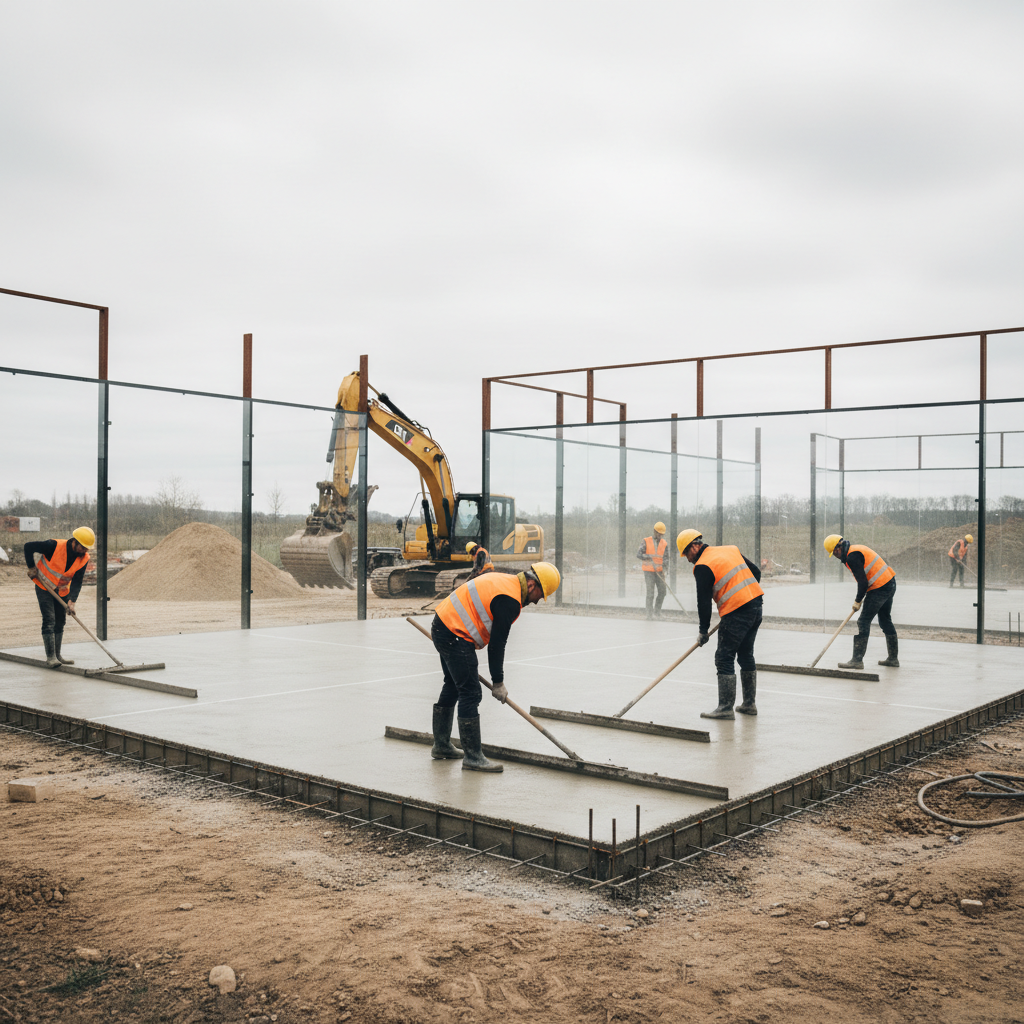
- Key Takeaway: Professional installation teams are essential to ensure the correct torque is applied to glass-to-steel fasteners, preventing structural fatigue.
How do panoramic padel court designs compare to standard ones?
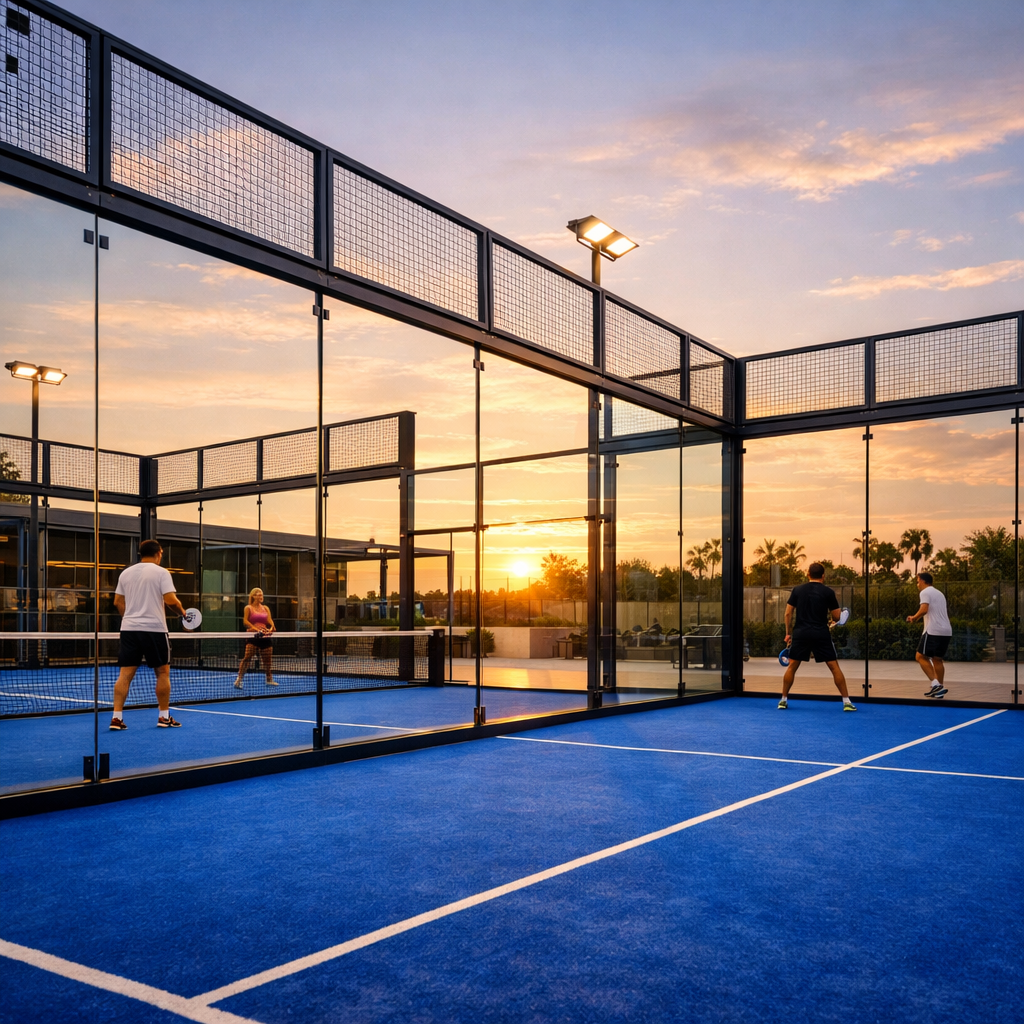
Panoramic designs differ from standard models by removing middle vertical structural pillars to provide spectators and cameras with an unobstructed 360-degree view of the match. While standard models remain the most durable choice for high-wind environments, panoramic models serve as the centerpiece for televised events and high-end club branding.
Choosing between these configurations depends on whether your priority is structural simplicity or premium aesthetic appeal for spectator engagement. Analysis of commercial clubs indicates that panoramic courts often command higher booking fees due to their “center court” prestige. Our Standard Padel Court service page details why the classic design continues to be a top choice for high-traffic training centers.
| Feature | Standard Model | Panoramic Model |
|---|---|---|
| Visibility | Good | Excellent (360°) |
| Structural Support | High (Regular Pillars) | Specialized Reinforced |
| Target Audience | Schools/Public Clubs | Pro Tournaments/VVIP |
| Wind Resistance | Superior | High |
- Key Takeaway: Panoramic models significantly increase a facility’s sponsorship value and attractiveness for high-profile exhibition matches.
What are the layout requirements for a padel court?
Layout requirements mandate a total footprint that includes the 200-square-meter playing area plus at least two meters of safety clearance around the perimeter for professional-level play. This “out-of-court” space is essential for matches where players must exit the enclosure to return balls that have bounced outside the glass walls.
Intelligent layout design ensures smooth traffic flow between matches and prevents noise interference between adjacent courts in multi-court facilities. Analysis of facility throughput shows that centralizing amenities like locker rooms and cafes reduces dead space and improves member retention. You can find optimized cluster arrangements in our padel court layout: what it is and how to build it manual for architects.
| Zone | Required Area | Purpose | Minimum Clearance |
|---|---|---|---|
| Playing Area | 200 sqm | Active match play | N/A |
| Safety Zone | 40-80 sqm | Professional “Outs” | 2 Meters |
| Walkways | 1.5m Width | Traffic flow | 1.5 Meters |
| Spectator Seating | Varies | Engagement | 3 Meters |
- Key Takeaway: Safety perimeters are not optional if you intend to host sanctioned tournaments where “out-of-court” play is a standard requirement.
Should you build an indoor or outdoor padel court?
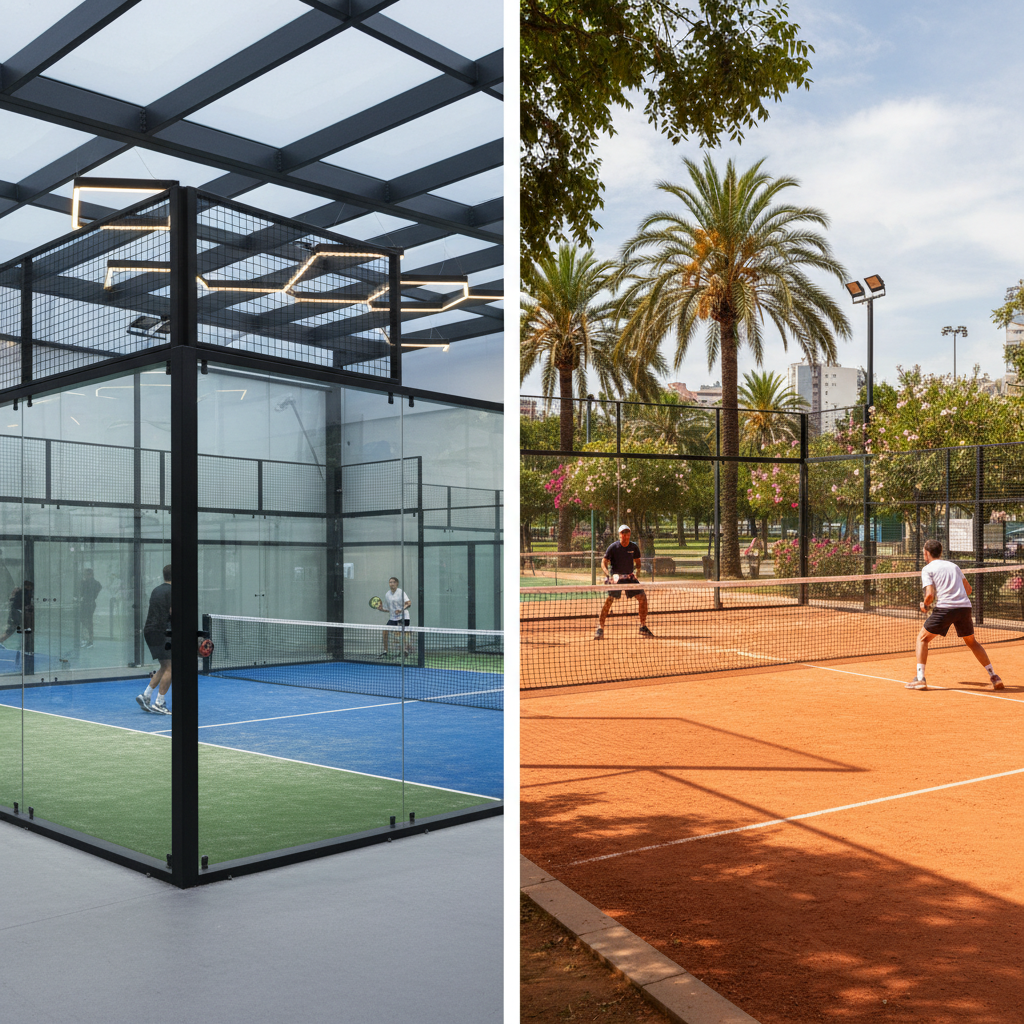
Building an indoor or outdoor court depends on your local climate and whether you prioritize year-round revenue stability or lower initial construction costs. Indoor facilities eliminate weather-related cancellations and protect the materials from UV degradation, though they require a minimum ceiling height of six to eight meters.
Outdoor courts offer a refreshing open-air experience and lower capital requirements but are vulnerable to rain and extreme temperature shifts. Analysis of long-term operational costs suggests that indoor courts often pay for themselves faster through 24/7/365 utilization. Many entrepreneurs now choose a hybrid model to cater to different seasonal player preferences.
| Factor | Indoor Court | Outdoor Court |
|---|---|---|
| Operation Hours | 24/7/365 | Weather Dependent |
| Revenue Stability | Constant | Seasonal |
| Initial Cost | High (Building costs) | Moderate |
| Lighting Costs | Higher (Daytime use) | Lower |
- Key Takeaway: Climate strategy is the single most important factor in determining the long-term profitability of your sports infrastructure investment.
How much does a padel court cost to build?
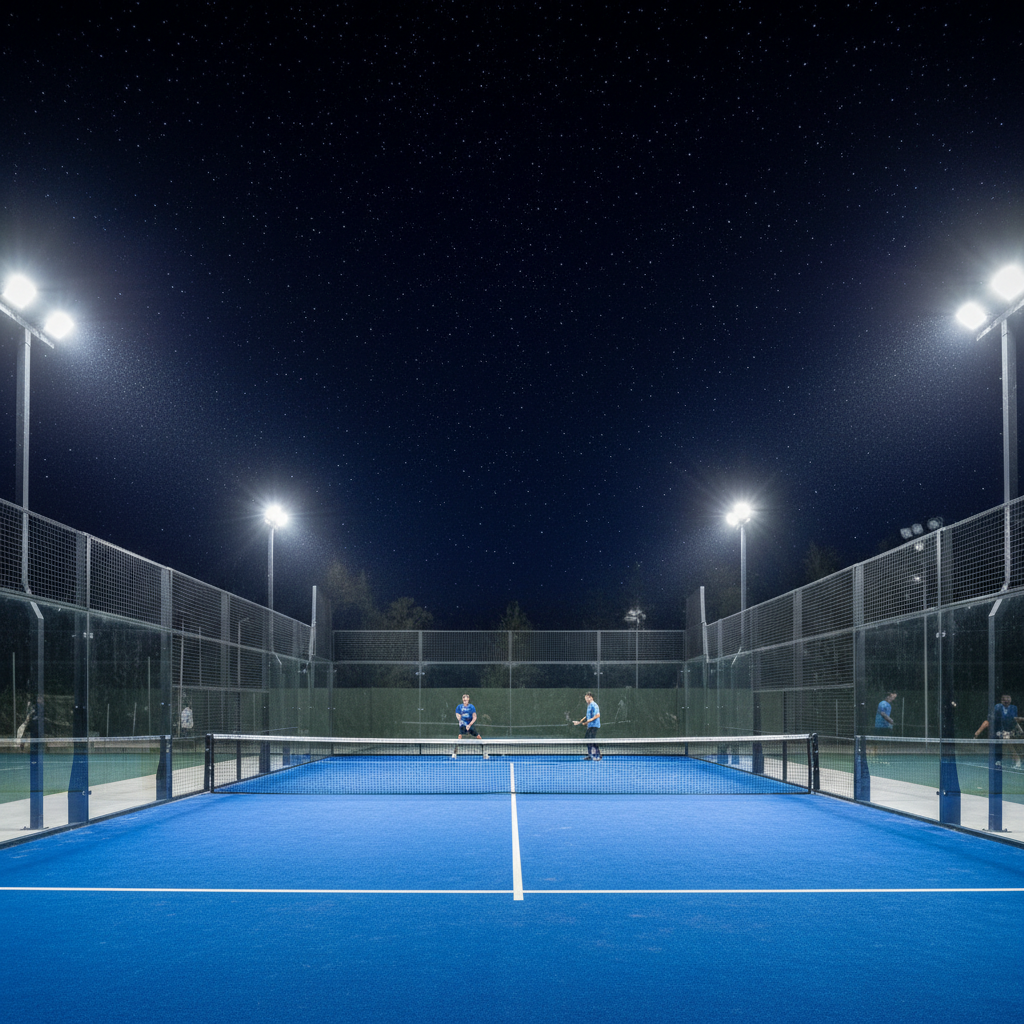
A professional padel court typically involves a capital investment of $20,000 to $50,000, depending on the quality of the galvanized steel, glass thickness, and lighting systems chosen. Investing in a premium 12mm glass system and professional LED lighting will reduce your insurance premiums and energy bills over time.
While cheaper materials might lower your initial outlay, they often lead to rust issues and structural fatigue within the first three years. Analysis of total cost of ownership (TCO) proves that high-grade materials significantly extend the period between major refurbishments. Most clubs find that premium courts maintain higher booking rates due to the superior player experience.
| Component | Cost Weight | Quality Tier | Life Expectancy |
|---|---|---|---|
| Foundation | 30% | Reinforced Concrete | 30+ Years |
| Structure/Glass | 40% | Galvanized Steel | 15-20 Years |
| Surface/Turf | 20% | Monofilament | 5-7 Years |
| Lighting/Net | 10% | LED (200W+) | 10 Years |
- Key Takeaway: Operational ROI is maximized by prioritizing structural durability and energy-efficient LED lighting over the lowest initial bid.
What engineering standards apply to a padel court foundation?
Engineering standards for padel foundations require a reinforced concrete slab (typically HA-25) with a maximum flatness tolerance of three millimeters across the entire 20-meter span. Precise leveling is the only way to prevent structural stresses from causing micro-cracks in the expensive tempered glass panels over time.
For outdoor installations, a slight one-percent slope is recommended to facilitate efficient water runoff and protect the synthetic turf from flooding. Analysis of structural failures shows that skipping the sub-base compaction step leads to sinking zones that can shatter the enclosure. Proper perimeter beam reinforcement is also critical to support the heavy weight of the glass walls.
| Technical Spec | Requirement | Purpose | Criticality |
|---|---|---|---|
| Concrete Strength | HA-25 or higher | Load bearing | Extreme |
| Level Tolerance | < 3mm | Ball bounce consistency | High |
| Drainage Slope | 1% (Outdoor) | Water removal | High |
| Slab Thickness | 15cm – 20cm | Stability | Extreme |
- Key Takeaway: The foundation is the most critical technical element; a flawed base will eventually compromise the safety of the entire glass structure.
How do you maintain a padel court for long-term use?
Maintaining a court for long-term use requires a schedule of weekly silica sand redistribution, monthly glass cleaning, and semi-annual structural inspections. Consistent upkeep preserves the professional playing characteristics of the turf and ensures the safety of every player who enters the enclosure.
Neglecting sand distribution leads to “bald spots” where the turf fibers flatten, resulting in hazardous slippery conditions and uneven ball bounce. Analysis of court longevity shows that facilities with a proactive maintenance plan extend the life of their synthetic surfaces by up to 40%. Checking the torque of the structural bolts every few months ensures the glass panels remain securely seated during high-impact play.
| Task | Frequency | Materials | Benefit |
|---|---|---|---|
| Sand Brushing | Weekly | Mechanical Brush | Prevents slipping |
| Glass Cleaning | Monthly | Non-abrasive | Visibility/Spectators |
| Bolt Inspection | Semi-Annual | Torque Wrench | Structural Safety |
| Deep Grooming | Annual | Specialized equipment | Turf rejuvenation |
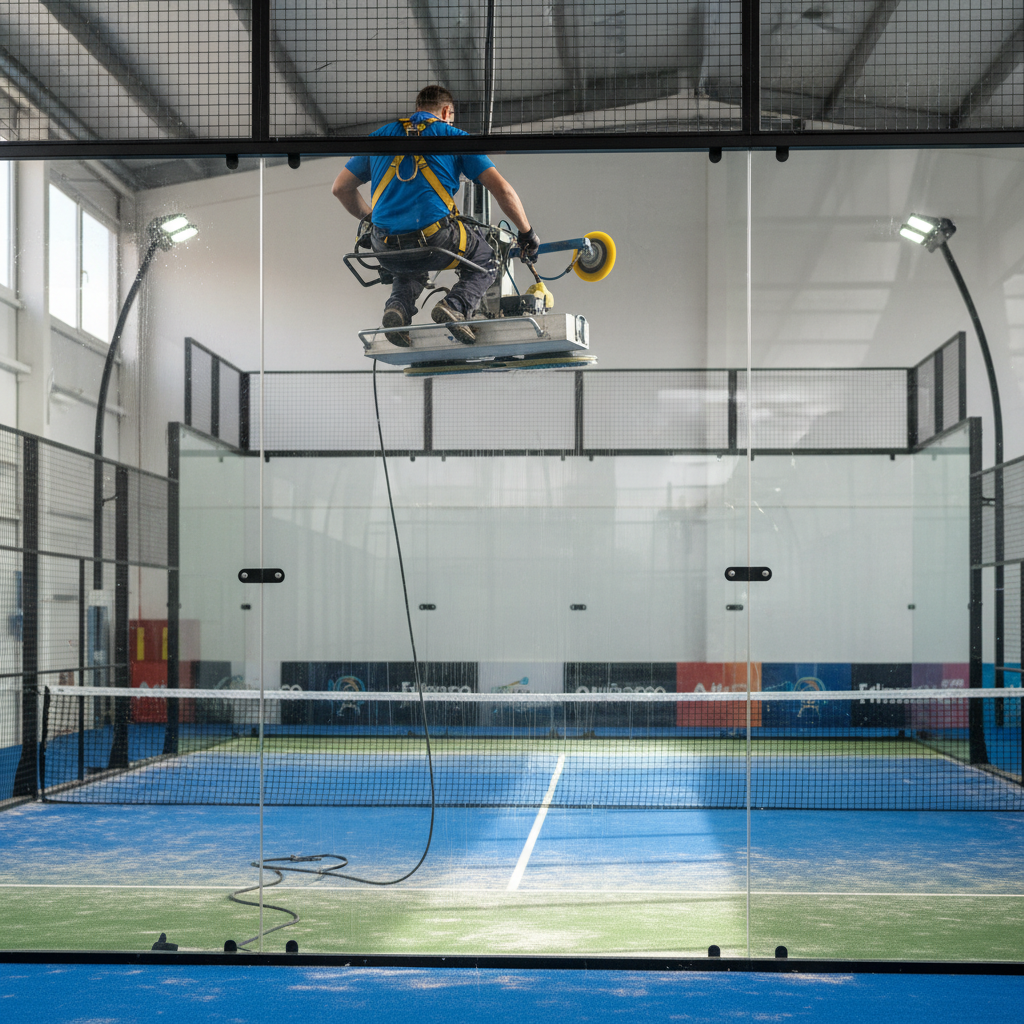
- Key Takeaway: Consistent structural care and sand management extend the lifespan of your materials and keep club members returning for a premium experience.
Building a world-class padel facility requires balancing technical engineering precision with strategic business planning. By focusing on high-quality galvanized steel, 12mm tempered glass, and professional-grade monofilament turf, you ensure your investment remains a high-value asset for decades. Whether you are building a private court or a multi-court commercial club, the foundation of success lies in the details of the construction process. Please contact us today to discuss your specific site requirements and begin your professional build.
Padel Court Construction FAQ
Q1: What is a padel court?
A padel court is a 20m x 10m arena enclosed by glass and mesh, designed specifically for a hybrid doubles racquet sport.
Q2: How does a padel court differ from a tennis court?
It is one-third the size of a tennis court, uses glass walls for rebounds, and requires solid perforated rackets instead of strings.
Q3: Can you build a padel court on any flat surface?
No, you must have a reinforced concrete slab or specialized sub-base to support the heavy weight of the glass and steel frame.
Q4: How long does the installation process take?
Once your concrete foundation has fully cured, a professional team can typically assemble the court structure and turf in 3 to 5 days.
Q5: What is the average lifespan of a professional court?
If you follow a regular maintenance routine, a high-quality galvanized steel and tempered glass court will last between 15 and 20 years.