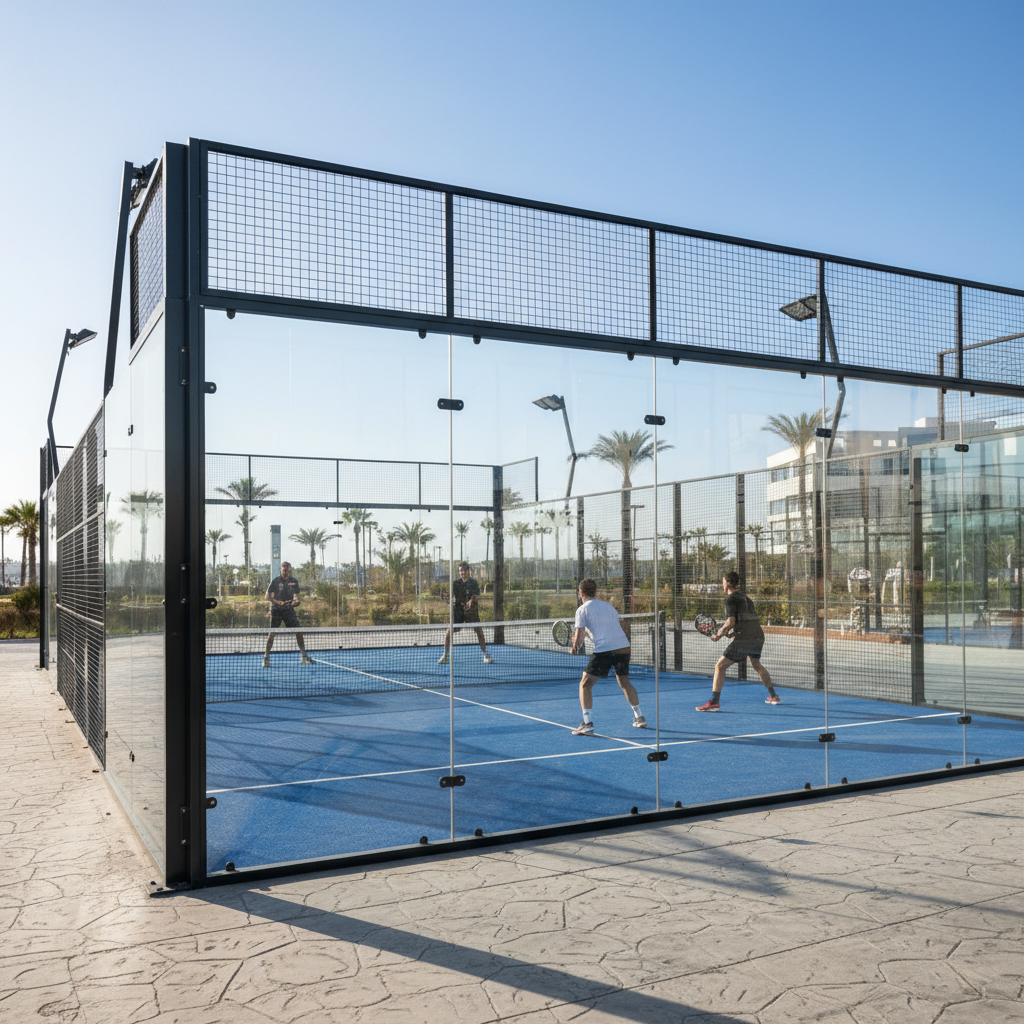
Many property developers and sports club owners are eager to capitalize on the growing popularity of padel but struggle to find precise technical specifications and construction requirements. Building a court without adhering to official standards can lead to costly structural failures, player safety issues, and disqualification from official tournament hosting. Imagine investing thousands only to realize the enclosure height or court lines do not meet international regulations. Padel tennis court dimensions require a standard playing area of 20 meters in length and 10 meters in width, enclosed by specific glass and mesh structures. This guide provides a professional blueprint for construction, ensuring your facility meets all technical benchmarks for success. Drawing from the International Padel Federation (FIP) standards and industry-leading construction practices, this analysis serves as a definitive resource for B2B project management.
1. What is a padel court and how does it function?
A professional padel tennis court dimensions represent a specialized arena that fuses the strategic elements of tennis with the rebounding dynamics of squash. Unlike traditional rackets sports, this game is played entirely within a 200-square-meter enclosed space where the walls are active participants in the match.
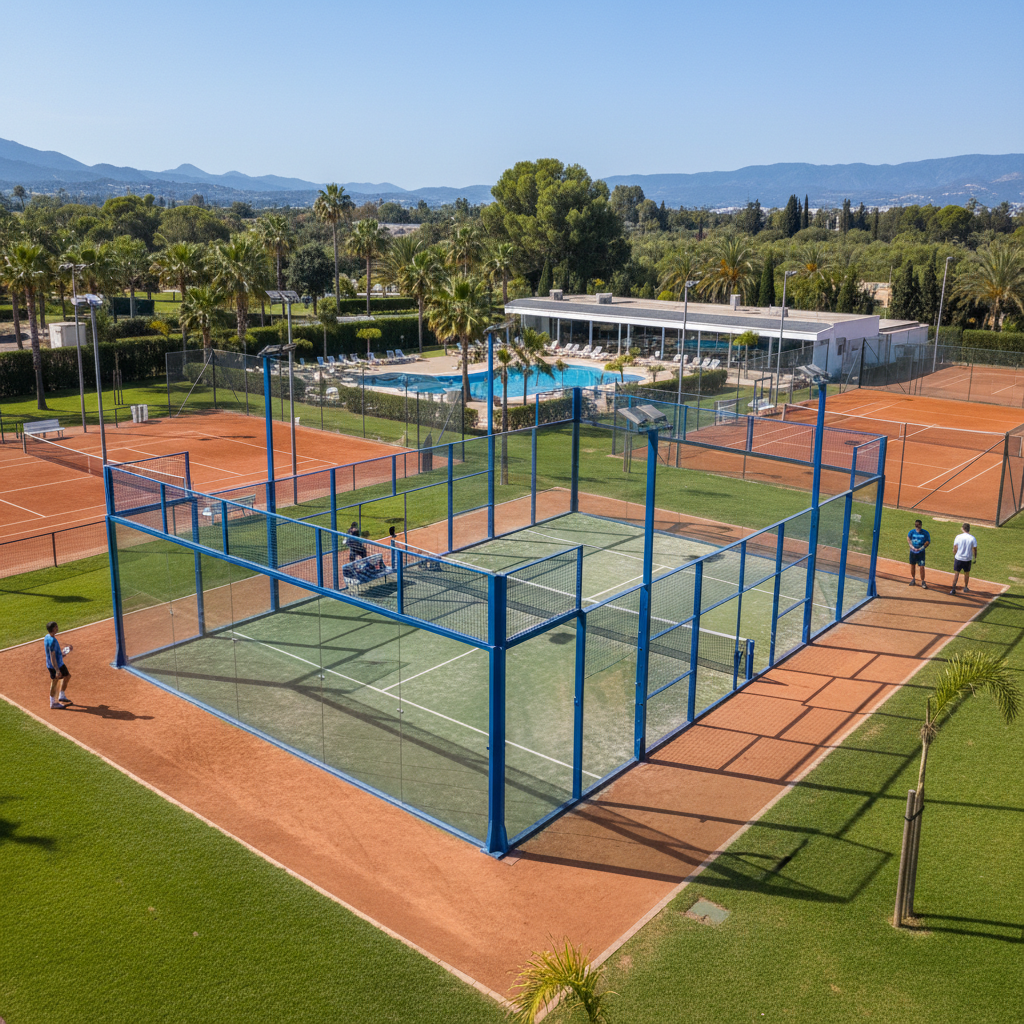
Is it different from a tennis court?
But here is the kicker:
- Size: Padel courts are approximately one-third the size of a standard tennis court.
- Enclosures: The use of tempered glass and metallic mesh allows for continuous play after the ball hits the wall.
- Scoring: While the scoring system is identical to tennis, the underhand serve and wall-play change the tactical approach completely.
Why are the glass walls important?
You might be wondering:
The glass serves as a high-impact surface that must withstand player collisions while providing perfect transparency for spectators.
Who regulates the official standards?
Let’s dig deeper:
The International Padel Federation (FIP) establishes the strict geometric and material requirements that define professional-grade facilities.
Key Takeaway: A padel court is a high-tech sports enclosure that prioritizes fast-paced play and spectator visibility through integrated wall systems.
| Feature | Padel Court | Tennis Court |
|---|---|---|
| Total Area | 200 m² | ~648 m² |
| Enclosure | Required (Glass/Mesh) | Optional (Fencing) |
| Serve Style | Underhand | Overhand |
2. What are the standard padel tennis court dimensions?
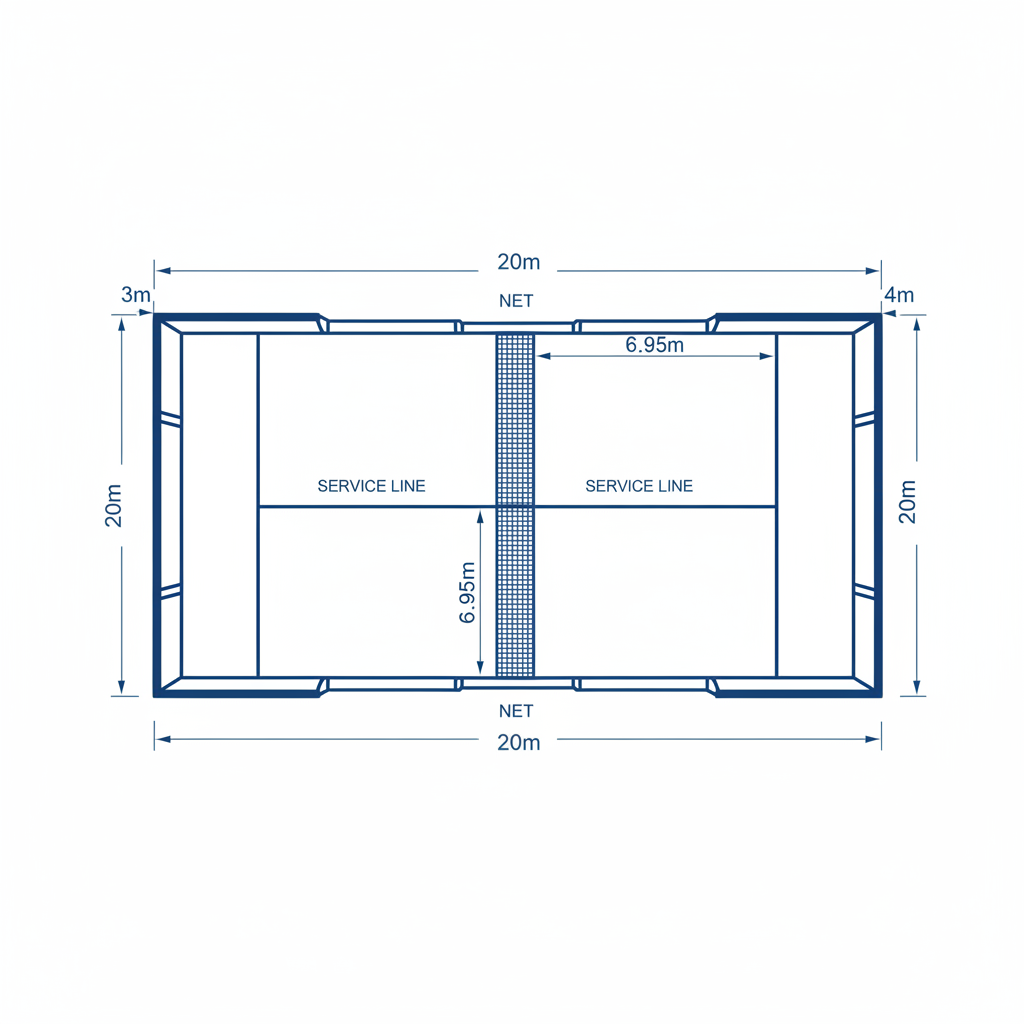
Official padel tennis court dimensions are strictly defined as a rectangle measuring 20 meters long by 10 meters wide, measured from the inner face of the enclosures. The FIP allows for a small tolerance of 0.5% in these measurements for official competitive play, ensuring consistency across global venues.
How long and wide is the playing area?
Think about this:
- Internal Width: Exactly 10.00 meters.
- Internal Length: Exactly 20.00 meters.
- Boundary Symmetry: The court is divided into two 10m x 10m squares by a central net.
What are the service line measurements?
In other words:
The service lines are positioned 6.95 meters from the net, and the central service line divides the area between the net and service lines into two equal zones.
How high should the net be?
It gets better:
The net must be 10 meters long, with a height of 0.88 meters at the center and a maximum of 0.92 meters at the posts.
Key Takeaway: Precision is non-negotiable; even a few centimeters of deviation can affect the ball’s trajectory and the fairness of the game.
| Component | Standard Measurement |
|---|---|
| Length | 20.00 Meters |
| Width | 10.00 Meters |
| Net Center Height | 0.88 Meters |
| Service Line Distance | 6.95 Meters from net |
3. What space is required to build a padel court?
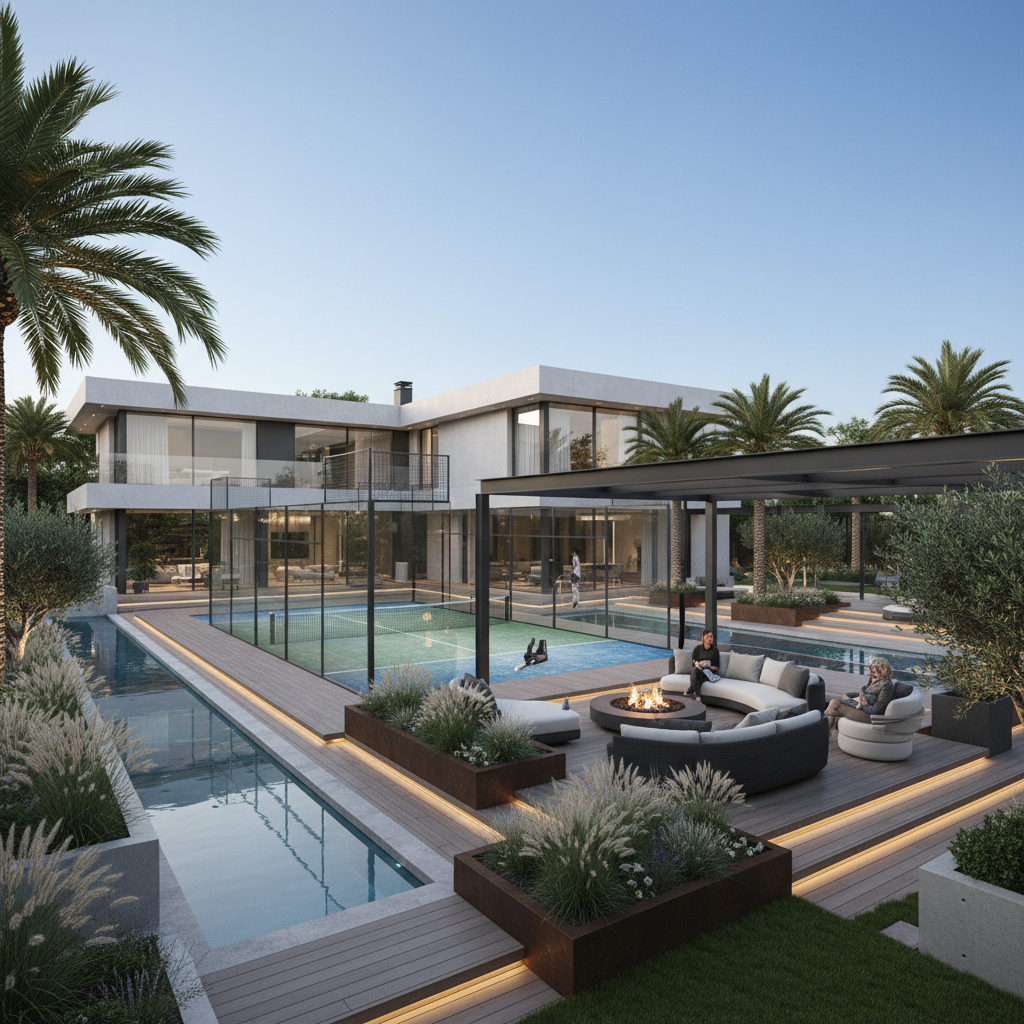
When planning a facility, the padel tennis court dimensions are only the starting point for your land requirements. A successful installation requires additional clearance for the external structural pillars, spectator walkways, and safety zones.
How much total land area is needed?
Wait, there’s more:
- Minimum Plot: A single court typically requires a footprint of 21m x 11m (231 m²) to accommodate the structure.
- Club Layouts: For multiple courts, a 2-meter gap between structures is recommended for maintenance and player movement.
- Spectator Zones: Add 3 to 5 meters on at least one side if you plan to host tournament seating.
What are the indoor height requirements?
The best part is:
Indoor facilities must provide a minimum clear ceiling height of 6 meters, though 8 meters is preferred for professional play to accommodate high lobs.
Is extra space needed for safety?
Keep this in mind:
The “out-of-court” play area, if permitted by the design, requires an extra 2 meters of width on each side of the central access points.
Key Takeaway: Always budget for a larger footprint than the court itself to ensure structural stability and user comfort.
| Requirement Type | Minimum Dimension | Recommended |
|---|---|---|
| Land Plot (Single) | 231 m² | 250 m² |
| Indoor Height | 6.00 Meters | 8.00 Meters |
| Structural Clearance | 0.5 Meters | 1.0 Meters |
4. What are the enclosure specs for a padel court?
The enclosure is the most critical technical component, as it must perfectly align with the padel tennis court dimensions while providing a consistent bounce. This structure usually consists of 10mm to 12mm tempered glass panels and electro-welded metallic mesh.
What materials are used for walls?
Here is the secret:
- Glass: 12mm tempered safety glass is the industry standard for commercial clubs due to its durability.
- Mesh: Metallic mesh must be rigid enough to prevent deformation, usually with a wire diameter of 3mm or 4mm.
- Frame: Hot-dip galvanized steel prevents rust, especially in outdoor or coastal environments.
How high is the metal mesh fencing?
That’s not all:
The side walls feature a combination of glass and mesh, typically reaching 3 meters in height, while the end walls are 4 meters high (3m glass + 1m mesh).
What glass thickness is recommended?
Why does this matter?
Thicker 12mm glass reduces vibration and provides a more professional “quiet” bounce compared to thinner alternatives.
Key Takeaway: High-quality glass and anti-corrosive steel frames are essential for the safety and longevity of the court enclosure.
| Component | Standard Specification |
|---|---|
| Glass Type | 12mm Tempered Safety Glass |
| Mesh Height | 3.0m – 4.0m |
| Steel Finish | Hot-dip Galvanized / Powder Coated |
| Mesh Pattern | 50mm x 50mm Diamond or Square |
5. Which surfaces are best for padel tennis courts?
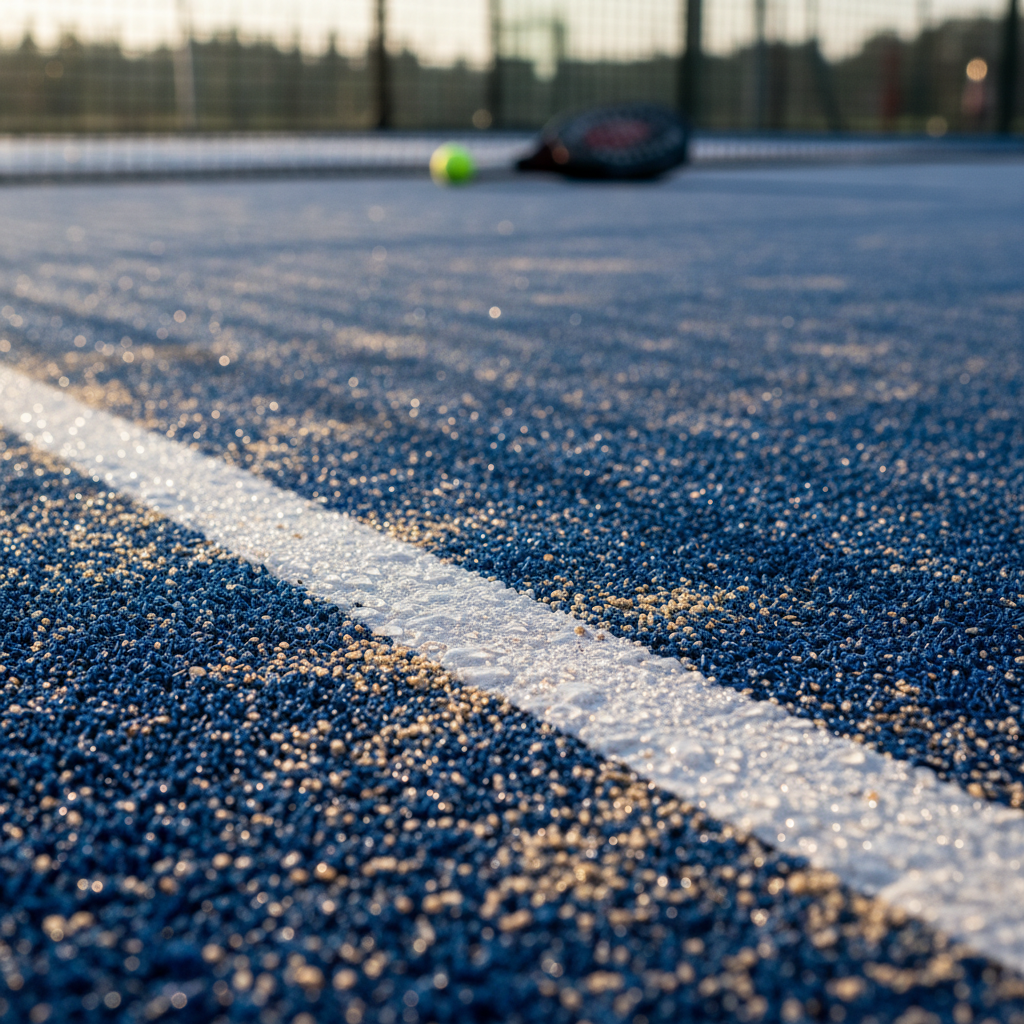
The playing surface significantly influences the speed and safety of matches within the padel tennis court dimensions. Artificial turf has become the universal choice, specifically designed to hold a layer of fine silica sand.
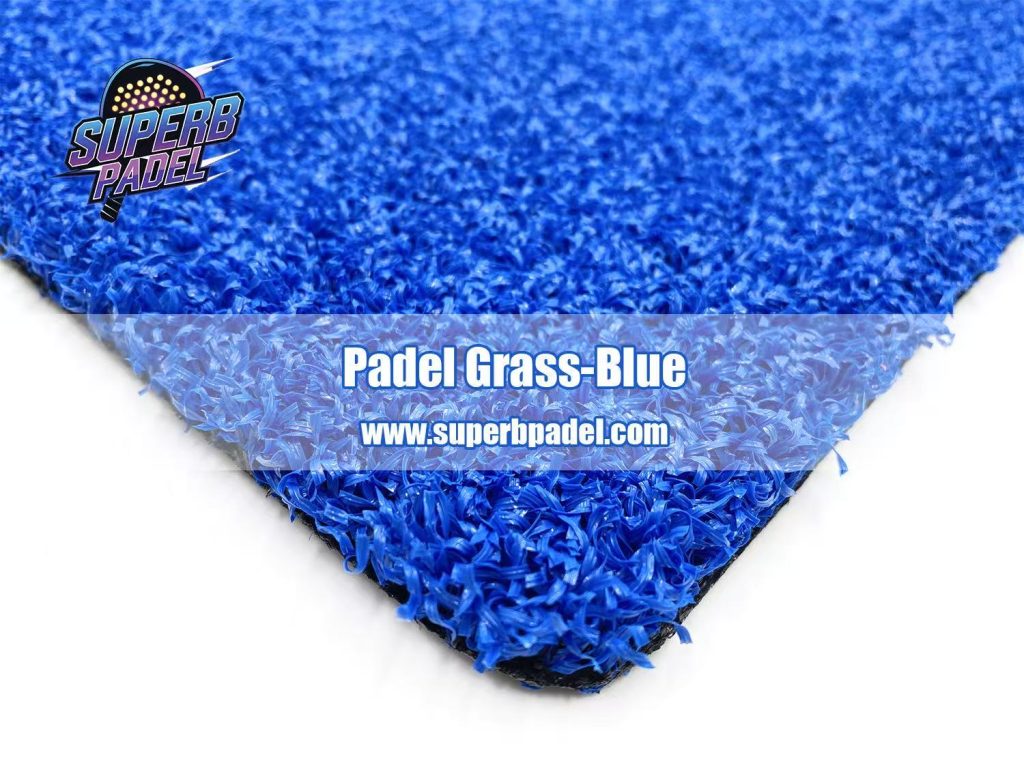
Why use artificial turf with sand?
Believe it or not:
- Player Safety: The sand allows for controlled sliding, which protects players’ knees and ankles during rapid changes of direction.
- Ball Bounce: It ensures a uniform vertical bounce across the entire 200m² area.
- Durability: Monofilament fibers offer superior resistance to heavy traffic compared to fibrillated options.
Can you use porous concrete or carpet?
As it turns out:
While porous concrete was common in the past, it is now rarely used in professional clubs due to its harsh impact on players’ joints.
Which court colors are officially approved?
But wait:
FIP regulations officially approve blue, green, and terracotta, with blue being the most popular for television visibility.
Key Takeaway: Monofilament artificial turf with silica sand infill provides the best balance of performance and injury prevention.
| Turf Type | Characteristics | Best For |
|---|---|---|
| Monofilament | Highly durable, upright fibers | Professional Clubs |
| Fibrillated | Softer, holds sand better initially | Recreational/Private |
| Textured (Curly) | Requires less sand, premium look | High-end facilities |
6. What lighting standards are needed for padel courts?
Adequate illumination is vital for tracking the ball at high speeds across the padel tennis court dimensions. Lighting must be uniform and designed to minimize glare for players looking upward for lobs or overhead smashes.
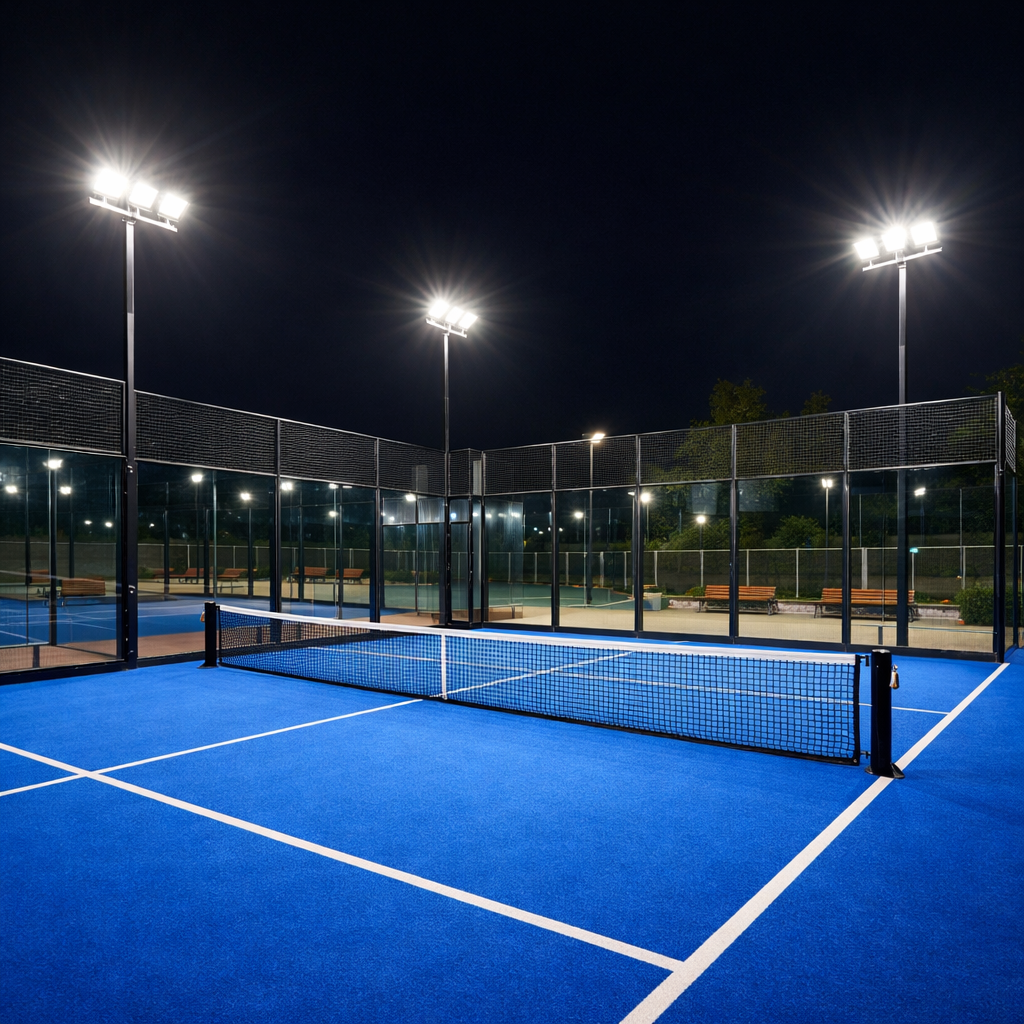
How many lux are required for play?
The truth is:
- Recreational: 200 to 300 Lux is sufficient for casual evening matches.
- Professional: 500 to 750 Lux is required for competitive club play and local tournaments.
- TV Broadcasting: Over 1000 Lux is necessary for high-definition filming without flickering.
Where should light posts be positioned?
It’s easier than you think:
Standard courts use four lighting posts, typically 6 meters high, located outside the court perimeter at the side mesh sections.
Are LED fixtures better for efficiency?
To make matters even better:
LED floodlights consume 50% less energy than traditional metal halide lamps and provide instant-on capabilities without a warm-up period.
Key Takeaway: Investing in 400W-600W LED floodlights ensures professional visibility while keeping operational energy costs low.
| Play Level | Lux Requirement | Recommended Wattage (LED) |
|---|---|---|
| Casual | 300 Lux | 200W x 8 units |
| Competitive | 500 Lux | 400W x 8 units |
| Broadcast | 1000 Lux | 600W+ x 8 units |
7. What are the steps to build a padel court?
Constructing a facility involves a systematic engineering process to ensure the padel tennis court dimensions remain perfectly level over time. The foundation is the most critical phase, as even a 1% slope can cause water pooling or uneven turf wear.
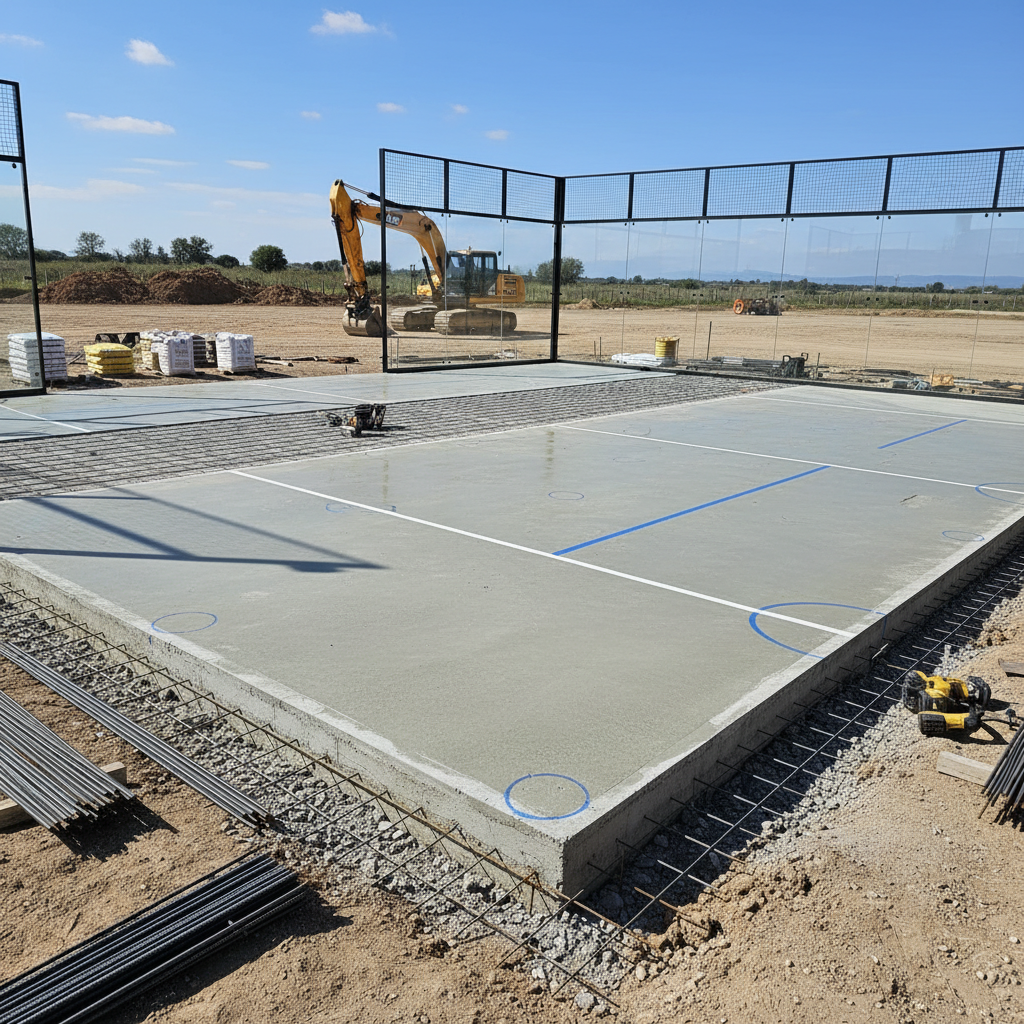
How do you prepare the foundation?
Follow these steps:
- Excavation: Remove topsoil and level the ground to create a stable sub-base.
- Concrete Slab: Pour a reinforced 15cm concrete slab with integrated drainage slopes (0.5% to 1%).
- Curing: Allow the concrete to fully cure for 21-28 days before installing the metal structure.
When should you install the enclosure?
The next step:
Once the base is ready, the steel pillars are chemically anchored into the concrete, followed by the installation of the glass panels and mesh.
How is the turf surface laid down?
Finally:
The artificial grass rolls are glued at the seams, and the white boundary lines are cut in before the silica sand is mechanically brushed into the fibers.
Key Takeaway: A 15cm reinforced concrete base is the only way to prevent structural shifting and ensure the court remains tournament-ready for decades.
| Construction Phase | Duration | Focus Point |
|---|---|---|
| Foundation | 7-10 Days | Levelness & Drainage |
| Metal Structure | 2-3 Days | Alignment & Bolting |
| Glass/Turf | 2-3 Days | Sealing & Sand Infill |
8. How much does it cost to build a padel court?
Calculating the budget for a project involves balancing the fixed padel tennis court dimensions with variable material qualities. For a B2B developer, the primary costs are split between site preparation, structural manufacturing, and professional installation.
What is the average price range?
Look at the numbers:
- Standard Court: $15,000 – $25,000 for the kit (glass, steel, turf, lights).
- Panoramic Court: $25,000 – $35,000 due to thicker glass and specialized pillar-less corners.
- Full Turnkey: $40,000 – $60,000 including foundation work and shipping.
Which factors impact the total budget?
Consider this:
The cost of logistics and the local price of concrete are the two biggest variables that can inflate a budget beyond the manufacturing price.
Are indoor builds more expensive?
Actually:
While the court itself costs the same, indoor projects often require higher lighting specs and specialized ventilation systems, increasing the total overhead.
Key Takeaway: Buying direct from a manufacturer can save up to 30%, but you must account for groundworks which often equal 40% of the total budget.
| Cost Component | Percentage | Estimated Range (USD) |
|---|---|---|
| Court Kit | 50% | $18k – $28k |
| Civil Works | 35% | $12k – $20k |
| Installation | 10% | $3k – $6k |
| Shipping | 5% | $1k – $3k |
9. How do you maintain a padel court for longevity?
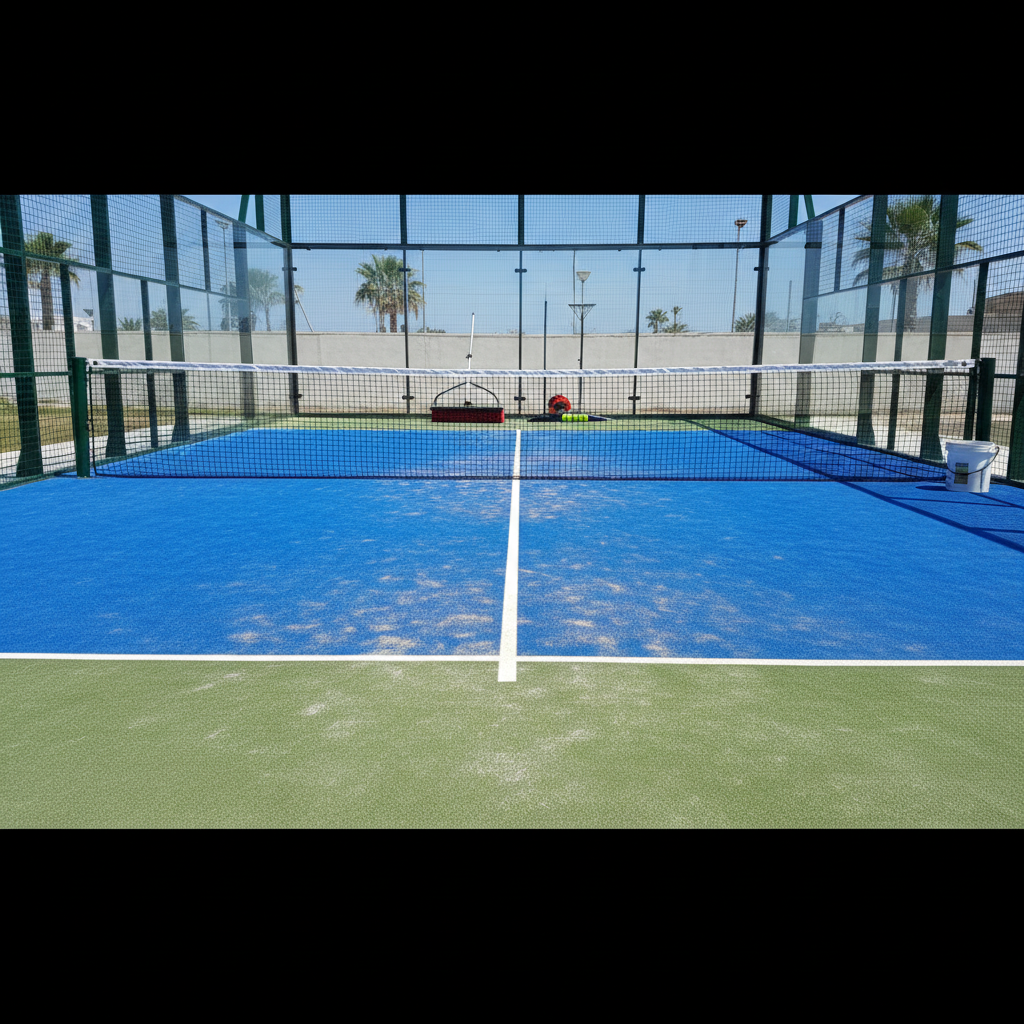
Preserving the padel tennis court dimensions and playing quality requires a proactive maintenance schedule. Neglecting the turf can lead to “bald spots,” while ignoring the glass bolts can create safety hazards.
How often should you brush the turf?
Don’t forget:
- Weekly: Brush the sand to redistribute it evenly and prevent the fibers from flattening.
- Monthly: Remove organic debris (leaves, dirt) to prevent the drainage holes from clogging.
- Annually: De-compact the sand and add 200kg-400kg of fresh silica sand to maintain the correct depth.
What cleaning is required for glass?
It’s simpler than it sounds:
Glass panels should be cleaned with water and a soft squeegee to maintain transparency; avoid abrasive chemicals that could damage the steel frame’s coating.
Do you need to replace the sand?
Think of it this way:
Sand doesn’t necessarily need “replacing,” but it does need topping up as players carry small amounts out of the court on their shoes over time.
Key Takeaway: Consistent weekly brushing is the single most effective way to double the lifespan of your artificial turf.
| Task | Frequency | Objective |
|---|---|---|
| Brushing | Weekly | Sand distribution |
| Glass Cleaning | Bi-Weekly | Visibility |
| Bolt Tightening | Quarterly | Structural Safety |
| Sand Refill | Yearly | Surface Performance |
10. Should you build indoor or outdoor courts?
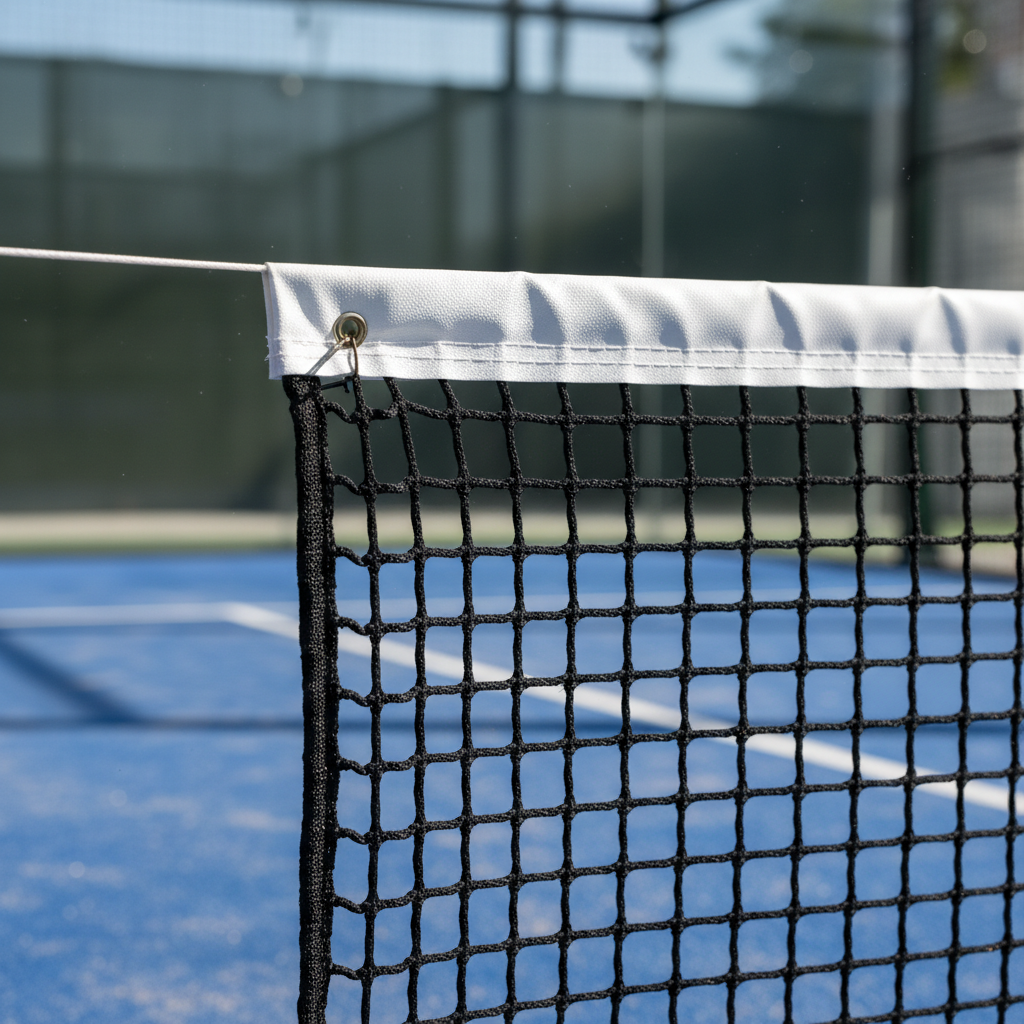
Choosing the right environment for your padel tennis court dimensions depends on your local climate and your business model’s ROI goals. Outdoor courts offer a beautiful aesthetic, but indoor courts guarantee revenue regardless of the weather.
How does weather affect outdoor play?
The downside:
- UV Damage: Intense sun can fade lower-quality turf fibers over time.
- Wind: High winds can interfere with the ball’s flight, making play difficult.
- Rain: While courts drain quickly, wet glass makes the ball “skid” and stay low, changing the game’s physics.
What are the benefits of indoor builds?
On the other hand:
Indoor courts offer a controlled environment with perfect lighting and zero wind, allowing for 24/7/365 booking potential.
Which option offers better ROI?
You decide:
Outdoor courts have lower initial construction costs, but indoor courts typically achieve 30% higher occupancy rates in regions with cold winters or rainy seasons.
Key Takeaway: For professional clubs in temperate or unpredictable climates, an indoor or roofed facility is the safer financial investment.
| Feature | Outdoor Court | Indoor Court |
|---|---|---|
| Initial Cost | Lower | Higher |
| Operational Hours | Weather-dependent | 24/7 |
| Maintenance | Higher (Debris) | Lower |
| Revenue Stability | Variable | High |
FAQ Section
Q1: Can I build a padel court in my backyard?
The short answer is yes, provided you have at least 231 m² of flat land. However, you should check local zoning laws as the 4-meter high walls may require specific building permits or neighbor agreements.
Q2: Can I play padel on a regular tennis court?
Actually, it depends on what you mean by “play.” While you can use the rackets on a tennis court, the game isn’t truly padel without the glass enclosures for rebounding, and the tennis court is far too large for proper padel dynamics.
Q3: Can I choose any color for the turf?
You might be wondering about aesthetics, and while custom colors like pink or yellow are possible, the FIP only officially recognizes blue, green, and terracotta for sanctioned tournament play.
Q4: Can I build a single-player padel court?
The truth is that “Individual Padel” courts do exist, usually measuring 6m x 20m. They are great for training or 1v1 play, but they do not meet the official 10m x 20m standard required for the traditional doubles game.
Q5: Can I install a court without a concrete base?
In my experience, this is a mistake. Without a reinforced concrete base, the heavy glass panels will eventually cause the ground to shift, leading to cracked glass and an unplayable, uneven surface.
Conclusion
Building a world-class padel facility requires a meticulous approach to technical standards and material selection. By strictly adhering to the official padel tennis court dimensions and investing in high-quality artificial turf and tempered glass, you ensure a premium experience for players and a sustainable return on investment. Whether you are expanding an existing sports club or launching a new venture, precision in the planning phase is the foundation of success. Ready to start your construction project? For expert guidance and equipment sourcing, feel free to contact us today.