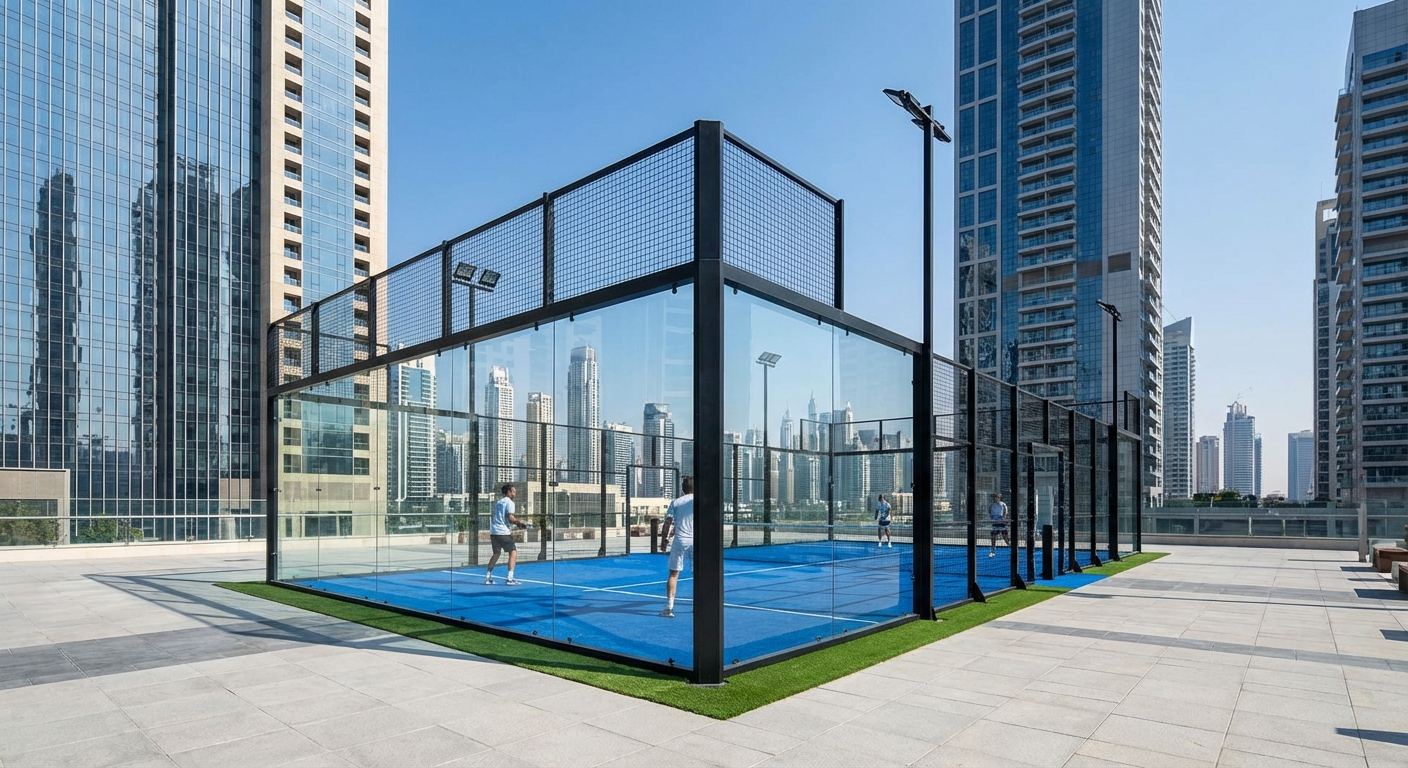
Padel Atlanta is a rapidly growing social racket sport played on a compact, glass-enclosed court that combines elements of tennis and squash. Many facility owners in Georgia are noticing that traditional racket sports are facing a shift in player engagement, leaving residents looking for social and accessible alternatives. You might find that expansive tennis courts are frequently underutilized, leading to stagnant revenue and high maintenance costs for spaces that fail to foster a community atmosphere. Building a premier padel atlanta destination addresses these challenges by offering a high-action sport that fits into half the space of a tennis court.
What exactly is padel atlanta and why is it popular?
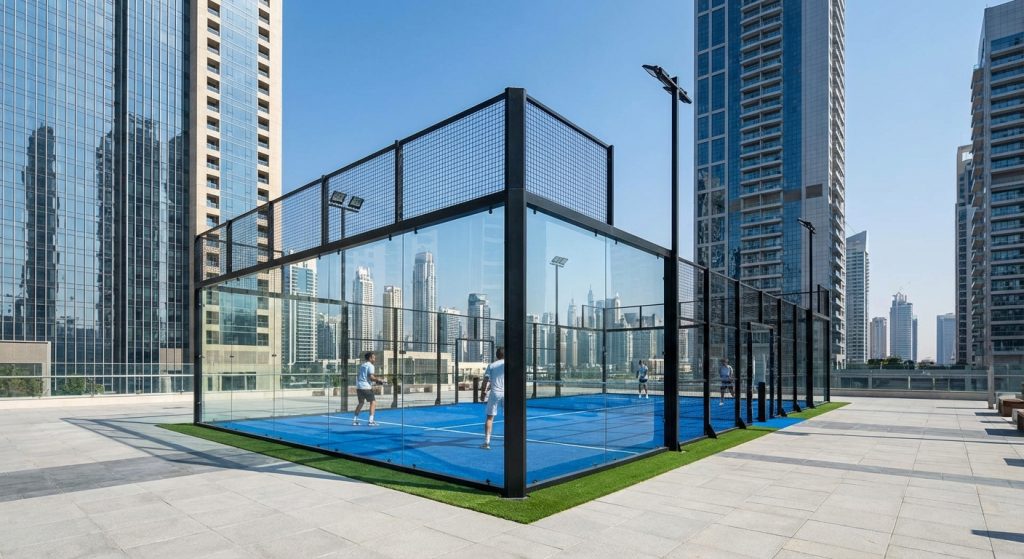
Padel Atlanta is a social sport played in doubles that uses glass walls to keep the ball in play, creating longer and more exciting rallies for players of all levels. The popularity of padel atlanta stems from its unique blend of strategic play and physical accessibility within the Georgia region. You will find that the learning curve is much shorter than tennis, allowing beginners to enjoy competitive matches almost immediately.
The social appeal of the sport
Unlike traditional sports, the enclosed nature of a court in the city fosters a social hub for the community. The proximity of players encourages interaction, making it a lifestyle amenity for luxury travelers and local residents.
Look:
- Its “Instagram-worthy” aesthetics attract a younger demographic.
- The game is primarily played in doubles to maximize interaction.
- Spectators can view the action easily through panoramic glass.
The best part? It turns a standard workout into a high-value networking event.
Does space efficiency drive local growth?
A significant driver for the sport is that it requires about half the footprint of a standard tennis court. This allows you to double your capacity and revenue potential within the same real estate footprint.
Simply put:
- One tennis court area can fit two full-sized padel courts.
- More players per square foot means higher hourly rental income.
- Compact designs work perfectly for urban rooftop or basement installs.
Key Takeaway: The sport’s popularity is driven by its social nature and space-saving design, making it an ideal investment for urban developments.
| Feature | Impact on Facility |
|---|---|
| Player Capacity | 4 players in a compact 10x20m space |
| Learning Curve | Low; beginners play competitively quickly |
| Social Value | High; encourages player-to-player engagement |
This data confirms that the smaller footprint directly correlates with higher social density and improved revenue per square foot.
How is the padel atlanta market growing currently?

The market for padel atlanta is currently expanding as part of a nationwide movement toward elite racket sports facilities and private club modernizations. Local clubs are increasingly replacing aging infrastructure with modern courts to meet the growing demand from well-traveled residents. You can see this trend in how major venues are now hosting high-profile circuit tournaments to attract sponsors.
Local club and tournament expansion
Georgia has seen a surge in activity, with new facilities opening to accommodate both recreational and professional play. This professionalization is increasing the local player base and creating new opportunities for brand partnerships.
Think about it:
- Monthly tournaments are becoming a staple in local sports calendars.
- Youth programs are introducing the sport to a new generation.
- Sponsorship interest is rising as the player demographic skews affluent.
Here is why: The local infrastructure is finally catching up to the international demand for the sport.
Integration into luxury hospitality
Five-star hotels and wellness resorts in the area are adopting the sport as a signature amenity to transform the guest experience. This move mirrors global trends where high-end courts are used to attract luxury travelers seeking active wellness.
Wait, there’s more:
- Resorts use these courts to offer unique weekend retreat packages.
- Private estates are adding courts to boost overall property value.
- Wellness centers integrate play into holistic health programming.
Key Takeaway: The market is maturing from a niche trend into an established lifestyle staple across residential and commercial sectors.
| Growth Metric | Observed Trend in Georgia |
|---|---|
| Facility Type | Shift from public parks to private luxury clubs |
| Event Frequency | Rapid increase in social mixers and pro tournaments |
| Property Value | Significant boost for estates with built-in courts |
The transition toward private club models suggests a high willingness to pay for premium, well-maintained playing environments.
Which padel atlanta court design fits your space?
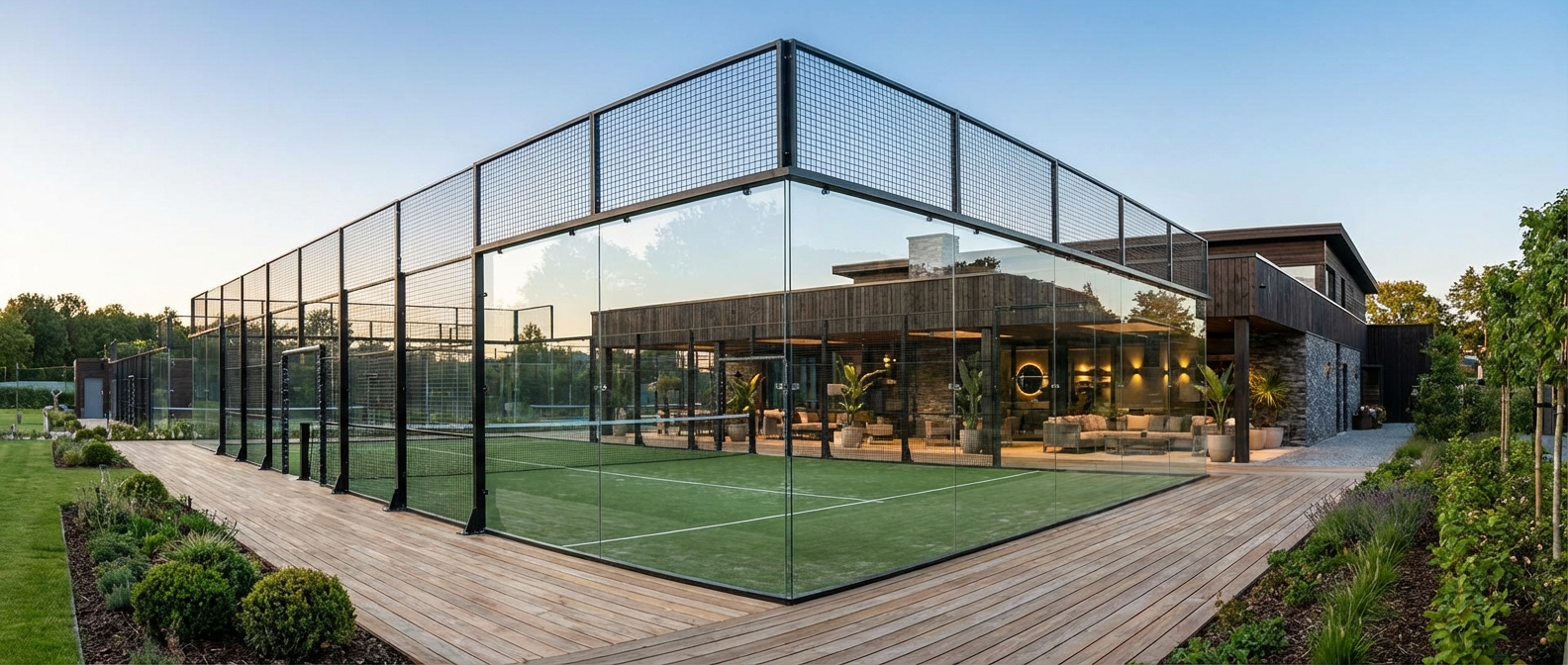
Selecting the right design for padel atlanta depends on whether you are targeting high-traffic commercial use or exclusive residential privacy. Various models offer different levels of visibility and structural aesthetics to match your facility’s branding. You should evaluate your target audience’s expectations before finalizing the structural silhouette and glass configuration.
Classic commercial designs
For high-frequency use, the Standard Padel Court is a proven, cost-efficient model that balances durability with a classic look. It is a reliable choice for sports clubs focused on maximizing ROI while maintaining a professional atmosphere.
Listen:
- Reinforced frames handle the stress of daily club matches.
- This model is the easiest to permit in most local jurisdictions.
- It offers the best balance of price and long-term performance.
The best part? It delivers a world-class experience without breaking the construction budget.
Panoramic viewing experiences
To offer superior visibility for spectators and media, you might consider the Panoramic Padel Court which removes rear structural posts. Elite facilities often choose the Super Panoramic Padel Court to provide maximum transparency for televised events.
Wait, what?
- These models use thicker glass to compensate for fewer steel supports.
- They create a stunning architectural centerpiece for high-end resorts.
- Visibility is optimized for coaches and fans alike.
Key Takeaway: Choosing between standard and panoramic designs allows facility owners to align their court aesthetics with their target audience’s expectations.
| Model | Best Use Case | Visibility Level |
|---|---|---|
| Standard | High-traffic sports clubs and gyms | Moderate |
| Panoramic | Competitive club play and social hubs | High |
| Super Panoramic | Elite resorts and professional tournaments | Maximum |
Investing in panoramic designs typically allows for higher premium court rental rates due to the enhanced aesthetic appeal.
What materials ensure a safe padel atlanta court?
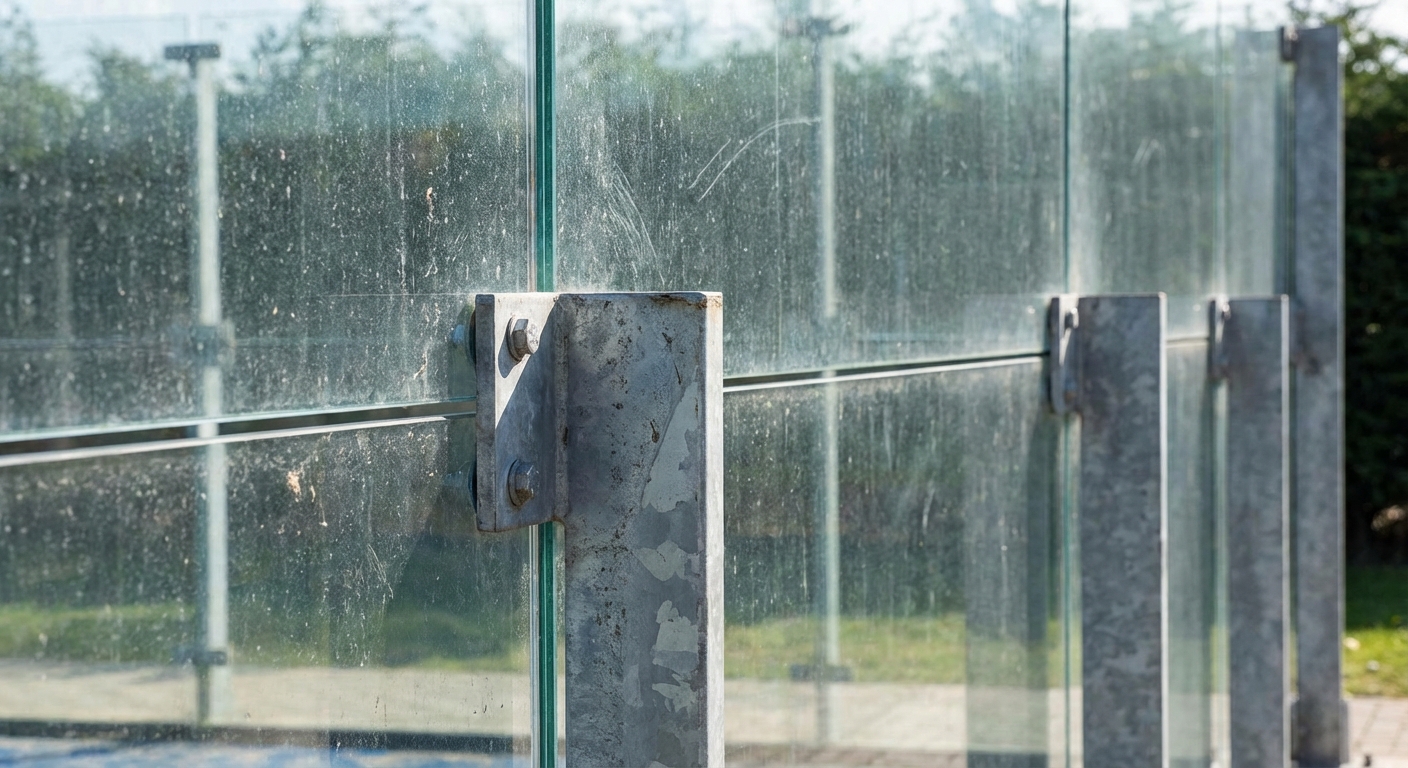
Safety and longevity for a padel atlanta installation depend heavily on the quality of the certified glass and the underlying steel structure. Using high-grade materials ensures the court can withstand both intense mechanical play and extreme environmental stress. You must prioritize structural integrity to mitigate liability and ensure a long-term design life for your facility.
Reinforced structural steel
A high-quality Padel Structure utilizes hot-dip galvanized steel to provide superior corrosion resistance in humid climates. This engineering choice ensures a 20-year design life, preventing rust and degradation over time.
Here is why:
- Galvanization protects the interior and exterior of the steel tubing.
- Modular designs allow for thermal expansion during hot Georgia summers.
- Precision welding prevents structural weak points during high-impact play.
Look: The right steel prevents your investment from literally rusting away.
Anti-explosion safety glass
Player safety is paramount, which is why using 12mm Padel Glass has become the rigorous industry standard. This tempered safety glass is designed to be anti-explosion, mitigating injury risks during high-impact matches near the walls.
Think about it:
- Tempered glass is several times stronger than standard plate glass.
- Stainless steel hardware keeps the panels securely in place.
- Certified glass meets local building codes for sports installations.
Key Takeaway: Investing in galvanized steel and 12mm tempered glass is critical for ensuring the long-term safety and durability of any local facility.
| Material | Technical Standard | Benefit |
|---|---|---|
| Galvanized Steel | Hot-dip coated tubes | 20+ years of rust protection |
| Tempered Glass | 12mm certified thickness | High impact and explosion resistance |
| Hardware | Stainless steel 304/316 | Prevents structural failure at joints |
Standardizing these materials is the most effective way to lower long-term insurance premiums and maintenance costs.
How to choose the right turf for padel atlanta play?
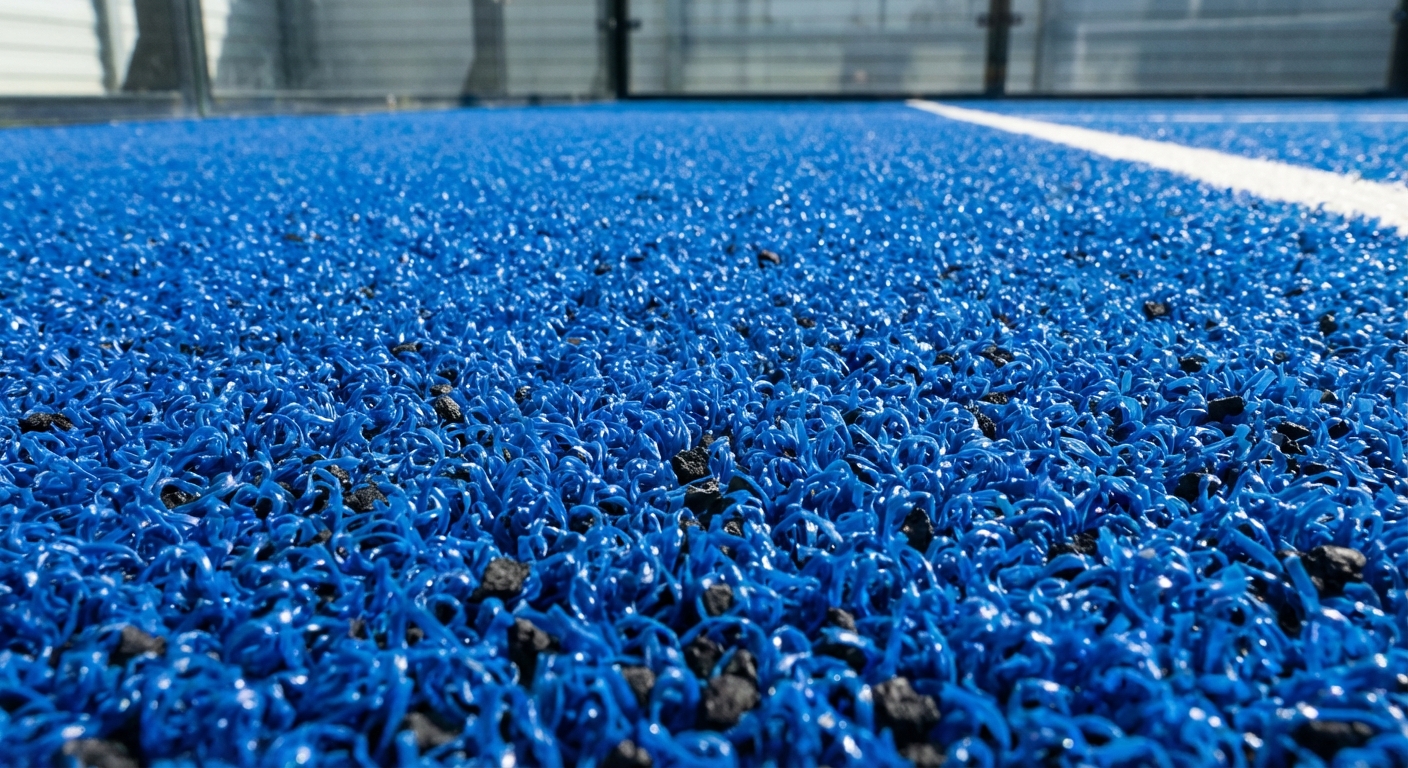
The playing surface is the most touched component of padel atlanta, directly influencing both the ball bounce and player joint health. High-performance turf reduces maintenance while providing a professional-grade experience that keeps players coming back. You should select a turf density that balances grip with the ability to slide safely during intense rallies.
Fibrillated and texturized turf
Choosing the right Padel Grass involves selecting high-density, texturized “curly” monofilament turf that requires less sand. This modern surface ensures consistent ball traction and reduces the abrasive wear on players’ shoes and rackets.
Simply put:
- Curly grass holds the sand infill deep within the fibers.
- It provides a more uniform bounce across the entire court surface.
- Maintenance is simplified compared to older fibrillated models.
The best part? Players experience less joint fatigue due to the superior shock absorption.
Can color enhance your branding?
Turf is available in various colors such as blue, green, and terracotta to match your facility’s aesthetic. Many high-end facilities choose blue for better ball visibility or add decorative turf around the perimeter for a refined finish.
Look:
- Blue is the professional standard for televised matches.
- Terracotta offers a classic clay-court feel for traditional clubs.
- Decorative perimeters can feature your custom club logo.
Key Takeaway: Texturized monofilament turf is the gold standard for modern courts, offering a balance of low maintenance and professional performance.
| Turf Type | Maintenance Level | Traction Quality |
|---|---|---|
| Standard Fibrillated | Moderate (requires brushing) | High initial grip |
| Texturized Curly | Low (retains sand better) | Exceptional and consistent |
| Decorative Perimeter | Minimal | N/A (Aesthetic only) |
Choosing a texturized curly turf typically reduces the frequency of sand top-offs by up to forty percent annually.
Why is lighting crucial for your padel atlanta facility?
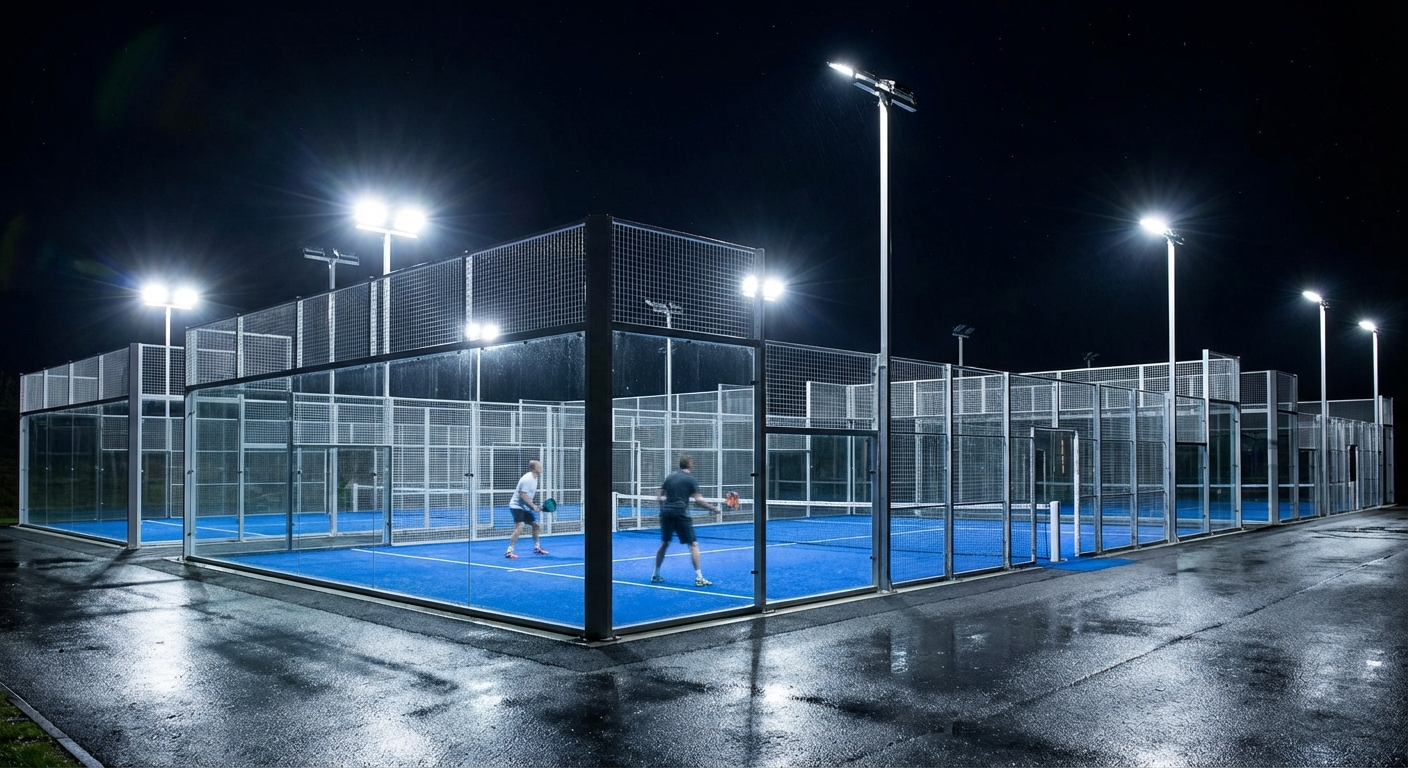
Effective lighting for padel atlanta extends your playing hours and enhances the safety of night-time matches for all participants. High-quality illumination must be uniform and glare-free to accommodate the fast-paced nature of tracking the ball against the glass. You will find that integrated lighting systems are a key factor in maximizing evening court rental revenue.
Advanced LED technology
Utilizing Padel LED Lighting with IP66 waterproof ratings ensures the system performs reliably in all weather conditions. High-efficiency floodlights reduce your operational energy costs while providing brilliant visibility for late-night sessions.
Here is why:
- LED systems turn on instantly without a warm-up period.
- Waterproofing prevents short circuits during heavy rain events.
- Long-lasting bulbs reduce the need for frequent rental of lift equipment.
Listen: Modern LEDs pay for themselves through energy savings in less than two years.
Is asymmetric distribution better?
Modern lighting systems use 200W asymmetric lights that distribute illumination evenly across the court without creating dark spots. This design prevents shadows and glare, which is essential for players tracking high lobs against a dark night sky.
Wait, what?
- Asymmetric lenses direct light downward to minimize light pollution.
- Uniformity across the surface prevents player eye strain.
- Angled posts give the court a sleek, modern architectural silhouette.
Key Takeaway: Integrated LED systems with asymmetric distribution provide the necessary visibility for professional-level night play while minimizing energy costs.
| Light Component | Specification | Advantage |
|---|---|---|
| Wattage | 200W per LED fixture | High intensity with low power draw |
| Waterproofing | IP66 Rated | Protection against humidity and dust |
| Post Design | Curved or angled | Optimal positioning to prevent glare |
Reliable night lighting can increase your facility’s daily billable hours by over thirty percent during winter months.
Can you convert a tennis court for padel atlanta?
Converting underutilized tennis infrastructure into a padel atlanta hub is one of the most efficient ways to modernize your property. This conversion can turn a single tennis court into multiple revenue-generating units without the need for extensive new land development. You can breathe new life into your sports club by offering a more social and fast-paced alternative to tennis.
Maximizing real estate footprint
One standard tennis court can easily fit two full-sized courts with room for player walkways. This allows for four times the player participation in the same area, significantly boosting your membership engagement and court rental fees.
Look:
- You go from 2-4 players to 8 players in the same space.
- Higher density leads to a more vibrant, energetic club atmosphere.
- It’s the fastest way to solve the problem of “empty court syndrome.”
The best part? Your return on investment accelerates with every additional player.
Is cost-effective infrastructure reuse possible?
By utilizing the existing footprint, you can save significantly on initial site clearing and major earthworks. The conversion process is often quicker than a ground-up build, allowing you to open your doors to players much sooner.
Think about it:
- Existing drainage systems can often be adapted for the new courts.
- You avoid the high cost of clearing new land or pouring full new slabs.
- Construction permits for “upgrades” are often easier to obtain.
Key Takeaway: Converting tennis courts is the fastest route to increasing facility revenue and modernizing the sports offerings of any local club.
| Conversion Factor | Tennis Court | Padel Conversion |
|---|---|---|
| Player Capacity | 2-4 players | 8 players (across 2 courts) |
| Maintenance | High (especially clay/hard) | Low (synthetic texturized turf) |
| Space Required | ~600-700 sqm | ~200 sqm per individual court |
The increased player density of a conversion project often leads to higher secondary revenue from pro-shop sales and refreshments.
What foundation is needed for a padel atlanta court?
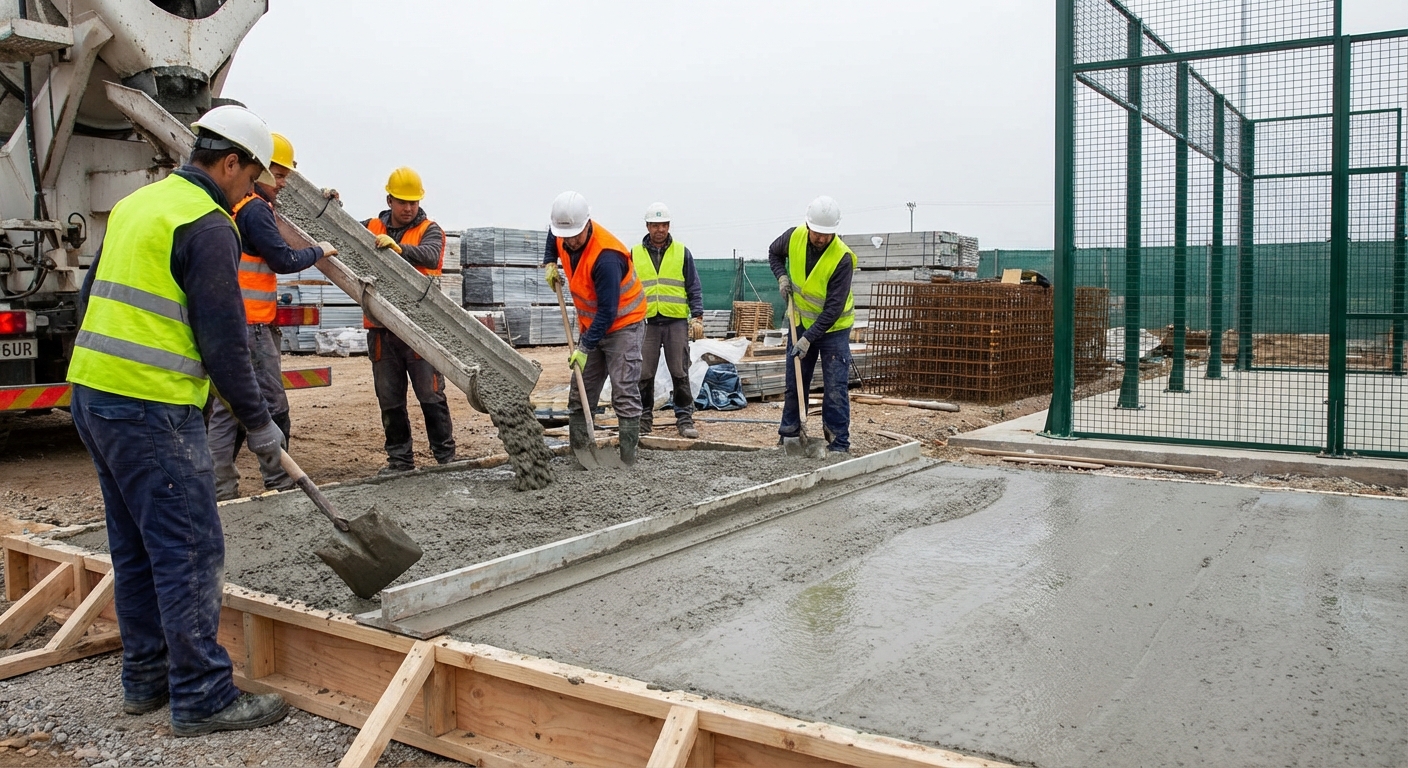
A stable and level foundation is the silent requirement for a high-quality padel atlanta experience. Without a precise concrete base, your glass walls may not align correctly, and the turf may develop uneven spots over time. You must ensure that the site preparation includes high-grade concrete that can support the significant weight of the steel and glass.
Precision concrete pouring
The foundation must be strong enough to anchor the steel structure securely against high wind loads. Professional installers ensure the base is tailored for the specific dimensions of the court, using a high-performance mix that stands the test of time.
Wait, there’s more:
- Laser-guided leveling is essential for the 12mm glass panels to fit.
- Rebar reinforcement prevents cracking during seasonal temperature shifts.
- A smooth finish ensures the synthetic turf adheres perfectly to the base.
Simply put: If the foundation is off by even an inch, the whole court fails.
Are drainage and slope considerations vital?
Proper site preparation includes managing water runoff to prevent pooling during humid Georgia summers. A perfectly level court with integrated drainage prevents water from sitting under the turf, which is vital for maintaining a consistent ball bounce.
Look:
- Slope should be minimal to keep the ball mechanics professional.
- Perimeter drainage keeps the structural steel from sitting in water.
- Proper grading prevents soil erosion around the court’s foundation.
Key Takeaway: A professional concrete foundation is non-negotiable for ensuring the structural alignment and playing quality of the court.
| Foundation Element | Requirement | Purpose |
|---|---|---|
| Concrete Grade | High-performance mix | Structural integrity and anchoring |
| Leveling | Laser-guided precision | Accurate fit for glass and turf |
| Surface Finish | Smooth and non-porous | Prevents moisture buildup under grass |
A properly engineered slab reduces structural vibration, which significantly enhances the acoustic quality of the game.
How does the padel atlanta installation process work?
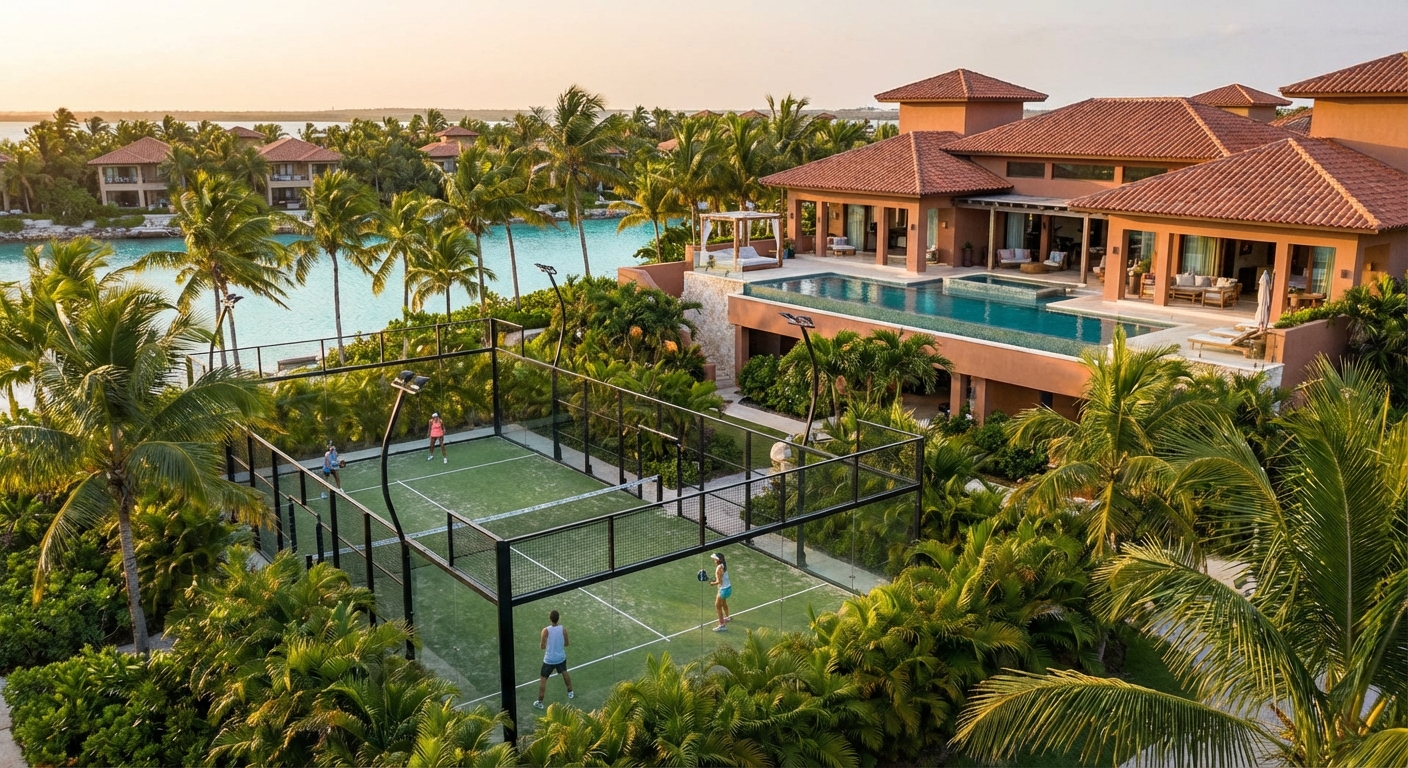
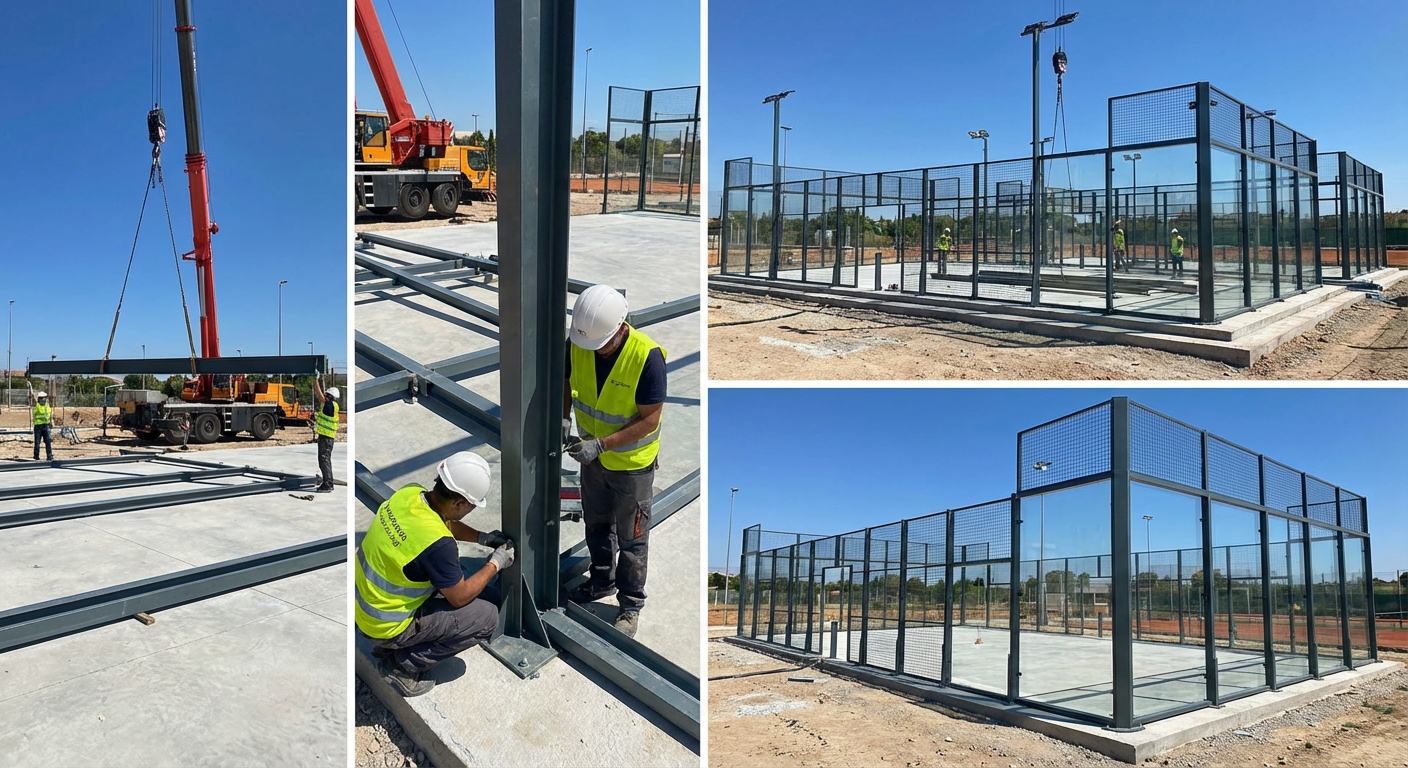
The installation of a padel atlanta facility is a specialized process involving precision engineering and modular assembly. Modern techniques allow for rapid deployment without sacrificing the quality or safety of the finished product. You can expect a professional installation team to handle everything from logistics to the final net tensioning in a matter of days.
Modular assembly and logistics
Most high-end courts feature a modular design that simplifies the assembly process on-site. Choosing a Roofed Padel Court can extend the timeline slightly but provides all-weather protection for year-round revenue generation.
Here is why:
- Prefabricated parts arrive ready for immediate mechanical assembly.
- Custom-built crates protect the 12mm glass during international transit.
- Modular systems are easier to repair if a specific part is damaged.
The best part? You can build multiple courts simultaneously to save on labor costs.
What about professional project management?
A typical installation takes only 4 to 5 days per court once the concrete foundation has properly cured. This phase includes the frame assembly, the installation of safety glass, and the precision laying of the synthetic turf with sand infill.
Listen:
- Licensed crews ensure the court meets all local building safety codes.
- Specialized tools are used to lift and secure the heavy glass panels.
- Final testing includes checking net height and lighting uniformity.
Key Takeaway: Efficient installation relies on a combination of modular court components and experienced project management to ensure a turn-key delivery.
| Phase | Timeline | Primary Activities |
|---|---|---|
| Logistics | Variable | Shipping, brokerage, and site delivery |
| Assembly | 4-5 Days | Steel frame and glass panel installation |
| Finishing | 1-2 Days | Turf laying, lighting setup, and net tension |
Standardizing the installation process with a turn-key provider minimizes site disruption and ensures a predictable grand opening date.
What are the common questions about padel atlanta?
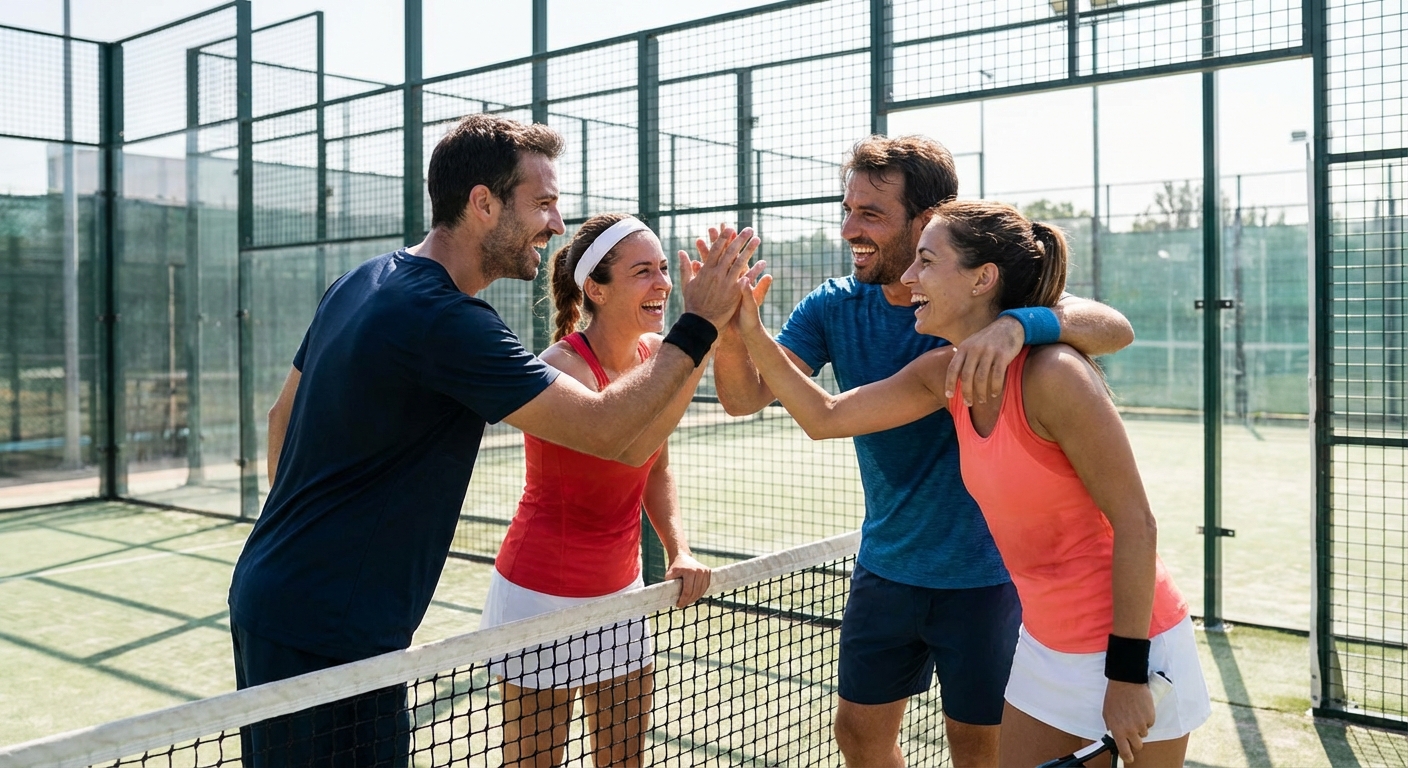
Understanding the specifics of padel atlanta helps investors and homeowners make informed decisions about their sports facility projects. These questions address the core concerns regarding space, maintenance, and the intended use of the courts. You should always consult with a professional installer to ensure your specific site meets all local regulatory requirements.
Can I build a court in my private backyard?
It is definitely possible to install a court on residential property given enough space. They require significantly less area than tennis courts and can often be built without extensive city permits if they meet local residential codes.
What’s the best way to maintain the playing surface?
Maintenance is remarkably minimal compared to traditional sports surfaces like clay. It mostly involves periodic brushing of the turf to redistribute the sand infill and checking the tension of the net and glass hardware.
Can I play padel in the rain?
While you can play outdoors, wet turf can change the ball dynamics and make the glass slippery. Many facilities opt for roofed structures to ensure that weather does not interrupt scheduled matches or high-stakes tournament play.
What are the standard dimensions for a regulation court?
A standard court measures 10 meters wide by 20 meters long. This compact size is exactly what allows for the high-intensity, social nature of the game that you see in modern clubs.
Why should I choose a panoramic model for my club?
Panoramic models are the superior choice for facilities that host spectators or film matches. The lack of rear posts provides an unobstructed view of the action, which is essential for premium clubs and professional events.
The growth of this sport in Georgia represents a significant opportunity to modernize recreational spaces and build vibrant communities. By selecting high-quality materials like galvanized steel and texturized turf, you can solve the problems of underutilized real estate and rising maintenance costs. Our vision is to empower every facility owner to create a world-class sports destination that fosters social connection and athletic excellence. If you are ready to transform your property and join the racket sports revolution, contact us today to start your project.