Key Takeaways for Your Build
| Project Phase | Primary Focus | Expected Outcome |
|---|---|---|
| Site Analysis | Ground leveling and drainage | Long-term structural integrity |
| Component Selection | Glass, grass, and lighting | Premium player experience |
| Installation | Modular assembly | Faster facility launch |
What exactly is a wilson padel setup and why build one?
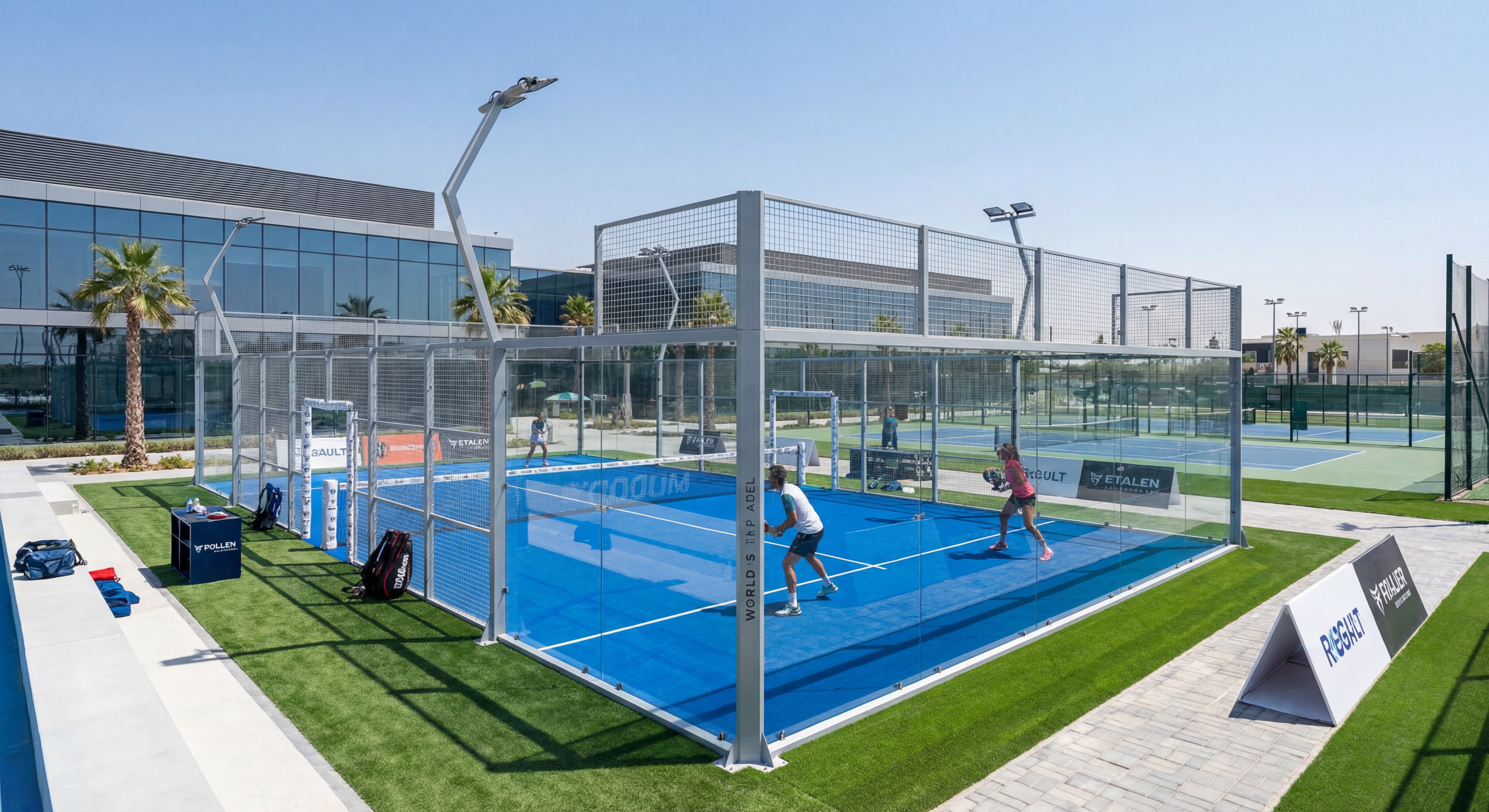
A wilson padel setup represents the pinnacle of modern sports infrastructure, combining aesthetic appeal with rigorous engineering. These facilities utilize a 10×20 meter footprint designed to facilitate the fast-paced, strategic gameplay that defines the sport. By investing in this specific standard, you ensure your court adheres to the precise dimensions and bounce characteristics required for official play.
But wait, there’s more.
What are the core benefits of this build?
Building a professional court environment offers significant long-term value for both commercial and residential projects.
- Enhanced facility aesthetics that attract premium clientele.
- Increased property valuation for residential installations.
- Higher member retention for sports clubs due to professional playability.
Is the wilson padel keyword relevant to your construction?
The wilson padel designation often guides the selection of high-end finishes and equipment that mirror professional tour standards. Utilizing this framework helps builders maintain a consistent quality level across all court components.
Key Takeaway: Professional standards ensure long-term durability and player satisfaction.
| Factor | Impact | Importance |
|---|---|---|
| Branding | High | Essential for marketing |
| Standards | Critical | Mandatory for safety |
The integration of professional-grade standards is the primary driver for successful court commercialization.
How do shapes like panoramic designs improve the game?
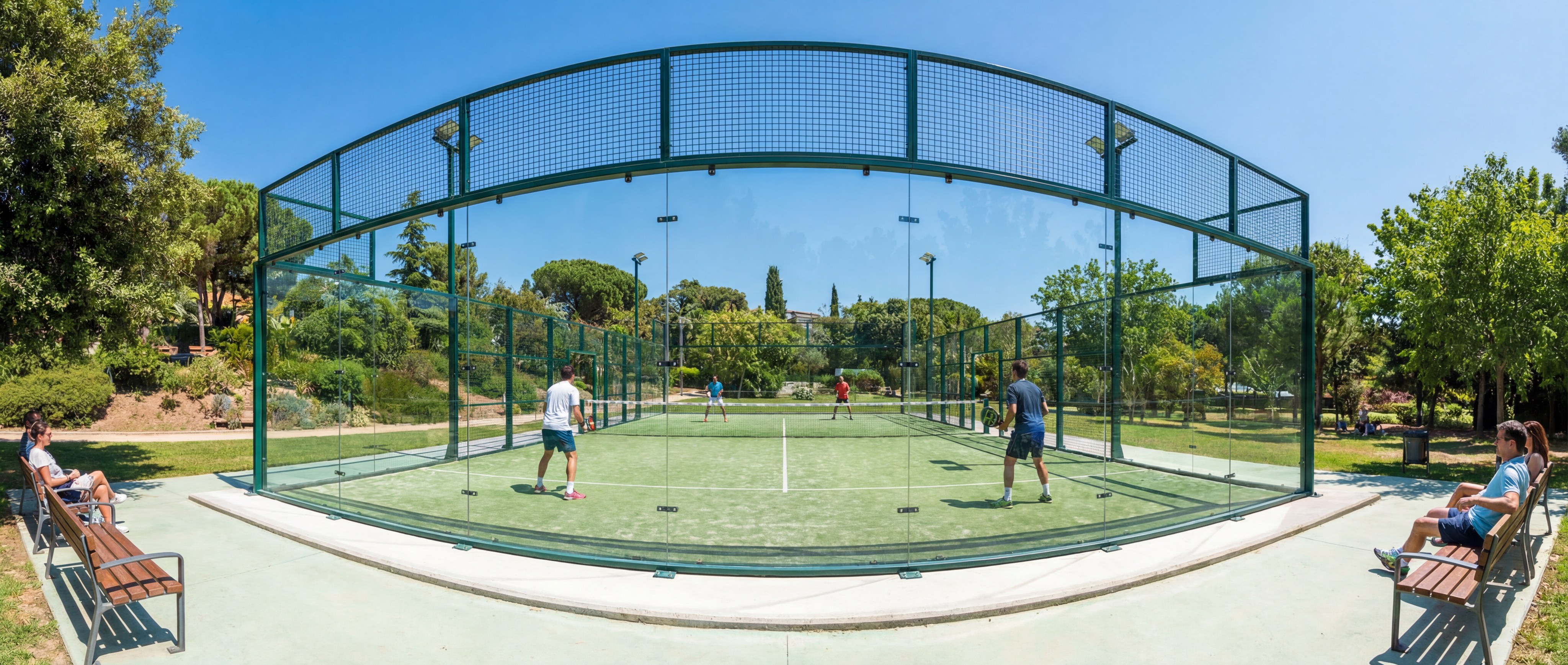
Panoramic designs improve the game by removing vertical metal pillars from the back and side walls to provide an unobstructed view. This architectural evolution in wilson padel construction allows spectators to follow the action without visual interference. It also creates a more immersive environment for players, making the court feel more spacious.
Does visibility affect the spectator experience?
High visibility is essential for broadcasting and live audience engagement in modern sports facilities.
- Eliminates “blind spots” caused by traditional support beams.
- Enhances the cinematic quality of recorded matches.
- Allows for better coaching observation from the sidelines.
How do you choose between standard and panoramic?
You must evaluate your primary audience when selecting between panoramic padel court designs and traditional frames. While standard frames are cost-effective for practice, super panoramic systems are the gold standard for show courts.
Which structural materials are best for long-term use?
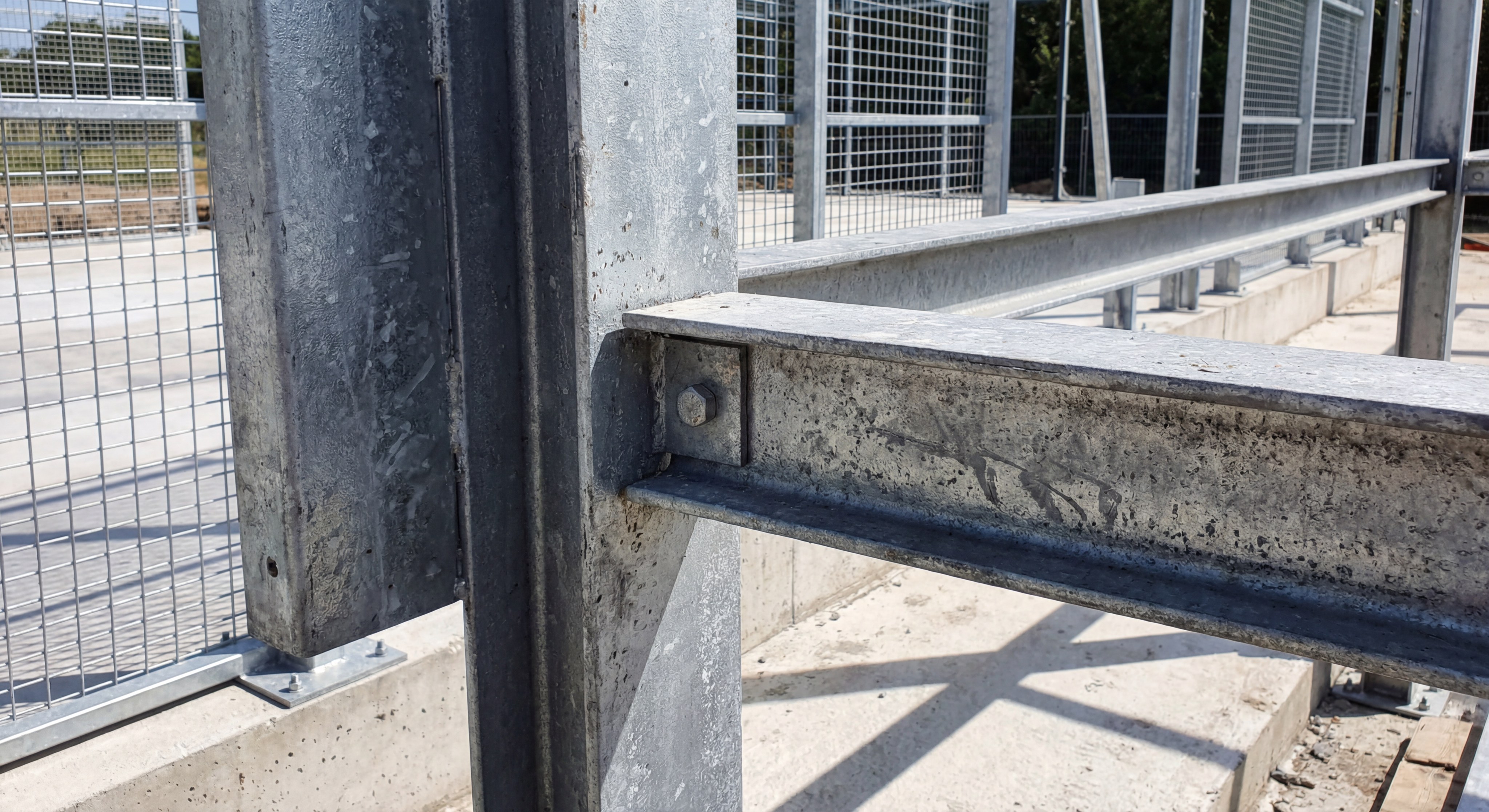
Hot-dip galvanized steel is the superior material for wilson padel structures because it provides an electrochemical barrier against rust. This treatment ensures the frame can withstand high humidity and coastal environments without structural degradation. When you choose galvanized components, you are investing in a frame that will remain stable and visually clean for decades.
Why is corrosion resistance vital for outdoor builds?
Outdoor courts are constantly exposed to UV rays, rain, and temperature fluctuations.
- Prevents structural weakening caused by oxidation.
- Reduces the need for frequent repainting and maintenance.
- Maintains the professional aesthetic of the facility.
What makes modular design efficient?
A modular structural approach allows for faster on-site assembly and easier part replacement. This system ensures that every bolt and beam aligns perfectly with the foundation.
Key Takeaway: Galvanized steel is the only viable option for long-term outdoor durability.
| Material | Life Expectancy | Maintenance Level |
|---|---|---|
| Galvanized Steel | 20+ Years | Low |
| Standard Steel | 5-10 Years | High |
Using superior alloys ensures the foundation of your investment remains secure against the elements.
How do you identify your project level before building?
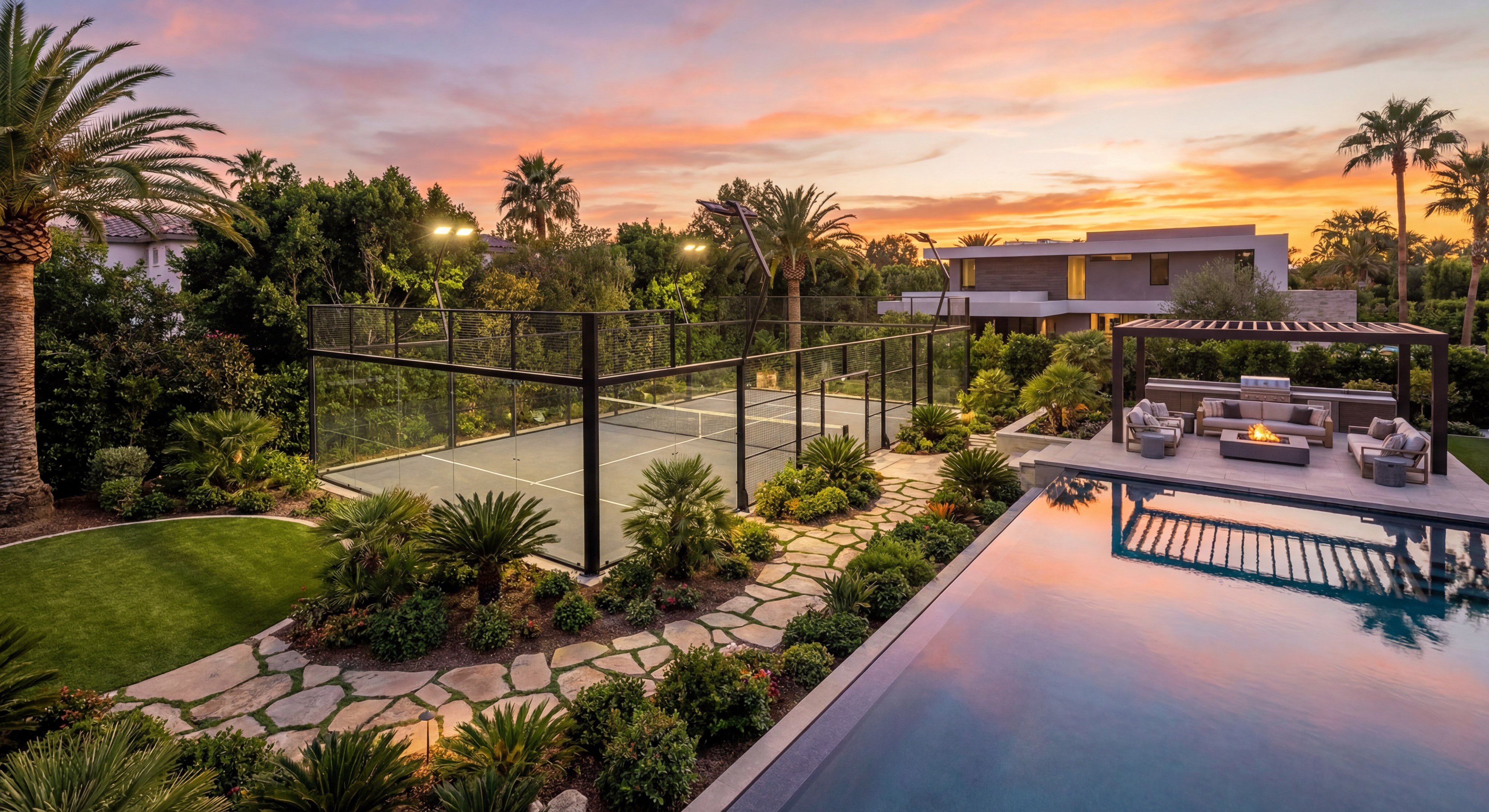
You identify your project level by assessing the intended frequency of use and whether the wilson padel court is for private or commercial use. Residential courts may prioritize aesthetics and noise reduction, whereas commercial clubs focus on heavy-duty durability and high-throughput lighting. Professional tournament builds must adhere to even stricter international federation standards for glass thickness and turf density.
Think about it.
What are the requirements for private installations?
Private builds often require specialized solutions like roofed padel court features to fit within residential landscapes.
- Compact footprints that respect property boundaries.
- Integrated landscaping to blend the court with the garden.
- Noise-dampening materials to maintain neighborhood peace.
How do you scale for competitive clubs?
Commercial scaling involves grouping multiple courts to maximize revenue and player flow. High-frequency clubs require robust materials that can handle 12+ hours of daily play without showing wear.
How does playing style dictate your court choice?
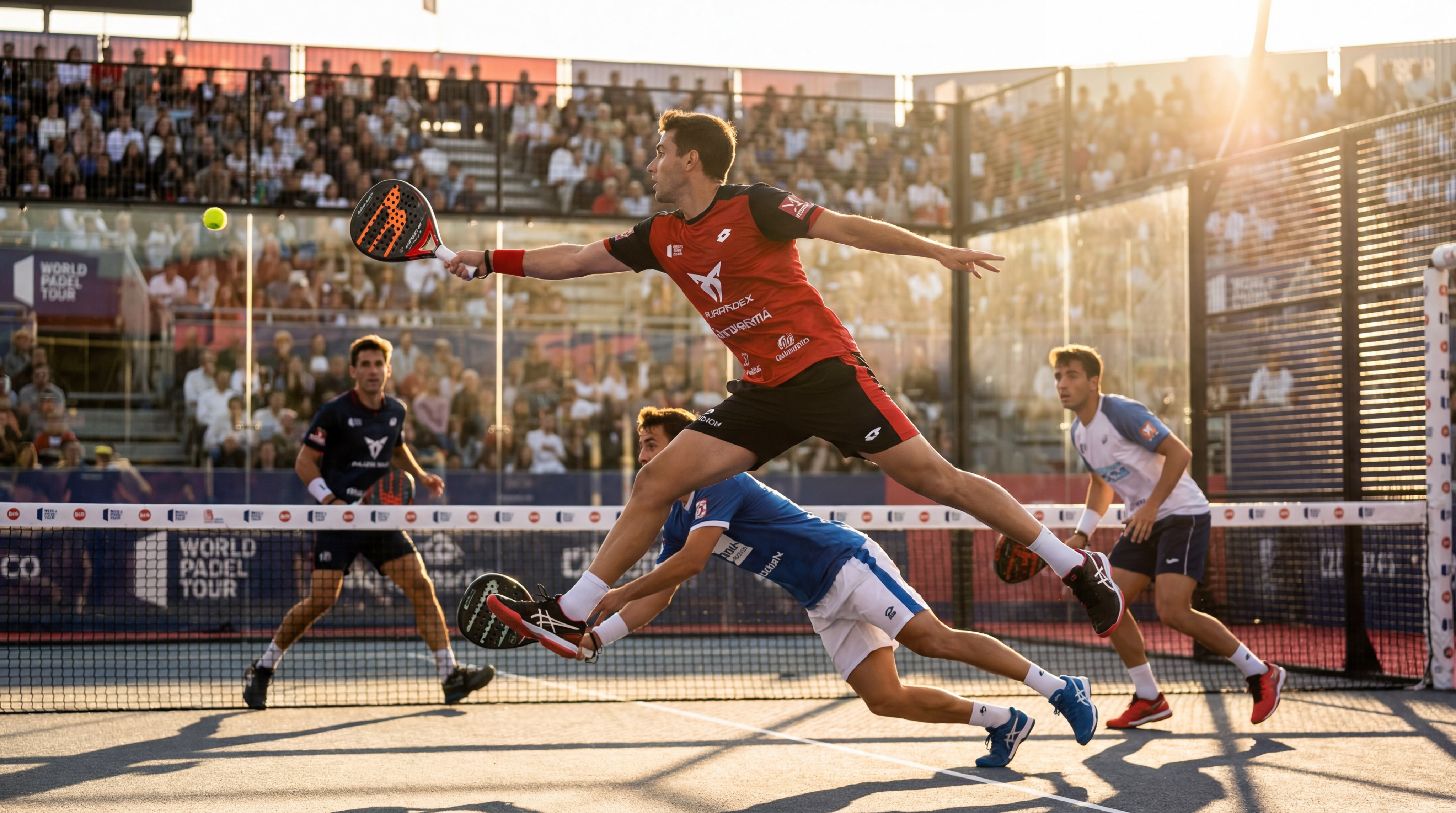
Playing style dictates court choice by influencing the specific rebound speed and “grip” of the wilson padel surface. Aggressive, power-focused players thrive on surfaces that provide a consistent, higher ball bounce for overhead smashes. Conversely, tactical players who rely on spin and control prefer high-density turf that allows for precise ball placement and slower, more predictable movement.
Can you design for explosive power?
Powerful gameplay requires a court that offers maximum stability underfoot and a firm response from the glass walls.
- High-tension net systems for crisp volleys.
- 12mm glass for reinforced rebound energy.
- Low-friction turf for quick lateral movements.
What balances utility for diverse members?
Most clubs benefit from a “medium-fast” setup that accommodates both beginners and advanced players. This versatility ensures the court remains accessible to the widest possible demographic.
Key Takeaway: Surface selection directly impacts the speed and difficulty of the game.
| Style | Surface Need | Component Focus |
|---|---|---|
| Power | Fast/Firm | 12mm Glass |
| Control | Medium/Soft | Texturized Turf |
Analyzing the target skill level of your players will prevent you from installing an mismatched surface.
Can you build a roofed court for year-round utility?
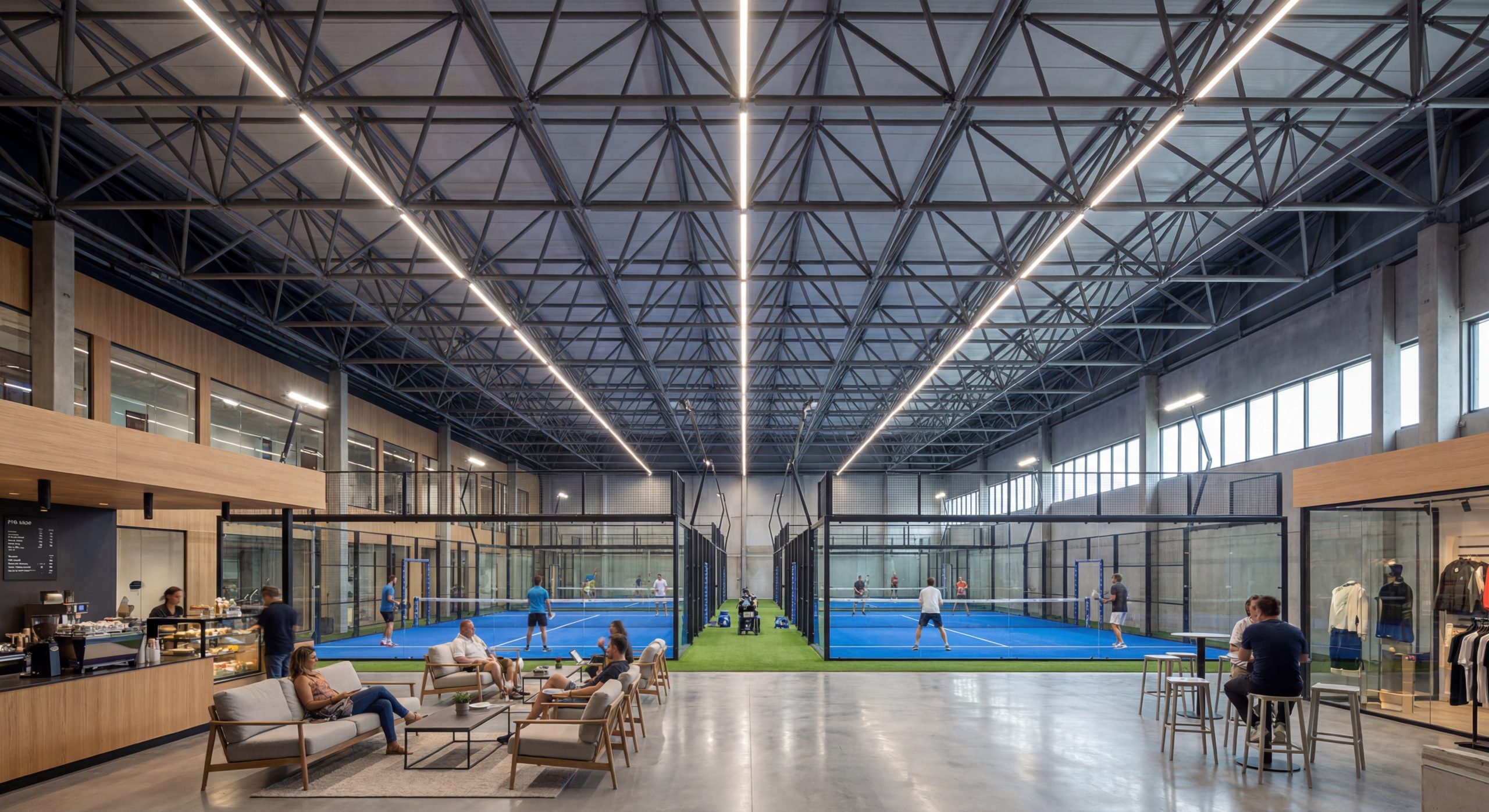
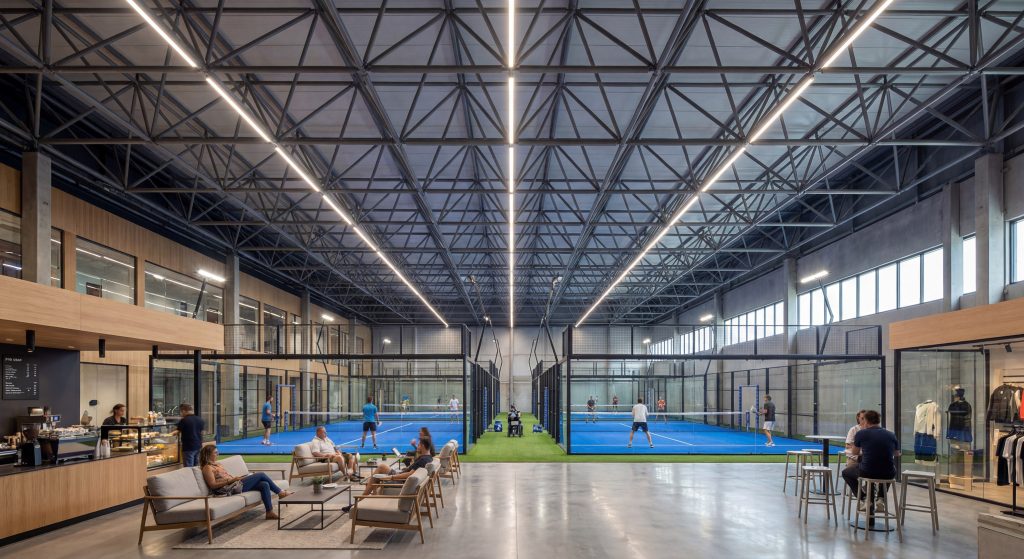
Yes, building a roofed court is the most effective way to ensure your wilson padel investment generates revenue every day of the year. A professionally engineered steel roof structure protects the premium padel grass from UV degradation and prevents match cancellations due to rain. These structures must be designed with a minimum internal height of 6 to 8 meters to accommodate the high “lob” shots common in the game.
How do you maximize revenue with all-weather accessibility?
Indoor or roofed facilities remove the seasonal barriers that often limit traditional outdoor sports.
- Guaranteed booking slots regardless of weather forecasts.
- Opportunities for nighttime play with controlled lighting.
- Protection for players from extreme heat and direct sunlight.
What are the height requirements for indoor builds?
You must maintain clear vertical space to ensure the game remains fair and competitive. Obstructions below 6 meters can significantly disrupt the flow of play during defensive lobs.
What lighting standards define a professional build?
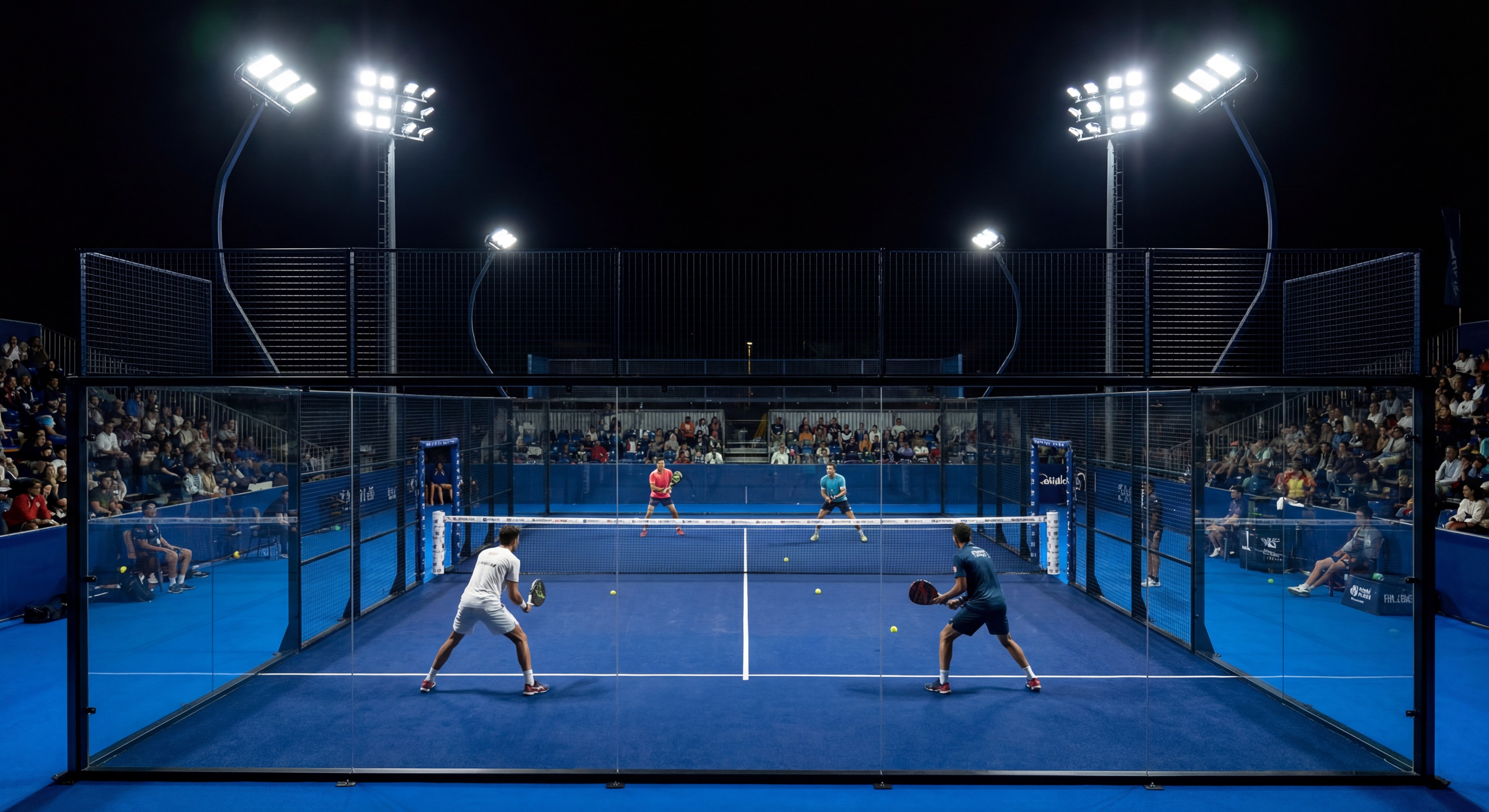
Professional builds are defined by uniform, flicker-free LED systems that achieve at least 300 to 500 lux across the entire wilson padel court. Proper lighting design focuses on eliminating shadows and preventing “player glare” when looking up for high balls. Using IP66-rated waterproof LEDs is mandatory for outdoor installations to ensure long-term electrical safety and performance.
How is uniform illumination achieved?
Achieving uniformity involves the precise calculation of light spread from four or eight pole positions.
- Use of asymmetric lenses to direct light toward the court center.
- Strategic height placement (typically 6 meters) for optimal coverage.
- High color rendering index (CRI) for clear ball visibility.
Why is energy efficiency important?
Modern LED systems consume up to 60% less energy than traditional metal halide lamps. This reduces operating costs while providing instant-on capability for immediate play.
Key Takeaway: Quality lighting is the difference between a mid-tier and elite facility.
| Standard | Lux Level | Best Use |
|---|---|---|
| Amateur | 200-300 | Private/Training |
| Professional | 500+ | Tournaments/TV |
Investing in high-output LEDs ensures that your facility is capable of hosting competitive night matches safely.
How do glass choices impact visibility and safety?
Glass choices impact safety by determining the structural resistance of the walls against player impact and high-speed ball collisions in a wilson padel environment. The industry standard for elite courts is 12mm tempered safety glass, which provides superior rebound consistency and durability compared to thinner 10mm options. Using high-impact padel glass ensures that even in the rare event of breakage, the glass shatters into small, blunt pieces to prevent injury.
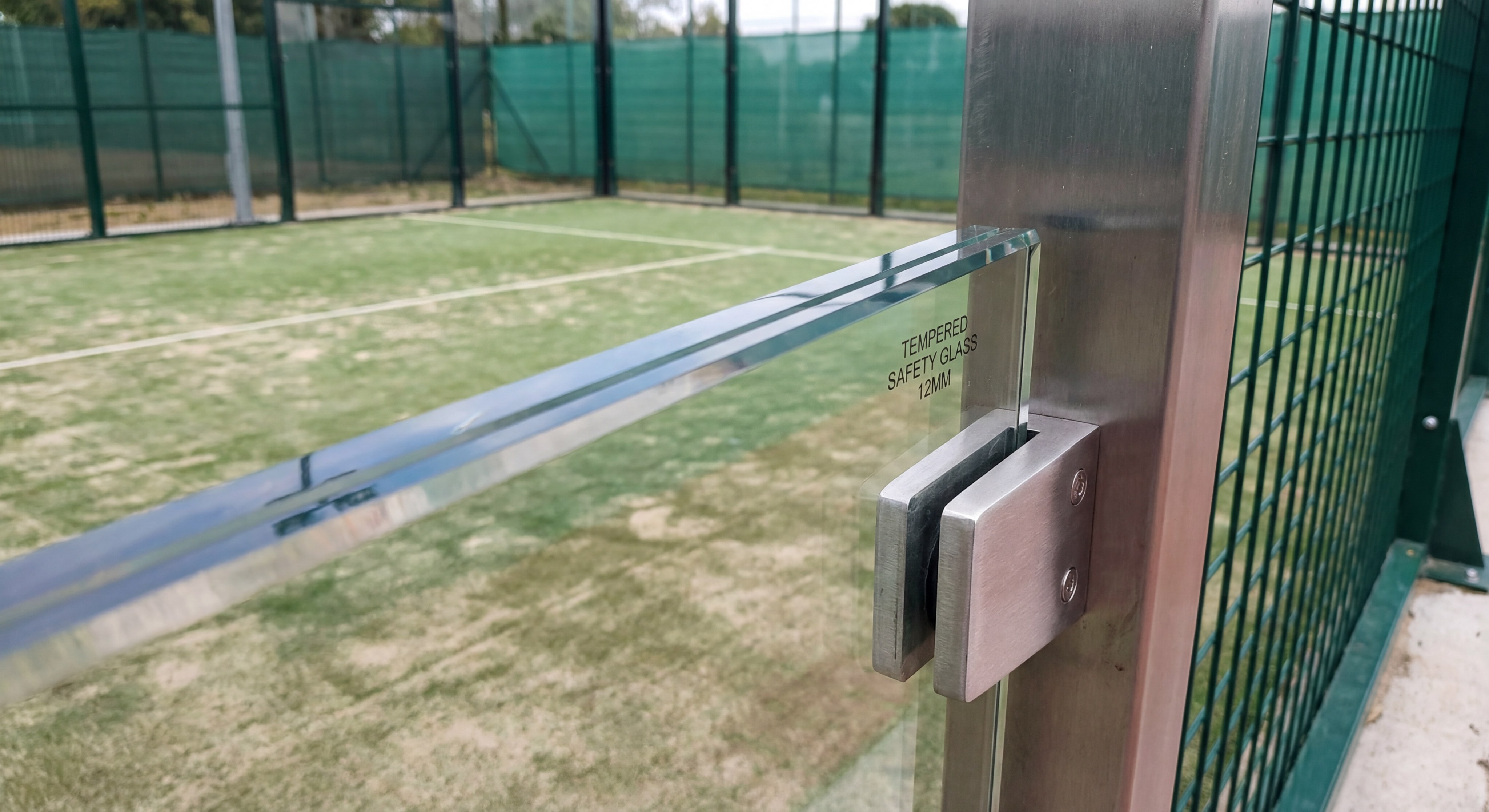
Why is 12mm tempered glass the professional choice?
Thicker glass reduces the “vibration” felt upon impact, creating a more solid and professional feel.
- Complies with European EN 12150 safety standards.
- Offers better acoustic insulation for the surrounding area.
- Resists extreme temperature-induced stress.
How does thickness affect ball rebound?
Consistency is key in padel; a thicker glass pane ensures the ball bounces off the wall with predictable energy. This allows players to develop better timing and more complex wall-play strategies.
What grass types offer the most comfortable playability?
Fibrillated and monofilament turfs are the primary options for a wilson padel surface, with monofilament being favored for its soft texture and durability. High-density grass layouts reduce the strain on players’ joints by providing a cushioned layer between the foot and the concrete base. The choice of grass also determines how much sand infill is required, which directly affects the speed of the ball’s skid across the floor.
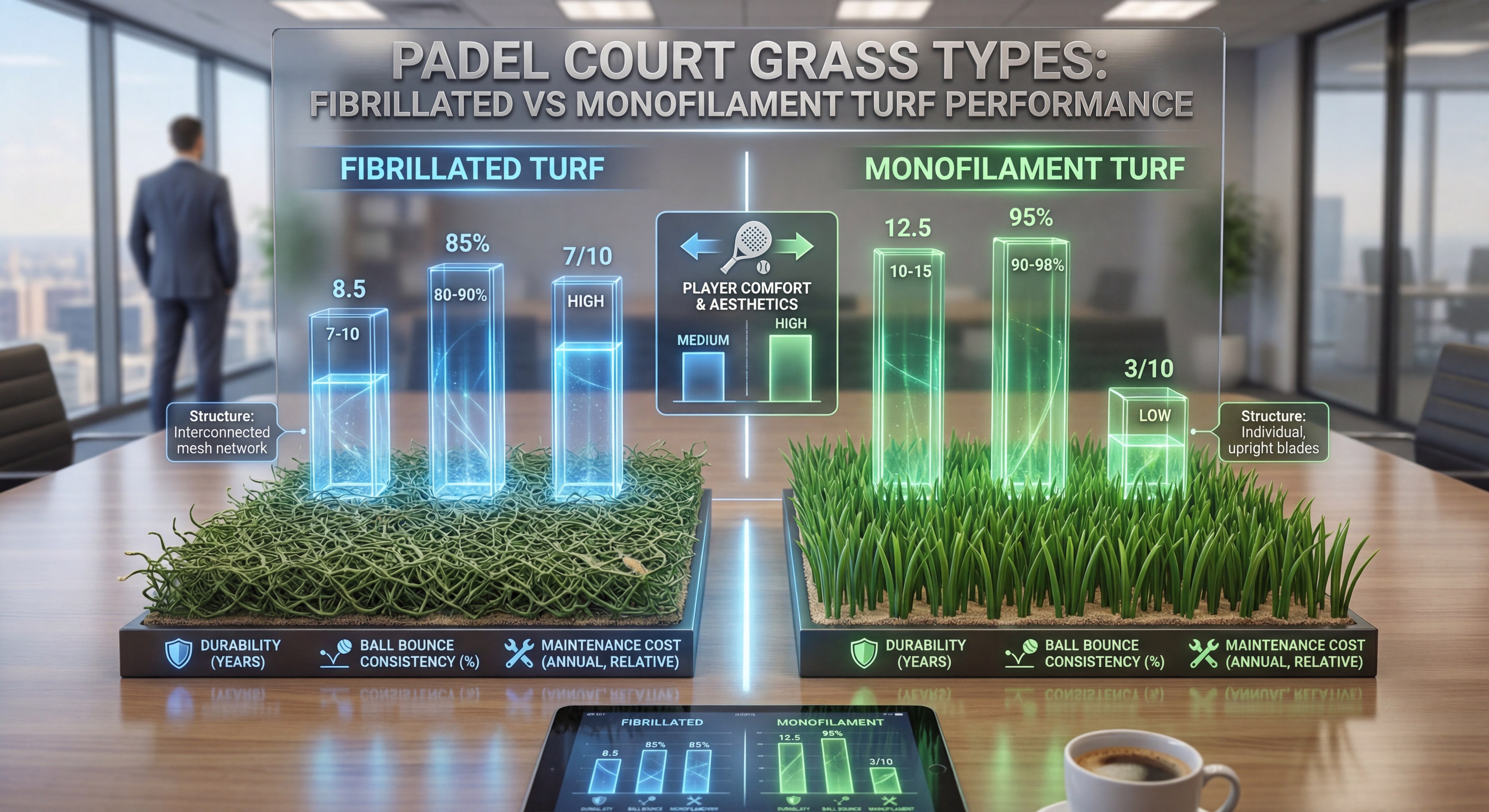
What is the difference between fibrillated and monofilament?
Understanding the fiber structure is essential for choosing the right level of maintenance and grip.
- Monofilament: Individual blades that stand upright, offering a more “natural” feel.
- Fibrillated: An interconnected mesh network that holds sand infill very effectively.
- Texturized: Curled fibers that require significantly less sand maintenance.
How does turf density affect joint health?
A higher stitch rate per square meter provides better shock absorption. This is a critical consideration for clubs catering to older players or those playing multiple times per week.
Key Takeaway: Turf quality is the single most important factor for player comfort.
| Grass Type | Maintenance | Player Comfort |
|---|---|---|
| Monofilament | Medium | Very High |
| Fibrillated | High | Medium |
Selecting a high-density, texturized turf will maximize the lifespan of your surface while minimizing daily upkeep.
How do you finalize your wilson padel installation?
Finalizing an installation involves the precise assembly of the metallic frame onto a perfectly leveled concrete foundation of the wilson padel project. Once the structure is bolted down, the glass panels are installed using specialized suction tools and rubber gaskets to ensure a tension-free fit. The final steps include laying the turf, distributing the silica sand infill evenly, and conducting a technical certification to verify that the net height and bounce meet tournament specifications.
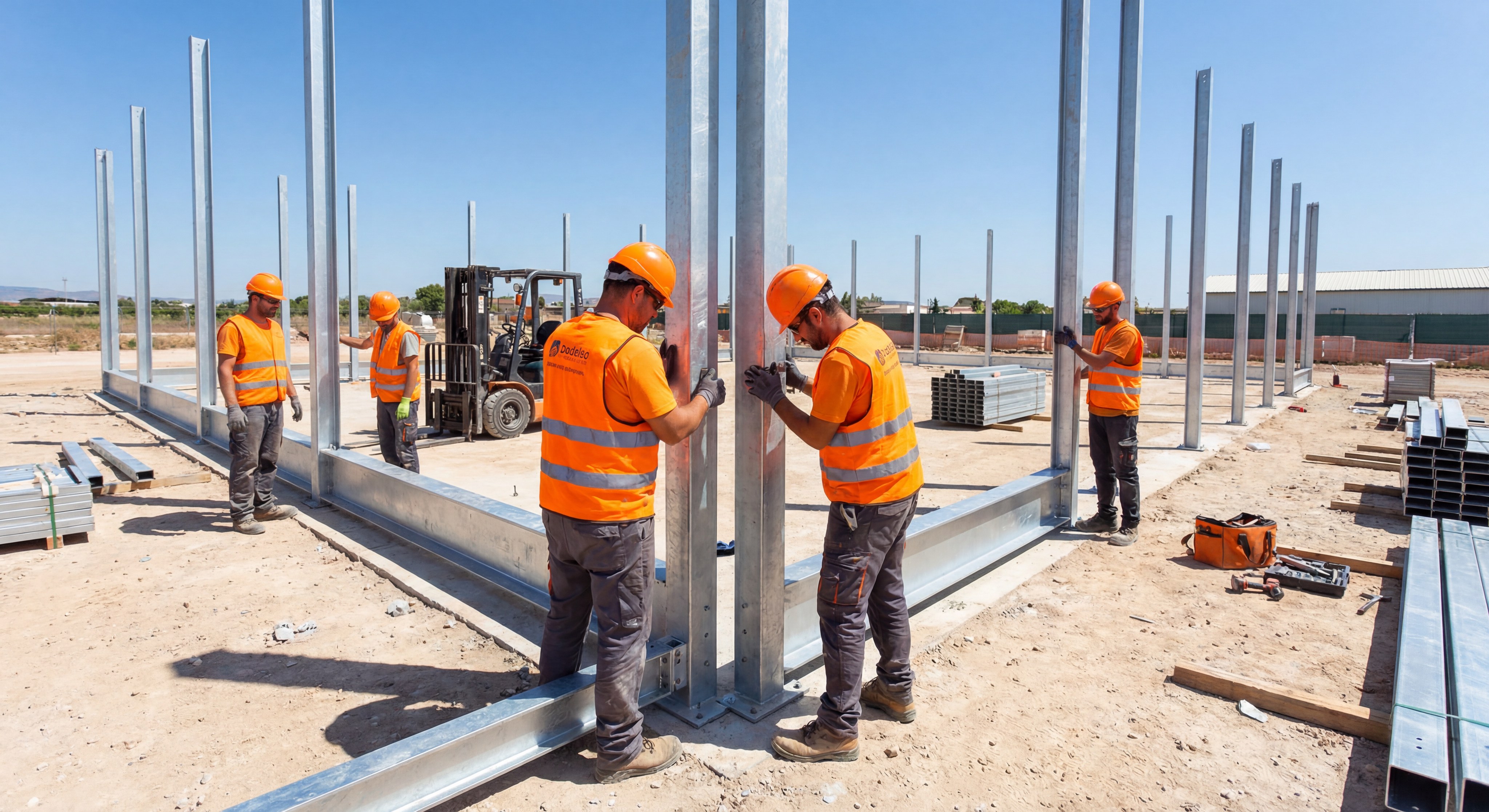
Let’s get started.
Why is the concrete foundation critical?
A court is only as good as the ground it sits on; any deviation in level will cause glass misalignment.
- Must be reinforced to support the weight of the peripheral walls.
- Requires integrated drainage to prevent water pooling under the turf.
- Needs a smooth finish for optimal turf adhesion.
What happens during the final inspection?
The final check ensures that all safety protocols have been met and the court is ready for high-intensity use. This includes checking the tension of all structural bolts and the uniformity of the sand distribution.
Summary Table: Build Component Comparison
| Feature | Basic Standard | Professional Elite |
|---|---|---|
| Frame | Standard Pillars | Super Panoramic |
| Glass | 10mm Tempered | 12mm Anti-Explosion |
| Turf | Standard PE | High-Density Fibrillated |
| Lighting | 200W LED | 300W+ High-Efficiency |
The journey to creating a world-class wilson padel experience begins with selecting a factory-direct partner that understands the nuances of structure, surface, and safety. By identifying your specific project goals and investing in certified materials, you ensure a facility that provides professional playability for years to come. To take the next step in your project, contact us for a tailored consultation and technical quote.
Frequently Asked Questions (FAQ)
What is the minimum space required for a court?
A minimum of 11×21 meters is recommended. While the standard playing area is exactly 10×20 meters, you must account for the structural footings and a small safety perimeter around the glass walls.
How long does a typical installation take?
Approximately 5 to 10 days of on-site work is standard. This timeframe assumes the concrete foundation is already cured and leveled; the modular nature of the steel frame allows for rapid assembly by a trained crew.
Can I customize the court with custom branding?
Absolutely. Factory-direct manufacturing allows you to select custom powder-coating colors for the steel frame and even laser-etch logos into the glass or integrate them directly into the turf fibers.
What’s the best way to maintain the playing surface?
Regular brushing is the most effective method. You should redistribute the silica sand once a week to prevent “bald spots” and remove any organic debris to ensure the drainage holes in the turf remain clear.
Is a special permit needed for construction?
Usually, yes. Requirements depend on your local municipality and whether the build is for a private residence or a commercial club; you should always verify local zoning laws regarding “accessory structures” before starting work.