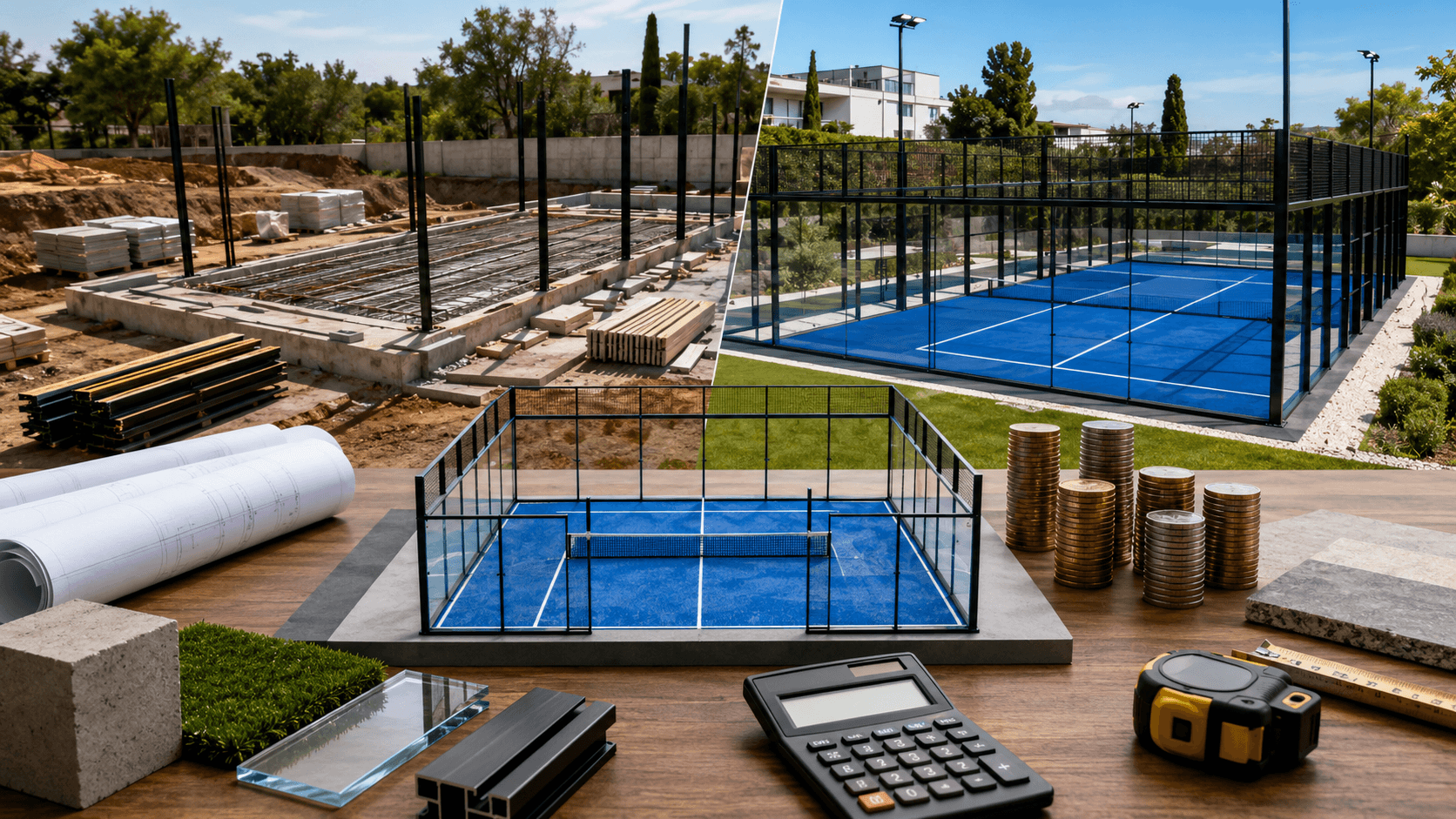
A professional padel installation typically ranges from $24,000 to $135,000 depending on materials, site prep, and location. Many developers start their sports project with a vague budget, only to realize that the global craze for padel comes with complex financial requirements. Without a clear roadmap, your investment can quickly fall victim to hidden structural fees and logistical nightmares that drain your capital before the first ball is served. This guide provides a comprehensive breakdown of every expense to help you accurately determine how much does a padel court cost for a successful build.
What is the baseline price for a padel court in 2026?
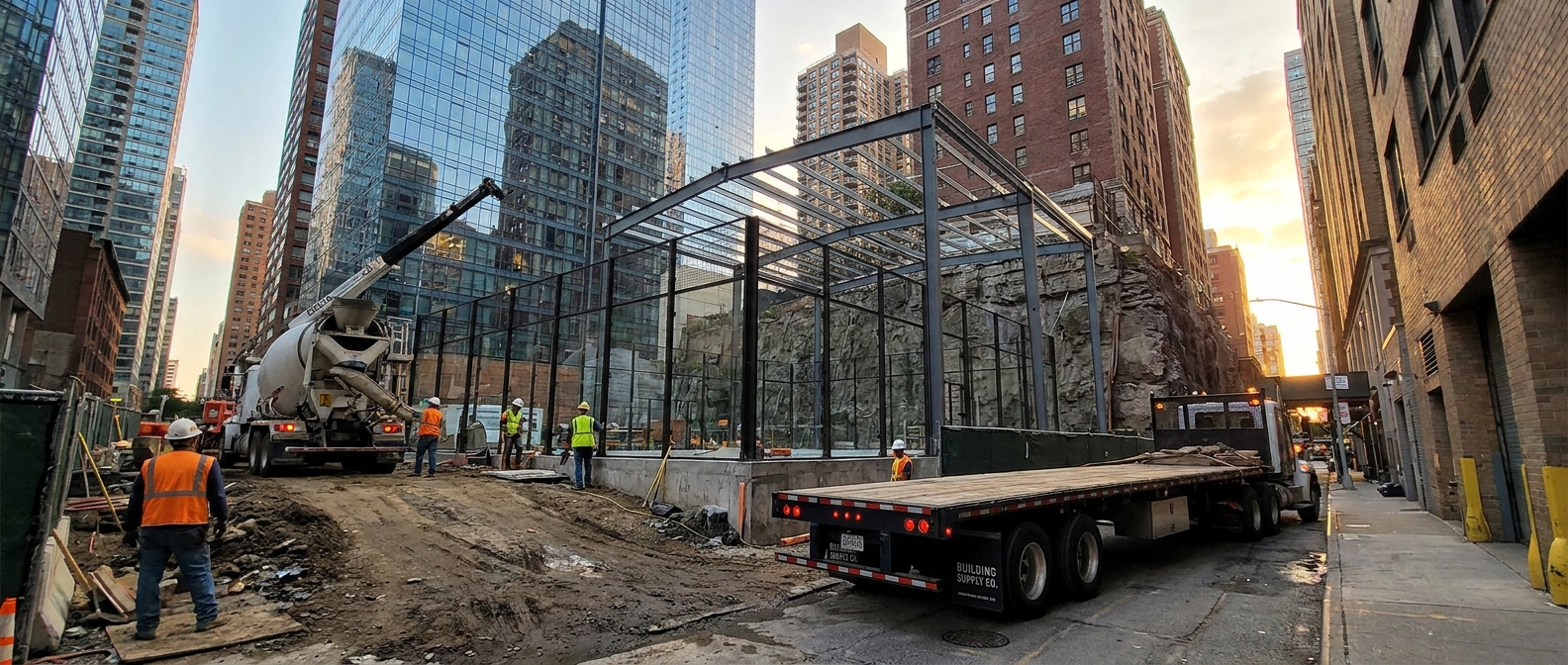
Determining how much does a padel court cost starts with understanding the basic price range, which typically falls between $24,000 and $135,000. This wide variance is driven by the specific engineering of the court, the quality of materials selected, and the complexity of the installation site.
Average cost breakdown by item
Look: the total project cost is a sum of several critical components. While the steel and glass structure accounts for nearly 50% of the budget, you must also account for artificial turf, LED systems, and transportation fees.
- Steel and glass structure: $22,500 – $38,300
- Professional surface materials: $5,600 – $13,500
- LED Lighting systems: $2,800 – $10,000
- Logistics and shipping: $8,400 – $22,000
Key Takeaway: Budgeting for the high end of the range is recommended if you are building in a high-labor market or require competition-grade finishes.
| Expense Category | Low End | High End |
|---|---|---|
| Steel & Glass Structure | $22,500 | $38,300 |
| Surface Materials | $5,600 | $13,500 |
| Professional Lighting | $2,800 | $10,000 |
| Logistics & Shipping | $8,400 | $22,000 |
This breakdown serves as a fundamental guide for allocating your initial capital across the primary structural categories.
Does location change how much does a padel court cost?
When analyzing how much does a padel court cost, geographic location remains one of the most influential factors due to varying labor rates and state-specific building codes. Investing in a professional facility in a high-cost area like New York or California can increase your construction budget by 20% to 35% compared to more affordable regions.
Regional labor and code impacts
Here is the deal: labor costs are not uniform across the country. Urban centers require higher insurance and union wages, which significantly bloats the “site preparation” portion of your budget.
- High-cost states: Hawaii, Alaska, California, New York.
- Affordable states: Mississippi, Arkansas, Alabama, West Virginia.
- Permit fees: Vary significantly by municipal zoning laws.
Key Takeaway: Always consult with a local project manager to identify state-level permits and environmental requirements that could add thousands to your initial estimate.
| Region Type | Estimated Labor Impact | Average Total Cost |
|---|---|---|
| High-Cost (HI, AK, NY) | +30% | $110,000+ |
| Mid-Range (TX, FL, AZ) | Baseline | $75,000 |
| Low-Cost (AL, MS, WV) | -15% | $55,000 |
Understanding local market conditions is critical to preventing budget overruns during the mobilization phase.
How does competition level impact your total budget?
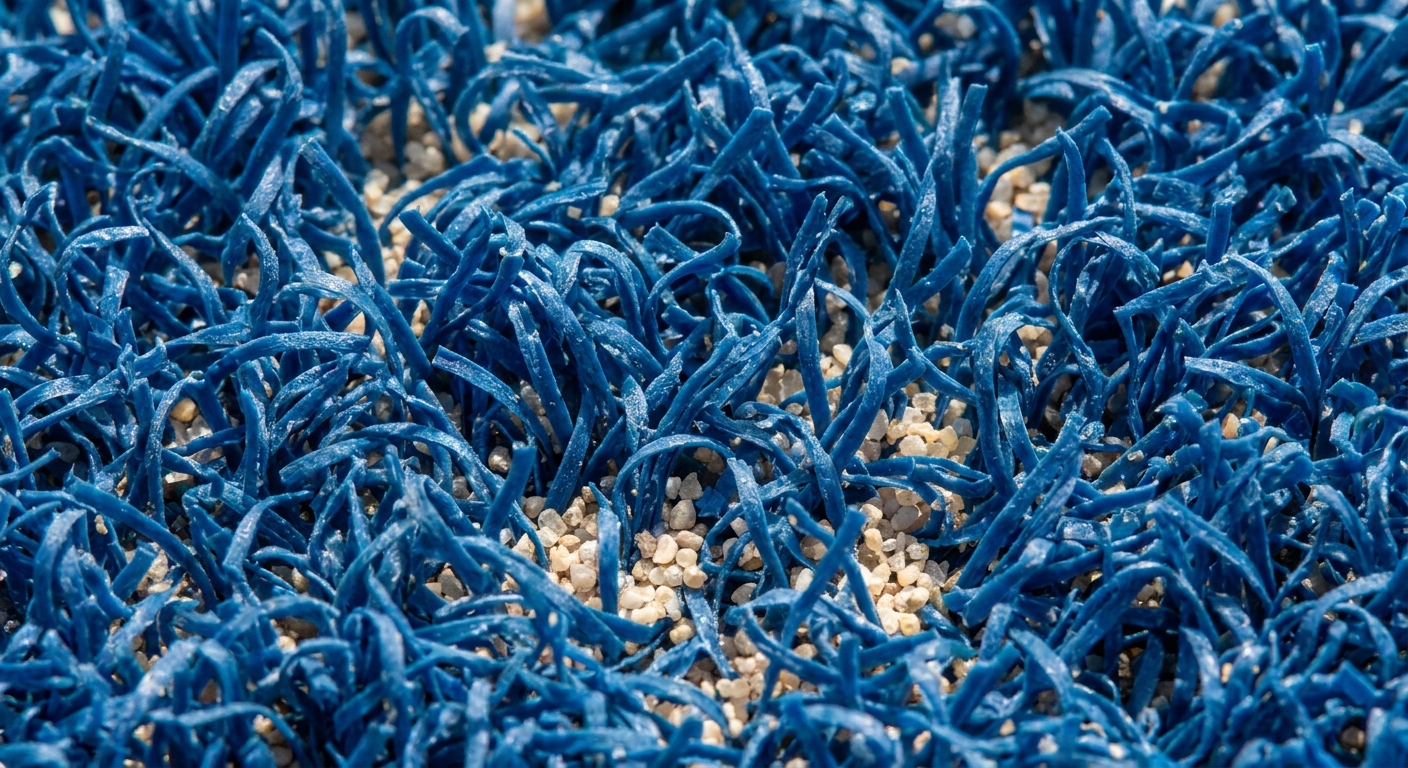
To accurately calculate how much does a padel court cost, you must first define whether you are targeting recreational players or hosting international tournaments. A court designed for casual backyard play has significantly lower structural requirements than one intended for professional standards.
Professional vs. recreational specs
The best part? Investing in professional specs increases your court’s lifespan. Professional courts require 12mm anti-explosion tempered glass to ensure player safety and optimal spectator visibility, though this comes at a premium price.
- Glass type: 10mm (Recreational) vs 12mm (Pro).
- Space requirements: Pro courts often need extra out-of-court recovery space.
- Material density: High-density materials handle 10+ hours of daily play.
Key Takeaway: Competition-level courts use higher-density materials designed to withstand heavy use, reducing long-term maintenance costs despite the higher initial price.
| Feature | Recreational Court | Professional Court |
|---|---|---|
| Glass Type | 10mm Standard | 12mm Anti-Explosion |
| Surface | Asphalt/Concrete | Fibrillated Turf |
| Amenities | Basic Netting | Benches & Scoreboards |
Selecting the right competition level ensures your facility meets the expectations of your target demographic without overspending.
Will an indoor facility break your project bank?
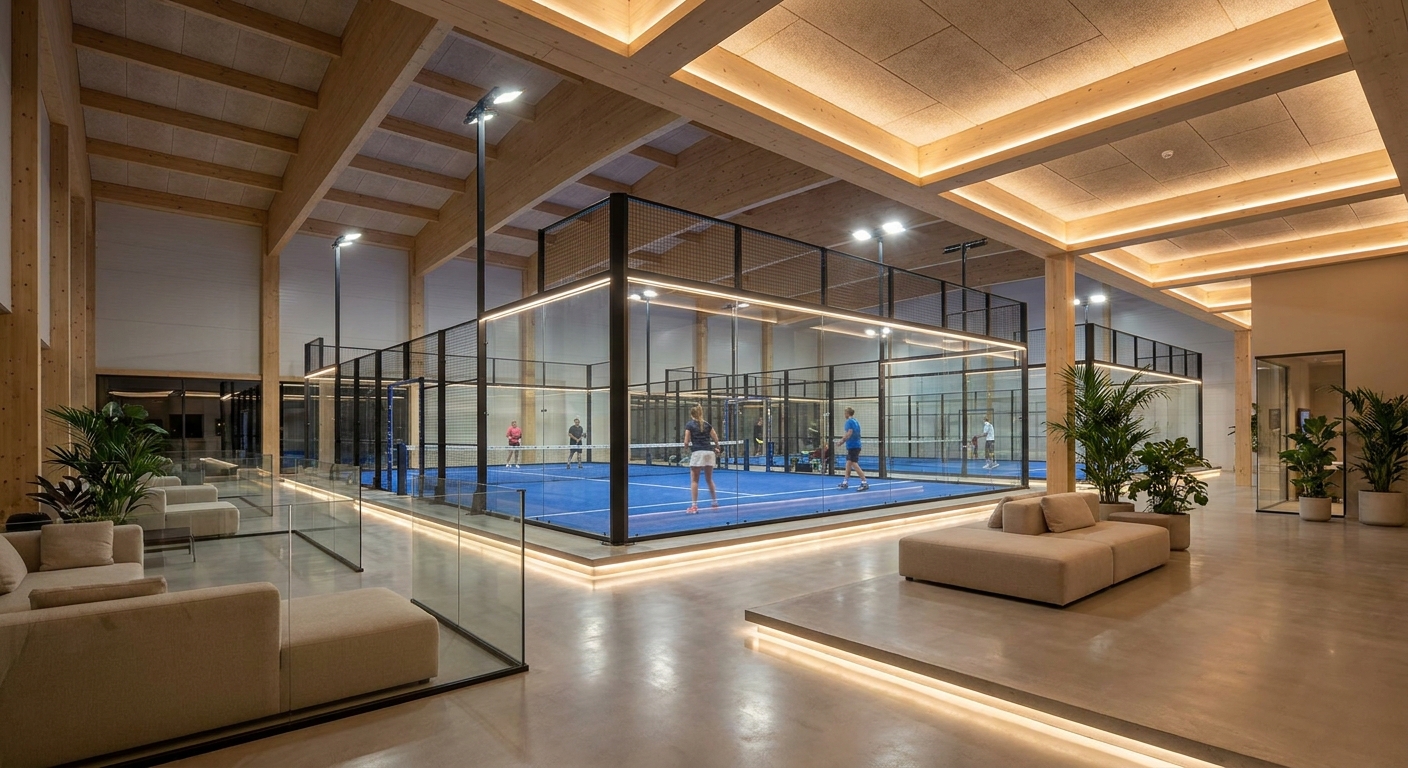
Deciding between an indoor or outdoor setup drastically alters how much does a padel court cost for your project. While outdoor courts are cheaper initially, indoor facilities eliminate weather-related downtime but introduce significant structural overhead for roofing and ventilation.
Structural and operational overhead
Look: you need at least 7 meters of vertical clearance for indoor play. If you are not using an existing warehouse, constructing a purpose-built steel building can effectively double your initial project investment.
- Roofing: Tensile fabric domes or permanent steel structures.
- HVAC: Climate control is essential for player comfort and ROI.
- Lighting: Indoor venues require 100% artificial lighting year-round.
Key Takeaway: While indoor courts are more expensive to build, they suffer less from UV degradation, leading to a much longer lifespan for the turf and frame.
| Factor | Outdoor Court | Indoor Court |
|---|---|---|
| Initial Cost | Lower | Higher |
| Weather Risk | High | Zero |
| Surface Life | 5–7 Years | 10+ Years |
Evaluating the trade-off between upfront construction costs and consistent year-round revenue is vital for indoor facility planning.
Why is the subfloor choice a hidden cost driver?
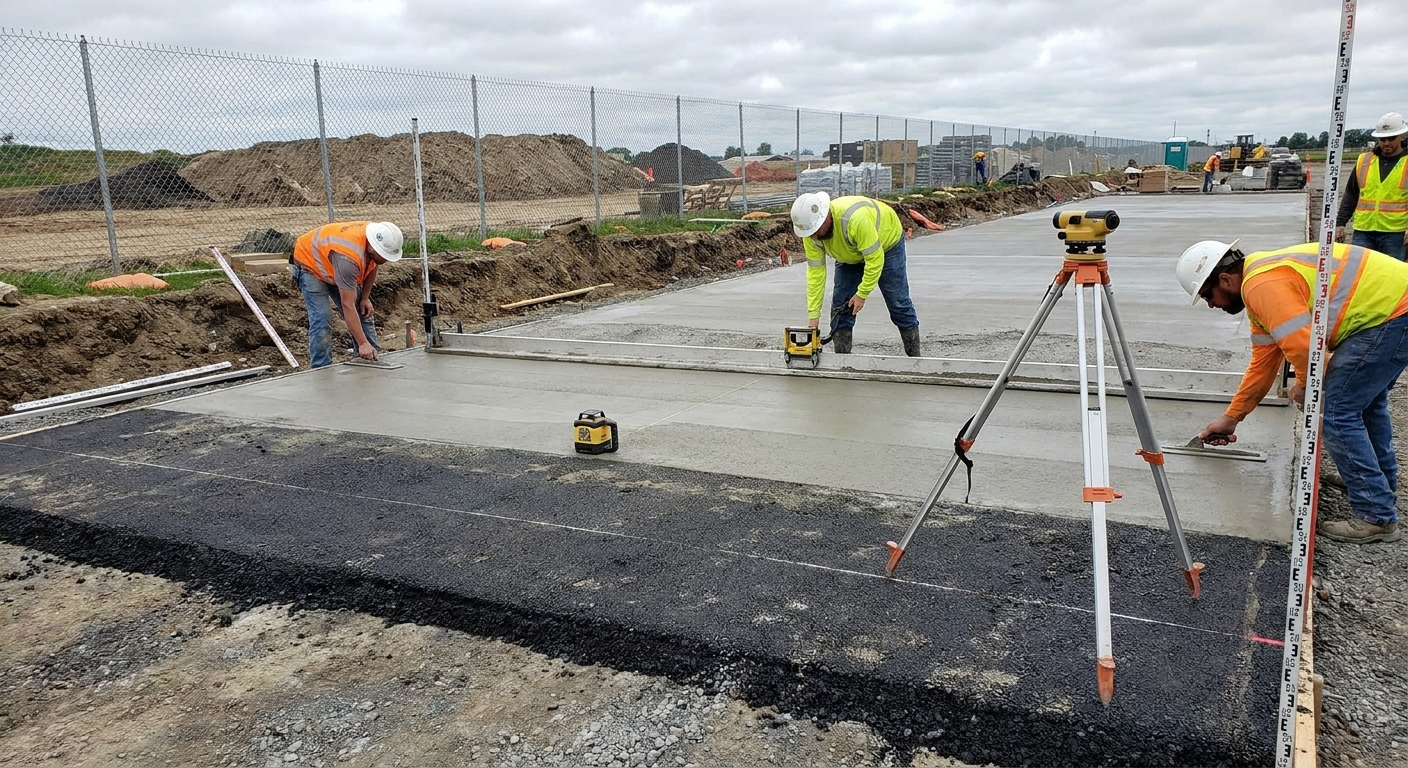
A major error in estimating how much does a padel court cost is overlooking the subfloor, which acts as the foundation for the entire structure. The choice between asphalt and concrete will dictate both your immediate expenditure and the court’s playing characteristics.
Asphalt vs. concrete foundations
The deal is this: asphalt is often cheaper but concrete offers superior durability. Reinforced concrete provides a perfectly level surface, which is essential for the professional-grade ball bounce players expect.
- Asphalt: Porous, cheaper upfront, but high maintenance.
- Concrete: Very high durability, low maintenance, but expensive.
- Drainage: Essential to prevent water pooling and mold growth.
Key Takeaway: Investing in a reinforced concrete subfloor minimizes the risk of cracking and shifting, which are common issues in extreme climates.
| Material | Upfront Cost | Durability | Maintenance |
|---|---|---|---|
| Asphalt | $12,000 – $18,000 | Moderate | High |
| Concrete | $18,000 – $28,000 | Very High | Low |
A solid foundation is the most important “invisible” investment you will make to ensure the long-term success of your facility.
Is premium artificial turf worth the extra expense?
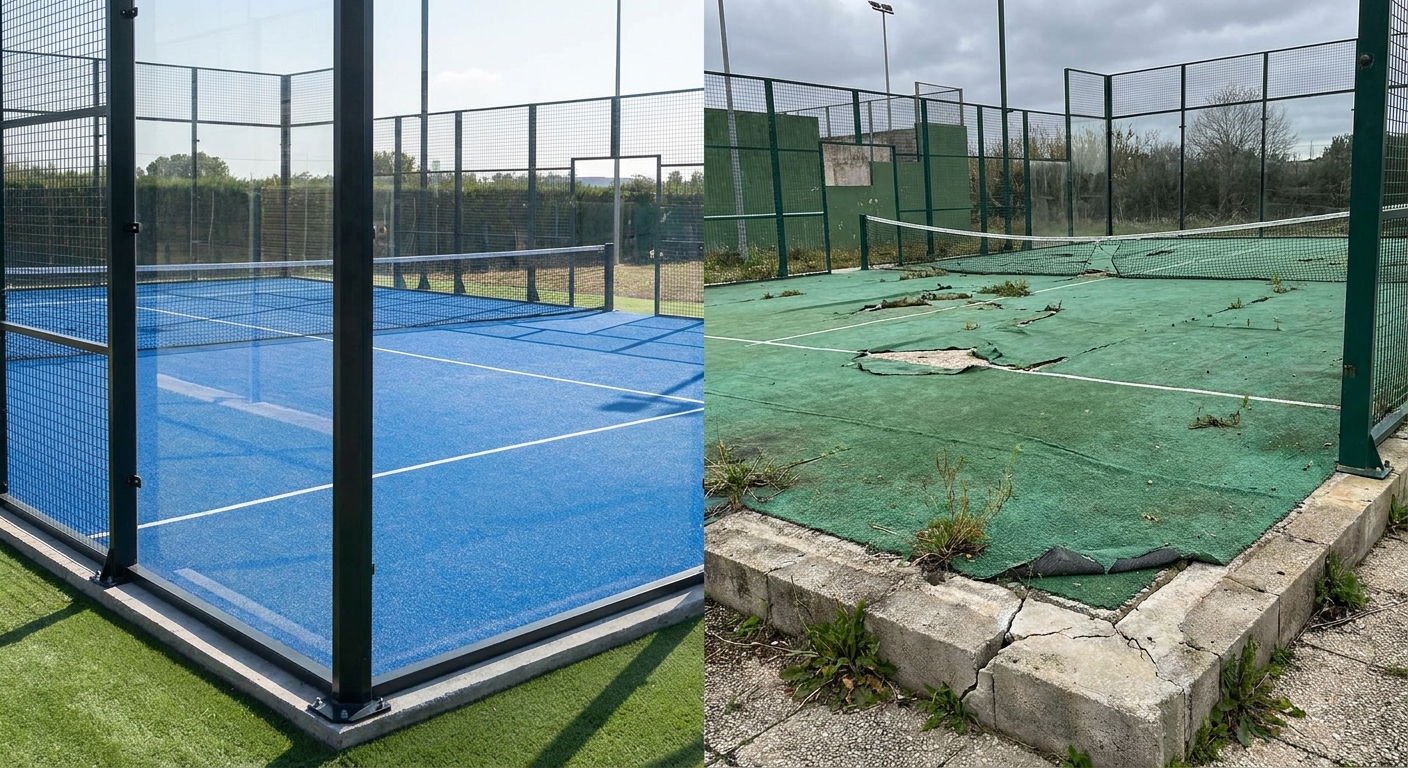
The playing surface is a primary factor in how much does a padel court cost and is the element players interact with most. Utilizing high-quality fibrillated or monofilament turf ensures a consistent ball bounce and reduces the physical impact on players’ joints.
Turf quality and performance
The best part? High-quality turf lasts twice as long as entry-level options. Choosing a turf that meets European standards ensures that the surface remains playable for 8 to 10 years, depending on the environment.
- Fiber density: High-density fibers provide better resistance to wear.
- Infill: Specific silica sand grains prevent matting over time.
- Joint protection: Better shock absorption prevents player injuries.
Key Takeaway: Choosing a turf that meets European standards ensures that the surface remains playable for 5–10 years, regardless of indoor or outdoor use.
| Turf Grade | Estimated Cost | Lifespan | Performance |
|---|---|---|---|
| Standard | $5,500 | 4-5 Years | Basic |
| Professional | $12,000 | 8-10 Years | Elite |
Selecting premium turf improves the player experience, which directly translates to higher booking rates and member retention.
How do glass specifications affect safety and price?
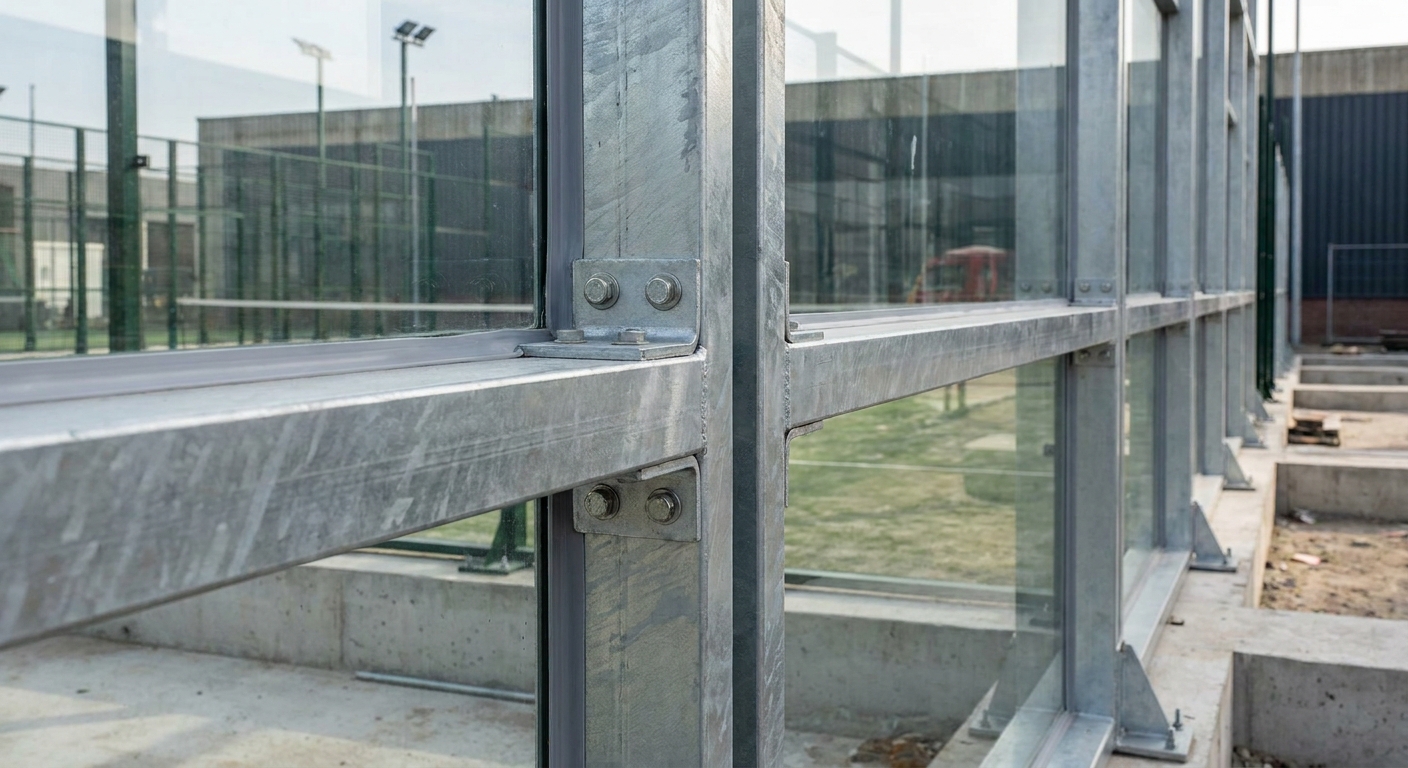
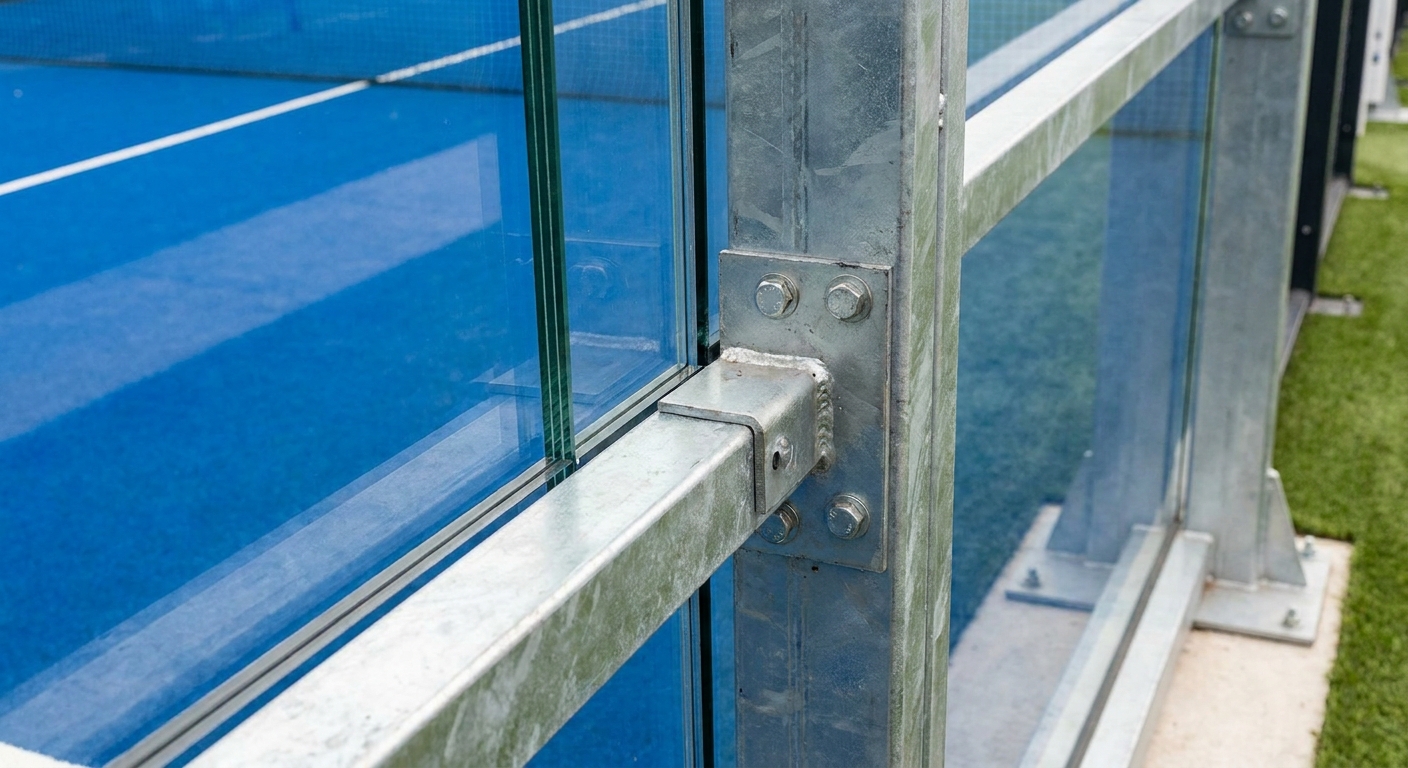
When calculating how much does a padel court cost, you must prioritize the glass walls, which provide the unique rebounding mechanics of the sport. Standard enclosures use 10mm glass, but premium panoramic designs require 12mm tempered glass to handle the force of high-impact play.
Safety and design standards
Look: safety is a non-negotiable expense for any commercial facility. Padel glass must comply with safety standards like EN 12150 to ensure that if it breaks, it shatters into small, blunt pieces.
- Standard: Uses vertical metal posts for support.
- Panoramic: Removes rear posts for 360-degree viewing.
- Hardware: High-grade stainless steel is required to prevent corrosion.
Key Takeaway: The hardware used to anchor glass panels must be high-grade stainless steel to prevent corrosion, especially for outdoor courts in humid environments.
| Glass Design | Avg. Thickness | Price Impact | Visibility |
|---|---|---|---|
| Standard Frame | 10mm | Baseline | Good |
| Panoramic | 12mm | +$12,000 | Exceptional |
Investing in high-spec glass not only enhances the aesthetic appeal of your club but also mitigates significant liability risks.
Can energy-efficient lighting save you money long-term?
Lighting is a specialized component that impacts how much does a padel court cost during the construction phase and throughout its operational life. High-efficiency LED lighting systems are now the industry standard, offering superior illumination with significantly lower utility bills.
LED efficiency vs. traditional systems
Here is the deal: LED systems provide instant-on capability and uniform light distribution. Traditional metal halide lights are cheaper to buy initially but consume massive amounts of energy and require frequent, expensive bulb replacements.
- Utility savings: LEDs reduce energy consumption by up to 60%.
- Durability: IP66 ratings protect electronics from rain and dust.
- Maintenance: Professional LEDs require minimal intervention for years.
Key Takeaway: Integrated lighting systems that mount directly to the court’s structural posts are easier and cheaper to install than standalone light masts.
| Light Type | Cost to Buy | Energy Use | Maintenance |
|---|---|---|---|
| Metal Halide | Low | Very High | Frequent |
| Professional LED | Moderate | Low | Minimal |
Switching to professional LED systems is one of the most effective ways to lower the long-term operational costs of your project.
What are the most common budgeting mistakes to avoid?
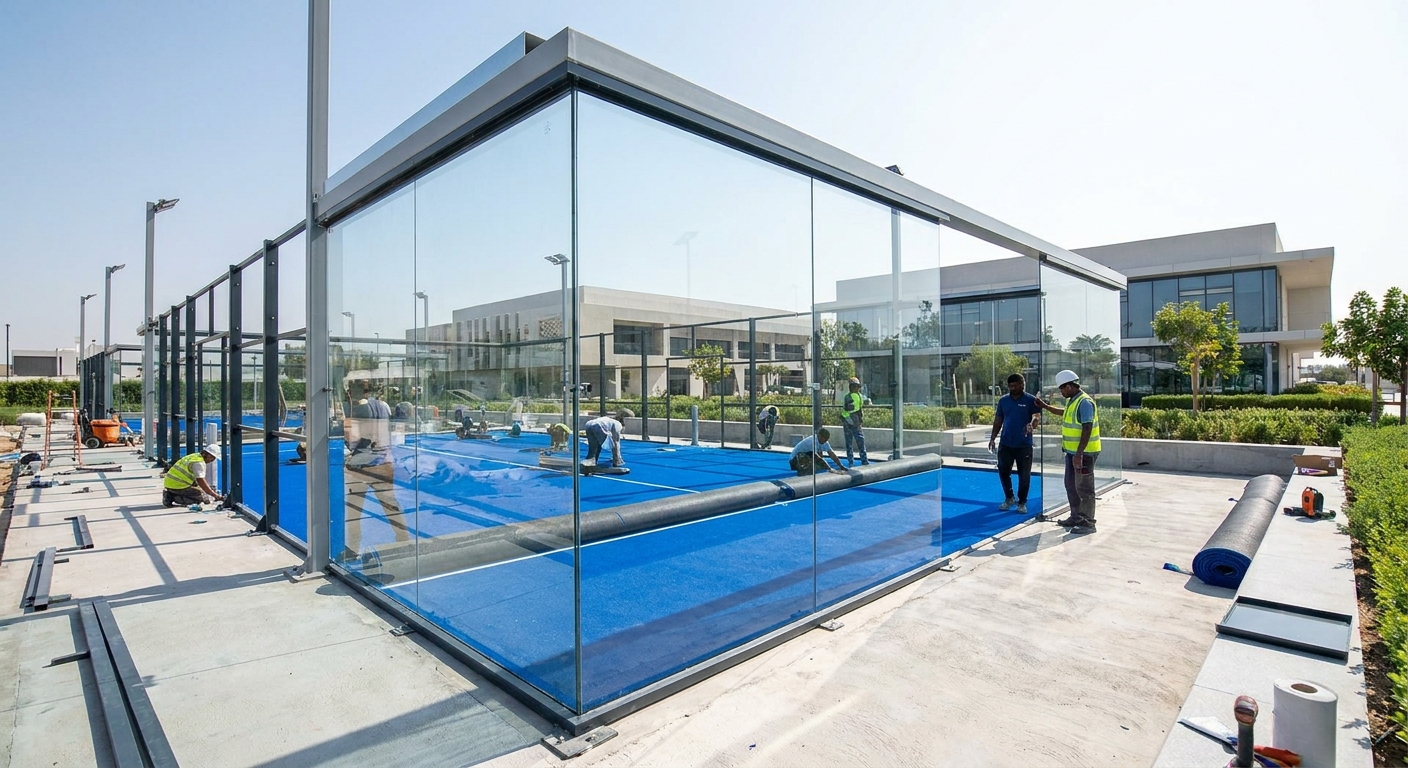
Many project owners fail to accurately estimate how much does a padel court cost because they overlook “soft costs” and logistical hurdles. Avoiding these common pitfalls can save you tens of thousands of dollars during the construction phase.
Logistics and site survey errors
The best part of a successful build is the planning phase. Failing to perform a professional site survey can result in discovering underground utilities or unstable soil after the contract is signed, leading to massive remediation costs.
- Site survey: remediates soil issues before they become expensive.
- Import duties: Most courts are international; factor in taxes and customs.
- Safety zones: Ensure your site plan accounts for the necessary perimeter zones.
Key Takeaway: Ensure your site plan accounts for the full 10×20 meter internal playing area plus the thickness of the structural frame and safety zones.
| Mistake | Financial Risk | Prevention |
|---|---|---|
| No Site Survey | $10,000+ | Hire local engineer |
| Cheap Materials | $20,000+ | Buy certified specs |
| DIY Installation | $5,000+ | Use factory experts |
Comprehensive planning and professional oversight are the best defenses against the unexpected costs that often plague sports developments.
Can factory deals lower how much does a padel court cost?
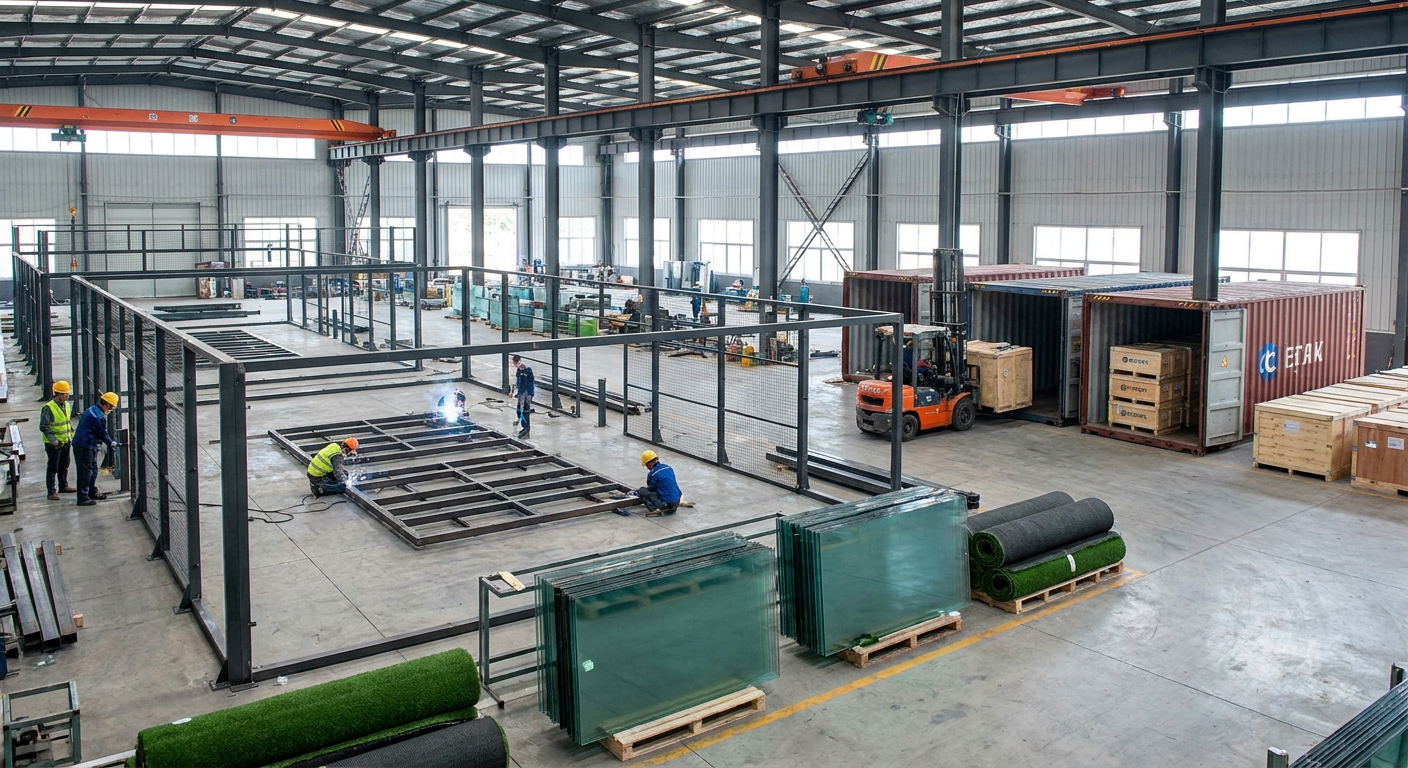
One of the most effective strategies to reduce how much does a padel court cost is to source your materials directly from the manufacturer. Ordering factory-direct allows you to eliminate middleman markups, often saving project owners up to 30% on structural components.
Benefits of OEM customization
Look: buying direct allows you to customize RAL colors and integrate your club’s logo into the turf. This branding adds value to your facility without the premium prices charged by local distributors.
- Direct technical support: Factory guidance ensures modular structures are assembled correctly.
- Bulk discounts: Ordering three or more units can reduce costs by 15% to 20%.
- Customization: Get exactly the specs your project requires.
Key Takeaway: Factory-direct purchases usually come with comprehensive installation manuals and remote video guidance to ensure correct assembly.
| Buying Method | Price Mark | Support | Customization |
|---|---|---|---|
| Local Distributor | +30% | Local | Limited |
| Factory Direct | Baseline | Direct | Unlimited |
By cutting out the middleman, you can reinvest your savings into higher-quality finishes or additional courts to scale your business faster.
FAQ: Padel Court Construction
How long does it take to build a single padel court?
Once the subfloor is cured, structural assembly typically takes 3 to 5 days. A professional crew of four can usually complete the installation within this timeframe if all materials are on-site.
Can I install a padel court on a standard tennis court?
Yes, you can, but the foundation requires modification. Because padel courts (10x20m) are smaller than tennis courts, you must ensure specific anchoring points are reinforced to support the glass walls.
Is it cheaper to build a padel court outdoors?
Yes, outdoor courts are significantly cheaper because you avoid building and HVAC costs. However, you must budget for higher maintenance due to exposure to UV rays and rain.
What’s the best way to handle shipping costs?
The best way is to utilize bulk ordering and direct port delivery. Sharing shipping containers for multiple courts can reduce your logistical expenses by up to 20%.
How do I know if I need a permit for construction?
Most jurisdictions require building and electrical permits because the court is a permanent structure. Always check with your local zoning board before signing any manufacturing contracts.
Conclusion
Calculating the total investment for your facility requires balancing initial quality with long-term durability. By understanding the drivers behind foundation, glass, and surface pricing, you can build a facility that attracts elite players while maintaining a healthy bottom line. When you are ready to determine exactly how much does a padel court cost for your specific site, please contact us today for a personalized consultation. Let us help you transform your vision into a world-class sports destination with factory-direct precision and premium materials.