The average cost to build a professional padel court ranges between £55,000 and £80,000 depending on your site prep requirements and final material specifications. You likely see the massive growth of this sport and want to capitalize on the high revenue potential it offers for your facility. However, the fear of hidden construction costs and choosing the wrong materials can lead to expensive mistakes that drain your capital. By understanding exactly how much to build a padel court, you can confidently plan a project that delivers a world-class playing experience and a rapid return on your investment.
What is the price to build a padel court?
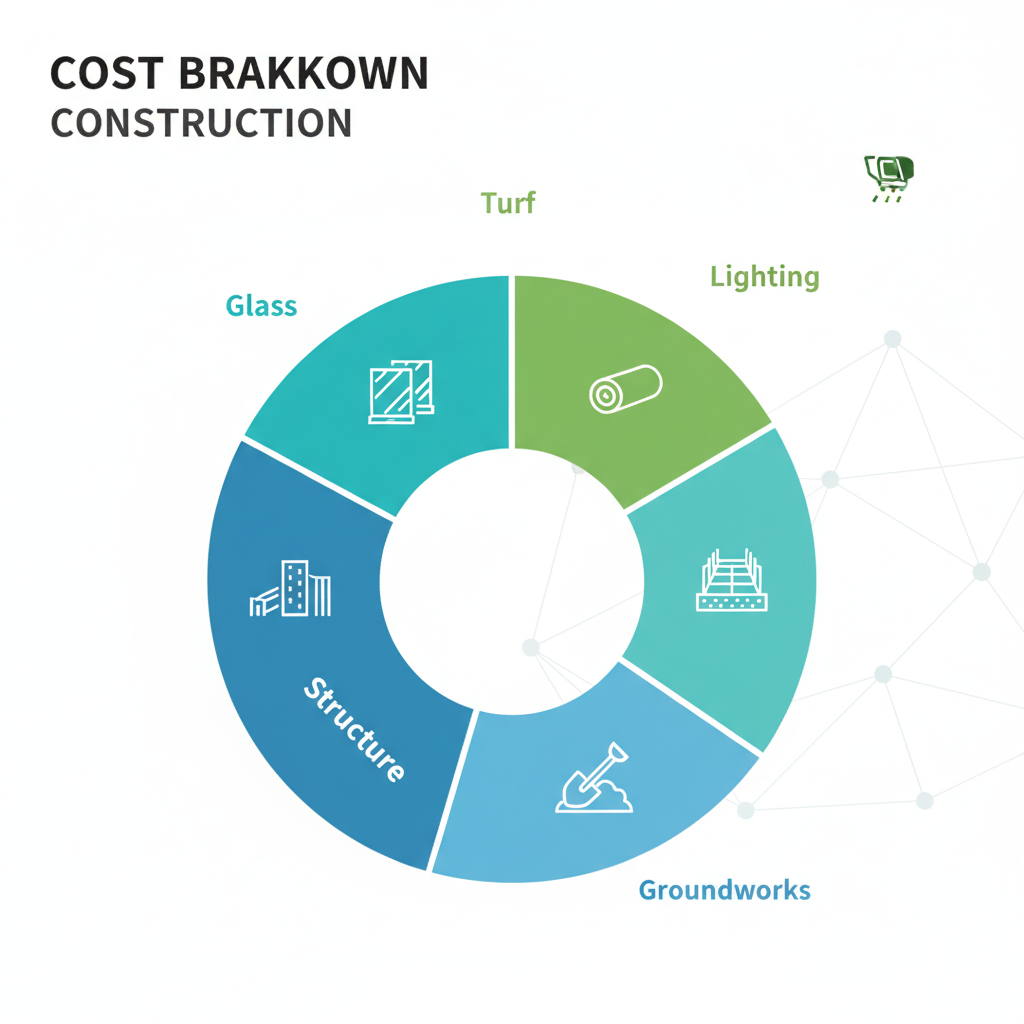
The primary investment for a high-specification padel court typically falls between £55,000 and £80,000 when you account for professional groundworks and premium structural components. You should recognize that this cost includes the essential sub-base, the galvanized steel framework, 12mm tempered glass, and high-performance LED lighting. While economy options exist, investing in commercial-grade materials ensures your facility can handle high-frequency usage without incurring heavy maintenance fees.
Identifying core investment components
Ready for the good part?
You can better manage your budget by identifying which components drive the total price and where you can find manufacturing efficiencies. High-quality steel and certified safety glass represent the bulk of the material costs for any professional installation.
- Groundworks and drainage systems
- Hot-dip galvanized steel frames
- 12mm anti-explosion safety glass
- Professional-grade sand-dressed turf
- High-efficiency LED floodlights
| Expense Category | Standard Allocation | Premium Allocation |
|---|---|---|
| Groundworks | £25,000 | £35,000 |
| Steel & Glass Kit | £18,000 | £25,000 |
| Surface & Lights | £12,000 | £20,000 |
Detailed analysis shows that groundworks typically represent 40% to 50% of the total project expenditure for a new-build facility.
Key Takeaway
Securing a professional padel court requires a strategic balance between site preparation and material quality. By prioritizing structural integrity and certified safety components, you ensure a long-lasting asset that attracts premium players.
Why does site prep change how much to build a padel court?
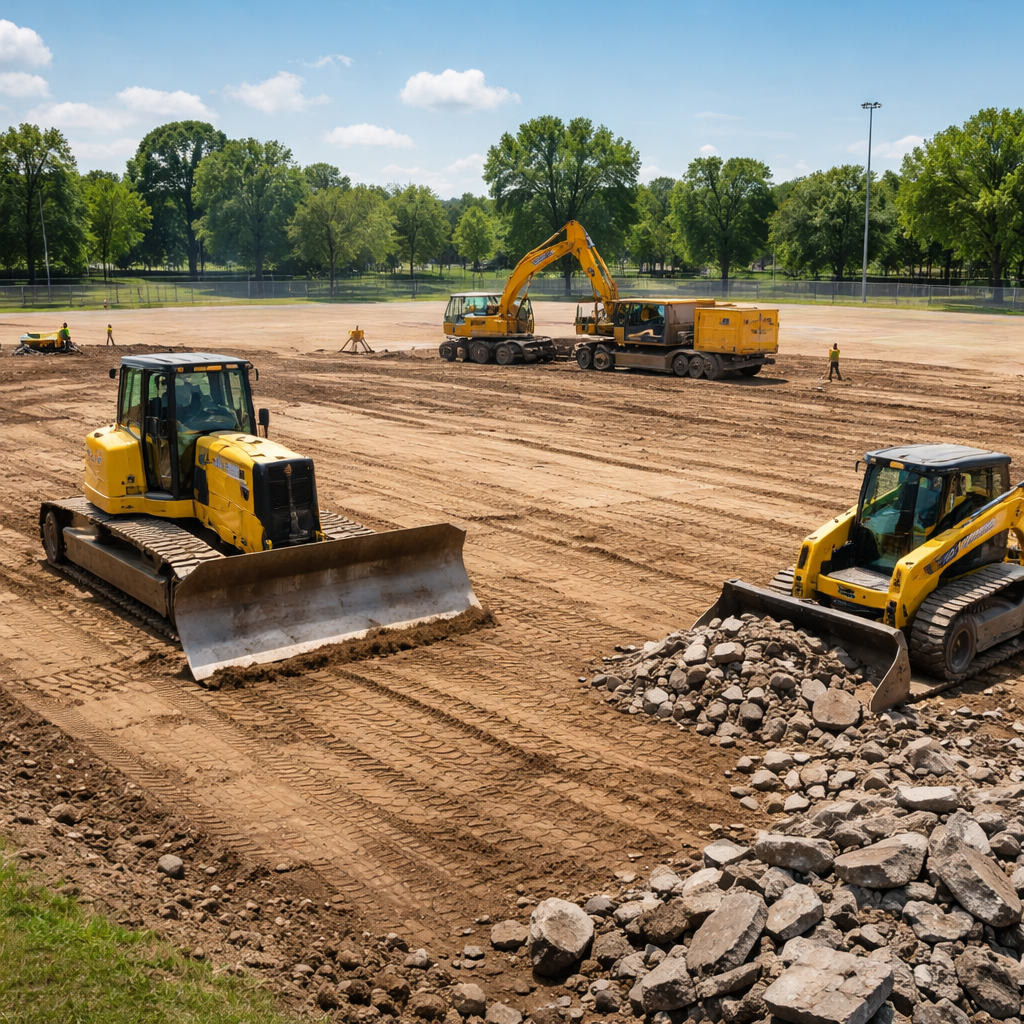
Technical site preparation is the most variable factor in how much to build a padel court because it depends entirely on your land’s topography and soil stability. You must ensure the ground is laser-leveled and capable of supporting a reinforced concrete ring beam to hold the glass walls securely. If your site requires significant earthmoving or specialized drainage for clay-heavy soil, your initial groundwork costs will naturally increase.
Managing site variability costs
But here’s the kicker…
You cannot skip the soil analysis phase without risking base subsidence that could cause your glass panels to shatter under stress. A professional survey identifies utility lines and drainage needs before you break ground, preventing costly delays during the construction phase.
- Topographical survey and leveling
- Soil load-bearing capacity testing
- Sub-base drainage pipe installation
- Reinforced concrete ring beam casting
| Prep Task | Impact on Cost | Project Necessity |
|---|---|---|
| Leveling | High | Essential |
| Soil Test | Medium | Recommended |
| Drainage | High | Essential |
| Tree Removal | Variable | Site-specific |
Expert analysis indicates that early investment in drainage systems prevents surface flooding and extends the playable hours of your facility.
Key Takeaway
Your site’s unique physical characteristics directly dictate the baseline cost of your padel project. Professional groundworks are not an area to cut corners, as they provide the structural foundation for your entire investment.
Does size change how much to build a padel court?
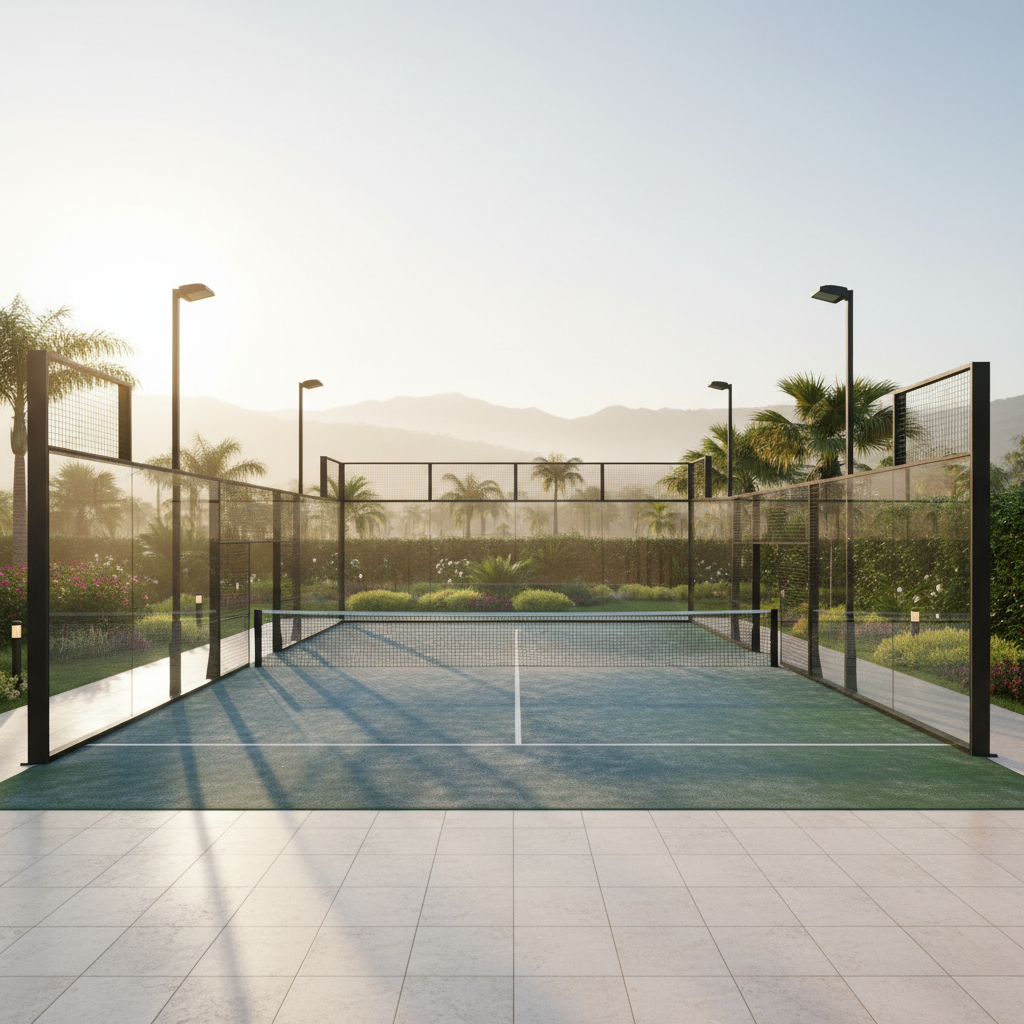
The standard dimensions of 20m x 10m dictate the fixed material requirements for how much to build a padel court and ensure international playing standards are met. You will find that while the playing area is 25% smaller than a tennis court, the structural requirements for the glass and mesh enclosure are much more intensive. Designing for multiple courts simultaneously allows you to reduce the average cost per unit by sharing common drainage and access pathways.
Optimizing facility footprint efficiency
What’s the real story?
You maximize your revenue per square foot by fitting two padel courts into the space normally occupied by a single traditional tennis court. This density makes padel an exceptionally profitable choice for urban leisure centers with limited land availability.
- Playing area: 200 square meters
- Safety runoff zone: 0.5m to 1.0m
- Double court footprint: 450-500 square meters
- Multi-court mobilization savings
| Court Type | Square Meters | Material Intensity |
|---|---|---|
| Standard Double | 200 | High |
| Single Padel | 120 | Medium |
| Tennis Conversion | 600+ | Low (Structure) |
Analysis confirms that building two courts in a single phase reduces mobilization fees for heavy machinery and labor by up to 15%.
Key Takeaway
Size consistency allows for predictable budgeting, but facility density is your secret weapon for high ROI. Plan for multiple courts from the start to leverage economies of scale and maximize your revenue potential.
How does turf quality change how much to build a padel court?
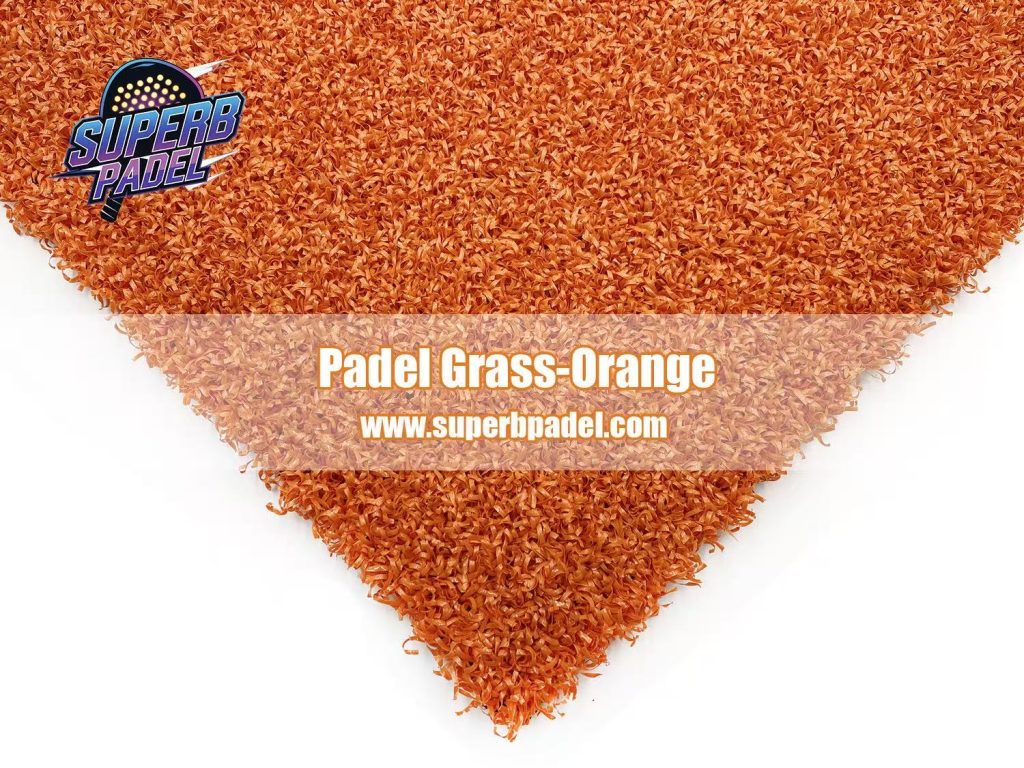
Selecting high-density, sand-dressed artificial turf significantly influences how much to build a padel court and directly impacts the player’s experience. You should expect to spend between £5,000 and £8,000 for professional-grade fibers that offer consistent ball bounce and high wear resistance. Lower-quality turf may save you capital upfront but will require replacement years earlier under heavy commercial use.
Selecting the right synthetic surface
This is where it gets interesting…
You can choose between monofilament and fibrillated fibers, each offering different levels of durability and aesthetic appeal for your club members. Professional-grade turf is designed to hold sand infill evenly, preventing the slippery spots that can lead to player injuries.
- 10mm to 12mm pile height
- Fibrillated fiber durability
- UV-resistant material additives
- High-flow drainage backing
| Turf Grade | Lifespan | Play Consistency |
|---|---|---|
| Professional | 8-12 Years | High |
| Club Grade | 5-7 Years | Medium |
| Economy | 3-5 Years | Low |
Analysis shows that premium turf reduces the frequency of decompaction maintenance, lowering your long-term operational costs.
Key Takeaway
The playing surface is the part of the court your members interact with most. Invest in high-density fibers to ensure a professional playing experience that keeps your booking calendar full and your maintenance costs low.
Will glass type impact how much to build a padel court?
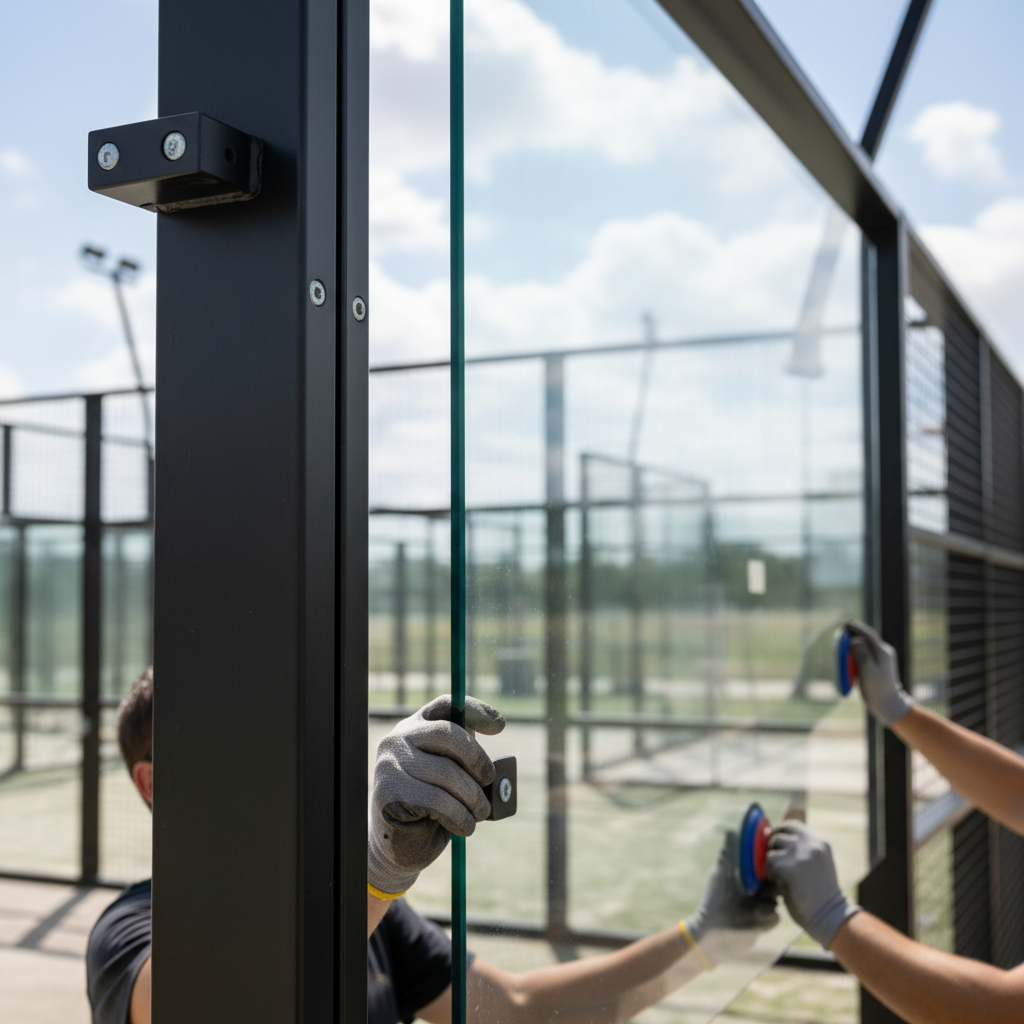
The choice between 10mm and 12mm tempered safety glass is a critical decision that affects how much to build a padel court and your facility’s safety rating. You must use 12mm glass for commercial environments to ensure the walls can withstand high-velocity ball impacts and player collisions over many years. Certified anti-explosion glass is a non-negotiable requirement for meeting international safety standards and securing project insurance.
Understanding glass enclosure safety
Think about it:
You gain peace of mind by installing glass that meets European EN 12150 standards, ensuring it shatters into small, harmless grains if a catastrophic impact occurs. High-quality glass also provides better transparency and UV resistance, keeping your facility looking modern and premium for spectators.
- 12mm tempered safety glass
- Countersunk stainless steel bolts
- EPDM rubber protection gaskets
- Certified anti-explosion technology
| Glass Thickness | Impact Strength | Weight Per Panel |
|---|---|---|
| 10mm | Standard | ~180kg |
| 12mm | High | ~215kg |
| Panoramic 12mm | Maximum | ~250kg |
Structural analysis indicates that 12mm glass provides a more consistent rebound for competitive play compared to thinner, more flexible alternatives.
Key Takeaway
Glass is the defining structural element of a padel court. Prioritize 12mm certified safety glass to protect your players, reduce liability, and ensure the long-term integrity of your enclosure.
Do lighting systems add to how much to build a padel court?
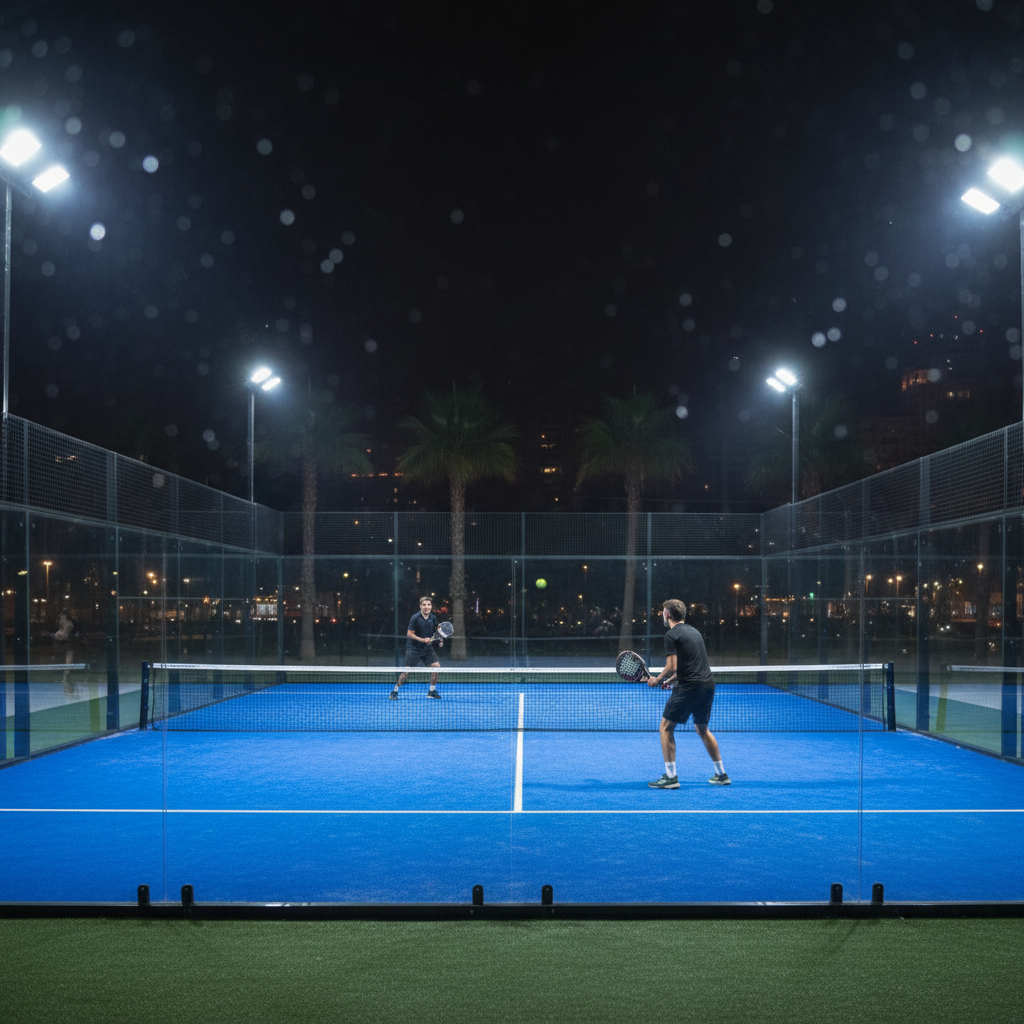
Integrating a professional LED floodlighting system is an essential cost in how much to build a padel court because it extends your revenue-earning hours into the night. You should budget between £4,000 and £7,500 for high-efficiency lights that provide uniform illumination across the entire playing surface. Modern LED systems consume 60% less energy than traditional halogen bulbs, significantly lowering your monthly utility bills.
Maximizing evening revenue hours
Wait, there is more…
You can opt for smart lighting controls that allow you to adjust brightness levels based on booking times, further optimizing your operational efficiency. Professional LED chips offer over 50,000 hours of life, meaning you won’t need to worry about frequent bulb replacements in hard-to-reach locations.
- 200W to 300W LED floodlights
- Low-glare asymmetric optics
- IP66 waterproof rating
- Instant-on/off functionality
| Lighting Tier | Avg. Lux Level | Energy Efficiency |
|---|---|---|
| Tournament | 500 Lux | Extreme |
| Club Standard | 300 Lux | High |
| Economy | 200 Lux | Medium |
Comparative analysis confirms that LED lighting pays for itself within the first 18 months through energy savings and increased evening bookings.
Key Takeaway
Lighting is your facility’s primary tool for maximizing court utilization. By choosing high-efficiency LED systems, you ensure a professional playing environment while keeping your long-term overhead as low as possible.
How does a roof impact how much to build a padel court?
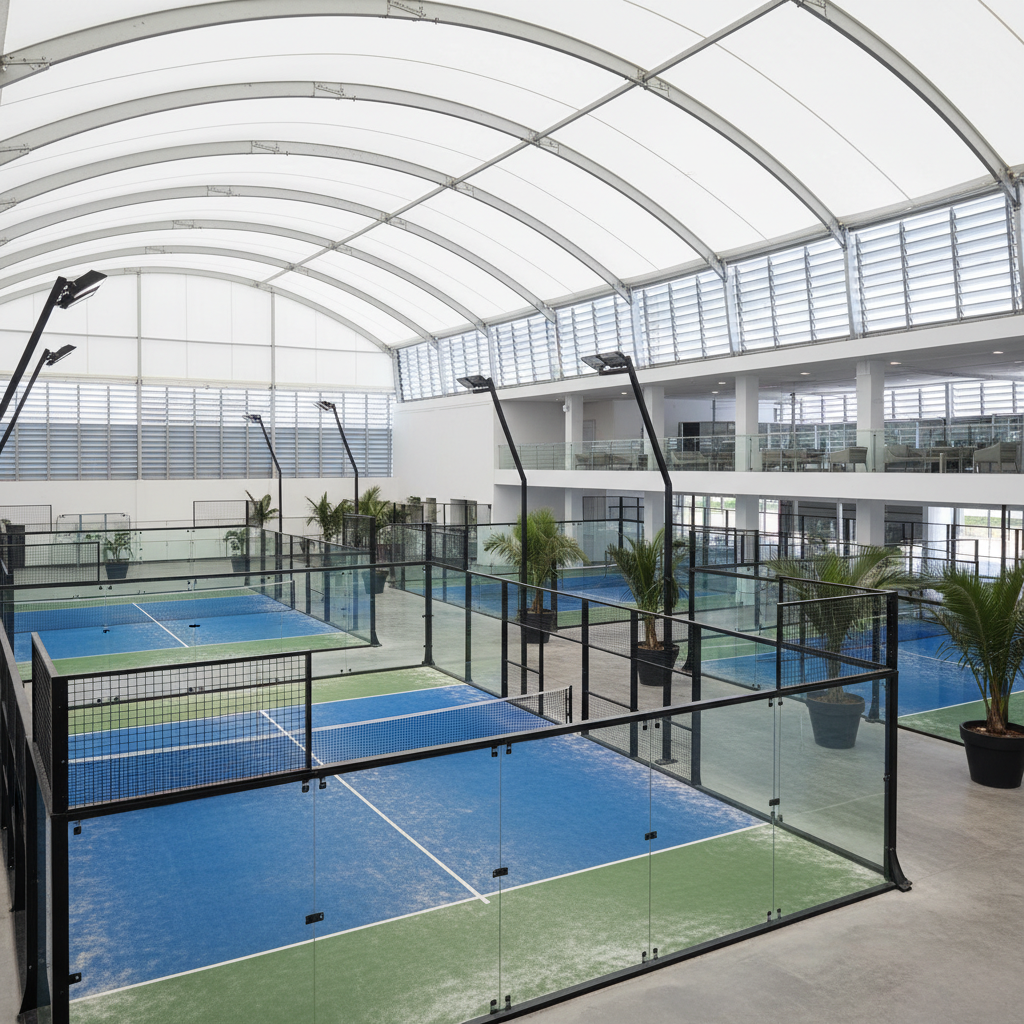
Adding a roofing system can increase how much to build a padel court by £15,000 to £35,000 but guarantees your revenue remains consistent regardless of the weather. You will find that roofed courts have significantly higher utilization rates during winter months when rain or snow would otherwise force outdoor closures. A roof also protects your structural components and turf from UV degradation, extending the overall lifecycle of the facility.
Ensuring all-weather revenue stability
It gets better:
You can market your facility as an “all-weather” destination, which allows you to charge a premium for court hire during peak rainy seasons. High-tensile fabric roofs or permanent steel structures provide the necessary height clearance for lobs while keeping the playing area dry and safe.
- High-tensile PVC fabric roofs
- Permanent steel canopy structures
- Integrated guttering systems
- Increased peak-season utilization
| Facility Type | Est. Annual Revenue | Weather Risk |
|---|---|---|
| Outdoor | £25,000 | High |
| Roofed | £45,000 | Low |
| Indoor Hub | £60,000+ | Zero |
Financial analysis suggests that the initial cost of a roof is recovered through the additional 30% to 50% in winter bookings it facilitates.
Key Takeaway
A roof transforms your padel court into a 365-day-a-year business asset. While it requires more capital upfront, the revenue certainty and protection of your assets make it a wise choice for commercial operators.
Does buying direct lower how much to build a padel court?
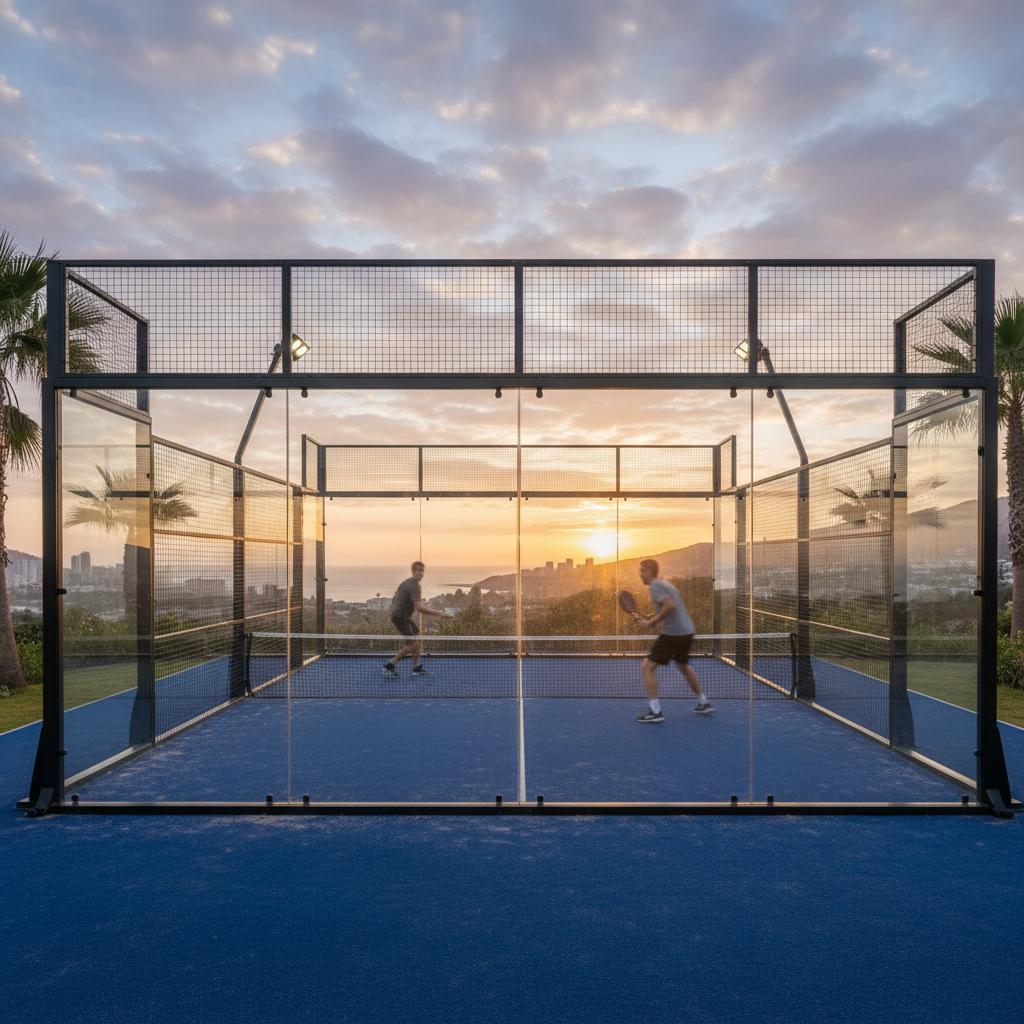
Purchasing your equipment directly from a manufacturer is the most effective way to lower how much to build a padel court by eliminating middleman commissions and retail markups. You gain direct access to factory-direct pricing, allowing you to upgrade your court’s specifications without exceeding your original budget. Bypassing distributors also ensures you receive genuine spare parts and direct technical support for the life of your facility.
Leveraging factory direct advantages
The best part?
You can fully customize your court’s colors and branding at the source, which is often a service that local contractors charge a significant premium for. Direct buying also streamlines the logistics process, as the manufacturer handles the quality control of every component before it leaves the factory.
- Elimination of distributor markups
- OEM/ODM branding customization
- Direct technical assembly guidance
- Certified material traceability
| Procurement Path | Relative Price | Technical Support |
|---|---|---|
| Factory Direct | 100% | Direct Expert |
| Local Distributor | 135% | Intermediary |
| Retail Agent | 150% | Generalist |
Market analysis demonstrates that clubs save an average of 30% on material costs when purchasing directly from the manufacturing source.
Key Takeaway
Direct procurement provides the highest quality materials at the lowest possible cost. This strategy allows you to allocate more budget toward revenue-generating amenities like lighting or high-end turf.
What foundations are used for how much to build a padel court?
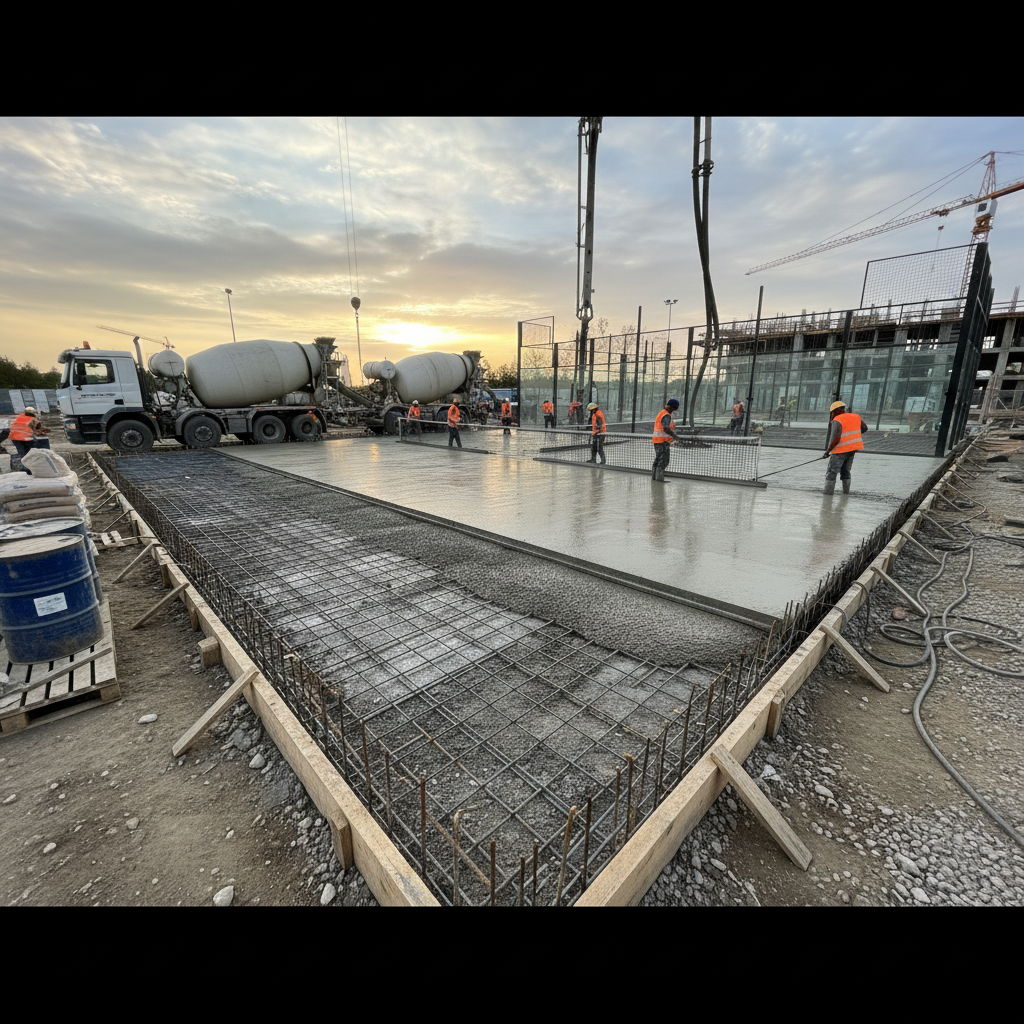
The engineering of the foundation is a major factor in how much to build a padel court because it must support the intense structural loads of the glass enclosure. You must install a reinforced concrete ring beam that is at least 40cm wide and 40cm deep around the perimeter to anchor the steel posts securely. A porous macadam or specialized concrete base is then laid inside the beam to ensure rapid drainage and a perfectly flat playing surface.
Engineering a stable playing base
Let’s dive in:
You must prioritize the accuracy of the base leveling, as even a minor deviation can cause the glass panels to sit unevenly, leading to structural stress and potential breakage. A professional base contractor will use laser-leveling technology to achieve the sub-millimeter precision required for elite play.
- Reinforced concrete ring beam
- Porous sub-base material layers
- Laser-leveled surface precision
- Integrated drainage pipe network
| Base Material | Drainage Speed | Structural Life |
|---|---|---|
| Porous Macadam | Fast | 15+ Years |
| Specialized Concrete | Medium | 20+ Years |
| Basic Asphalt | Slow | 8-10 Years |
Analysis reveals that the majority of structural failures in padel courts are linked to inadequate ring beam reinforcement or poor drainage planning.
Key Takeaway
The foundation is the most critical structural component of your project. By investing in a professionally engineered ring beam and a high-flow drainage base, you protect your glass and ensure your facility remains playable in all conditions.
How long does it take for how much to build a padel court?
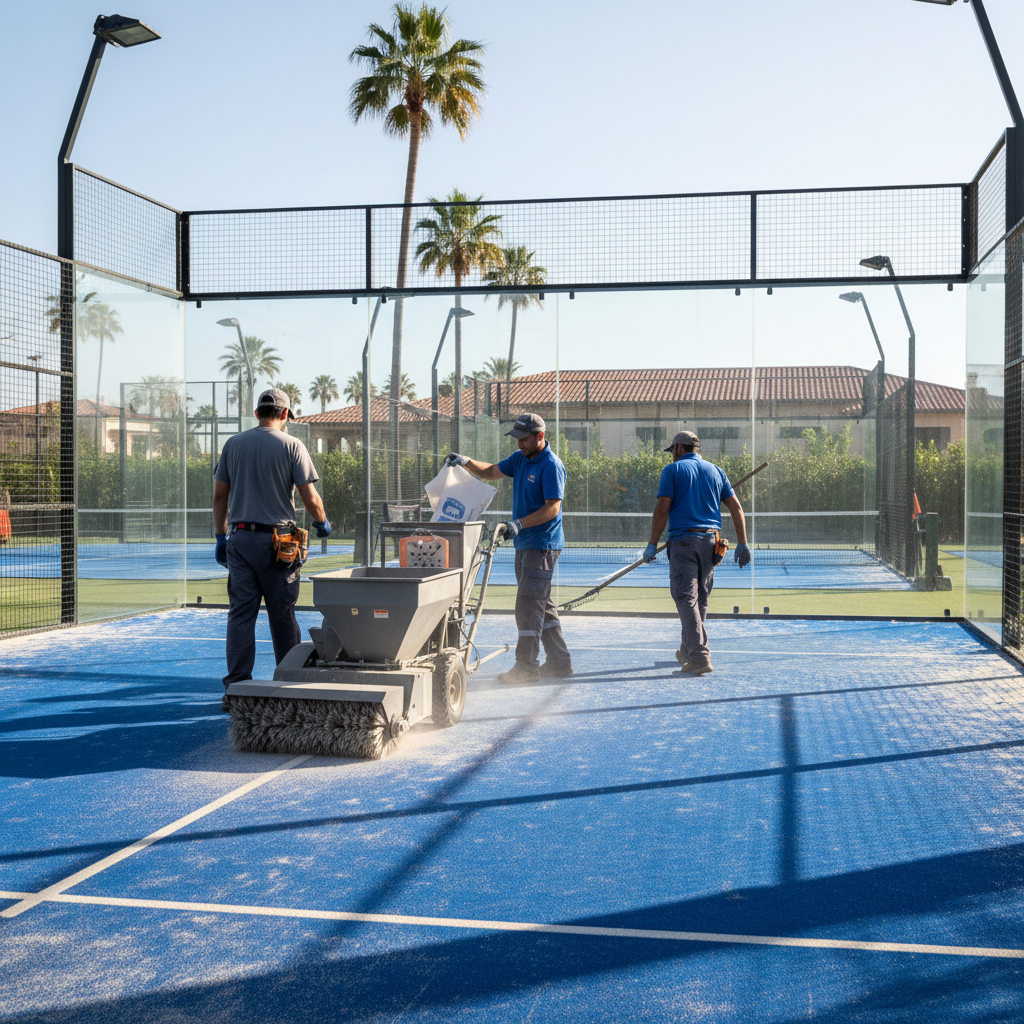
The total timeline for your project influences how much to build a padel court through labor costs and the window of time before you can start generating revenue. You should plan for a six-to-eight-week on-site construction period once the initial design and planning permissions have been secured. Understanding each phase—from excavation to the final light testing—allows you to manage your facility’s launch and marketing activities effectively.
Scheduling the construction lifecycle
Here’s the deal:
You will spend the first two to three weeks on groundworks and base preparation, followed by a week for the concrete ring beam to cure properly before structural installation begins. The final assembly of the steel, glass, and turf is a rapid process that typically takes less than ten days for an experienced crew.
- Design and planning (4-12 weeks)
- Earthworks and drainage (2 weeks)
- Base and ring beam (2 weeks)
- Structure and assembly (1-2 weeks)
| Project Phase | Labor Intensity | Critical Path Item |
|---|---|---|
| Groundworks | High | Drainage/Leveling |
| Base Casting | Medium | Concrete Curing |
| Installation | High | Glass Alignment |
Analysis shows that efficient project management can shave two weeks off the total timeline, allowing you to start generating court hire revenue earlier.
Key Takeaway
Time is money when it comes to facility development. By coordinating your groundworks and structural delivery carefully, you can complete your padel court in under two months and begin recouping your investment.
Frequently Asked Questions
Can I build a padel court on my existing tennis court?
Yes, but you still need a reinforced concrete ring beam and a laser-leveled base to meet safety standards.
What’s the best glass thickness for a club?
Twelve millimeters is the industry standard for commercial safety, providing the best rebound and impact resistance.
Can I install a padel court myself?
No, because the specialized alignment of the steel frames and the heavy 200kg glass panels require professional machinery and expertise.
What’s the best ROI strategy for padel?
Build at least two courts to share amenities and utilize a factory-direct manufacturer to lower your initial capital expenditure.
Can I build a court without a roof?
Yes, but you will lose revenue during rainy days; most commercial operators find a roof pays for itself via winter bookings.
Strategic Conclusion
Building a professional padel facility is one of the most effective ways to diversify your sports offerings and secure a high-demand revenue stream. By focusing on certified materials, professional groundworks, and factory-direct procurement, you ensure that your facility is built to last while keeping how much to build a padel court within a manageable budget. We are committed to providing you with the technical expertise and high-performance equipment needed to make your vision a reality. Our brand vision is to empower facility owners with world-class courts that inspire community growth and commercial success. Don’t leave your project’s success to chance—reach out to our expert team and contact us today to receive your comprehensive quotation and site assessment.