A padel board is a specialized sports infrastructure consisting of a 20×10 meter court enclosed by glass walls and steel mesh, designed for a fast-paced racket sport played in doubles. Many facility owners struggle with high construction quotes and a lack of technical knowledge when trying to enter the booming racket sports market. Failing to understand the specific structural requirements can lead to poor ball bounce, safety hazards, and a significant loss on investment. Investing in a professional padel board setup ensures your facility meets international standards while maximizing player engagement and long-term revenue.
What are the essential rules of a padel board?
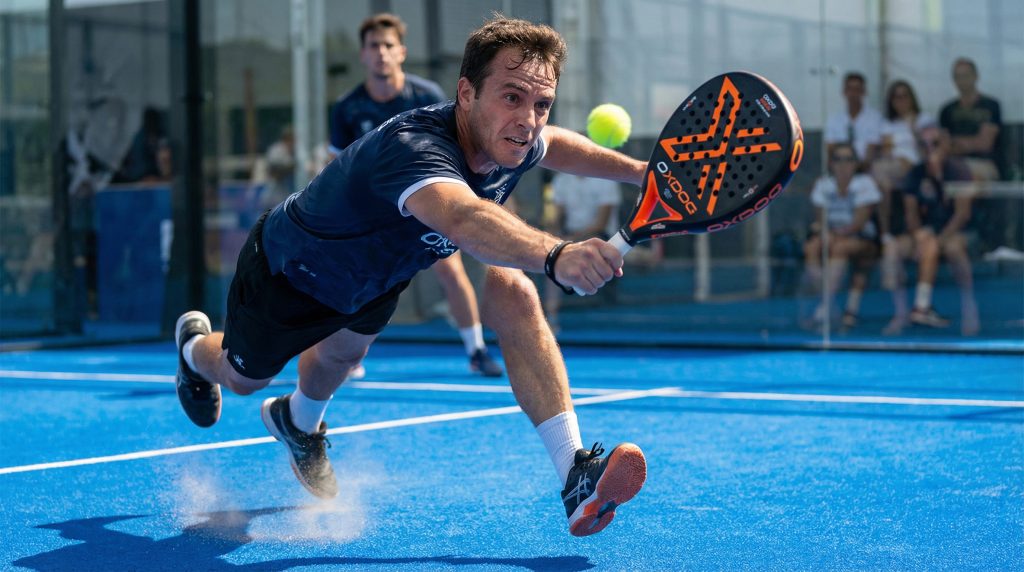
The essential rules of a padel board require the ball to bounce on the ground before hitting any surrounding walls or fences. It is primarily a doubles sport where you must work in pairs to outmaneuver your opponents. As in tennis, the ball can be hit indistinctly by any player in any zone of the court once it is in play.
How many players are required for a match?
A standard match on a padel board requires four players divided into two competing teams. This format encourages a social atmosphere and strategic team play across the net.
Here is the kicker.
- Four players total (two per side).
- Mandatory doubles format for professional play.
- Alternating serves between partners.
What are the main gameplay dynamics?
The gameplay dynamics involve using the glass walls to keep the ball in play after it has bounced on the turf. You can hit the ball in any zone, but it must never hit the fence directly on a serve or a return.
Think about it.
- Ball must bounce before hitting walls.
- Volleys are allowed during rallies.
- The net separates the two teams.
Key Takeaway: Understanding the doubles-centric nature and the “ground-first” bounce rule is fundamental for anyone managing a professional facility.
| Rule Category | Description |
|---|---|
| Team Size | 4 Players (2 vs 2) |
| Valid Bounce | Ground first, then walls |
| Serve Style | Underhand below the waist |
How do you design a high-quality padel board?
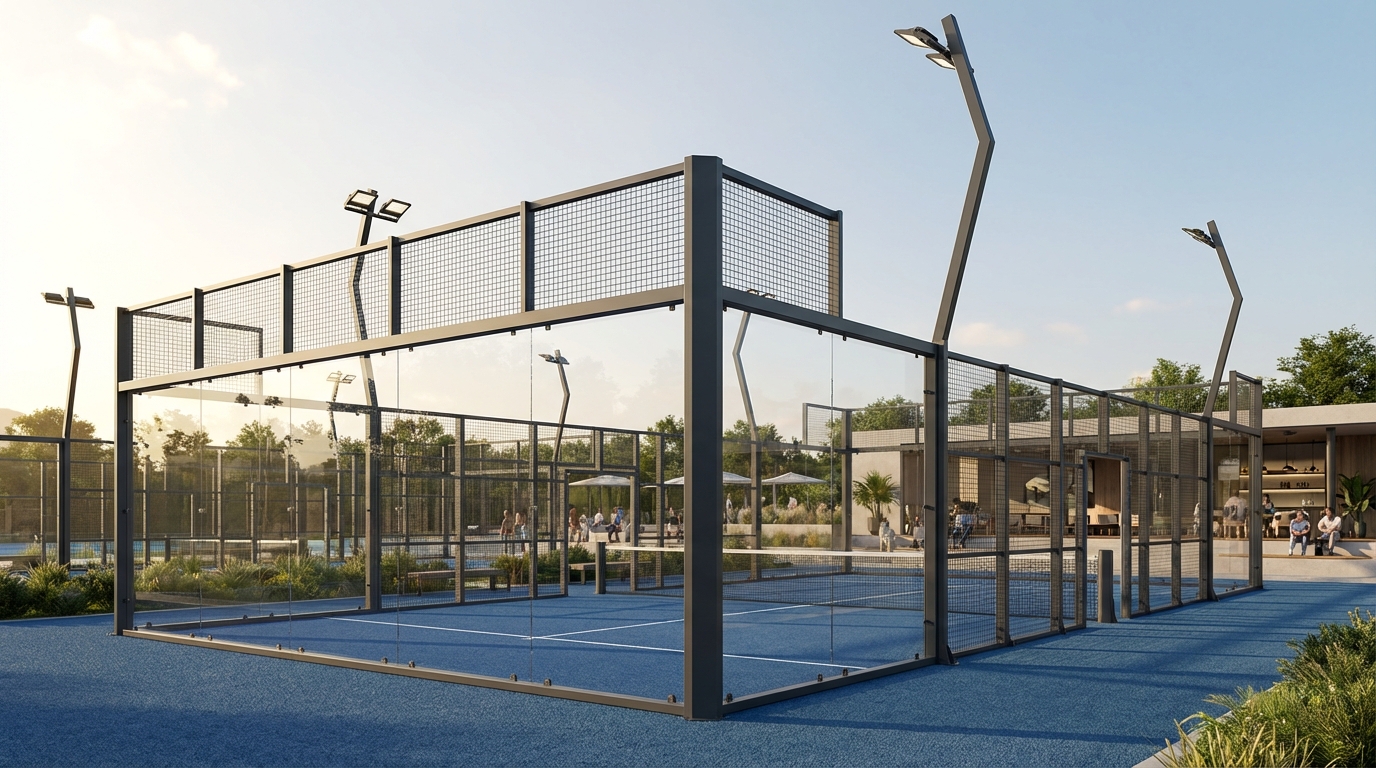
Designing a high-quality padel board starts with selecting a 20-meter by 10-meter area that can accommodate the structural load of tempered glass. Proper orientation is vital to ensure that the sun does not blind you or your players during peak hours of operation.
What are the standard court dimensions?
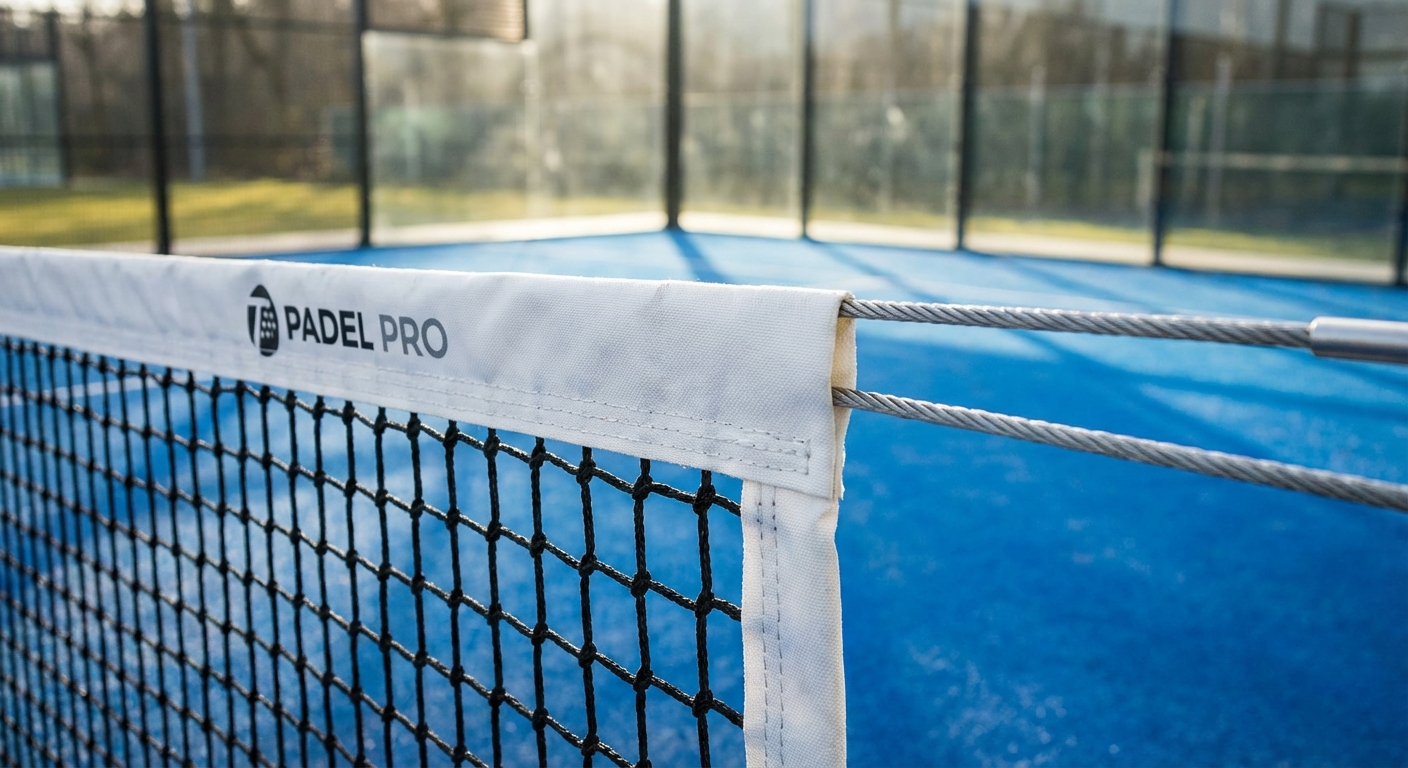
The official dimensions of a padel board are exactly 20 meters in length and 10 meters in width. The court is divided in the middle by a net that stands 88 centimeters high at the center.
Believe it or not.
- Total Area: 200 square meters.
- Internal Width: 10 meters.
- Internal Length: 20 meters.
What lighting is required for visibility?
Professional lighting for a Standard Padel Court requires at least four LED floodlights mounted on poles at a height of 6 meters. This ensures uniform lux levels across the entire playing surface without creating distracting shadows.
The best part?
- IP66 waterproof-rated LEDs.
- Minimum 300-500 lux for clubs.
- Anti-glare positioning for better play.
Key Takeaway: Precision in dimensions and high-quality lighting are the twin pillars of a professional-grade installation.
| Component | Specification |
|---|---|
| Length | 20 Meters |
| Width | 10 Meters |
| Light Height | 6 Meters |
Which ball is used on a professional padel board?
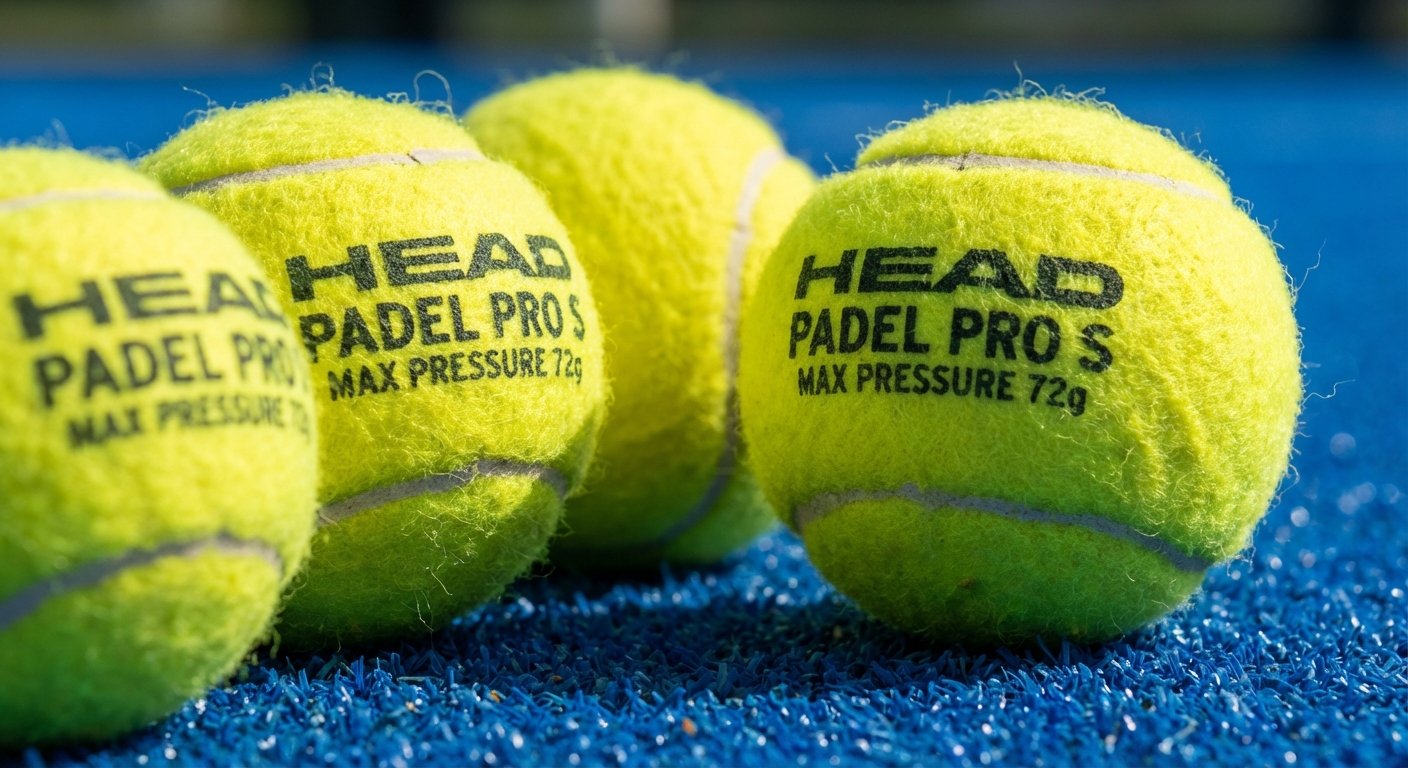
The ball used on a professional padel board looks identical to a tennis ball but has significantly lower internal pressure. This lower pressure results in a slower bounce, which is necessary to accommodate the smaller court size and the presence of walls.
How does ball pressure affect the game?
Internal pressure in a padel board ball is regulated to be between 4.6kg and 5.2kg per 2.54 square cm. This ensures that the ball doesn’t fly off the court too easily when hit with power.
It gets better.
- Lower pressure than tennis balls.
- Consistent 135cm to 145cm bounce.
- Slower flight speed for control.
What materials are these balls made from?
A padel board ball is constructed with a high-quality rubber core covered in a blend of wool, nylon, and cotton felt. This specific felt density is designed to withstand the friction of the Padel Grass and the impact against the glass.
Look at it this way.
- Natural rubber core.
- High-visibility yellow felt.
- Water-resistant coating for durability.
Key Takeaway: Always provide specific balls to ensure the game remains controllable and enjoyable for your members.
| Feature | Padel Ball | Tennis Ball |
|---|---|---|
| Pressure | 10-11 psi | 14-15 psi |
| Bounce Height | 135-145 cm | 135-147 cm |
| Size | 6.35 – 6.77 cm | 6.54 – 6.86 cm |
How do you choose the right padel board racket?
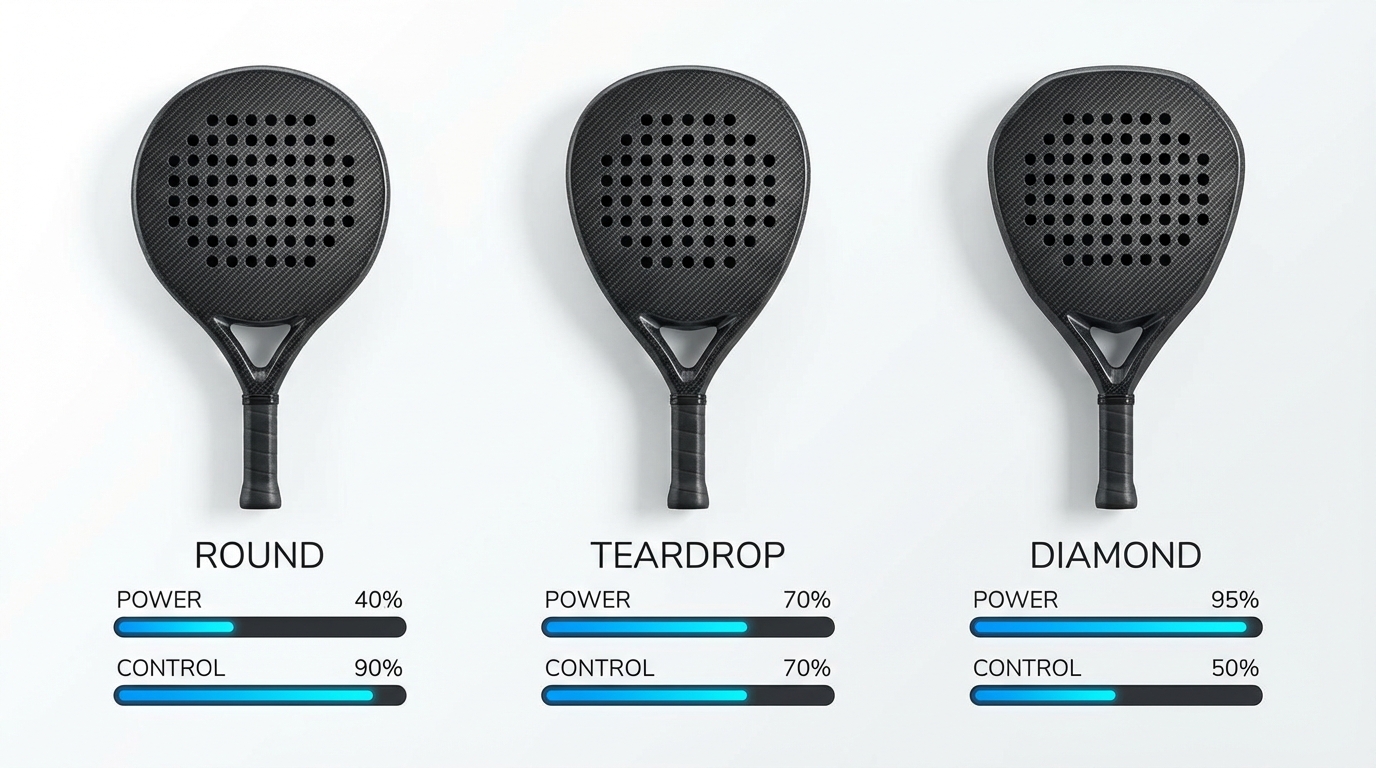
Choosing the right padel board racket involves evaluating your skill level and your preferred balance between power and control. Unlike tennis rackets, these are solid tools made of composite materials with no strings.
What are the different racket shapes?
Rackets for a padel board come in round, teardrop, and diamond shapes to suit different playstyles. Round rackets offer you the most control, while diamond shapes provide maximum power for advanced players.
Make no mistake.
- Round: Large sweet spot for beginners.
- Teardrop: Balanced power and control.
- Diamond: Top-heavy for aggressive shots.
What materials define racket quality?
High-end padel board rackets use carbon fiber frames and EVA foam cores to absorb vibrations and provide a responsive touch. The surface may also feature a rough “sand” finish to help you generate more spin on the ball.
The secret?
- Carbon fiber for durability.
- EVA foam for shock absorption.
- Integrated safety wrist straps.
Key Takeaway: Offering a variety of rackets ensures that both novices and pros find the equipment they need to play effectively.
| Shape | Control | Power | Skill Level |
|---|---|---|---|
| Round | High | Low | Beginner |
| Teardrop | Medium | Medium | Intermediate |
| Diamond | Low | High | Advanced |
How does scoring work on a padel board?
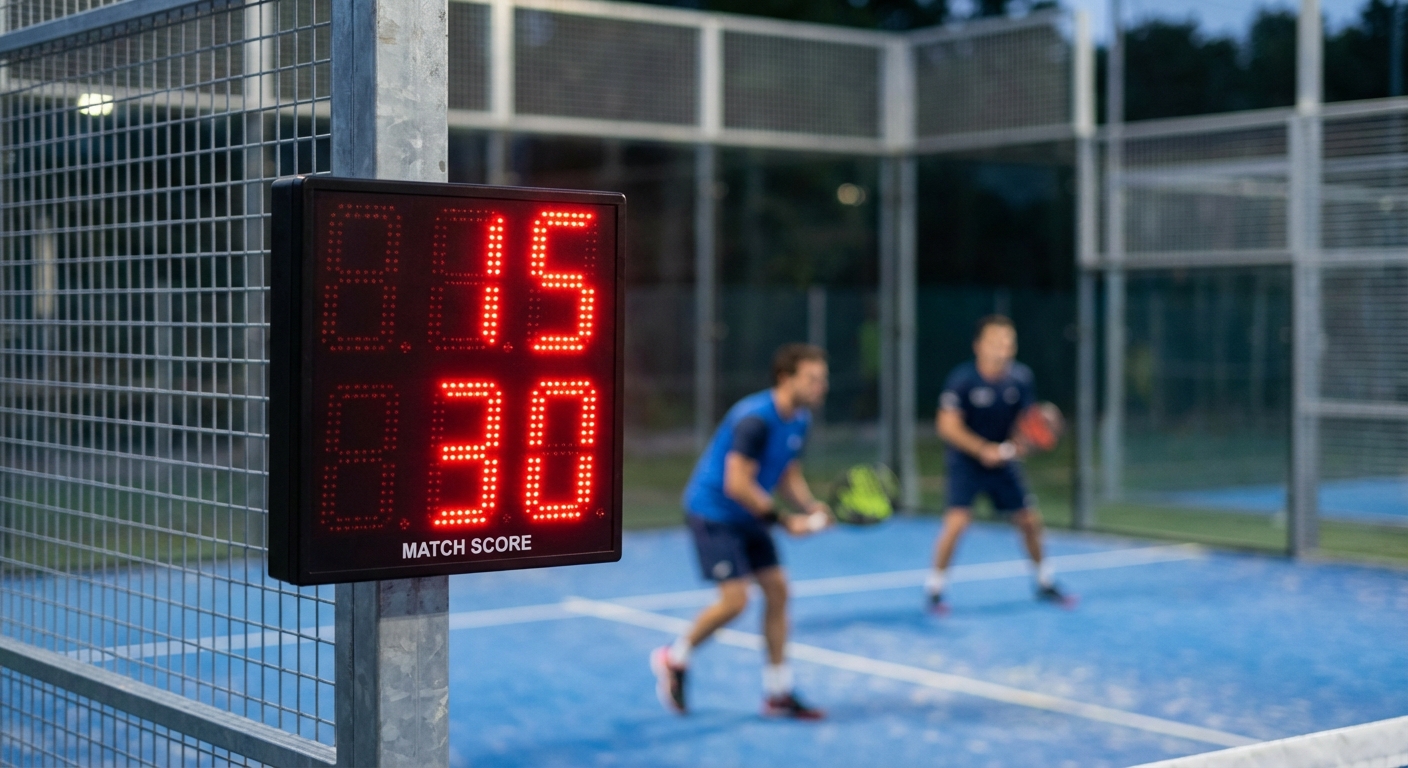
Scoring on a padel board follows the traditional tennis system of 15, 30, 40, and game. Matches are typically played as the best of three sets, with a tie-break occurring if a set reaches a six-six score.
How is a game won?
To win a game on a padel board, your team must score four points and have at least a two-point lead. However, many professional circuits now use the “Golden Point” rule to decide games at 40-40.
Here is the deal.
- 1st point: 15.
- 2nd point: 30.
- 3rd point: 40.
- 4th point: Game.
When do teams change sides?
Teams must change sides of the padel board when the sum of the games played in a set is an odd number. This ensures that neither team has a permanent advantage regarding wind or sun positioning.
Stay with me here.
- Change at 1-0, 2-1, 3-2.
- 90-second rest during changes.
- 120-second rest between sets.
Key Takeaway: The familiar scoring system makes the sport highly accessible to anyone who has previously played or watched tennis.
| Score Point | Call |
|---|---|
| 0 Points | Love |
| 1 Point | 15 |
| 2 Points | 30 |
| 3 Points | 40 |
What is the correct way to serve on a padel board?
The correct way to serve on a padel board is to hit the ball underhand at or below waist level after bouncing it behind the service line. The serve must land in the opponent’s cross-court service box to be considered valid.
Where must the serve land?
Every serve on a padel board must land within the service box located diagonally across the net from the server. If the ball bounces in the box and then hits the side fence, it is considered a fault.
Think about it.
- Must bounce in the diagonal box.
- Cannot hit the fence after bounce.
- Can hit the glass after bounce.
How many serve attempts are allowed?
The server on a padel board is granted two attempts to successfully put the ball into play. If the ball clips the net and lands in the correct box, it is a “let” and the serve is repeated.
The best part?
- First serve and second serve.
- “Let” calls for net touches.
- Double fault results in point loss.
Key Takeaway: Mastering the underhand serve is the first step for any player looking to control the pace of a match.
| Serve Outcome | Result |
|---|---|
| Hits Net & Lands In | Let (Repeat) |
| Hits Fence After Bounce | Fault |
| Hits Glass After Bounce | Valid |
Why are the walls vital for a padel board?
The walls are vital for a padel board because they allow the ball to remain in play after a bounce, creating a dynamic 360-degree gaming experience. They are typically made of 10mm or 12mm Padel Glass to ensure safety and consistent ball rebound.
What materials are used for walls?
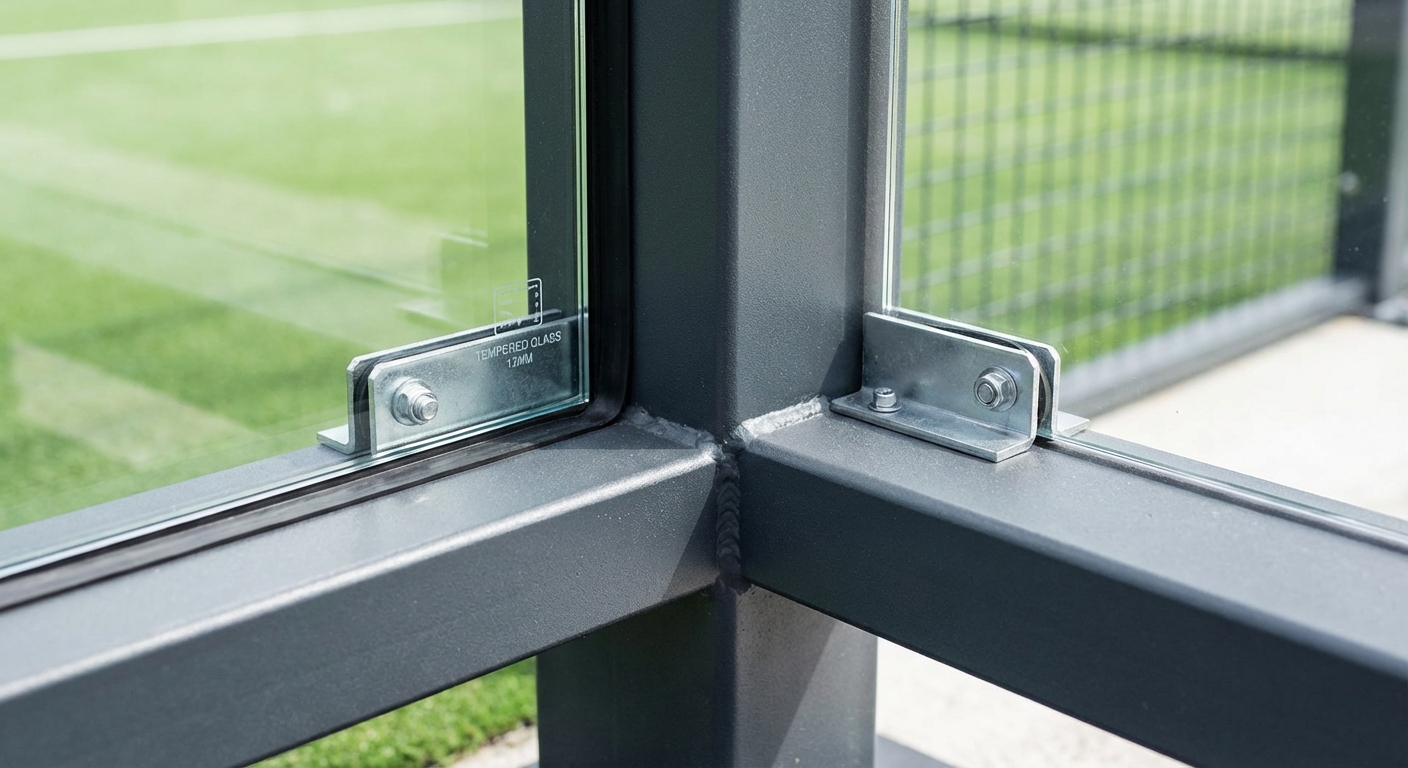
Professional padel board facilities use tempered safety glass that can withstand high-velocity impacts from both balls and players. The glass panels are secured by a galvanized steel structure to prevent wobbling or structural failure.
Believe it or not.
- 12mm tempered safety glass.
- UV-resistant gaskets.
- Laser-aligned steel frames.
How does the fence interact with play?
The metal mesh or fence on a padel board produces an unpredictable bounce, which you can use as a tactical tool to confuse opponents. Unlike the glass, hitting the fence directly from a shot without a bounce results in a lost point.
Here is the kicker.
- Unpredictable ball trajectory.
- Durable electro-welded mesh.
- Tactical “snag” points for spin.
Key Takeaway: The combination of glass and mesh is what gives the game its unique strategic depth and high spectator appeal.
| Surface Type | Bounce Quality | Direct Hit Rule |
|---|---|---|
| Tempered Glass | Predictable / High | Allowed (after bounce) |
| Metal Mesh | Unpredictable | Allowed (after bounce) |
| The Ground | Standard | Mandatory First |
How can you build a durable padel board?
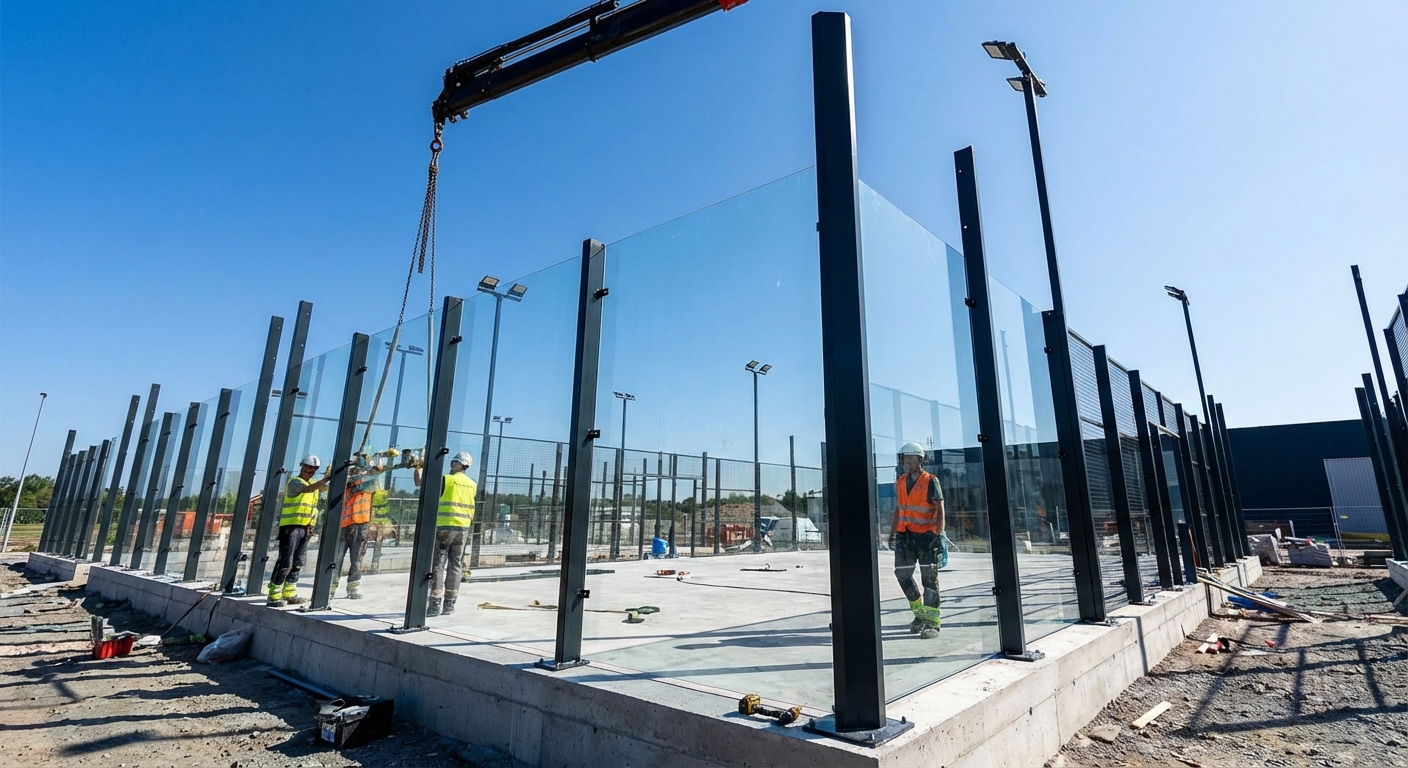
Building a durable padel board requires a solid concrete foundation and a hot-dip galvanized Padel Structure to resist corrosion. Using high-density artificial turf with sand infill is also essential for a professional playing surface.
What kind of foundation is needed?
The foundation for a padel board must be a reinforced concrete slab or a porous asphalt base with a minimum thickness of 15cm. This provides a level surface and ensures that the structural anchors remain secure during heavy use.
Wait for it.
- Reinforced concrete (3000 psi).
- 1% slope for water drainage.
- Precise anchoring points.
How is the artificial turf installed?
Artificial turf for a padel board is laid in rolls and glued at the seams before being filled with fine, kiln-dried silica sand. This sand stabilizes the turf fibers and allows you to slide safely during intense movements.
Look at it this way.
- Fibrillated or monofilament turf.
- 10kg to 15kg of sand per m².
- UV-stabilized fiber technology.
Key Takeaway: Investing in a galvanized steel frame and a thick concrete base will extend the lifespan of your facility to over 20 years.
| Construction Step | Material Requirement |
|---|---|
| Base | Reinforced Concrete |
| Structure | Galvanized Steel |
| Surface | Monofilament Turf |
What is the maintenance cost for a padel board?
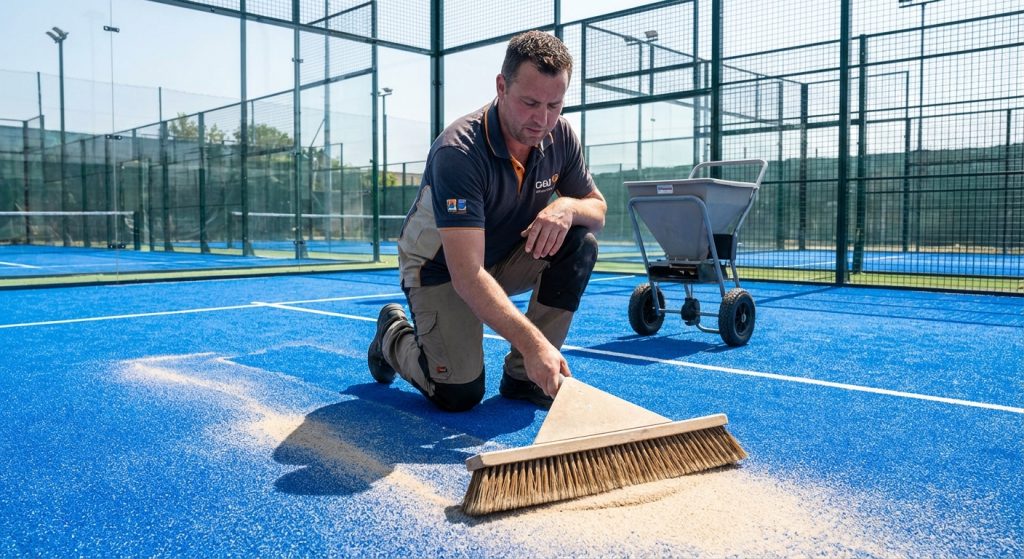
The maintenance cost for a padel board is relatively low, primarily involving regular turf brushing and glass cleaning to maintain optimal playing conditions. For a commercial club, these tasks ensure the longevity of the equipment and the safety of the players.
How often should turf be maintained?
Turf on a padel board should be brushed at least once a week to redistribute the silica sand and prevent the fibers from flattening. This simple task ensures a consistent ball bounce and prevents “bald” spots on high-traffic areas.
Think about it.
- Weekly brushing with plastic bristles.
- Monthly sand leveling.
- Annual deep cleaning of moss.
What are the structural check-ups?
A padel board requires a bi-annual inspection of all bolts, gaskets, and net tensioners to ensure the structure remains rigid. Checking the glass-to-metal contact points is vital to prevent stress cracks from vibrations.
The best part?
- Tighten frame bolts.
- Inspect glass gaskets.
- Check net wire tension.
Key Takeaway: Proactive maintenance keeps your court looking new and prevents minor issues from turning into major structural failures.
| Maintenance Task | Frequency | Benefit |
|---|---|---|
| Glass Cleaning | Weekly | Better Visibility |
| Turf Brushing | Weekly | Even Bounce |
| Bolt Tightening | Every 6 Months | Structural Safety |
Frequently Asked Questions
- Can I install a padel board outdoors?
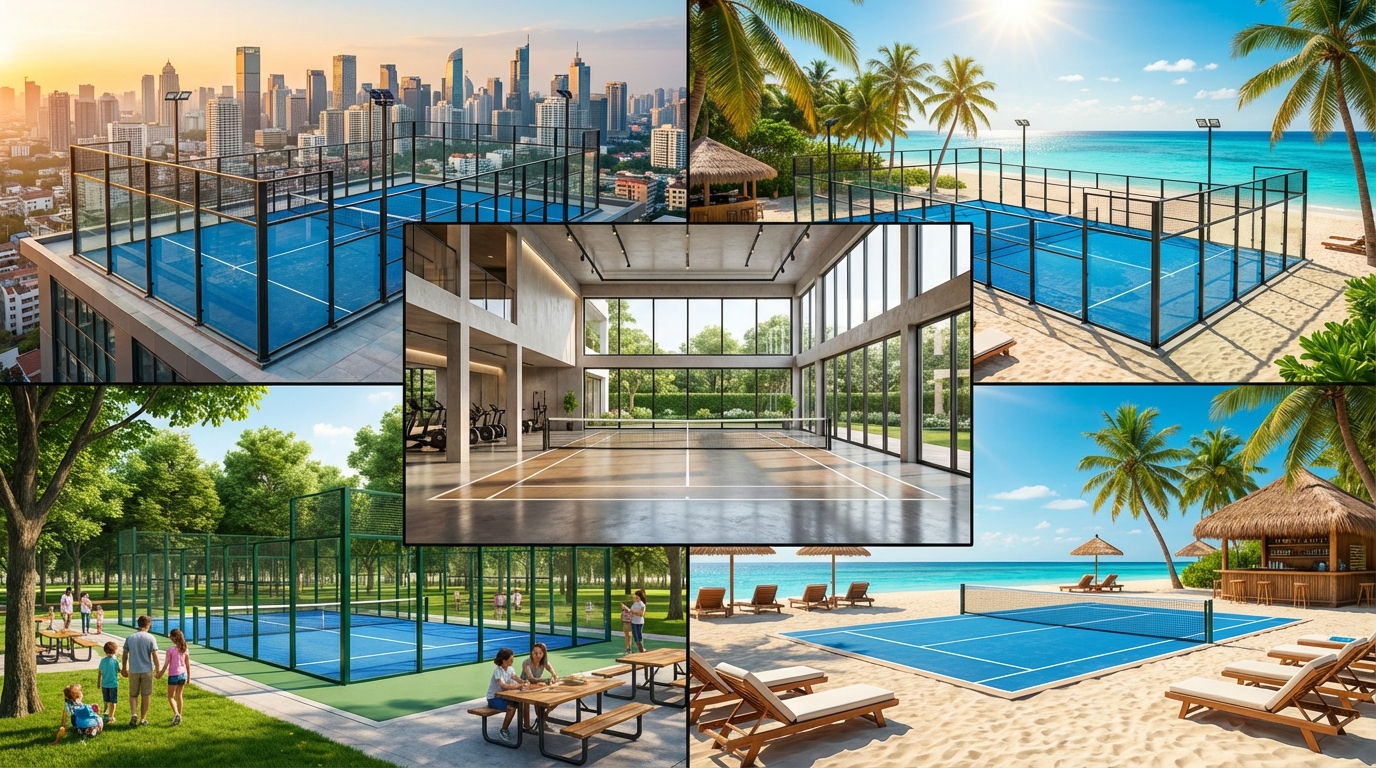
Yes, as long as you use hot-dip galvanized steel frames and UV-resistant turf to withstand weather conditions. - What’s the best glass thickness for a court?
For commercial use, 12mm tempered safety glass is the industry standard for maximum durability and safety. - Can I build a padel board on top of a tennis court?
Yes, one standard tennis court typically has enough space to accommodate two or even three padel courts. - What’s the best way to clean the glass walls?
You should use a simple solution of water and mild soap with a soft squeegee to avoid scratching the surface. - Can I customize the color of the structure?
Absolutely, professional manufacturers offer a wide range of RAL colors to match your club’s specific branding requirements.
Conclusion
Ready to elevate your facility with a professional court? Our team provides factory-direct solutions tailored to your specific needs. To receive a detailed quotation and technical consultation, contact us today and let us help you build a world-class sports destination.