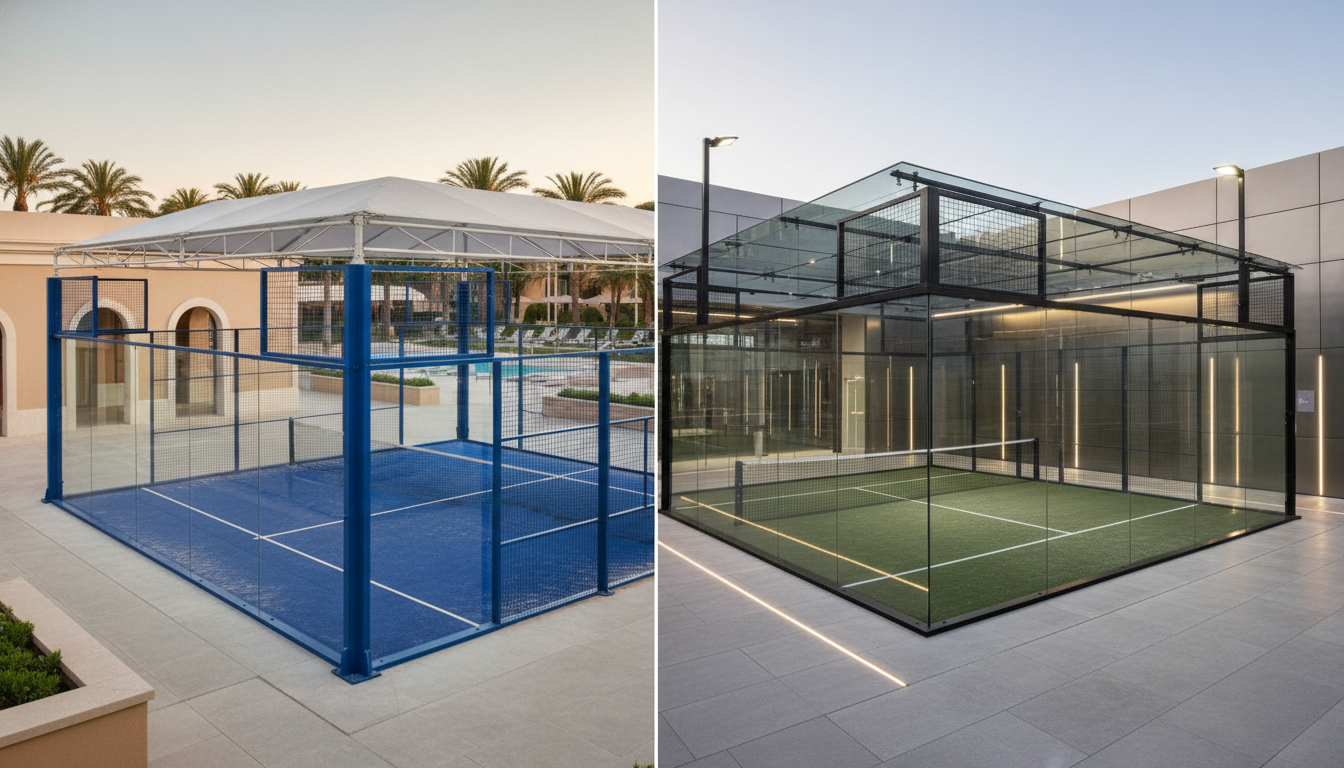
Bay padel is a specialized regional adaptation of the world’s fastest-growing racket sport, combining coastal-ready infrastructure with high-density urban community hubs.
Finding a modern, social, and accessible sporting facility in premium urban or waterfront locations is becoming increasingly difficult for active professionals. You often face overbooked traditional tennis courts and a lack of engaging environments that foster both fitness and networking. This scarcity leads to missed revenue opportunities for facility owners and a disconnected community for enthusiasts. By choosing to develop bay padel, you provide a high-performance, social-centric solution that maximizes space and attracts a premium demographic.
What exactly defines the concept of bay padel?
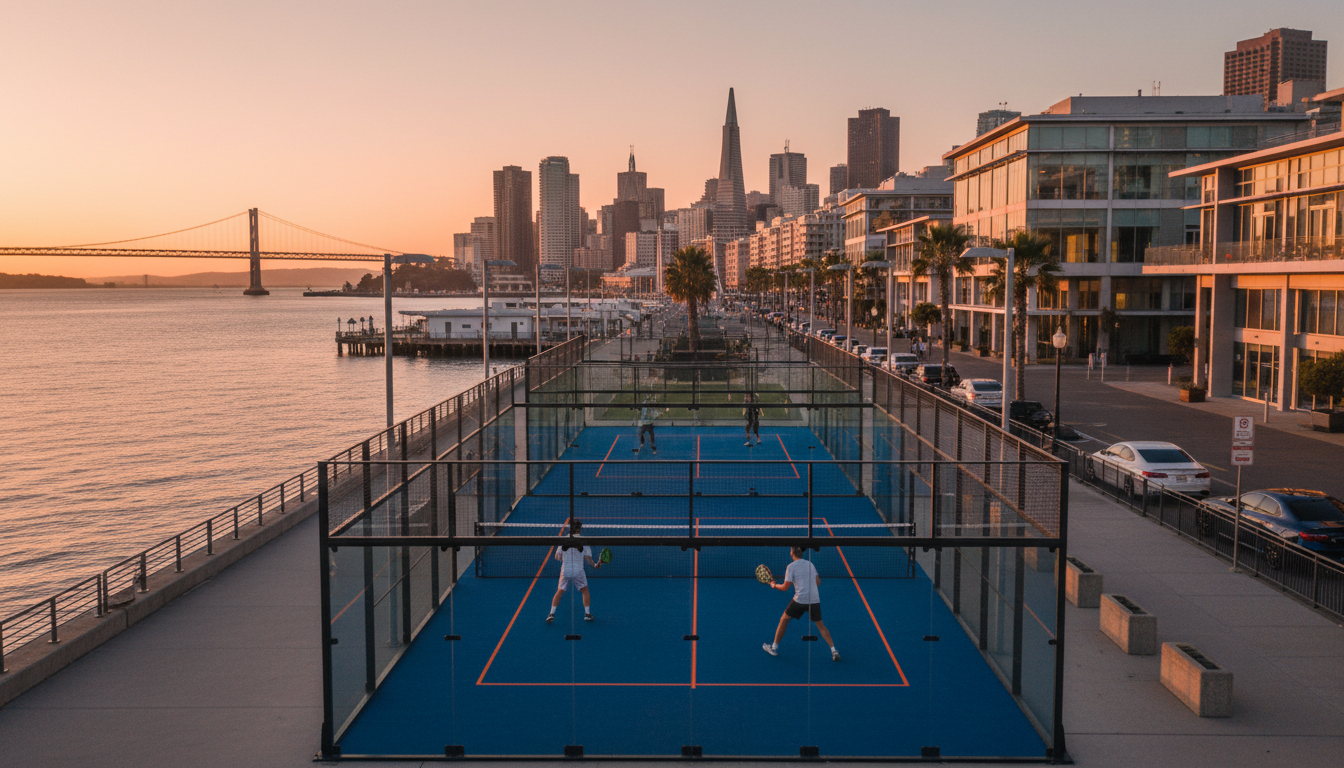
The concept of bay padel refers to the strategic integration of professional-grade padel facilities into coastal or high-traffic urban bay environments. These facilities prioritize durability against salt-heavy air and aesthetic alignment with modern architectural landscapes.
Is it different from standard padel?
Does the environment change the game? While the rules remain identical, the infrastructure for this regional style focuses on corrosion resistance and wind-load stability.
Here is the kicker:
- Reinforced hot-dip galvanized steel frames are mandatory.
- Transparent glass panels are optimized for waterfront views.
- Synthetic turf is chosen for high drainage in humid climates.
Why does it focus on community hubs?
Can a sport truly drive urban revitalization? These facilities are designed as social magnets, often including lounge areas and pro shops to keep players engaged long after the match.
Look no further:
- Social-centric layouts encourage spectator participation.
- Multi-court setups allow for large-scale corporate events.
- Modern aesthetics increase the property value of the surrounding area.
Key Takeaway: Bay padel blends elite performance with strategic urban aesthetics to create a high-value community asset.
| Component | Bay Padel Standard | Benefit |
|---|---|---|
| Framework | Hot-dip Galvanized | Corrosion resistance |
| Viewports | 12mm Tempered Glass | Maximum visibility |
| Surface | Fibrillated Turf | Consistent ball bounce |
This structural foundation ensures that your facility remains a premier destination for years to come.
Why is bay padel becoming the top choice for clubs?
Facility owners choose this model because it offers a significantly higher return on investment per square foot compared to traditional tennis or pickleball. The sport’s addictive nature ensures high court utilization rates and recurring membership revenue.
How does it maximize player retention?
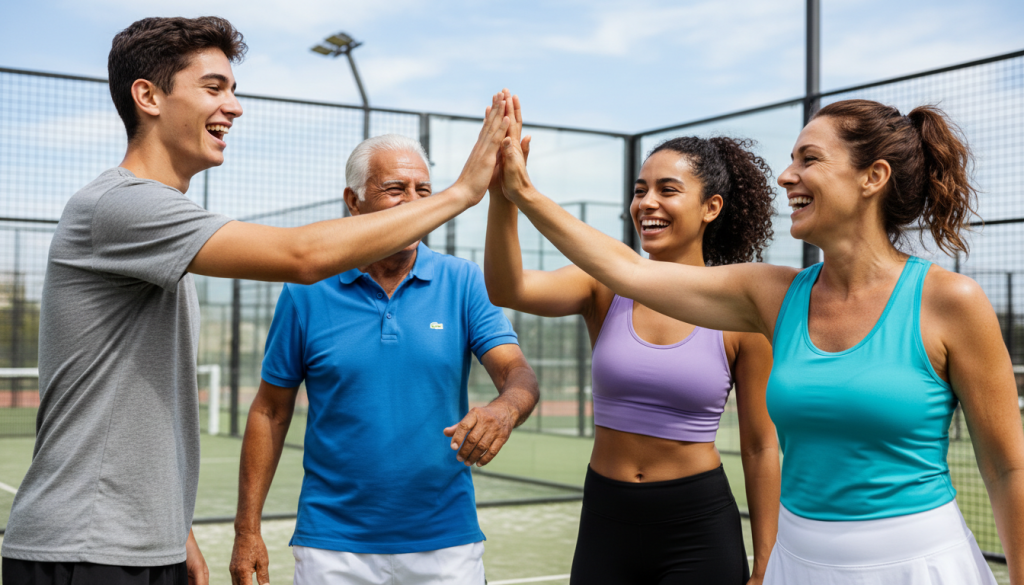
Why do players keep coming back? The shorter learning curve and social doubles format make it accessible to beginners while remaining challenging for athletes.
Think about this:
- New players experience success within their first hour.
- The 4-player format naturally fosters social networking.
- Enclosed walls keep the ball in play longer for higher engagement.
Is the revenue model sustainable?
Can you rely on this as a long-term business? The smaller footprint allows you to fit three courts in the space of one tennis court, tripling your hourly rental potential.
The best part?
- Higher player density increases ancillary sales in pro shops.
- Low maintenance costs lead to better profit margins.
- Growing global popularity ensures a steady stream of new members.
Key Takeaway: The superior ROI and player retention of the padel model make it a dominant force in modern sports club development.
| Metric | Padel Advantage | Impact |
|---|---|---|
| Space Efficiency | 3:1 vs Tennis | Triple revenue capacity |
| Learning Curve | Low | Broadest possible demographic |
| Social Factor | High | Increased club retention |
The data confirms that transitioning to this sport is the most logical step for maximizing facility profitability.
How do you find the perfect site for bay padel?
Finding a site for bay padel requires balancing urban accessibility with enough clearance for professional-grade court dimensions. You should prioritize locations with high visibility and proximity to professional centers or residential waterfronts.
Should you prioritize indoor or outdoor sites?
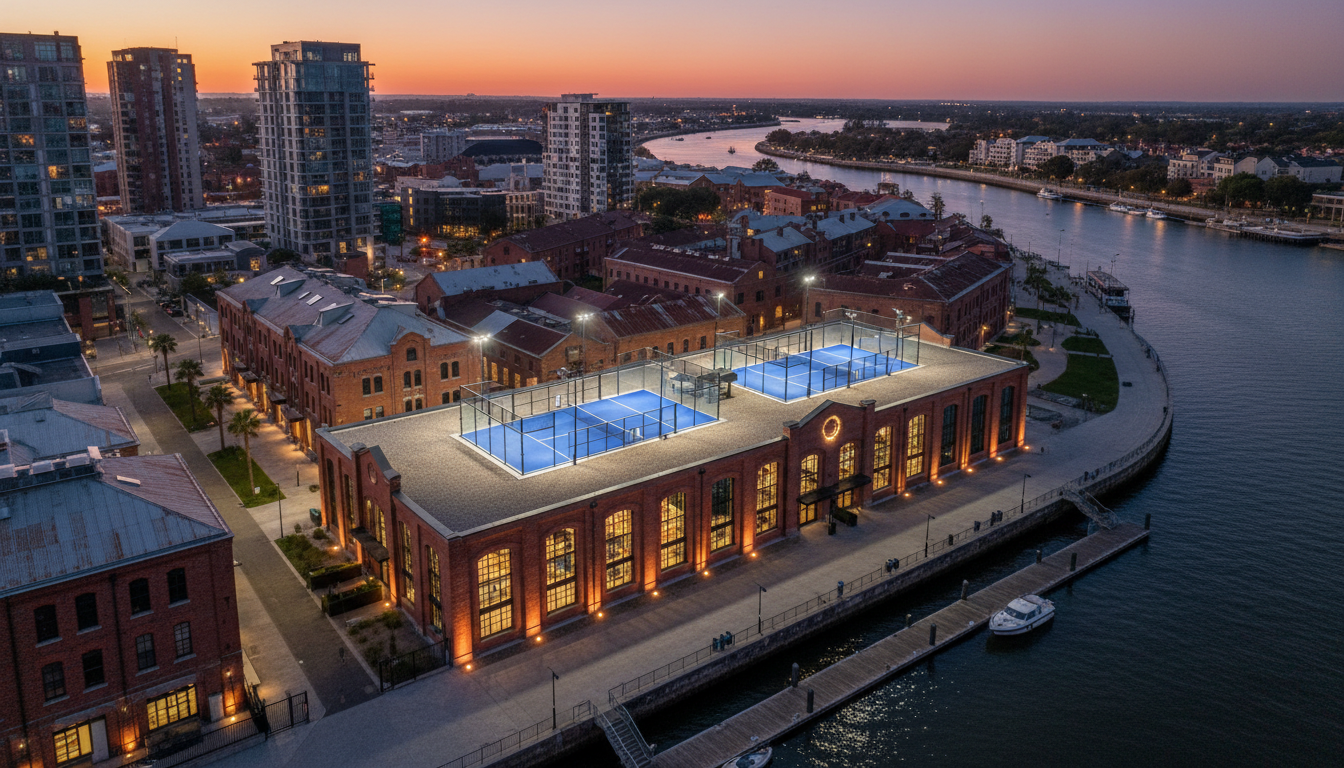
What environment fits your brand best? Outdoor waterfront sites offer unmatched prestige, while indoor conversions provide year-round climate control and consistent revenue.
Here is the deal:
- Outdoor courts require UV-resistant materials and wind-load engineering.
- Indoor facilities need a minimum ceiling height of 6 to 8 meters.
- Waterfront locations benefit from natural cooling but face higher salt exposure.
What are the zoning considerations?
Are there legal hurdles to clear? You must ensure your site is zoned for recreational use and meets local noise ordinances, especially near residential zones.
It gets better:
- Padel generates less noise than pickleball due to the glass walls.
- Prefabricated structures can often simplify the permitting process.
- Multi-use developments often welcome sports facilities as a lifestyle amenity.
Key Takeaway: Strategic site selection focuses on visibility, accessibility, and environmental resilience to ensure commercial success.
| Site Type | Pros | Cons |
|---|---|---|
| Waterfront | High prestige, views | Salt-air maintenance |
| Urban Indoor | 365-day operation | Lighting and AC costs |
| Mixed-Use | Built-in customer base | Noise/Space constraints |
Selecting the right environment is the first step toward building a recognizable regional sporting brand.
What are the standard dimensions for bay padel?
The exact dimensions for a professional court are 10 meters wide by 20 meters long, enclosed by a combination of glass and metallic mesh. Accuracy in these measurements is critical to ensure international competition standards are met.
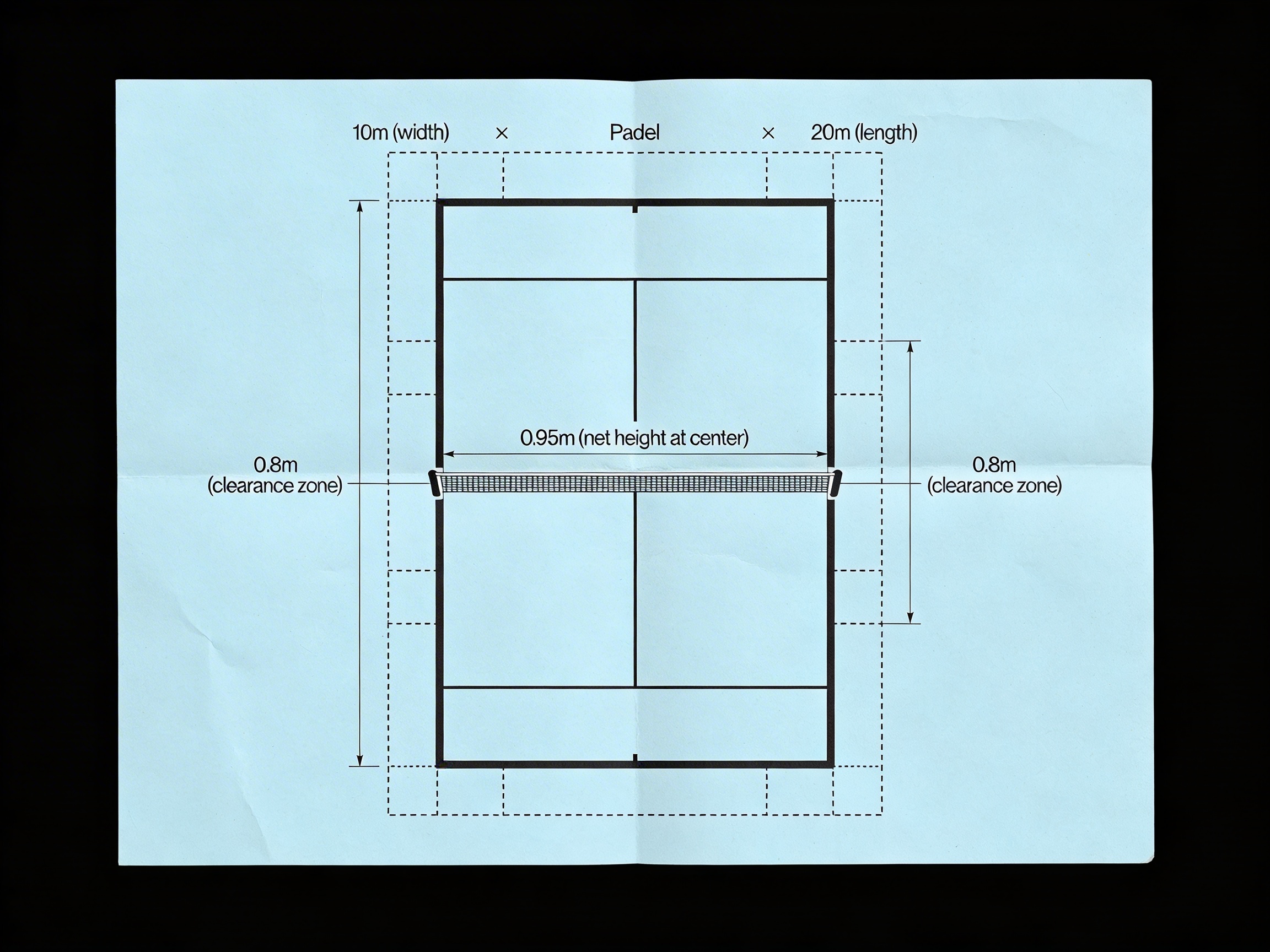
Is there room for error in foundation work?
Why is the base so important? Any deviation in the concrete slab level will cause the glass panels to misalign, leading to structural instability and safety risks.
Bottom line:
- The concrete slab must be perfectly level and reinforced.
- Perimeter beams must support the weight of heavy steel pillars.
- Drainage slopes must be subtle enough not to affect ball bounce.
How much clearance is needed per court?
Do you have enough space for “out-of-court” play? For professional tournaments, you need at least 2 meters of clear space on either side of the center doors.
Don’t forget:
- Total footprint with clearance is usually 12×22 meters.
- Grouping courts together saves on shared structural pillars.
- Proper spacing prevents player collisions and improves spectator flow.
Key Takeaway: Adhering to strict 10x20m dimensions and level foundations is non-negotiable for safety and playability.
| Feature | Measurement | Standard |
|---|---|---|
| Court Size | 10m x 20m | International |
| Net Height | 0.88m (Center) | Professional |
| Glass Height | 3m or 4m | Safety/Spec |
Maintaining these specifications ensures your facility qualifies for official tournaments and professional clinics.
Which court model works best for bay padel?
Selecting the right bay padel model depends on whether you prioritize cost-efficiency for a public club or maximum visibility for a showcase venue. Different structural designs offer unique aesthetic and functional advantages for your specific project.
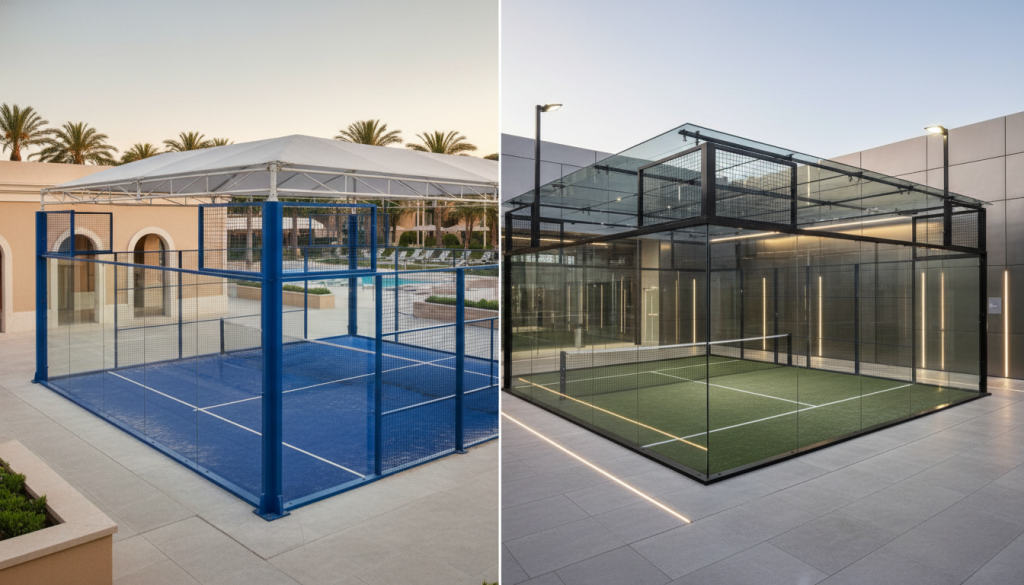
When should you use a Standard Padel Court?
Is the classic model right for you? A Standard Padel Court is the workhorse of the industry, offering a modular design that is easy to assemble and maintain in high-traffic areas.
Believe it or not:
- Pillar-based structures provide the highest wind resistance.
- Components are easily replaceable if damaged in public parks.
- It is the most cost-effective solution for multi-court startups.
Why invest in a Panoramic Padel Court?
Is the view worth the investment? A Panoramic Padel Court removes the rear structural posts, providing an unobstructed view for spectators and camera crews.
In short:
- It creates a “show court” atmosphere for elite matches.
- The sleek design attracts high-end sponsors and media coverage.
- It justifies higher court rental fees for the premium experience.
Key Takeaway: Choose standard models for volume and durability, and panoramic models for prestige and spectator engagement.
| Model | Best For | Main Feature |
|---|---|---|
| Standard | Public Clubs | Extreme durability |
| Panoramic | Center Courts | Unobstructed views |
| Super Panoramic | Professional Tours | Maximum glass area |
Aligning your court model with your business goals ensures you don’t overspend while still meeting market demand.
What materials ensure the longevity of bay padel?
To ensure the longevity of bay padel, you must use materials specifically certified for high-impact sports and outdoor exposure. Investing in factory-direct, high-quality components prevents premature degradation caused by intense play and coastal weather.
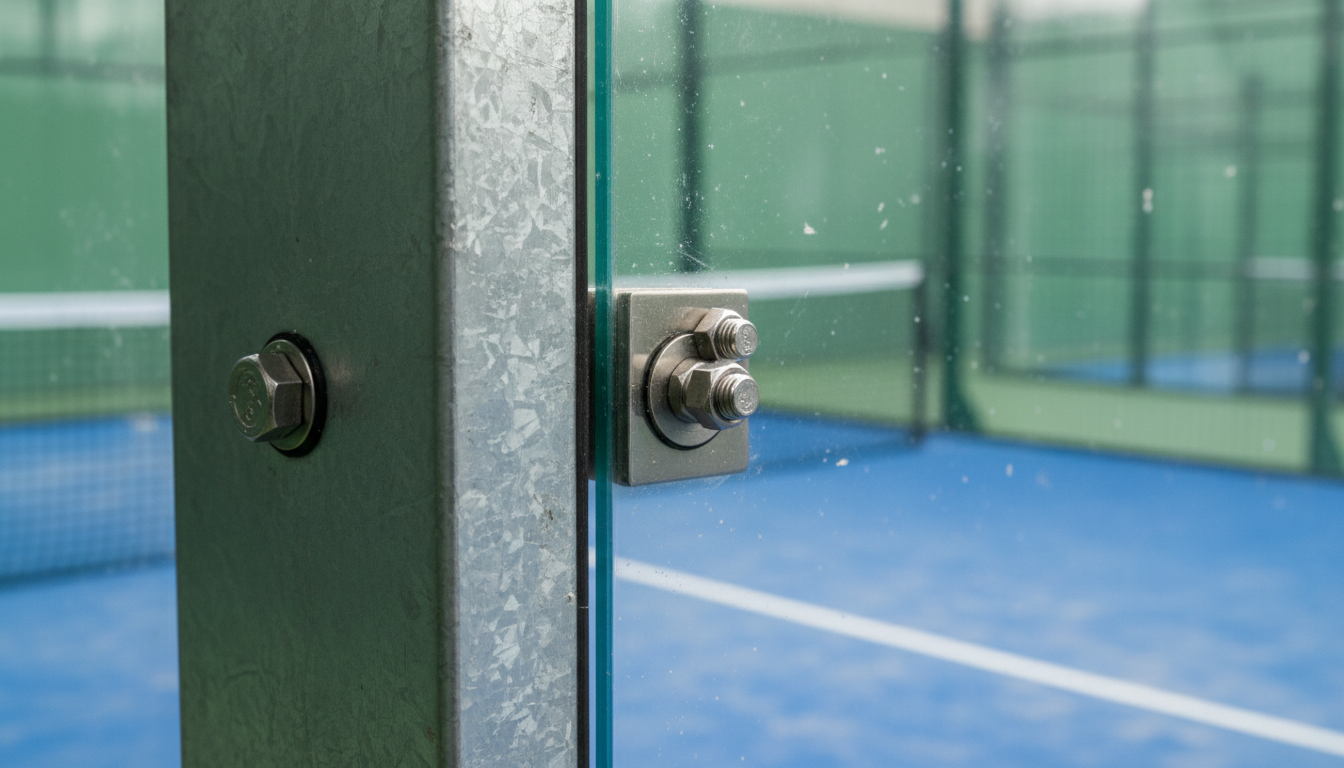
Why is glass thickness non-negotiable?
Can you cut costs on safety? You must use 12mm tempered Padel Glass to withstand the repeated impact of players leaning or falling against the walls.
Why does this matter?
- Anti-explosion tempering ensures the glass crumbles safely if broken.
- Thicker glass provides the necessary rebound for strategic wall shots.
- European EN 12150 certification is the gold standard for player safety.
What defines high-performance turf?
Is all artificial grass the same? You need high-density, monofilament or fibrillated turf that can hold silica sand infill evenly for a predictable ball bounce.
Look at the facts:
- UV-stabilized fibers prevent the court from fading in the sun.
- High stitch density prevents “bald spots” in high-wear zones.
- Porous backing allows for rapid water drainage during storms.
Key Takeaway: High-quality tempered glass and UV-resistant turf are the cornerstones of a safe and durable facility.
| Material | Specification | Purpose |
|---|---|---|
| Structure | Q235 Steel | Strength/Stability |
| Glass | 12mm Tempered | Impact Safety |
| Turf | 12mm Fibrillated | Performance/Grip |
Using premium materials from the start reduces your long-term liability and maintenance overhead.
How much does it cost to construct bay padel?
Budgeting for bay padel involves balancing the initial procurement of the court structure with the necessary civil engineering for the foundation. By buying directly from the factory, you can reduce your total procurement costs by up to 30%.
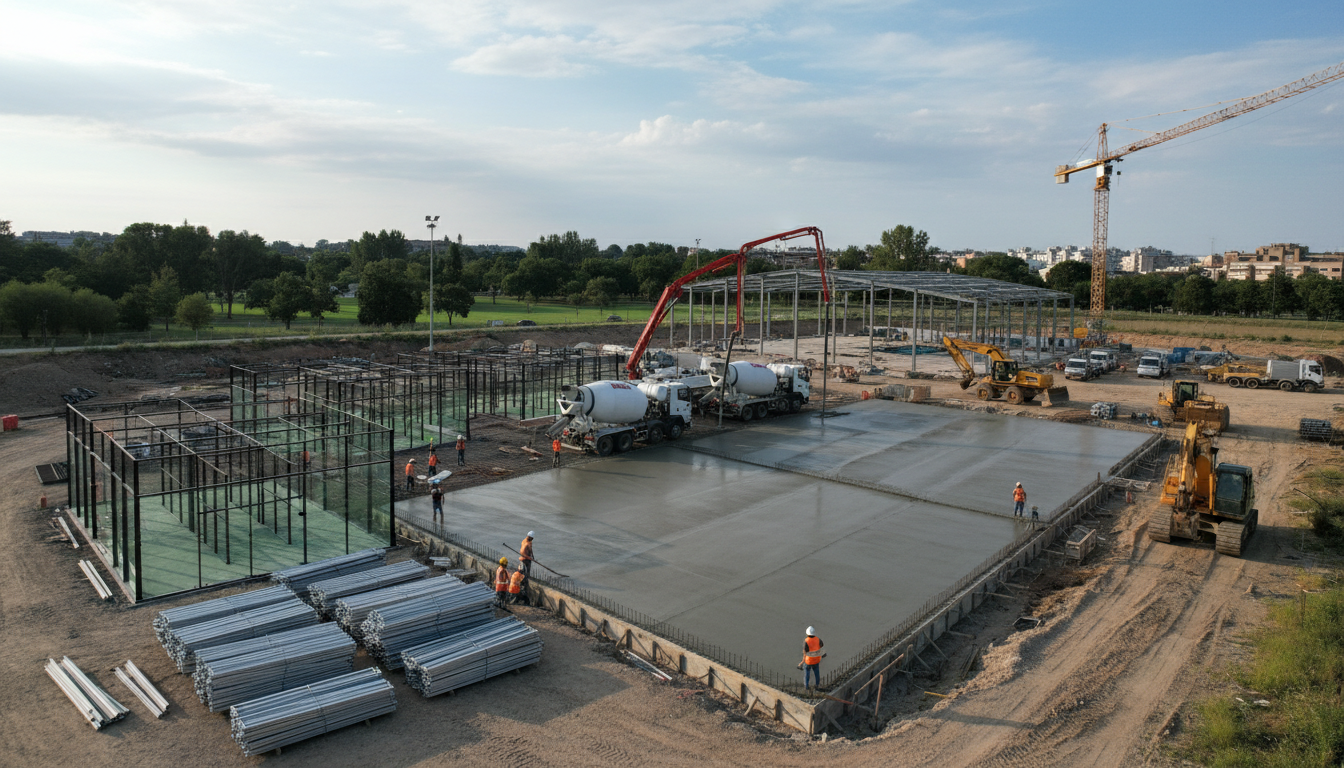
Where can you find the most savings?
Are middlemen eating your profits? Factory-direct sourcing eliminates distributor markups and gives you direct access to technical customization.
Consider these savings:
- Save on shipping by ordering multiple courts in a single container.
- OEM services allow you to bundle lighting and turf with the structure.
- Direct technical support reduces the risk of costly installation errors.