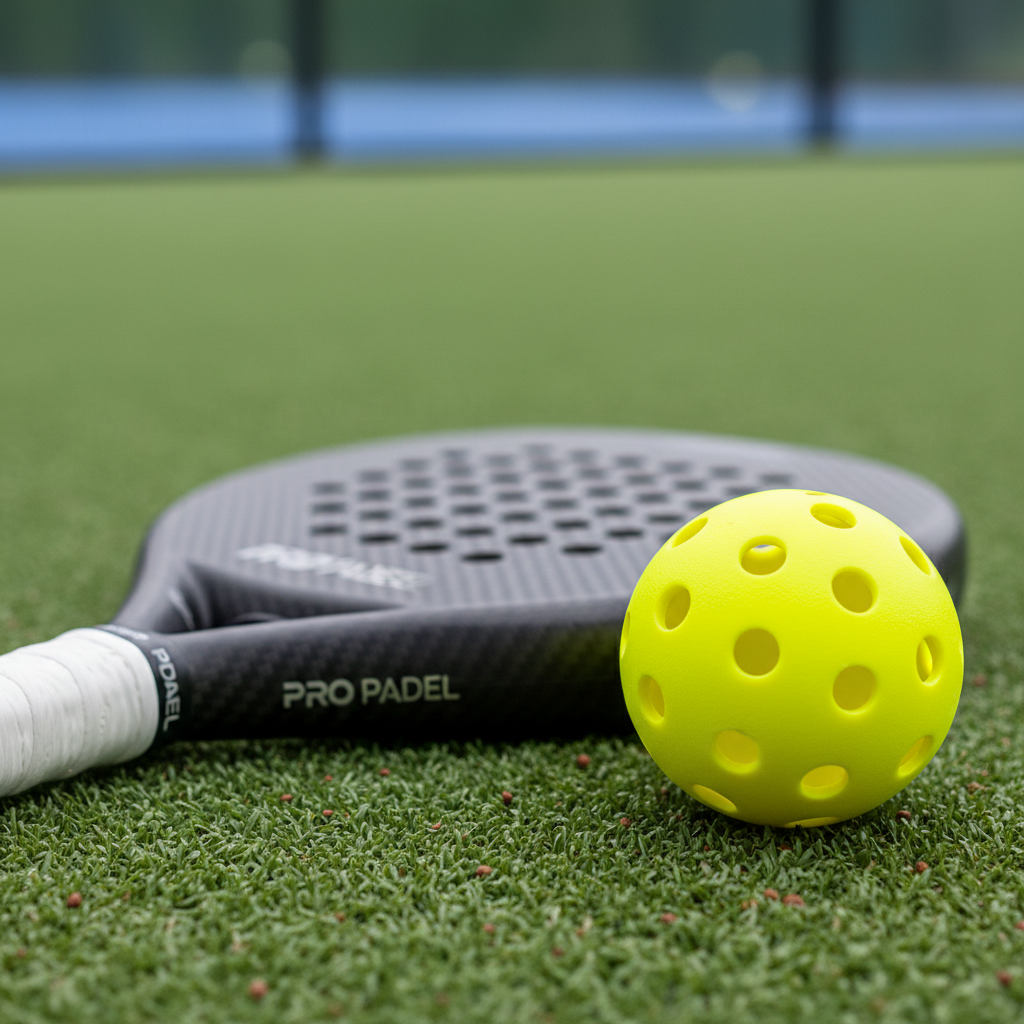
Padel is an enclosed racket sport with glass walls and solid rackets, while pickleball is played on an open court with perforated balls; building them involves specific dimensioning and surfacing as detailed below. Many commercial developers miscalculate site requirements because they fail to distinguish between these two rapid growth sports. This confusion leads to wasted capital and poorly utilized athletic facilities. We provide professional clarity on the difference between padel and pickleball so you can contact us to secure your investment. Our expert analysis ensures your recreational project meets international standards for quality and player retention.
1. Why do origins impact the difference between padel and pickleball?
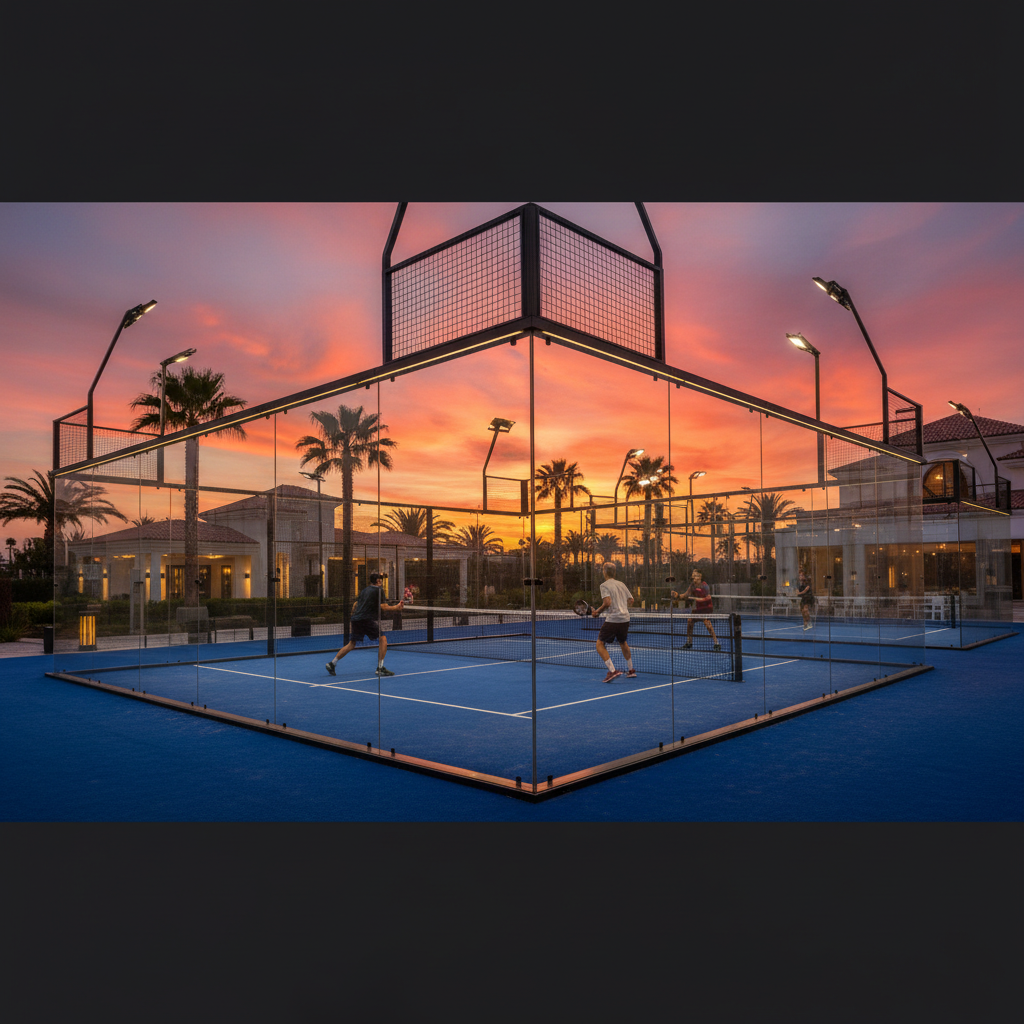
Historical roots dictate modern branding since padel began as elite leisure while pickleball remains community recreation. Understanding the difference between padel and pickleball helps you target specific demographic segments. Enrique Corcuera adapted his Mexican property in 1969 with high walls. Meanwhile, families on Bainbridge Island used improvised gear during 1965.
How did location shape early adoption?
What’s the real story? Padel gained massive momentum throughout Latin America because elite clubs embraced its sophisticated atmosphere. Pickleball dominated suburban recreational centers within American territories since families wanted accessible fun. You can observe how these backgrounds influence current market trends for luxury resorts or public parks.
- Padel attracts high-spending social club members.
- Pickleball fosters broad community participation.
- Geographical heritage defines modern facility aesthetics.
Key Takeaway
Padel heritage stems from luxury Mexican social circles while pickleball reflects grassroots American family innovation.
| Feature | Padel | Pickleball |
|---|---|---|
| Year Founded | 1969 | 1965 |
| Cultural Vibe | Premium/Social | Accessible/Family |
| Founding Place | Acapulco, Mexico | Washington, USA |
These disparate beginnings create the unique atmospheres players expect when they visit your sports facility.
2. What spaces define the difference between padel and pickleball?
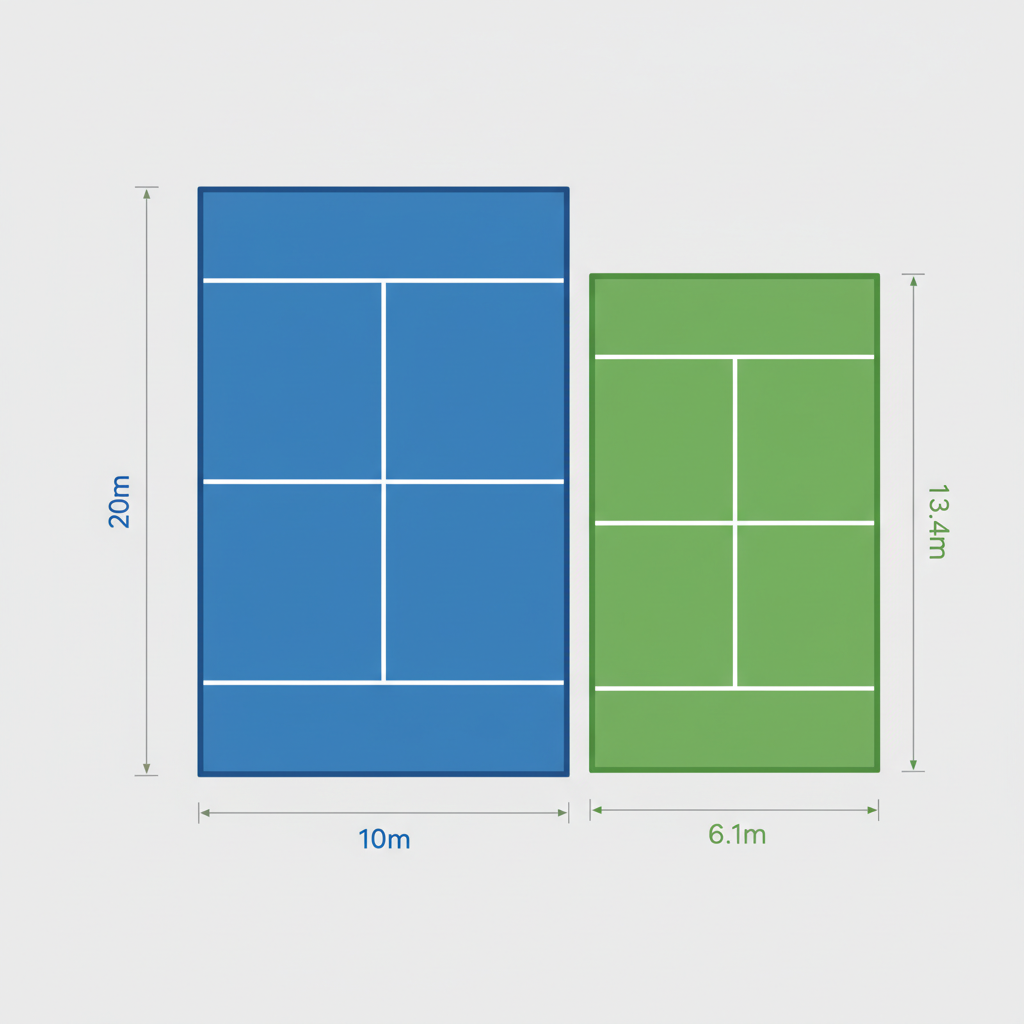
Land utilization varies greatly because padel courts require larger footprints and high vertical clearance for lobs. Identifying the difference between padel and pickleball ensures you maximize your available square footage. A standard padel court measures ten by twenty meters. Pickleball units fit into much tighter six by thirteen meter zones.
Does ceiling height matter for your build?
This is where it gets interesting… You need at least six meters of overhead space for indoor padel sites. Pickleball functions well in standard gymnasiums with lower ceilings since lobs happen less frequently. Developers must verify local zoning laws before installing high glass walls. Proper orientation prevents sun glare from interfering with glass reflections on outdoor padel properties.
- Three pickleball courts fit in two padel spaces.
- Vertical space is a non-negotiable padel requirement.
- Pickleball allows for higher player density.
Key Takeaway
Padel requires significant square footage and height while pickleball offers superior player density per acre.
| Metric | Padel Court | Pickleball Court |
|---|---|---|
| Area Needed | 200 sqm | 81.7 sqm |
| Vertical Height | 6m+ Required | Standard Gym OK |
| Boundary Type | Glass Walls | Painted Lines |
Spatial efficiency determines how many paying customers you can host during peak operating hours.
3. How does building show the difference between padel and pickleball?
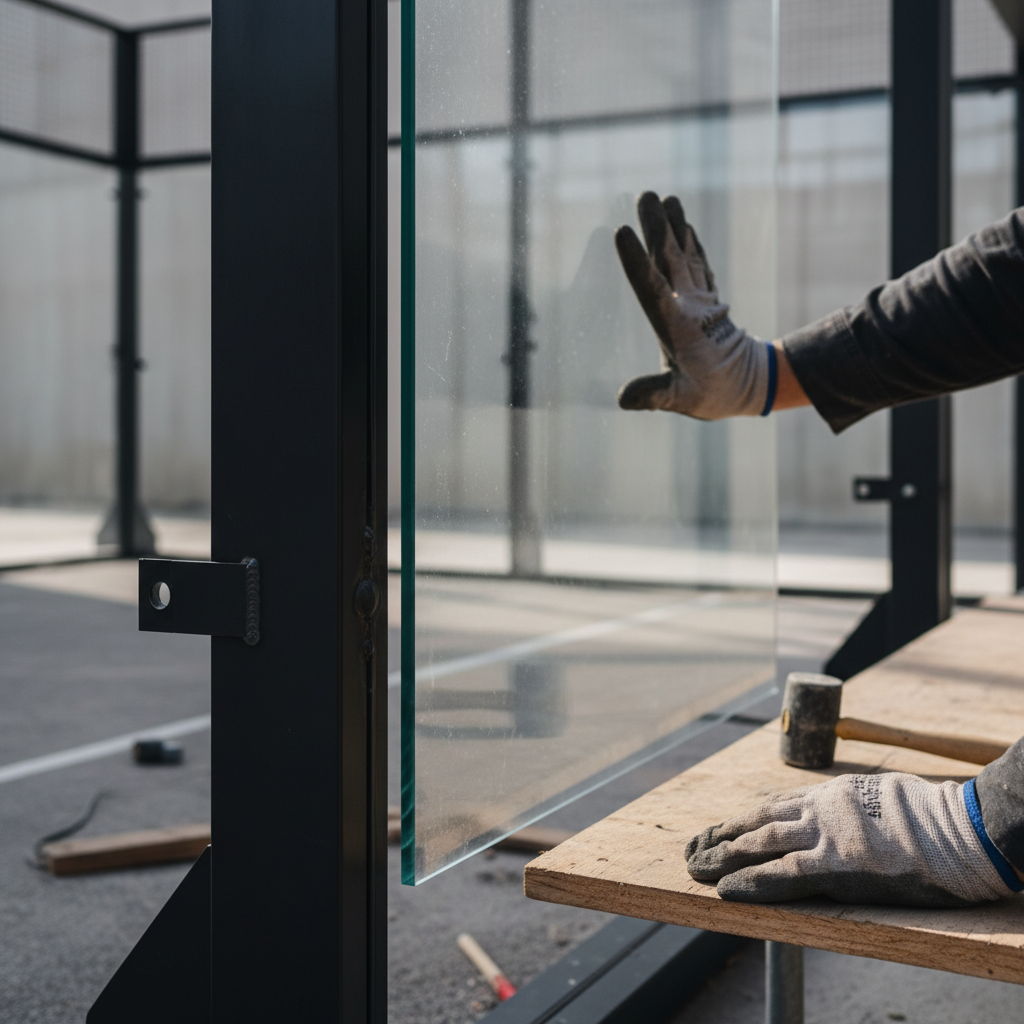
Engineering requirements diverge because padel involves heavy structural steel and tempered glass for wall play. Analyzing the difference between padel and pickleball reveals that padel builds are vertical architectural projects. Padel frames support ten-millimeter thick glass panels against high-impact collisions. Pickleball focuses mainly on high-quality acrylic surfacing over flat concrete slabs.
What materials dominate these installations?
Ready for the good part? Galvanized steel offers rust resistance for coastal padel sites where salt air lingers. Silicon sand infill stabilizes monofilament turf fibers in padel courts for consistent ball bounce. Pickleball construction emphasizes surface texture so players maintain grip in the “kitchen” zone. Every bolt on a padel frame must withstand vibrations from powerful overhead smashes.
- Padel needs reinforced concrete ring beams.
- Pickleball relies on standard slab drainage.
- Glass quality is a safety priority for padel.
Key Takeaway
Padel construction is a vertical engineering feat while pickleball remains a horizontal surfacing project.
| Component | Padel | Pickleball |
|---|---|---|
| Surface Material | Artificial Turf | Acrylic Hard Court |
| Frame Type | Steel and Glass | Open/Fenced |
| Foundation | Perimeter Beam | Solid Slab |
Building a durable court requires matching the specific engineering tolerances of your chosen sport.
4. Does gear explain the difference between padel and pickleball?
Equipment physics vary significantly since padel uses pressurized felt balls while pickleball utilizes hollow plastic spheres. Noticing the difference between padel and pickleball helps you stock the correct inventory for your pro shop. Padel rackets feature solid perforated faces with foam cores for power. Pickleball paddles use honeycomb cores covered by composite skins for precision touch.
How do racket weights affect you?
Think about it. Padel rackets weigh more because they generate kinetic energy needed for wall rebounds. Pickleball paddles stay lightweight for quick exchanges at the net during dink rallies. You will notice that padel balls bounce lower than tennis balls because they have less internal pressure. Pickleball balls move slowly because drag is created by their unique hole patterns.
- Padel balls are pressurized rubber.
- Pickleball balls are hard plastic.
- Racket perforations reduce padel air resistance.
Key Takeaway
Padel gear prioritizes power and absorption while pickleball equipment focuses on precision and net speed.
| Gear Item | Padel | Pickleball |
|---|---|---|
| Racket Style | Thick with Holes | Thin/Flat Paddle |
| Ball Type | Pressurized Felt | Perforated Plastic |
| Main Focus | Power/Rebounds | Touch/Precision |
Selecting the right equipment allows players to experience the intended physics of each racket sport.
5. How do rules mark the difference between padel and pickleball?
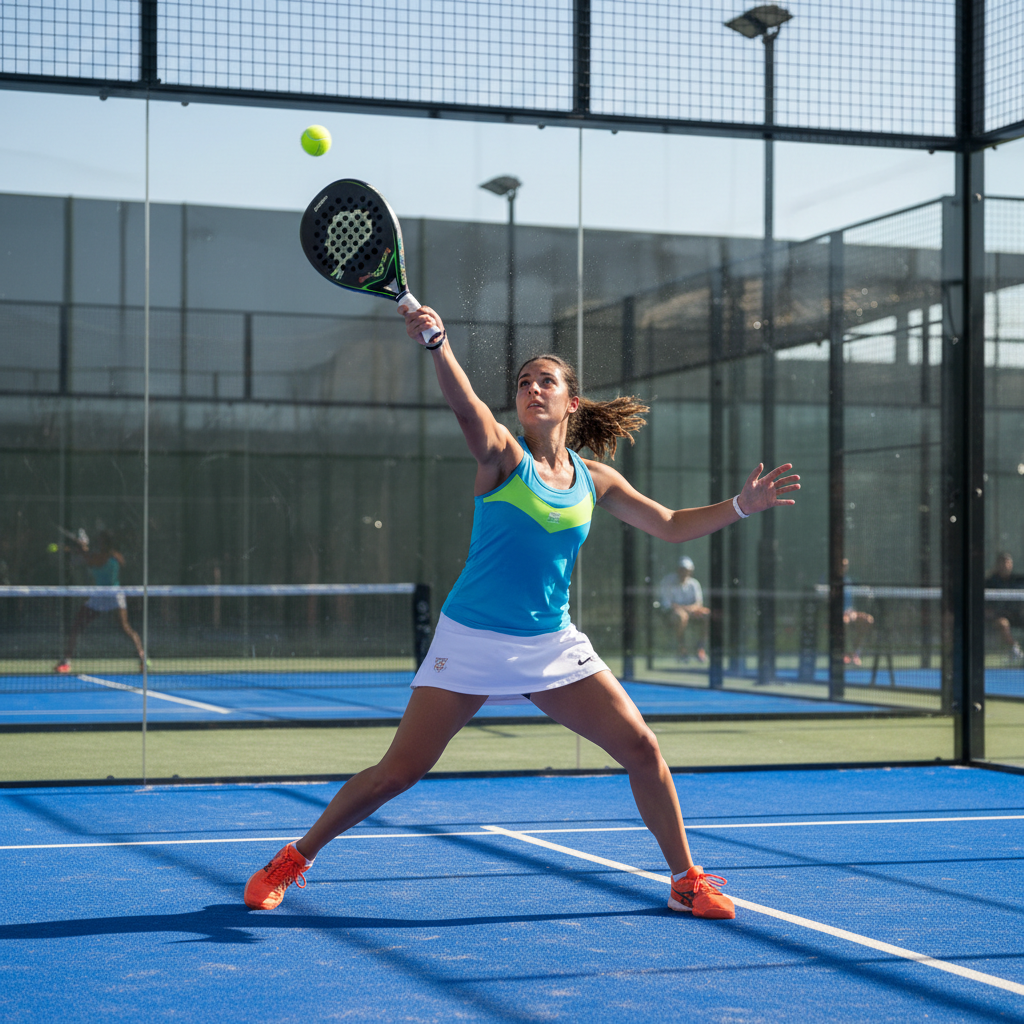
Service mechanics and court boundaries differ because padel incorporates the walls into the legal field of play. The difference between padel and pickleball becomes clear when you watch the service motion. Padel requires an underhand serve after a bounce behind the service line. Pickleball mandates an underhand serve from the hand without a bounce at the baseline.
How do walls change your strategy?
What’s the real story? Wall rebounds give you a second chance to return difficult shots in padel. Pickleball forbids volleying within the “kitchen” zone to prevent aggressive net dominance by tall players. You must calculate geometry for glass bounces when playing padel at a high level. Pickleball focuses on soft dinks to force opponent errors during long rallies.
- Padel is almost exclusively doubles.
- Pickleball handles singles or doubles.
- Fences are out in pickleball play.
Key Takeaway
Padel rules embrace the physical environment while pickleball rules restrict movement to maintain strategic balance.
| Rule Category | Padel | Pickleball |
|---|---|---|
| Service | Bounce then Hit | Direct Hand Hit |
| Wall Usage | Live After Bounce | Out of Bounds |
| Net Zone | Free Volleys | Non-Volley Zone |
Mastering the rules of either sport requires a deep understanding of their unique boundary constraints.
6. Does scoring prove the difference between padel and pickleball?
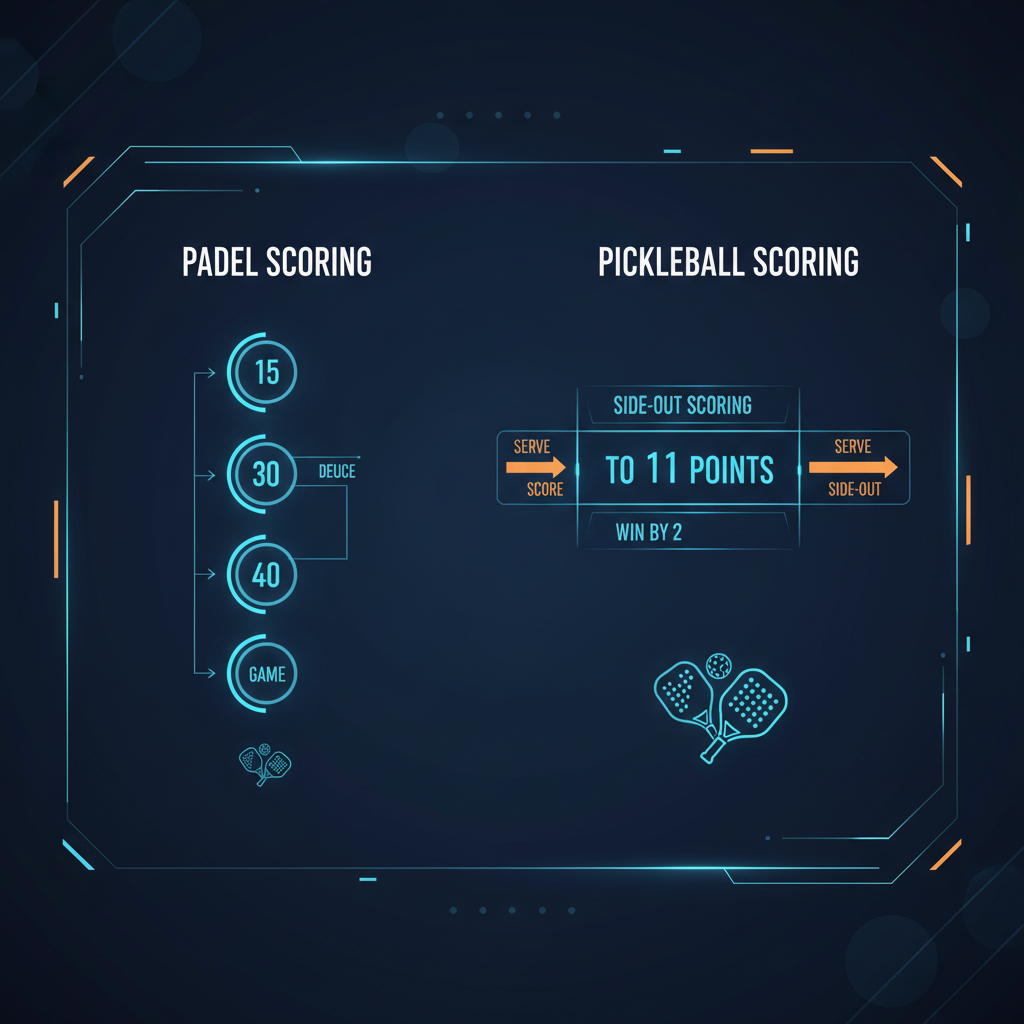
Point accumulation differs because padel follows traditional tennis logic while pickleball uses a side-out scoring system. Knowing the difference between padel and pickleball helps your staff manage tournament brackets efficiently. Padel counts points as fifteen, thirty, and forty before winning a game. Pickleball games go to eleven points with only the serving team earning points.
How does side-out scoring impact you?
But here’s the kicker… Pickleball matches can last longer if teams trade service frequently without scoring. Padel matches follow a predictable set-based rhythm that makes scheduling easy for club managers. You must announce three numbers before serving in a pickleball match to track the score. Padel scoring remains silent until the players confirm the game progress after each point.
- Padel uses sets and tie-breaks.
- Pickleball uses games to eleven.
- Golden points accelerate padel matches.
Key Takeaway
Padel mirrors the tennis scoring system while pickleball utilizes a unique side-out method for points.
| Metric | Padel | Pickleball |
|---|---|---|
| Point Logic | 15, 30, 40, Game | 1, 2, 3… to 11 |
| Who Scores | Both Teams | Only Server |
| Set Format | Best of Three | Single Games/Sets |
Scoring systems dictate the psychological pressure players feel during critical moments of a match.
7. What costs show the difference between padel and pickleball?
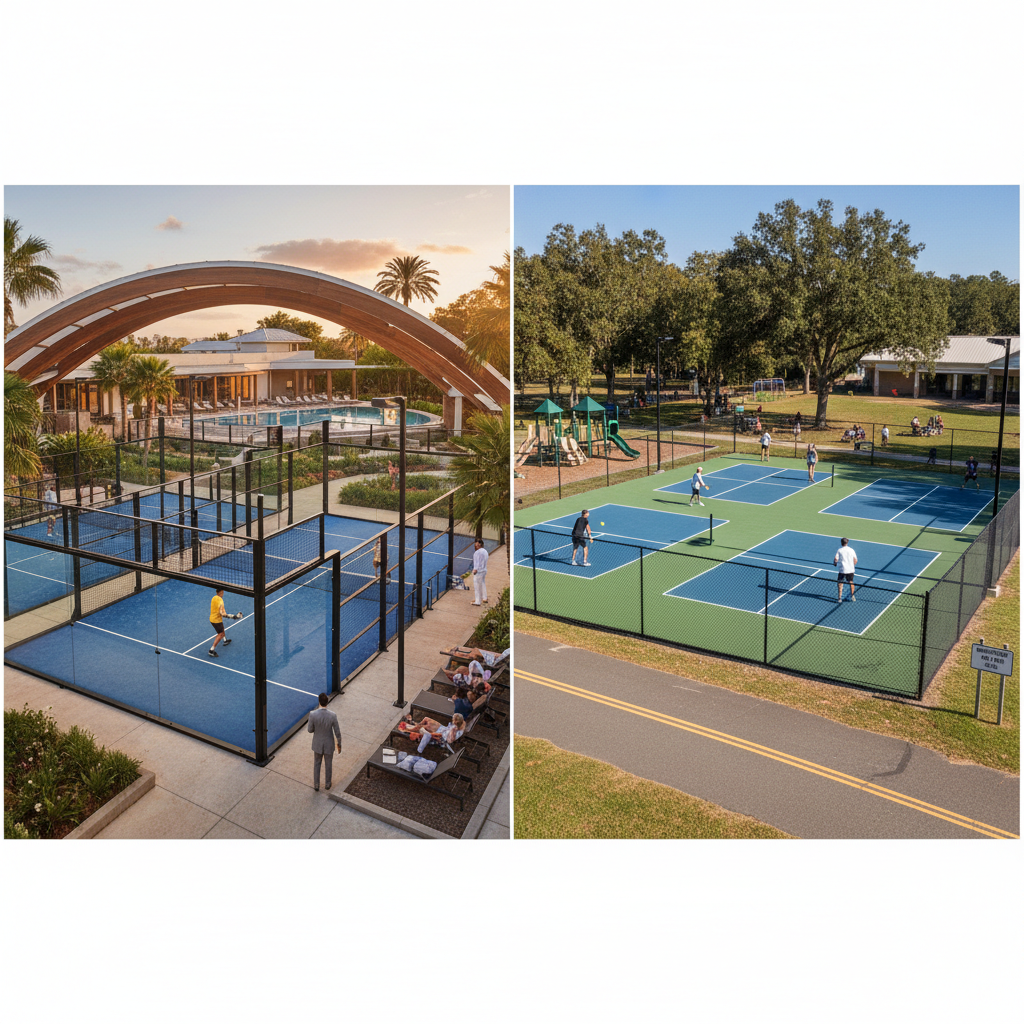
Capital expenditure varies widely because padel requires expensive glass and steel while pickleball uses simple surface paint. Evaluating the difference between padel and pickleball is vital for your initial budget reports. A single premium padel court can cost forty thousand dollars to install properly. Pickleball courts often cost less than fifteen thousand dollars if a concrete base exists.
What drives the high padel costs?
Look at this. Shipping heavy tempered glass panels from specialized factories adds significant logistics fees. You need a reinforced concrete perimeter beam to support the weight of the padel frame. Installation teams for padel require heavy lifting equipment to secure the glass panels safely. You can build multiple pickleball courts for the price of one panoramic padel unit.
- Padel involves higher material costs.
- Pickleball is a budget-friendly option.
- Logistics favor local pickleball builds.
Key Takeaway
Padel is a premium high-cost asset while pickleball provides a low-entry-cost solution for volume play.
| Expense | Padel Court | Pickleball Court |
|---|---|---|
| Materials | $20,000 – $35,000 | $5,000 – $8,000 |
| Installation | $5,000 – $10,000 | $2,000 – $4,000 |
| Maintenance | High (Sand/Glass) | Low (Washing) |
Investors must weigh these upfront costs against the projected hourly revenue of each sport.
8. Can upkeep show the difference between padel and pickleball?
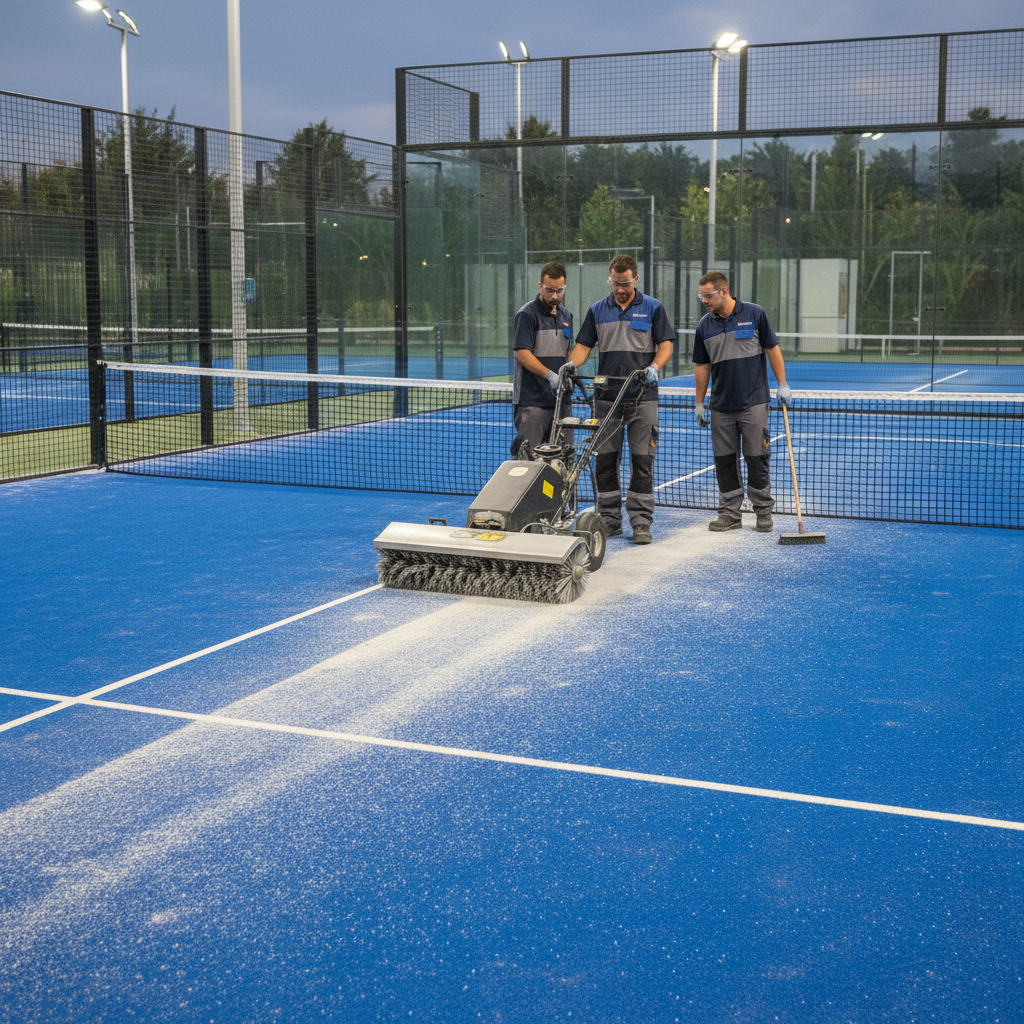
Operational labor differs because padel turf requires constant sand redistribution while pickleball surfaces only need cleaning. Understanding the difference between padel and pickleball helps you plan your weekly maintenance schedule. You must brush padel courts weekly to keep the silicon sand infill level. Pickleball courts stay playable with occasional pressure washing to remove dirt and debris.
How often do surfaces need replacement?
This is where it gets interesting… Padel turf usually lasts five to seven years depending on the player traffic. You need to check the bolts on a padel frame annually to ensure structural safety. If a glass panel breaks, your court loses revenue until a replacement panel arrives. Pickleball surfaces are durable but the paint texture wears down after several seasons of play.
- Padel requires glass cleaning.
- Pickleball needs crack filling.
- Sand levels impact padel safety.
Key Takeaway
Padel requires labor-intensive weekly maintenance while pickleball is a low-upkeep athletic asset.
| Task | Padel Frequency | Pickleball Frequency |
|---|---|---|
| Surface Care | Weekly Brushing | Monthly Washing |
| Safety Check | Quarterly Bolts | Annual Net Check |
| Replacement | 5-7 Year Turf | 4-6 Year Paint |
Consistent maintenance protects your investment and ensures a high-quality experience for all players.
9. Does ROI reveal the difference between padel and pickleball?
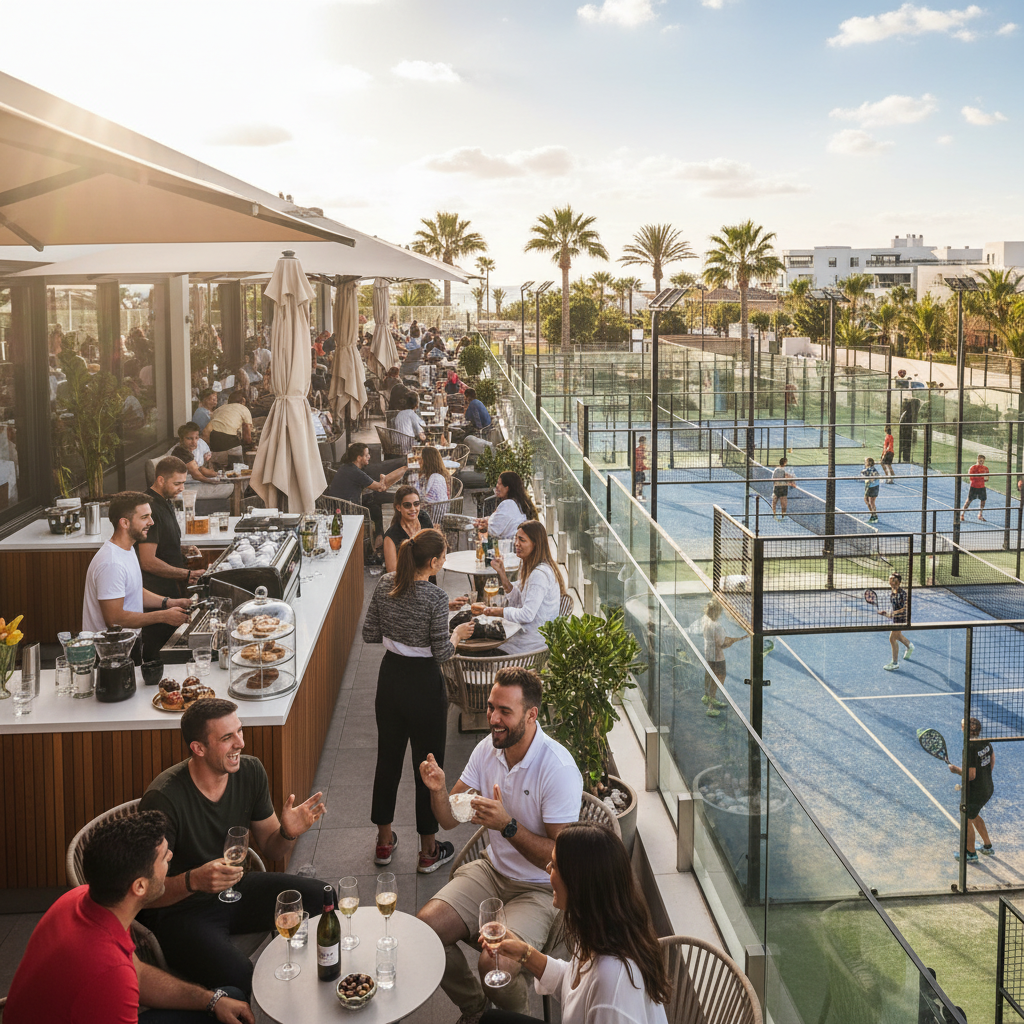
Revenue models diverge because padel commands premium hourly rates while pickleball thrives on high player turnover. The difference between padel and pickleball impacts your long-term profitability and business strategy. Padel players often pay sixty dollars per hour for access to a social club. Pickleball generates income through tournament fees and high-density court usage during peak hours.
Ready for the good part? You can fit four pickleball courts in one tennis space to maximize throughput. Padel attracts corporate sponsors who want their branding on the professional glass walls. Your facility cafe will thrive because padel players stay longer for post-match social drinks. Investors should analyze local demand to see if a luxury or volume model works best.
- Padel offers higher per-court rent.
- Pickleball offers higher volume sales.
- Coaching margins favor technical padel.
Key Takeaway
Padel provides a high-margin luxury revenue stream while pickleball maximizes land use for community volume.
| Revenue Factor | Padel | Pickleball |
|---|---|---|
| Hourly Rate | $40 – $80 | $15 – $30 |
| Sponsor Value | High (Glass Walls) | Medium (Fencing) |
| Retail Margin | High (Carbon Gear) | Medium (Paddles) |
Balancing premium pricing with player volume is the key to a successful multi-sport business.
10. Do users show the difference between padel and pickleball?
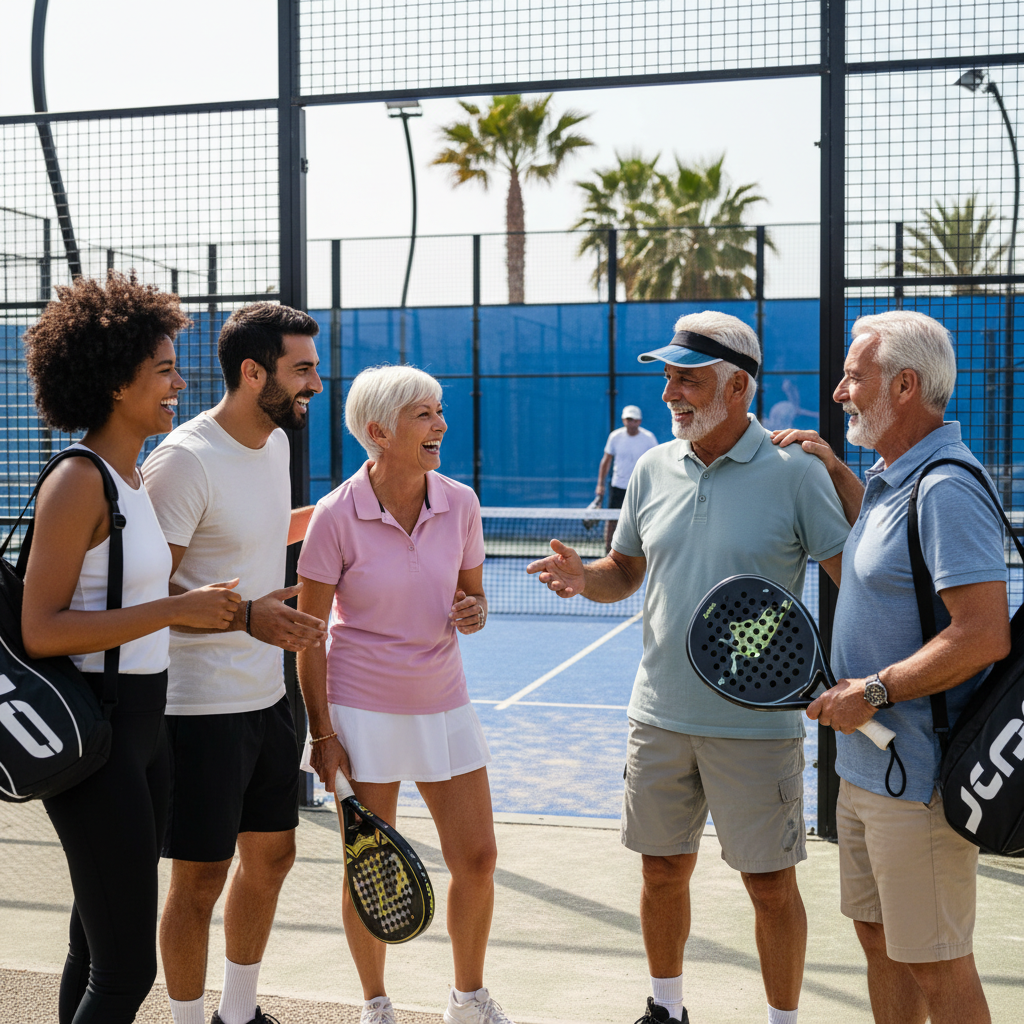
Player profiles differ because padel targets younger professionals while pickleball attracts a broad multi-generational audience. Noticing the difference between padel and pickleball helps you craft effective marketing campaigns. Padel is an aspirational lifestyle sport for social elites in Europe and Asia. Pickleball is the inclusive game for everyone because it is easy to learn.
Which sport builds more loyalty?
What’s the real story? Padel builds strong club loyalty through organized social leagues and competitive rankings. Pickleball thrives on open play where strangers can jump in and play together instantly. You will see more fashion-conscious athletes on a padel court during the weekends. Understanding these social dynamics helps you choose the right sport for your specific neighborhood.
- Padel users are often 25-45.
- Pickleball users are 8-80.
- Padel attracts former tennis pros.
Key Takeaway
Padel serves an upwardly mobile professional demographic while pickleball builds an inclusive community for all ages.
| Metric | Padel Player | Pickleball Player |
|---|---|---|
| Primary Goal | Status/Competition | Fun/Accessibility |
| Gear Spend | High Investment | Low to Medium |
| Social Style | Club Membership | Community Drop-in |
To summarize the difference between padel and pickleball, you must weigh luxury wall-based play against accessible community recreation. Padel offers a premium investment with unique structural needs and high revenue potential. Pickleball provides an efficient land-use solution that engages the widest possible audience. Selecting the right sport depends on your financial goals and the local market demand in your area. If you are ready to build world-class courts, contact us today for a professional site consultation. Our brand vision is to provide the highest quality sporting infrastructure for modern athletic entrepreneurs.
Q1: Can I play padel on a pickleball court?
No. Padel requires specific glass and mesh walls for the ball to stay in play during a match.
Q2: What’s the best surface for a new pickleball court?
Concise judgment: Acrylic is best. It provides the most consistent bounce and player traction for all weather conditions.
Q3: How do I know if I have enough space for padel?
Concise judgment: Measure for 200 sqm. You need a 10×20 meter clear area plus safety zones and high vertical clearance.
Q4: Can I use a tennis ball for pickleball?
No. Pickleball requires a specific perforated plastic ball that moves slowly to maintain the game’s unique strategic pace.
Q5: What’s the best way to clean padel glass?
Concise judgment: Non-abrasive liquid cleaners. Use a soft cloth to avoid scratching the tempered glass while maintaining a clear view.