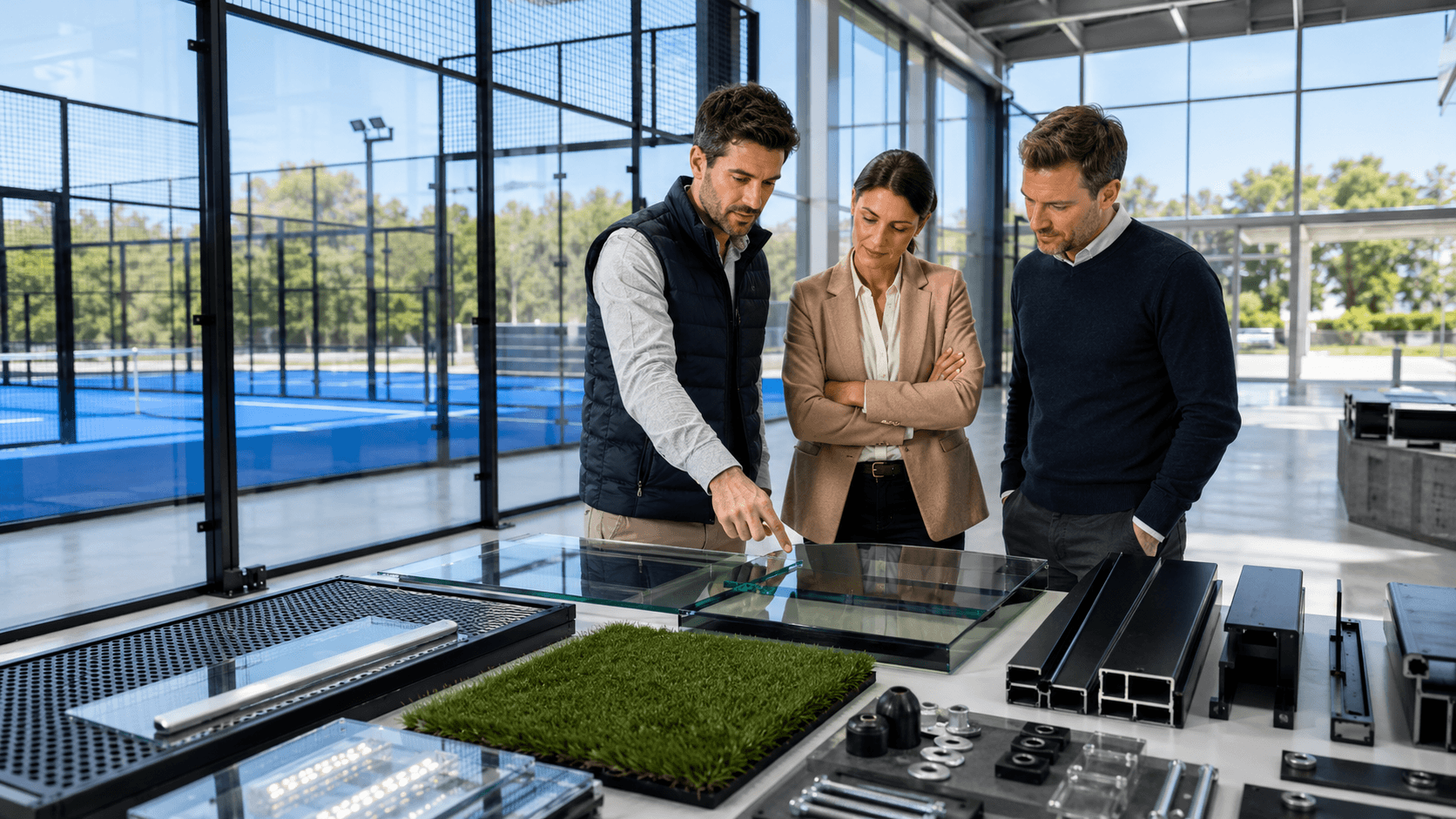
To select a trusted padel court supplier, you must prioritize manufacturers with verified international certifications, structural engineering reports, and a documented history of global installations. You are likely seeing new court builders pop up everywhere, but many lack the technical expertise to ensure long-term safety. It is stressful to invest six figures into a project only to watch the steel rust or the glass misalign within a year. By choosing Superb Padel , you bypass the middleman and secure high-grade materials directly from the source.
What makes a trusted padel court supplier reliable?
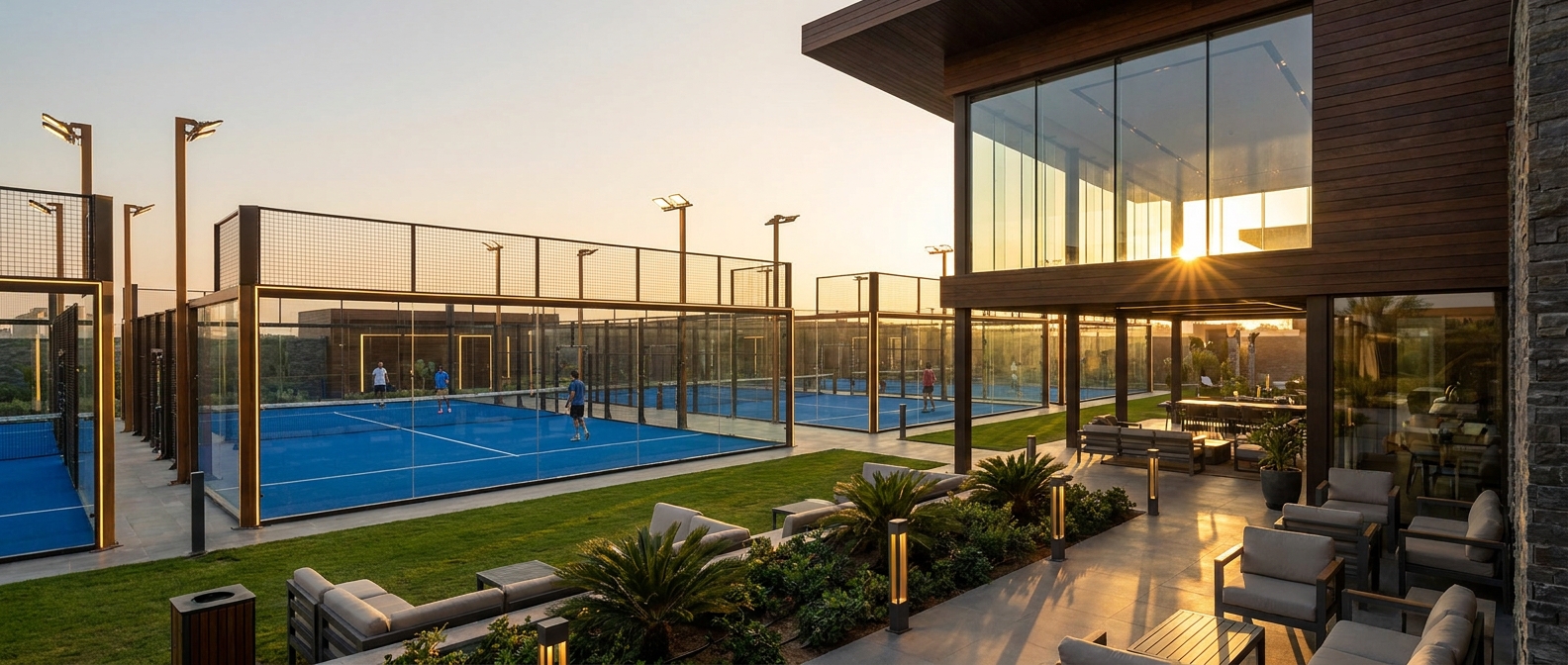
A reliable partner is defined by their technical transparency and their ability to meet rigorous International Padel Federation (FIP) standards. A trusted padel court supplier will never hide their material specifications or structural wind-load calculations. You need to know that your investment is built to last through high-intensity play and varying weather conditions.
Is global experience essential?
Experience across different climates proves that the supplier understands how materials react to humidity, salt air, and extreme heat.
- Installations in 10+ countries.
- Documented case studies of five-year-old courts.
- Direct access to engineering teams.
Think about it. A supplier that only builds in one region might not understand the specific galvanization needs of a coastal club.
Can you verify their structural safety?
Safety is the non-negotiable pillar of any commercial sports installation.
The bottom line? If they cannot provide a stamped engineering report for wind loads, they are not a professional manufacturer. You deserve a structure that remains stable even during severe storms.
Key Takeaway: Reliability is born from a combination of global experience and documented engineering proof.
| Reliability Factor | Benchmark | Importance | |
|---|---|---|---|
| Global Projects | 500+ Courts | High | |
| Structural Stamped Plans | Included | Critical | |
| Factory Transparency | Full Access | High |
Use this benchmark to filter out local distributors who lack direct manufacturing oversight.
How much does a trusted padel court supplier cost?
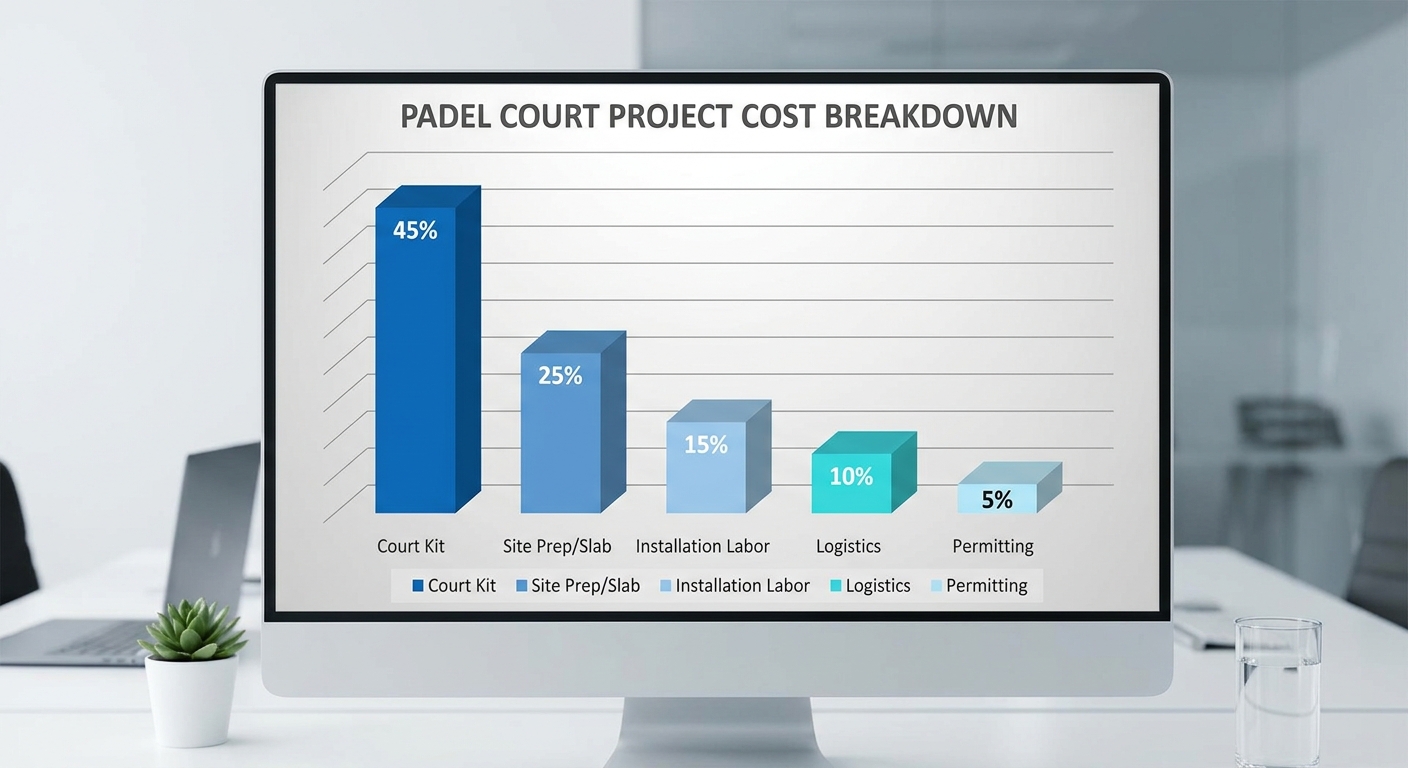
The average cost for a professional-grade kit from a trusted padel court supplier typically ranges between 20,000 and 27,000 before shipping and installation. You must distinguish between the base hardware price and the “total landed cost” to avoid budget overruns. A transparent partner provides a line-item breakdown of every component from the glass to the LED masts.
Why do prices vary so much?
Price fluctuations usually stem from the quality of the steel treatment and the thickness of the glass panels used.
- Standard 10mm vs. Premium 12mm glass.
- Basic paint vs. Hot-dip galvanization.
- Standard turf vs. Textured monofilament.
Wait, there’s more. Shipping logistics and import duties can add significant weight to your final invoice if not calculated early.
Are there hidden installation fees?
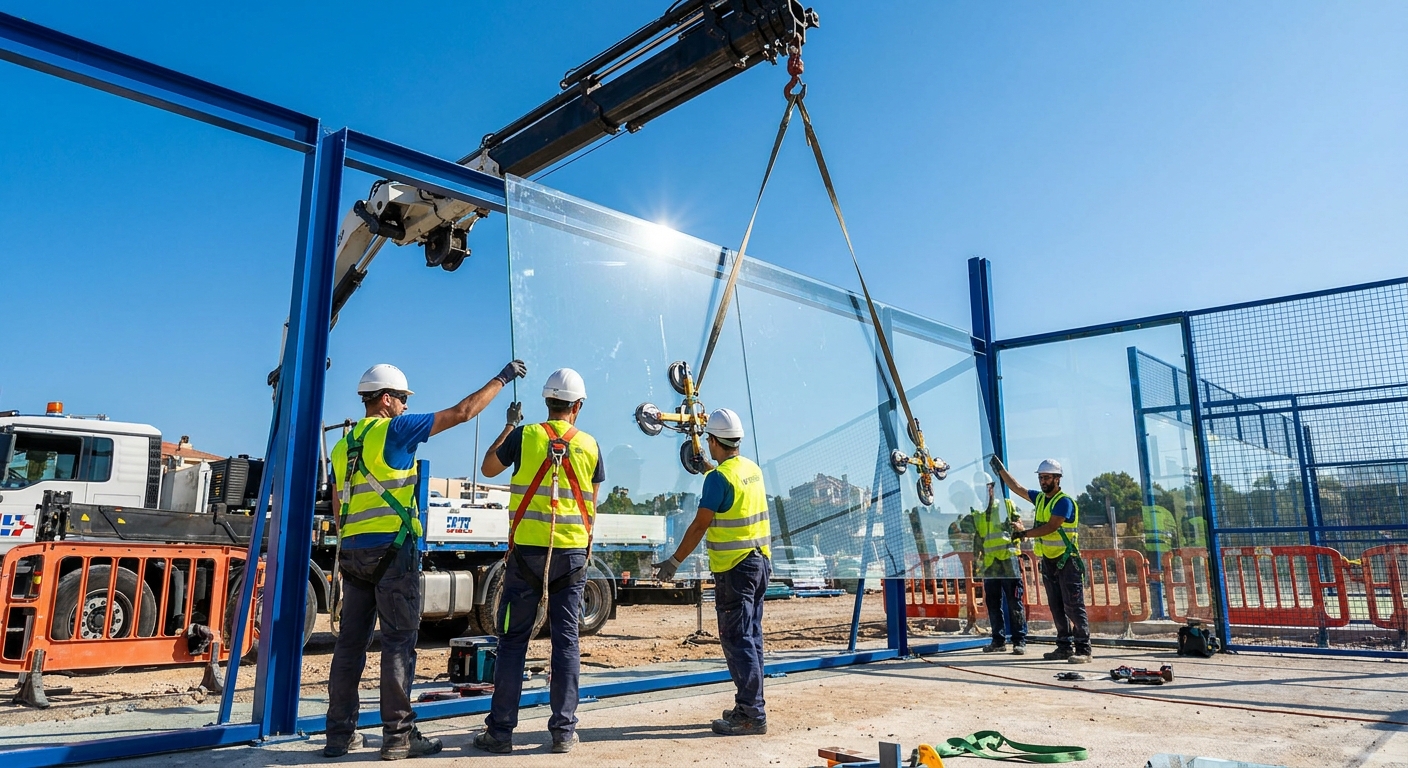
Many investors forget to account for site preparation and the specialized equipment needed for glass lifting.
Here is the kicker: A low-cost quote often ignores the price of a proper concrete slab or electrical hookups for the lighting. You should ask for a comprehensive project checklist to see what is actually included.
Key Takeaway: Focus on the total ROI rather than the lowest initial quote to ensure long-term profitability.
| Cost Element | Estimated Range (USD) | Variance Factor | |
|---|---|---|---|
| Court Hardware | 20k−27k | Material Grade | |
| Shipping/Logistics | 3k−8k | Port Distance | |
| Installation Labor | 5k−10k | Local Rates |
Evaluate the total landed cost to ensure your business plan accounts for every necessary expense.
Which certifications define a trusted padel court supplier?
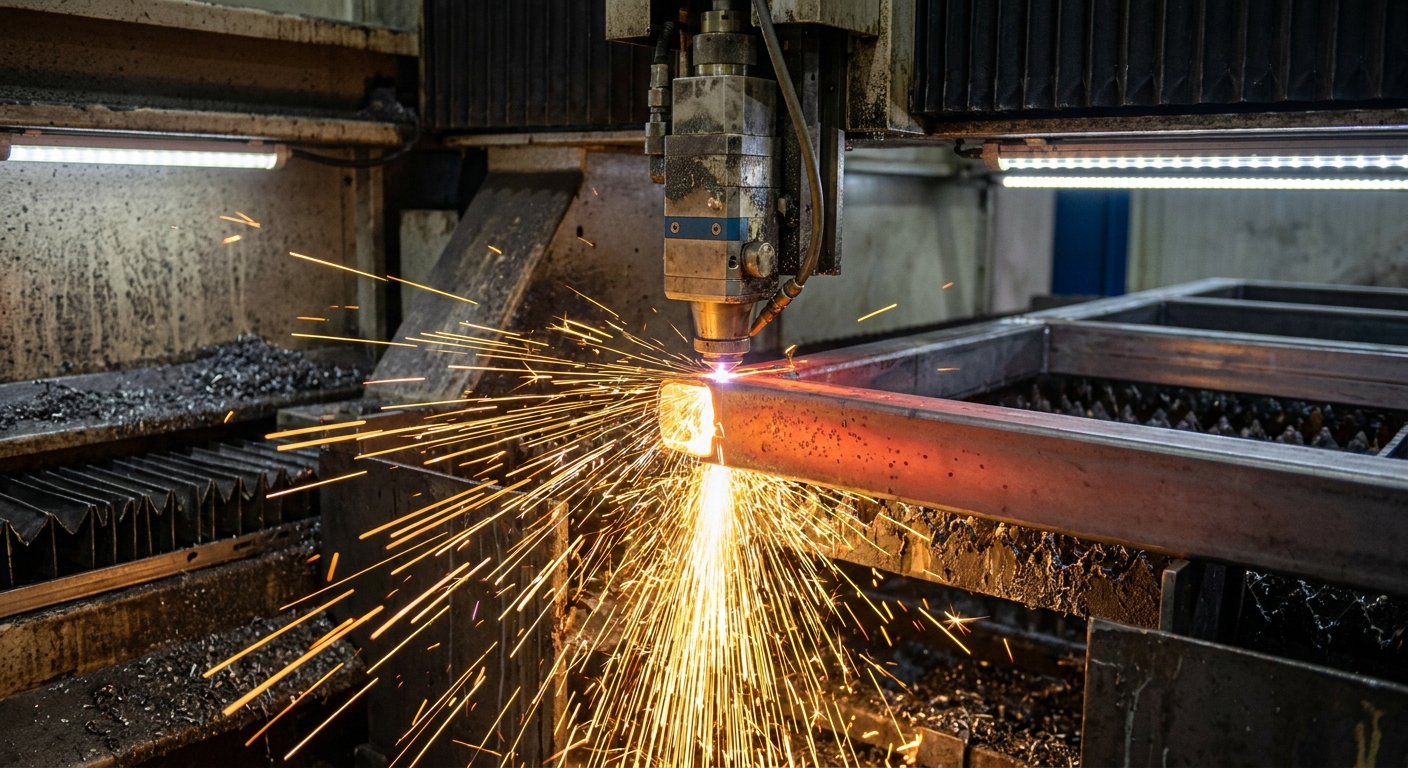
A trusted padel court supplier must hold CE certifications for glass and ISO standards for steel manufacturing processes. These documents prove that the factory follows international safety and quality control protocols. You should always request these certificates during the initial vetting phase to protect your liability.
What is FIP and ITF compliance?
Compliance with the International Padel Federation (FIP) ensures your court is suitable for official tournament play.
- Exact 20m x 10m dimensions.
- Specific rebound height requirements.
- Approved net and post height.
You see, without these certifications, your club might be disqualified from hosting professional events. This limits your revenue potential in the long run.
Why does glass certification matter?
Glass failure is the most common safety risk in a padel facility, making impact testing reports vital.
The bottom line? Certified 12mm tempered security glass is designed to shatter into blunt granules rather than sharp shards. This certification protects your players and reduces your insurance premiums.
Key Takeaway: Certifications are the only objective way to verify the quality and safety of the materials you are buying.
| Certification Type | Requirement | Purpose | |
|---|---|---|---|
| CE / SGCC | Glass Impact Test | Player Safety | |
| ISO 9001 | Factory Management | Quality Consistency | |
| FIP Standards | Dimensional Specs | Tournament Use |
Compare these documents side-by-side to ensure your supplier isn’t using outdated or fake credentials.
Does a trusted padel court supplier offer panoramas?
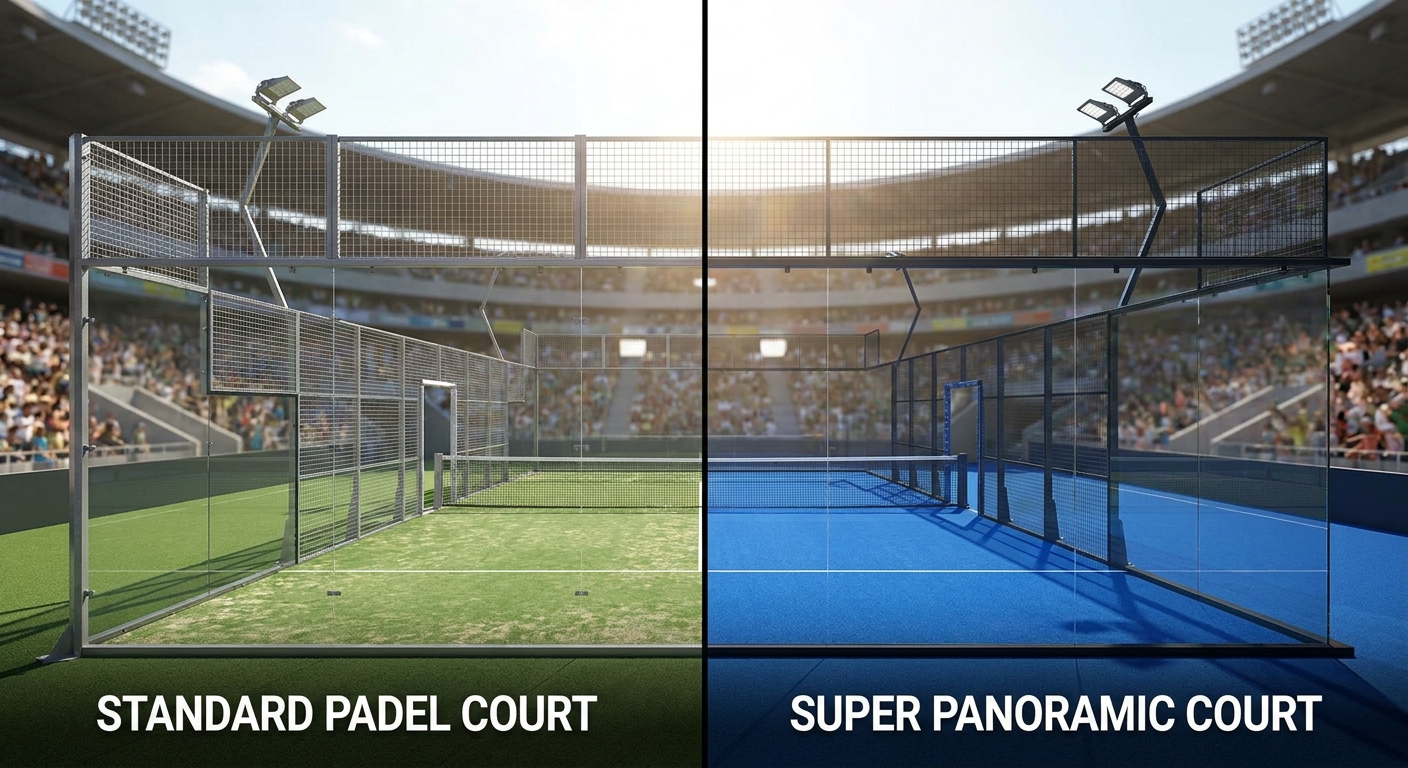
Yes, a trusted padel court supplier should offer various models, including full panoramic designs that eliminate corner pillars for better visibility. Panoramic courts are the gold standard for center courts and broadcast matches. You want a supplier that can engineer these structures without compromising on the stability found in standard models.
What are the benefits of panoramic glass?
Panoramic glass provides an unobstructed view for spectators and creates a high-end “stadium” feel for your club members.
- Enhanced spectator experience.
- Better filming for social media.
- Premium court rental rates.
Think about it. Players are often willing to pay a 20% premium to play on the “show court” of your facility.
Is the structural integrity different?
Because panoramic courts lack corner supports, they require thicker steel tubes and specialized glass mounting systems.
Here is the kicker: Some suppliers simply remove the pillars without reinforcing the rest of the frame. You must ensure the supplier uses 3mm+ thick steel for these high-visibility designs.
Key Takeaway: Panoramic courts increase brand value but require superior engineering to maintain structural safety.
| Court Type | Visibility | Steel Req | Price Index | |
|---|---|---|---|---|
| Standard | Moderate | 2.0 – 2.5mm | 100% | |
| Panoramic | High | 3.0mm+ | 125% | |
| Super Panoramic | Maximum | Reinforced | 140% |
Check the steel thickness specifications for panoramic models to ensure they meet your local wind-load requirements.
What materials does a trusted padel court supplier use?
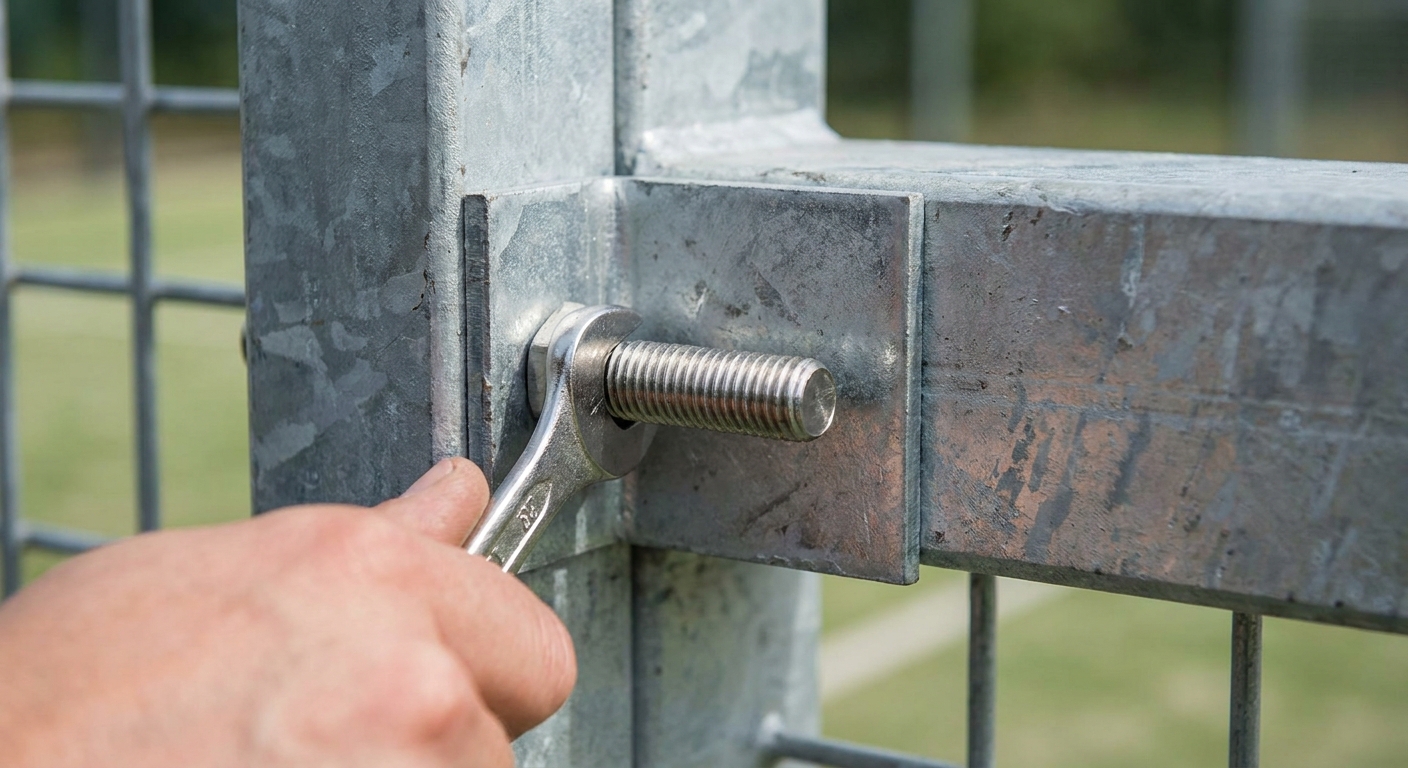
High-grade materials like hot-dip galvanized steel and monofilament textured turf are the hallmarks of a trusted padel court supplier. You should look for steel with a minimum thickness of 3mm for the pillars and frames. Lower-quality materials will lead to premature corrosion, especially in outdoor or humid indoor environments.
Why is galvanization so important?
Galvanization creates a protective zinc coating that prevents the steel from rusting when exposed to oxygen and moisture.
- Hot-dip is superior to electro-galvanization.
- Protects the inside of the steel tubes.
- Extends lifespan by 10+ years.
The bottom line? Cutting costs on galvanization today will lead to expensive structural repairs in just three seasons.
Which turf provides the best playability?
Modern textured monofilament turf (curly grass) offers more consistent ball bounce and requires less sand maintenance.
Think about it. Better turf means fewer player injuries and a more professional playing experience for your members. You want turf that maintains its color and pile height under heavy daily traffic.
Key Takeaway: The quality of the raw materials determines whether your court lasts five years or twenty.
| Material | Professional Grade | Common Cheap Alternative | |
|---|---|---|---|
| Steel | Hot-dip Galvanized | Basic Powder Coating | |
| Glass | 12mm Tempered | 10mm Standard | |
| Turf | Textured Monofilament | Fibrillated Poly |
Insist on a material data sheet (MDS) to verify that the components match the marketing claims.
Can a trusted padel court supplier provide portables?
Many investors seek a trusted padel court supplier that offers portable kits for temporary events or shopping mall installations. Portable courts use a specialized weighted base instead of a permanent concrete slab. You need to ensure the supplier provides a system that remains stable and safe even during aggressive gameplay.
When should you use a portable court?
Portable courts are perfect for exhibitions, temporary tournaments, or venues where you cannot drill into the floor.
- Pop-up city center events.
- Indoor exhibition halls.
- Locations with short-term leases.
Wait, there’s more. Because they don’t require a permanent foundation, they can significantly speed up your time-to-market for a new business location.
Are portable courts as safe as permanent ones?
Stability is achieved through a heavy perimeter frame that keeps the glass walls securely in place without floor anchors.
The bottom line? You must verify the weight distribution of the portable kit to ensure it doesn’t shift during high-impact ball rebounds. A professional supplier will provide a site-specific weight calculation for your peace of mind.
Key Takeaway: Portable courts offer incredible flexibility but require a supplier with specific experience in “slab-free” engineering.
| Feature | Permanent Court | Portable Court | |
|---|---|---|---|
| Foundation | Concrete Slab | Weighted Base | |
| Install Time | 4-6 Days | 2-3 Days | |
| Mobility | Fixed | Re-locatable |
Review the base frame weight specifications to ensure the portable court meets your venue’s safety standards.
How long is the trusted padel court supplier’s lead time?
A trusted padel court supplier typically quotes a production lead time of 4 to 6 weeks, with shipping adding another 2 to 6 weeks depending on your location. You should be wary of any vendor claiming they can deliver in less than 14 days. High-quality manufacturing, especially custom color powder coating and glass tempering, takes time to execute correctly.
What factors delay production?
Most delays occur due to raw material shortages or backlogs in the factory’s custom painting schedule.
- Custom RAL color requests.
- Large-scale project backlogs.
- Global shipping congestion.
Think about it. Rushing the manufacturing process often leads to poor paint adhesion or bubbles in the glass panels.
How to manage the shipping timeline?
Shipping logistics are complex, and a reliable supplier should manage the door-to-port process for you.
Here is the kicker: If your supplier doesn’t understand local import regulations, your containers could sit at the port for weeks. You need a partner who provides all necessary documentation, including the bill of lading and packing lists, well in advance.
Key Takeaway: Plan for a 3-month window from the initial deposit to the first game to avoid stressful project delays.
| Project Stage | Duration | Primary Risk | |
|---|---|---|---|
| Production | 4 – 6 Weeks | Factory Backlog | |
| Sea Freight | 2 – 6 Weeks | Port Delays | |
| Installation | 3 – 5 Days | Weather / Labor |
Align your site preparation schedule with the supplier’s production updates to minimize court downtime.
How to vet a trusted padel court supplier’s history?
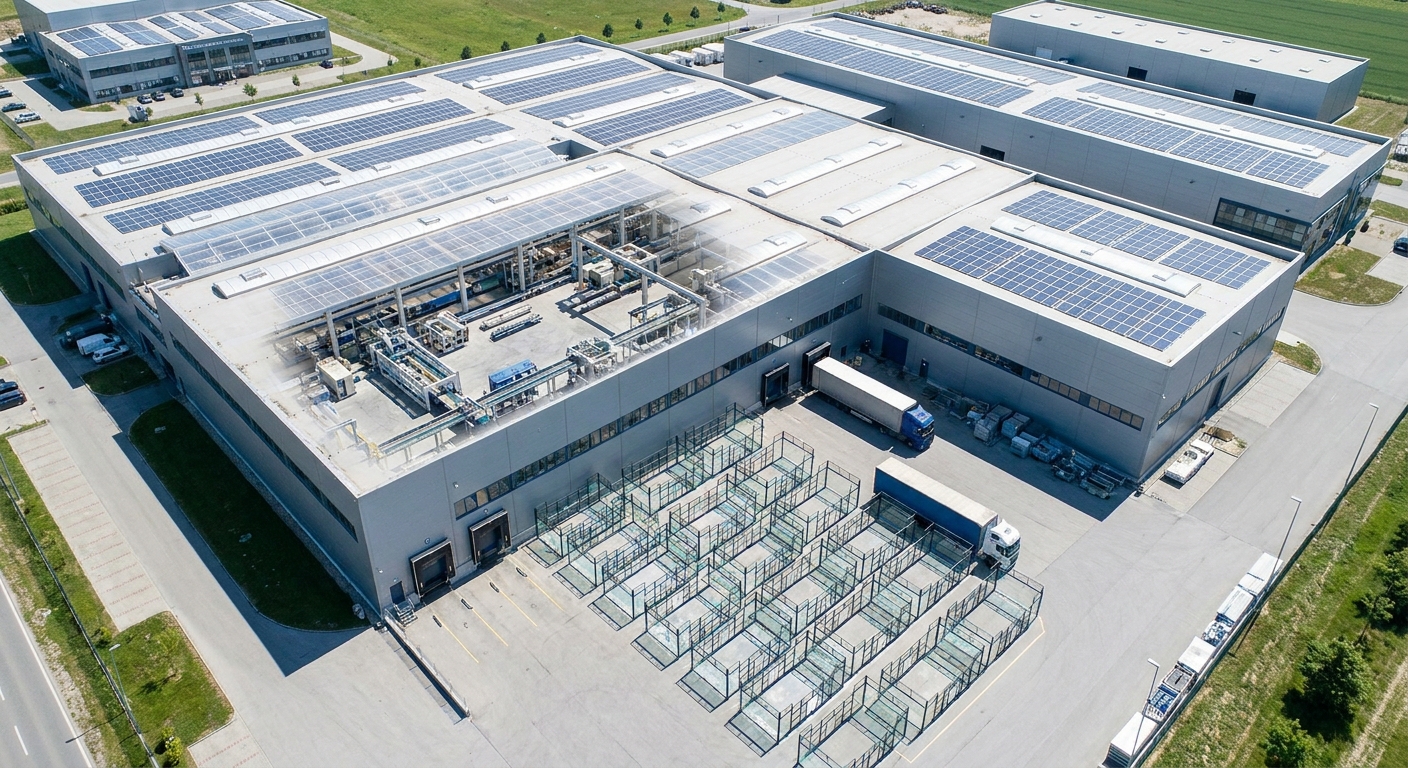
Vetting a trusted padel court supplier involves checking their years in operation and their list of previous commercial clients. You should look for a company that has survived market fluctuations and continues to support its early installations. A supplier that can’t provide references from courts built three or more years ago is a major red flag.
Can they share recent case studies?
Case studies provide visual proof of the supplier’s ability to handle complex terrains and large-scale club layouts.
- Multi-court club configurations.
- High-altitude or coastal installs.
- Indoor vs. outdoor durability.
You see, a photo of a factory is one thing, but seeing a functional club with 1,000+ weekly players is the ultimate proof of quality.
Should you call existing clients?
Talking to a current club owner is the most effective way to learn about the supplier’s after-sales support.
The bottom line? Ask them about the turf wear-and-tear and how responsive the supplier was when a glass panel needed replacing. If the supplier is hesitant to provide client contacts, it’s time to look elsewhere.
Key Takeaway: A supplier’s reputation is only as good as the feedback from the club operators who use their courts daily.
| Vetting Method | What to Look For | Red Flag | |
|---|---|---|---|
| Client Calls | Prompt Support | “No Contact” Policy | |
| Case Studies | Diverse Locations | Stock Photos Only | |
| Years in Biz | 5+ Years | Newly Registered |
Use these social proof metrics to determine if the manufacturer is a long-term partner or a short-term vendor.
Why choose a factory-direct trusted padel court supplier?
Choosing a factory-direct trusted padel court supplier allows you to save 20-30% by removing distributor markups and commissions. You gain a direct line to the engineering team, which is vital for customizing your court to specific local site challenges. Direct communication reduces the chance of technical errors that often occur when information is passed through multiple agents.
Is OEM customization available?
Factory-direct suppliers often provide Original Equipment Manufacturing (OEM) services, allowing you to brand the courts as your own.
- Custom logo embossed turf.
- Branded net protectors.
- Unique frame color schemes.
Think about it. Building a unique brand identity helps your club stand out in an increasingly crowded market.
How does direct support work?
When you work directly with the factory, spare parts like replacement glass or specialized bolts are shipped faster.
Wait, there’s more. You aren’t reliant on a local dealer who might go out of business or stop carrying a specific court model. This direct relationship ensures your facility remains operational for decades.
Key Takeaway: Factory-direct sourcing maximizes your budget and ensures technical accountability for the life of your facility.
| Sourcing Option | Price Point | Tech Access | Risk | |
|---|---|---|---|---|
| Factory Direct | Lowest | Direct | Shipping Coordination | |
| Local Dealer | High | Indirect | Dealer Bankruptcy | |
| Generic Agent | Moderate | None | Quality Fraud |
Analyze the long-term savings of direct sourcing against the convenience of a local middleman before deciding.
Where can I find a trusted padel court supplier today?
To find a trusted padel court supplier, you should start by reviewing the manufacturer’s official digital presence and global project map. You can explore the full range of premium, factory-direct courts by visiting our catalog. At Superb Padel, we specialize in delivering tournament-grade infrastructure that meets the highest safety standards in the industry.
Can I get a custom quote?
Yes, a professional supplier should provide a tailored quote based on your specific location and court quantity.
- Quantity-based discounts.
- Climate-specific material upgrades.
- Comprehensive logistics planning.
The bottom line? Every project is unique, and your quote should reflect the specific engineering needs of your site.
What is the first step?
The best way to begin is by discussing your site layout and business goals with an expert consultant.
Here is the kicker: A quick consultation can save you thousands in planning errors and permit delays. You don’t have to navigate the complexities of padel court construction alone.
Key Takeaway: Start your journey with a supplier that offers a combination of factory-direct pricing and professional project guidance.
| Action Step | Purpose | Outcome | |
|---|---|---|---|
| Request Quote | Cost Baseline | Financial Planning | |
| Review Designs | Model Selection | Aesthetic Alignment | |
| Verify Logistics | Shipping Plan | Timeline Security |
Follow this logical chain of inquiry to secure a partner that will help your padel business thrive for years.
Selecting the right partner is the single most important decision in your padel project. By focusing on technical certifications, structural integrity, and the advantages of factory-direct communication, you can build a facility that stands the test of time. Don’t settle for mediocre builds when you can have tournament-grade quality that protects your players and your profits. Contact us today to start building your world-class padel club with Superb Padel.
FAQ
Can I install a padel court on an existing tennis court?Yes, you can. Typically, a standard tennis court provides enough space for two or three padel courts, but you must verify the existing concrete thickness and drainage capabilities first.
What’s the best way to maintain my padel court?Regularly brush the turf to redistribute the sand and check the tension of the net and the structural bolts. A reliable supplier will provide a detailed maintenance manual for your staff.
What’s the best glass for a commercial club?We strongly recommend 12mm tempered security glass for all commercial applications. It offers better rebound performance and a much higher level of safety for your players compared to 10mm options.
Can I customize the court colors for my brand?Absolutely. Most trusted suppliers use the RAL color system, which allows you to choose from hundreds of powder-coating options to perfectly match your brand identity.
What is the lifespan of a professional padel court?A high-quality court from a trusted manufacturer should last between 15 and 20 years, provided you perform regular maintenance and use hot-dip galvanized steel components.