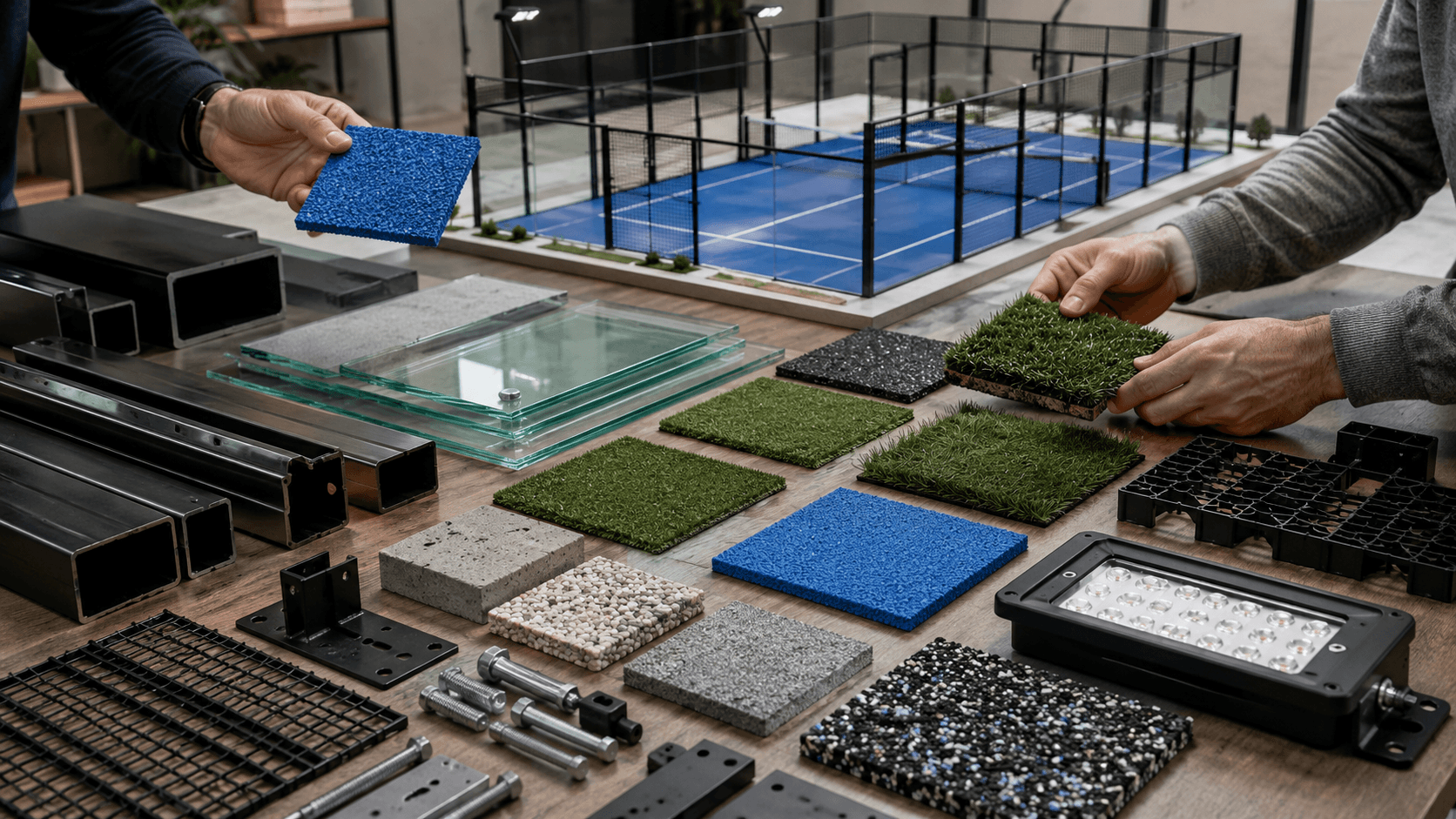
Selecting materials for a cancha padel requires prioritizing structural integrity, weather resistance, and professional playability standards. You want to build a world-class facility, but choosing inferior steel or low-grade turf can lead to rapid oxidation and inconsistent ball bounce, ruining your investment within months. By following official guidelines and selecting high-performance components, you ensure a durable facility that meets the needs of competitive players.
What are the ideal dimensions for a cancha padel?
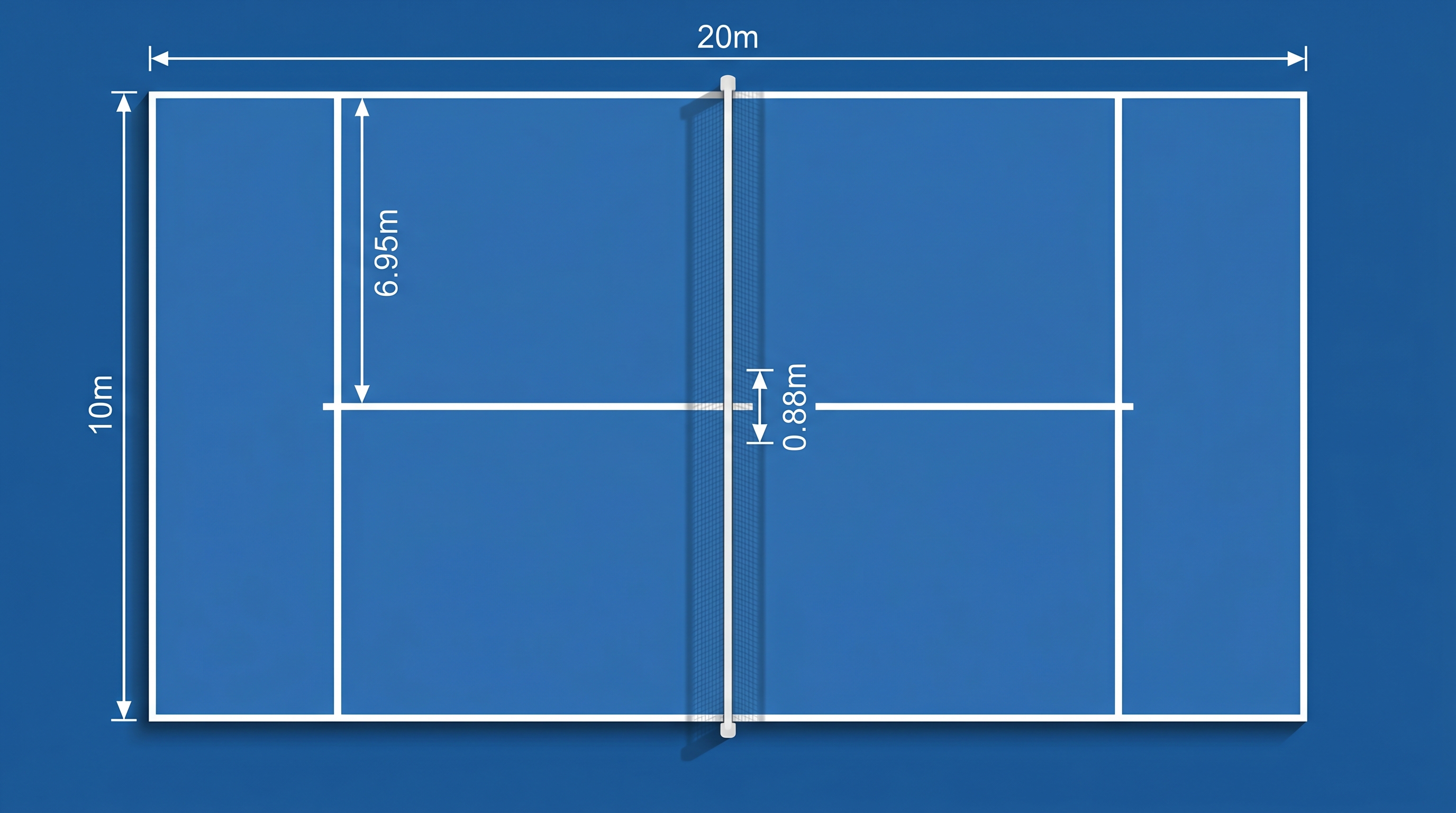
The standard dimensions for a professional cancha padel are 10 meters wide by 20 meters long, measured from the internal faces of the walls. These dimensions are strictly regulated to ensure a consistent playing experience across all international facilities.
Precise sizing for international play
You must ensure that your court area follows the exact 2:1 length-to-width ratio required for competitive balance. Errors in measurement can lead to net displacement and invalid service lines that frustrate experienced players.
The truth is:
Even a few centimeters of error can change the entire physics of the game.
- Length: 20 meters internally.
- Width: 10 meters internally.
- Service Lines: Located 6.95 meters from the net.
- Tolerance: Maximum variance of 0.5% allowed.
Net and post positioning requirements
You need to center the net perfectly between the side walls, dividing the 20-meter length into two equal 10-meter halves. The posts must not exceed a specific height to prevent interference with out-of-court play during intense matches.
Think about it:
A sagging net is the most common reason for amateur play disputes.
- Net Height: 88 cm at the center.
- Post Height: Maximum of 1.05 meters.
- Mesh Aperture: Small enough to prevent the ball from passing through.
- Tension: Adjustable cable to prevent sagging over time.
Key Takeaway
Adhering to the 10x20m internal dimensions and 88cm net height is non-negotiable for professional compliance and player safety.
The following table outlines the exact metric requirements for a regulation court.
| Feature | Standard Metric | FIP Compliance Rule |
|---|---|---|
| Internal Width | 10 Meters | Rule 1: Court Dimensions |
| Internal Length | 20 Meters | Rule 1: Court Dimensions |
| Net Center Height | 0.88 Meters | Rule 2: The Net |
| Service Line Distance | 6.95 Meters | Rule 1: Marking Lines |
Which steel is best for a durable cancha padel?
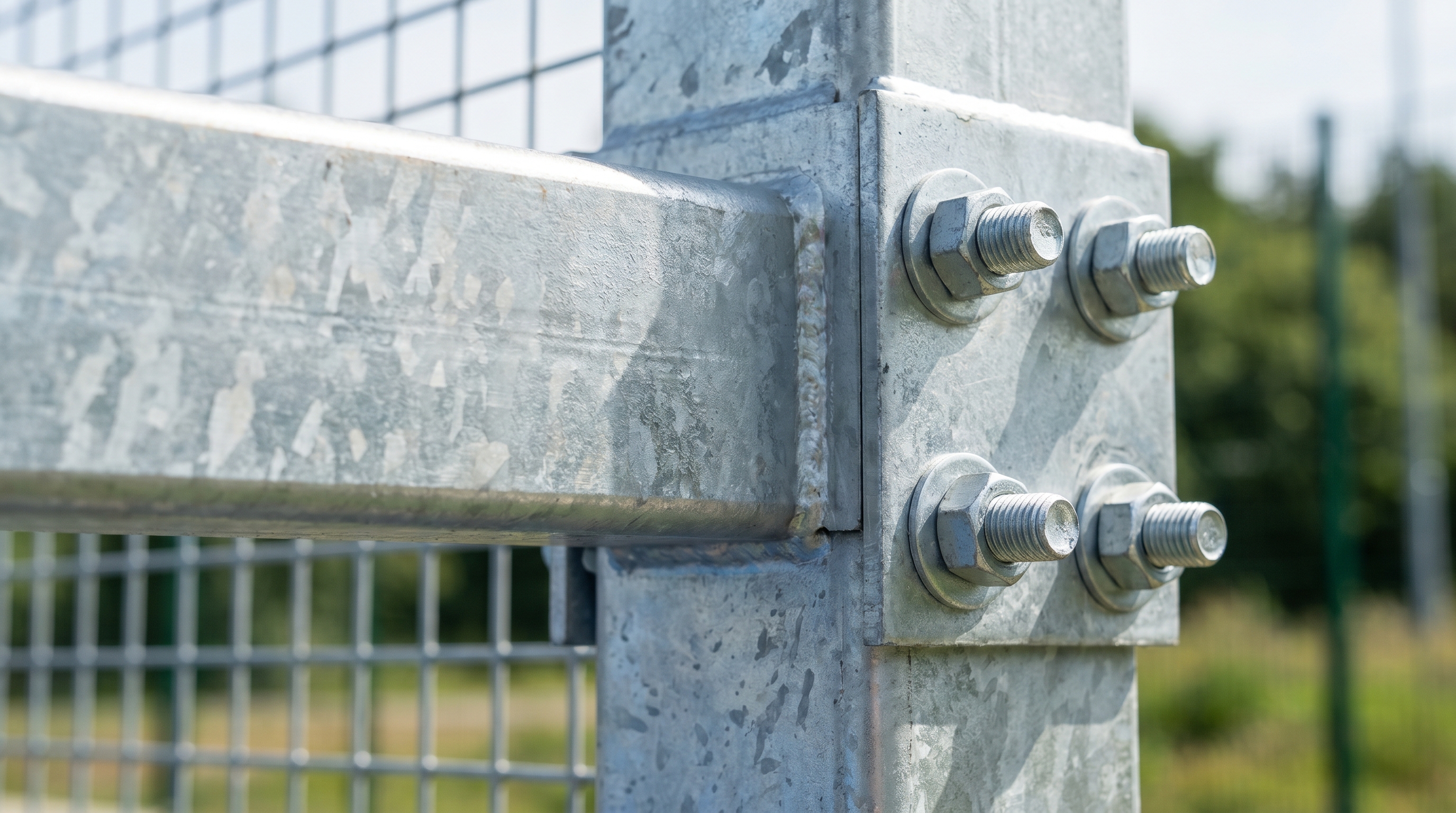
Hot-dip galvanized steel is the superior material for a Standard Padel Court because it offers maximum protection against corrosion and structural fatigue. You should verify that the steel frames used in your cancha padel are treated both internally and externally to withstand high-humidity environments.
Galvanization and coating standards
You should look for steel that has undergone a hot-dip galvanization process followed by electrostatic powder coating. This dual-layer protection ensures your court remains rust-free for over 20 years, even in coastal areas.
But wait, there’s more:
Quality steel doesn’t just prevent rust; it provides the rigidity needed for consistent ball rebounds.
- Process: Hot-dip galvanization for internal/external protection.
- Finish: Polyester powder coating (RAL colors).
- Thickness: Minimum 3mm steel wall thickness.
- Corrosion Grade: C4 or higher for outdoor use.
Structural frame design benefits
The frame must be modular to allow for thermal expansion and contraction without warping the glass panels. You need a design that utilizes laser-cut plates for perfect alignment during the assembly of your facility.
Check this out:
A modular frame is significantly easier to repair if a single section is damaged by impact.
- Connection: High-strength M12 bolts.
- Base Plates: 10mm thick steel for stability.
- Pillars: 100x100mm or 120x80mm profiles.
- Reinforcement: Triangular gussets at high-stress joints.
Key Takeaway
Investing in hot-dip galvanized steel with a 3mm thickness prevents structural failure and keeps maintenance costs low for decades.
Review the comparison below to understand why galvanization is essential.
| Material Type | Corrosion Resistance | Lifespan | Best Application |
|---|---|---|---|
| Hot-Dip Galvanized | Exceptional | 20+ Years | Coastal/Outdoor |
| Cold Galvanized | Moderate | 5-7 Years | Indoor Only |
| Painted Carbon Steel | Low | 2-3 Years | Not Recommended |
What glass thickness ensures a safe cancha padel?
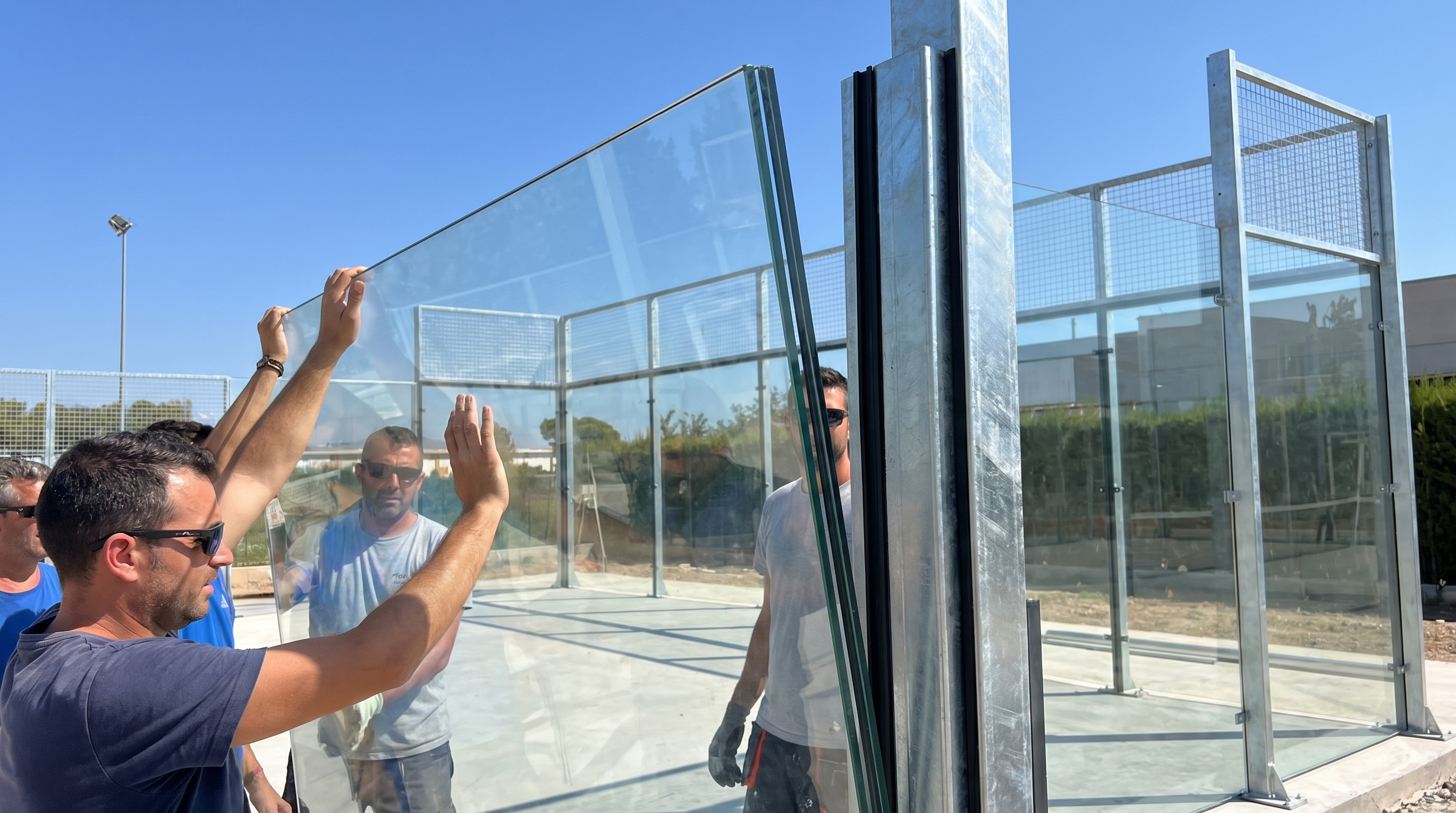
The most common thickness for a professional cancha padel is 12mm tempered safety glass, which provides the necessary strength to withstand high-velocity player impacts. This padel glass must meet European standards to ensure it shatters into small, blunt pieces if broken.
Safety glass certification requirements
You must verify that your glass is tempered and heat-soaked to reduce the risk of spontaneous breakage during a match. Non-certified glass is a major liability that can lead to severe injuries during intense play.
The best part?
Tempered glass is five times stronger than regular glass, making it nearly impossible to break with a ball.
- Thickness: 12mm (Standard) or 10mm (Budget).
- Safety Rating: EN 12150-1 compliant.
- Edge Work: Polished and beveled for safety.
- Impact Resistance: Tested for 50kg pendulum hits.
Mounting and vibration dampening
You need to use high-quality EPDM rubber gaskets between the glass and the steel frame to absorb vibrations. This prevents “glass chatter” and ensures the ball rebounds with predictable speed and direction for the players.
Don’t overlook this:
Direct contact between steel and glass is the number one cause of glass failure.
- Gaskets: UV-resistant EPDM rubber.
- Bushings: PVC sleeves for all glass holes.
- Fasteners: Countersunk stainless steel bolts.
- Clearance: 3mm gap between glass panels for expansion.
Key Takeaway
Always insist on 12mm EN 12150-1 certified tempered glass with EPDM gaskets to maximize both safety and playability.
Ensure your glass choices align with the traffic and intensity of your club.
| Thickness | Weight per m² | Impact Strength | Recommended Usage |
|---|---|---|---|
| 10mm | 25 kg | Standard | Residential / Low Traffic |
| 12mm | 30 kg | High | Commercial / Pro Clubs |
| 12mm Laminated | 32 kg | Maximum | High-Risk Areas |
How do you choose turf for a cancha padel?
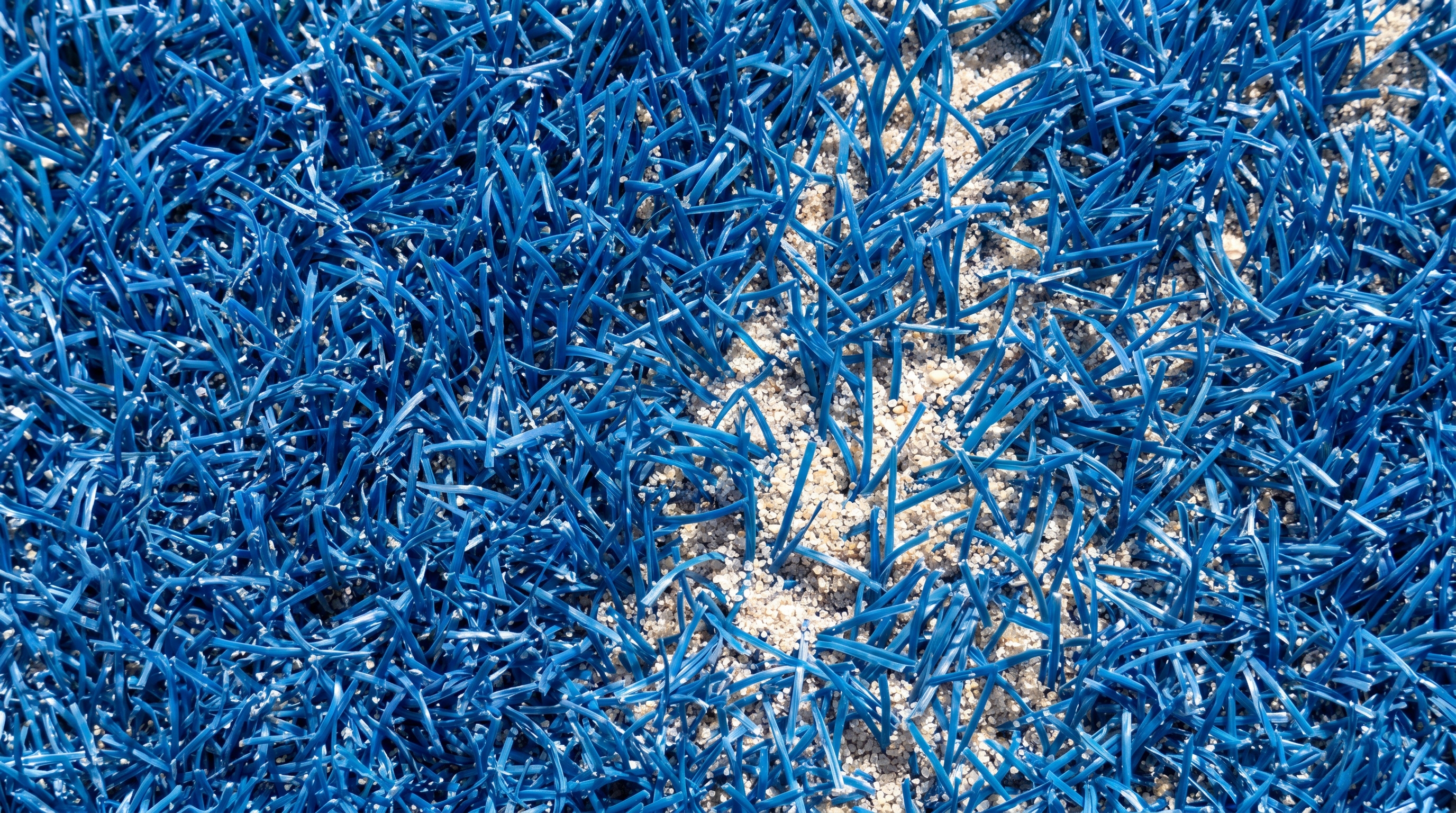
Selecting high-density monofilament or fibrillated padel grass is essential for a high-quality cancha padel because it dictates game speed and player traction. You should look for turf with a high “Dtex” value to ensure the fibers don’t flatten after a few weeks of heavy use.
Fiber type and pile height
You must choose a turf with a pile height of 10mm to 12mm to comply with international professional standards. Textured monofilament fibers are currently the preferred choice for elite clubs because they hold sand more effectively than flat fibers.
Look at it this way:
The turf isn’t just “carpet”; it is a precision component that controls ball friction.
- Fiber Type: Texturized Monofilament.
- Pile Height: 10mm – 12mm.
- Dtex: 8,000 to 10,000 range.
- Stitch Rate: 250+ per meter.
Infill and drainage capabilities
You need to apply kiln-dried silica sand evenly across the surface to stabilize the fibers and allow for controlled sliding. Ensure the backing of the turf has perforated holes to handle heavy rainfall without forming pools.
The reality is:
Poor drainage will lead to “dead spots” where the ball refuses to bounce after rain.
- Sand Type: 99% pure silica sand.
- Sand Volume: 8kg to 15kg per square meter.
- Backing: UV-resistant latex or PU.
- Drainage Rate: 60 liters per minute per m².
Key Takeaway
Choose 10mm-12mm texturized monofilament turf with a high Dtex rating to ensure professional traction and long-term durability.
Selecting the right turf type reduces maintenance and improves the user experience.
| Turf Type | Durability | Sand Movement | Maintenance |
|---|---|---|---|
| Texturized Mono | High | Minimal | Low |
| Fibrillated | Moderate | High | Moderate |
| Standard Mono | High | Moderate | High |
What lighting standards apply to a cancha padel?
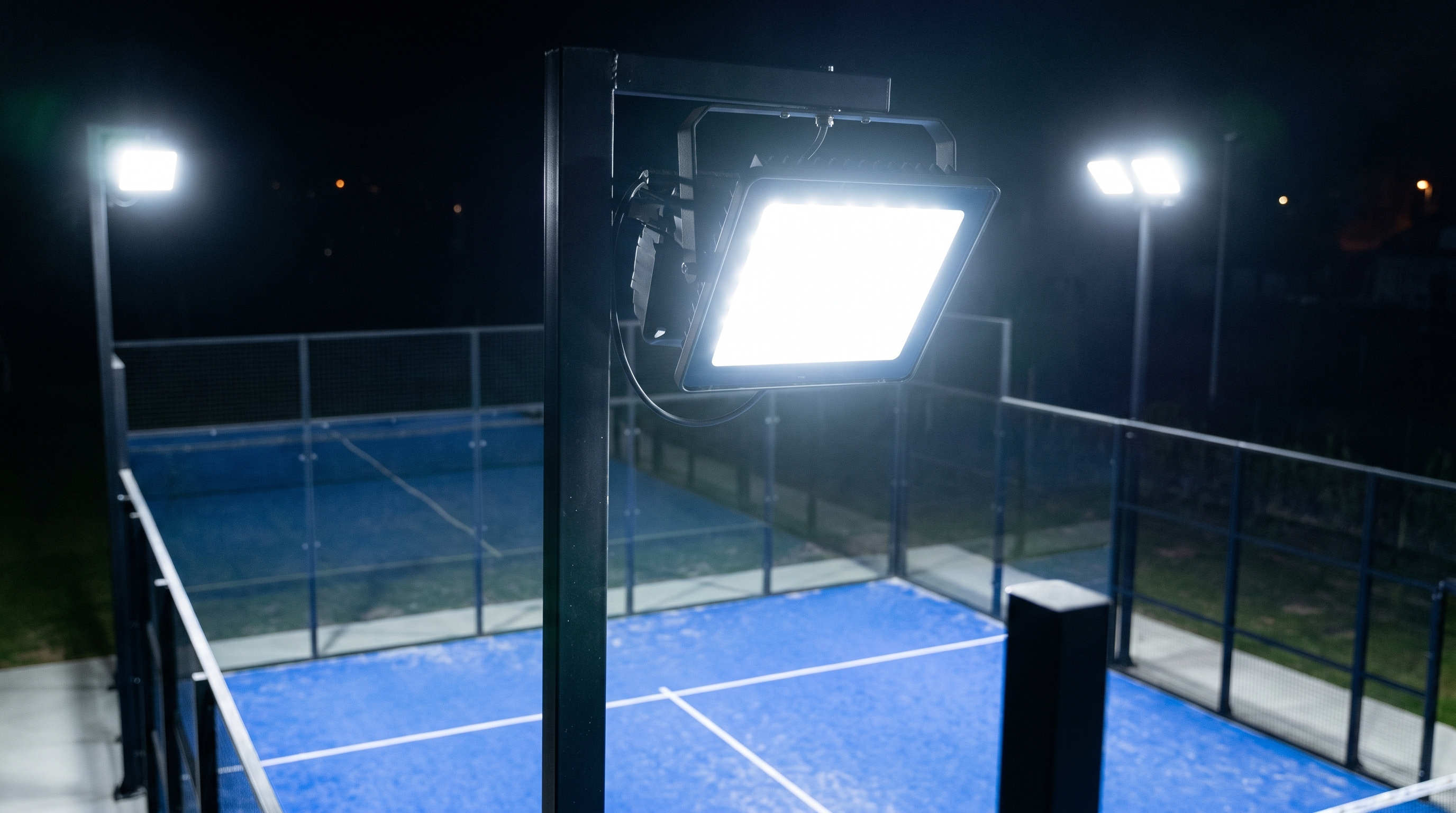
Professional lighting for a cancha padel must provide at least 300 to 500 lux of uniform illumination across the entire playing surface. You should utilize high-efficiency padel LED lighting to minimize energy consumption while maximizing visibility during night matches.
Lux levels and uniformity
You must ensure that the light uniformity ratio is high enough to prevent shadows that make it impossible for players to track balls. Poor lighting creates visual fatigue and can lead to errors in judgment during fast-paced points.
Think about this:
If your lights are too dim, players will suffer from eye strain and increased reaction times.
- Recreational Lux: 200 – 300 lux.
- Competitive Lux: 500+ lux.
- Uniformity: 0.7 (Class I play).
- Color Temperature: 5000K – 6000K (Daylight).
LED fixture and post placement
You should install lights on 6-meter or 7-meter posts positioned outside the court boundaries to prevent collision risks for the players. Modern fixtures should have an IP66 waterproof rating to survive harsh outdoor conditions without failing.
It gets better:
Asymmetrical lenses direct the light onto the court and away from the neighbors.
- Fixture Power: 150W – 240W per lamp.
- Quantity: 8 lamps per court for pro play.
- Mounting Height: 6 meters minimum.
- Beam Angle: Asymmetrical to reduce glare.
Key Takeaway
Install 8 units of 200W LED floodlights at a 6-meter height to achieve the 500 lux required for professional competitive play.
Use these benchmarks to determine the lighting level appropriate for your club’s target audience.
| Play Level | Avg. Illuminance (Lux) | Uniformity (Uo) | Mounting Height |
|---|---|---|---|
| Recreational | 200 Lux | 0.5 | 6 Meters |
| Club/League | 300 Lux | 0.7 | 6 Meters |
| Professional | 500 Lux | 0.7 | 7 Meters |
What foundation is needed for a cancha padel?
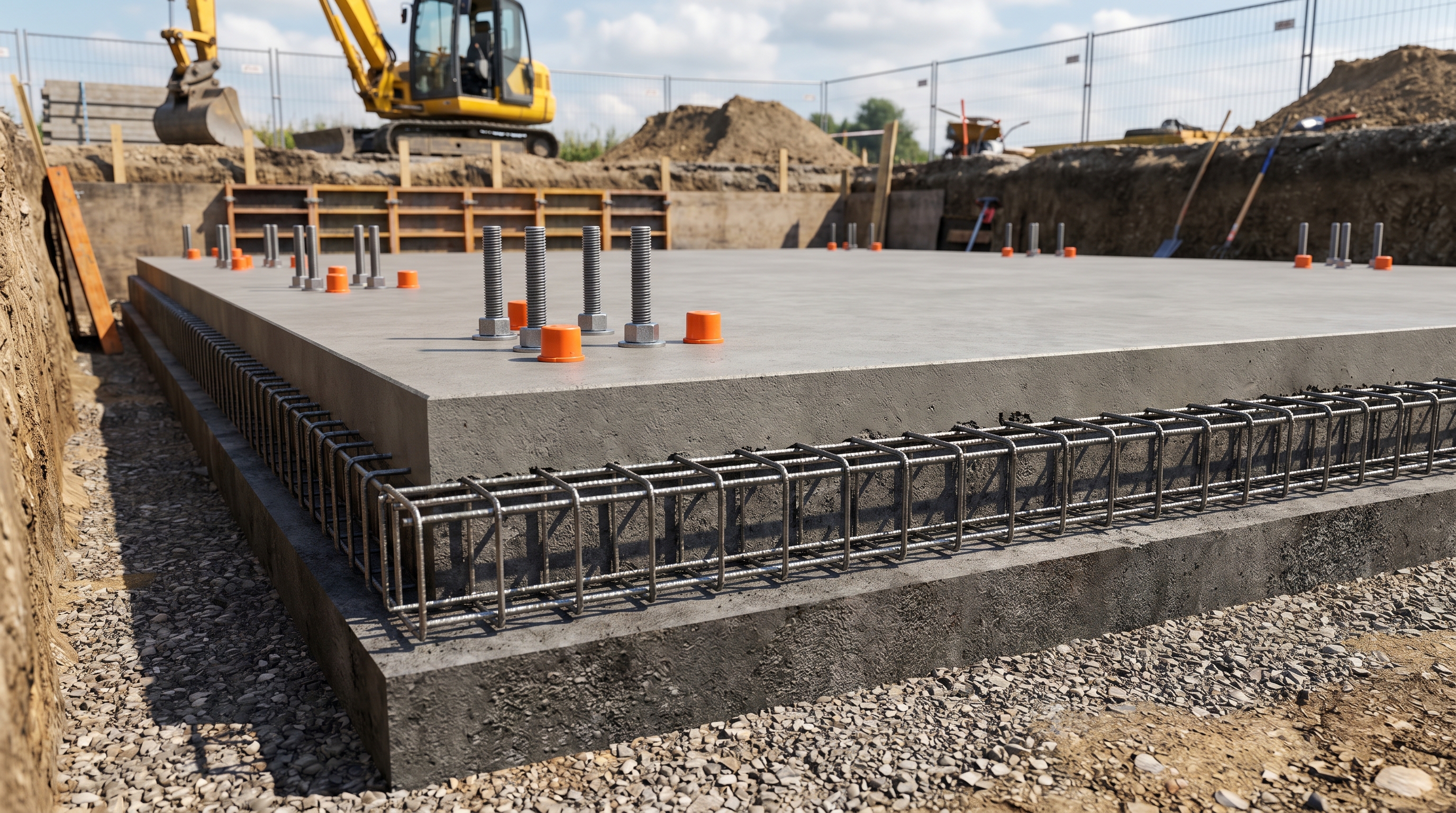
A reinforced concrete slab is the most reliable foundation for a cancha padel because it provides the absolute flatness required for turf installation. You must ensure the base is slightly larger than the court itself to provide a secure anchoring point for the heavy steel pillars.
Concrete vs asphalt bases
You should choose a 15cm thick reinforced concrete slab for the best long-term results and structural stability. While asphalt is cheaper, it can soften in high heat and lead to depressions under the glass loads that ruin the court’s level.
Here is the deal:
If the base isn’t perfectly flat, the turf will develop wrinkles that are impossible to fix.
- Concrete Grade: H-25 or C25/30.
- Thickness: 15cm minimum.
- Reinforcement: Steel mesh (Mallazo).
- Finish: Power-troweled for flatness.
Slope and drainage requirements
You must include a 0.5% to 1% slope from the center to the sides to prevent water from pooling under the turf. Proper perimeter drainage channels are essential for maintaining the lifespan of the steel and the backing of the grass.
Don’t skip this:
Installing a court on “green” concrete that hasn’t cured will trap moisture and rot the backing.
- Slope: 1cm drop every 2 meters.
- Planarity: +/- 3mm over 3 meters.
- Expansion Joints: Positioned under the net line.
- Curing Time: 21-28 days before installation.
Key Takeaway
A 15cm reinforced concrete slab with a 0.5% slope is the only way to guarantee a perfectly flat, durable playing surface.
Compare the various base options available for your project.
| Base Type | Stability | Cost | Drainage |
|---|---|---|---|
| Reinforced Concrete | Exceptional | High | Requires Slope |
| Porous Concrete | Good | Moderate | Excellent |
| Asphalt | Moderate | Low | Good |
How does mesh quality affect a cancha padel?
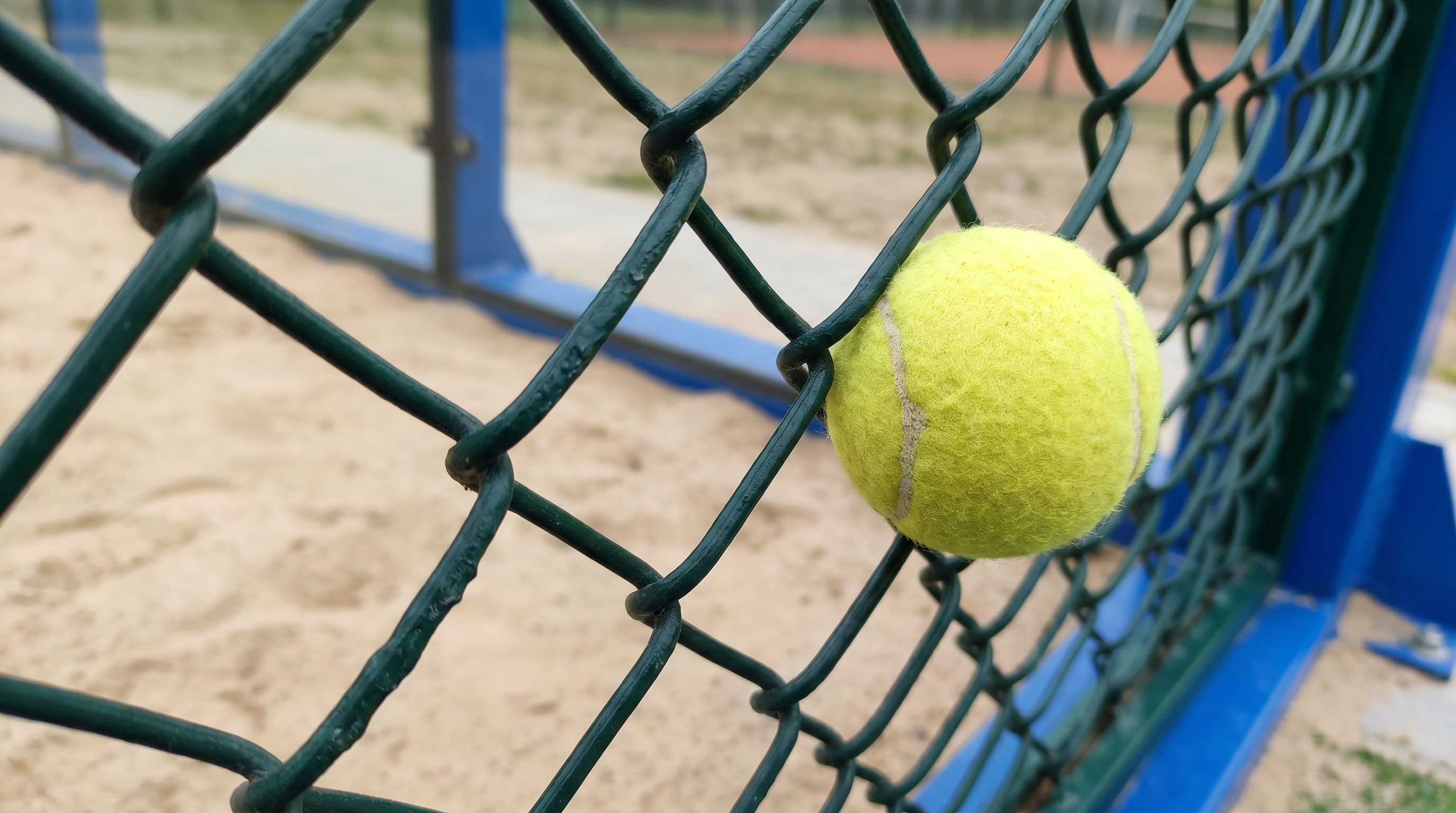
The quality of the electro-welded mesh on your cancha padel is vital because it determines how the ball behaves when it hits the side fences. You must ensure the mesh is flush with the glass panels to prevent irregular bounces that disrupt the flow of a match.
Mesh gauge and weld strength
You should specify a 4mm wire diameter for your mesh to ensure it doesn’t deform over time from constant ball impact. The welds must be smooth to prevent snags on clothing or skin during close-range play at the fence.
Think about it:
Weak mesh will eventually “belly out,” creating zones where the ball dies on impact.
- Wire Diameter: 4mm (Standard).
- Aperture: 50mm x 50mm or 40mm x 40mm.
- Welding: Automated electro-fusion.
- Compliance: Rule 1 (FIP) regarding surface flatness.
Anti-injury design features
You need to select a mesh system that hides all sharp wire ends within the steel frame profiles to protect players. This “anti-injury” design is a hallmark of high-quality manufacturing and is essential for courts intended for public use.
The best part?
A flush-mounted mesh ensures that the ball transition from glass to fence is seamless and predictable.
- Framing: Folded steel edges.
- Finish: Burr-free powder coating.
- Alignment: Perfectly flush with glass.
- Mounting: Vibration-dampening clips.
Key Takeaway
Use 4mm electro-welded mesh with an anti-injury frame to ensure consistent play and maximum player safety.
The following specifications are required for professional-grade mesh systems.
| Component | Professional Standard | FIP Rule Reference |
|---|---|---|
| Wire Thickness | 4.0 mm | Rule 1: Lateral Walls |
| Mesh Aperture | 50 x 50 mm | Rule 1: Lateral Walls |
| Surface Alignment | Flush with Glass | Rule 1: Interior Surface |
| Finish | Smooth Powder Coat | Safety Standard |
What colors are available for a cancha padel?
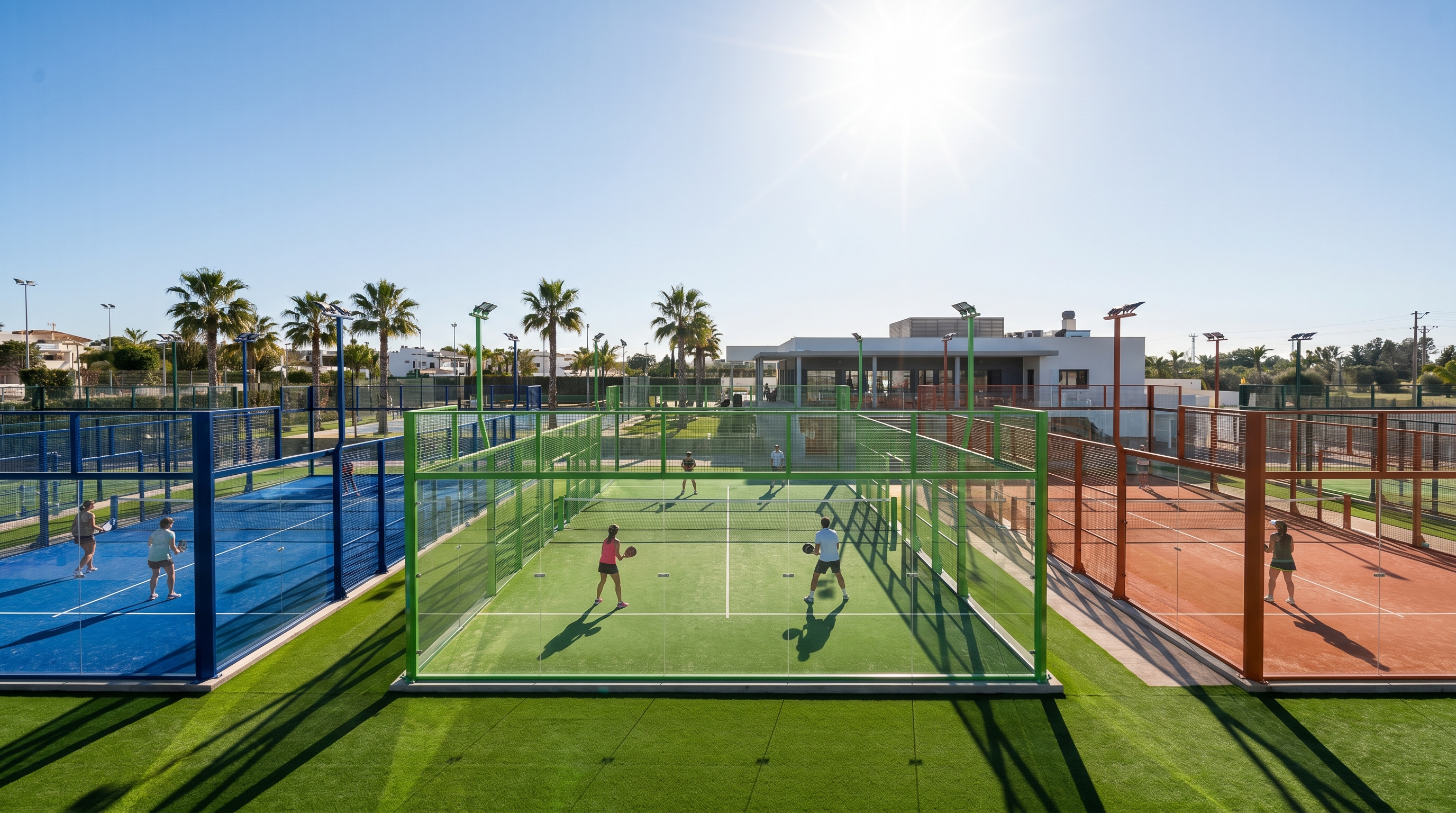
While blue is the most popular choice, a cancha padel can be customized with various colors for the turf and the steel frame to match your club’s branding. You should select colors that provide high contrast with the yellow ball to improve visibility for both players and spectators.
Popular turf color choices
You can choose from standard colors like blue, green, or clay-red, with blue being the preferred choice for televised tournaments. Blue offers the best visual contrast, making it much easier for players to track high-speed shots during a game.
Look at it this way:
Color choice is a marketing tool that defines the aesthetic identity of your club.
- Pro Blue: Standard for World Padel Tour.
- Forest Green: Traditional look for parks.
- Clay Red: Mimics the look of clay tennis courts.
- Black/Anthracite: Modern, high-end boutique style.
Steel frame customization
You have the option to paint the steel structure in any RAL color to create a unique look for your facility. Most high-end clubs choose black or dark grey frames to make the court look sleek and professional against the turf.
The truth is:
Matching the frame color to your logo enhances brand recognition and club prestige.
- Standard: Black or Dark Green.
- Custom: White, Red, or Metallic.
- Durability: All colors use UV-resistant powder coating.
- Consistency: Uniform coating across all structural pillars.
Key Takeaway
Select a blue turf and black frame combination to achieve a professional look that offers the best ball visibility.
Review the most common color combinations used in modern clubs.
| Combination | Turf Color | Frame Color | Best For |
|---|---|---|---|
| Classic Pro | Blue | Black | Tournaments |
| Traditional | Green | Green | Residential |
| Modern | Black | Silver | Boutique Clubs |
Should you build an indoor or outdoor cancha padel?
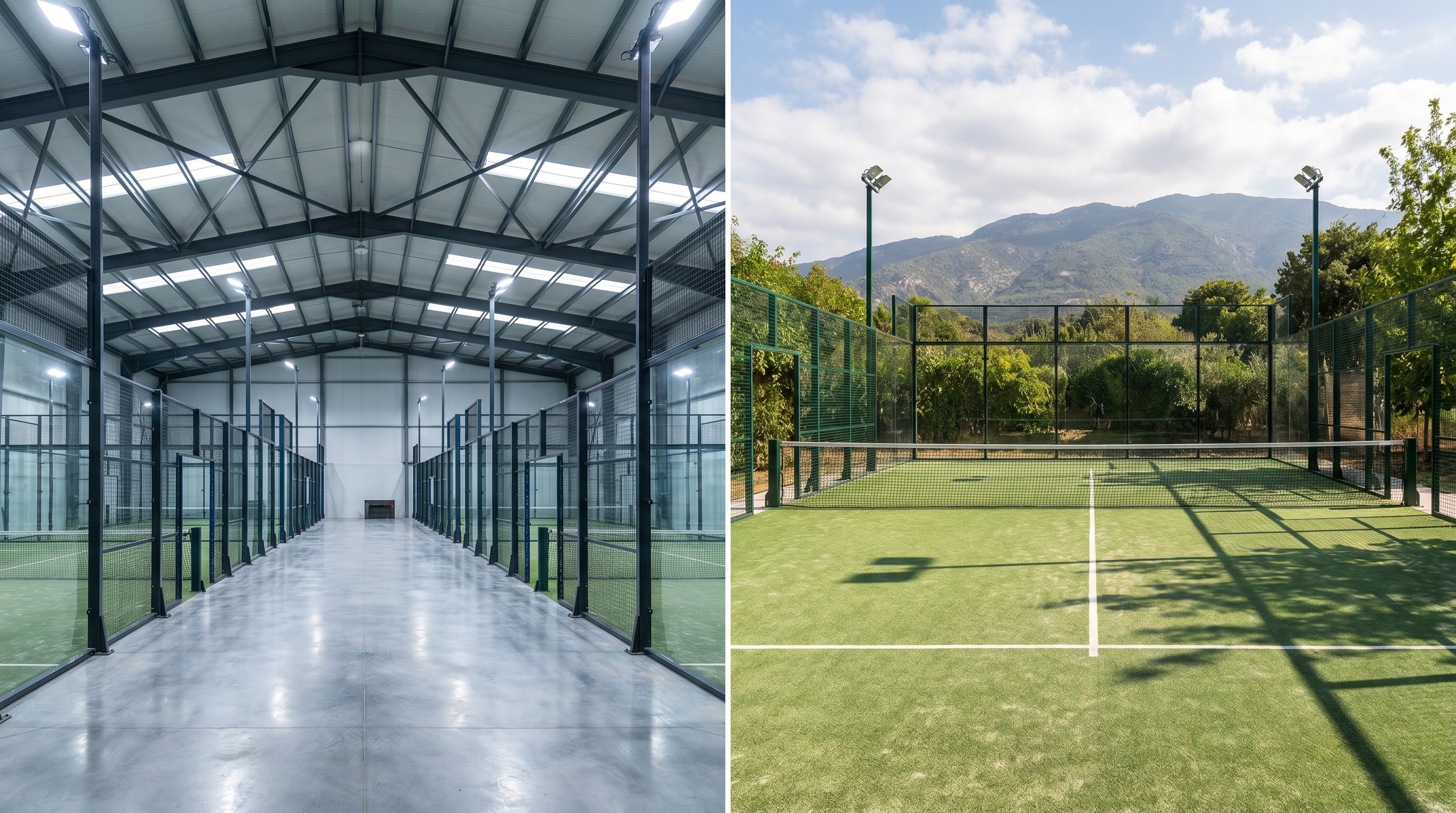
Deciding between an indoor or outdoor cancha padel depends on your local climate and your goals for year-round revenue. If you live in a rainy or extremely hot climate, building a Roofed Padel Court is often the best way to ensure consistent bookings throughout the year.
Advantages of indoor facilities
You can control the environment completely, eliminating wind and rain issues that can ruin a scheduled match. Indoor courts also allow for better lighting control and can be easier to maintain since they are protected from UV degradation.
Imagine this:
Players will pay a premium to play in a climate-controlled hall during a heatwave.
- Weather: 100% protection from rain and wind.
- Surface: Turf lasts longer without UV exposure.
- Comfort: Climate control options for players.
- Revenue: Steady income regardless of the season.
Considerations for outdoor courts
You should consider the natural appeal of playing outdoors, which many players prefer during pleasant weather months. Outdoor courts are generally cheaper to build as they do not require a massive building structure or extensive ventilation systems.
The bottom line is:
Outdoor courts attract more attention from passersby, acting as a natural advertisement for your club.
- Cost: Lower initial investment.
- Vibe: Excellent for social “summer club” atmospheres.
- Space: Easier to fit into existing park or club layouts.
- Maintenance: Requires more frequent cleaning of leaves and debris.
Key Takeaway
Build an indoor or roofed court if you want to guarantee 365 days of play, but choose outdoor for lower costs and a social vibe.
The table below summarizes the trade-offs between the two environments.
| Factor | Indoor Court | Outdoor Court |
|---|---|---|
| Initial Cost | Higher | Lower |
| Playability | Year-round | Weather-dependent |
| Turf Longevity | Excellent | Good (UV exposed) |
| Lighting | Fully Controlled | External Factors |
How do you finalize a cancha padel layout?
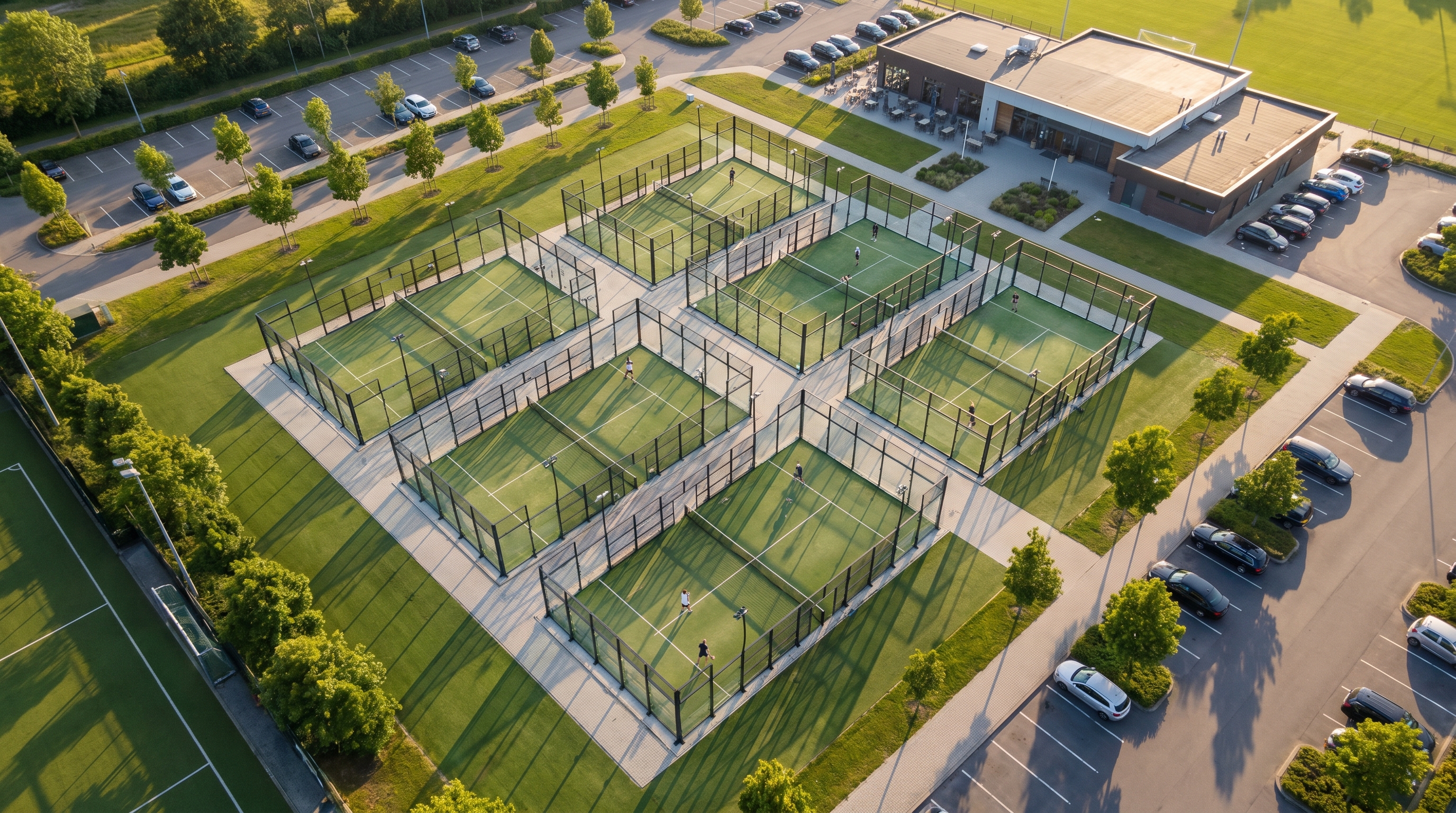
Finalizing your cancha padel layout involves verifying all safety clearances and ensuring the orientation minimizes sun glare for the players. You should always position the court in a North-South orientation to prevent the sun from blinding players during serves.
Court orientation and sun path
You must align the long axis of the court as close to North-South as possible for any outdoor installation. This ensures that the sun stays to the side of the players during peak morning and afternoon hours when bookings are highest.
Check this out:
An East-West court will be virtually unplayable for two hours every day during sunset.
- Orientation: North-South (± 15°).
- Glare Reduction: Use of screens or trees.
- Wind Protection: Strategic placement of fences.
- Accessibility: Minimum 1.5m path around the court.
Compliance and final check
You should conduct a final walk-through to ensure the net tension is correct and all safety caps are installed on structural bolts. Ensuring the lines are exactly 5cm wide and contrast sharply with the turf is the final step in a professional setup.
The best part?
A fully compliant court can host official tournaments, increasing your venue’s prestige.
- Line Width: Exactly 50mm.
- Safety Zone: 2m x 4m out-of-court play area.
- Hardware: All bolts torqued and capped.
- Net: 88cm at center, 92cm at posts.
Key Takeaway
Orient your court North-South and verify all 5cm line markings to ensure professional playability and tournament readiness.
Follow this final checklist to ensure your facility is ready for its first match.
| Category | Requirement | Verification Method |
|---|---|---|
| Orientation | North-South | Compass / Site Survey |
| Line Width | 5 cm | Manual Measurement |
| Safety Caps | On all bolts | Visual Inspection |
| Net Tension | 88 cm center | Height Gauge |
Conclusion
To select materials for building a cancha padel, you must prioritize 12mm tempered safety glass, hot-dip galvanized steel frames, and texturized monofilament turf to ensure safety and professional performance. By focusing on these high-quality components and adhering to international standards, you create a facility that maximizes player satisfaction and long-term return on investment. Our factory-direct solutions are designed to eliminate middleman costs while providing the durability required for elite sports clubs. Ready to start your project? Contact us today to receive a customized quote and expert guidance on transforming your vision into a world-class facility.
FAQ
Can I install a padel court on an existing tennis court?
Yes, but you must ensure the base can support the concentrated weight of the glass panels and that the dimensions allow for the 10x20m footprint.
What is the best color for padel turf?
Blue is the professional standard because it provides the best visual contrast with the yellow ball, making it easier for players to track shots.
What’s the best glass thickness for a commercial club?
12mm tempered glass is the best choice for commercial environments due to its superior impact resistance and structural rigidity under heavy use.
Can I build a padel court myself to save costs?
It is not recommended, as the precision required for glass alignment and steel leveling is extreme; even small errors can lead to glass breakage.
How often does the turf need maintenance?
Weekly brushing is required to redistribute the silica sand and prevent the fibers from matting down, which preserves the consistent ball bounce.