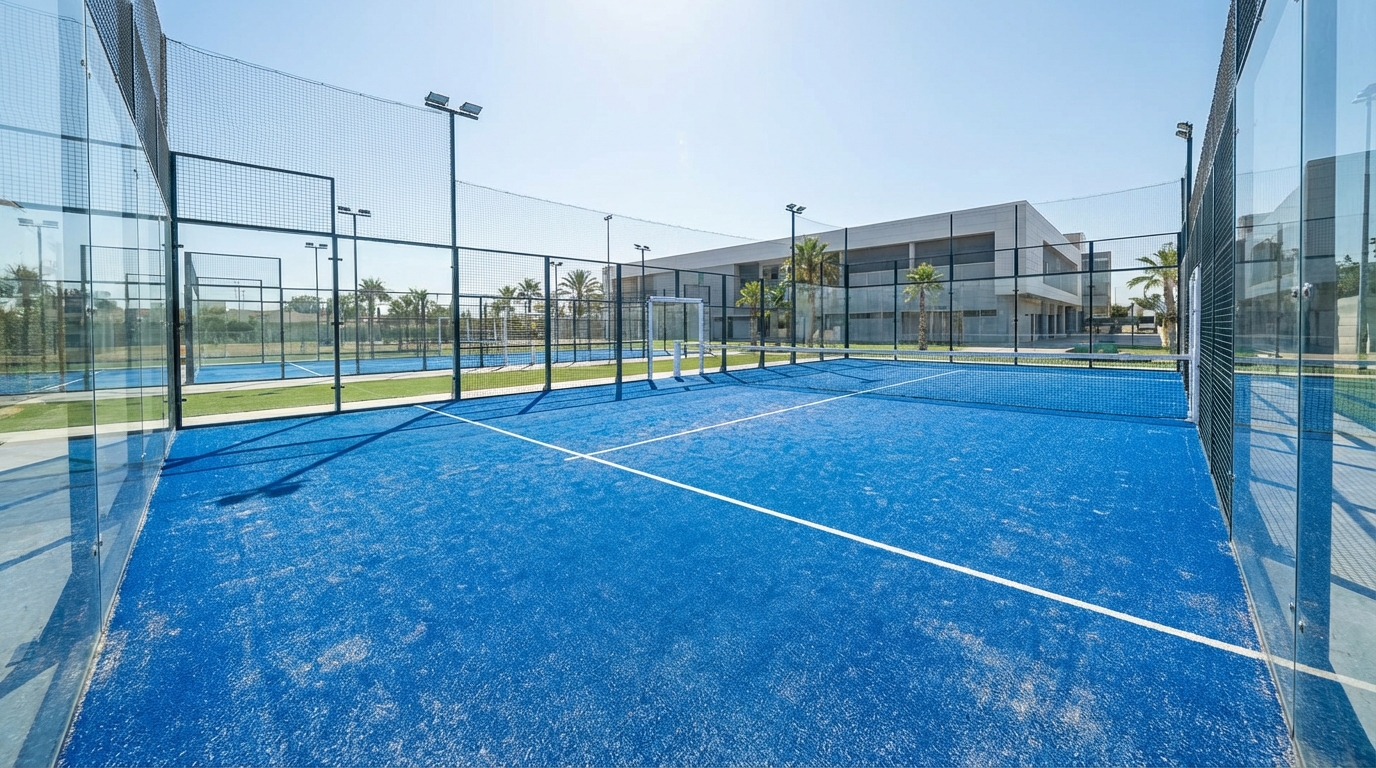
A standard doubles padel court dimensions in feet measure exactly 65.62 feet in length and 32.81 feet in width. If you jump into construction without these precise imperial figures, you risk costly zoning failures or structural misfits that devalue your investment. By following this blueprint, you solve the layout puzzle and build a high-performance facility that attracts premium players.
What are standard padel court dimensions in feet?
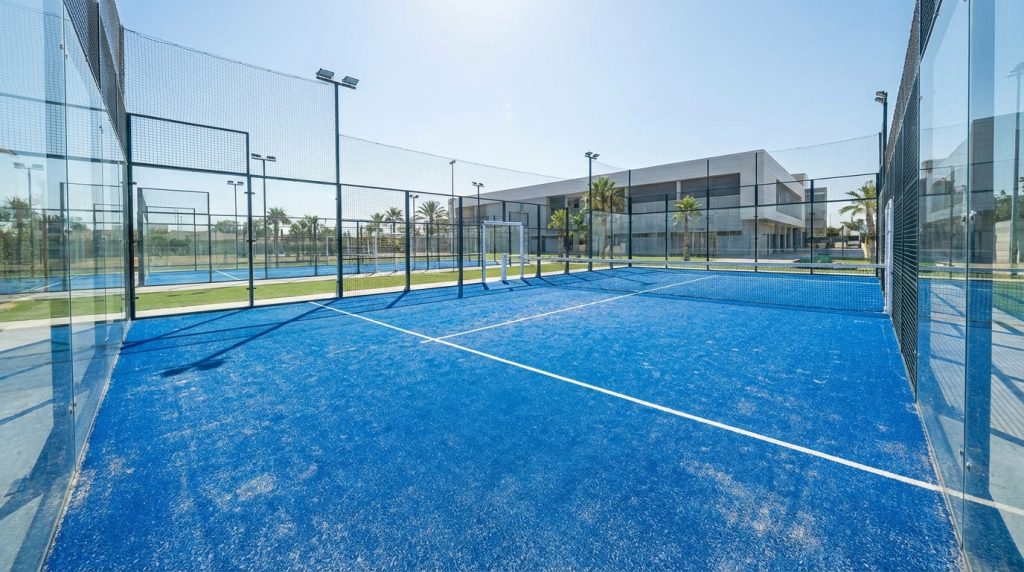
The official padel court dimensions in feet for the playing surface are 65.62′ x 32.81′. This rectangular area is defined by the inner edge of the glass and mesh walls. You must ensure the lines are exactly 1.97 inches wide for tournament-grade accuracy.
How do you measure the playing zone?
Here is the deal: you must measure from the internal face of the perimeter walls to get the playing area right. If you include the thickness of the steel posts in your 32.81-foot width, the court will be too narrow for fair play. You should always double-check your tape measurements at the net line and both back walls.
- Length: 65.62 feet (20 meters).
- Width: 32.81 feet (10 meters).
- Service Line: 22.80 feet from the net.
- Line Thickness: 1.97 inches (5 cm).
Key Takeaway: Precise internal measurements ensure your court meets international play standards, providing a professional experience for every athlete.
| Component | Dimension in Feet | Tolerance Allowed |
|---|---|---|
| Playing Length | 65.62 ft | +/- 0.5% |
| Playing Width | 32.81 ft | +/- 0.5% |
| Net Height (Center) | 2.89 ft | Fixed |
The 0.5% tolerance window allows for minor thermal expansion in the steel frame without violating official regulations.
How much space is needed for padel court dimensions in feet?
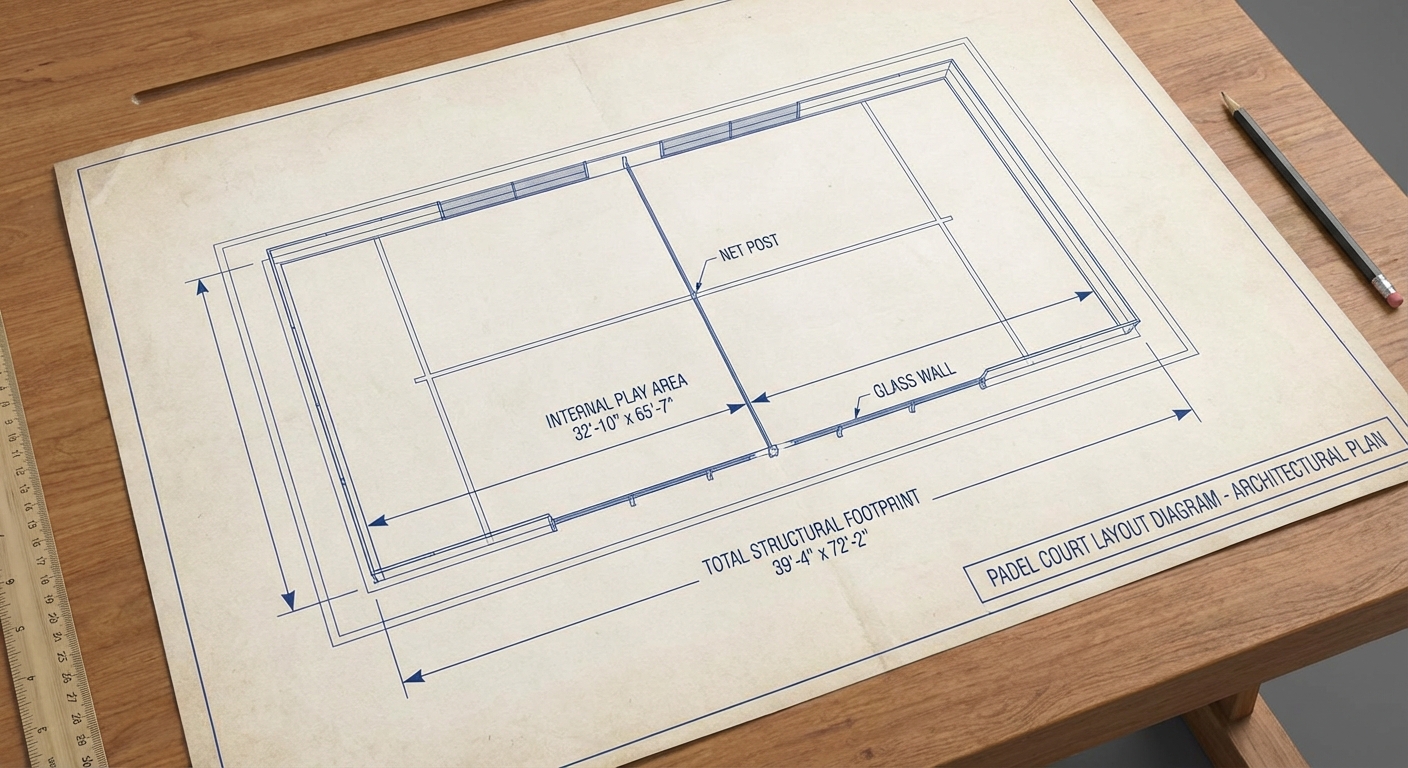
You need a total area of approximately 75.46 feet by 42.65 feet to accommodate the structural frame and safety zones for padel court dimensions in feet. This extra space prevents players from crashing into surrounding obstacles during high-intensity points. Site preparation is much easier when you account for this footprint early.
What is the total structural footprint?
But wait, there is more: you also need to account for the concrete foundation that extends beyond the glass. Most professional installers recommend a buffer of at least 3 feet on all sides for maintenance access and spectator seating. If you plan to host official tournaments, you must provide even more space for out-of-court play.
- Minimum Site Width: 43 feet.
- Minimum Site Length: 76 feet.
- Foundation Depth: 6 inches.
- Player Safety Zone: 6.5 feet per side.
Key Takeaway: Planning for a larger footprint than just the playing area protects players from injury and allows for future facility upgrades.
| Space Category | Footprint (Feet) | Total Area (Sq Ft) |
|---|---|---|
| Internal Court | 65.62 x 32.81 | ~2,153 |
| Structural Base | 68.90 x 36.09 | ~2,486 |
| Recommended Site | 75.46 x 42.65 | ~3,218 |
Expanding the site area by 50% over the internal dimensions is the standard benchmark for high-end sports club designs.
Why do indoor padel court dimensions in feet require height?
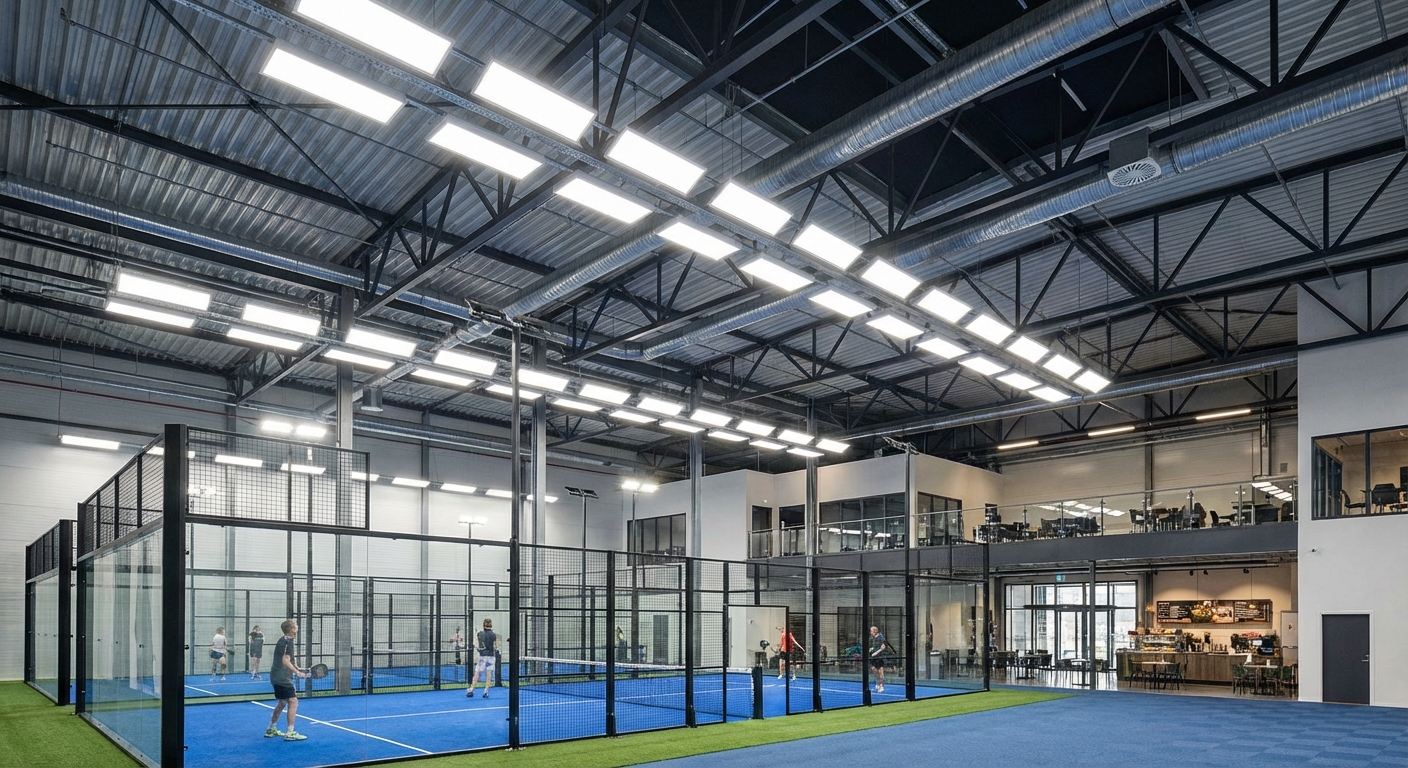
Indoor vertical clearance for padel court dimensions in feet must be at least 19.69 feet to allow for the strategic “lob” shot. If your ceiling is lower than this, the ball will hit the roof constantly, ruining the game’s flow. Professional clubs often push this height to 26 feet for optimal airiness.
What are the vertical wall specs?
The best part? You can utilize a mix of glass and mesh to meet the wall height requirements of nearly 10 feet. Back walls must be solid glass to ensure a predictable bounce, while side walls often transition to metallic mesh at higher elevations. You should verify that no lighting fixtures or beams hang below your chosen clearance level.
- Back Wall Height: 9.84 feet (3 meters).
- Side Mesh Height: 13.12 feet (4 meters).
- Minimum Ceiling: 19.69 feet (6 meters).
- Pro Ceiling Height: 26.25 feet (8 meters).
Key Takeaway: High ceilings are the hallmark of a quality indoor club, directly influencing player satisfaction and the difficulty of defensive play.
| Feature | Standard Height (Feet) | Impact on Play |
|---|---|---|
| Glass Back Wall | 9.84 ft | Predictable rebounds |
| Metal Side Fence | 13.12 ft | Safety and ventilation |
| Clearance | 20.00 ft | Allows tactical lobs |
Adequate vertical space is non-negotiable for competitive play, as ceiling obstructions create an unfair advantage for aggressive hitters.
How do single vs double padel court dimensions in feet differ?
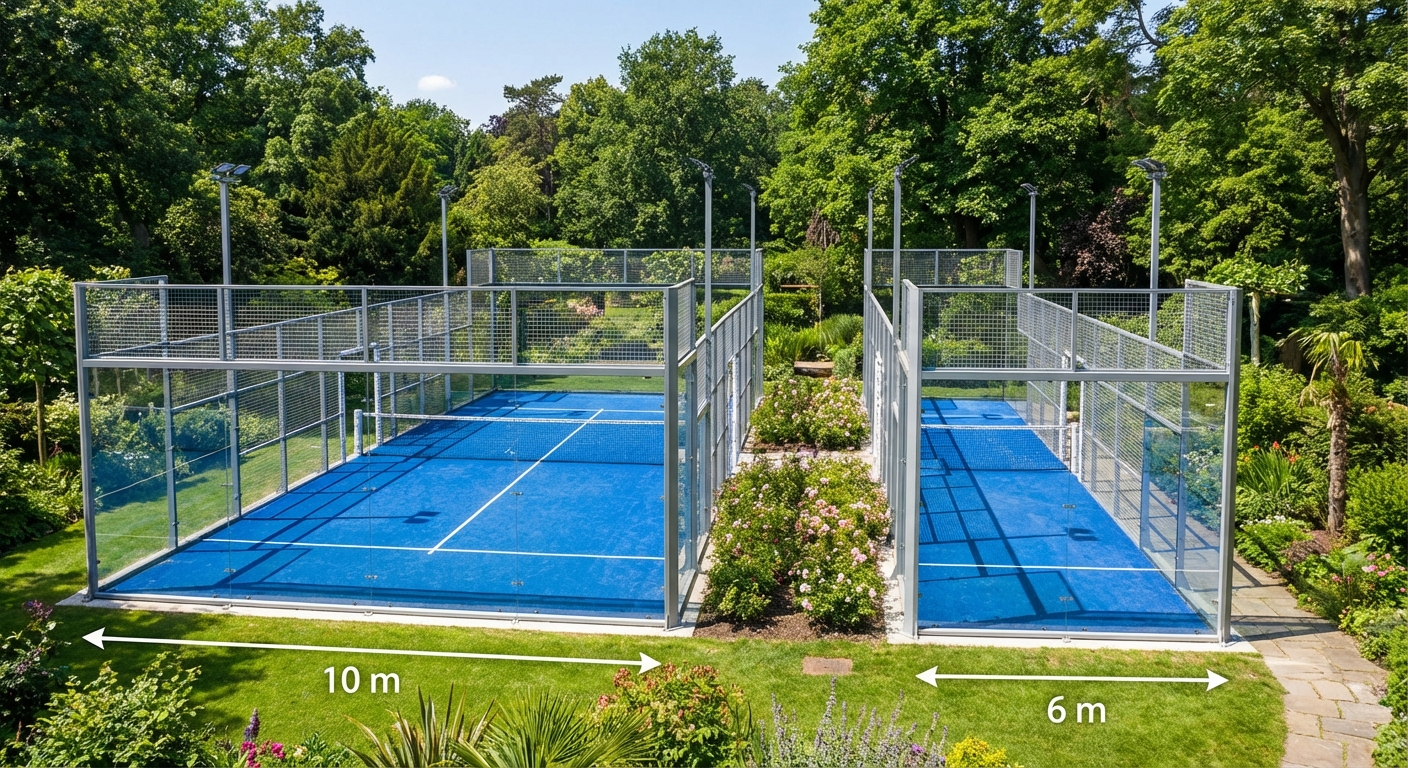
The primary difference between single and double padel court dimensions in feet is the width, which drops from 32.81 feet to 19.69 feet. While both courts share the same 65.62-foot length, the narrower single court is designed for intense 1-on-1 training. You will find that single courts are excellent for small or odd-shaped plots of land.
Why build a single court?
You might be wondering: is a single court worth the investment? While the doubles format is more popular for social play, single courts are increasingly used by coaches to improve a player’s footwork and lateral speed. You should consider adding one single court for every three doubles courts to diversify your club’s offerings.
- Double Court Width: 32.81 feet.
- Single Court Width: 19.69 feet.
- Common Length: 65.62 feet.
- Max Players: 2 (Single) vs 4 (Double).
Key Takeaway: Offering both sizes allows you to maximize every square foot of your property while catering to different player training needs.
| Court Type | Dimensions (Feet) | Target Audience |
|---|---|---|
| Doubles | 65.6 x 32.8 | Social & Pro League |
| Singles | 65.6 x 19.7 | 1-on-1 Training |
| Total Space | Varies by buffer | All Levels |
Singles courts provide a higher physical intensity per player, making them a niche but valuable addition to modern sports hubs.
What materials fit these padel court dimensions in feet?
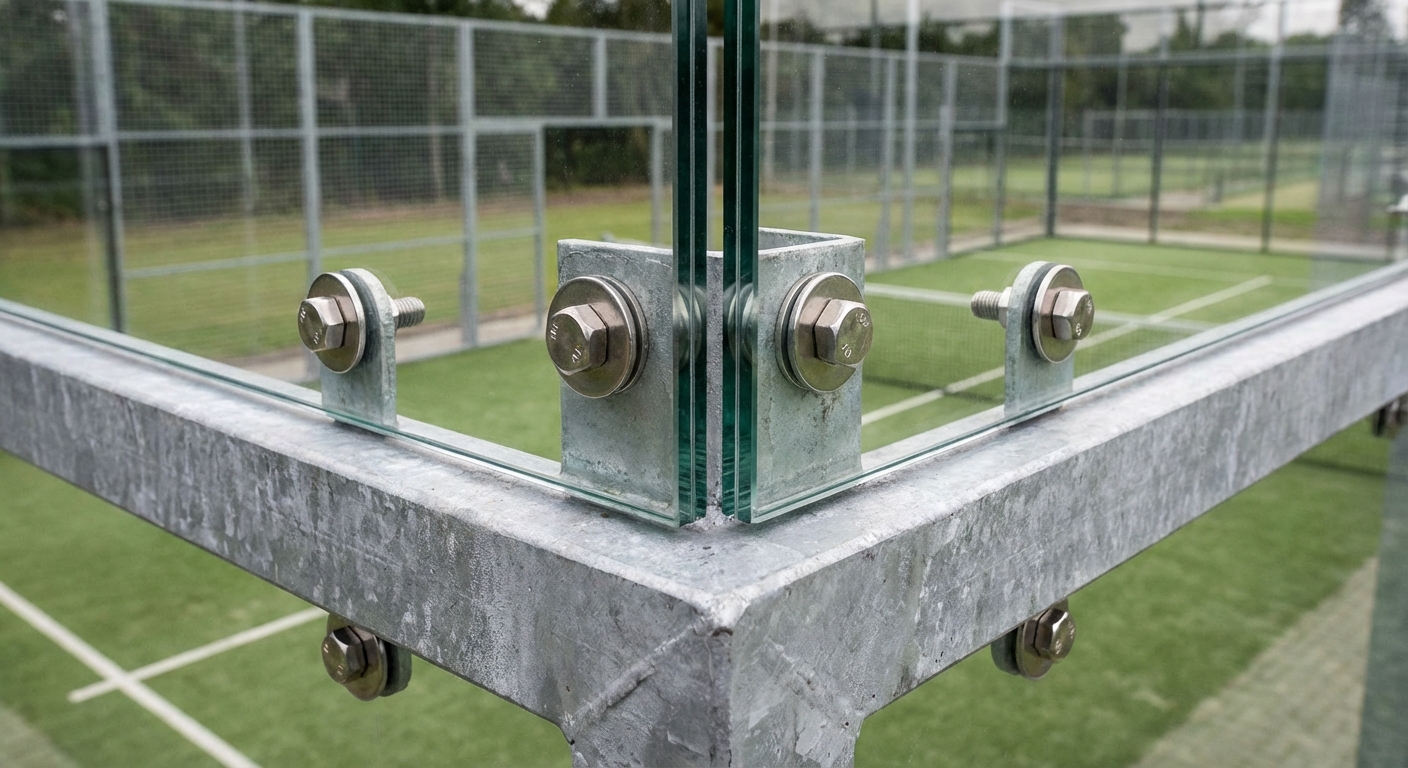
You must use 10mm or 12mm tempered glass and galvanized steel to maintain structural integrity across padel court dimensions in feet. These materials are chosen for their resistance to impact and weather-related corrosion. High-quality turf is equally important to provide the correct ball-to-ground friction.
Which steel and glass should you choose?
Look: the glass panels must be precisely cut to fit the 10-meter and 20-meter spans. Using “extra-clear” tempered glass provides better visibility for spectators and players alike. You should also ensure that your steel frame is hot-dip galvanized to prevent rust, especially if you are building near a coastal area.
- Glass Thickness: 10mm or 12mm tempered.
- Frame Material: Hot-dip galvanized steel.
- Turf Type: Monofilament or Fibrillated.
- Paint Finish: Powder-coated for durability.
Key Takeaway: Investing in premium materials reduces your long-term maintenance costs and ensures the safety of everyone on the court.
| Component | Professional Spec | Longevity |
|---|---|---|
| Glass Walls | 12mm Tempered | 15+ Years |
| Steel Posts | 3mm Thick Steel | Anti-corrosion |
| Artificial Turf | Textured Blue/Green | 5-8 Years |
The interaction between 12mm glass and a rigid steel frame creates the most consistent ball bounce required for professional-level competition.
How to build a base for padel court dimensions in feet?
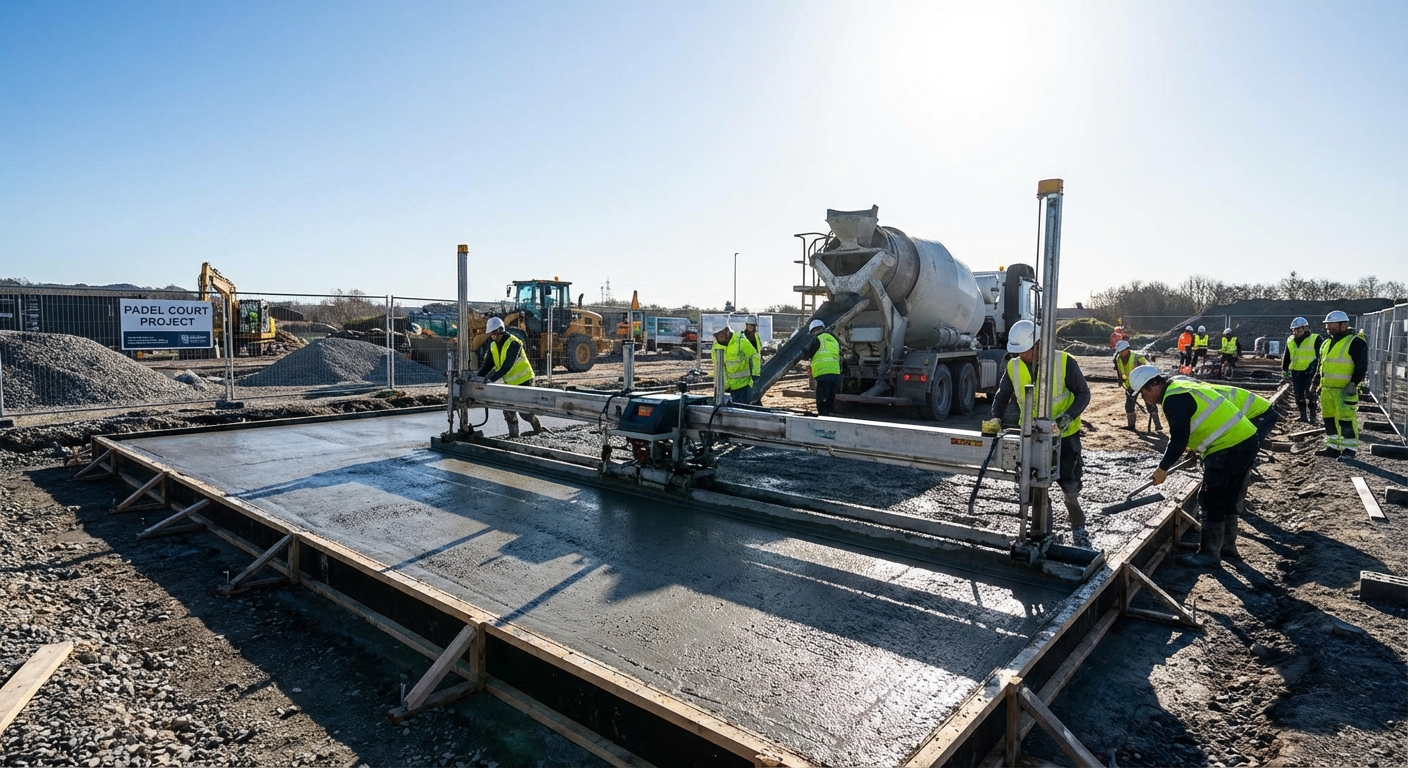
You should pour a reinforced concrete slab at least 6 inches thick to support the weight and padel court dimensions in feet. This foundation must be perfectly level to avoid “dead spots” where the ball doesn’t bounce correctly. A slight slope of 0.5% is often added to outdoor courts to facilitate water drainage.
How do you handle drainage and leveling?
It gets better: modern laser-leveling technology ensures your base is accurate to within a few millimeters. Proper drainage prevents water from pooling under the turf, which can cause the adhesive to fail and the surface to bubble. You must install a perimeter drainage channel if your site is in a high-rainfall region.
- Concrete Strength: 3000 PSI or higher.
- Slab Thickness: 6 inches (15 cm).
- Drainage Slope: 0.5% to 1.0%.
- Curing Time: Minimum 21 to 28 days.
Key Takeaway: A flawless concrete base is the most critical part of the build, as it dictates the quality of play and the life of the turf.
| Phase | Critical Action | Success Metric |
|---|---|---|
| Excavation | Soil compaction | No settling |
| Pouring | Laser leveling | +/- 3mm tolerance |
| Finishing | Surface troweling | Smooth for adhesive |
Foundation errors are the most expensive to fix, so you should prioritize a professional concrete team with sports-flooring experience.
What lighting works for padel court dimensions in feet?
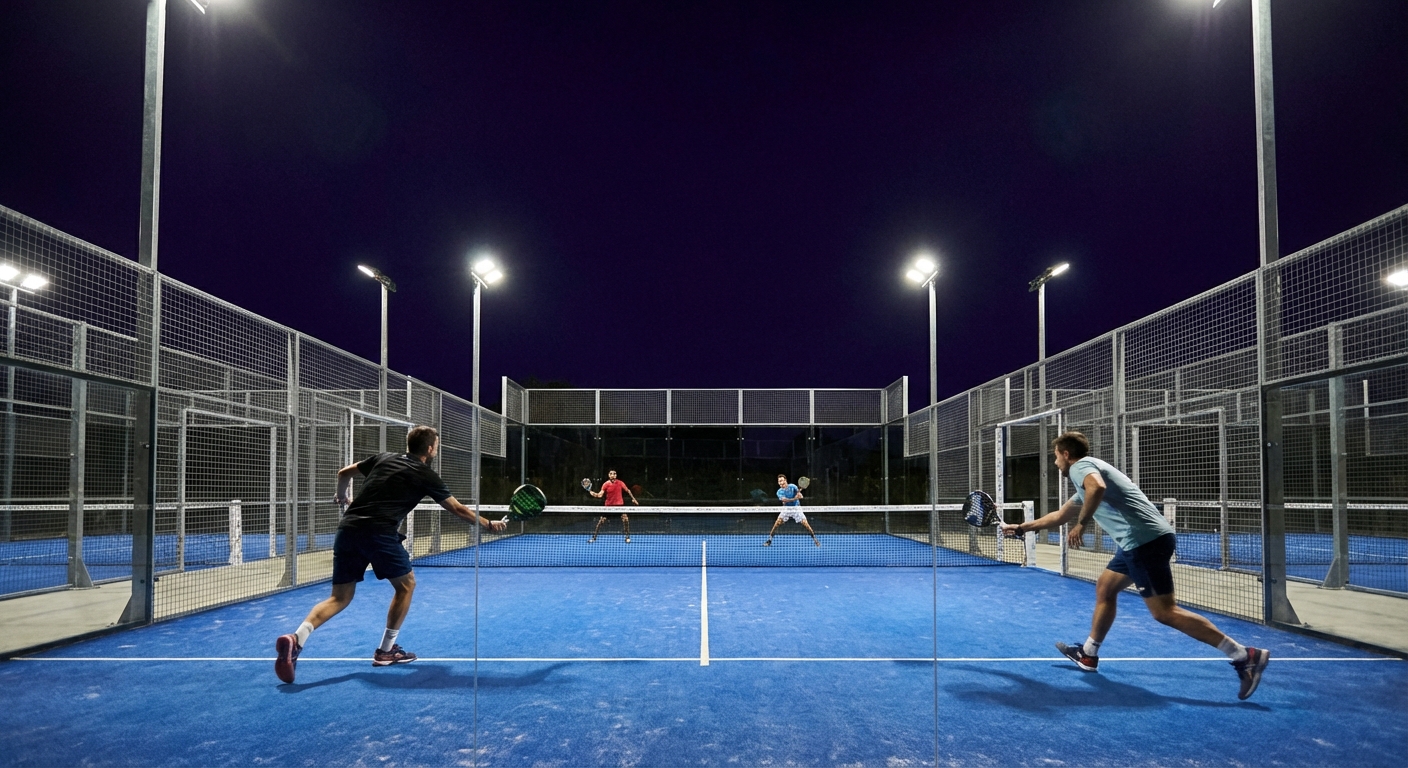
You need 4 to 8 LED floodlights mounted at 20 feet to illuminate padel court dimensions in feet without creating blinding glare. Proper lighting extends your facility’s operational hours well into the night, significantly increasing your revenue. The lights should be angled to cover the corners and the net area evenly.
How to eliminate player glare?
Think about it: if the lights are too low, a player looking up to hit a lob will be blinded instantly. You should position the poles outside the glass line to prevent them from interfering with the game or causing injuries. LED technology is the standard because it offers high lux levels with low energy consumption.
- Lumen Output: 200W to 400W per lamp.
- Lux Level: 500 Lux (Club) / 750 Lux (Pro).
- Pole Height: 20 to 26 feet.
- Lamp Quantity: 8 lamps for pro visibility.
Key Takeaway: Strategic lighting design ensures your courts are safe and playable 24/7, maximizing your club’s booking potential.
| Lighting Grade | Average Lux | Application |
|---|---|---|
| Recreational | 300 – 400 | Amateur play |
| Club | 500 – 600 | Local tournaments |
| Professional | 750+ | Broadcast TV |
Tournament-grade lighting requires an 8-pole configuration to eliminate shadows and provide the high-definition visibility needed for cameras and spectators.
Why is ROI high for padel court dimensions in feet?
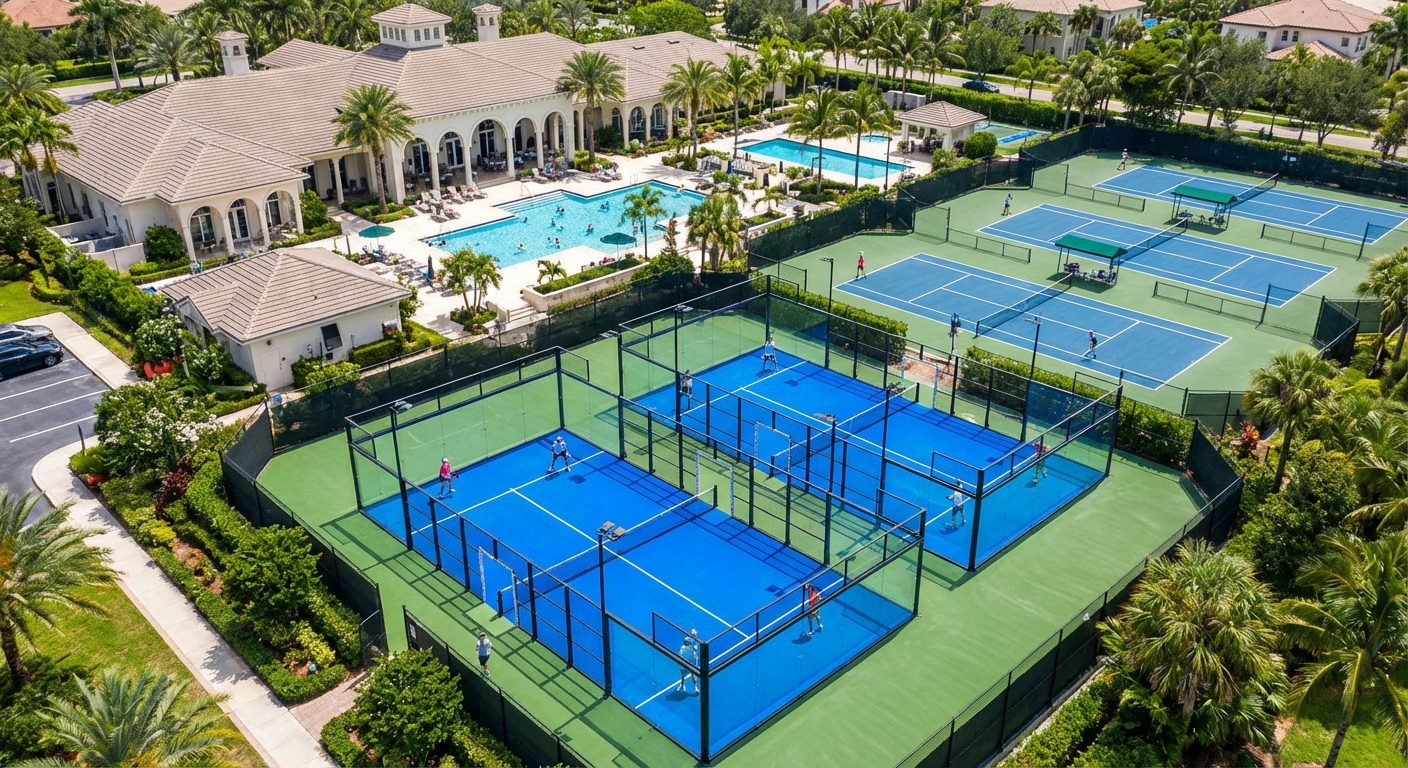
The return on investment is high because you can fit three padel courts in the space of one tennis court, tripling your player capacity within padel court dimensions in feet. This density allows you to charge more total booking fees per hour on the same piece of land. Padel’s social nature also leads to higher recurring memberships compared to other sports.
How does space efficiency drive profit?
Best of all: the maintenance for artificial turf and glass is significantly lower than for clay or grass tennis courts. You don’t need to water, roll, or repaint lines every few weeks, which keeps your overhead costs low. You can focus your budget on social amenities like a cafe or pro shop to further boost your bottom line.
- Tennis Court Size: ~7,200 sq ft.
- Padel Court Size: ~2,200 sq ft.
- Player Ratio: 4 players per 2,200 sq ft.
- Maintenance: Occasional turf brushing.
Key Takeaway: Transitioning from traditional sports to padel allows you to serve more customers and generate higher profits with less land.
| Asset | Capacity | Revenue Potential |
|---|---|---|
| 1 Tennis Court | 2-4 Players | $ |
| 3 Padel Courts | 12 Players | $$$ |
| Operating Cost | Low Maintenance | High Margin |
By optimizing for player density, you achieve a break-even point much faster than with large-scale traditional tennis or soccer facilities.
How to customize your padel court dimensions in feet?
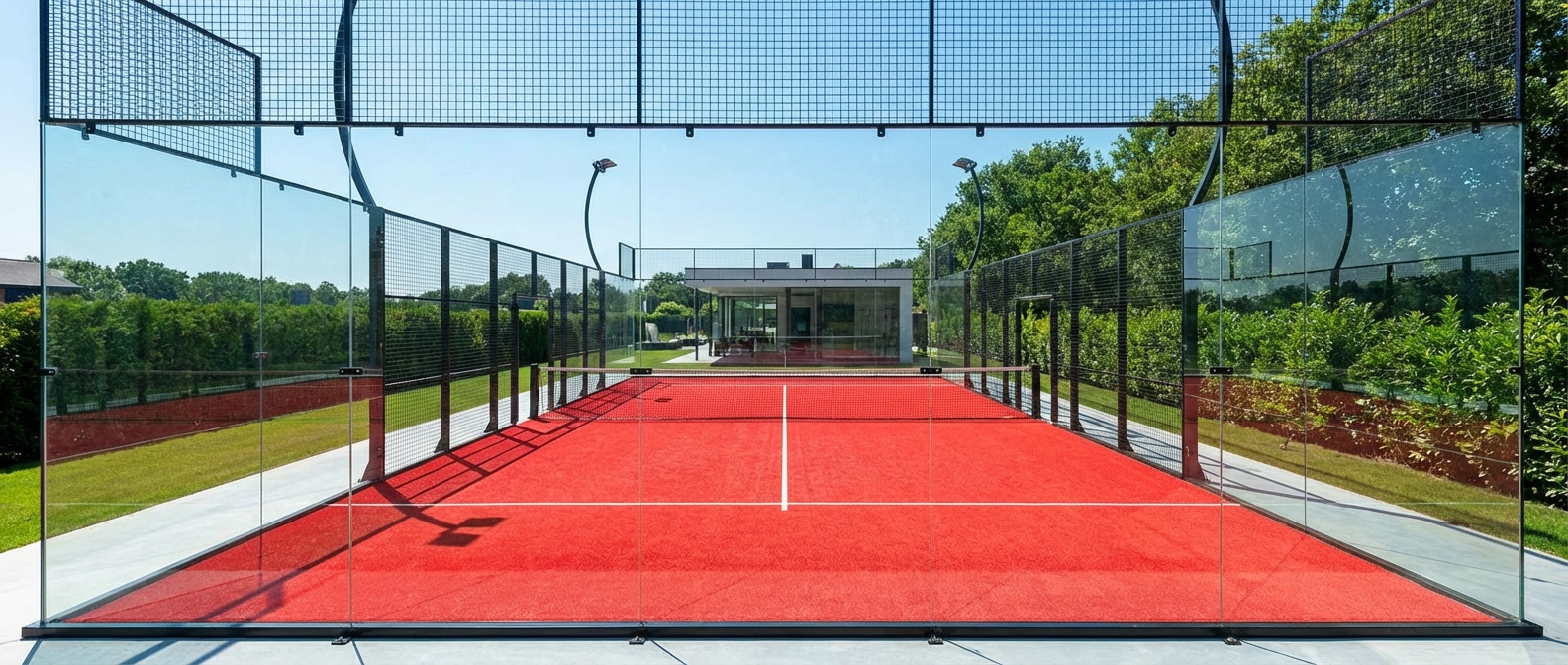
You can personalize the aesthetics of your padel court dimensions in feet by choosing panoramic glass and custom turf colors. While the dimensions stay fixed, the “look and feel” can reflect your brand’s unique identity. Panoramic models are especially popular because they offer unobstructed views for spectators.
What are the best aesthetic upgrades?
Check this out: you can choose turf colors like terracotta or black to stand out from the traditional blue. Adding custom logos to the glass or the protective netting increases your sponsorship opportunities. You should also consider “Super Panoramic” designs that remove the corner pillars for a truly high-end, futuristic aesthetic.
- Frame Finish: RAL color matching.
- Turf Colors: Blue, Green, Red, Purple.
- Design Style: Standard, Panoramic, Super Panoramic.
- Custom Branding: Glass etching or net logos.
Key Takeaway: Customization makes your facility a destination rather than just a place to play, helping you build a loyal community.
| Upgrade | Benefit | Cost Impact |
|---|---|---|
| Panoramic Glass | Spectator view | Moderate |
| Textured Turf | Pro-level grip | Low |
| Custom Colors | Brand identity | Variable |
Visual differentiation is the secret to charging premium membership rates in a competitive sports market with high player expectations.
Where to order padel court dimensions in feet globally?
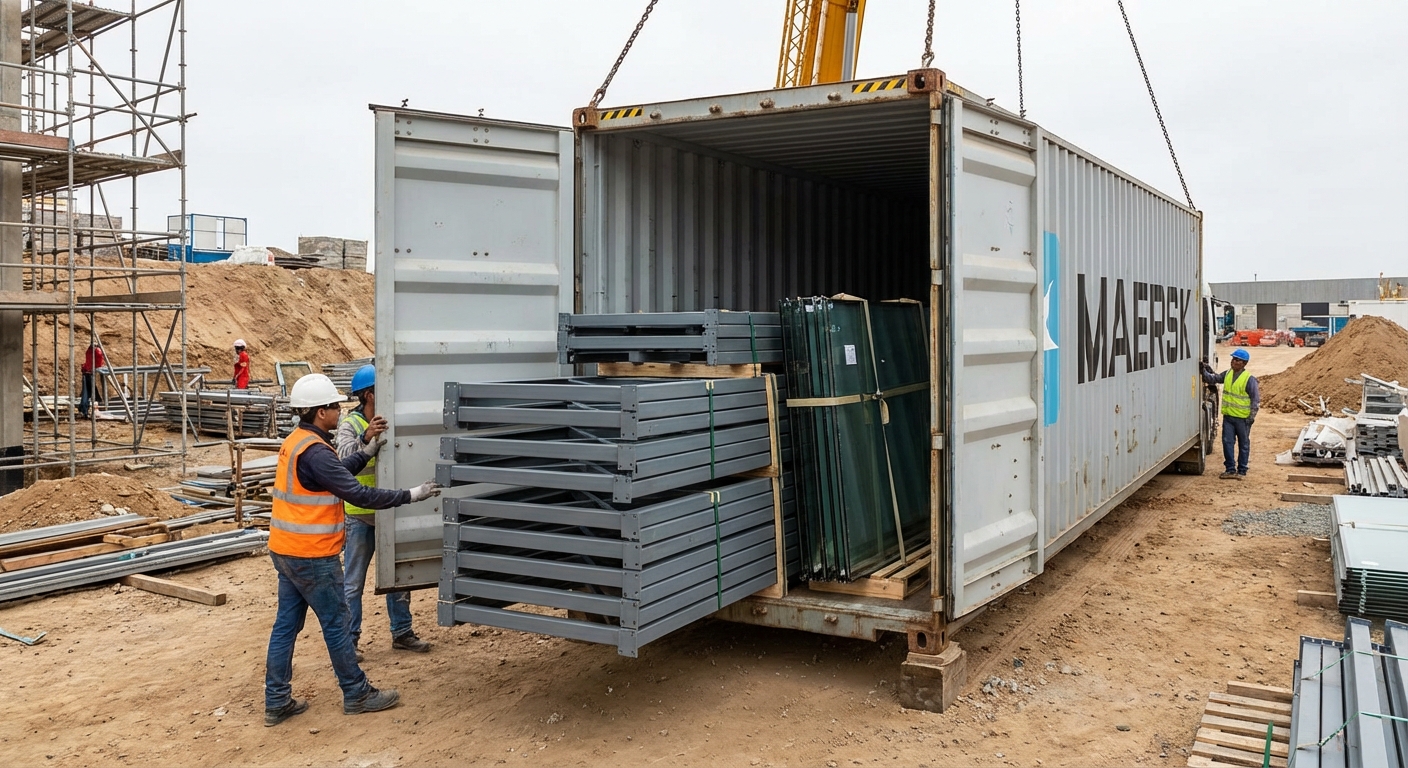
You should source directly from a factory-direct manufacturer to ensure your padel court dimensions in feet are accurate and cost-effective. Ordering from the factory can save you up to 30% compared to local middleman retailers. Professional manufacturers provide full global logistics and installation support to streamline your project.
How to verify a global supplier?
What is the bottom line? You must check for FIP-compliant certifications and a history of successful international installations. A reliable partner will provide you with a full technical drawing package before the first bolt is ever tightened. You should always ask for a detailed warranty on both the steel structure and the turf surface.
- Pricing: 30% factory-direct savings.
- Logistics: Global sea freight shipping.
- Support: On-site installation teams.
- Warranty: 5 to 10 years on frame.
Key Takeaway: Partnering with a specialized factory gives you the best balance of technical precision and long-term financial stability.
| Service | Included Benefit | Value |
|---|---|---|
| OEM/ODM | Custom design specs | Unique club |
| Shipping | Door-to-port delivery | Stress-free |
| Installation | Expert crew assembly | Precision fit |
Direct sourcing eliminates the markup of local distributors while providing you with direct access to the engineers who designed your courts.
*
Summary and Next Steps
Building a professional facility requires a deep understanding of standard playing areas and structural footprints. We have covered everything from the core 65.6′ x 32.8′ measurements to the high-clearance requirements of indoor play. Our vision is to empower club owners with the highest quality, factory-direct courts that maximize revenue and player safety. If you are ready to transform your space into a world-class padel destination, contact us today for a custom quote and detailed technical drawing.
*
Frequently Asked Questions
- What is the exact total square footage needed for one padel court?
Approximately 3,220 square feet is required for one court. This includes the playing area and the necessary safety perimeter for professional play. - How do I know if my existing tennis court can fit padel courts?
Yes, you can usually fit three courts on one tennis court. A standard tennis court is roughly 7,200 square feet, which is more than enough for three 2,200-square-foot padel footprints. - Can I install a padel court on a 4-inch concrete slab?
No, you cannot safely do that. A 6-inch reinforced slab is the minimum requirement to prevent cracking and ensure the structural posts stay anchored. - What is the best height for indoor padel court ceilings?
The best height is 26 feet or more. While the minimum is 20 feet, a higher ceiling prevents interference with tactical lobs during high-level matches. - How do I know if my supplier is FIP-compliant?
You must request their official certification documents. A legitimate manufacturer will provide proof that their padel court dimensions in feet and materials meet International Padel Federation standards.