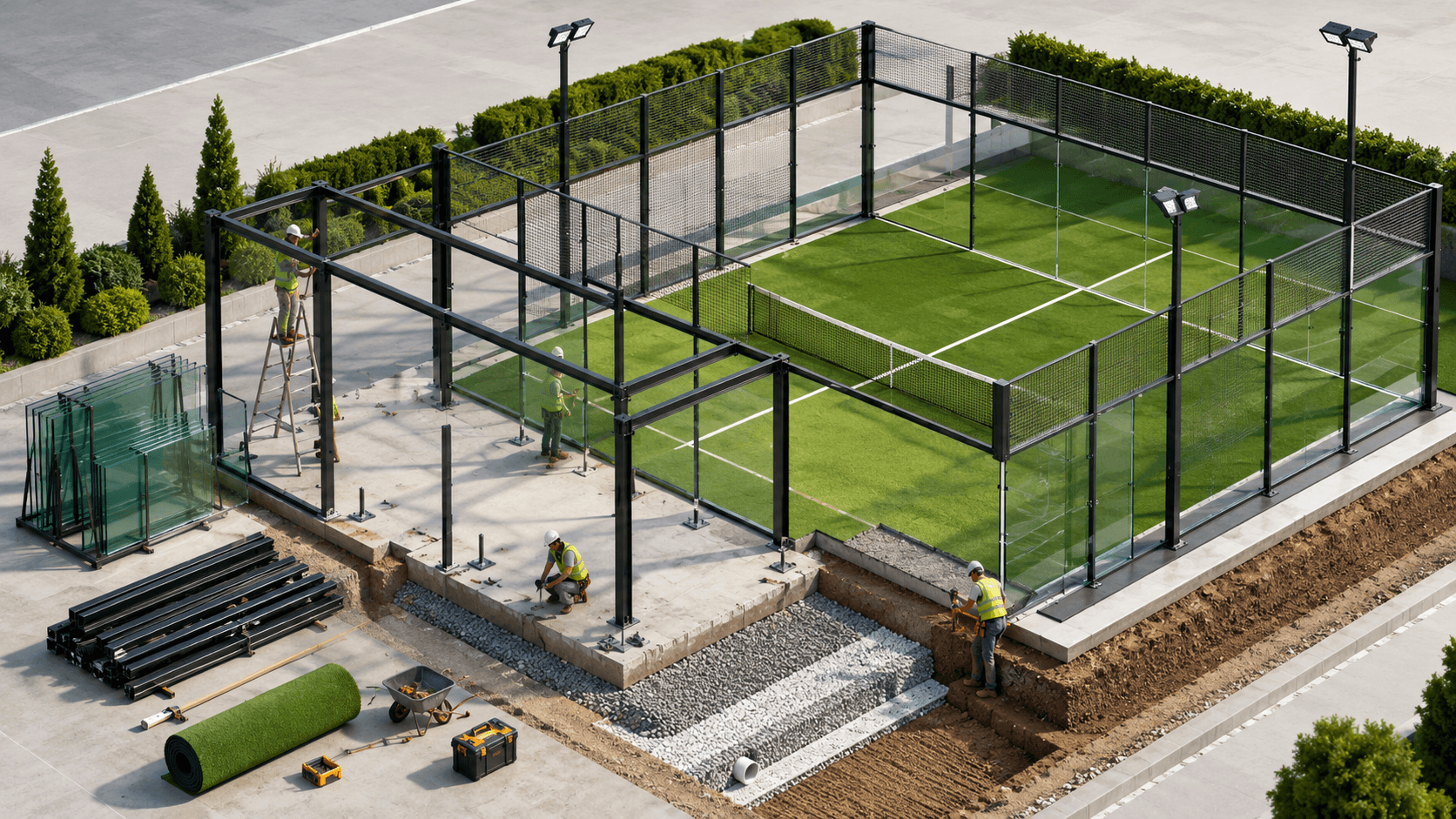
What is padel court construction and its core purpose?
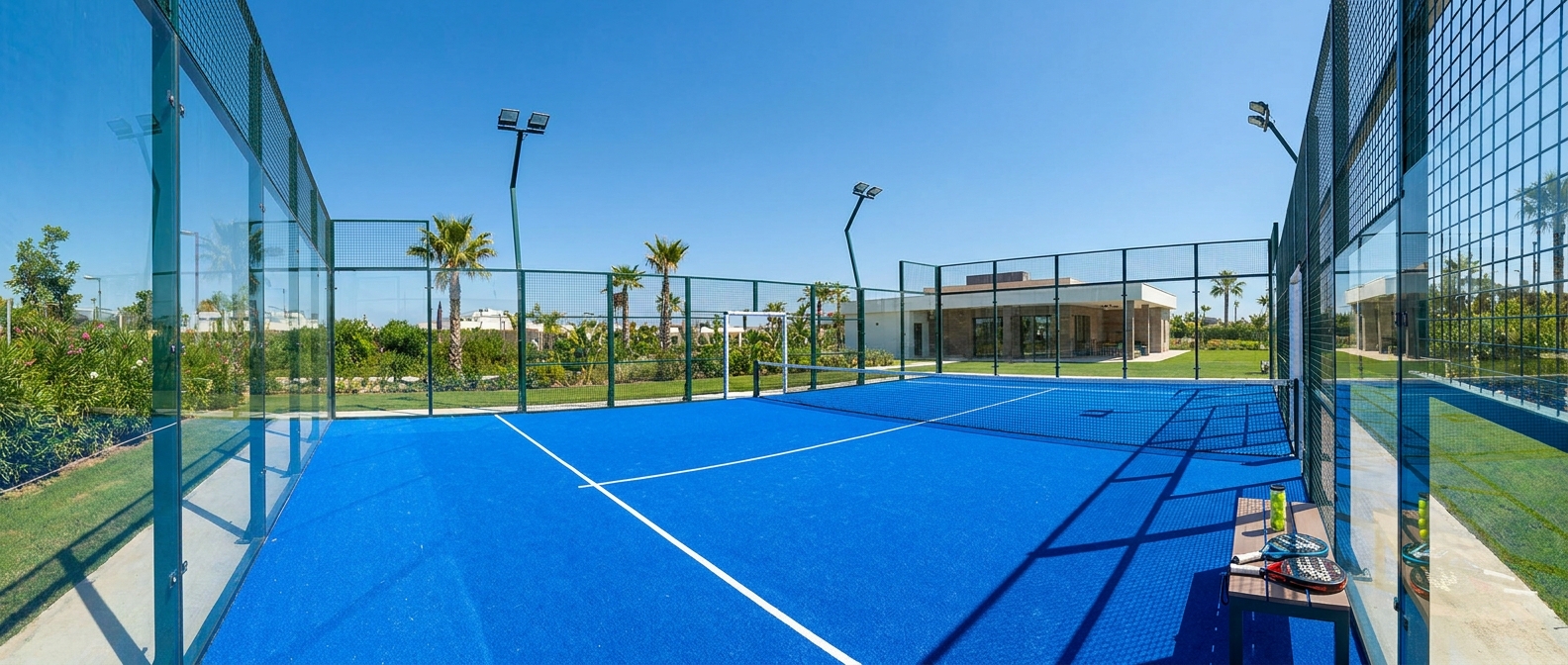
Professional padel court construction is the specialized engineering and assembly process of a 10×20 meter sports facility enclosed by glass and mesh walls. You might find that traditional sports clubs are struggling with underutilized space and declining member engagement. This stagnation often leads to lost revenue and a fading reputation in a competitive fitness market.
The good news is that padel offers a high-density, high-engagement solution that transforms your facility’s profile. By implementing a turnkey build, you provide a social, fast-paced racket sport that appeals to all ages and skill levels. This strategic investment not only maximizes your square footage but also secures a modern revenue stream.
Defining the padel court structure
Think about this: a padel court is far more than just a smaller tennis court. It is a complex ecosystem of tempered glass, galvanized steel, and high-performance synthetic turf designed for rebounding play.
- Internal Dimensions: 10 meters wide by 20 meters long.
- Enclosure Height: 3 meters for glass panels and up to 4 meters with mesh fencing.
- Surface Material: Fibrillated or monofilament artificial grass with silica sand infill.
- Structural Frame: Hot-dip galvanized steel for maximum corrosion resistance.
- Lighting: Integrated LED floodlights providing 500 to 750 lux for nighttime visibility.
The strategic value for your facility
Believe it or not, you can fit three padel courts in the space of a single tennis court. This density allows you to host 12 players simultaneously in the same footprint that previously only accommodated four.
- Higher ROI: Increased player turnover per hour compared to traditional sports.
- Social Appeal: The doubles-only format fosters a community atmosphere and higher club retention.
- Low Barrier to Entry: Players of different skill levels can enjoy the game together immediately.
- Year-Round Revenue: With roofed or indoor options, your income is never weather-dependent.
- Aesthetic Appeal: Modern panoramic designs elevate the visual branding of your sports center.
Essential components of the build
The real secret lies in the quality of the individual components. You need to ensure that every bolt, glass panel, and turf fiber meets international federation standards for safety and performance.
- Tempered Glass: Usually 10mm or 12mm thick to handle high-velocity player impact.
- Mesh Fencing: Electro-welded panels that prevent ball escape while allowing spectator views.
- Net System: Specialized 10-meter nets with center height tensioning of 0.88 meters.
- Base Layer: A perfectly leveled concrete or porous asphalt foundation for drainage.
- Hardware: Stainless steel fittings to prevent rust in outdoor environments.
Key Takeaway: Professional construction transforms underused space into a high-density, social hub that guarantees long-term club growth and member satisfaction.
What are the key stages of padel court construction?
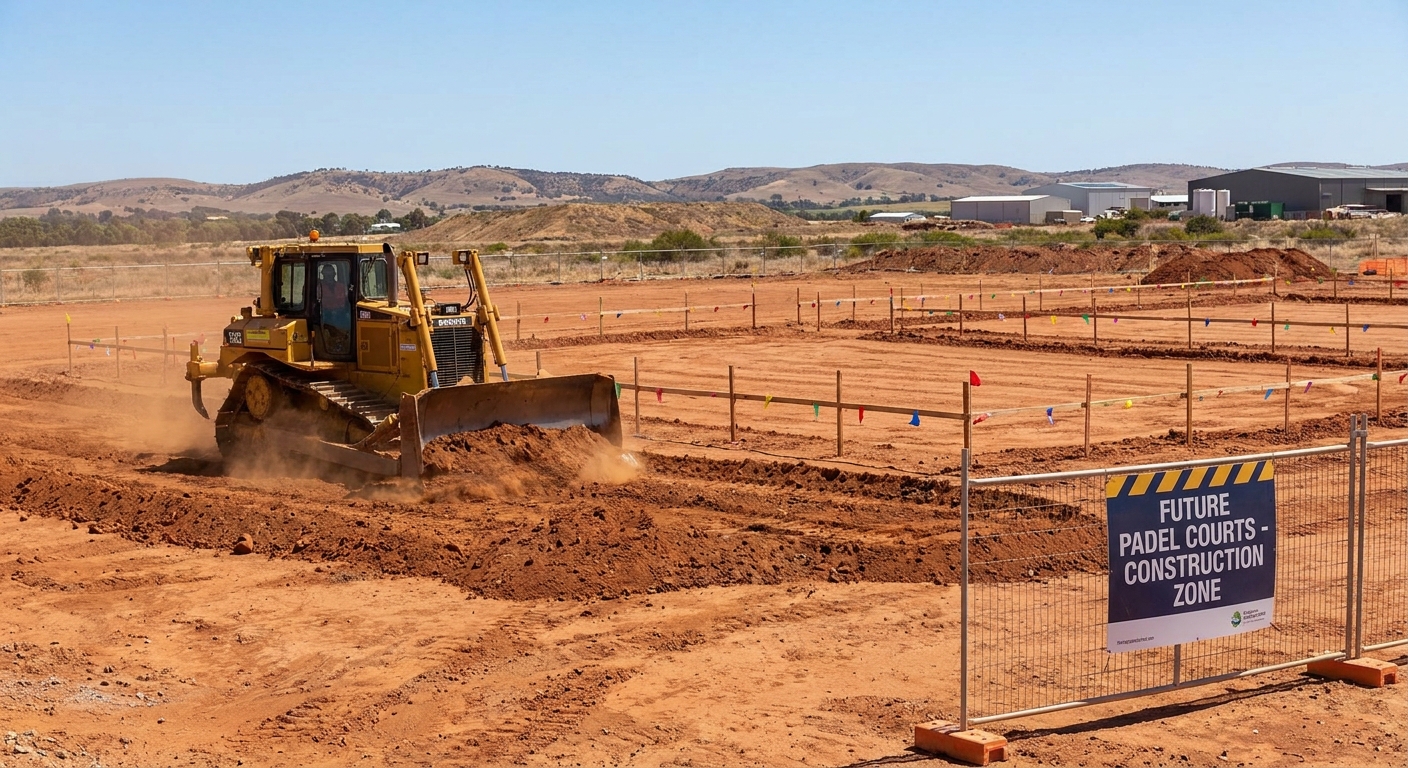
The key stages of padel court construction involve a sequence of civil works, structural assembly, and precision finishing to ensure a FIP-compliant playing environment. You must follow a strictly choreographed workflow to avoid structural misalignments or drainage failures. Skipping even a minor step in the foundation phase can lead to costly repairs within the first year of operation.
Preliminary site preparation and civil works
The bottom line is that your court is only as good as the ground it sits on. You must start with professional excavation and soil stabilization to prevent future shifting or cracking.
- Site Clearing: Removing all vegetation, roots, and existing debris from the 200+ sqm area.
- Grading: Leveling the sub-base to a precise slope (usually 0.5%) for water runoff.
- Compaction: Using heavy machinery to ensure the earth is dense enough to support the concrete.
- Utilities: Trenching for electrical conduits to power the LED lighting system.
- Drainage: Installing perimeter channels to move rainwater away from the foundation quickly.
Structural frame and glass installation
Here is the kicker: the assembly of the steel cage and glass walls requires millimeter-level precision. You are building a structure where the ball must bounce predictably off every square inch of the glass surface.
- Frame Erection: Bolting the galvanized steel pillars into the reinforced concrete base.
- Leveling: Using laser levels to ensure the entire structure is perfectly plumb and square.
- Glass Handling: Utilizing vacuum suction lifters to place heavy tempered glass panels safely.
- Sealing: Applying specialized rubber gaskets and silicone to prevent glass-to-metal contact.
- Mesh Mounting: Stretching and securing the electro-welded fencing to prevent sagging.
Turf laying and final commissioning
The best part? This is when the project truly comes to life as the vibrant blue or green turf is installed. You must ensure the fibers are brushed correctly and the sand is distributed with total uniformity.
- Turf Unrolling: Aligning the synthetic grass rolls to minimize visible seams and overlaps.
- Seam Bonding: Using high-strength polyurethane adhesive and jointing tape for a permanent bond.
- Sand Infill: Applying 10-15kg of kiln-dried silica sand per square meter.
- Brushing: Deep brushing to stand the fibers upright and settle the sand at the base.
- Net Setup: Mounting the posts and tensioning the net to the official 0.88m center height.
Key Takeaway: A disciplined, stage-by-stage approach ensures structural integrity, perfect ball bounce, and a facility that lasts for decades with minimal maintenance.
| Construction Stage | Primary Focus | Typical Duration | Critical Success Factor | |
|---|---|---|---|---|
| Site Prep | Ground stability | 1-2 Weeks | Correct soil compaction levels | |
| Civil Works | Concrete foundation | 2 Weeks | Precision leveling and curing | |
| Assembly | Steel & Glass | 1 Week | Millimeter-accurate alignment | |
| Finishing | Turf & Lighting | 1 Week | Uniform sand distribution |
Professional project management coordinates these phases to minimize downtime and ensure the court meets international competitive standards.
How much does professional padel court construction cost?
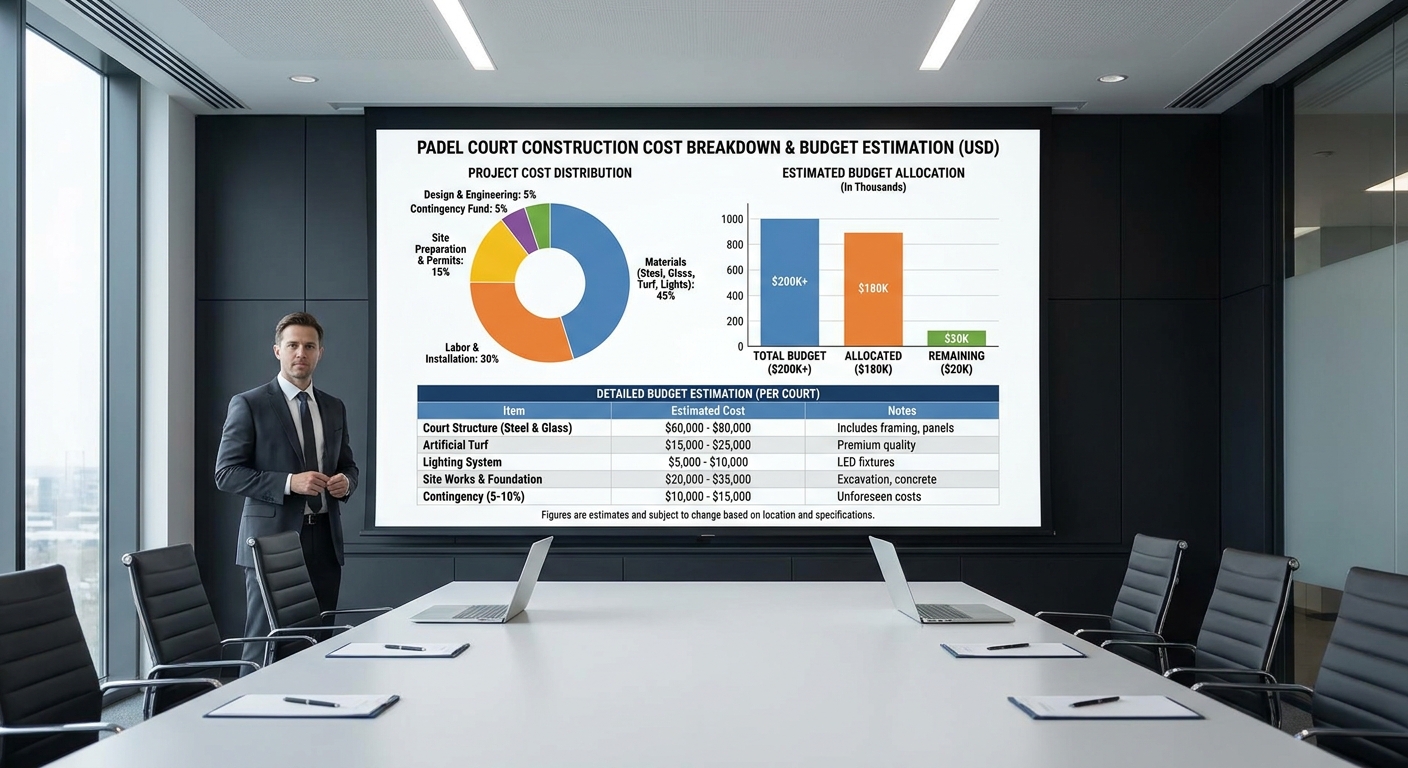
A professional padel court construction project typically costs between 25,000 and 60,000 per court, depending on material selection and site complexities. You need to view this as a capital investment that requires a detailed budget breakdown for effective ROI planning. While lower-cost options exist, choosing subpar materials often leads to higher operational costs and lower player satisfaction.
Primary material and manufacturing costs
The truth of the matter is that quality materials drive the bulk of your initial expenditure. You are paying for safety-certified glass, high-grade steel, and turf that can withstand 2,000+ hours of play annually.
- Steel Structure: Costs vary based on whether you choose standard, panoramic, or super-panoramic designs.
- Glass Quality: 12mm tempered glass is a premium over 10mm but offers superior safety and bounce.
- Artificial Turf: High-density monofilament fibers command a higher price but offer much longer lifespans.
- LED Systems: Investing in energy-efficient 200W-300W floodlights reduces long-term utility bills.
- Hardware: Marine-grade stainless steel fasteners add cost but prevent unsightly rust streaks.
Logistics and labor expenses
Think about this: shipping heavy glass and steel across borders adds a significant layer to your financial planning. You must also account for specialized labor teams who understand the nuances of sports court precision.
- Shipping: Container costs and port duties can vary wildly based on your global location.
- Heavy Machinery: Renting excavators, cranes, and rollers for site preparation.
- Specialized Installers: Skilled technicians are required for glass leveling and turf seaming.
- Permitting: Local municipal fees for building permits and environmental inspections.
- Travel Costs: If using an international expert team, airfare and accommodation must be budgeted.
Long-term maintenance and hidden fees
In simple terms, the “sticker price” isn’t the only number you need to worry about. You should allocate a contingency fund for unforeseen site conditions or local code requirements.
- Sand Replacement: Periodic topping up of silica sand to maintain fiber health.
- Cleaning Supplies: Specialized brushes and cleaners for glass and synthetic turf.
- Electricity: Monthly operational costs for nighttime lighting and facility access.
- Insurance: Liability coverage for players and structural insurance for the assets.
- Refurbishment: Budgeting for turf replacement every 5-7 years to keep the court “new.”
Key Takeaway: A transparent budget that accounts for both upfront construction and long-term operational costs is essential for a sustainable and profitable padel venture.
| Budget Category | Estimated Range (USD) | Percentage of Total | Impact on Quality | |
|---|---|---|---|---|
| Structure & Glass | 15,000−25,000 | 40-50% | High (Safety & Playability) | |
| Foundation/Civils | 8,000−15,000 | 25-30% | Critical (Structural Life) | |
| Turf & Lighting | 5,000−10,000 | 15-20% | High (Player Experience) | |
| Labor & Shipping | 5,000−15,000 | Varies | Essential (Precision) |
Analyzing these figures reveals that investing in the foundation and structure provides the greatest protection for your long-term capital asset.
What dimensions are required for padel court construction?
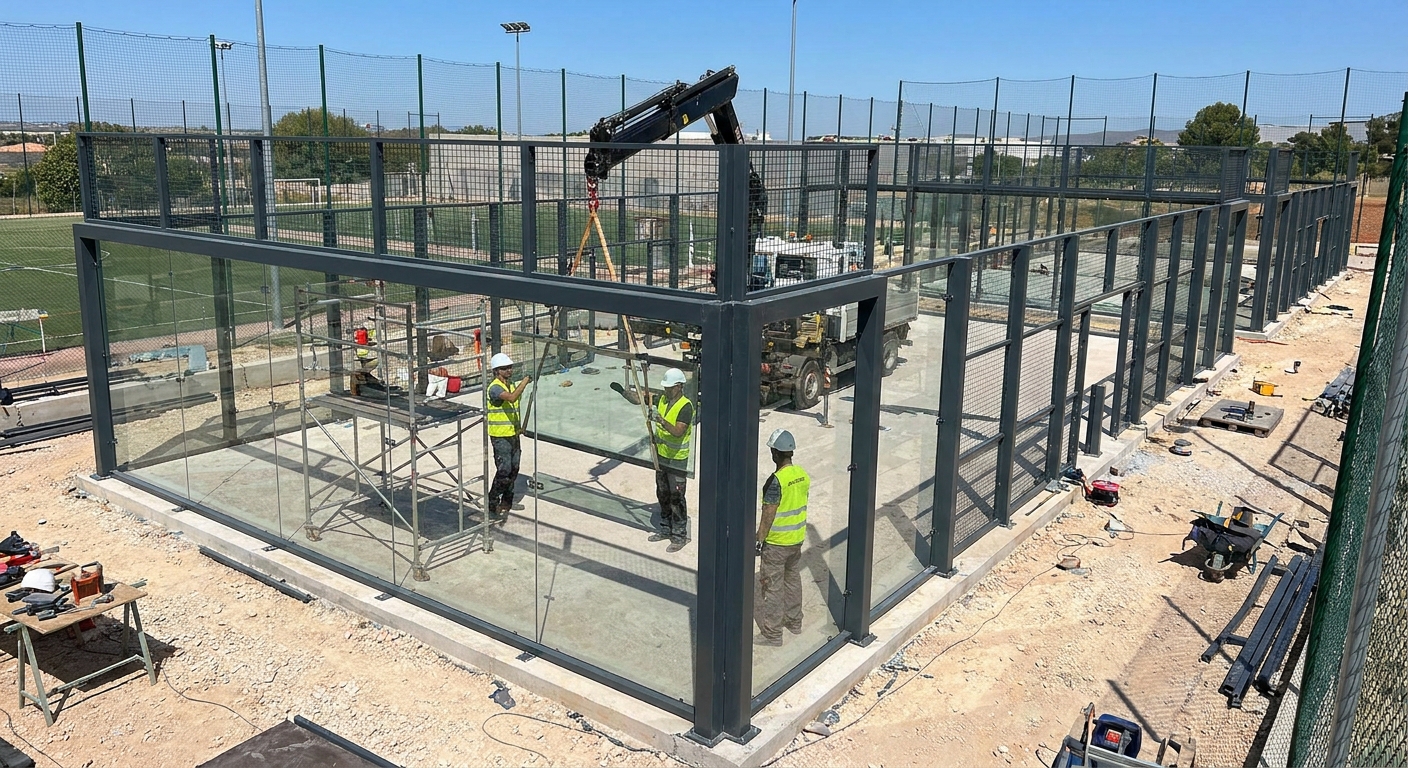
Official padel court construction requires a strictly defined internal playing area of 10 meters in width by 20 meters in length. You cannot deviate from these measurements if you intend to host sanctioned tournaments or attract serious competitive players. Beyond the white lines, you must also plan for safety zones and structural footprints that extend the total required space.
Internal playing field specifications
Believe it or not, the “box” you play in is a masterpiece of geometric precision. Every line must be exactly 5cm wide and positioned according to International Padel Federation (FIP) standards.
- Service Lines: Located 6.95 meters from the net on both sides.
- Center Service Line: Divides the service area into two equal rectangles of 5 meters width.
- Net Height: 0.88 meters at the center, rising to 0.92 meters at the support posts.
- Net Width: Must span the entire 10-meter width of the court.
- Line Color: Typically white or black, providing high contrast against the turf color.
Vertical clearance and enclosure height
The best part of padel is the “lob,” but you can’t play it if your ceiling or lights are too low. You must ensure that the vertical space is just as regulated as the horizontal floor space.
- Minimum Ceiling Height: 6 meters for recreational play, though 8 meters is the professional gold standard.
- Glass Wall Height: The back walls must be 3 meters high to allow for consistent rebounding play.
- Side Wall Design: Features a combination of glass and mesh, often stepping down from 3m to 2m.
- Lighting Pole Height: Floodlights are generally mounted at 6 meters to prevent player glare.
- Clearance Zone: Ensure no tree branches or HVAC ducts intrude into the vertical playing volume.
Total footprint and safety buffers
The real secret to a safe court is the space outside the glass. You need to provide enough room for players to run out of the doors for “out-of-court” plays and for spectators to walk safely.
- Outer Perimeter: A minimum of 0.5 meters of clear space around the entire glass structure.
- Out-of-Court Play: For pro-level setups, you need 2 meters of clear space on each side of the net.
- Spectator Paths: Ideally 1.5 to 2 meters for comfortable traffic flow between multiple courts.
- Foundation Extension: The concrete slab should extend at least 10-20cm beyond the metal pillars.
- Entry Points: Gates should be centered on the long sides, usually 1 meter wide for accessibility.
Key Takeaway: Adhering to precise FIP dimensions ensures your court is competition-ready and provides the standard experience players expect globally.
| Dimension Type | Metric Measurement | Purpose | FIP Requirement | |
|---|---|---|---|---|
| Length/Width | 20m x 10m | Total Play Area | Mandatory | |
| Service Box | 5m x 6.95m | Serving Zone | Mandatory | |
| Ceiling Height | 6m – 8m | Vertical Play | Recommended | |
| Line Width | 5cm | Boundary Marker | Mandatory |
Strict adherence to these metrics prevents “dead zones” and ensures that player skills translate perfectly from your facility to any other court in the world.
Which materials are best for padel court construction?
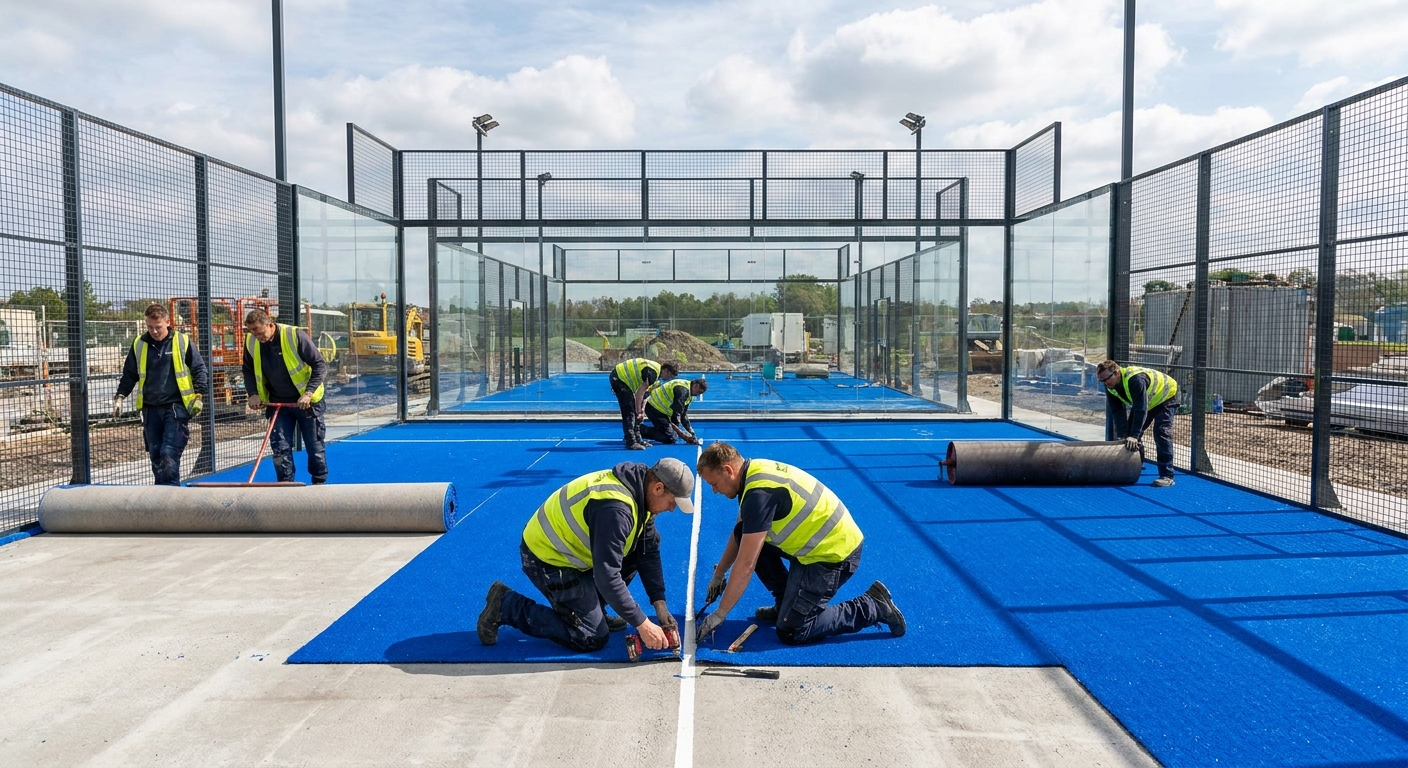
The best materials for padel court construction include hot-dip galvanized steel for the frame and 12mm tempered safety glass for the walls. You must prioritize materials that balance durability with the specific physics of the sport, such as ball rebound and player impact safety. Using inferior steel or thin glass is a recipe for structural failure and potential injury.
High-performance steel and mesh fencing
Here is the kicker: the metal structure is the skeleton of your court and must withstand heavy wind loads and player collisions. You should always opt for powder-coated finishes over standard paint to prevent peeling and corrosion.
- Galvanized Steel: Provides a 20-year rust-free lifespan even in humid or coastal climates.
- Pillar Thickness: Usually 80x80mm or 100x100mm for maximum structural rigidity.
- Electro-welded Mesh: 50x50x4mm dimensions are standard to ensure the ball doesn’t get stuck.
- Modular Design: Allows for faster on-site assembly and easier replacement of damaged parts.
- Anti-Vibration Systems: Integrated rubber mounts that reduce noise when the ball hits the fence.
Safety glass and rebounding surfaces
In simple terms, the glass is what makes padel unique. You need a surface that is perfectly flat and incredibly strong to ensure the game remains fast and the spectators stay safe.
- 12mm Tempered Glass: The Padel Glass standard for commercial clubs due to its superior impact resistance.
- Countersunk Holes: Essential for flush mounting bolts, preventing erratic ball bounces.
- Polished Edges: Reduces the risk of stress fractures during the installation process.
- Heat Soak Testing: A premium process that ensures the glass won’t spontaneously shatter.
- Laser Alignment: Ensures every panel is perfectly flush with its neighbor for a seamless play surface.
Artificial turf and infill technology
The bottom line is that the turf dictates how the players’ joints feel after two hours of play. You want a surface that provides grip without being “grabby,” allowing for controlled slides and turns.
- Monofilament Turf: Preferred for its “memory” which keeps fibers standing upright longer.
- Dtex Rating: Higher Dtex (e.g., 9,000+) indicates a thicker, more durable fiber.
- Silica Sand: 0.2-0.8mm grain size is ideal to prevent clumping and allow drainage.
- UV Protection: Essential additives that prevent the turf from fading or becoming brittle in the sun.
- Permeability: Backing material that allows water to pass through at 30+ liters per minute.
Key Takeaway: Premium materials like 12mm tempered glass and hot-dip galvanized steel significantly reduce maintenance costs and elevate the player experience.
| Material | Recommended Spec | Primary Benefit | Lifecycle | |
|---|---|---|---|---|
| Structure | Hot-dip Galvanized Steel | Corrosion Resistance | 20+ Years | |
| Glass | 12mm Tempered Safety | Consistent Bounce/Safety | Indefinite | |
| Turf | Monofilament PE | Player Comfort/Grip | 5-8 Years | |
| Fasteners | A2 Stainless Steel | No Rust Staining | 15+ Years |
Synthesizing high-grade components into a single build creates a professional-grade asset that retains its value and aesthetic appeal over time.
How do you choose a site for padel court construction?
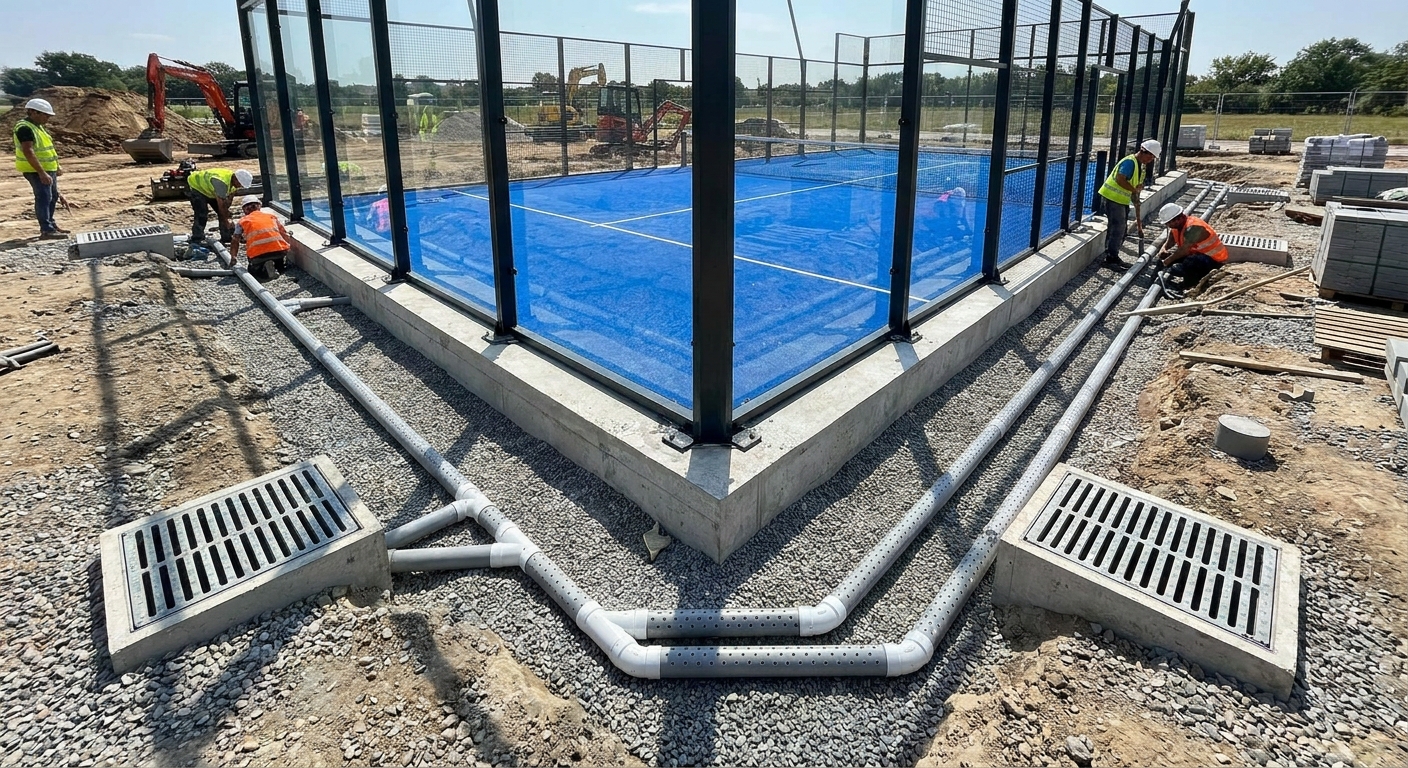
Choosing a site for padel court construction involves assessing soil stability, solar orientation, and the proximity of noise-sensitive neighbors. You should avoid areas with high water tables or shifting clay soils that could compromise your concrete foundation. A poorly chosen location can lead to drainage nightmares that render your court unplayable after every rain shower.
Soil analysis and load-bearing capacity
Think about this: a padel court weighs several tons, and that weight is concentrated on small pillar footprints. You must ensure the ground can support this load without settling unevenly over the coming years.
- Soil Testing: Conducting a core sample to identify rock, sand, or clay layers.
- Compaction Needs: Determining if you need imported fill or heavy vibratory rolling.
- Water Table: Ensuring the foundation won’t be “lifted” or cracked by hydrostatic pressure.
- Tree Roots: Removing large trees within 5 meters to prevent roots from cracking the slab.
- Existing Utilities: Scanning for buried gas, water, or fiber-optic lines before digging.
Orientation and environmental factors
Believe it or not, the sun can be your worst enemy during a late-afternoon match. You must orient your court correctly to ensure neither player is blinded during the serve or overhead smash.
- North-South Axis: The gold standard orientation to minimize sun glare for both teams.
- Wind Protection: Utilizing existing buildings or windbreaks to prevent “gusty” play conditions.
- Natural Shade: Strategic placement near trees (at a distance) to lower temperatures in summer.
- Acoustics: Placing courts away from residential bedrooms to mitigate the “thock” sound of play.
- Visibility: Ensuring the court is a focal point for the club, driving curiosity and new bookings.
Accessibility and utility connections
The truth of the matter is that a court in the middle of nowhere won’t get used. You need to ensure players can get to the court easily and that you have the power needed for nighttime lighting.
- Pedestrian Flow: Safe, well-lit paths from the locker rooms or clubhouse.
- ADA Compliance: Ensuring ramps and wide gates are included for wheelchair players.
- Electrical Proximity: Shortening cable runs from the main board to save on installation costs.
- Water Access: Nearby taps for cleaning the glass and rinsing the artificial turf.
- Spectator Space: Room for benches or a small viewing deck to enhance the social atmosphere.
Key Takeaway: Proper site selection reduces civil engineering costs and maximizes the year-round playability and popularity of your facility.
| Site Factor | Ideal Condition | Risk of Failure | Mitigation Strategy | |
|---|---|---|---|---|
| Orientation | North-South | Blinding Sun Glare | Repositioning or Shade Nets | |
| Soil Type | Stable/Compactable | Foundation Cracking | Reinforced slab design | |
| Drainage | Natural Slope | Water Pooling | Perimeter French drains | |
| Noise | Commercial/Buffer | Local Complaints | Acoustic glass or barriers |
Rigorous site assessment prevents the “hidden costs” of construction from ballooning and ensures a long-term, trouble-free operation.
What foundation is needed for padel court construction?
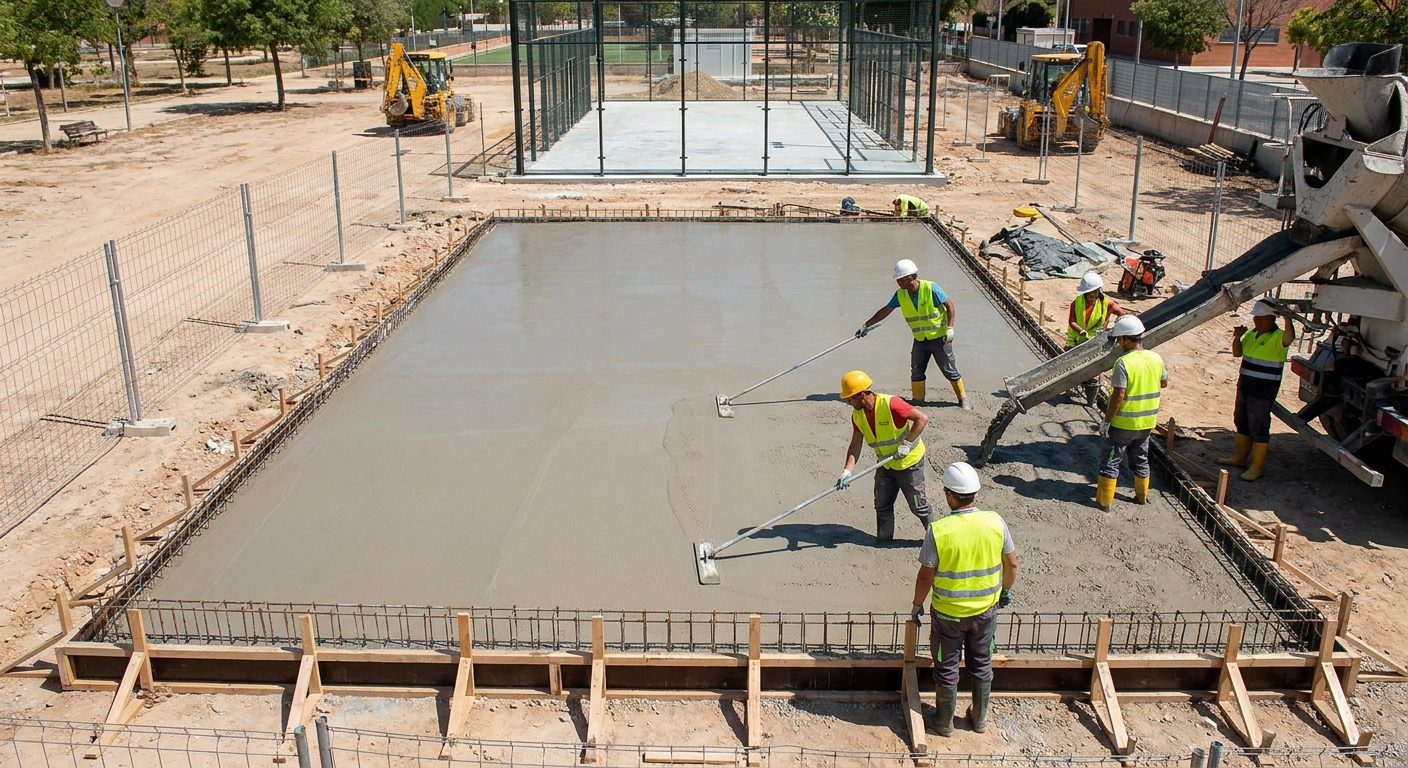
The foundation needed for padel court construction is typically a 15-20cm reinforced concrete slab or a specialized porous asphalt layer. You must achieve a surface tolerance of less than 3mm over a 3-meter straight edge to ensure the turf lays flat and the ball bounces truly. A wavy or cracked foundation will immediately degrade the quality of the game and can even cause glass panels to shatter.
Reinforced concrete slab specifications
The bottom line is that concrete is the most durable and common choice for global padel builds. You are creating a “floating” slab that must resist the expansion and contraction caused by seasonal temperature changes.
- Compressive Strength: Minimum C25/30 grade concrete to handle structural loads.
- Steel Reinforcement: Double layer of A142 or A193 mesh to prevent structural cracking.
- Vapor Barrier: Heavy-duty plastic sheeting to prevent ground moisture from seeping up.
- Expansion Joints: Strategically placed cuts that allow the slab to move without breaking.
- Finish: A power-troweled “light broom” finish for optimal turf adhesion and grip.
Porous asphalt and drainage alternatives
Here is the kicker: in high-rainfall areas, a non-porous slab can lead to water “pooling” under the turf. You might consider a porous foundation that allows water to drain directly through the floor into the sub-base.
- Open-Graded Asphalt: A mix of large aggregates that creates interconnected voids for water.
- Vertical Drainage: Allows the court to be playable just minutes after a heavy storm.
- Reduced Slope: Since water goes through the surface, you need less of a horizontal pitch.
- Maintenance: Requires periodic vacuuming to prevent dust from clogging the pores.
- Cost Factor: Often slightly more expensive than concrete but saves on perimeter drainage.
Perimeter beams and structural anchoring
In simple terms, the slab doesn’t just hold the players; it holds the entire steel cage against the wind. You must ensure the edges of your foundation are extra-thick to provide deep anchoring points for the pillars.
- Ring Beam: A thickened 40x40cm perimeter around the slab for structural stability.
- Anchor Bolts: M16 or M20 stainless steel bolts chemical-set deep into the concrete.
- Leveling Shims: Used under the pillar baseplates to achieve perfect vertical alignment.
- Grouting: Filling the gap under baseplates to prevent moisture trap and vibration.
- Conduit Integration: Casting the electrical pipes directly into the slab for a clean finish.
Key Takeaway: A precision-engineered foundation is the most critical component for structural safety and a professional-grade ball bounce.
| Foundation Type | Best For | Main Advantage | Main Disadvantage | |
|---|---|---|---|---|
| RC Concrete | All Climates | Extreme Durability | Requires Slope for Drainage | |
| Porous Asphalt | High Rain Areas | Vertical Drainage | Shorter Lifespan (10 yrs) | |
| Stone Base | Low Budget | Fast Installation | Risk of Surface Shifting |
Selecting the right foundation based on your local climate and soil conditions ensures the longevity and playability of the court for decades.
How long does the padel court construction process take?
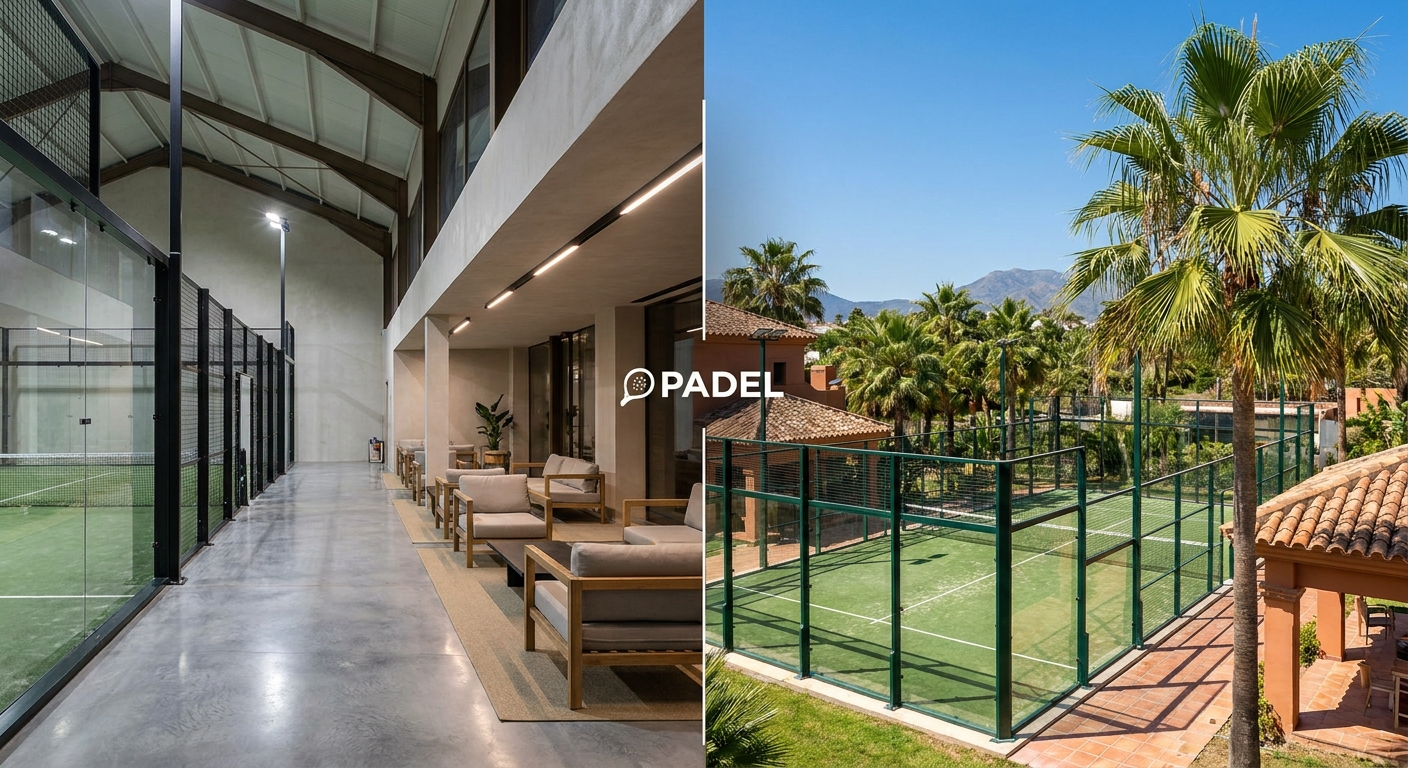
The padel court construction process typically takes between 4 and 8 weeks from the first day of excavation to the inaugural match. You should understand that the timeline is heavily dependent on weather conditions and the curing time required for the concrete foundation. Rushing the process, especially the foundation curing, can lead to catastrophic turf bubbles or structural shifting.
Phase 1: Planning and mobilization (Week 1)
Believe it or not, the work starts long before the first shovel hits the ground. You must coordinate logistics, equipment rentals, and labor teams to ensure a seamless “just-in-time” delivery of materials.
- Permit Verification: Ensuring all local building and environmental approvals are active.
- Material Delivery: Scheduling the arrival of glass and steel containers at the site.
- Equipment Arrival: Mobilizing excavators, rollers, and concrete mixers.
- Site Survey: One final laser check of the dimensions and orientation.
- Safety Setup: Installing fencing and signage to secure the construction zone.
Phase 2: Groundwork and slab curing (Weeks 2-5)
The real secret to a fast build is the efficiency of the civil works team. However, you are at the mercy of chemistry here—concrete needs time to reach its design strength before it can support the steel cage.
- Excavation: Usually a 2-3 day process for a single court footprint.
- Formwork: Setting the borders and steel reinforcement mesh (1-2 days).
- Concrete Pour: A single-day event that requires a continuous supply of fresh mix.
- Curing Time: A non-negotiable 14-21 day period for the slab to harden and dry.
- Moisture Testing: Ensuring the slab is dry enough for the artificial turf adhesive to bond.
Phase 3: Assembly and finishing (Weeks 6-8)
The best part of the timeline is the final assembly, where the structure appears to “grow” out of the ground in just a few days. This phase is fast-paced and requires a highly skilled technical team.
- Steel Frame: Erection and leveling usually take 2-3 days per court.
- Glass Installation: Setting the panels and seals takes approximately 2 days.
- Turf & Sand: Laying, seaming, and brushing the surface (2-3 days).
- Lighting & Electrics: Final wiring and aiming of the LED floodlights (1 day).
- Commissioning: Testing the net tension and cleaning the glass for play.
Key Takeaway: A 2-month window allows for a high-quality build that respects the natural curing times of the materials while maintaining project momentum.
| Construction Phase | Days Active | Dependency | Critical Path Item | |
|---|---|---|---|---|
| Site Prep | 3-5 Days | Weather | Heavy machinery access | |
| Foundation | 2-3 Days | Concrete Supply | Precision leveling | |
| Curing | 14-21 Days | Temperature | No heavy loads allowed | |
| Assembly | 5-7 Days | Labor Skill | Glass panel safety |
Managing player expectations and marketing the court opening should align with this 8-week timeline to ensure a fully booked launch day.
What lighting is used in padel court construction?
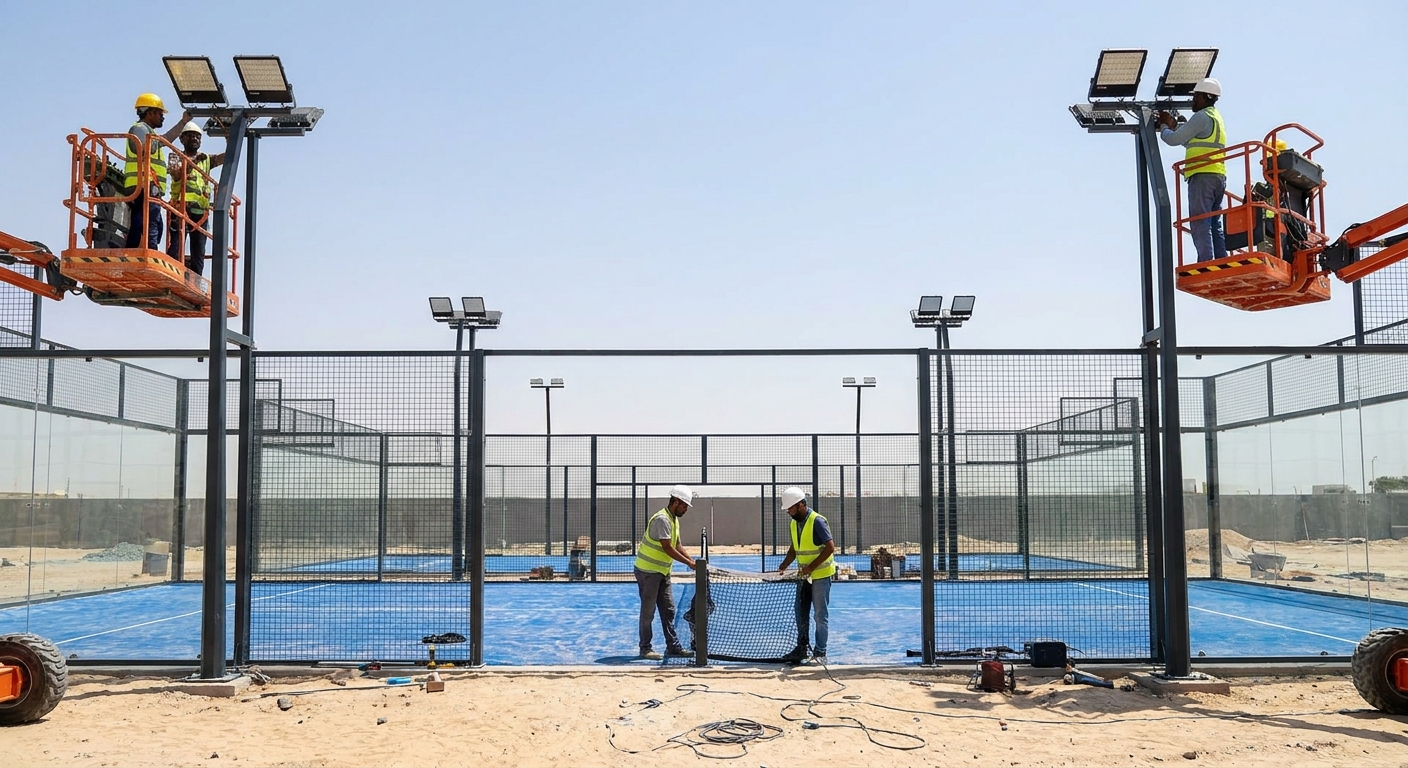
The padel court construction standard for lighting utilizes 8 high-efficiency LED floodlights mounted on 6-meter-high corner poles. You must achieve a uniform light distribution of at least 500 lux for recreational play and up to 750 lux for televised or professional tournaments. Improper lighting creates “shadow pockets” that make the ball difficult to track during fast-paced volleys.
LED technology and energy efficiency
Think about this: traditional halide lights take 15 minutes to warm up and consume massive amounts of power. You should switch to LED systems that provide instant-on capability and up to 70% energy savings.
- Wattage: Typically 200W to 300W per fixture to reach professional lux levels.
- Color Temperature: 5000K to 5700K (Cool White) for the best ball visibility and contrast.
- IP Rating: IP65 or higher to ensure the fixtures are dust-tight and waterproof.
- Heat Dissipation: Aluminum cooling fins that prevent the LED chips from burning out.
- Flicker-Free: Essential for high-speed video recording and smooth player tracking.
Pole placement and glare reduction
Believe it or not, the position of the light is just as important as its power. You must ensure the light is angled into the court without shining directly into the eyes of a player looking up for a smash.
- Pole Height: Standard 6-meter poles provide the best balance of coverage and maintenance access.
- Angled Brackets: Allows for “asymmetric” lighting that pushes light into the court center.
- Internal Wiring: Cables should run inside the steel poles for a clean, vandal-proof look.
- Foundation Mount: Heavy-duty baseplates bolted directly into the court’s concrete slab.
- Anti-Glare Shields: Optional visors that prevent light spill into neighboring residential areas.
Smart controls and maintenance
The truth of the matter is that you shouldn’t have your lights burning at 100% when no one is playing. You can integrate smart control systems that allow for remote scheduling and dimming via a smartphone app.
- PIR Sensors: Automatically turn lights on when players enter the court.
- App Integration: Allows club owners to track energy usage and schedule operating hours.
- Gradual Dimming: Safely lowers light levels at the end of a booking to signal court turnover.
- Modular Drivers: Allows for easy replacement of electronic components without removing the whole lamp.
- Long Lifespan: Quality LEDs are rated for 50,000+ hours, reducing your ladder-climbing maintenance.
Key Takeaway: High-quality LED lighting extends your operating hours and provides a professional atmosphere that players are willing to pay a premium for.
| Lighting Spec | Requirement | Impact on Game | |
|---|---|---|---|
| Lux Level | 500 – 750 lx | Ball tracking and safety | |
| Uniformity | > 0.7 Uo | No dark spots on the turf | |
| CRI | > 80 | Natural color representation | |
| Glaring (UGR) | < 22 | Comfort during overhead shots |
Investing in a premium lighting package pays for itself through reduced energy bills and increased court booking revenue during evening hours.
What are common FAQs about padel court construction?
Common FAQs about padel court construction often center on the lifespan of the materials, the return on investment for club owners, and the complexity of maintenance. You need to provide clear, evidence-based answers to these concerns to build trust with your stakeholders or investors. Understanding the “reality” of court ownership helps you prepare for a successful and profitable long-term operation.
How much space do I actually need for a padel court?
The absolute minimum footprint for a single court is 11 meters by 21 meters, which accounts for the 10x20m playing area plus a 0.5m structural buffer. However, if you want a premium experience with spectator seating and out-of-court play, you should plan for a 13x23m area per court.
How long do the glass and turf last?
The glass panels are effectively permanent unless shattered by a severe impact, whereas the artificial turf is a “consumable” asset. You can expect a high-quality monofilament turf to last 5 to 8 years in a busy commercial club before needing replacement.
Can I build a padel court on top of an old tennis court?
Yes, this is one of the most popular ways to revitalize a facility. A single full-sized tennis court has enough space to accommodate two or even three padel courts, allowing you to triple your potential revenue from the same plot of land.
What are the main maintenance tasks?
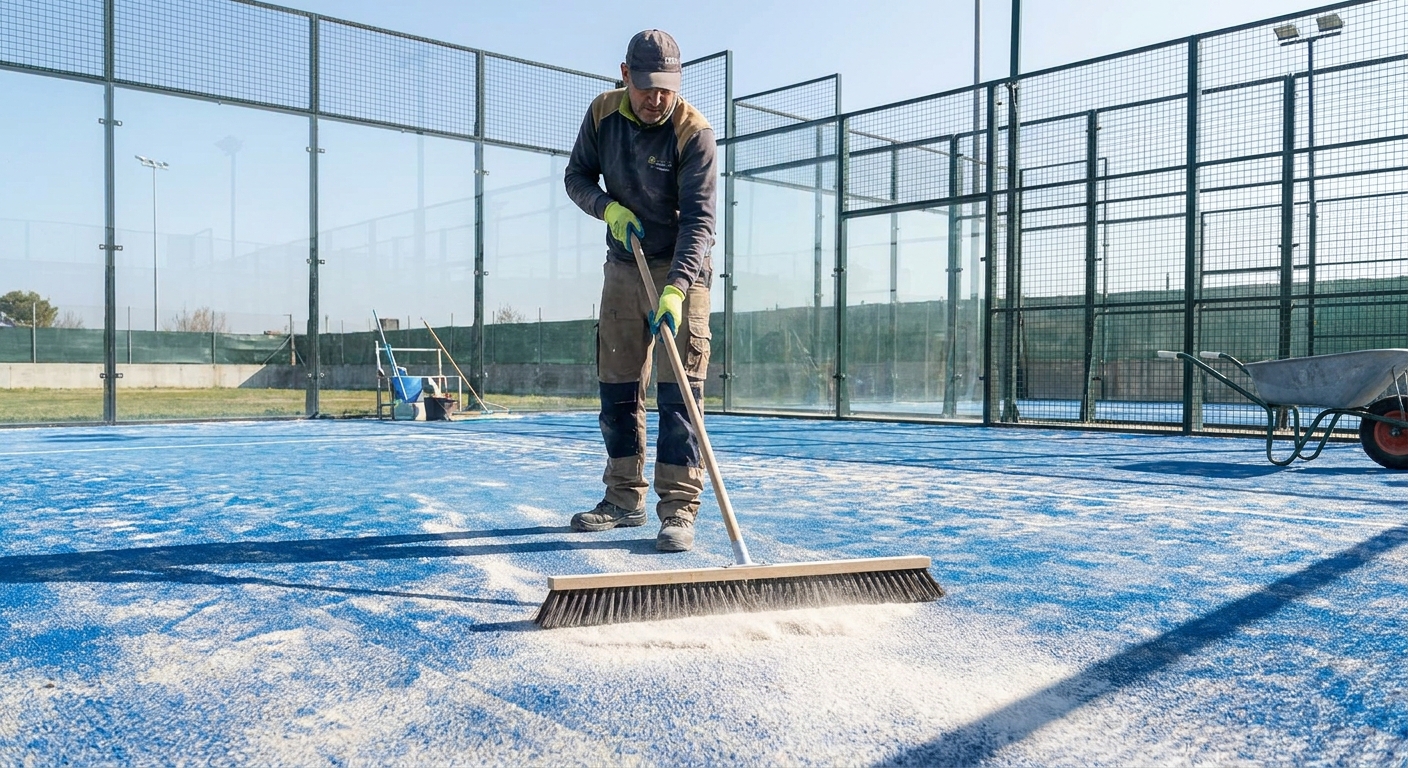
You must brush the turf weekly to redistribute the sand and clean the glass monthly to ensure high visibility for spectators. Periodically, you should also check the tension of the net and the tightness of the structural bolts to ensure ongoing safety.
Is an indoor court better than an outdoor court?
It depends entirely on your local climate and business model. Indoor courts offer 365-day playability and lower maintenance but require much higher initial capital for the building structure and climate control systems.
Contact Us for Expert Guidance
Are you ready to transform your facility with professional padel courts? Our vision at Superbpadel is to empower club owners with factory-direct, world-class sports solutions that drive community growth and financial success. From precision manufacturing to global installation support, we are your dedicated partners in every phase of development. Contact us today to receive a personalized quote and start your journey toward becoming a premier padel destination.