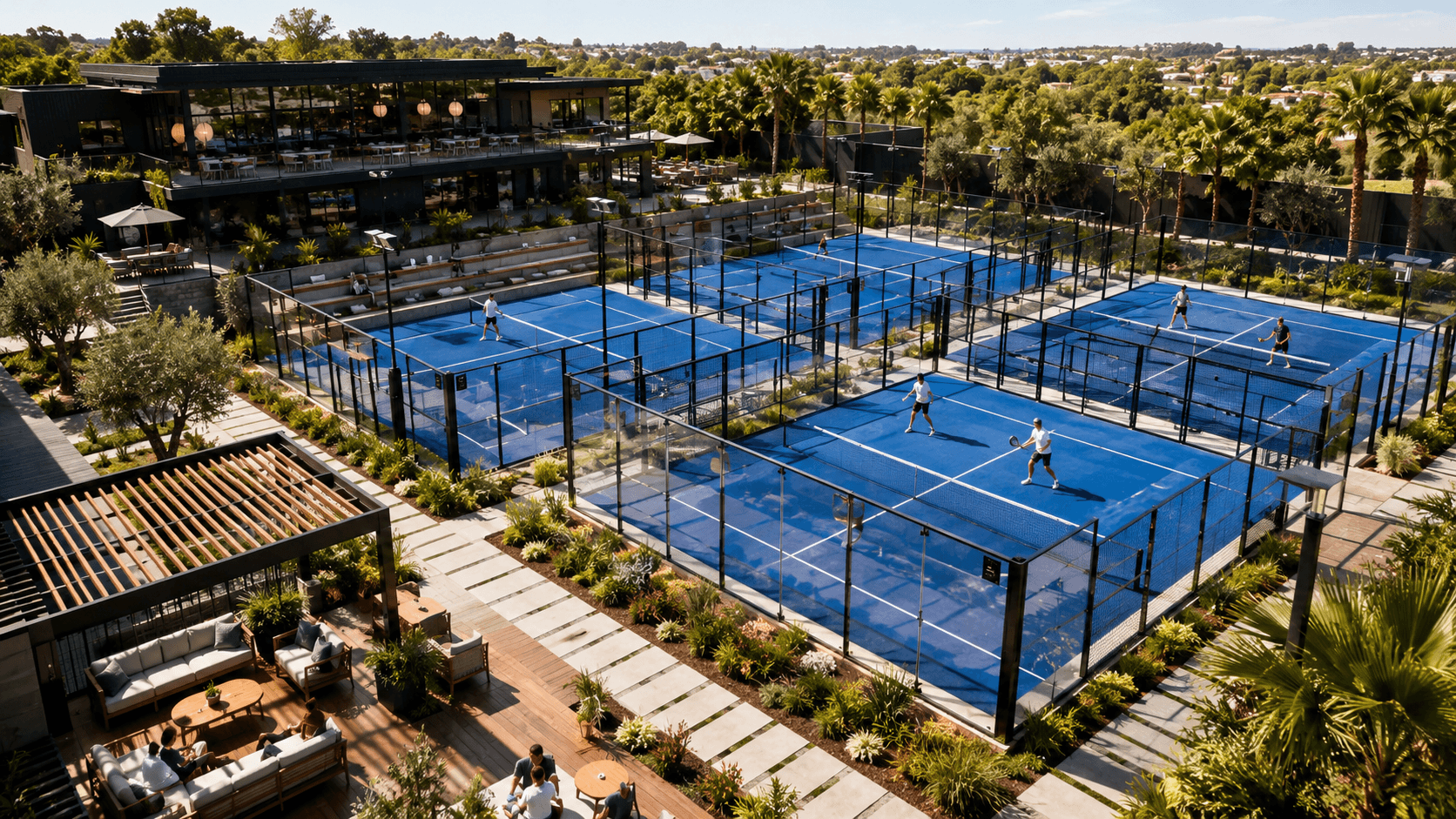
The best padel court design for commercial clubs is a professional panoramic setup using high-durability 12mm tempered glass and hot-dip galvanized steel.
Subpar courts drive away members who seek a premium playing experience. Maintenance costs and safety risks eat profits, leaving club owners with diminishing returns on their investment. Investing in a premium padel court design for commercial clubs ensures long-term ROI and establishes your facility as a market leader.
Why prioritize padel court design for commercial clubs?
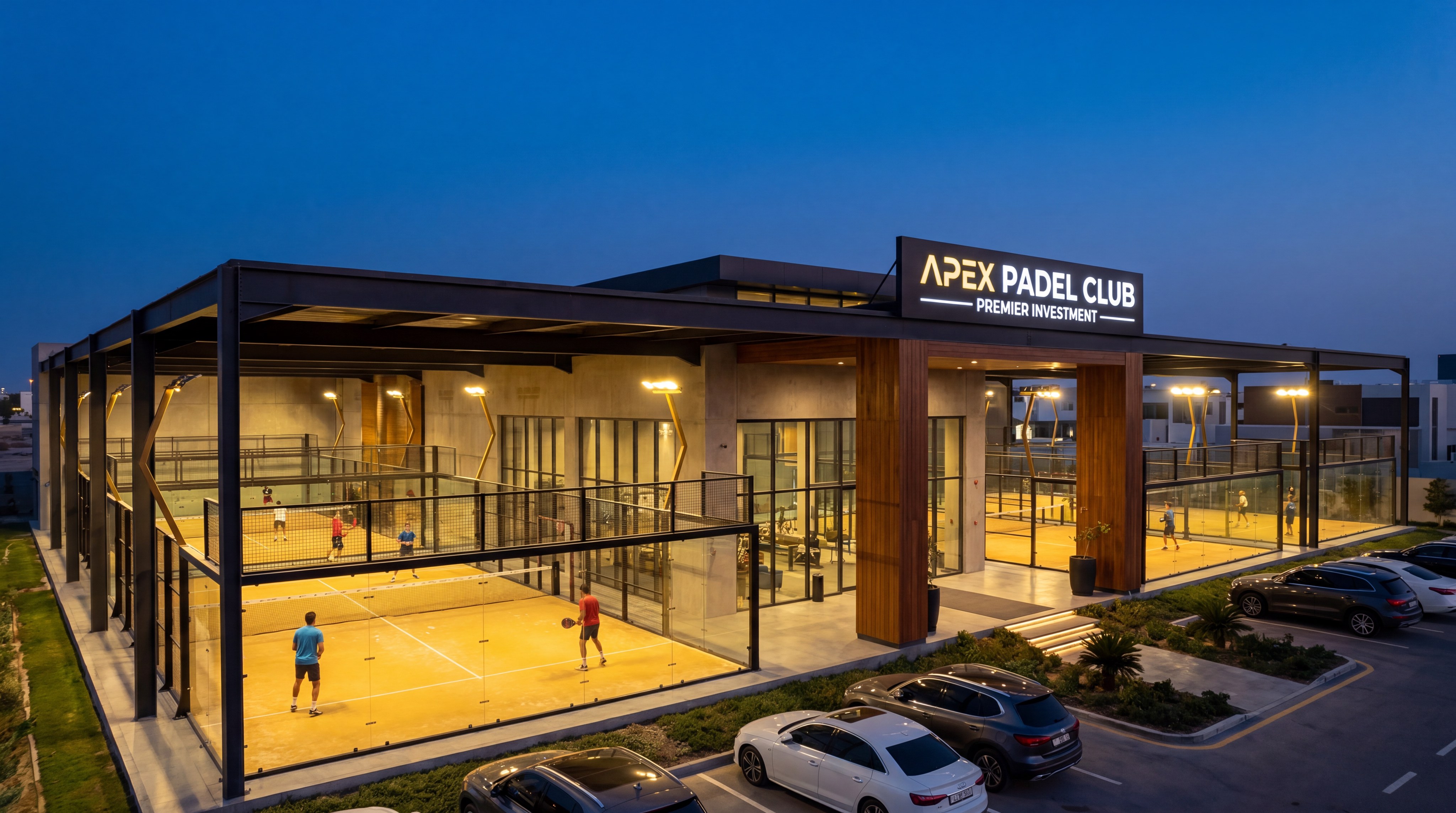
Prioritizing padel court design for commercial clubs ensures that your facility meets international standards and provides a superior player experience. High-quality designs attract competitive players who are willing to pay premium booking fees. This focus on quality helps your club stand out in an increasingly crowded sports market.
Understanding the professional padel market
The professional market demands facilities that can handle high-intensity play without structural degradation. Investors must look beyond aesthetics to ensure every component meets rigorous performance metrics.
Look at it this way:
- Professional players prefer courts with consistent ball bounce.
- High-end aesthetics attract corporate sponsorship opportunities.
- Durable structures reduce the frequency of emergency repairs.
The bottom line? A professional setup is your strongest marketing tool.
The impact of design on player safety
Player safety is non-negotiable in a commercial environment where liability and reputation are at stake. Structural integrity prevents glass breakage and injuries during aggressive net play.
Think about this:
- Tempered glass must meet anti-explosion safety standards.
- Seamless turf joints prevent tripping hazards for runners.
- Galvanized steel resists corrosion in high-humidity indoor environments.
And it gets better: Key Takeaway: Safety-first design minimizes liability and maximizes player trust.
| Feature | Importance | Business Impact | |
|---|---|---|---|
| International Standards | Critical | Market Authority | |
| Structural Integrity | High | Liability Reduction | |
| Premium Aesthetics | Medium | Brand Value |
Focusing on these design elements ensures your club remains competitive and safe for all skill levels.
How does padel court design for commercial clubs affect ROI?
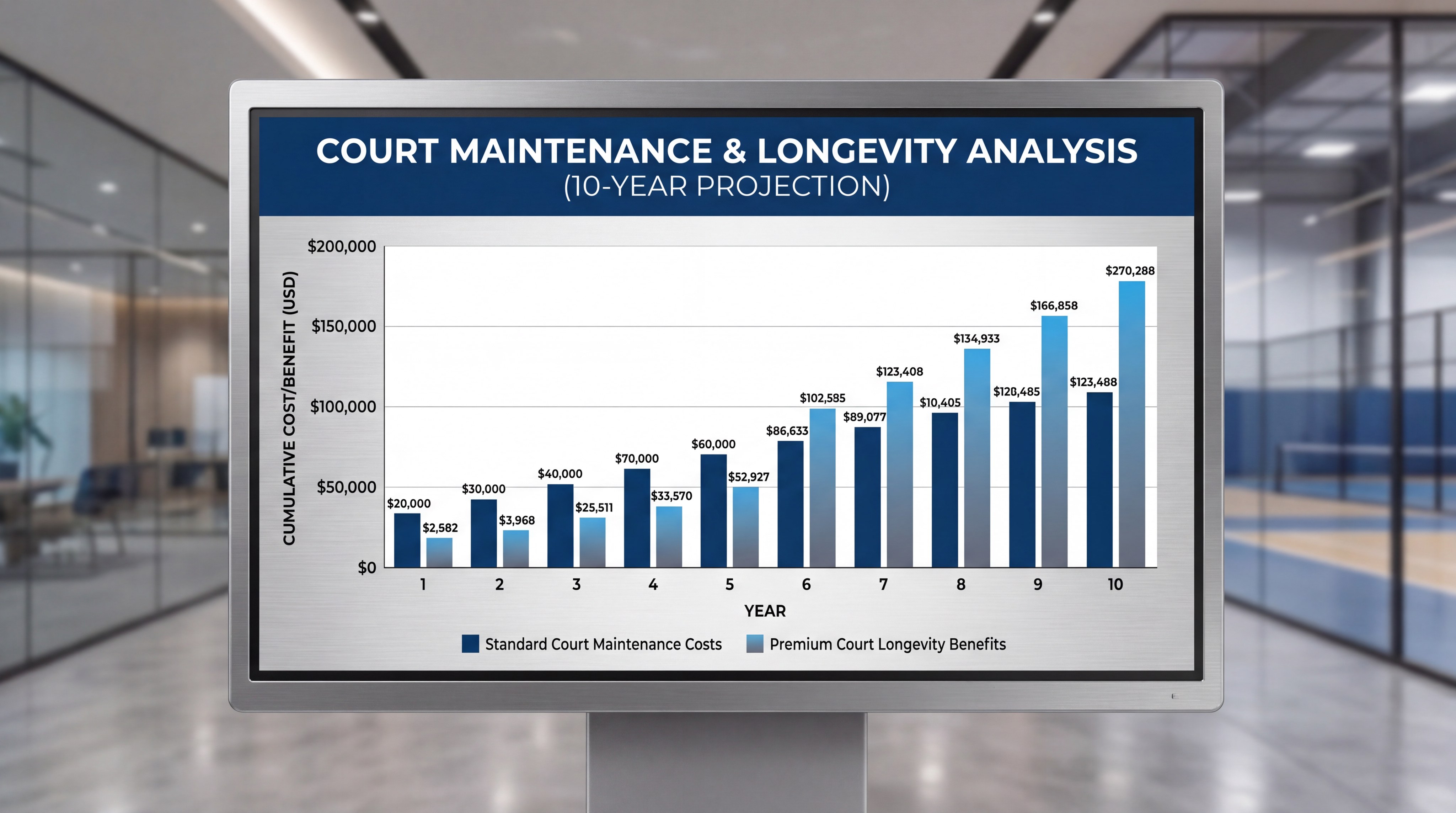
Strategic padel court design for commercial clubs significantly boosts ROI by reducing long-term maintenance expenses and increasing player retention. While initial costs may be higher, premium materials prevent the early replacement of turf or glass. This longevity ensures that your revenue goes toward expansion rather than constant repairs.
Balancing initial investment vs. longevity
Investors often struggle with high upfront costs, but the true metric of success is the total cost of ownership over ten years. Premium courts maintain their performance characteristics much longer than budget alternatives.
The reality is:
- High-durability steel lasts 20+ years without structural failure.
- UV-resistant turf prevents fading and fiber thinning.
- Quality lighting systems reduce monthly electricity bills.
But there is a catch:
- Budget courts often require resurfacing within 24 months.
- Poorly galvanized frames may rust in coastal environments.
- Cheap glass has a higher risk of spontaneous shattering.
Maximizing court booking frequency
A well-designed court is a busy court, as players actively seek out facilities that offer a professional feel. Enhanced visibility and comfort lead to longer play sessions and more frequent return visits.
Consider this:
- Panoramic designs are preferred for televised or recorded matches.
- High-quality turf reduces joint impact, allowing for daily play.
- Bright, uniform lighting extends playable hours late into the night.
The result? Key Takeaway: Premium design creates a “destination” feel that drives peak-hour bookings.
| Metric | Premium Design | Standard Design | |
|---|---|---|---|
| Maintenance Cycle | 5-7 Years | 2-3 Years | |
| Booking Premium | +20% | Baseline | |
| Life Expectancy | 15+ Years | 5-8 Years |
The data proves that investing in quality early results in exponentially higher profit margins over time.
Which glass suits padel court design for commercial clubs?
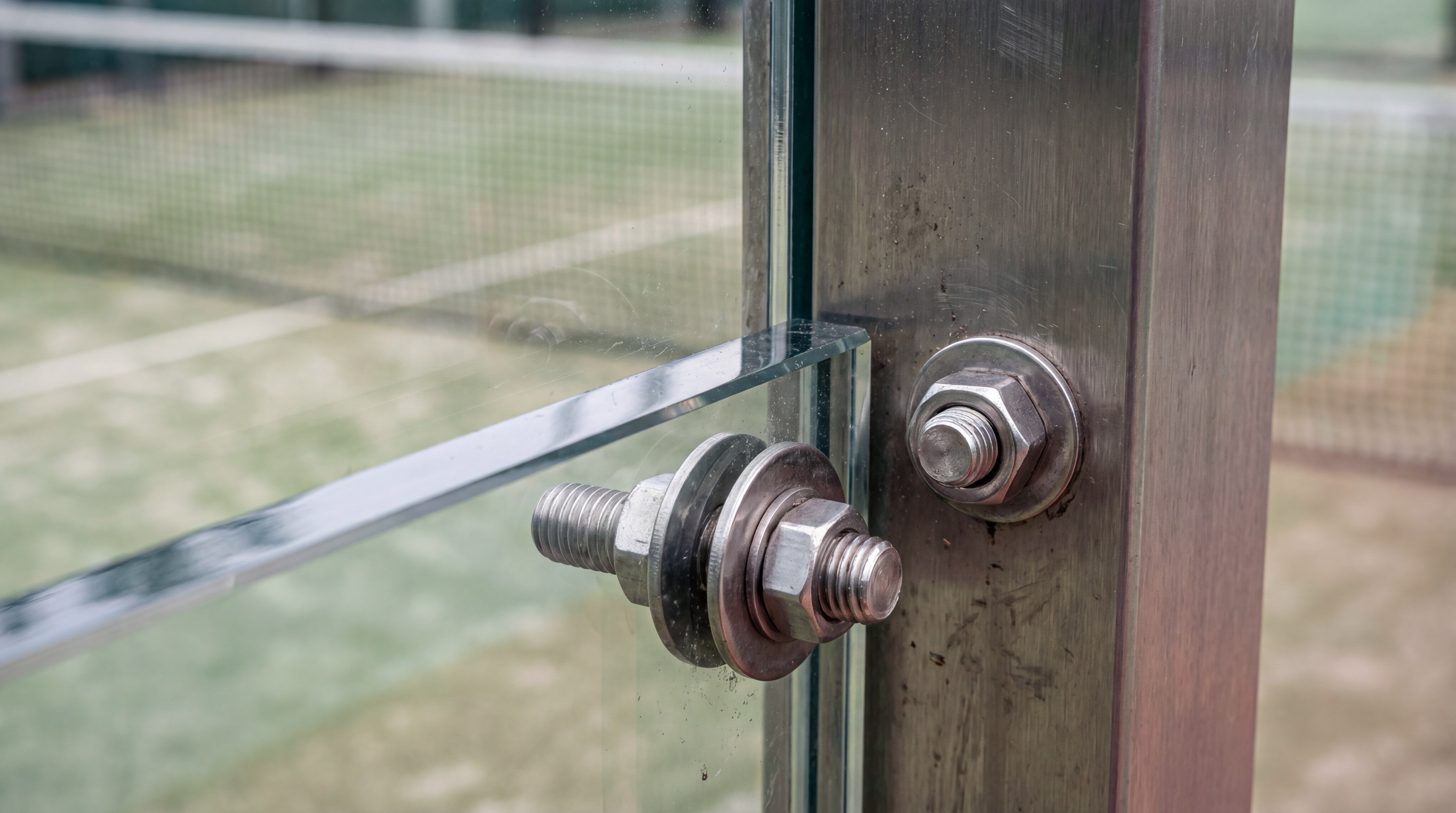
The best padel court design for commercial clubs utilizes 12mm tempered glass to ensure maximum safety and structural stability. This thickness is essential for panoramic courts where the glass must support its own weight without corner pillars. Thicker glass provides a more consistent ball rebound, which is highly valued by advanced players.
Benefits of 12mm anti-explosion tempered glass
12mm tempered glass is the gold standard for high-traffic commercial clubs due to its superior impact resistance. It provides the necessary rigidity to prevent the “vibration” often felt in thinner glass panels.
Here is the deal:
- It effectively resists high-velocity impacts from players and balls.
- Anti-explosion treatment ensures glass shatters into safe, blunt pieces.
- Polished edges prevent micro-cracks that lead to structural failure.
And it gets better:
- Players feel more confident diving for shots near the walls.
- Thicker panels provide better sound dampening for a quieter club.
- Visual clarity remains high for spectators and cameras.
Glass installation and alignment standards
Professional installation is just as important as the glass quality itself to prevent stress fractures. Proper alignment ensures that ball bounces remain predictable across the entire back wall.
The truth is:
- Stainless steel fasteners must be torqued to specific tensions.
- Rubber gaskets are required to prevent glass-to-metal contact.
- Laser alignment is necessary for a perfectly level court surface.
Believe it or not: Key Takeaway: Precision installation of 12mm glass is the foundation of player safety and game quality.
| Glass Attribute | 10mm Standard | 12mm Professional | |
|---|---|---|---|
| Impact Strength | Moderate | High | |
| Rebound Accuracy | 85% | 98% | |
| Durability | Average | Exceptional |
Using 12mm glass is a non-negotiable requirement for any club aiming for a premium market position.
What turf works for padel court design for commercial clubs?
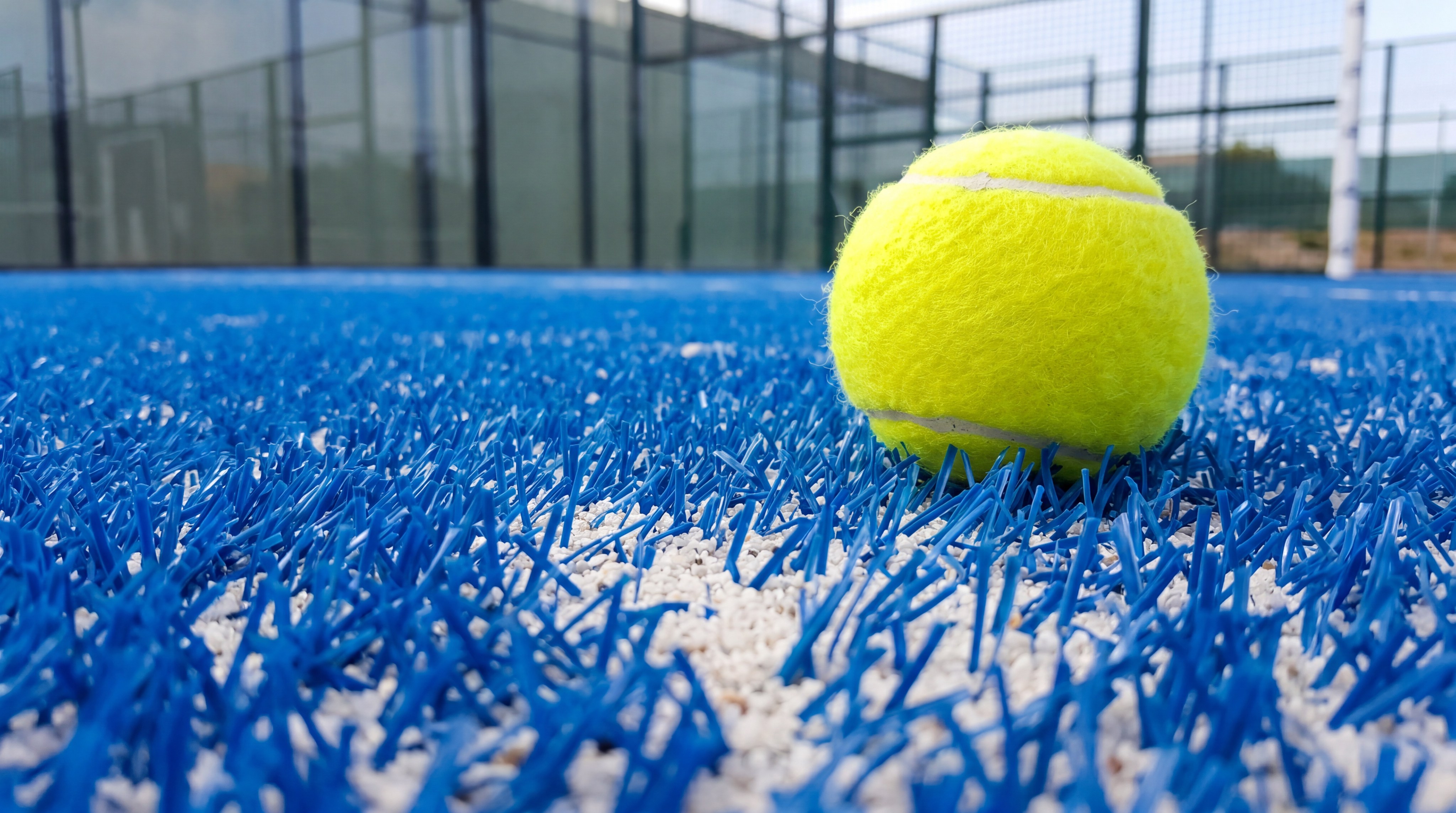
The optimal padel court design for commercial clubs requires monofilament textured turf with high Dtex density for maximum durability. Textured fibers hold silica sand in place more effectively than traditional flat fibers, reducing maintenance needs. This specific turf type ensures a uniform speed of play across the entire surface.
Monofilament vs. fibrillated turf systems
Monofilament turf is the preferred choice for commercial facilities because the fibers return to their upright position after play. This resilience prevents the “matting” effect that ruins ball bounce and aesthetics.
The bottom line?
- Monofilament fibers are less abrasive on players’ skin and joints.
- Textured variants require up to 50% less sand redistribution.
- UV-stabilized polymers prevent the turf from becoming brittle.
Keep this in mind:
- Fibrillated turf wears down faster under heavy daily use.
- Monofilament offers a more “clay-like” sliding experience for experts.
- Premium turf maintains its vibrant color for several years.
Silica sand density and ball bounce
Correct sand infill is critical to maintaining the grip and bounce characteristics of the court. Too little sand leads to excessive turf wear, while too much sand creates slippery and dangerous conditions.
Make no mistake:
- Kiln-dried silica sand must be evenly distributed during installation.
- Round-grain sand is required to prevent fiber abrasion.
- Consistent sand levels prevent “dead spots” on the court.
It is quite simple: Key Takeaway: High-density monofilament turf paired with precise sand infill defines the professional experience.
| Turf Feature | Monofilament Textured | Fibrillated Standard | |
|---|---|---|---|
| Sand Mobility | Low | High | |
| Durability | High | Medium | |
| Player Comfort | Superior | Basic |
Choosing monofilament textured turf reduces your daily maintenance labor while keeping the courts in championship condition.
Is lighting vital in padel court design for commercial clubs?
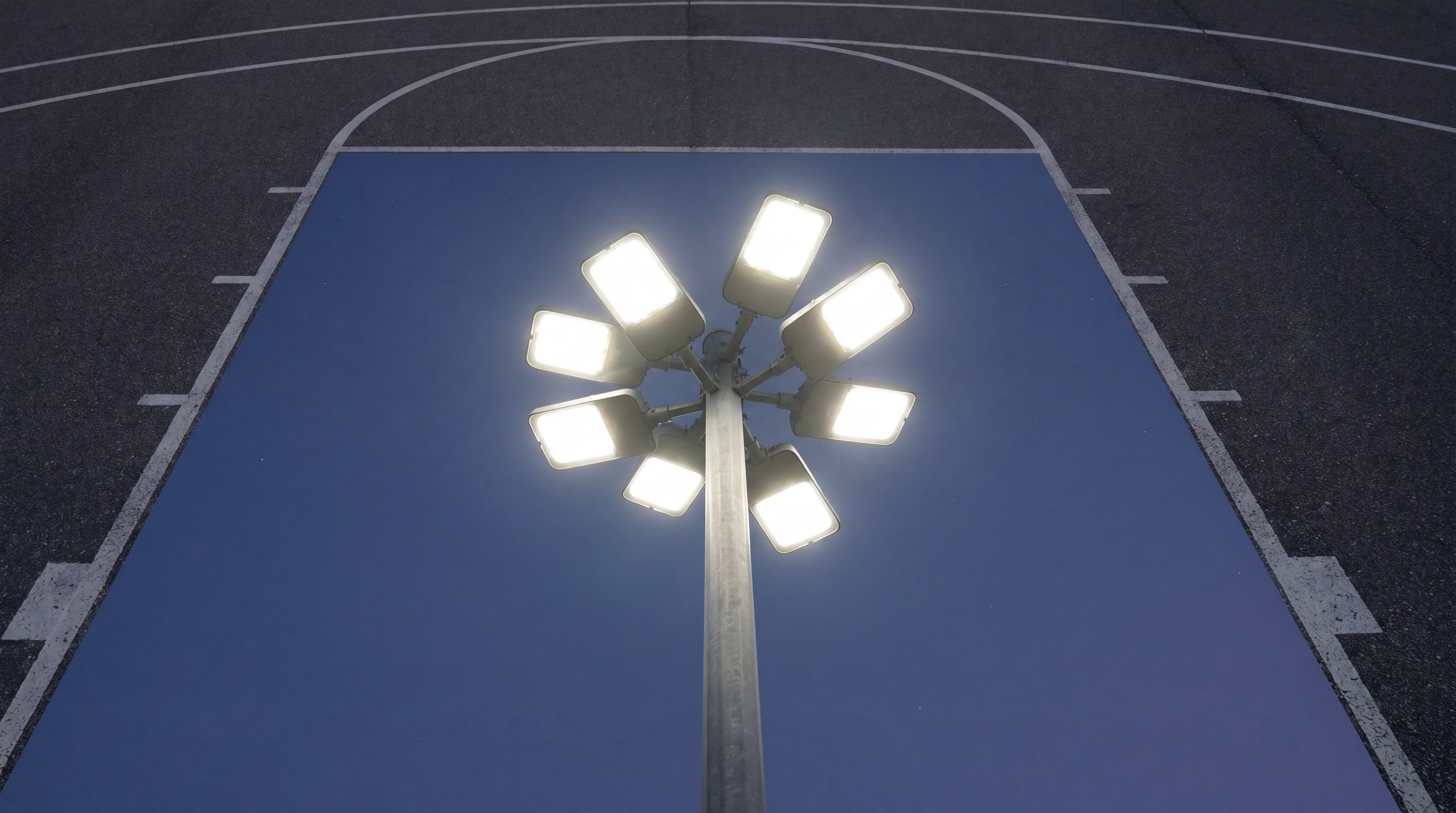
Effective padel court design for commercial clubs hinges on high-output LED lighting systems that provide at least 500-750 lux. Proper lighting allows your club to operate at 100% capacity during evening hours, which are typically the most profitable. Modern LED technology also slashes energy consumption compared to old metal-halide fixtures.
LED technology and glare reduction
Modern LED masts are designed to project light downward without blinding players during high lobs or overhead smashes. Advanced optics ensure that the ball remains visible at all times against the dark sky.
The fact is:
- Instant-on capability allows for immediate play after power fluctuations.
- Diffused lenses prevent harsh shadows on the court surface.
- Lower heat emission extends the lifespan of the electronic drivers.
And it gets better:
- Smart controls allow you to dim lights during off-peak hours.
- High color rendering indexes (CRI) make the ball “pop” visually.
- Long-lasting bulbs mean you rarely need specialized lift equipment for repairs.
Uniformity levels for professional play
Lighting uniformity is the measure of how evenly light is spread across the entire 20×10 meter playing area. Poor uniformity causes “flicker” effects that distract players and ruin the recorded video quality.
The key is:
- Masts must be positioned at precise heights to avoid overlap.
- Photometric studies are necessary before installation begins.
- Consistent lux levels are required for competitive tournament hosting.
You see: Key Takeaway: Uniform, glare-free LED lighting is essential for maximizing evening revenue and player satisfaction.
| Lighting Spec | Target Value | Benefit | |
|---|---|---|---|
| Average Lux | 500 – 750 | Professional Play | |
| Uniformity (Uo) | >0.7 | Visual Comfort | |
| Energy Saving | 60% | Operational Profit |
Investing in high-grade LED masts ensures that your courts are playable and profitable 24 hours a day.
How to optimize padel court design for commercial clubs’ space?
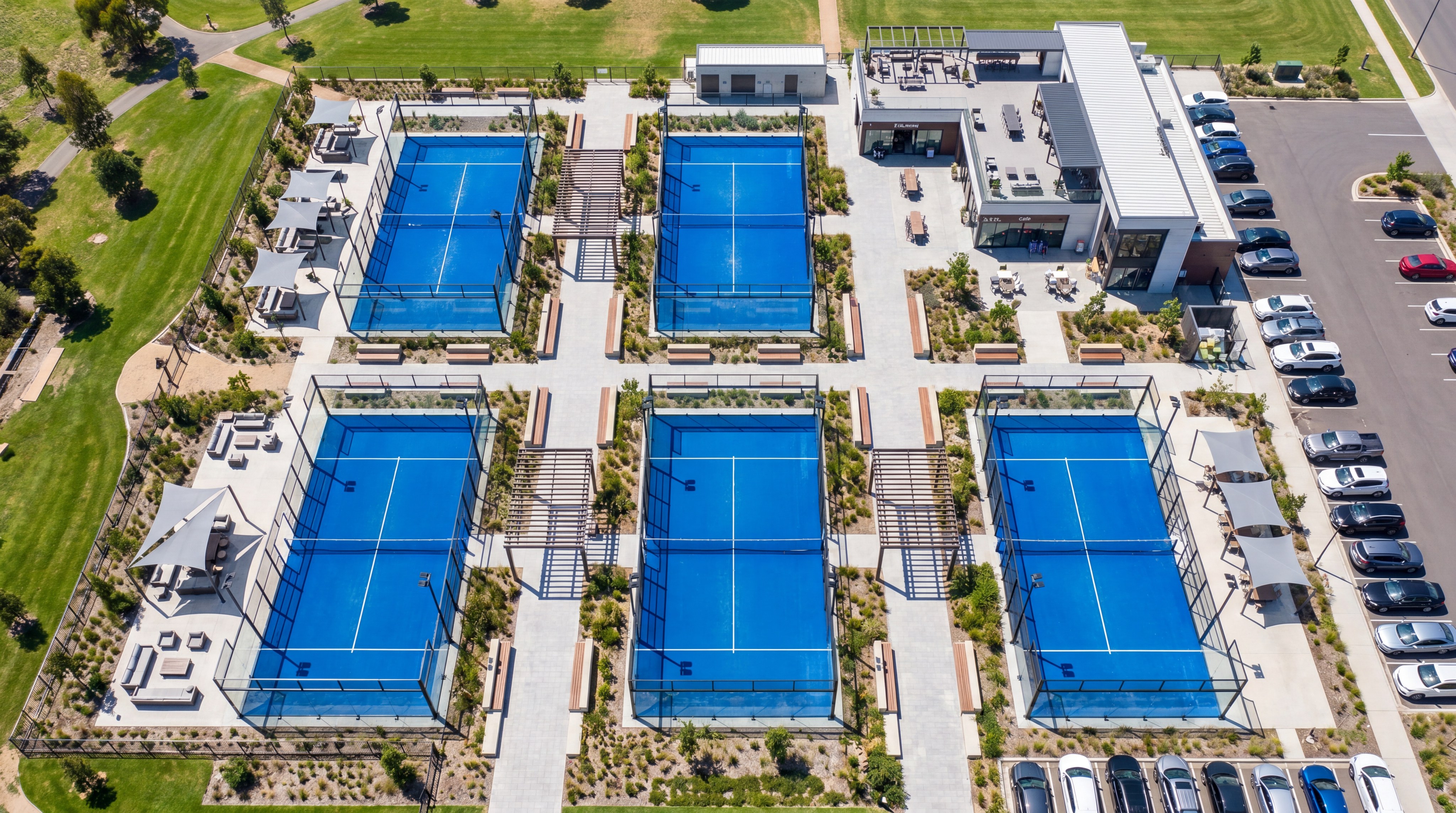
Optimizing padel court design for commercial clubs requires a layout that balances the number of courts with adequate spectator and safety zones. A standard court measures 20×10 meters, but you must account for the structural pillars and perimeter walkways. Efficient space planning increases the total number of players your facility can host per hour.
Minimum footprint requirements for safety zones
Safety zones are the areas outside the court doors where players can run to retrieve balls during high-level play. Commercial clubs must ensure these areas are free of obstacles to prevent collisions and injuries.
To be clear:
- A minimum of 2 meters is recommended between adjacent courts.
- Entryways must be wide enough for players to exit quickly.
- Perimeter fencing should not restrict spectator movement or flow.
The reality is:
- Cramming courts too close together lowers the “premium” feel.
- Shared safety zones can lead to player interference.
- Proper spacing allows for the installation of umpire chairs.
Layout strategies for multi-court facilities
Multi-court facilities should be organized to centralize social areas, such as cafes or pro-shops, for maximum secondary revenue. Linear or “back-to-back” court arrangements are typically the most space-efficient for large clubs.
Think about this:
- Central walkways improve the viewing experience for spectators.
- Corner courts are ideal for private coaching or training sessions.
- Drainage systems must be integrated into the foundation of all courts.
And it gets better: Key Takeaway: Intelligent spatial planning balances maximum court density with a premium, uncrowded atmosphere.
| Area Type | Minimum Allowance | Purpose | |
|---|---|---|---|
| Court Box | 204 sqm | Standard Play | |
| Safety Zone | 4 – 8 meters | Out-of-court Play | |
| Social Zone | Variable | Secondary Revenue |
A well-planned layout ensures that your club can scale operations without sacrificing player safety or comfort.
Why choose panoramic padel court design for commercial clubs?
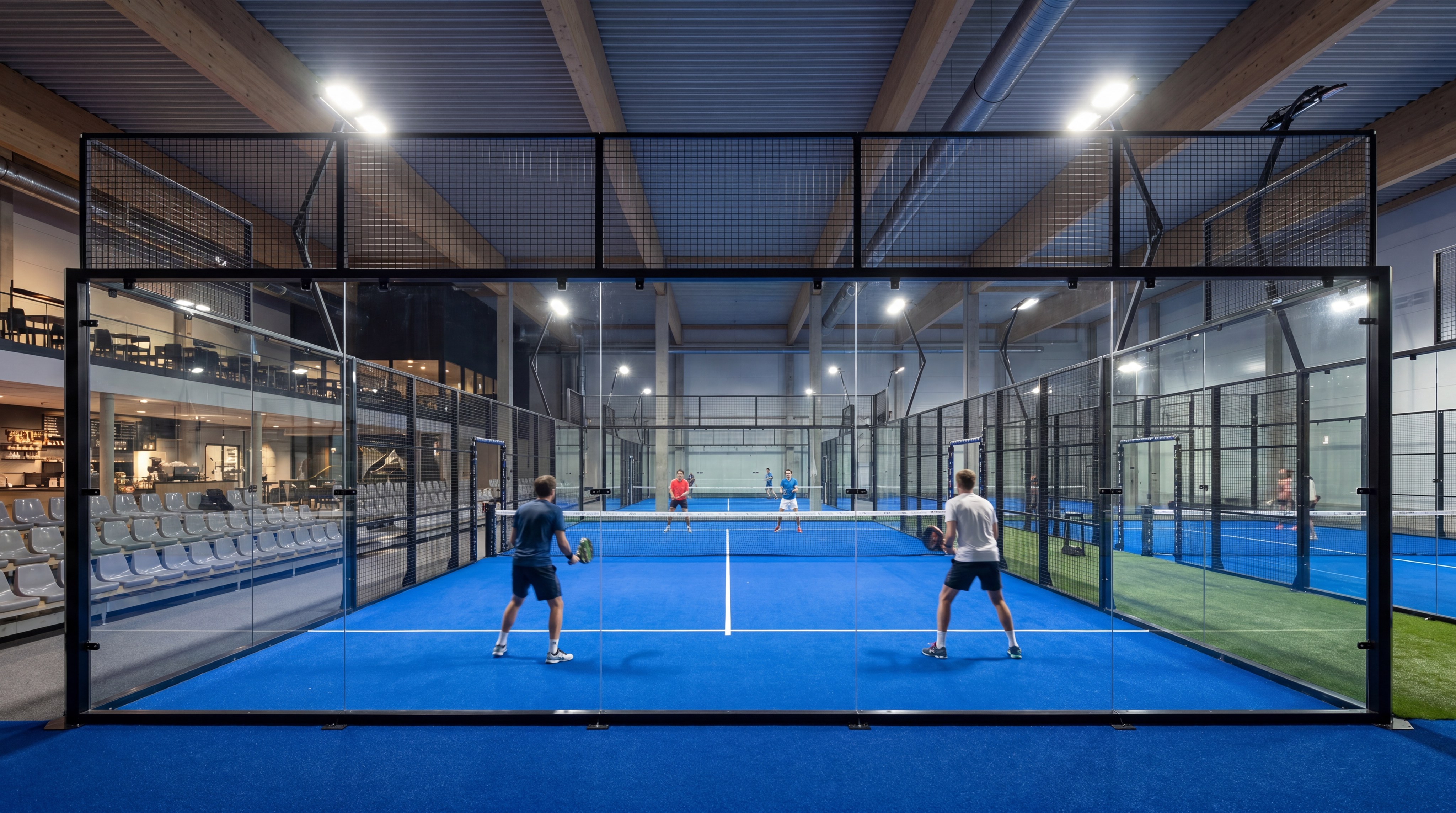
Choosing a panoramic padel court design for commercial clubs provides an unobstructed 360-degree view that is perfect for spectators and broadcasting. By removing the bulky corner pillars, these courts create a stunning visual aesthetic that defines modern premium clubs. Players feel less enclosed, and the facility gains a high-end, luxury reputation instantly.
Enhancing spectator visibility and broadcasting
Panoramic courts are the first choice for tournament finals because they offer the best sightlines for both live audiences and cameras. This visibility is crucial for clubs that want to host local leagues or corporate events.
The fact remains:
- Sponsors love the high visibility of their branding on court walls.
- Social media content looks significantly better from a panoramic view.
- Spectators can watch multiple matches simultaneously without pillars.
Believe it or not:
- Panoramic courts often command a higher booking fee per hour.
- They serve as the “center court” centerpiece for any facility.
- Clear views help coaches monitor multiple students from a distance.
Structural engineering without corner pillars
Engineering a court without corner pillars requires a reinforced steel frame at the top and bottom to maintain glass stability. This design uses specialized structural beams to handle the immense pressure of the 12mm glass panels.
The truth is:
- Only high-grade galvanized steel can support this specific design.
- The base anchoring system must be significantly more robust.
- Wind load calculations are vital for outdoor panoramic setups.
The bottom line? Key Takeaway: Panoramic courts are the ultimate status symbol for clubs targeting elite and corporate demographics.
| Feature | Panoramic Design | Pillar Design | |
|---|---|---|---|
| Corner View | 100% Clear | Obstructed | |
| Structural Load | Top/Bottom Reinforced | Corner Distributed | |
| Market Position | Ultra-Premium | Standard/Professional |
While the engineering is more complex, the marketing and revenue benefits of panoramic courts are undeniable for commercial success.
Can indoor padel court design for commercial clubs boost usage?
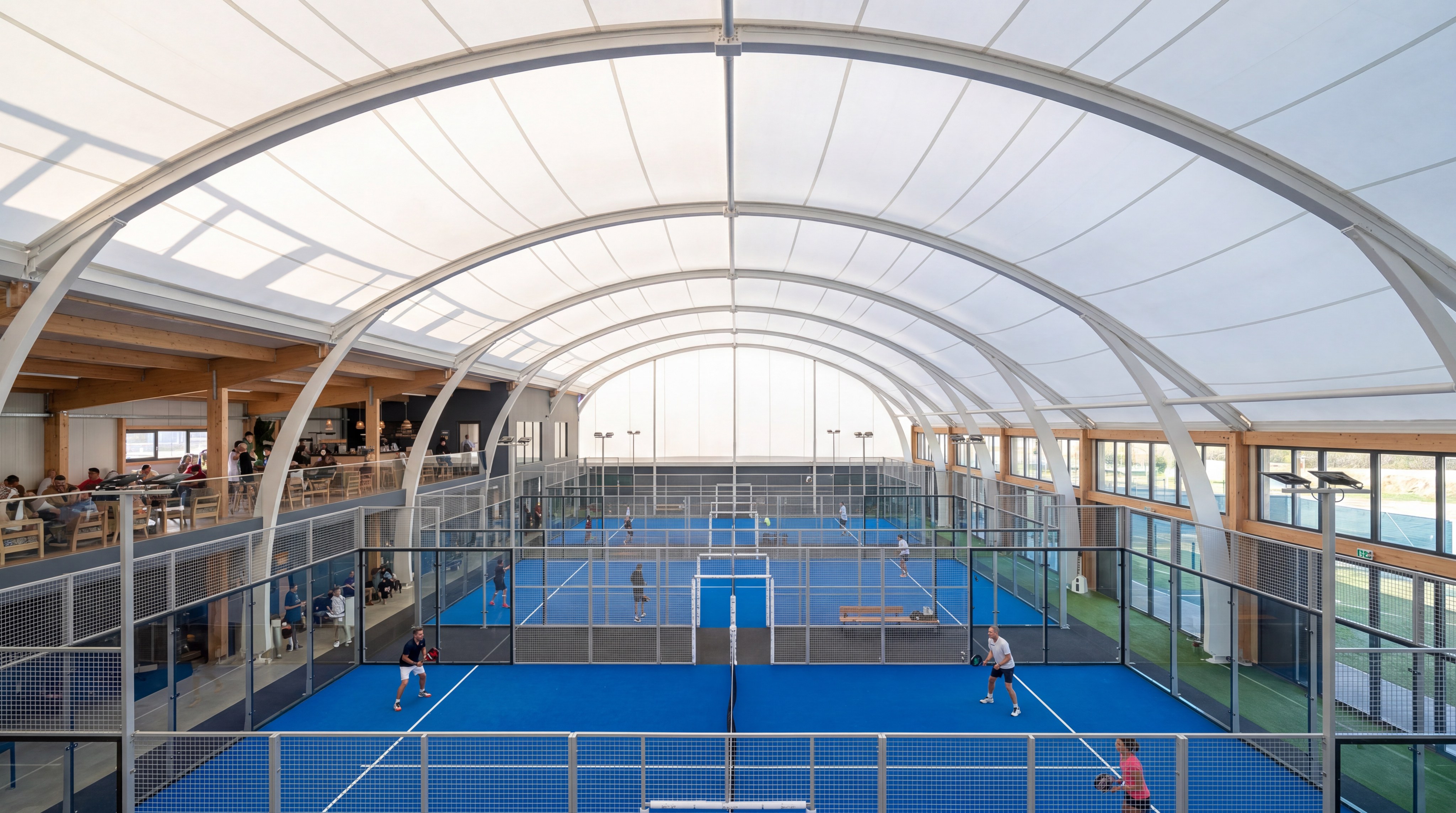
Indoor padel court design for commercial clubs guarantees 365 days of revenue by eliminating weather-related cancellations. In regions with extreme heat, rain, or wind, an indoor facility is the only way to ensure consistent booking income. Controlling the environment also protects the court materials from UV damage and moisture.
Climate control and all-weather playability
Indoor facilities allow you to maintain a perfect playing temperature, which keeps members comfortable and active during off-seasons. This consistency builds a habit of play that isn’t interrupted by a change in seasons.
Look at it this way:
- Air conditioning prevents player fatigue during peak summer months.
- Heating systems attract players during the cold winter nights.
- Humidity control prevents the glass from fogging during play.
And it gets better:
- Wind-free environments allow for more precise technical lobs.
- Total darkness is avoided during storm-related cloud cover.
- Players don’t have to worry about sun glare during midday matches.
Acoustic considerations for indoor environments
Indoor padel can be loud due to the sound of rackets and ball impacts echoing off the walls and ceiling. Premium indoor designs incorporate acoustic panels to reduce noise pollution and improve the social atmosphere.
Think about this:
- High ceilings (8m+) are required for a natural lobbing game.
- Acoustic baffles can be hung to absorb high-frequency sounds.
- Flooring around the courts should be sound-dampening rubber.
The reality is: Key Takeaway: Indoor design maximizes operational hours and protects your investment from the elements.
| Advantage | Indoor Facility | Outdoor Facility | |
|---|---|---|---|
| Operational Days | 365 | Weather Dependent | |
| Maintenance Need | Low (No UV/Rain) | High (Exposure) | |
| Player Comfort | Controlled | Variable |
An indoor setup is the safest financial bet for club owners in climates where outdoor play is restricted for part of the year.
What structure fits padel court design for commercial clubs?
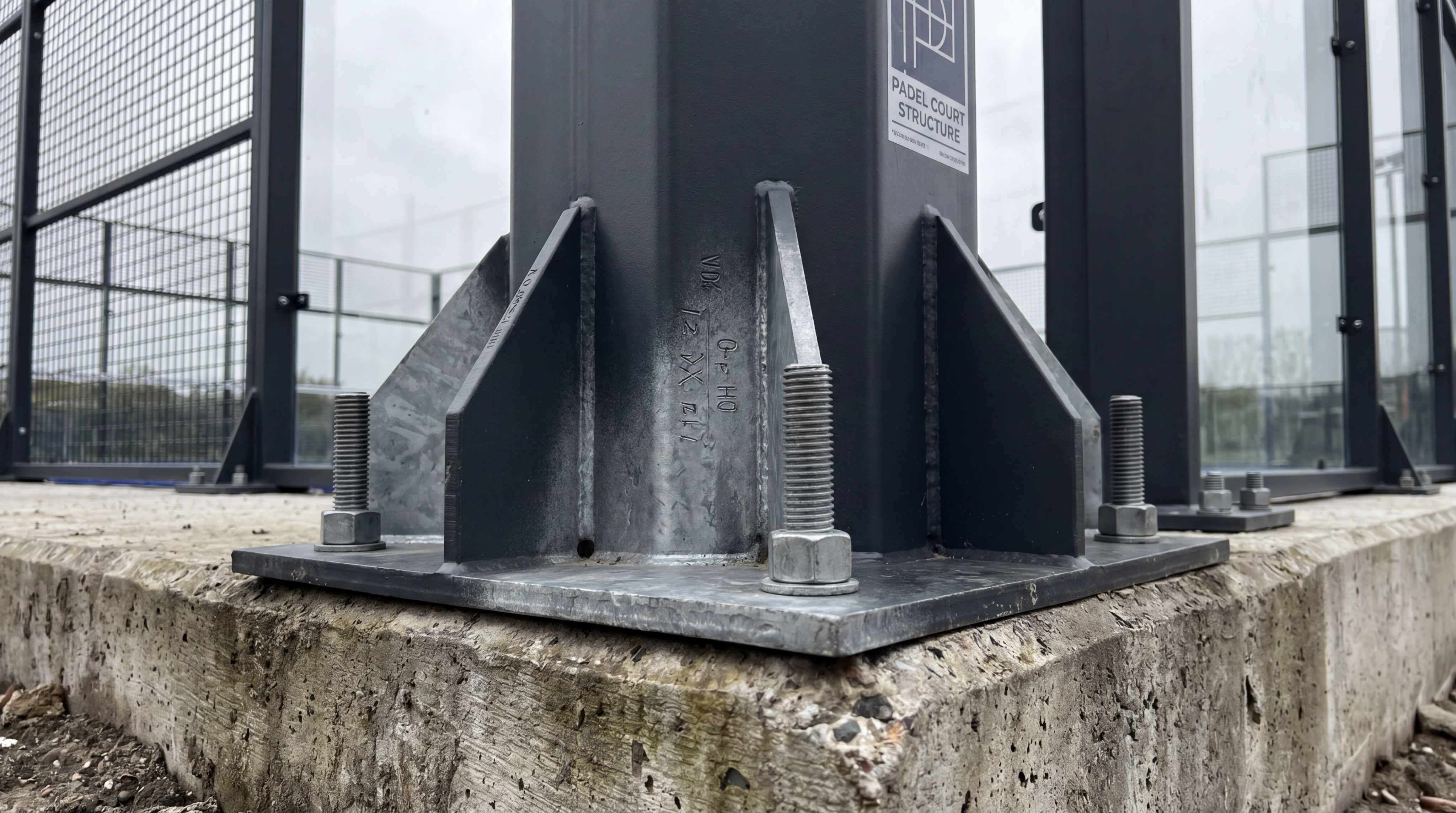
The core padel court design for commercial clubs must feature a hot-dip galvanized steel frame to prevent structural rust and decay. Hot-dip galvanization involves submerging the steel in molten zinc, providing a thicker protective layer than standard spray painting. This ensures that the court remains structurally sound and visually appealing for decades.
Hot-dip galvanized steel vs. painted frames
Painted frames often begin to chip and rust within the first year, especially in high-impact areas where rackets hit the mesh. Hot-dip galvanized steel offers self-healing properties that prevent rust from spreading even if the surface is scratched.
The bottom line?
- Zinc coating protects the steel inside and out from oxidation.
- It requires zero repainting maintenance for over 15 years.
- The finish remains smooth, preventing injury from rusted edges.
Keep this in mind:
- Coastal clubs must use galvanization to survive salty air.
- Indoor clubs need it to resist high-humidity corrosion.
- It provides the highest weight-bearing capacity for glass support.
Wind load resistance for outdoor installations
For outdoor courts, the structural design must be engineered to withstand local wind speeds and gusts. This involves using thicker steel profiles and reinforced anchoring bolts to keep the court stable during storms.
Make no mistake:
- Engineering certifications are required for building permits.
- Panoramic courts require even higher wind load ratings.
- Base plates must be secured into 20cm+ thick concrete.
Believe it or not: Key Takeaway: Hot-dip galvanized steel is the only structural choice that ensures a 20-year lifespan in commercial use.
| Spec | Hot-Dip Galvanized | Standard Painted | |
|---|---|---|---|
| Rust Resistance | Excellent | Poor | |
| Maintenance | Near-Zero | Annual Touch-ups | |
| Longevity | 20+ Years | 3-5 Years |
The structural integrity of your club starts with the quality of the steel; never compromise on the galvanization process.
How to maintain padel court design for commercial clubs?
Maintaining your padel court design for commercial clubs involves weekly sand leveling and monthly structural inspections to preserve the “new court” feel. Neglecting maintenance leads to uneven turf wear and loose glass panels, which can compromise player safety. A consistent schedule ensures that your high-end design remains a premium asset for years.
Monthly inspection checklists for club owners
Regular inspections allow you to catch small issues before they become expensive structural failures. Checking the tension of the net and the stability of the glass fasteners should be part of your routine.
The reality is:
- Loose bolts can lead to glass vibration and eventual breakage.
- Net tension must be checked to ensure it meets regulation heights.
- Mesh panels should be inspected for any sharp or bent wires.
And it gets better:
- A clean court attracts higher-paying corporate members.
- Regular cleaning of the glass improves the spectator experience.
- Checking lights monthly ensures 100% evening uptime.
Professional surfacing rejuvenation
Every 1-2 years, your turf may require a professional deep clean to remove compacted sand and debris. This process fluffs the monofilament fibers and restores the original ball bounce characteristics.
Consider this:
- Decompressing the sand prevents the turf from becoming hard.
- Professional machines can remove algae or moss in outdoor courts.
- Re-leveling the silica sand ensures a consistent sliding surface.
The final word? Key Takeaway: Consistent, proactive maintenance is the only way to protect the ROI of your professional court design.
| Task | Frequency | Value | |
|---|---|---|---|
| Sand Leveling | Weekly | Bounce Quality | |
| Glass Cleaning | Weekly | Visual Appeal | |
| Structural Check | Monthly | Safety/Longevity |
Proactive maintenance not only extends the life of your facility but also maintains the premium reputation that drives your club’s revenue.
Strategic Summary
Building a successful commercial padel facility requires a commitment to quality that players can feel the moment they step onto the turf. At Superb Padel, our stance is simple: we believe that durability and professional-grade engineering are the only ways to ensure long-term profitability for club owners. By choosing a panoramic design with 12mm glass and galvanized steel, you are not just buying a court; you are investing in a sustainable business model.
Contact us today to start designing your world-class padel facility.
FAQ
Can I customize the color of the turf and steel frame for my brand?Yes, professional manufacturers offer a wide range of RAL colors for the steel structure and multiple turf colors (blue, green, red) to match your club’s identity.
What’s the best way to handle drainage for an outdoor commercial court?The best foundation is a porous concrete or asphalt base with a 1% slope, allowing water to drain quickly so courts are playable minutes after rain.
How do I know if my glass meets international safety standards?You should always request CE or similar certifications from your supplier to ensure the glass is 12mm thick and has undergone the heat-soak test.
Can I install a panoramic court indoors if I have low ceilings?While you can install the structure, a minimum ceiling height of 8 meters is highly recommended for professional play to accommodate the high lobs common in padel.
What’s the best way to maximize revenue during off-peak hours?Many commercial clubs use their high-end design to attract youth clinics, senior leagues, and corporate team-building events during the morning and early afternoon.