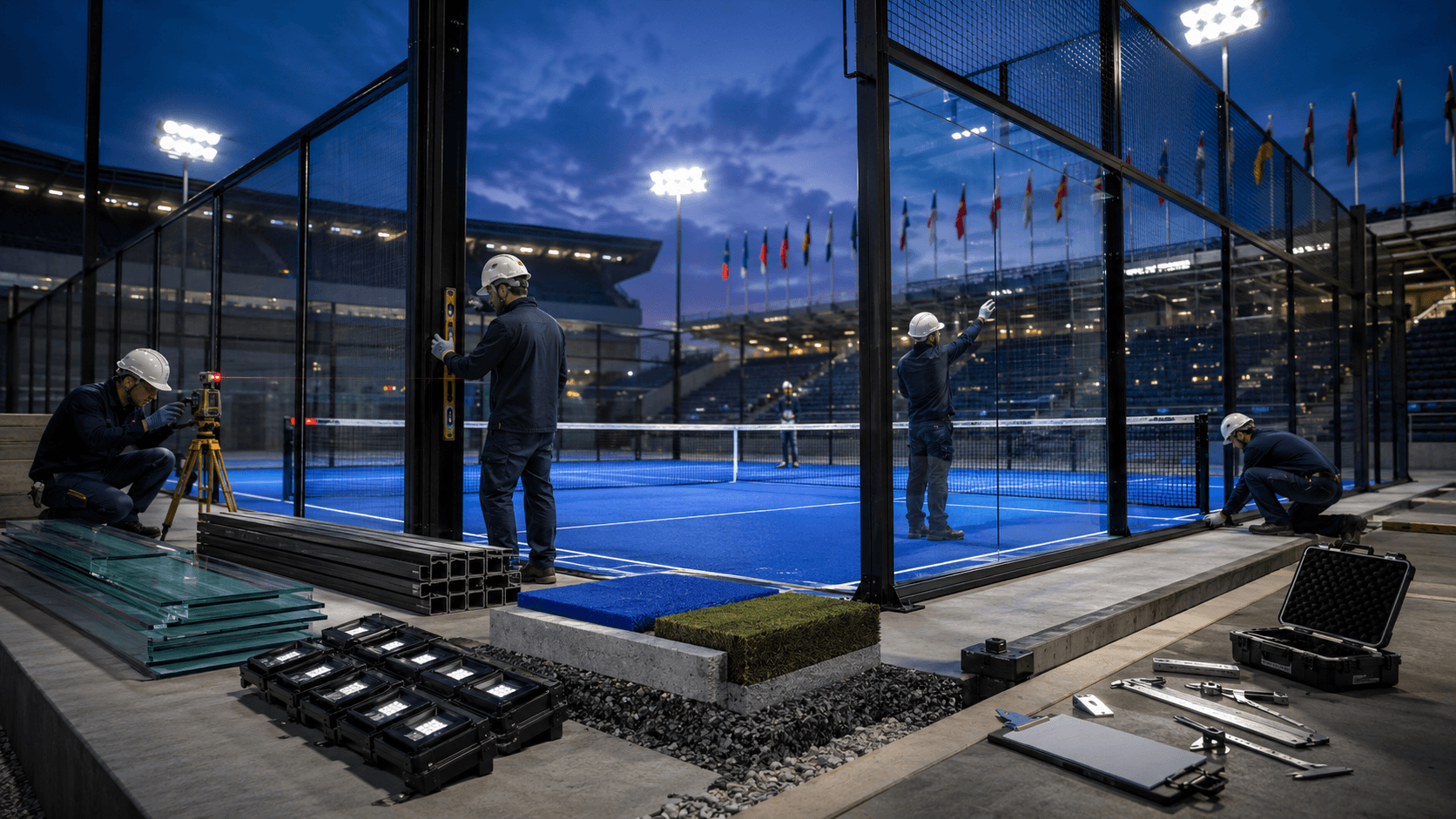
Investing in a high-end sports facility is a high-stakes venture that requires precision and specialized knowledge. Many developers fail because they overlook the rigorous international standards required for professional play, leading to inconsistent ball bounce and safety hazards. A poorly constructed court results in rapidly deteriorating surfaces that turn away club members and invite expensive repairs. This guide provides a comprehensive blueprint for building a professional cancha de padel by focusing on International Padel Federation (FIP) standards and modular engineering.
What are the dimensions for a professional cancha de padel?
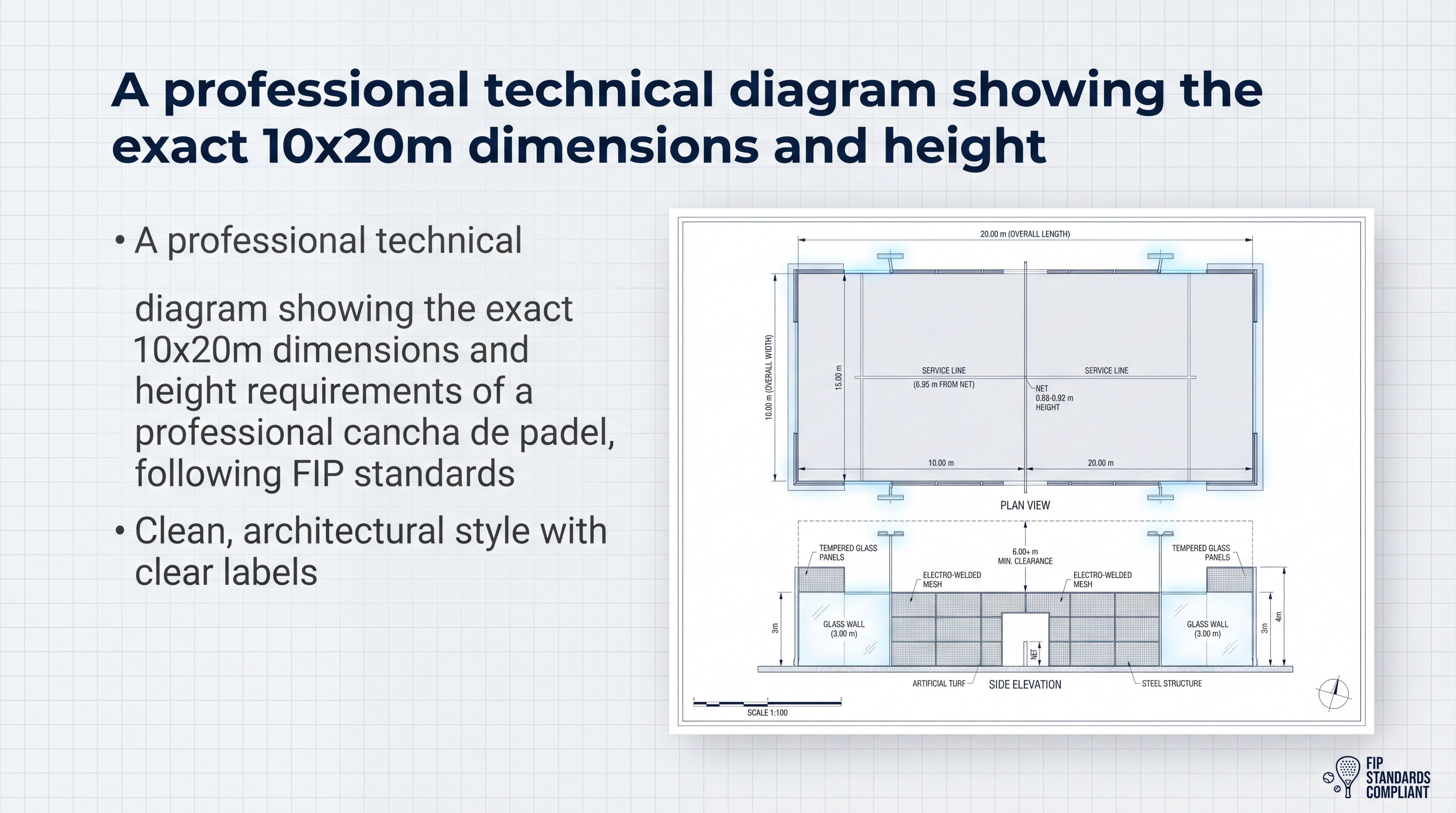
The standard dimensions for a professional cancha de padel consist of an internal playing area exactly 10 meters wide and 20 meters long. You must ensure the net divides this space into two equal 10×10 meter squares. It is vital to leave a clearance zone around the perimeter to accommodate structural pillars and player safety.
Is a 10×20 meter area required for play?
Yes, maintaining a 200-square-meter internal footprint is non-negotiable for FIP-certified competitive matches. You need this exact ratio to facilitate the unique tactical movement and wall-play that defines the sport. Proper clearance space outside the lines prevents injuries during high-speed transitions.
- Length: 20 meters
- Width: 10 meters
- Net position: Center-point at 10 meters
- Safety clearance: 0.5 to 1 meter
Here is the kicker: even a few centimeters of deviation can disqualify your facility from hosting official tournaments.
How do vertical clearances affect the game?
Vertical clearance is just as critical as floor dimensions because the ball frequently reaches high altitudes during lobs. You must maintain a minimum height of 6 meters over the entire playing surface, though 8 meters is preferred for professional venues. This prevents structural interference from ceiling beams or lighting fixtures during intense points.
- Minimum clearance: 6 meters
- Recommended height: 8 meters
- Obstacle-free zone: Entire court area
- Lighting mount height: Usually 6 meters
The truth is: players will quickly lose interest if their tactical lobs constantly hit low-hanging obstacles.
Are there specific height requirements for walls?
The walls must follow a specific height gradient to ensure the ball interacts correctly with the glass and mesh panels. You need back walls that stand 4 meters tall, usually composed of 3 meters of glass topped by 1 meter of metallic mesh. The side walls typically transition from 4 meters at the corners to 3 meters along the mid-section.
- Back wall height: 4 meters
- Glass component: 3 meters
- Mesh component: 1 meter
- Side wall height: 3 to 4 meters
But wait, there’s more: precision in these heights ensures that “off-the-wall” gameplay remains predictable and fair.
Key Takeaway: Adhering to the 10x20m internal dimension and the 4-meter wall height is the foundation of any professional court project.
| Dimension Feature | Professional Specification |
|---|---|
| Internal Length | 20 Meters |
| Internal Width | 10 Meters |
| Back Wall Height | 4 Meters (Total) |
| Vertical Clearance | 6-8 Meters |
This table summarizes the core spatial requirements necessary to meet international tournament benchmarks.
Which glass thickness secures a safe cancha de padel?
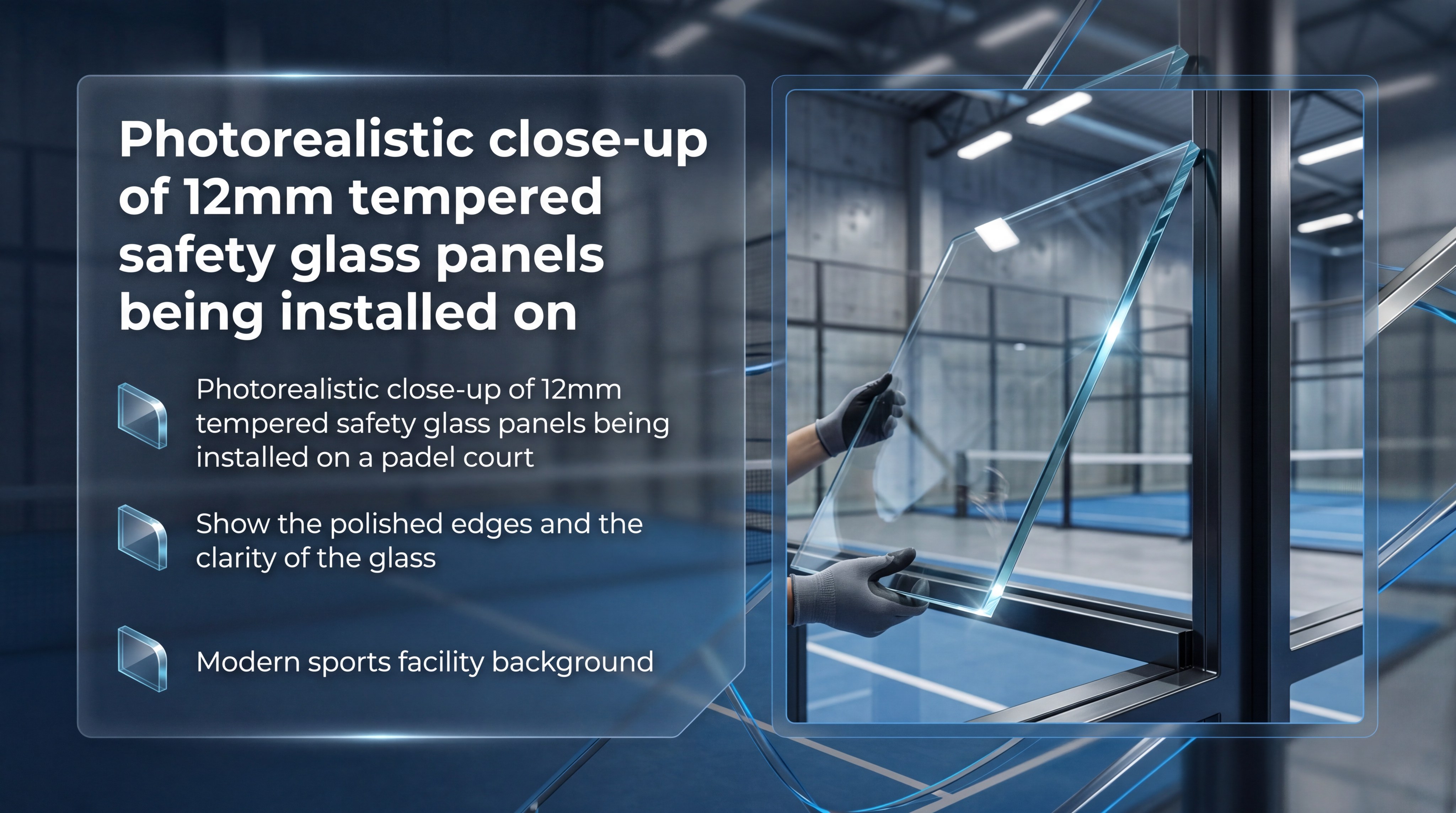
Choosing 12mm tempered safety glass is the most effective way to secure a professional cancha de padel for long-term commercial use. This thickness provides the structural rigidity needed to withstand high-velocity player impacts and consistent ball rebounds. You will find that thinner glass often lacks the durability required for high-traffic sports clubs.
Why is 12mm tempered glass the industry standard?
Thicker 12mm glass minimizes vibration and provides a much more consistent bounce for the players. You benefit from increased impact resistance, which is essential when athletes accidentally collide with the walls during play. This investment reduces the risk of expensive breakages and potential liability issues at your facility.
- Thickness: 12mm
- Type: Tempered Safety Glass
- Benefit: Superior impact resistance
- Benefit: Lower vibration levels
Best of all: the enhanced weight of 12mm panels adds significant stability to the entire court structure.
Does the glass require EN 12150 certification?
Every glass panel you install must comply with the EN 12150 European safety standard. This certification ensures that if the glass does break, it shatters into tiny, blunt fragments instead of dangerous, sharp shards. You must verify this rating to protect your business from legal risks and ensure player safety.
- Certification: EN 12150-1
- Safety feature: Anti-explosion tempering
- Edges: Flat polished and beveled
- Mounting: Countersunk holes for hardware
Believe it or not: many budget courts use non-certified glass that puts every player at physical risk.
Key Takeaway: Always specify 12mm tempered glass with EN 12150 certification to ensure maximum safety and professional playability.
| Glass Property | Standard Requirement |
|---|---|
| Thickness | 12mm (Professional) |
| Material Type | Tempered Safety Glass |
| Certification | EN 12150 / CE |
| Edge Treatment | Beveled and Polished |
High-quality glass specifications are the primary defense against structural failure and player injury.
Why is the frame of a professional cancha de padel critical?
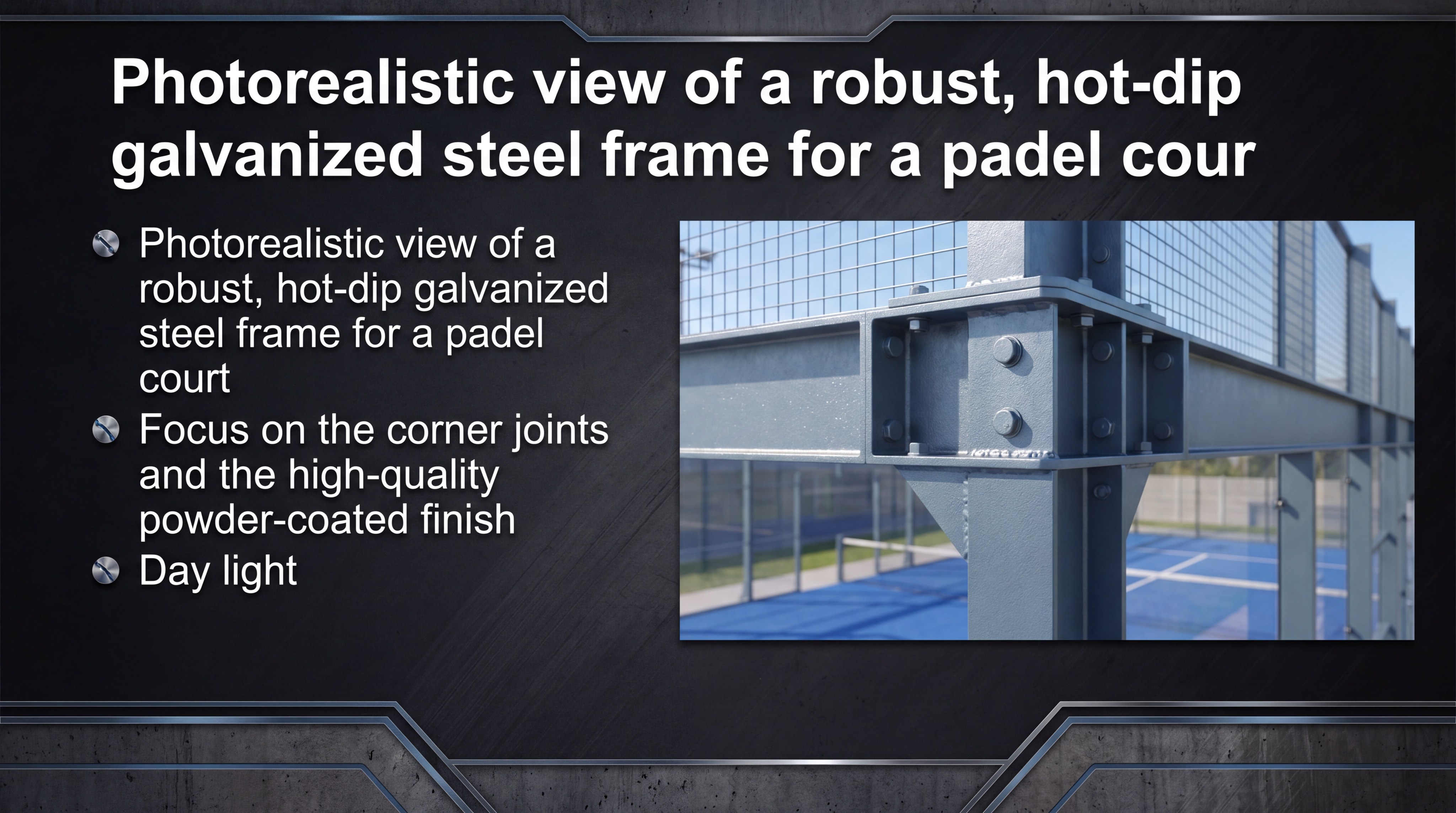
The frame of a professional cancha de padel is critical because it supports the heavy glass panels and maintains the tension of the metallic mesh. You need a structure that can withstand wind loads and mechanical stress without warping or rusting over time. A weak frame will lead to glass misalignment and a shortened facility lifespan.
What makes hot-dip galvanized steel superior?
Hot-dip galvanization provides a deep zinc coating that protects the steel from corrosion in both indoor and outdoor environments. You should demand this treatment because it prevents rust from forming inside the pillars where it isn’t visible. This process ensures your court remains structurally sound for over 20 years.
- Material: Q235B Carbon Steel
- Treatment: Hot-dip galvanization
- Coating: UV-resistant powder paint
- Pillar size: 80x80mm or 100x100mm
Now, think about this: a simple spray-on primer will fail within two years in coastal or humid climates.
How does a modular structure simplify assembly?
Modular engineering allows you to assemble the court like a precision kit with pre-drilled holes and standardized components. You will find that this system reduces labor costs and ensures that every bolt aligns perfectly on-site. This accuracy is vital for maintaining the structural integrity required for professional certification.
- Design: Bolt-on modular system
- Assembly: No welding required on-site
- Precision: Laser-cut connection plates
- Versatility: Easier to ship and relocate
You see: modularity doesn’t just save time; it eliminates the human error often found in manual construction.
Key Takeaway: A hot-dip galvanized, modular steel frame is the only way to guarantee a 20-year lifespan for a professional-grade court.
| Structural Component | Professional Grade |
|---|---|
| Frame Material | Hot-Dip Galvanized Steel |
| Pillar Dimensions | 100 x 100 x 3 mm |
| Finish | RAL Powder Coating |
| Assembly Type | Modular / Bolt-together |
Investing in superior metallurgy prevents the catastrophic structural failure of glass-heavy sports installations.
What turf is best for your professional cancha de padel?
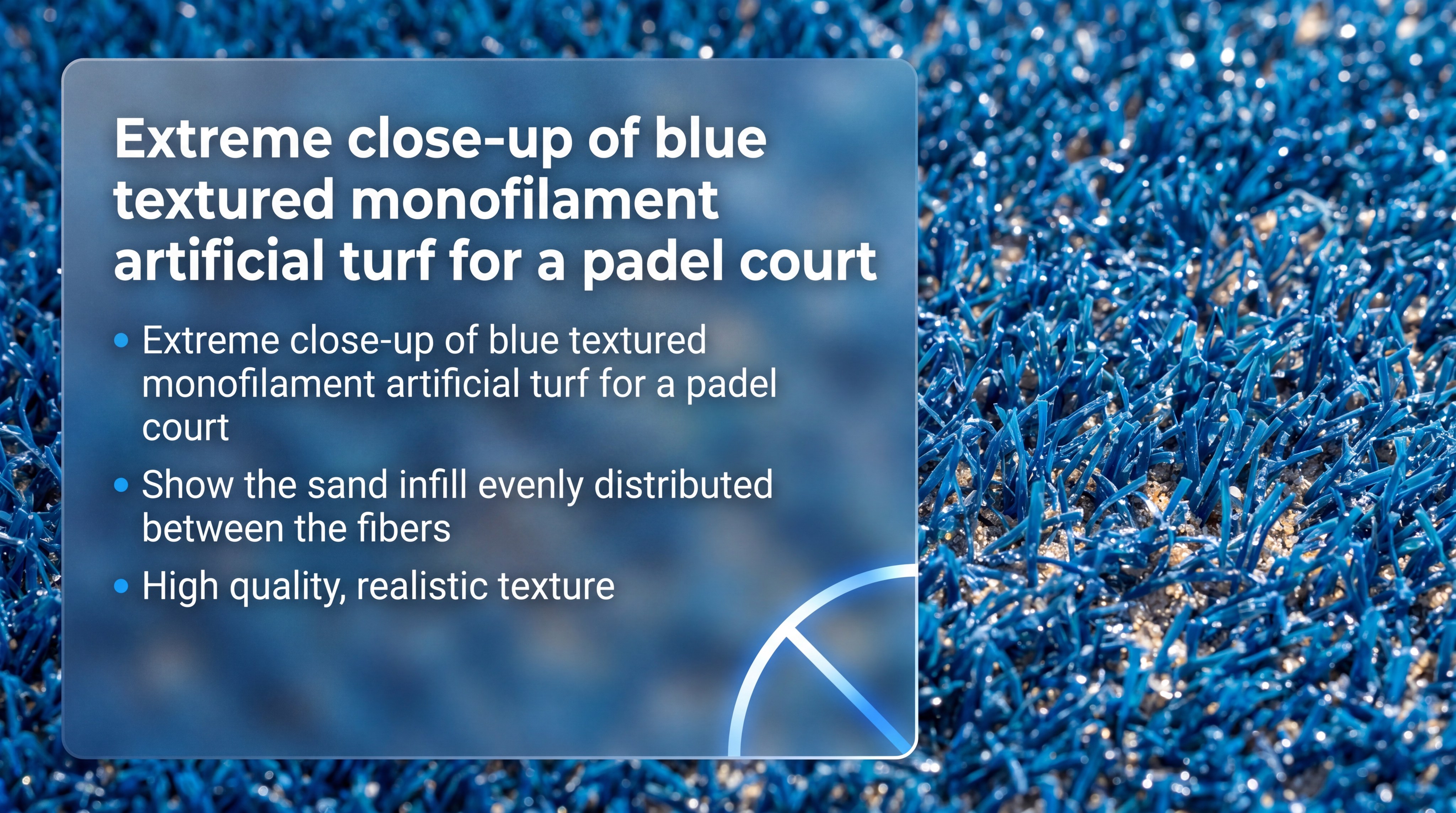
The best surface for a professional cancha de padel is textured monofilament artificial turf designed for high-frequency use. You must choose a surface that balances ball speed, player grip, and joint safety to provide a premium experience. The right turf ensures a predictable bounce and allows for controlled sliding during competitive play.
Should you choose monofilament or fibrillated grass?
Textured monofilament (STX) grass is currently the preferred choice for professional clubs worldwide. You will find that it offers better resilience, meaning the fibers stand upright longer than traditional fibrillated options. This results in a more consistent ball bounce and significantly lower maintenance requirements over the turf’s life.
- Fiber type: Textured Monofilament
- Durability: High wear resistance
- Playability: Consistent bounce
- Aesthetics: Deep, vibrant colors
It gets better: monofilament turf feels more natural underfoot, reducing the risk of knee and ankle strain.
How does silica sand infill impact performance?
Silica sand infill is necessary to weigh down the turf and provide the correct amount of friction for movement. You must distribute the sand evenly—typically 12kg to 15kg per square meter—to avoid dead spots on the court. Properly filled turf allows players to slide safely without catching their shoes on the carpet.
- Material: Kiln-dried silica sand
- Grain size: 0.5mm to 1.0mm
- Distribution: Specialized brushing machines
- Function: Fiber support and friction control
Simply put: without the correct sand infill, your expensive turf will wear out in half the expected time.
Key Takeaway: Opt for high-density textured monofilament turf to provide a professional-grade surface that minimizes maintenance and injury risks.
| Turf Specification | Professional Standard |
|---|---|
| Fiber Material | 100% Polyethylene (PE) |
| Pile Height | 10mm to 12mm |
| Stitch Rate | 240 to 260 per meter |
| Infill Type | Rounded Silica Sand |
The playing surface is the most touched component of the court, making its quality vital for member retention.
How do you light a professional cancha de padel correctly?
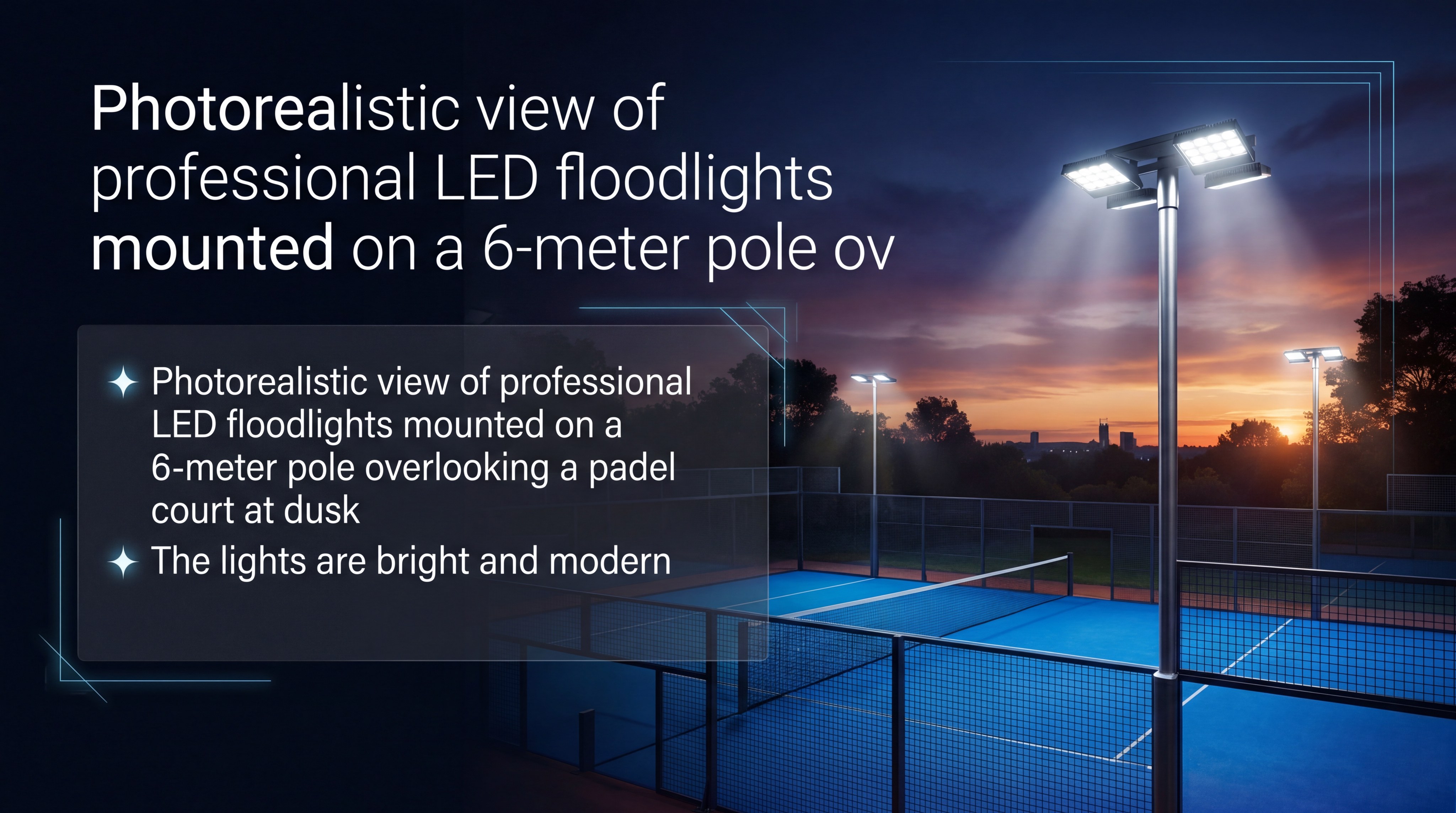
You light a professional cancha de padel correctly by installing eight high-efficiency LED floodlights mounted on four poles at a height of 6 meters. This configuration ensures that the entire 200-square-meter area receives uniform illumination without creating dark zones. Proper lighting is essential for high-speed play where ball visibility determines the quality of the match.
Why are IP66-rated LED floodlights mandatory?
IP66-rated lights are completely dust-tight and protected against powerful water jets, making them ideal for outdoor and indoor facilities. You need this level of protection to ensure your lighting system survives heavy rain and pressure washing without electrical failure. High-quality LEDs also offer instant-on capabilities and significant energy savings compared to old metal halide lamps.
- Rating: IP66 Waterproof
- Power: 200W to 300W per lamp
- Lifespan: 50,000+ hours
- Efficiency: Low energy consumption
That’s just the beginning; these lights also produce minimal heat, preventing damage to the mounting fixtures.
What lux levels are needed for professional matches?
For professional club play and local tournaments, you should aim for an average illuminance of 500 lux. If you plan to host televised professional matches, this requirement often increases to 750 or even 1000 lux for camera clarity. You must ensure the light is distributed evenly across the floor and walls to prevent glare.
- Club Standard: 300 – 500 Lux
- Pro/TV Standard: 750 – 1000 Lux
- Mounting Height: 6 meters
- Uniformity: >0.7 ratio
Believe it or not: poor lighting is the number one reason why high-level players switch to competing clubs.
Key Takeaway: Install 200W IP66 LED lamps in a symmetrical 8-light layout to achieve the 500-lux uniformity required for pro play.
| Lighting Feature | Requirement |
|---|---|
| Lamp Type | High-Output LED |
| Waterproof Rating | IP66 |
| Target Illuminance | 500 Lux (Average) |
| Total Lamp Count | 8 Units per Court |
Advanced LED systems reduce operational costs while providing the visibility needed for fast-paced night matches.
Is a panoramic cancha de padel better for spectators?
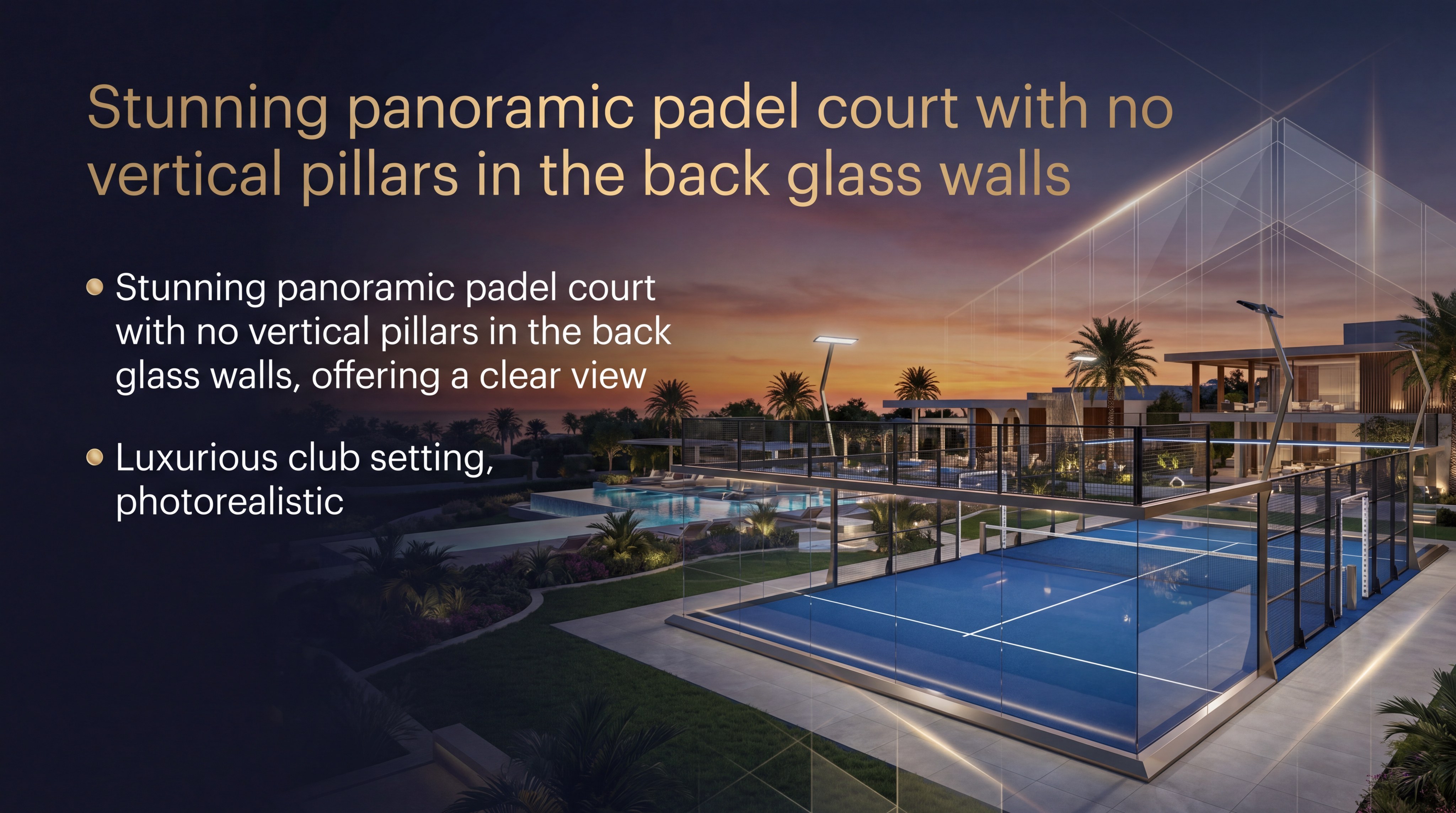
A panoramic cancha de padel is significantly better for spectators because it removes the vertical steel pillars from the back glass walls. This creates an unobstructed, 360-degree view of the action, which is essential for center courts and televised events. You will find that these models attract more fans and provide a much more luxurious aesthetic.
What defines the panoramic court structural style?
The panoramic style uses reinforced horizontal beams and thicker glass to maintain structural integrity without the need for rear vertical posts. You benefit from a “cleaner” look that makes the court feel more open and professional. This design is the gold standard for high-end clubs looking to create a “show court” for their finals.
- Feature: No rear vertical pillars
- Benefit: Maximum spectator visibility
- Support: Heavily reinforced base plates
- Application: Tournament center courts
Here is the kicker: panoramic courts can command higher booking fees due to their premium visual appeal.
Should you consider a roofed model for all-weather play?
If your facility is in a region with high rainfall or intense sun, a roofed court ensures your revenue never stops. You must ensure the roof height remains at least 6 meters (ideally 8) to maintain the integrity of the game’s lobs. An integrated roof system protects your investment from UV damage and keeps players comfortable year-round.
- Advantage: 365-day playability
- Height: Minimum 6m clearance
- Ventilation: Open sides for airflow
- Protection: Shields turf from UV
The truth is: one rainy week can cost a club thousands in lost bookings if the courts aren’t covered.
Key Takeaway: Invest in a panoramic design for your main courts to maximize spectator engagement and justify premium rental rates.
| Court Model | Primary Advantage |
|---|---|
| Standard | Highly durable and cost-effective |
| Panoramic | Unmatched spectator visibility |
| Roofed | Guaranteed year-round revenue |
| Super Panoramic | Maximum luxury and pro-feel |
Strategic court selection allows facility owners to cater to both casual players and competitive tournament crowds.
What foundation is needed for a cancha de padel?
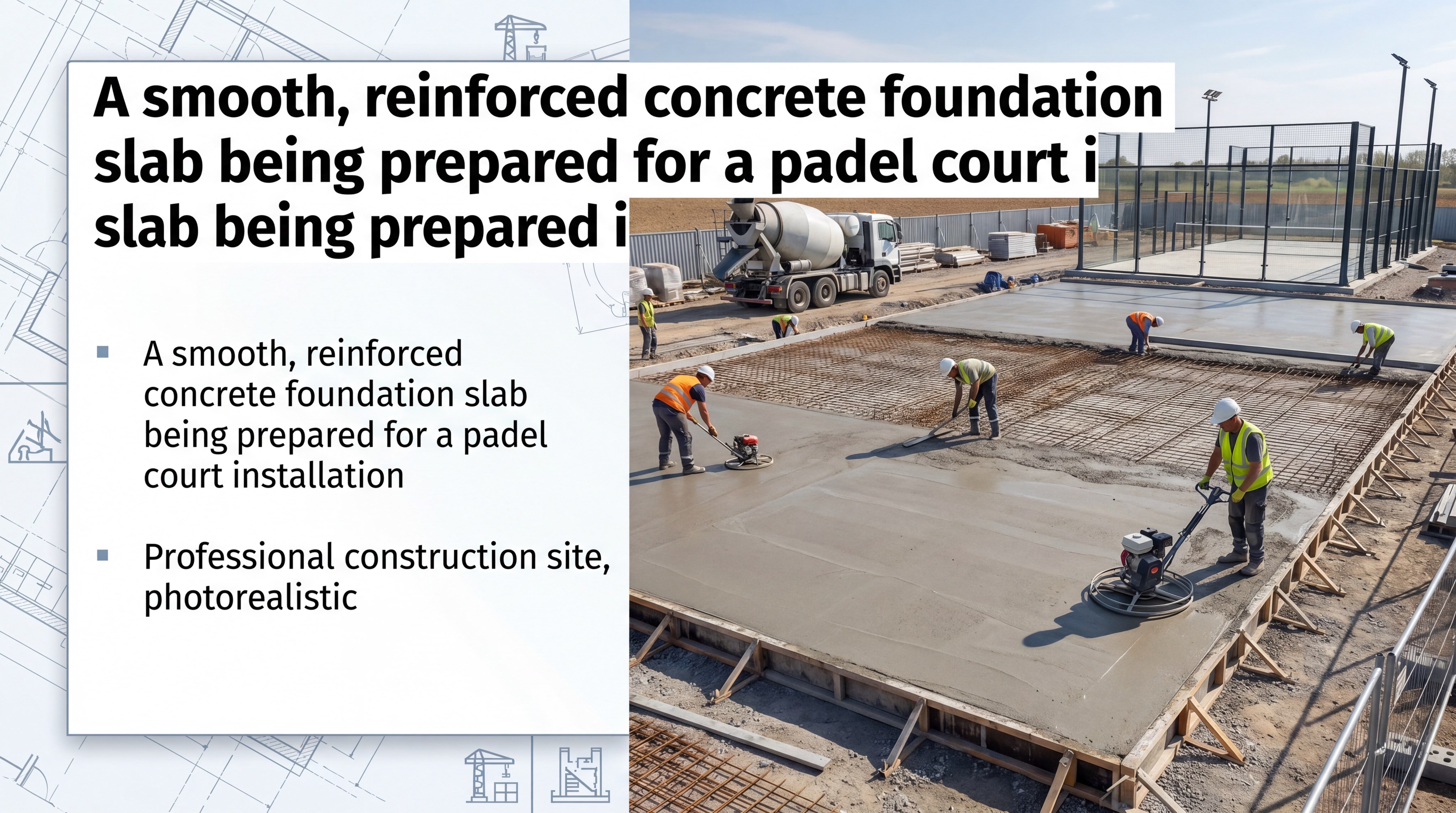
The foundation for a professional cancha de padel must be a perfectly level, reinforced concrete slab or porous asphalt base. You cannot install a high-quality court on soft ground or uneven surfaces without risking glass breakage and structural shifting. A solid foundation is the most critical factor in ensuring the court’s 20-year lifespan.
Is a reinforced concrete slab the best base?
A 15cm thick reinforced concrete slab is the industry standard for ensuring long-term stability and a consistent ball bounce. You must use high-grade concrete with steel mesh reinforcement to prevent cracking under the weight of the 12mm glass panels. This base provides the necessary anchor points for the steel pillars to be bolted down securely.
- Thickness: 15cm (minimum)
- Material: Reinforced Concrete
- Finish: Power-troweled smooth
- Anchoring: Chemical or mechanical bolts
You see: the best steel structure in the world will fail if the concrete beneath it begins to sink or crack.
How important is a 1% slope for drainage?
For outdoor courts, a subtle 1% slope is mandatory to prevent water from pooling on the surface after rain. You must ensure the slope is uniform so it doesn’t negatively impact the ball’s bounce or the player’s balance. Proper drainage keeps the turf dry and prevents the growth of mold or algae within the silica sand.
- Slope: 1% (usually side-to-side)
- Function: Rapid water runoff
- Benefit: Prevents turf “floating”
- Benefit: Protects steel from standing water
Best of all: a well-drained court is ready for play just minutes after a heavy rain shower ends.
Key Takeaway: Never cut corners on the foundation; a perfectly level 15cm reinforced slab is essential for safety and performance.
| Foundation Element | Professional Spec |
|---|---|
| Base Material | Reinforced Concrete |
| Slab Thickness | 150 mm |
| Surface Slope | 1% (Outdoor only) |
| Flatness Tolerance | +/- 3mm over 3 meters |
A stable foundation ensures that the glass panels remain perfectly aligned, preventing spontaneous structural shattering.
Which standards govern the net on a cancha de padel?
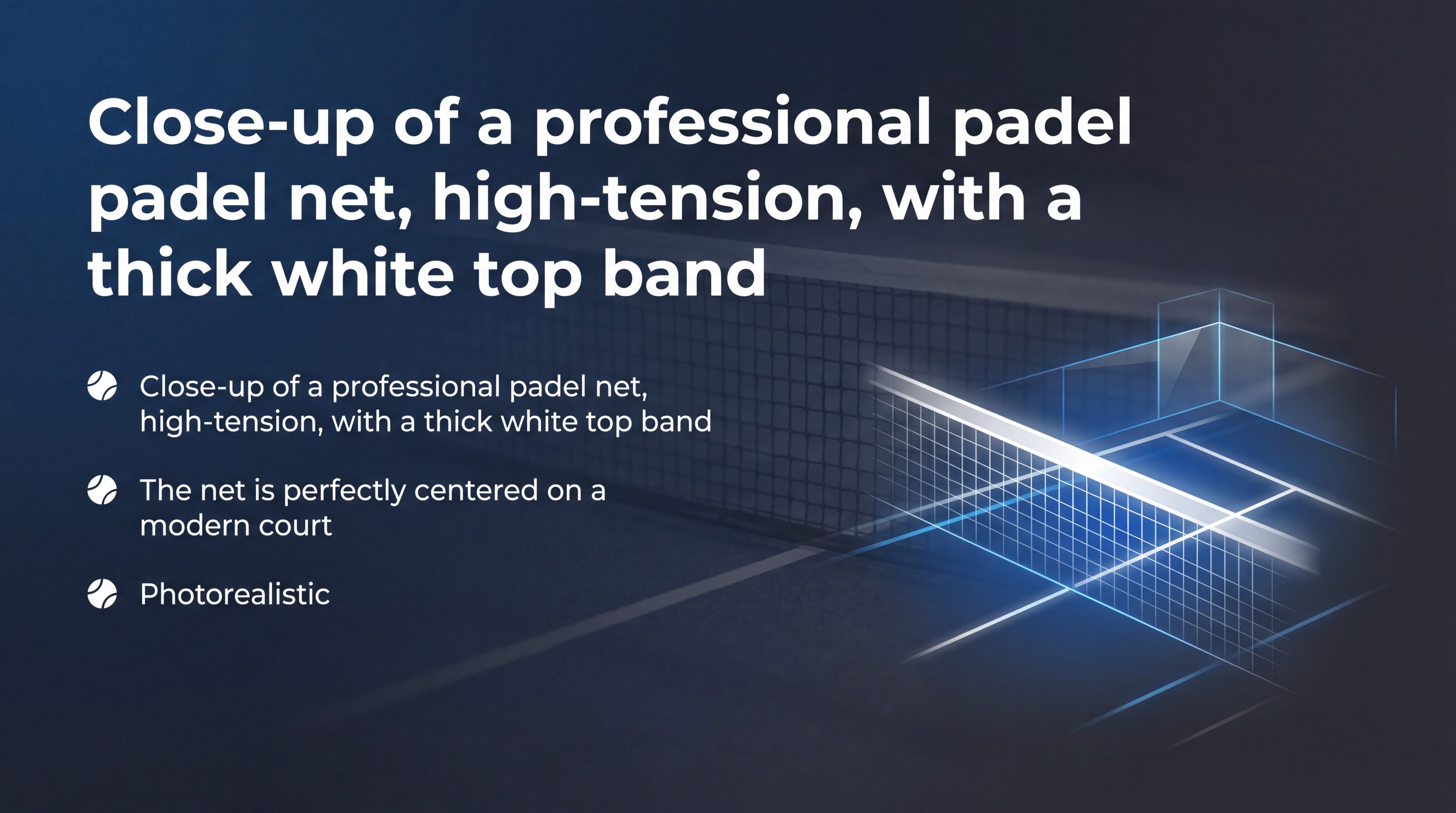
Specific FIP regulations govern the net on a professional cancha de padel to ensure fair play and player safety. You must install a net that is exactly 10 meters long and maintained at a specific height at the center and the posts. Using a professional-grade net with a high-tension cable is necessary to prevent sagging during matches.
What is the official FIP net height specification?
The net must have a height of 0.88 meters at the center and a maximum of 0.92 meters at the supporting posts. You must check these measurements regularly as the tension cable can stretch over time with heavy use. Ensuring the correct height is vital for the technical integrity of volleys and net-play at a professional level.
- Center height: 0.88 meters
- Post height: 0.92 meters
- Length: 10 meters
- Material: Polypropylene (no knots)
Now, think about this: a net that is just 2cm too high completely changes the tactical difficulty of the game.
Why must the mesh be flush with the glass?
The side metallic mesh panels must be installed flush with the glass to prevent irregular ball bounces when the ball hits the transition zone. You must ensure there are no sharp edges or gaps between the glass and the frame where a ball or finger could get caught. This flush design maintains the predictability required for high-level tactical exchanges.
- Mesh type: Electro-welded anti-injury
- Flushness: Level with glass surface
- Safety: No sharp protruding wires
- Function: Predictable rebounds
The truth is: a poorly aligned mesh panel can cause a “lucky” bounce that ruins the fairness of a match.
Key Takeaway: Use a high-tension professional net and ensure all mesh panels are flush with the glass for FIP-compliant play.
| Net/Mesh Component | FIP Regulation |
|---|---|
| Center Net Height | 88 cm |
| Post Net Height | 92 cm (Max) |
| Mesh Type | Electro-welded / Flush |
| Safety Finish | Anti-injury / No Sharp Edges |
Precision in net and mesh installation separates a professional tournament court from a recreational backyard project.
How can you save on your professional cancha de padel cost?
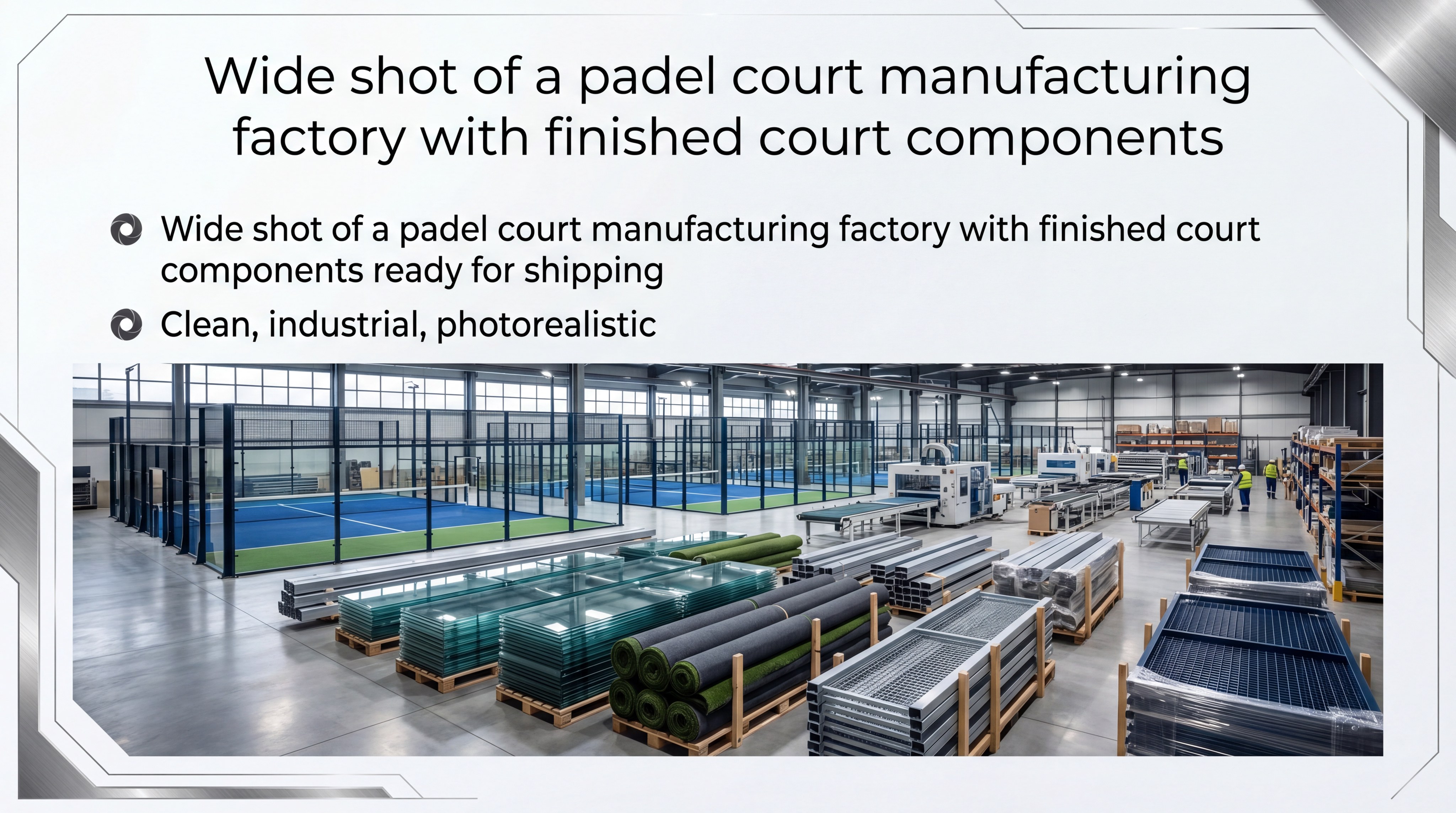
You can save on your professional cancha de padel cost by purchasing directly from a manufacturer and focusing on the total cost of ownership. Buying factory-direct eliminates the heavy markups added by local distributors and equipment resellers. While the initial price is important, investing in high-quality materials upfront prevents expensive maintenance and repairs later.
Does buying factory-direct eliminate middleman markups?
Purchasing from the factory can save you up to 30% on the total equipment cost for your facility. You gain direct access to technical support and can customize your order to meet your specific site requirements without paying extra fees. This approach allows you to reallocate your budget toward better lighting or premium turf options.
- Savings: Up to 30% off retail
- Benefit: Direct technical support
- Benefit: OEM customization options
- Benefit: Better quality control
Believe it or not: most “local” suppliers are simply reselling the same factory-made courts at a 20-50% markup.
What maintenance factors affect long-term ROI?
Low-quality courts often hide costs in frequent turf replacements and structural rust repairs. You will find that high-quality galvanized steel and 12mm glass require almost zero maintenance beyond basic cleaning and sand brushing. Choosing a durable product ensures your court stays in top condition for 20 years, maximizing your return on investment.
- Weekly: Turf brushing
- Monthly: Bolt tension check
- Yearly: Deep sand cleaning
- Benefit: Consistent member retention
It gets better: a well-maintained, high-quality court retains its resale value much better than a budget model.
Key Takeaway: Focus on factory-direct procurement and high-quality materials to minimize both initial costs and long-term maintenance expenses.
| Cost Component | Saving Strategy |
|---|---|
| Structure & Glass | Buy Factory-Direct (Save 30%) |
| Logistics | Consolidate shipping containers |
| Installation | Use modular bolt-on designs |
| Maintenance | Invest in 12mm glass and HD turf |
Direct sourcing combined with high-durability materials ensures the most profitable business model for sports clubs.
Can you customize the design of a cancha de padel?
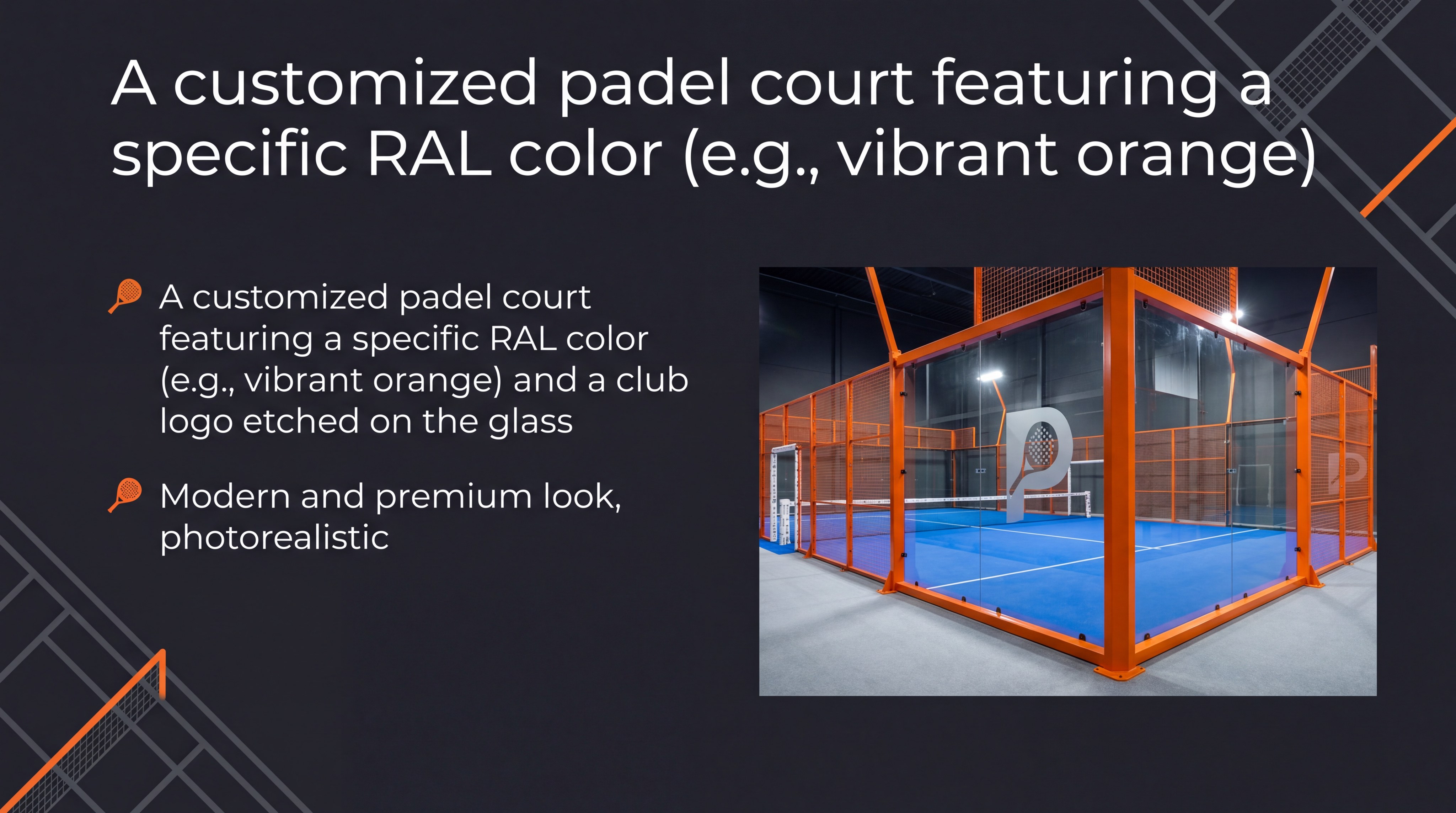
You can fully customize the design of a professional cancha de padel to match your club’s branding or architectural style. Customization options range from choosing unique structural colors to integrating laser-etched logos directly into the glass panels. This ability allows your facility to stand out in a competitive market and creates a premium, “branded” environment.
Can you integrate club logos into the court?
Yes, logos can be integrated into the artificial turf during manufacturing or etched onto the glass walls for a professional look. You should use this feature to highlight sponsors or reinforce your club’s identity on every court. Branded courts are highly photogenic, which helps your facility gain organic traction on social media from players sharing their matches.
- Turf: Logo inlays (permanent)
- Glass: Laser etching or decals
- Protective pads: Custom printing
- Benefit: Increased sponsorship revenue
Simply put: a branded court feels like a professional arena, encouraging players to pay higher booking rates.
Are custom RAL colors available for the structure?
The steel structure can be powder-coated in any RAL color, from classic black and blue to vibrant custom shades like orange or white. You can use these colors to coordinate with your existing building or to create a themed sports zone within a resort. High-quality powder coating provides a durable, UV-resistant finish that stays bright for years.
- Color options: Full RAL spectrum
- Finish: Matte, Gloss, or Textured
- Coating: UV-protected powder
- Benefit: Unique aesthetic identity
Best of all: matching the court color to your brand’s palette creates a cohesive and professional atmosphere.
Key Takeaway: Use customization to differentiate your facility from competitors and create a high-end experience that justifies higher booking fees.
| Customization Area | Available Options |
|---|---|
| Steel Structure | Any RAL Color Coating |
| Artificial Turf | Blue, Green, Clay, or Black |
| Glass Walls | Logo Etching / Branding |
| Lighting Poles | Straight or Curved Designs |
Personalized court designs transform standard sports equipment into a powerful marketing tool for your club.
*
Frequently Asked Questions
Can I install a cancha de padel on my own?
While the modular design allows for straightforward assembly, it is highly recommended to have a professional supervisor for the glass and turf installation. You must ensure the foundation is perfectly level and the glass is not under mechanical stress to prevent accidental breakage.
What is the best orientation for an outdoor court?
Ideally, you should orient an outdoor cancha de padel on a North-South axis. This minimizes the sun’s glare in players’ eyes during the morning and late afternoon matches, ensuring a fair game for both sides.
How long does the installation process take?
Once your concrete foundation is fully cured, the actual assembly of the steel structure, glass, and turf typically takes 3 to 5 days. You will need a team of four workers and proper lifting equipment for the 12mm glass panels.
Can I convert a tennis court into padel courts?
Yes, you certainly can. Since a standard tennis court is roughly 24×11 meters, you can fit one cancha de padel comfortably, or even two if you have enough surrounding clearance space.
What is the typical lifespan of the artificial turf?
In a high-use professional club, high-quality textured monofilament turf usually lasts between 5 to 8 years. You can extend this lifespan with regular brushing and by maintaining the correct levels of silica sand infill.
*
Building a world-class facility requires a partner that understands the intersection of engineering and sport. At Superbpadel, we specialize in delivering high-performance, FIP-compliant solutions that stand the test of time. Whether you are launching a new sports club or upgrading a resort, our factory-direct expertise ensures you receive premium quality without the distributor markup. Contact us today to receive a detailed quote and take the first step toward creating your premier padel destination.