What makes osaka padel unique in racket sports?
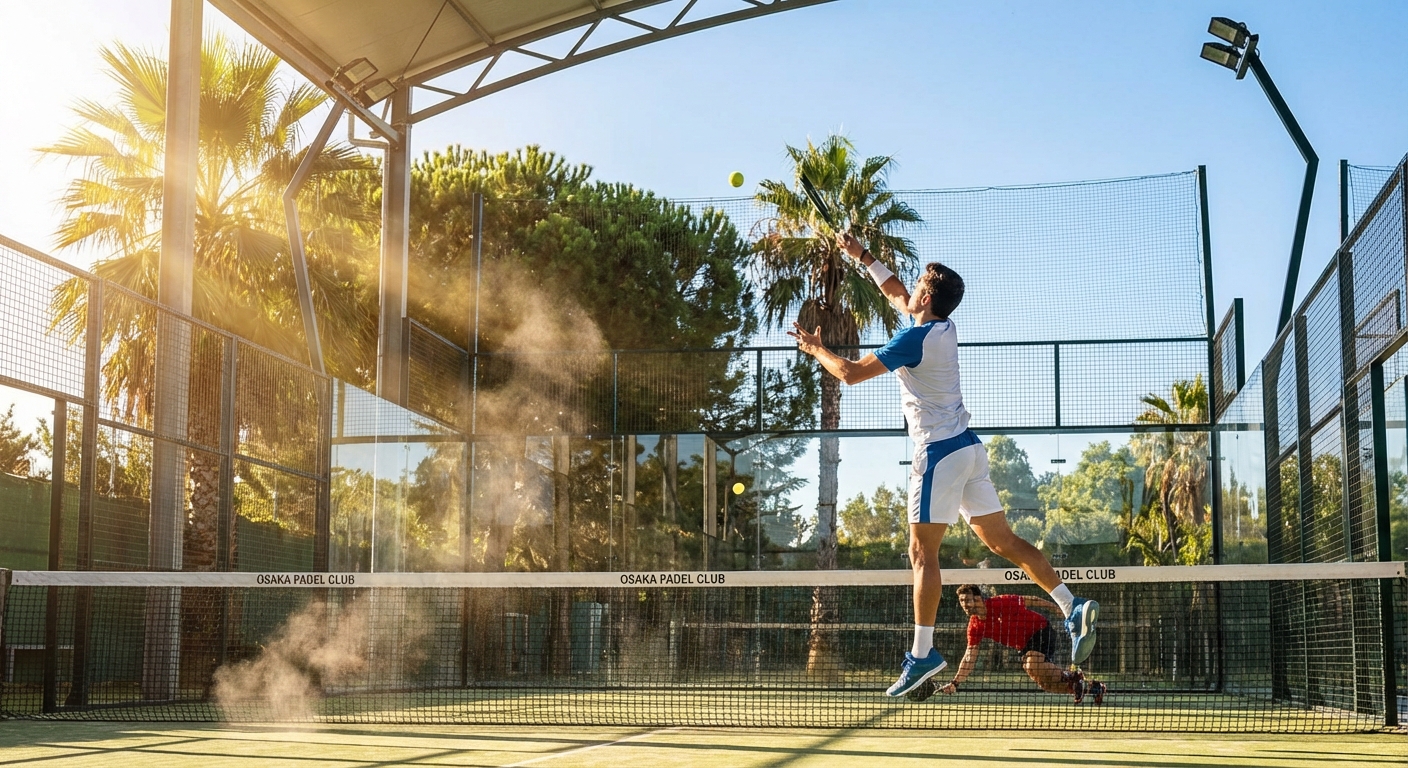
Osaka padel stands out because it integrates precision-engineered Japanese carbon fiber with specific court rebound physics. You will find that this sport emphasizes a “build” that favors tactical placement over raw speed. The synergy between the equipment and the court environment creates a unique athletic experience for you.
The technical advantage of certified gear
Believe it or not, the equipment you choose dictates your reaction time at the net. You need gear that absorbs vibration while providing a crisp energy return during high-velocity smashes. This technical balance is what allows you to maintain control during long rallies.
- High-modulus carbon frames
- High-density foam cores
- UV-resistant court structures
Think about it. Without specialized materials, your game remains limited by the physics of standard tennis equipment.
Key Takeaway: Quality engineering in osaka padel ensures that your performance scales with your technical ability on the court.
| Component | Benefit |
|---|---|
| Carbon Fiber | Lightweight durability |
| Toughened Glass | Consistent rebound |
| LED Lighting | 24/7 Playability |
The integration of advanced materials directly correlates to the longevity of your equipment and the quality of your play.
How do you choose the right osaka padel racket?
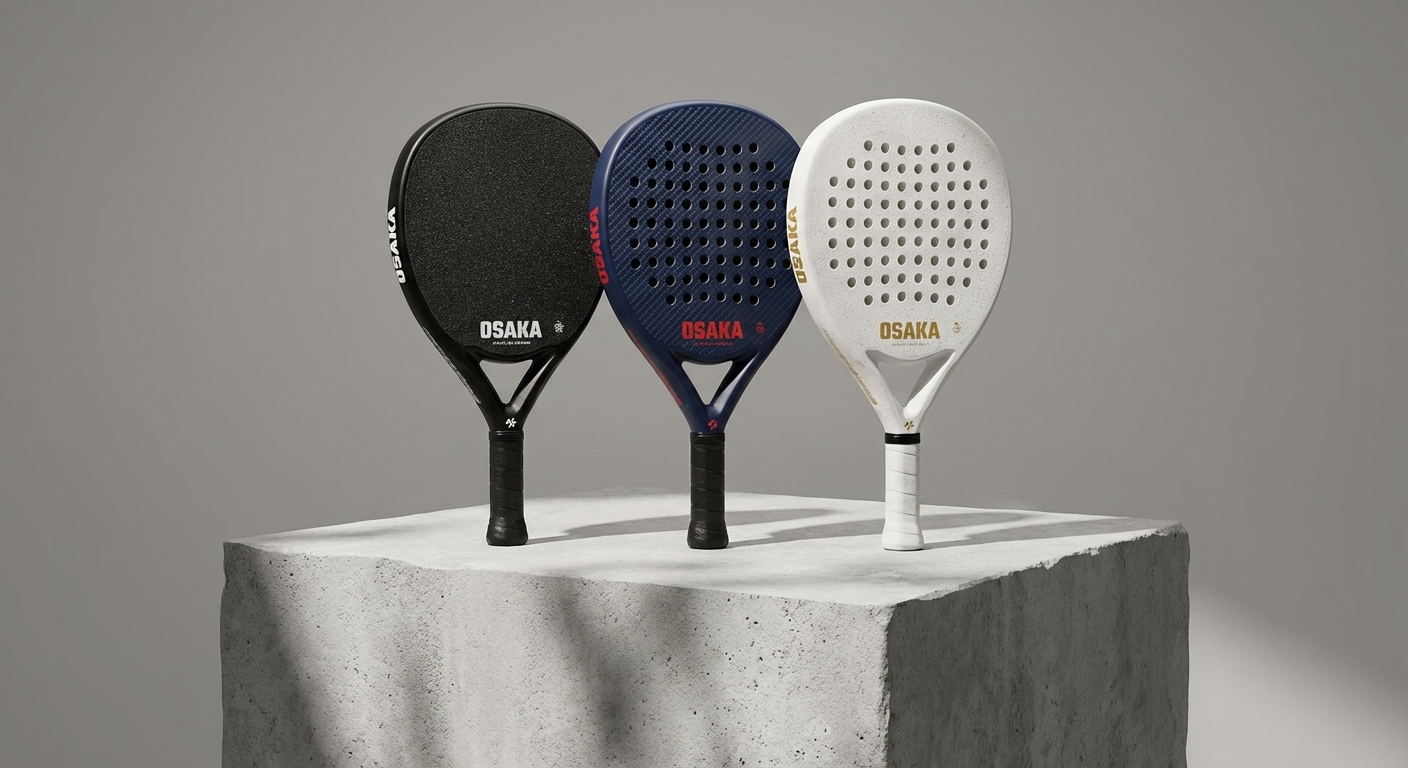
Choosing the right osaka padel racket requires you to assess your current skill level and your preferred style of play. You should look for a frame that balances maneuverability with a power-optimized sweet spot. It is vital to select a Standard Padel Court environment where you can test different weight distributions to find your perfect match.
Matching gear to your player progression
Here is the deal. Casual players benefit from lighter, round-shaped rackets that offer maximum control. As you move toward an intermediate level, you will likely prefer a teardrop shape that introduces more power into your arsenal. Advanced athletes typically move toward heavy, head-balanced designs for lethal smashes.
- Casual: Round Shape
- Intermediate: Teardrop Shape
- Advanced: Power Frame
Best of all, having the right gear reduces the risk of common injuries like tennis elbow.
Key Takeaway: Aligning your racket choice with your skill level ensures a faster learning curve and more enjoyable matches.
| Player Level | Racket Shape | Focus |
|---|---|---|
| Beginner | Round | Accuracy |
| Intermediate | Teardrop | Versatility |
| Professional | Diamond | Power |
Selecting a racket based on these tiers allows you to grow your technical skills without being hindered by inappropriate gear.
Why does racket shape matter for osaka padel success?
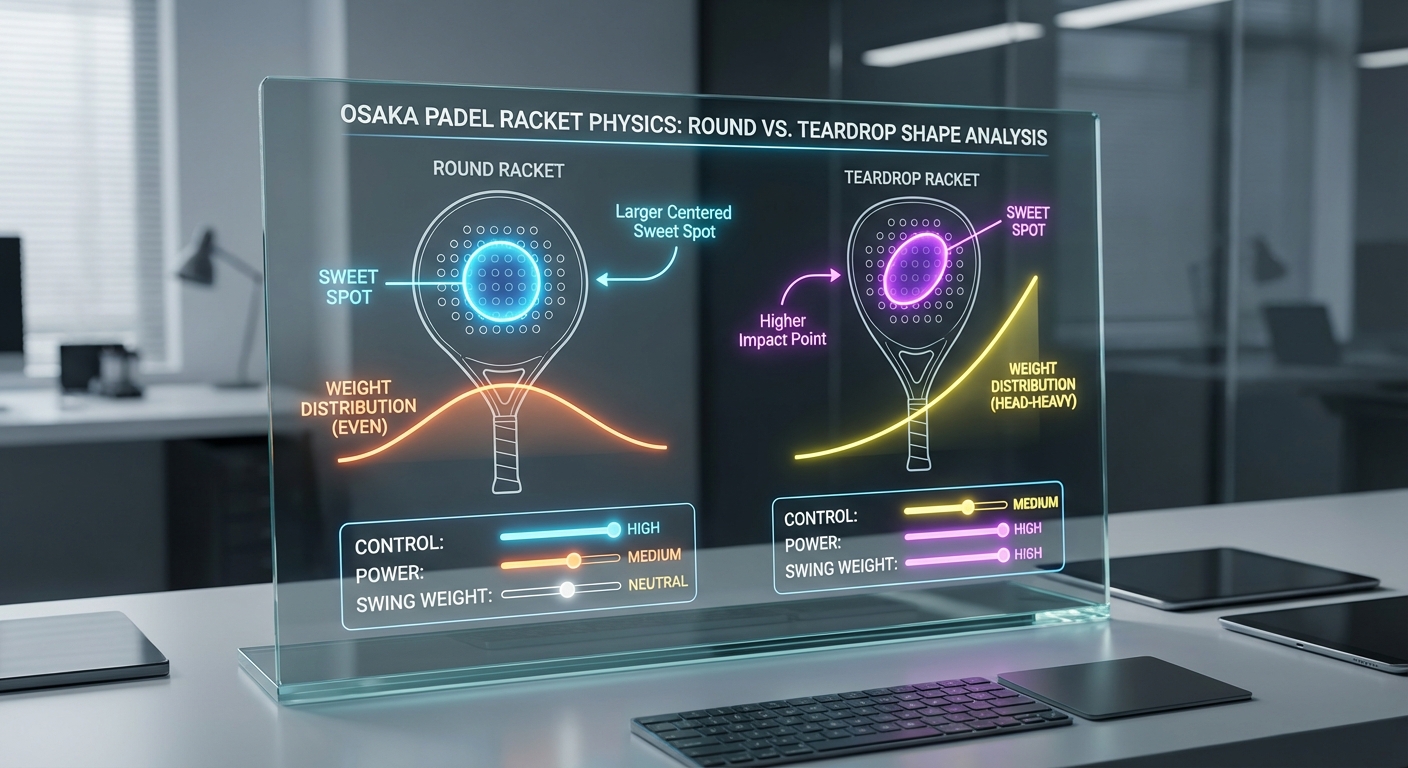
Racket shape in osaka padel determines where the “sweet spot” is located on the face of your equipment. You see, the geometry of the frame dictates how the weight is distributed between the handle and the head. This distribution directly impacts your swing speed and your ability to control the ball’s trajectory.
Understanding round vs teardrop designs
Let’s be honest. If you are struggling with control, a round frame is your best ally because of its large, centered sweet spot. Teardrop frames shift that balance toward the top, giving you more leverage when you need to finish a point with a powerful overhead shot. You must decide if your game relies on defensive stability or offensive aggression.
- Round: Low balance point
- Teardrop: Mid-high balance point
- Sweet Spot: Varies by geometry
Keep this in mind. The shape is the most visible indicator of how a racket will perform in your hands.
Key Takeaway: Geometric choice is the primary driver of playstyle orientation, either favoring surgical precision or explosive power.
| Shape | Balance | Sweet Spot Size |
|---|---|---|
| Round | Handle | Large |
| Teardrop | Middle | Medium |
Analyzing these shapes helps you transition your skills from other racket sports into the specific demands of the padel court.
Does the weight of your osaka padel gear affect play?
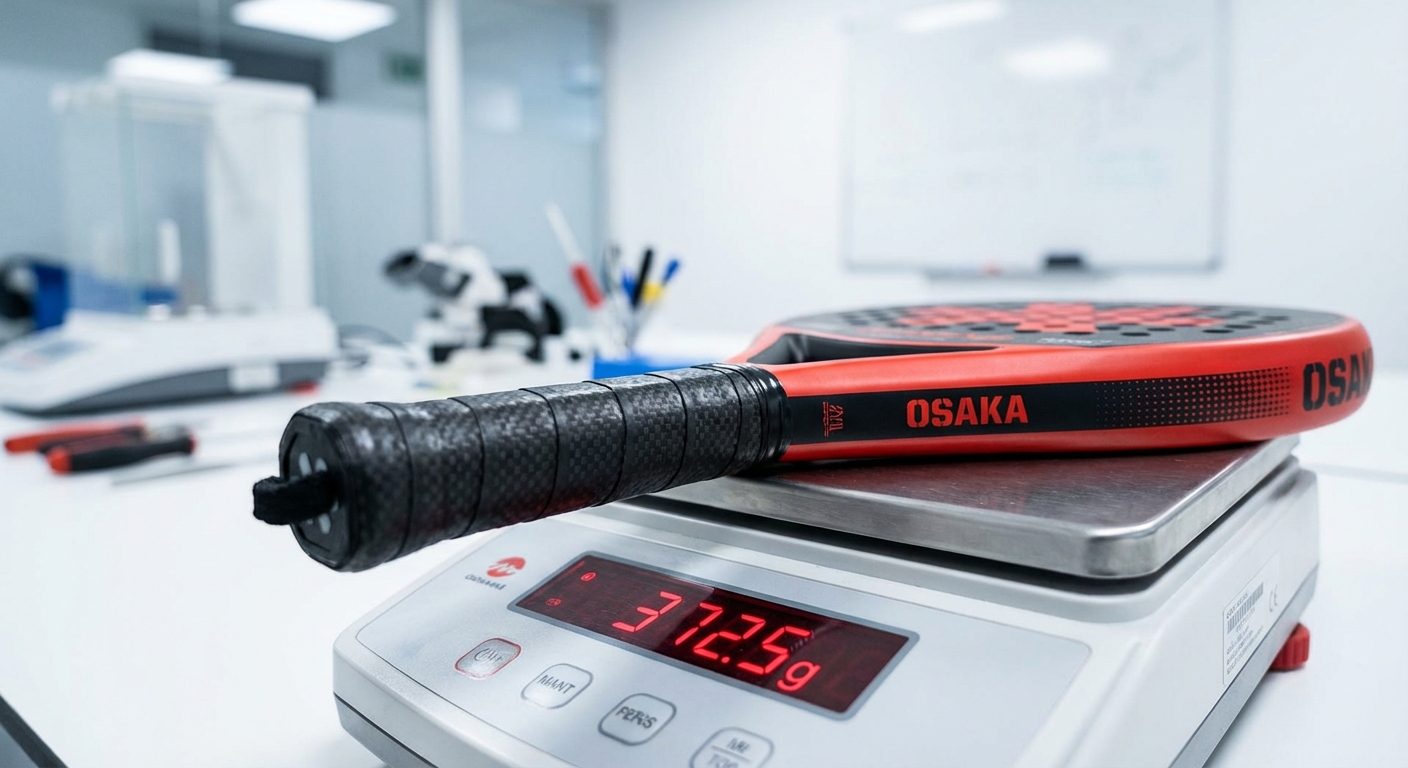
Weight in osaka padel gear is a critical metric that influences both your agility and your impact force. You will typically find adult rackets weighing between 360g and 375g. Choosing a weight outside of this standard range can drastically change how you handle fast net volleys or high-impact smashes.
Finding the balance between 360g and 375g
You see, a lighter racket allows you to react faster during quick exchanges near the net. However, a heavier racket provides more mass behind the ball, which is essential for consistent power in your offensive game. You must test these weights to ensure your shoulder can handle the swing load over a long match.
- Under 360g: High maneuverability
- 360g – 370g: Balanced performance
- Over 375g: Maximum power
Believe it or not, even a ten-gram difference can be felt during a competitive two-hour set.
Key Takeaway: Weight selection is a trade-off between reaction speed at the net and the kinetic energy you can transfer to the ball.
| Weight Range | Target User | Key Benefit |
|---|---|---|
| <350g | Kids/Juniors | Injury Prevention |
| 360g – 370g | Intermediate | Versatility |
| >375g | Advanced Pro | Smash Power |
The correct weight allows you to maintain consistent form throughout your play session without sacrificing your physical comfort.
Which foam density is best for an osaka padel racket?
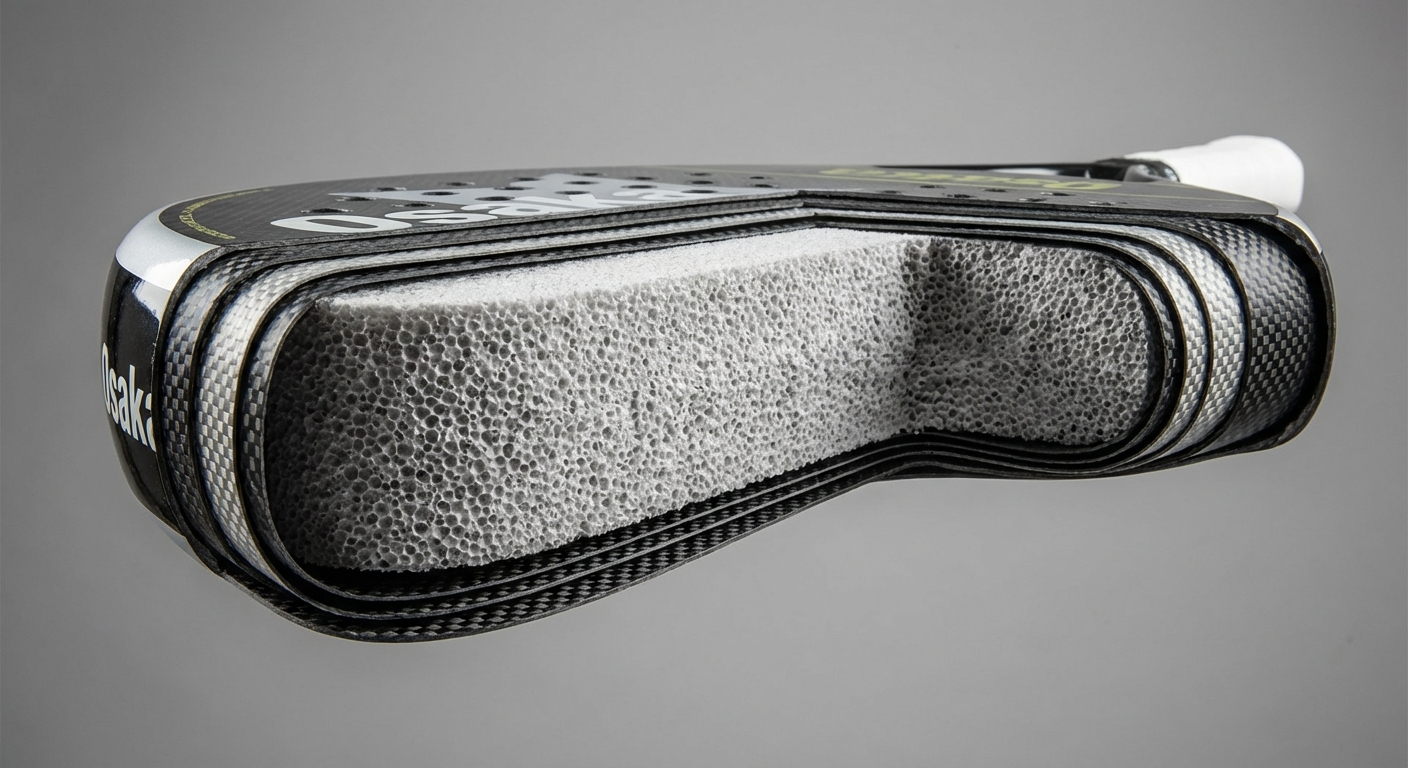
Foam density in an osaka padel racket acts as the “engine” that determines the feel of the ball upon impact. You will choose between hard-touch high-density foam and soft-touch medium-density options. This choice affects how much the ball “sinks” into the racket before it is propelled forward.
Hard touch vs soft touch performance
Here’s why. Hard-touch rackets provide extra punch for your smashes because they do not absorb as much energy from the ball. Conversely, soft-touch rackets offer superior stability and control, which you will find useful for placement-heavy games. You should pick a foam that complements the stiffness of your racket’s outer shell.
- Hard Touch: High-density core
- Soft Touch: Medium-density core
- Energy Return: Higher in hard foam
It gets better. Selecting the right foam density can actually improve your accuracy on the most difficult shots.
Key Takeaway: Foam density regulates the energy transfer and vibration feedback you receive during every contact with the ball.
| Foam Type | Density | Advantage |
|---|---|---|
| Hard | High | Explosive Smashing |
| Soft | Medium | Placement Accuracy |
Understanding the internal core construction allows you to buy gear that truly matches the technical requirements of your playstyle.
What materials are used to build an osaka padel racket?
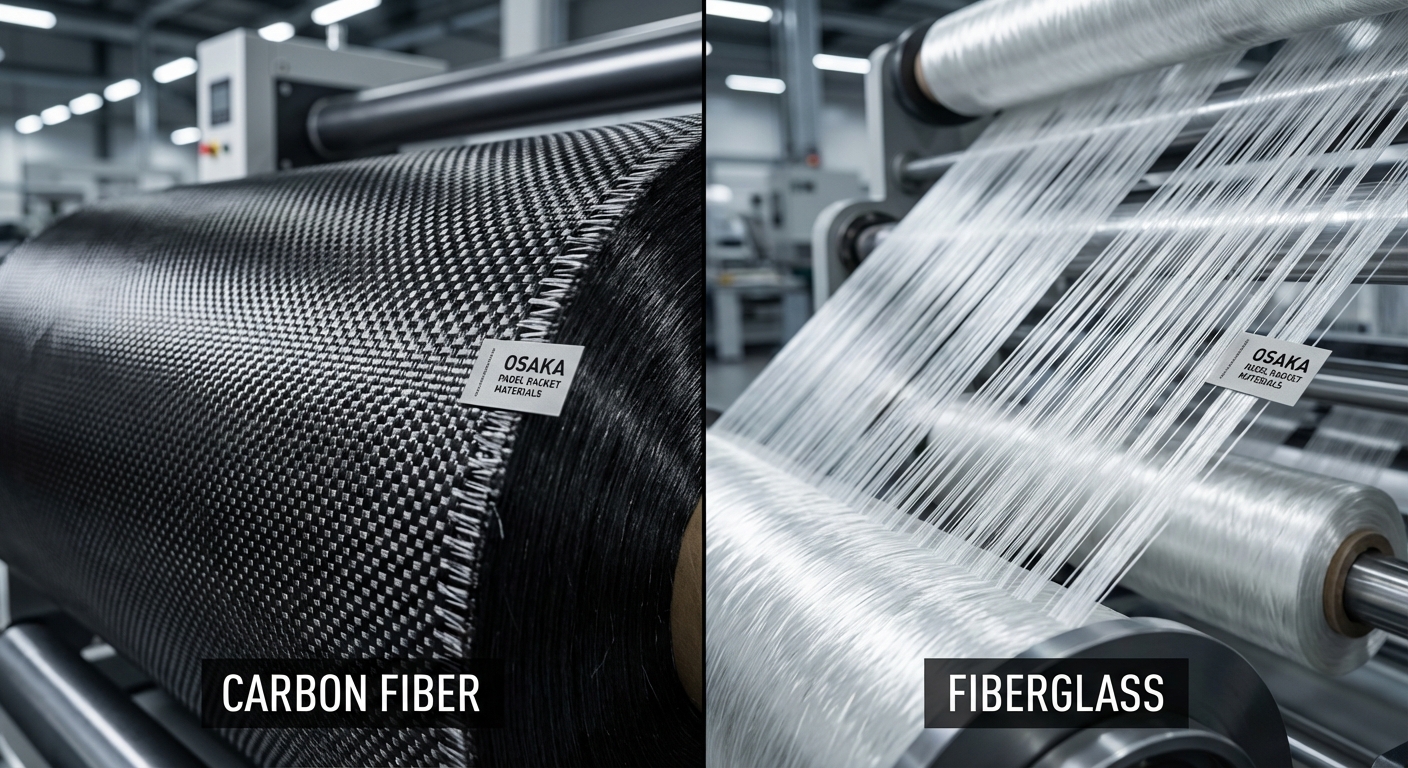
Modern osaka padel rackets are built using a combination of fiberglass, carbon fiber, and technical composites. You will find that high-end models utilize Japanese carbon fiber for its extreme strength-to-weight ratio. These materials are chosen to provide a rigid structure that can withstand the thousands of impacts occurring in every match.
Comparing fiberglass and carbon fiber builds
Think about it. Fiberglass is more flexible and less expensive, making it the perfect material for your first beginner racket. As your game evolves, you will move toward carbon fiber because it offers the stiffness required for professional-level power. You must decide if you value the “forgiveness” of fiberglass or the “precision” of carbon.
- Fiberglass: Beginner flexibility
- Carbon: Professional rigidity
- Composites: Intermediate balance
Here is the deal. The better the materials, the longer your racket will maintain its original performance characteristics.
Key Takeaway: Material quality is the most significant factor in the price and lifespan of your high-performance padel equipment.
| Material | Stiffness | Ideal Level |
|---|---|---|
| Fiberglass | Low | Beginner |
| Composite | Medium | Intermediate |
| Carbon | High | Advanced |
Investing in high-modulus materials ensures your equipment doesn’t lose its “pop” after a few months of intense competition.
How do you build a professional osaka padel court?
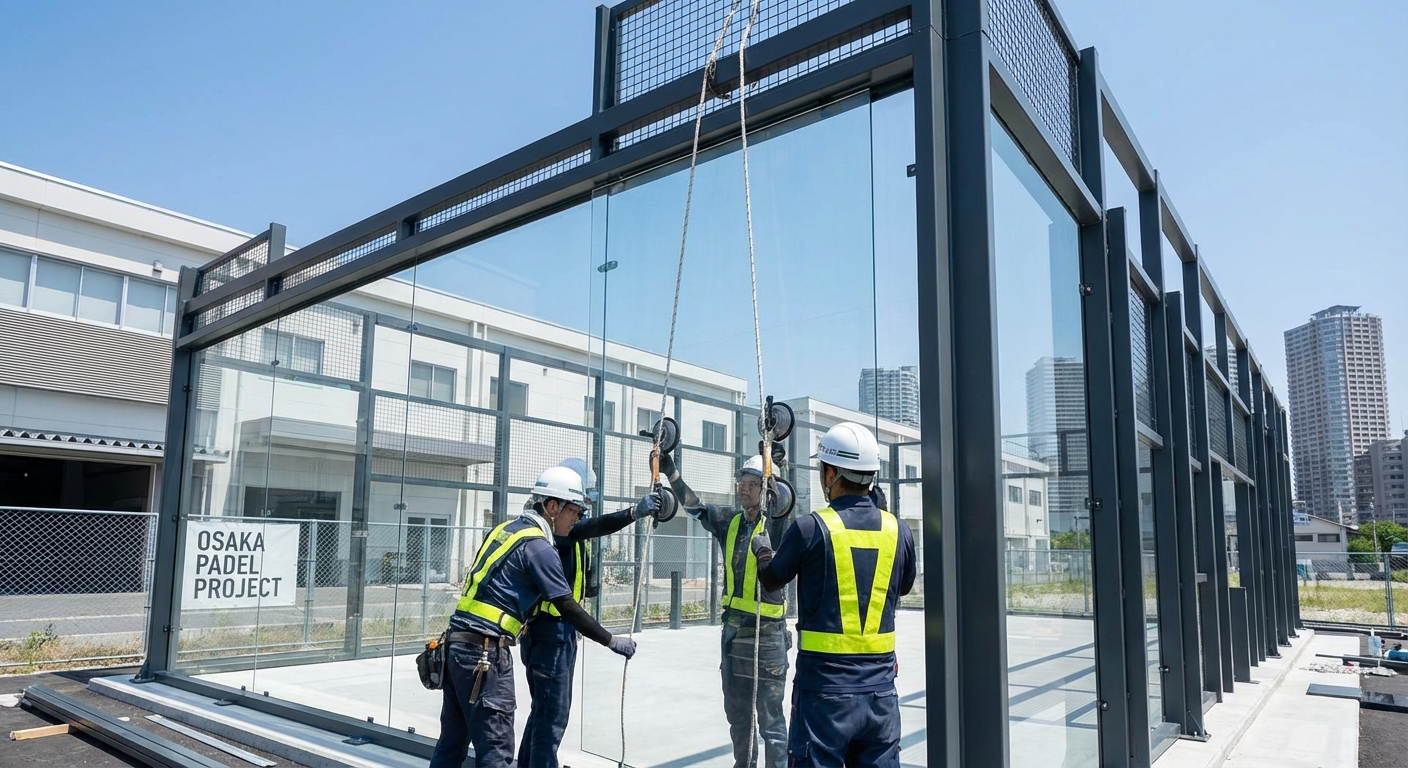
Building a professional osaka padel court involves assembling a modular system of galvanized steel, tempered glass, and synthetic turf. You must ensure the Panoramic Padel Court design provides maximum visibility while maintaining structural integrity. Precision in the foundation is vital to ensure all glass panels align perfectly for a consistent ball bounce.
Structural engineering and glass safety
Believe it or not, the glass panels are the most critical safety feature of your court build. You need 12mm toughened glass that meets EN 12150 standards to handle the weight of players leaning against the walls. The steel frame must be hot-dip galvanized to prevent rust, especially if you are building in a coastal or humid environment.
- Glass: 12mm Tempered
- Frame: Q235 Galvanized Steel
- Turf: FIP Approved Padel Grass
You see, a high-quality build drastically reduces your long-term maintenance costs and player turnover.
Key Takeaway: Professional court construction requires certified materials to ensure safety, durability, and a high-quality player experience.
| Component | Standard | Life Expectancy |
|---|---|---|
| Steel Frame | ISO 1461 | 15+ Years |
| Glass Walls | CE Marked | Lifetime (unbroken) |
| Synthetic Turf | UV Resistant | 5-8 Years |
Using factory-direct components ensures that your investment meets the rigorous demands of a busy sports club or commercial facility.
What are the dimensions for an osaka padel court build?
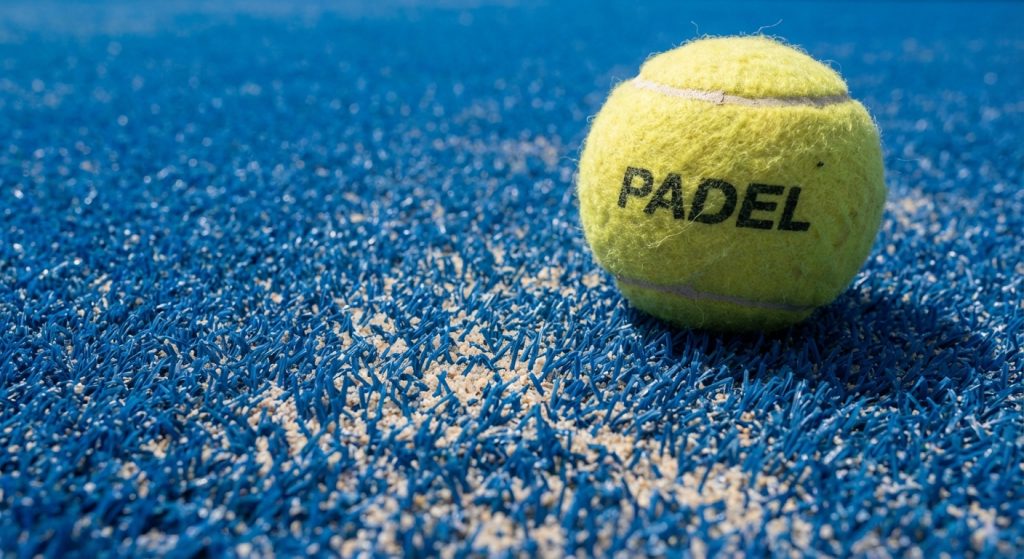
The standard dimensions for an osaka padel court build are exactly 20 meters long by 10 meters wide. You must also account for a safety perimeter if you plan to allow players to run “out of court” to retrieve balls. Integrating high-performance Padel LED Lighting is essential to ensure these dimensions are fully visible during evening play.
The layout of a standard 20m x 10m court
Here’s why. The court is divided into two halves by a central net, with service lines located 6.95 meters from the net on each side. You will find that the walls should be 3 meters high on the sides and 4 meters high at the back to facilitate all tactical shots. Your build must follow these FIP regulations to be considered a tournament-grade facility.
- Length: 20 meters
- Width: 10 meters
- Back Wall: 4 meters high
Best of all, these standard dimensions allow players from all over the world to compete fairly at your club.
Key Takeaway: Adhering to international dimensions is mandatory for facility certification and ensures the 3D physics of the game work correctly.
| Zone | Measurement | Purpose |
|---|---|---|
| Service Line | 6.95m from Net | Serving Rules |
| Mesh Height | 3m Sides | Ball Retention |
| Net Height | 0.88m – 0.92m | Game Central Point |
Correct court layout is the foundation of professional play and allows you to host sanctioned tournaments and competitive leagues.
Why is professional lighting vital for osaka padel?
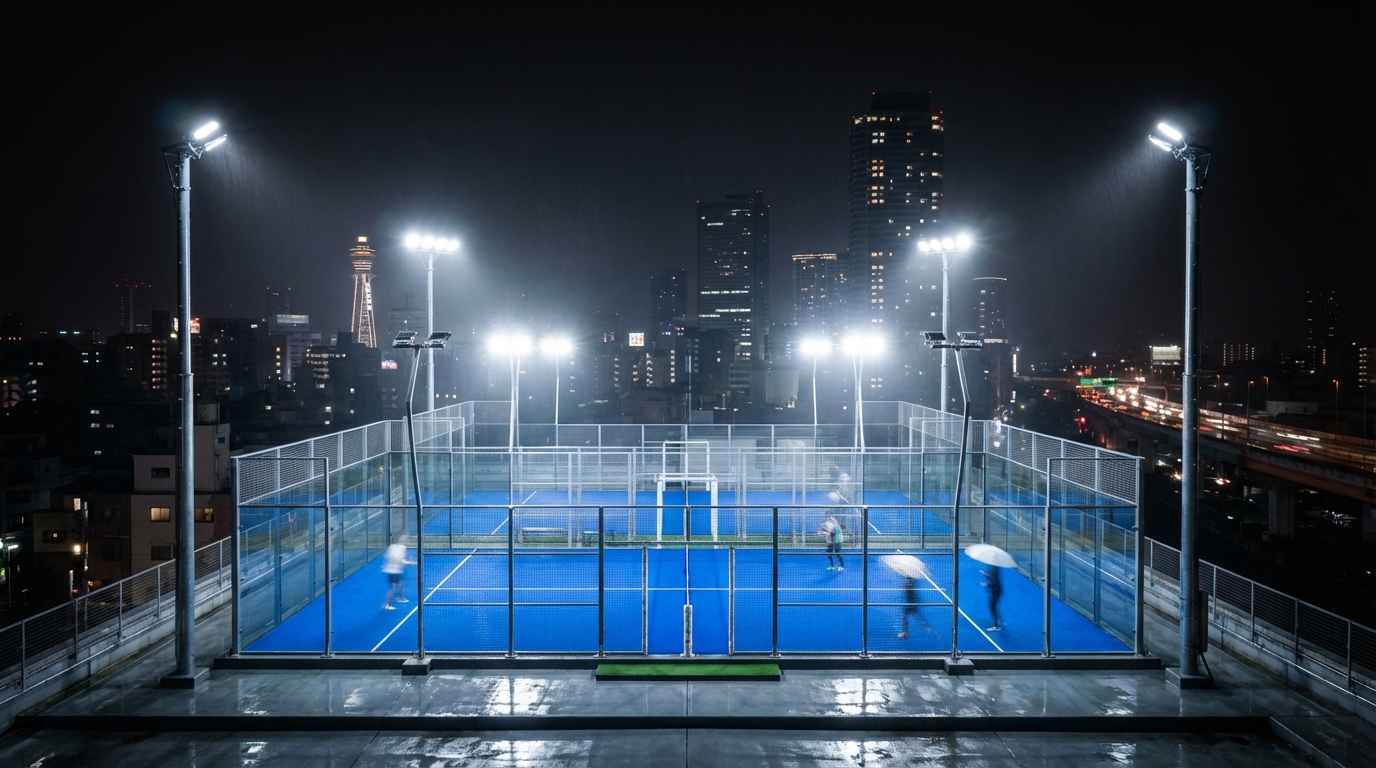
Professional lighting in an osaka padel build ensures that your facility remains profitable and playable 24 hours a day. You will need a minimum of 400 lux for recreational games and over 500 lux for professional tournaments. High-quality LED systems reduce glare, which is essential when you are looking up to track a high lob shot.
Designing lighting for visibility and safety
Believe it or not, improper lighting is the number one cause of player complaints in indoor and evening facilities. You should use IP67-rated floodlights that can withstand outdoor conditions without flickering or losing intensity. Proper placement of the light poles ensures there are no shadows on the service lines or near the back glass walls.
- Intensity: 400 – 500 Lux
- System: 8x200W LED typical
- Rating: IP67 Waterproof
It gets better. Modern LED systems consume up to 50% less energy than traditional metal halide lights while providing better coverage.
Key Takeaway: Strategic lighting extends your facility’s operational hours and provides a safe, professional atmosphere for evening athletes.
| Feature | Requirement | Benefit |
|---|---|---|
| Lux Level | 400+ | Clear Vision |
| LED Type | Anti-glare | Eye Comfort |
| Enclosure | Waterproof | Low Maintenance |
Investing in a tournament-grade lighting system is a one-time cost that significantly increases the long-term ROI of your padel court.
How do you analyze market demand for osaka padel?
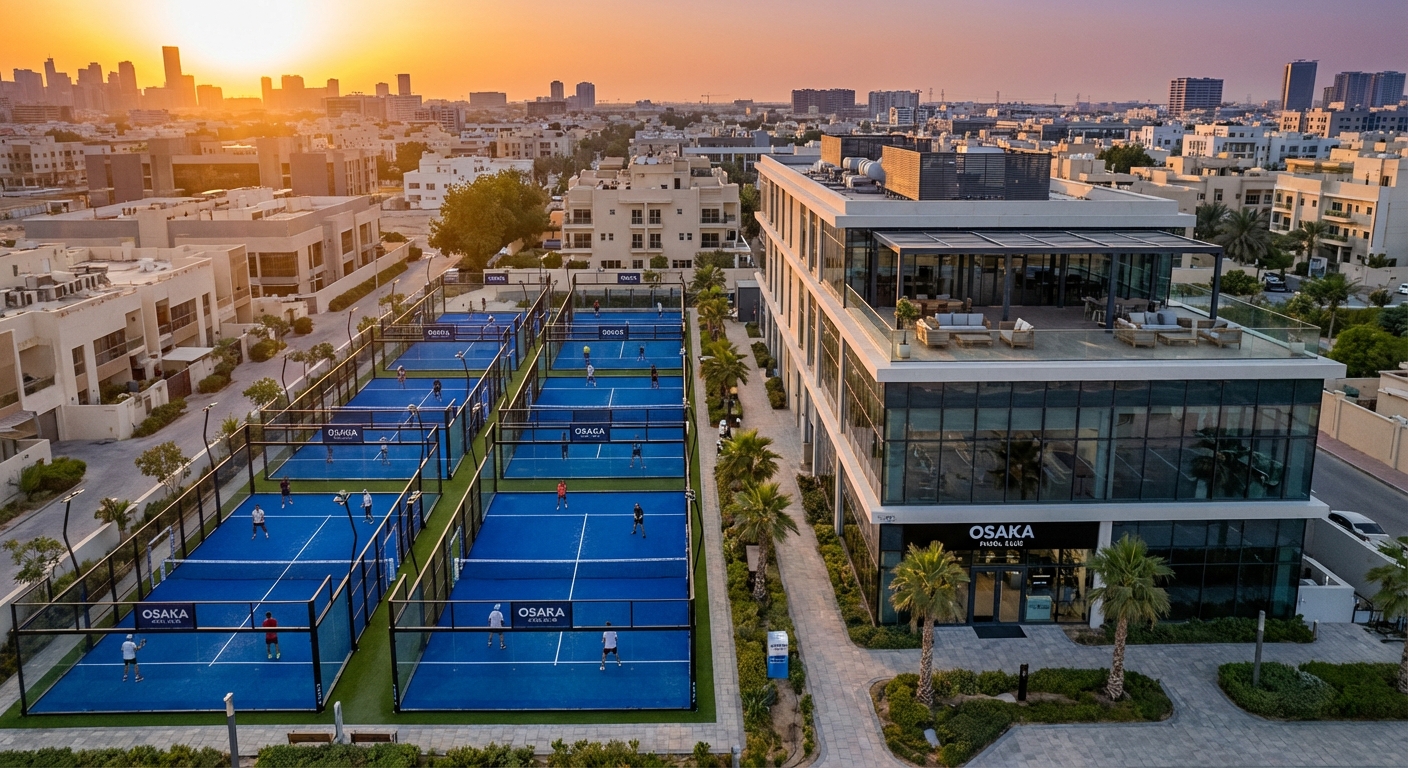
Analyzing the osaka padel market involves evaluating local demographics and the current competition from other racket sports. You must use market demand data to determine if your community prefers recreational social play or high-stakes competitive leagues. This analysis will help you decide how many courts to build and what amenities your facility should offer.
Strategies for club growth and scaling
Keep this in mind. Padel has a much higher player density than tennis, meaning you can generate more revenue per square meter of your property. You should focus on building a community by hosting introductory clinics and mixed-skill tournaments to attract new members. Scaling your facility is easier when you start with a modular court design that allows for future expansion.
- Density: 4 players per 200sqm
- Retention: High social engagement
- Revenue: Court rentals + Pro shop
Here is the deal. The most successful clubs are those that provide a premium experience from the equipment to the court surfaces.
Key Takeaway: Thorough market research ensures that your padel facility is sized correctly for your local audience and set up for long-term profit.
| Factor | Metric | Result |
|---|---|---|
| Player Count | 4 per Court | High Utilization |
| Court Fees | $40 – $120/hour | Fast ROI |
| Space Needed | 200 sqm | Efficiency |
By understanding the business metrics of padel, you can build a sustainable sports hub that serves athletes for decades to come.
As the world’s leading factory-direct manufacturer, we are dedicated to providing the infrastructure that builds the future of global racket sports. Our vision is to empower every club owner and player with professional-grade materials that guarantee performance and durability. Whether you are constructing a new panoramic facility or upgrading your gear, we are here to support your journey. To begin your professional build or order high-performance equipment, contact us today and let our experts guide your next project.
FAQ
- Can I build an osaka padel court in a residential area?
Yes, you can build a court as long as you adhere to local zoning laws regarding noise and lighting. - What’s the best racket for a player transitioning from tennis?
You should start with a teardrop-shaped racket, as it provides a similar power profile to a tennis racket while teaching you padel control. - Can I use standard tennis balls for osaka padel?
No, padel balls have a lower internal pressure to match the smaller court size and the specific rebound of the glass walls. - What’s the best way to maintain the synthetic turf?
You should regularly brush the silica sand to ensure even distribution and remove debris to maintain proper drainage. - Can I customize the color of my court structure?
Yes, we offer custom powder coating in various colors to match your club’s specific branding and aesthetic needs.