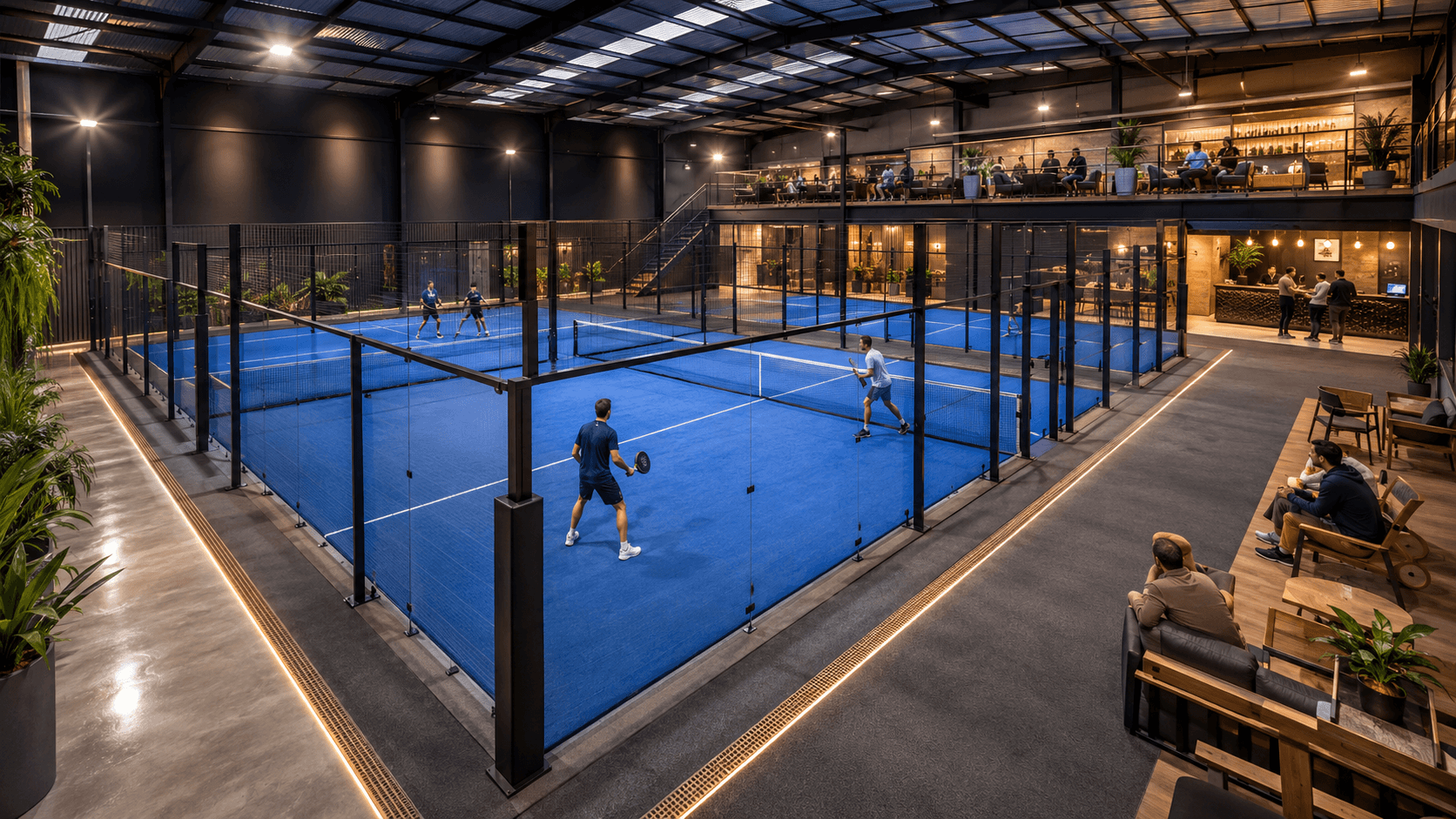
Building safe, durable, and profitable indoor padel courts requires a strategic combination of high-grade materials, precise engineering, and factory-direct procurement. Many investors rush into the booming market only to face the nightmare of sagging turf, shattered glass, or inadequate lighting that ruins the player experience. These technical failures lead to massive liability risks and lost revenue that can sink a business in its first year. By following a professional construction blueprint, you can eliminate these risks and ensure your facility becomes the premier destination in your region.
What is the ideal space for indoor padel courts?
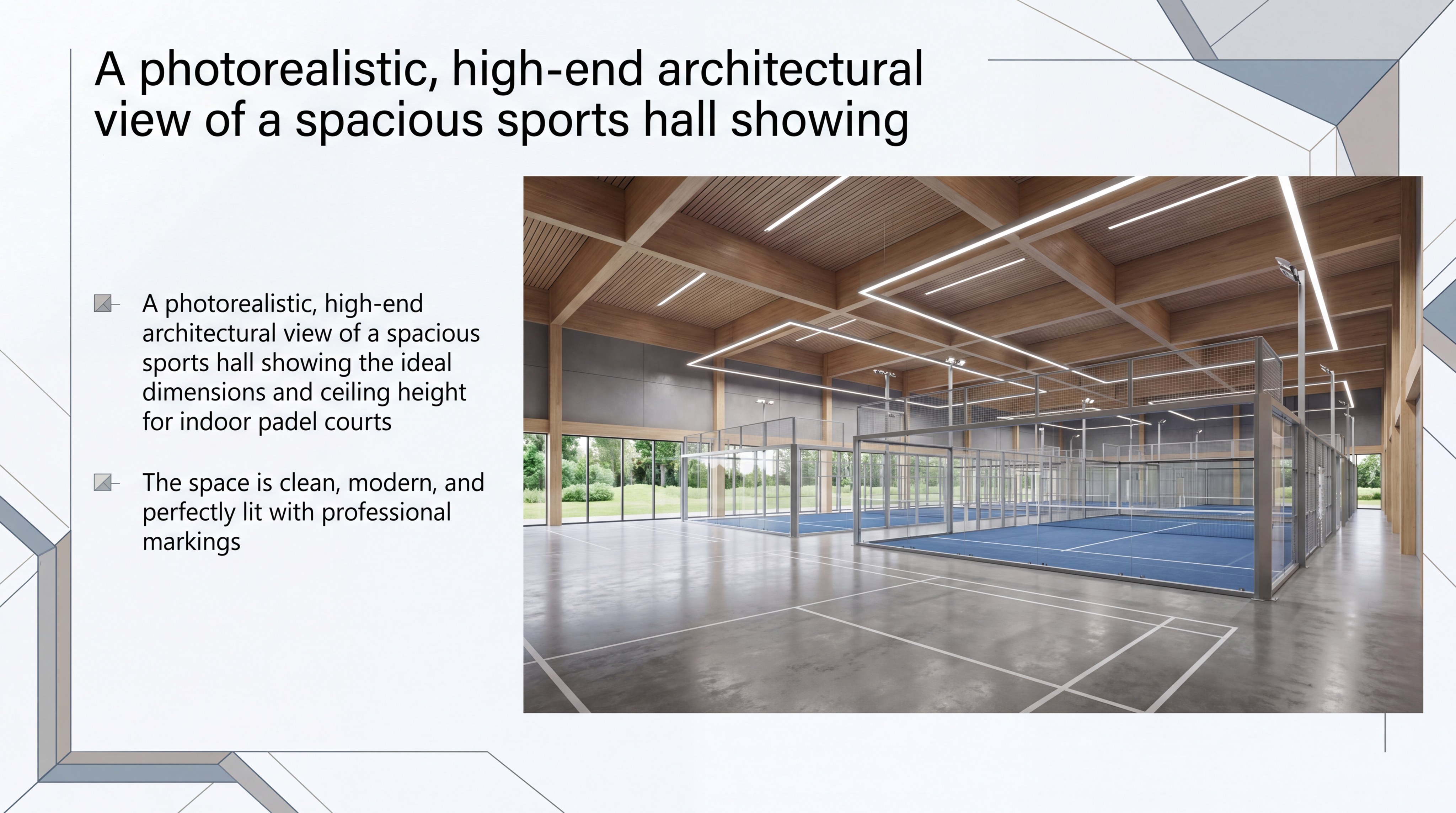
The ideal space for a single court is approximately 231 square meters, which accounts for the 10×20 meter playing area and a necessary safety perimeter. Planning your indoor padel courts starts with selecting a building that offers sufficient ceiling clearance and unobstructed floor space. You must ensure the facility can accommodate multiple units while leaving room for essential club amenities.
What are the specific height requirements?
A minimum height of 6 meters is required for standard play, but 8 meters is the professional gold standard. Higher ceilings allow for competitive lobs and a better acoustic environment for the players.
Think about this:
- 6 Meters: The bare minimum for recreational play.
- 8 Meters: The standard for professional tournaments and elite clubs.
- 9+ Meters: Provides a premium, airy feel that attracts top-tier talent.
How do buffer zones improve safety?
Maintaining a 0.5 to 1-meter safety perimeter around the glass walls is crucial for player movement and structural inspections. This space prevents players from feeling “cramped” and allows for easier maintenance of the glass panels.
But that’s not all:
- It provides a clear walkway for spectators.
- It protects the structure from accidental collisions with facility walls.
- It facilitates the installation of lighting and net systems.
Key Takeaway: Prioritize ceiling height and perimeter clearance to avoid a “cramped” facility that discourages competitive athletes.
| Dimension Type | Minimum Requirement | Professional Standard | |
|---|---|---|---|
| Playing Area | 20m x 10m | 20m x 10m | |
| Ceiling Height | 6 Meters | 8+ Meters | |
| Safety Buffer | 0.5 Meters | 1.0 Meters |
The analysis shows that investing in an 8-meter ceiling height significantly increases the venue’s appeal to professional-level players.
Which structure suits your indoor padel courts?
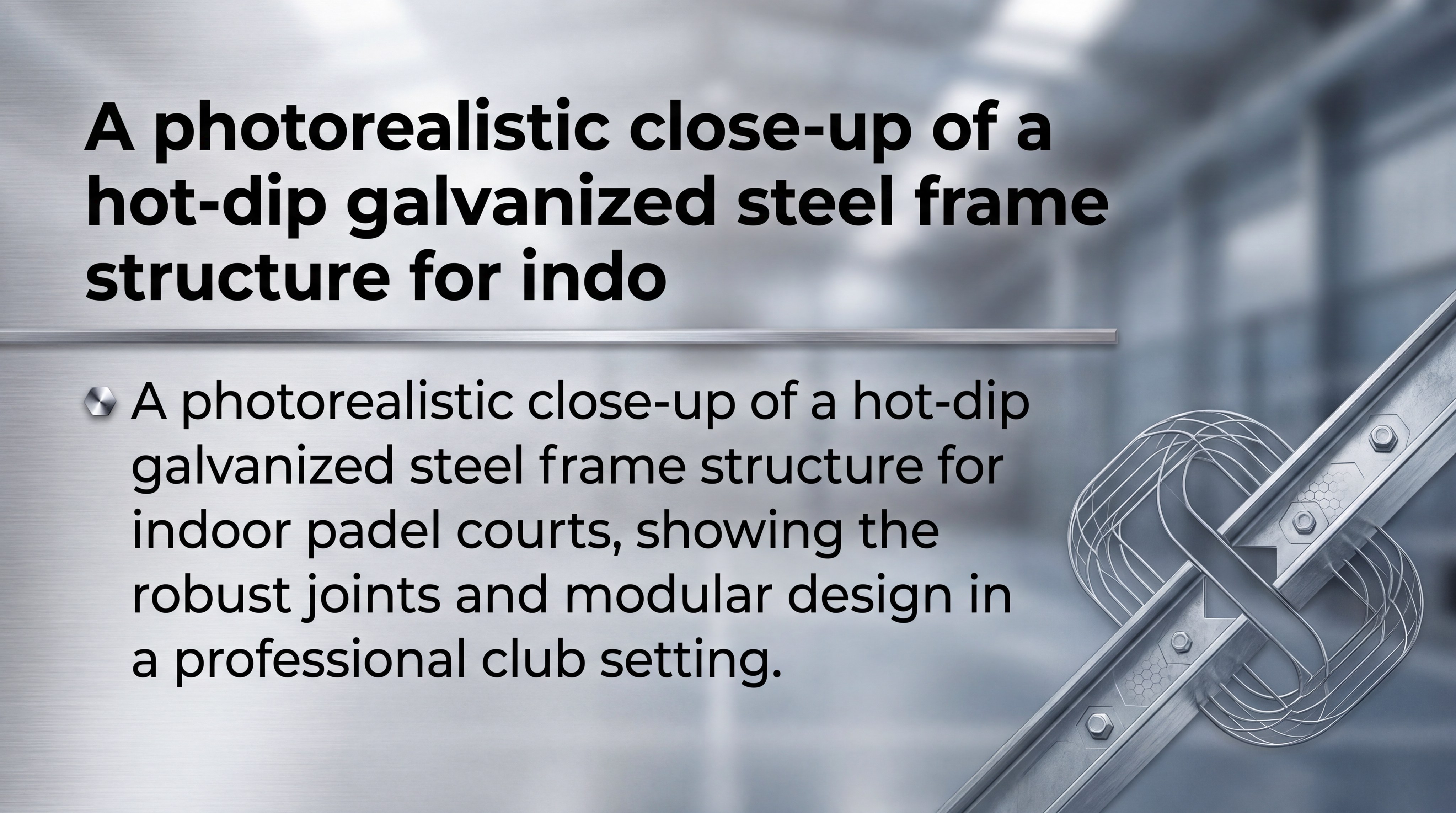
Selecting a hot-dip galvanized steel frame with a modular design is the most effective way to ensure the long-term structural integrity of your facility. When building indoor padel courts , you must choose a frame that can withstand constant ball impacts and high player frequency without vibrating. A Standard Padel Court structure provides the perfect balance of commercial durability and cost-efficiency.
Why is galvanized steel mandatory?
Hot-dip galvanization provides a protective zinc coating that prevents corrosion in high-humidity indoor environments. This treatment ensures a 20-year design life, protecting your initial capital investment from structural decay.
Here is the kicker:
- It eliminates the risk of rust in humid club settings.
- The modular assembly reduces on-site labor costs significantly.
- It offers superior vibration damping for a quieter playing experience.
Key Takeaway: Never settle for untreated steel; hot-dip galvanization is essential for minimizing maintenance and maximizing the lifespan of your court.
| Component | Material Specification | Benefit | |
|---|---|---|---|
| Main Pillars | Hot-dip Galvanized Steel | 20-year corrosion resistance | |
| Joint System | Modular Bolting | Rapid installation and stability | |
| Coating | UV-Resistant Powder | Brand consistency and aesthetics |
Choosing a modular galvanized frame reduces installation time by 30% compared to traditional welded structures.
How to choose glass for safe indoor padel courts?
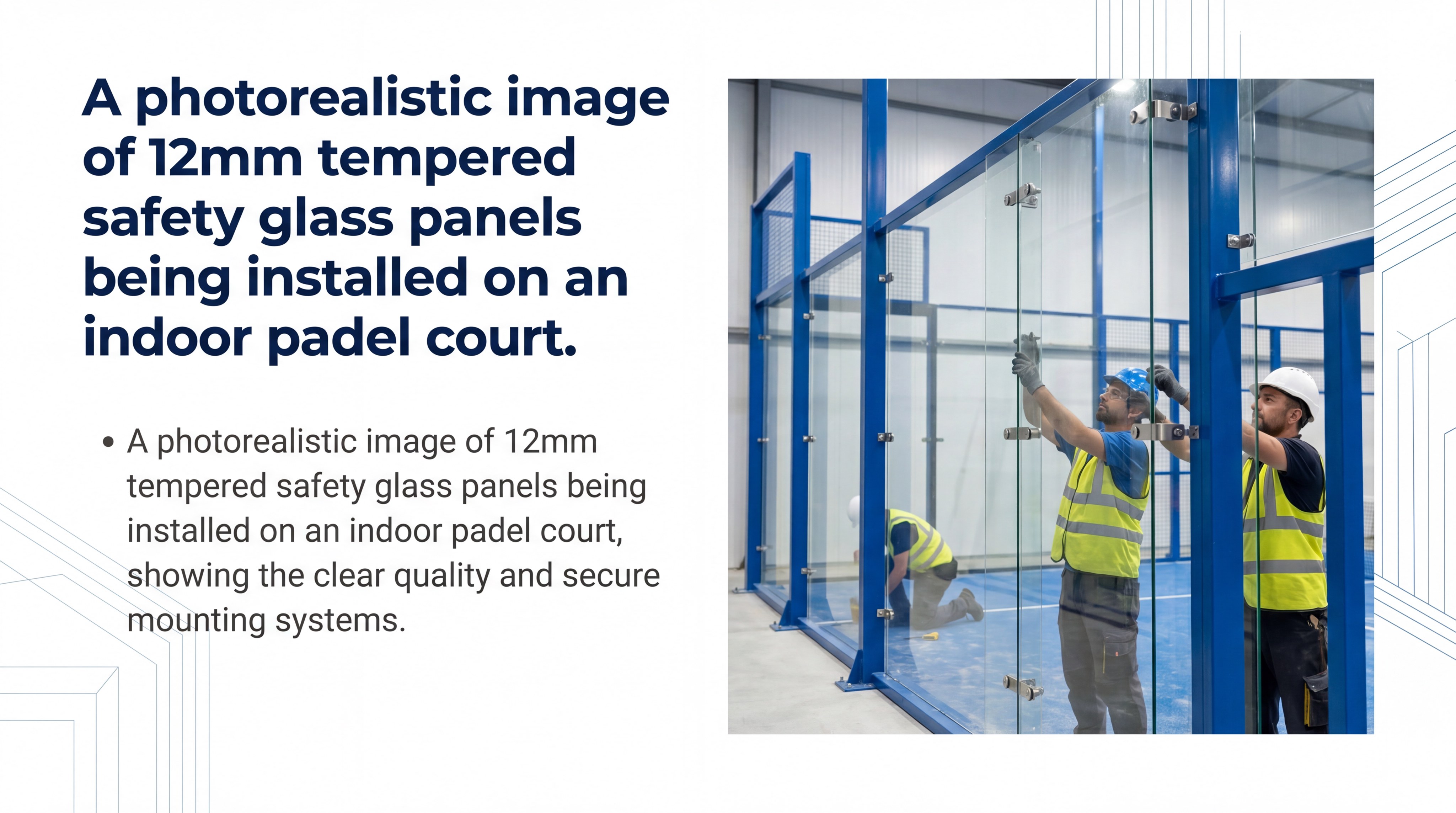
Safe indoor padel courts must utilize 12mm anti-explosion tempered safety glass that fully complies with the European EN 12150 standard. The quality of your Padel Glass is the single most important factor in mitigating liability and ensuring player trust during high-speed matches. High-quality tempered glass provides a predictable ball bounce and crystal-clear visibility for spectators and cameras.
What are the safety standards for glass?
The glass must be designed to withstand high-velocity impacts from both balls and professional athletes without shattering into dangerous shards. Anti-explosion technology ensures that if a break does occur, the glass crumbles into small, blunt pieces to prevent injury.
Believe it or not:
- 12mm glass is the industry standard for commercial safety.
- Certified glass reduces your insurance premiums for sports facilities.
- Polished edges prevent accidental cuts during the installation process.
How does installation affect durability?
Precision fitting with high-quality gaskets is required to prevent glass-to-metal contact, which is the leading cause of spontaneous breakage. Every panel must be perfectly aligned to ensure the ball reacts consistently across the entire wall surface.
But that’s not all:
- Specialized hardware absorbs the vibration from player impacts.
- Proper spacing allows for thermal expansion in heated facilities.
- High-grade gaskets seal the panels against dust and moisture.
Key Takeaway: Invest in certified 12mm tempered glass to protect your players and eliminate the massive costs of frequent replacements.
| Glass Property | Standard Requirement | Performance Outcome | |
|---|---|---|---|
| Thickness | 12mm | Maximum impact resistance | |
| Certification | EN 12150 | Full legal and safety compliance | |
| Finish | Polished/Blunt Edges | Enhanced safety for installers |
Using certified safety glass is the most effective way to protect your business from legal liabilities and emergency repair costs.
Why is turf vital for indoor padel courts?
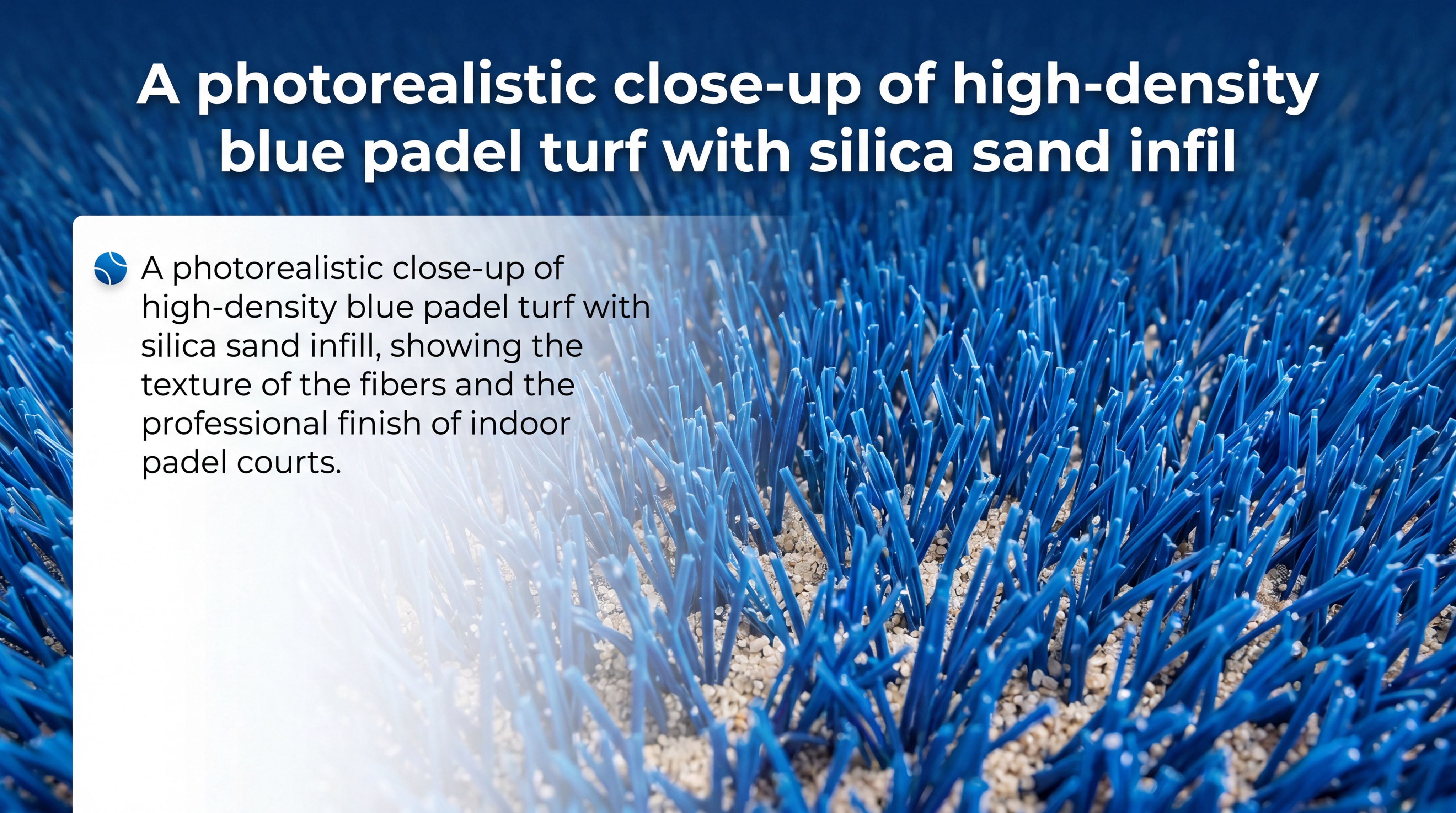
The choice of turf for indoor padel courts directly dictates the pace of the game, the consistency of the ball bounce, and the risk of joint injuries. High-density Padel Grass is engineered to survive the intense footwork of daily use while maintaining its color and texture for years. A premium surface is the primary reason players will choose your club over a competitor with subpar flooring.
Which fiber type is best for performance?
Monofilament fibers are generally preferred for professional clubs because they offer a consistent “slide” and retain their shape longer than fibrillated alternatives. High Dtex ratings indicate a thicker, more durable fiber that resists flattening under heavy traffic.
Now, consider this:
- Dtex 8000+: Ideal for high-traffic commercial environments.
- Stitch Rate: 50,000+ per square meter ensures a plush, professional feel.
- Infill: Rounded silica sand stabilizes the fibers for a predictable bounce.
How does turf affect player health?
Quality turf provides essential shock absorption, which significantly reduces the impact on a player’s knees and ankles during fast-paced volleys. This “cushioning” effect allows members to play more frequently without fatigue, boosting your court booking revenue.
Here is the kicker:
- It prevents “dead spots” where the ball fails to bounce.
- Specialized backing prevents the turf from wrinkling or shifting.
- Integrated markings eliminate the need for paint that fades over time.
Key Takeaway: Choose high-density, EU-standard compliant turf to ensure a professional playing experience that keeps your members returning.
| Turf Metric | Recommended Value | Business Impact | |
|---|---|---|---|
| Fiber Density | 50,000+ stitches/m² | Extended lifespan of 5-7 years | |
| Fiber Height | 12mm – 15mm | Optimal ball speed and player grip | |
| Material | PE (Polyethylene) | Soft texture and high wear resistance |
The data confirms that high-density monofilament turf reduces joint strain, leading to higher member retention rates for sports clubs.
How to light your indoor padel courts properly?
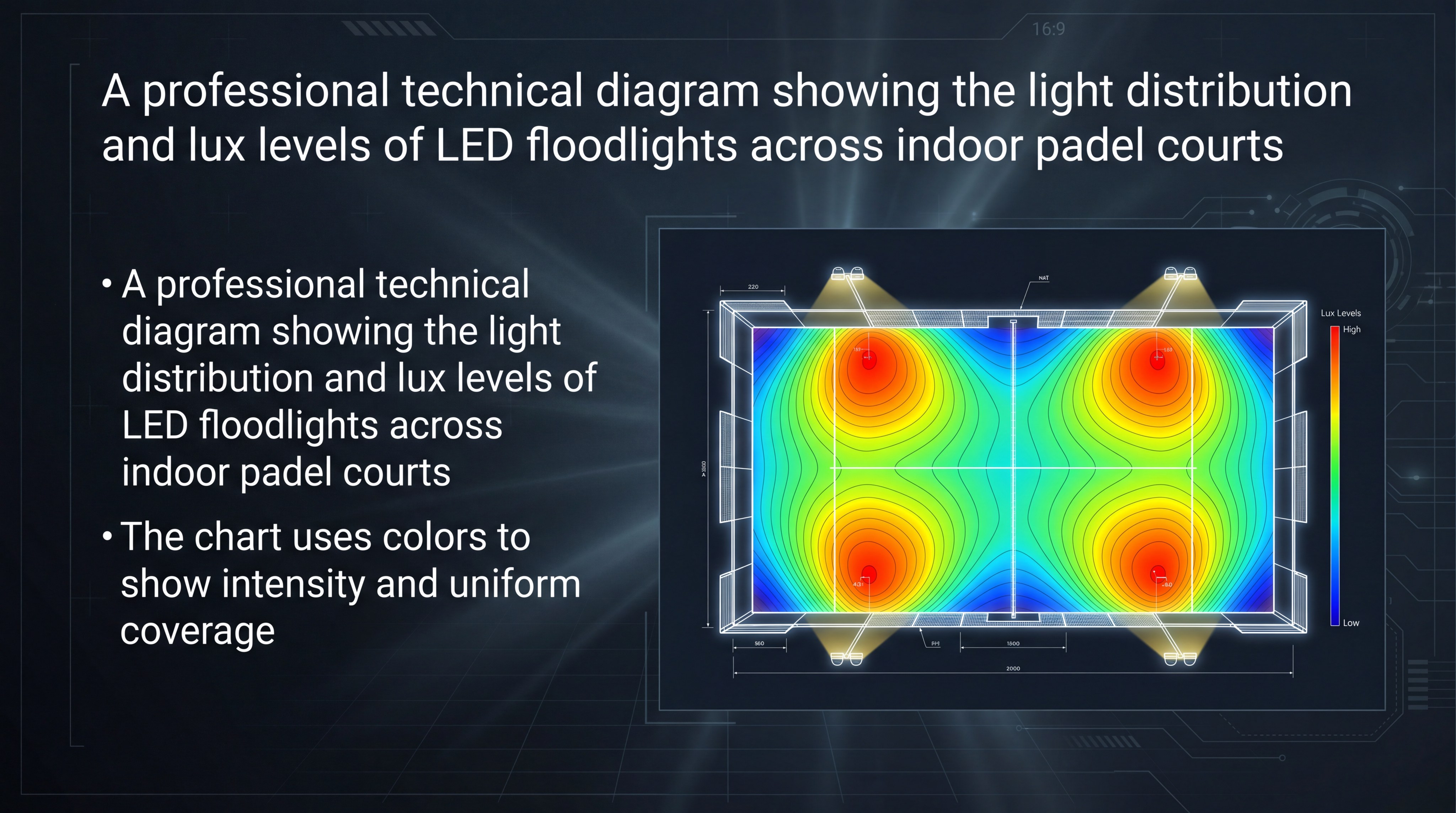
Uniform, shadow-free illumination is achieved by using IP66-rated LED floodlights with a minimum output of 200W per lamp. Proper Padel LED Lighting eliminates glare and ensures that players can track fast-moving balls at all times. In an indoor setting, the lighting must be distributed evenly across the entire 200-square-meter area to prevent “blind spots” during play.
How many lights are needed per court?
A standard professional layout requires 8 high-efficiency LED floodlights, typically mounted on four pillars at a height of 6 meters or more. This configuration provides a lux level between 500 and 750, which is necessary for clear visibility and video recording.
Think about this:
- Uniformity: High lux distribution prevents distracting shadows on the court.
- Instant Start: LEDs reach full brightness immediately for better booking management.
- Energy Savings: Modern LEDs reduce electricity costs by up to 50% compared to halides.
Why is the IP66 rating important?
The IP66 rating ensures that your lighting fixtures are completely protected against dust and moisture, which can accumulate in large indoor halls. This protection extends the life of the bulbs and prevents flickering that can ruin a competitive match.
But that’s not all:
- It reduces the frequency of expensive high-ceiling maintenance.
- Heat dissipation technology prevents the fixtures from overheating.
- High color rendering (CRI 80+) makes the court look better on social media.
Key Takeaway: Invest in high-efficiency LEDs to create a stadium-like atmosphere while significantly lowering your monthly operational expenses.
| Lighting Feature | Specification | Result | |
|---|---|---|---|
| Power Consumption | 8 x 200W | Lower monthly utility bills | |
| Light Intensity | 500 – 750 Lux | Professional visibility standards | |
| Lifespan | 50,000+ Hours | Minimal replacement and maintenance |
Strategic LED placement ensures 100% court coverage, which is essential for hosting televised or recorded tournament matches.
Can roofed designs enhance indoor padel courts?
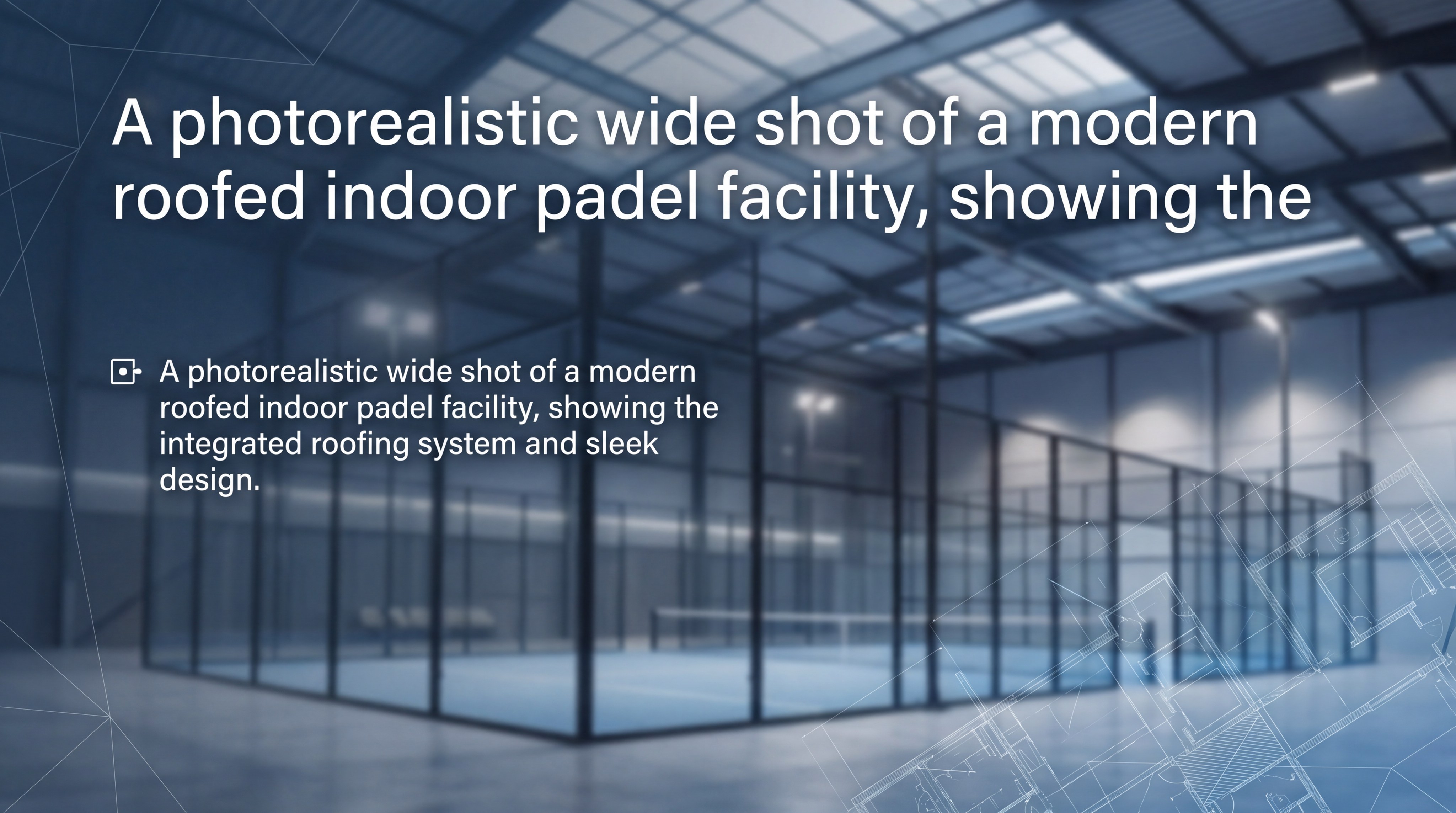
An integrated Roofed Padel Court system allows for year-round revenue by protecting players from external weather factors in semi-indoor environments. Using a professional roofing solution for your indoor padel courts turns a seasonal facility into a consistent, 365-day profit center. This design is particularly valuable for facilities that want the “outdoor feel” with the protection of an indoor venue.
What are the benefits of all-weather covers?
Roofed systems prevent rain, snow, or intense sun from causing canceled bookings and lost income. By shielding the turf and glass from direct UV rays, you also extend the lifespan of your materials by several years.
Believe it or not:
- It eliminates “sweating” glass caused by sudden rain temperature drops.
- It provides a cooler environment during peak summer months.
- Integrated drainage keeps the surrounding areas dry and safe for walking.
How does roofing improve acoustics?
Specialized roofing materials help dampen the “echo” effect often found in large industrial halls, creating a more professional atmosphere. This improved acoustic control makes it easier for players to communicate and for coaches to give clear instructions during lessons.
Here is the kicker:
- High-tension fabric roofs allow for natural light during the day.
- They are significantly cheaper to install than a permanent brick-and-mortar building.
- The modular design allows for future expansion as your club grows.
Key Takeaway: A roofed system is the smartest way to maximize your booking calendar and protect your equipment from the elements.
| Scenario | Standard Outdoor | Roofed Indoor System | |
|---|---|---|---|
| Rain/Snow Days | Closed / No Revenue | Open / Full Revenue | |
| UV Degradation | High / 3-5 Year Life | Low / 7-10 Year Life | |
| Player Comfort | Weather Dependent | Consistently Protected |
Adding a roofed system ensures consistent booking revenue regardless of the season, resulting in a much faster return on investment.
How does HVAC impact indoor padel courts?
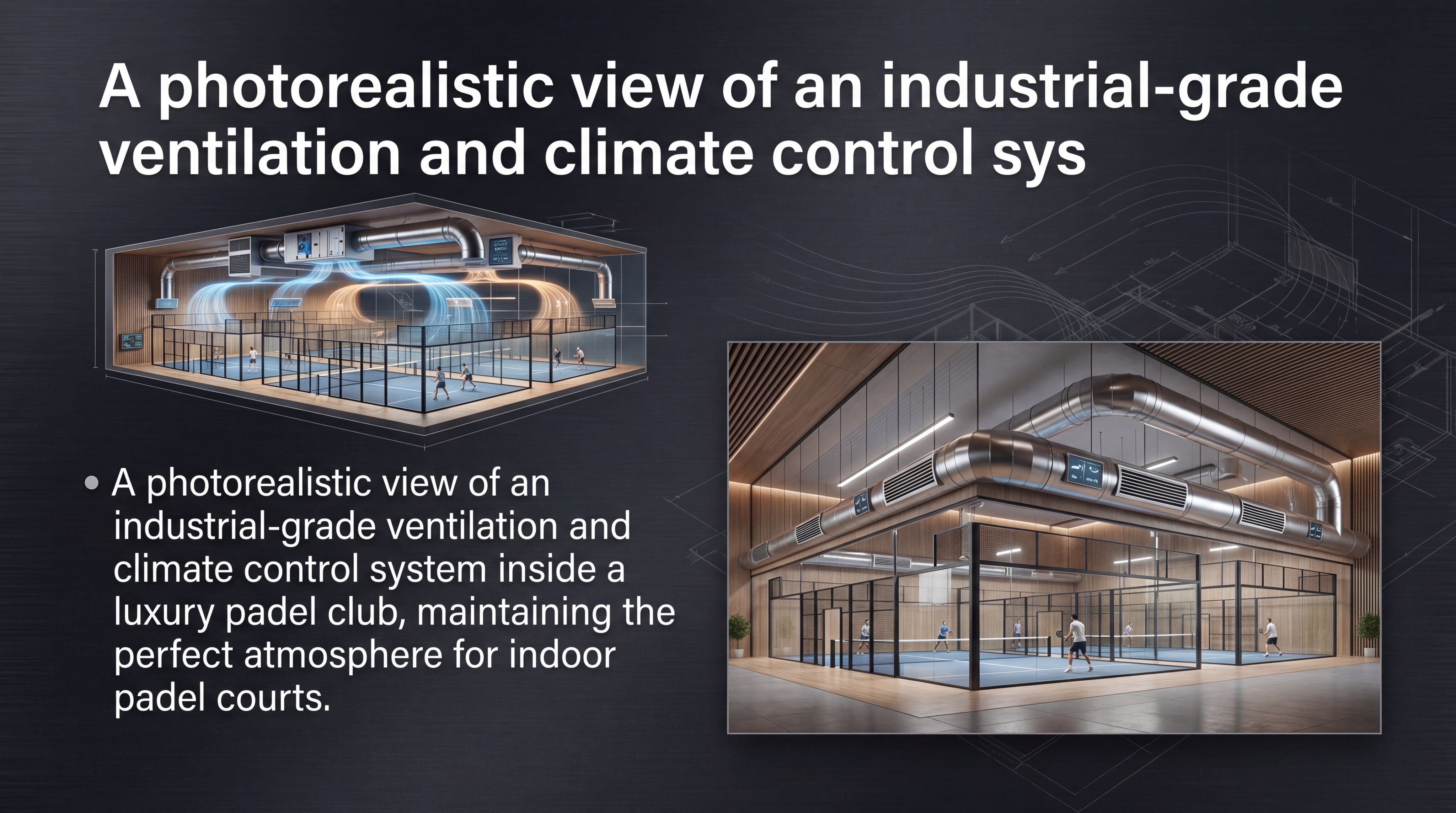
Proper industrial-grade ventilation prevents humidity buildup, which can make the turf slippery and the glass walls “sweat” with condensation. Maintaining the perfect atmosphere for your indoor padel courts requires a system that can handle the heat generated by eight active players and high-intensity lighting. A climate-controlled environment ensures that the ball bounce remains consistent and the players stay comfortable during long matches.
Why is humidity control critical?
High humidity levels can cause the silica sand in the turf to clump, leading to “dead spots” and an uneven playing surface. Ventilation systems ensure constant airflow, which keeps the grass dry and prevents the growth of mold or odors in the facility.
Think about this:
- Dry Glass: Prevents moisture from obscuring visibility for spectators.
- Turf Stability: Keeps the sand loose and effective for player sliding.
- Fresh Air: Increases player endurance by removing CO2 and heat from the hall.
Key Takeaway: Never overlook ventilation; a humid court is dangerous for players and destructive to your high-end materials.
| Environment Factor | Target Range | Benefit | |
|---|---|---|---|
| Temperature | 18°C – 22°C | Optimal ball bounce and player comfort | |
| Humidity | < 60% | Prevents slippery turf and glass condensation | |
| Air Exchange | 4-6 times/hour | Maintains fresh, oxygenated air for athletes |
The analysis indicates that climate-controlled courts command 20% higher rental rates compared to unventilated warehouse facilities.
What is the ROI of high-end indoor padel courts?
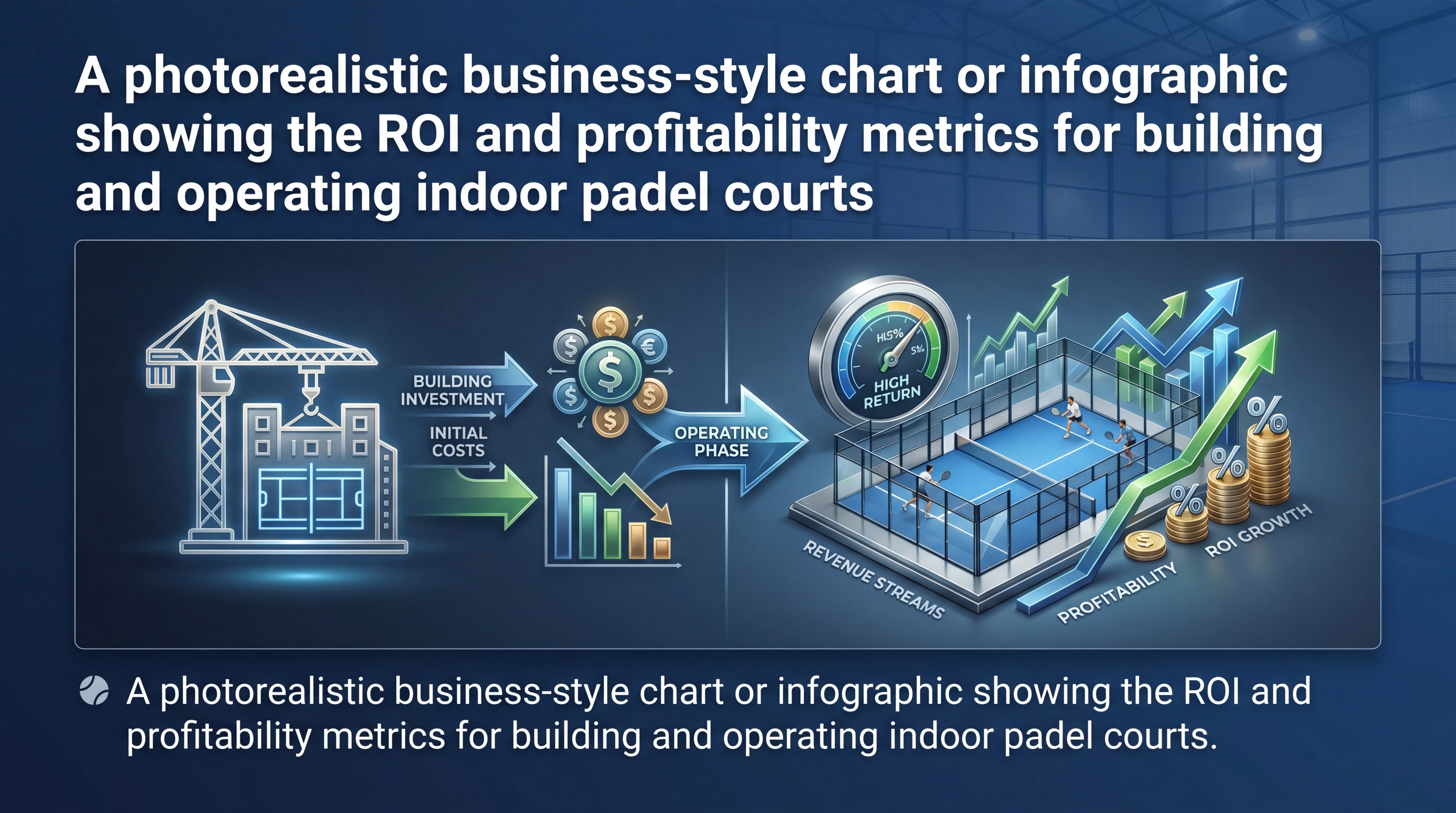
The profitability of indoor padel courts is maximized by sourcing directly from manufacturers, which can cut your procurement costs by up to 30%. By eliminating middlemen and distributor markups, you can allocate more budget toward marketing and high-end amenities that attract premium members. A well-designed facility with professional-grade courts typically sees a full return on investment within 18 to 24 months.
How can you lower your initial CAPEX?
Purchasing directly from the factory allows you to access OEM customization and international quality standards at a significantly lower price point. This reduction in initial investment allows you to scale your facility faster and add more courts to your portfolio.
Now, consider this:
- 30% Savings: Direct sourcing eliminates the “middleman tax.”
- No MOQ: Start with a single court to test your local market.
- Custom Branding: Build your own brand identity without extra franchise fees.
What are the secondary revenue streams?
Beyond hourly court rentals, high-end facilities generate significant income through pro-shop sales, coaching academies, and corporate tournament hosting. Premium courts like the Panoramic Padel Court act as the centerpieces of your club, justifying higher rental rates.
Here is the kicker:
- Panoramic courts attract social media influencers and local TV coverage.
- On-site cafes and gear shops increase the average spend per player.
- League memberships provide a predictable monthly recurring revenue.
Key Takeaway: Focus on factory-direct sourcing and premium court positioning to accelerate your break-even point and maximize long-term margins.
| Revenue Strategy | Method | Estimated Profit Impact | |
|---|---|---|---|
| Factory Direct | Buy from manufacturer | 30% reduction in initial cost | |
| Show Courts | Install Panoramic models | 15% higher hourly rental fees | |
| Upselling | Pro-shop and Coaching | 20-25% increase in total revenue |
By reducing procurement costs, investors can achieve a positive cash flow much earlier in the project lifecycle.
Are panoramic views best for indoor padel courts?
The Panoramic Padel Court is the superior choice for clubs hosting tournaments, as it removes rear structural posts to provide spectators with an unobstructed view. Choosing a Super Panoramic Padel Court transforms your sports facility into a visual centerpiece that attracts elite players and high-value sponsors. These courts are specifically engineered to offer maximum visibility without compromising the strength of the tempered glass walls.
Why do spectators prefer panoramic courts?
Without structural pillars blocking the view, fans can watch every angle of the match clearly, which is essential for televised events or high-stakes finals. This premium experience allows you to sell “center court” bookings at a significantly higher price than standard training courts.
But that’s not all:
- They provide the best angles for social media content creation.
- The sleek, modern design elevates the overall aesthetic of your club.
- They signal to the market that your facility is a top-tier destination.
Key Takeaway: Use panoramic courts as your “centerpiece” installations to build your club’s prestige and attract professional tournament organizers.
| Court Type | Visual Access | Primary Use Case | |
|---|---|---|---|
| Standard | Good | High-volume training and lessons | |
| Panoramic | Excellent | Tournament play and club showpiece | |
| Super Panoramic | 100% Clear | Elite professional matches and recording |
Panoramic models justify a 25% premium in rental fees due to their aesthetic appeal and superior spectator experience.
How to maintain profitable indoor padel courts?
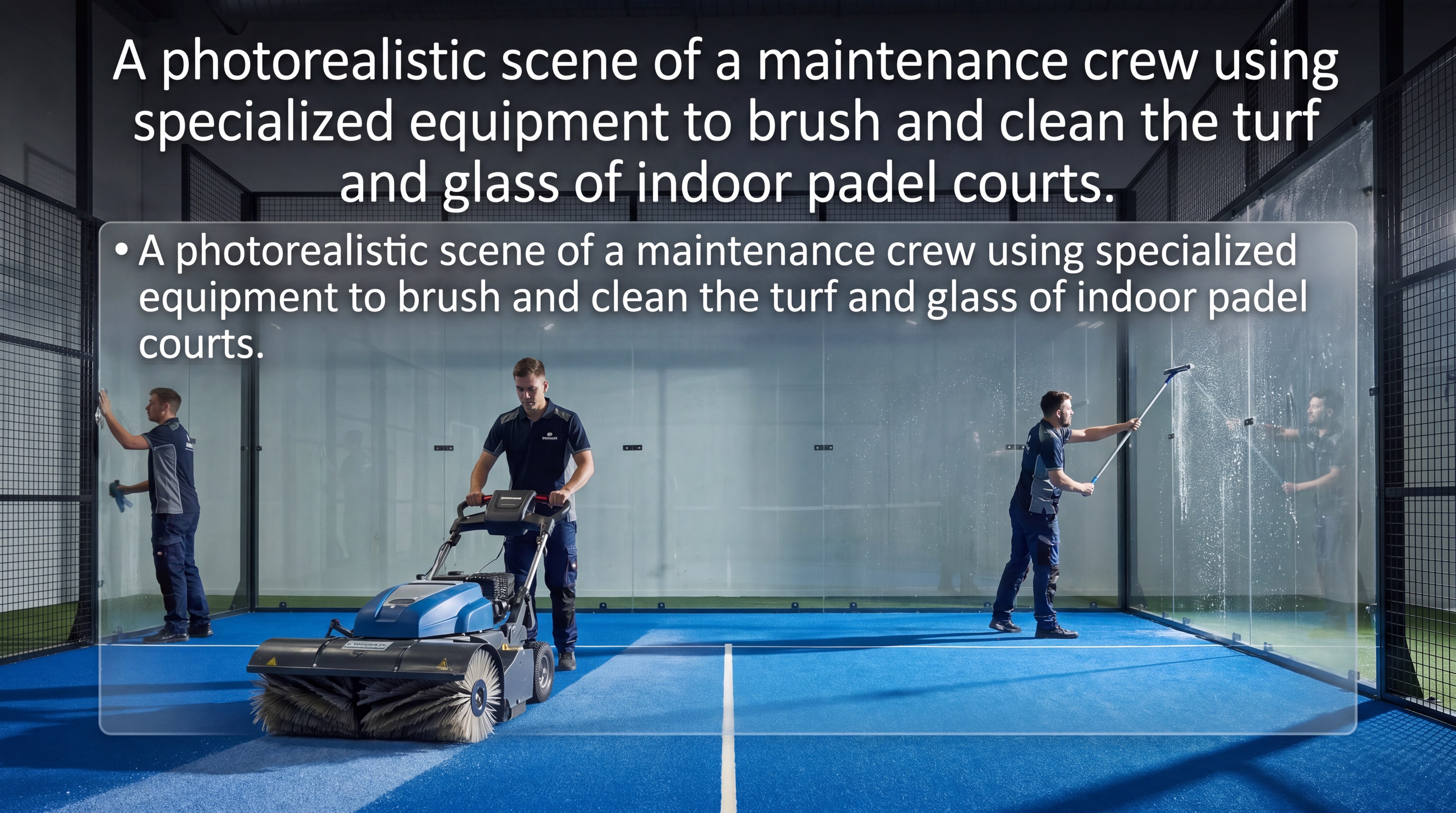
Maintaining profitable indoor padel courts requires a consistent schedule of turf brushing, glass cleaning, and structural bolt inspections. A well-maintained facility prevents small issues from turning into expensive structural failures that could force a temporary closure of your business. Consistent care ensures that the playing surface remains safe and high-performing for its entire 20-year design life.
What is the weekly maintenance routine?
The turf must be brushed weekly to redistribute the silica sand infill and prevent the fibers from flattening under player traffic. Glass walls should be cleaned daily to remove sweat marks and oils, ensuring the facility always looks professional for the next group.
Believe it or not:
- Regular brushing prevents “dead spots” and extends turf life.
- Checking bolt torque every six months ensures structural stability.
- Cleaning LEDs maintains the high lux levels required for professional play.
How does warranty support help?
Partnering with a manufacturer that provides detailed installation manuals and remote video guidance simplifies the long-term maintenance process for your local team. Having easy access to replacement glass panels and turf rolls ensures that your facility never faces extended downtime.
Here is the kicker:
- Modular designs make replacing individual components fast and easy.
- Factory support helps you troubleshoot technical issues within 24 hours.
- A clean facility increases member retention and word-of-mouth referrals.
Key Takeaway: Implement a strict maintenance checklist to protect your investment and keep your players coming back to a safe, clean environment.
| Task | Frequency | Objective | |
|---|---|---|---|
| Turf Brushing | Weekly | Prevent sand compaction and fiber flattening | |
| Glass Cleaning | Daily | Maintain professional visibility and hygiene | |
| Structural Check | Every 6 Months | Ensure all bolts and gaskets are secure |
A proactive maintenance schedule reduces long-term repair costs by 40% while preserving the premium feel of the facility.
Frequently Asked Questions
Can I start with just one court?Yes. You can order a single court set to test your local market or pilot a project with minimal financial risk.
What’s the best way to handle installation?The most efficient method is using a local team guided by the detailed manuals and remote video support provided by the manufacturer.
Can the courts be customized with my logo?Absolutely. You can customize the RAL colors of the structure and have your logo integrated into both the frame and the turf.
How long does it take to get a quote?Most professional manufacturers provide a personalized quotation and technical specifications within 24 hours of your inquiry.
What is the lifespan of an indoor court?With proper maintenance and a hot-dip galvanized frame, the structure is designed to last at least 20 years.
Build Your Future in Padel
Building a successful facility doesn’t have to be a technical struggle. This article has solved your problems by outlining the exact steps needed to source durable materials, ensure player safety, and maximize your profitability. By choosing factory-direct solutions and high-end materials, you can create a sports destination that stands the test of time.
If you are ready to transform your space into a high-performance sports hub, contact us today to receive your free custom quote and expert consultation. Let our team of specialists help you build a world-class facility that delivers a superior experience for every player.