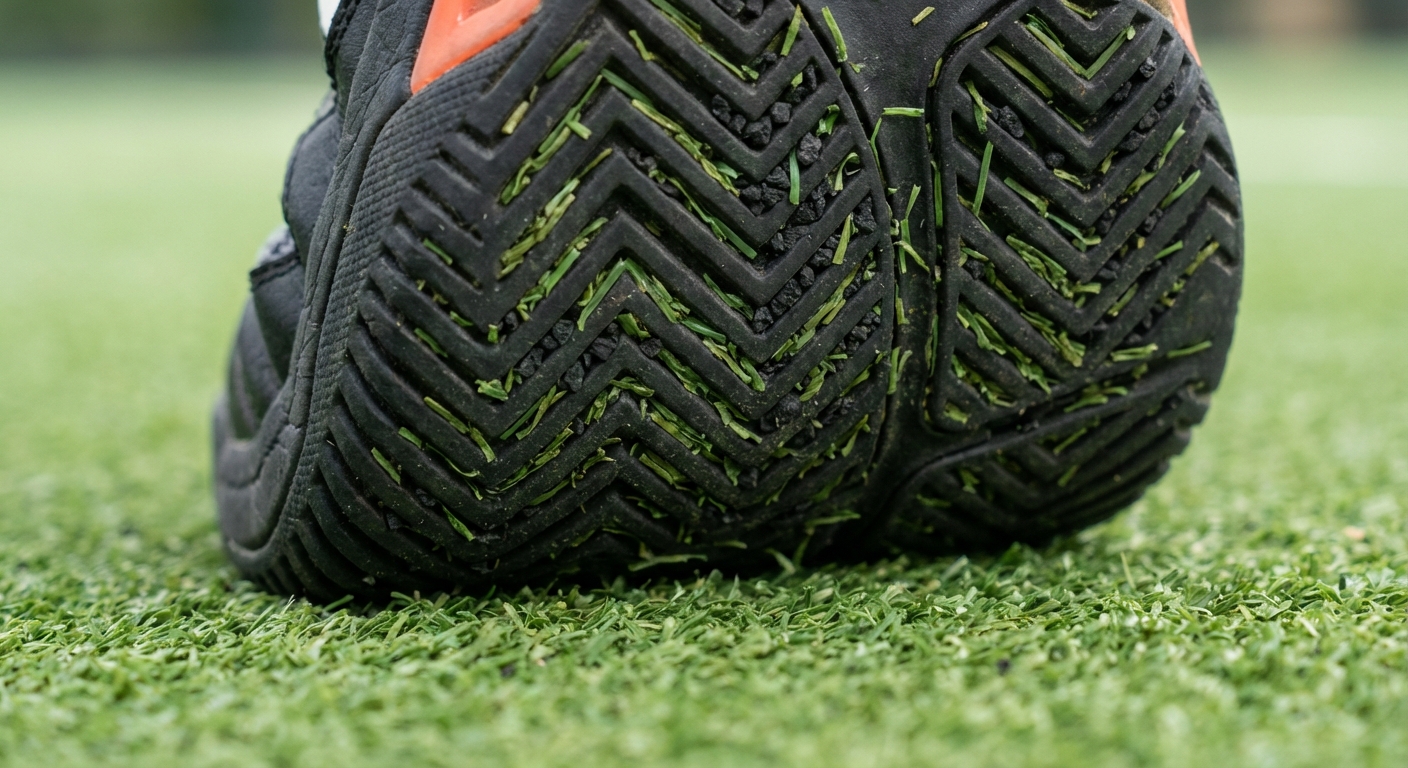
What exactly is tenis para padel?
Tenis para padel is a biomechanically engineered tool designed to manage the specific friction coefficients of artificial turf. While they may look like standard sneakers, they are built to bridge the gap between the stability of court shoes and the grip of turf shoes.
Defining specialized footwear for the court
Think about this for a second:
- The footwear is designed specifically for the unique combination of sand and synthetic fibers.
- It prioritizes lateral rigidity over forward-running mechanics to support side-to-side bursts.
- The construction utilizes high-density rubber to withstand abrasive court surfaces.
But here is the kicker:
Using standard running shoes on a padel court is the fastest way to suffer an ankle sprain due to the lack of lateral support.
Differences from standard court shoes
You might be wondering:
- Padel shoes feature reinforced toe caps for frequent dragging during volleys.
- They maintain a lower drop profile to keep your center of gravity close to the ground.
- Specific flex points in the forefoot allow for rapid explosive movements.
It gets better:
These shoes are often lighter than traditional tennis shoes to facilitate the constant, short sprints required in the cage.
Key Takeaway: Authentic tenis para padel is essential because it is the only footwear designed to handle the specific sliding and pivoting mechanics of the sport without compromising safety.
| Feature | Standard Tennis | Tenis para Padel |
|---|---|---|
| Primary Grip | Herringbone/All-court | Omni-directional/Deep Clay |
| Weight | Moderate to Heavy | Lightweight/Agile |
| Lateral Support | High | Extreme |
Footwear choice acts as the primary interface between the athlete and the Padel Grass, directly impacting the rate of surface wear.
Why is the sole of tenis para padel unique?
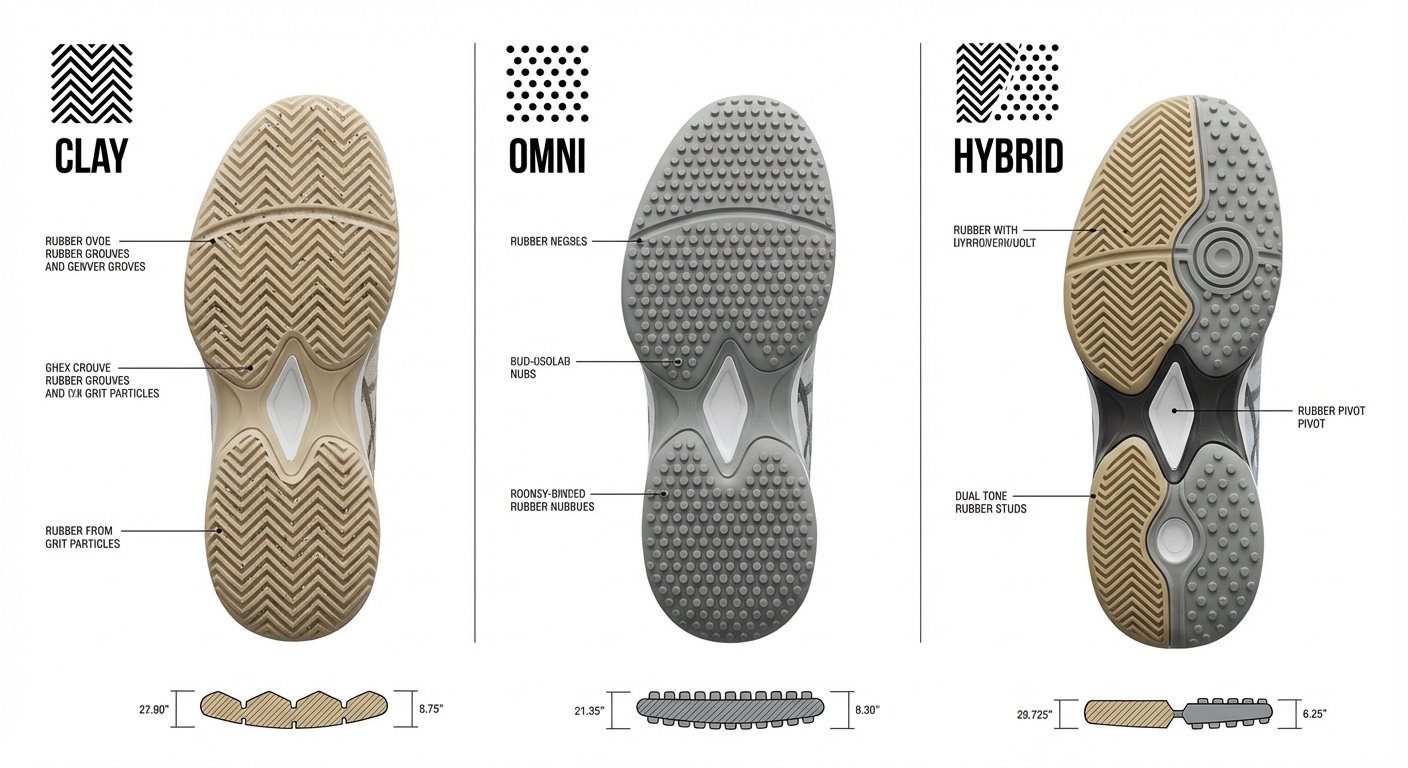
The outsole geometry is the most critical differentiator in tenis para padel, determining the player’s ability to slide or stop on demand. Unlike tennis, where you might slide on clay, padel requires a very specific grip level to avoid “sticking” to the turf, which can cause severe knee torque.
The importance of the grip pattern
Look at it this way:
- Omni soles utilize small “dots” or studs to grip the grass without catching on the fibers.
- Deep herringbone patterns allow for controlled slides on sandy surfaces.
- Hybrid soles combine both technologies for versatility across different court generations.
But wait, there’s more:
Tenis para padel outsoles are often made of more durable rubber compounds to resist the “sandpaper effect” of the court.
Friction management on artificial turf
Believe it or not:
- High-density rubber compounds prevent the shoe from gripping too hard, which protects your joints.
- Strategic channels in the sole allow for sand displacement so the grip remains consistent.
- Specific Shore hardness levels are chosen to balance long-term durability with immediate traction.
The bottom line:
The right sole prevents the sudden stops that lead to meniscus tears and ACL injuries.
Key Takeaway: The uniqueness of the sole lies in its ability to balance “grip and glide,” allowing for explosive starts and safe, controlled finishes.
| Sole Type | Best Surface | Key Benefit |
|---|---|---|
| Omni | Professional Turf (No Sand) | Maximum traction |
| Clay/Herringbone | Traditional Turf (High Sand) | Controlled sliding |
| Hybrid | All Surfaces | Maximum versatility |
As courts evolve toward Standard Padel Court designs with less sand, sole technology is shifting toward higher-density circular patterns for better rotation.
How does tenis para padel support pivoting?
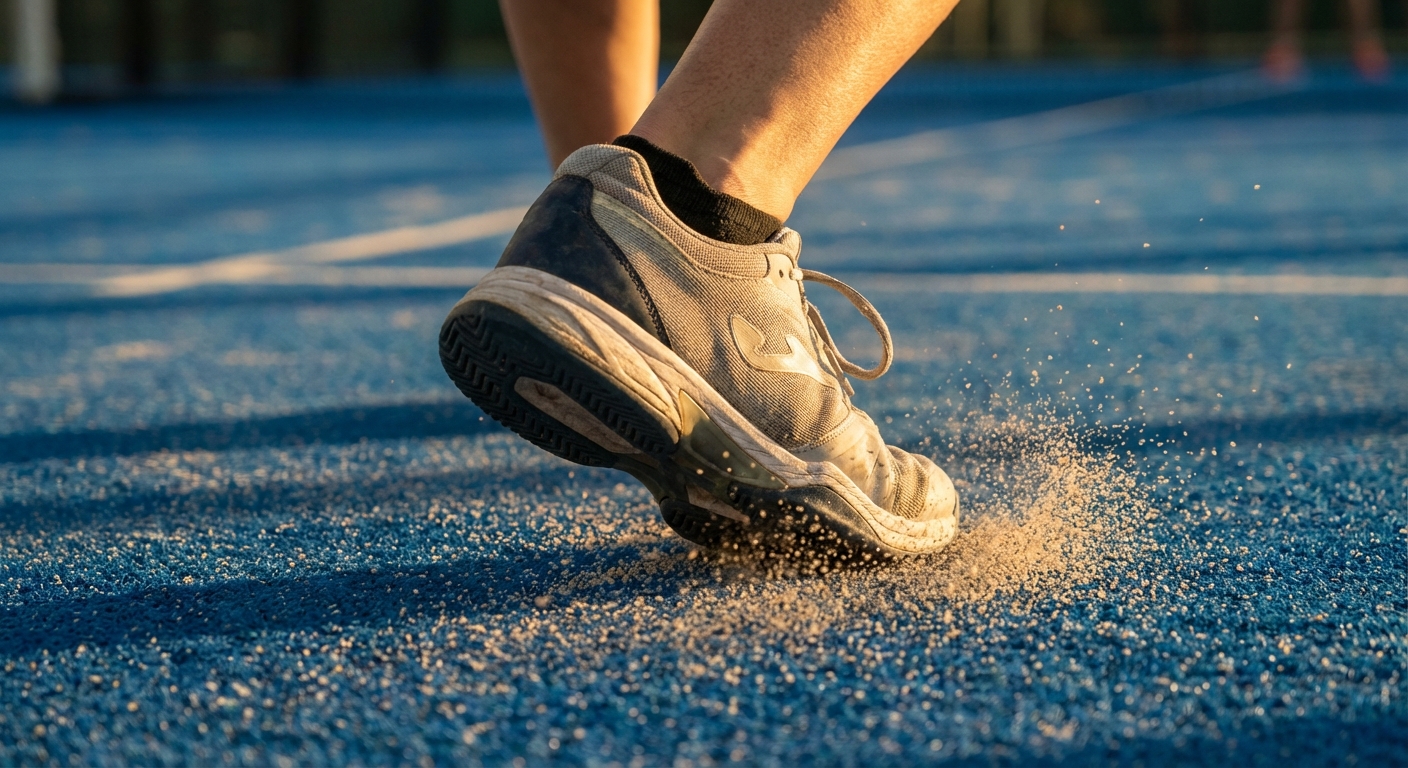
Tenis para padel facilitates 360-degree rotation through dedicated pivot points located under the ball of the foot. Because the game involves constant turns to track balls off the glass, the shoe must allow the foot to rotate without meeting excessive resistance from the turf.
Mechanics of the pivot point
But here is the deal:
- Circular patterns under the forefoot act as a “swivel,” reducing the force needed to turn.
- Reduced friction at these specific zones prevents the foot from becoming “stuck” while the body rotates.
- Structured grooves allow the shoe to twist naturally with your foot’s biomechanics.
But here is the kicker:
Traditional shoes lack these zones, forcing your knees and ankles to absorb the rotational energy instead of the shoe.
Preventing joint torque through design
You might be surprised:
- Decoupled heel and forefoot sections allow for independent movement.
- Midfoot shanks resist longitudinal twisting to keep the foot stable.
- Contoured edges prevent the shoe from “tripping” you during sudden side-steps.
It gets better:
Modern designs integrate these pivot zones so seamlessly that you feel faster and more agile during transition plays.
Key Takeaway: Pivoting is more frequent in this sport than in traditional tennis, necessitating dedicated rotation zones in the sole to protect the player’s lower joints.
| Component | Function | Result |
|---|---|---|
| Pivot Disk | 360-degree rotation | Reduced knee strain |
| Midfoot Shank | Torsional rigidity | Ankle stability |
| Decoupled Sole | Independent flex | Improved agility |
Without these pivot points, the player’s weight distribution on the Padel Structure leads to excessive strain on the ACL and meniscus.
Is cushioning different in tenis para padel?
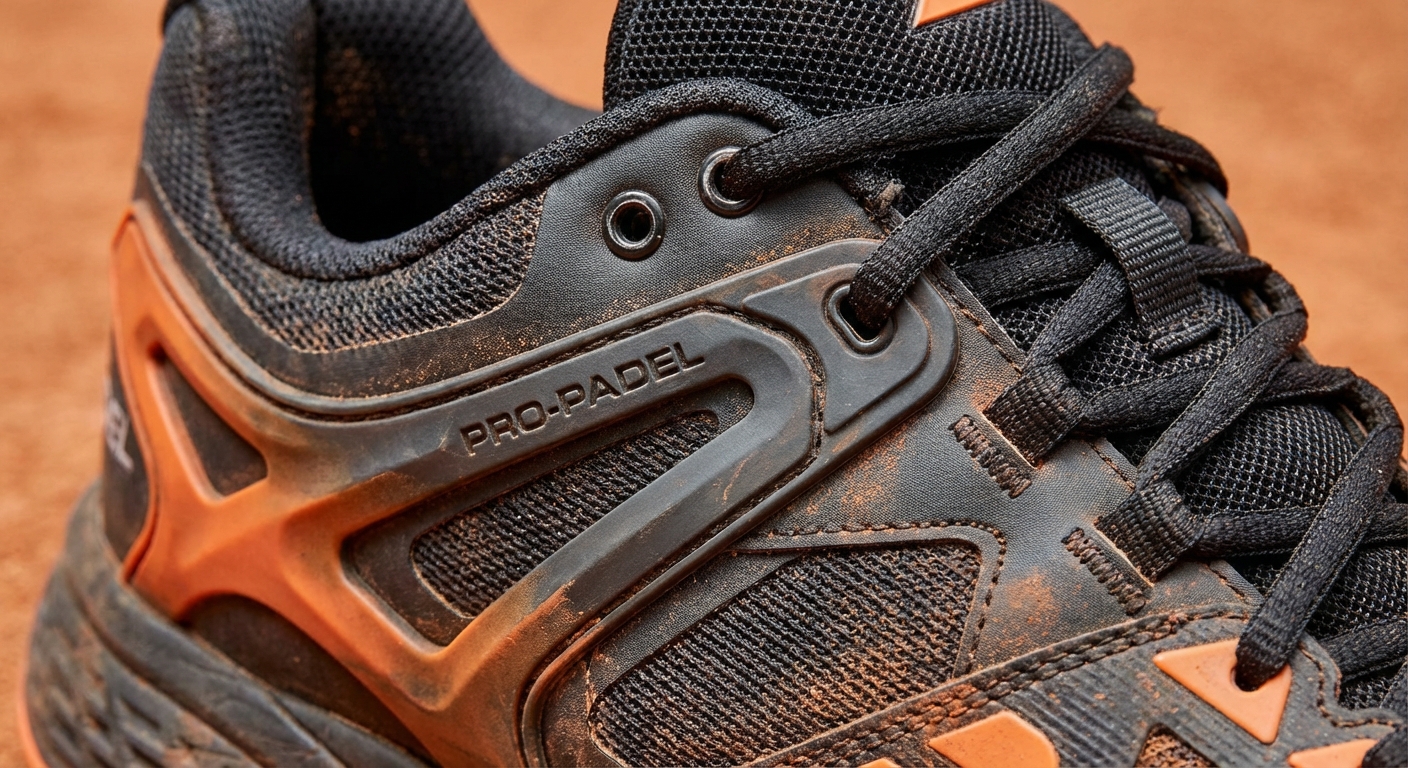
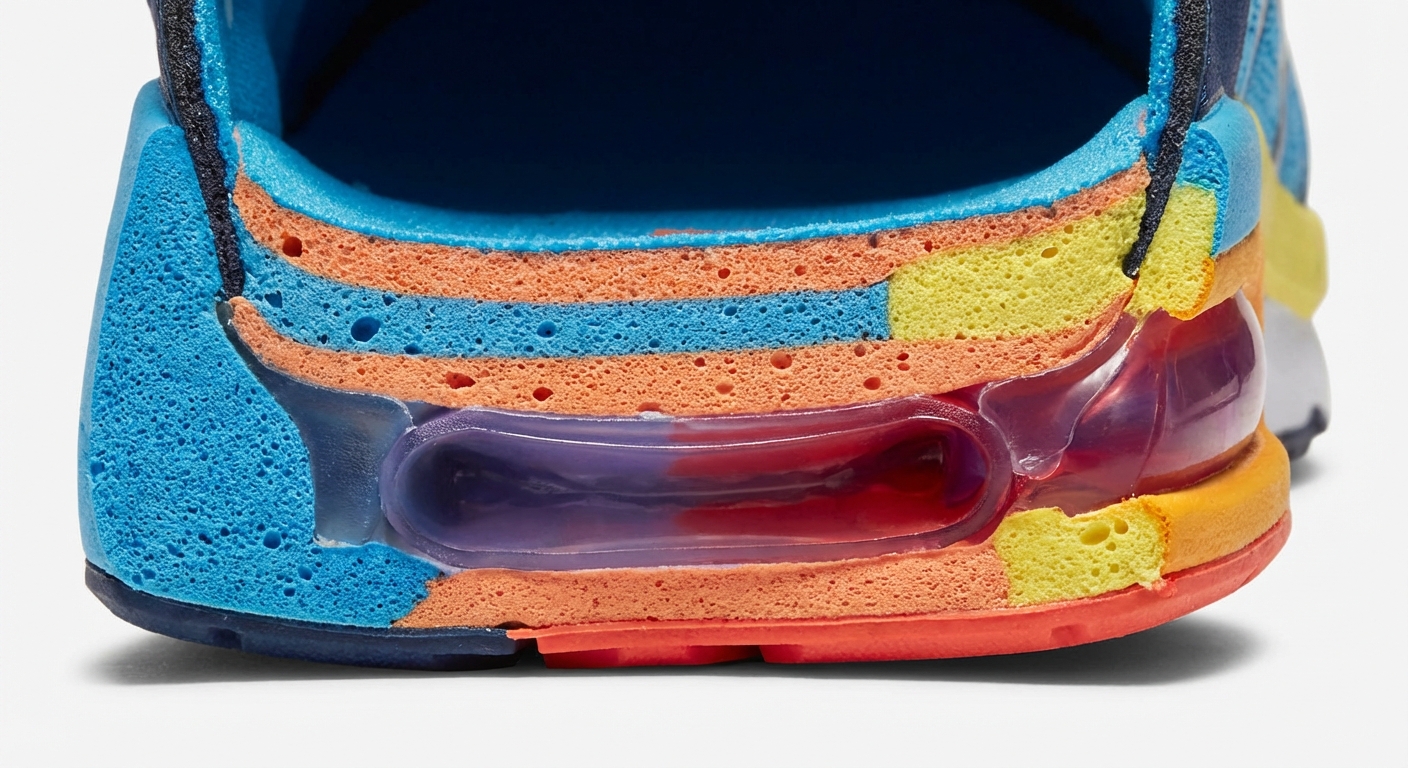
Verticality in tenis para padel requires a heel-to-toe drop and cushioning profile that prioritizes landing safety after overhead smashes. Unlike running shoes which cushion forward impact, padel shoes are built to absorb the vertical shock of jumping and the lateral shock of stopping.
Impact protection for vertical jumps
Look at it this way:
- Thicker heel units are engineered to absorb the landing from high-altitude smashes.
- High-rebound foam in the forefoot assists in the “second jump” at the net.
- Gel or air-based inserts are strategically placed at high-impact zones to prevent fatigue.
But here is the kicker:
The cushioning must be firm enough to provide feedback but soft enough to protect your spine and heels.
Energy return for explosive movement
Believe it or not:
- EVA (Ethylene Vinyl Acetate) midsoles provide lightweight responsiveness for quick net play.
- Polyurethane (PU) additives are often used to increase the long-term lifespan of the cushioning.
- Reactive insoles adapt to your specific arch during high-load movements for a custom feel.
It gets better:
Newer tenis para padel models use “super foams” that return energy to your stride, making you feel fresher in the third set.
Key Takeaway: Padel cushioning is specialized for high-impact vertical landings and rapid lateral restarts, ensuring player longevity throughout a tournament.
| Cushion Type | Location | Purpose |
|---|---|---|
| Gel/Air Units | Heel | Landing shock absorption |
| Rebound Foam | Forefoot | Explosive net jumps |
| TPU Shank | Midfoot | Arch support & stability |
The landing phase after a smash places up to 5x body weight on the heel, making premium midsole materials like those found in Asics Padel Shoes non-negotiable.
Can tenis para padel prevent ankle injuries?
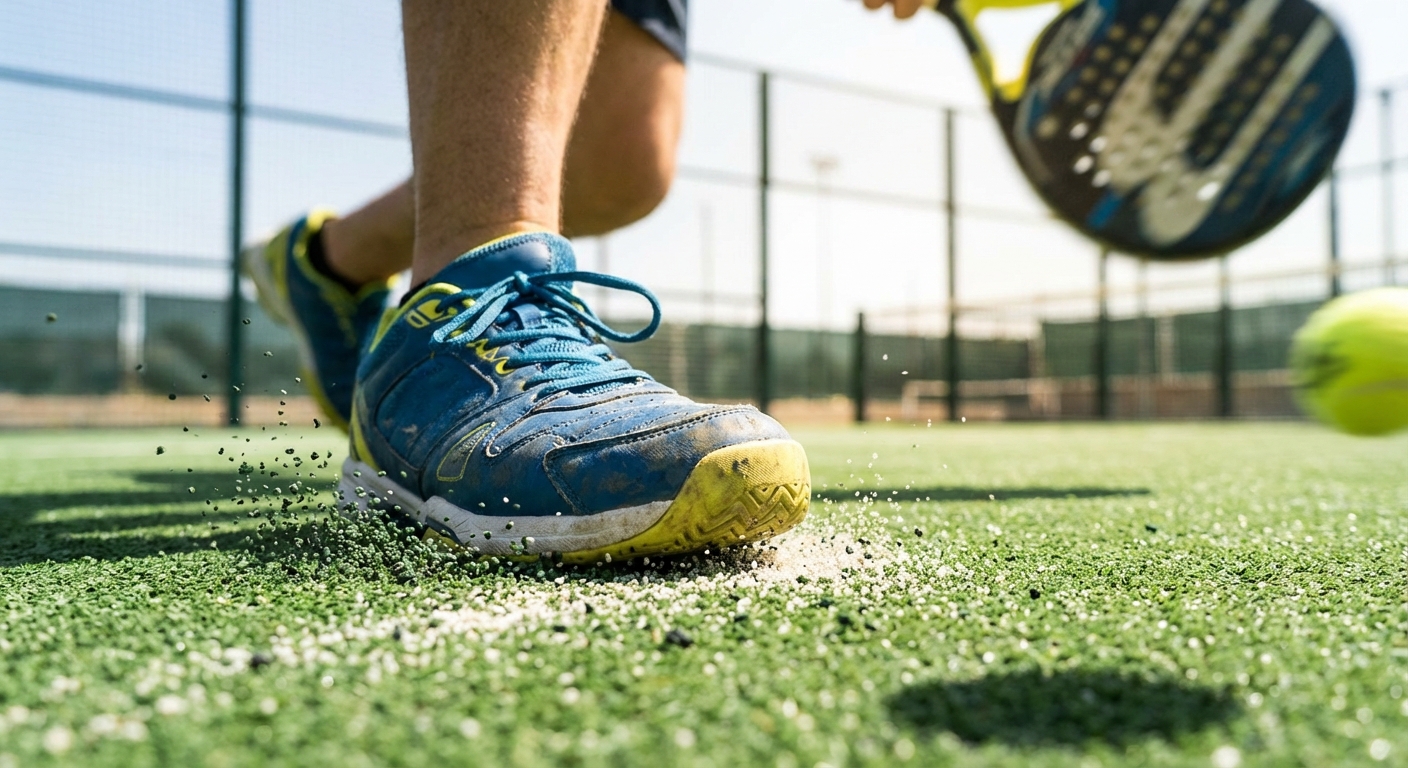
Ankle protection in tenis para padel is achieved through a combination of a wide base and rigid external heel support. Because players frequently move sideways at high speeds, the shoe must prevent the foot from “rolling over” the edge of the sole.
Lateral stability and heel locks
Does this sound familiar?
- External heel counters keep your foot centered and “locked-in” during sudden stops.
- Extended “outriggers” on the lateral side provide a wider base to prevent rolling.
- TPU (Thermoplastic Polyurethane) wraps around the midfoot for a secure, “glove-like” fit.
But here is the deal:
A secure heel lock is the difference between a successful recovery and a season-ending sprain.
Upper material integrity
The truth is:
- Synthetic leathers and reinforced meshes prevent the foot from sliding off the footbed.
- Heat-welded overlays provide structure without adding the weight of traditional stitching.
- Anatomic lacing systems pull the foot back into the heel cup to minimize internal movement.
It gets better:
Modern upper materials are breathable yet incredibly tough, resisting the abrasion of the court walls and turf.
Key Takeaway: Superior lateral support and a rigid heel chassis are the primary defenses against the common ankle injuries associated with high-speed court sports.
| Stability Feature | Mechanical Action | Injury Prevented |
|---|---|---|
| Lateral Outrigger | Widens contact base | Inversion sprain |
| Heel Counter | Anchors the calcaneus | Heel slippage/Blisters |
| Midfoot Wrap | Secures the metatarsals | Internal foot sliding |
Most injuries occur during lateral recovery; tenis para padel designs compensate for this with reinforced side-walls and stable chassis systems.
Does tenis para padel last longer on turf?
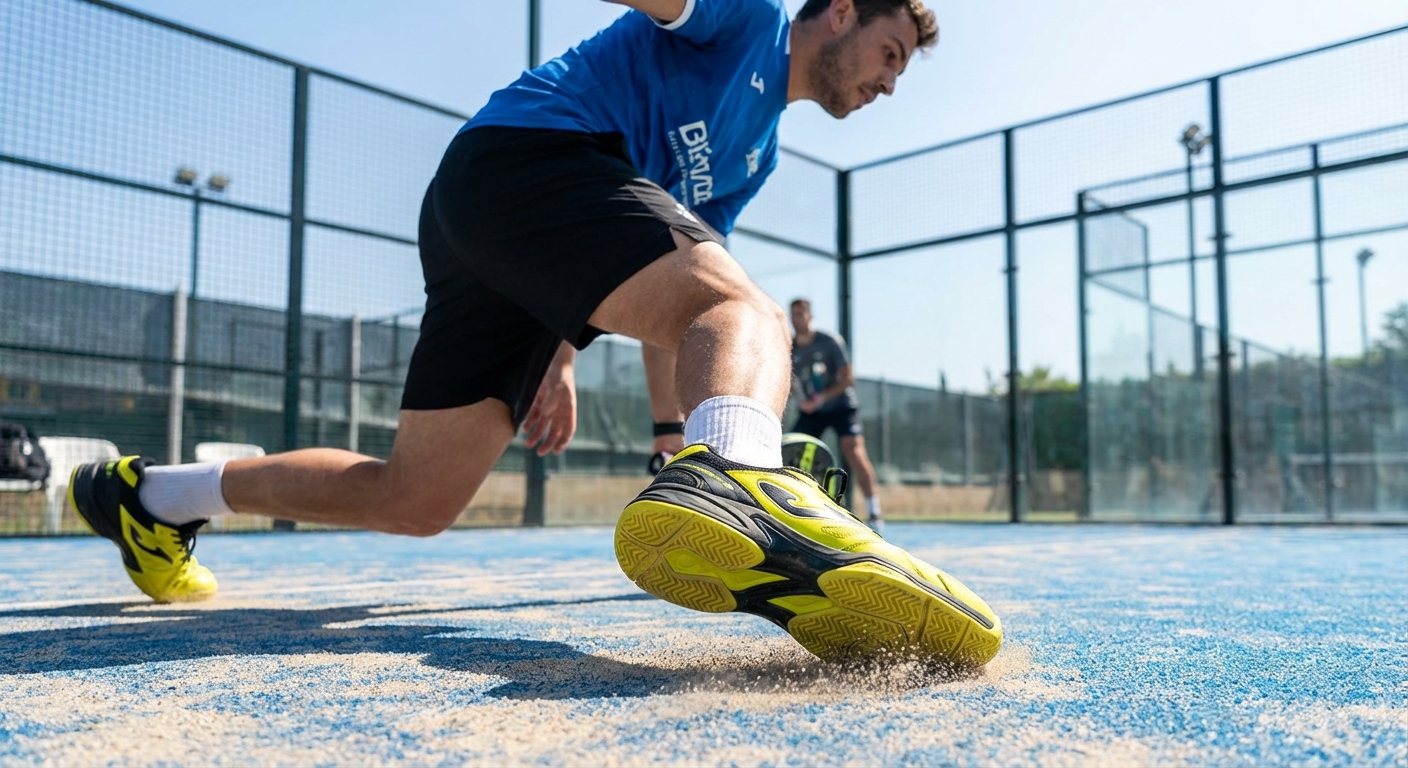
Longevity in tenis para padel is a function of rubber density and the inclusion of protective “drag zones” on the inner toe. Standard rubber soles burn through quickly on textured artificial grass, but padel-specific compounds are built to endure the friction.
Resistance to abrasive surfaces
Consider this:
- Standard tennis shoes often wear out in weeks due to the specific texture of padel turf.
- Padel-specific footwear uses high-abrasion rubber (H.A.R.) compounds for the outsole.
- Integrated toe guards prevent “toe drag” holes common in aggressive baseline players.
But wait, there’s more:
The durability of these shoes ensures that the grip pattern stays sharp for much longer, maintaining your safety over months of play.
Durability of the upper mesh
To be honest:
- Kevlar-infused fibers are often used in high-wear zones to prevent tearing.
- Breathable mesh is layered with protective films to keep sand out of the shoe.
- Double-stitching in the forefoot prevents the sole from delaminating under heat and pressure.
It gets better:
Investing in a quality pair actually saves you money by reducing the frequency of replacements.
Key Takeaway: Specialized padel shoes utilize high-abrasion materials to withstand the unique “sandpaper” effect of the court, offering better ROI than general sports shoes.
| Durability Element | Material | Typical Lifespan |
|---|---|---|
| Outsole | High-Abrasion Rubber | 6-12 Months |
| Toe Cap | Reinforced Rubber/TPU | Match-life of shoe |
| Upper | Reinforced Mesh | 8-12 Months |
For facility owners, promoting the right footwear ensures the Padel Glass and turf stay cleaner and last longer.
How to build high-quality tenis para padel?
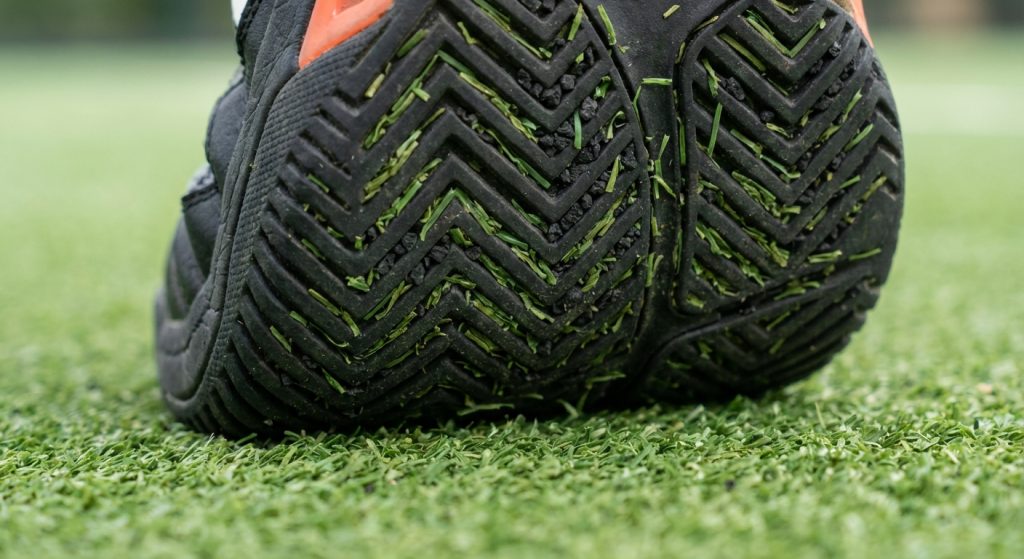
Building tenis para padel requires specialized molds that account for the wider footbed needed for lateral stability. It is a precision manufacturing process that balances flexibility, weight, and extreme durability.
Selecting the right raw materials
The first step:
- Sourcing high-grade TPU for the structural chassis is essential for stability.
- Utilizing non-marking, high-grip rubber ensures the court surface isn’t damaged.
- Selecting moisture-wicking internal fabrics is critical for comfort in hot climates.
But here is the deal:
Lower-quality materials will fail at the bonding points after just a few high-intensity matches.
The assembly process
It’s simpler than you think:
- Injection molding the midsole ensures consistent density and shock absorption.
- Cold-press bonding of the outsole ensures the glue doesn’t fail under court heat.
- Laser-cutting the upper panels allows for a millimeter-perfect fit and reduced waste.
It gets better:
Quality control in the bonding phase is what separates amateur footwear from professional-grade equipment.
Key Takeaway: High-quality padel shoes are built using advanced injection molding and laser-cutting technologies to ensure they can survive the extreme lateral forces of the game.
| Build Stage | Technology | Objective |
|---|---|---|
| Midsole | Injection Molding | Consistent cushioning |
| Outsole | Cold-Press Bonding | Heat-resistant adhesion |
| Upper | Laser Cutting | Precision fit |
A well-constructed shoe allows the player to focus entirely on their Padel Balls and strategy, rather than worrying about their equipment.
Why is lightweight tenis para padel essential?
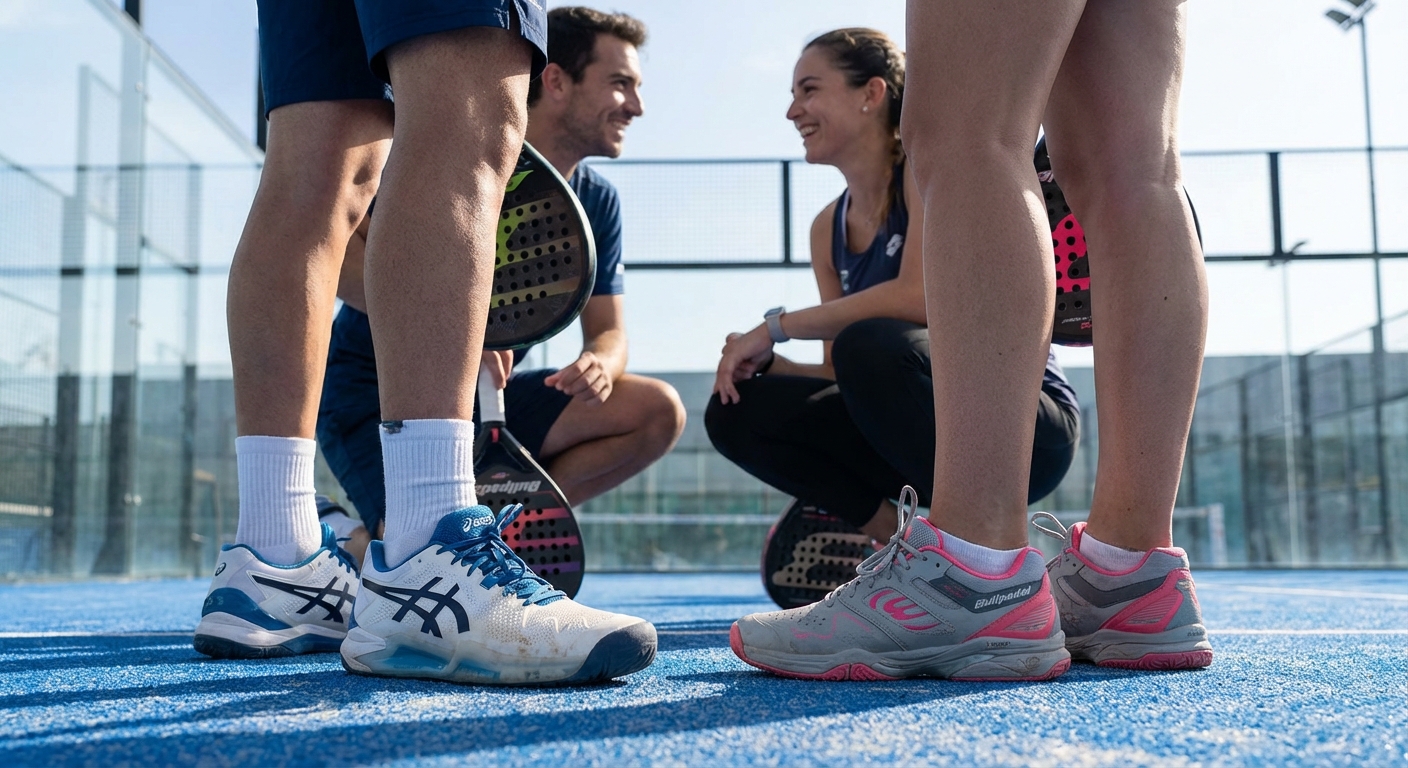
Weight reduction in tenis para padel must not come at the expense of lateral support or sole thickness. The game is faster than tennis due to the smaller court dimensions, meaning players must cover short distances in milliseconds.
Reducing player fatigue
This is crucial:
- Lighter shoes allow for faster reaction times at the net during quick exchanges.
- Reduced mass lowers the oxygen cost of movement during long, grueling matches.
- Modern synthetic materials achieve strength without the bulk of traditional leather.
But here is the kicker:
A 30g reduction in shoe weight can equate to significant energy savings over three sets.
Maintaining speed on the court
Keep in mind:
- Players perform hundreds of short bursts per match, making agility paramount.
- Lightweight shoes reduce the “clunky” feel that can lead to missteps.
- Advanced meshes provide structure while remaining nearly weightless.
It gets better:
The engineering challenge is finding the “sweet spot” between 320g and 380g for optimal professional performance.
Key Takeaway: Reducing shoe weight directly enhances agility and reaction speed, which are the two most critical physical attributes in the padel cage.
| Weight Class | Typical Weight | Best For |
|---|---|---|
| Ultra-Light | < 330g | Aggressive net players |
| Standard | 330g – 380g | All-around balanced play |
| Heavy-Duty | > 380g | Maximum stability/Baseliners |
Strategic weight management ensures that even in a Roofed Padel Court, where heat can build up, the player remains agile and light on their feet.
Who needs professional tenis para padel?
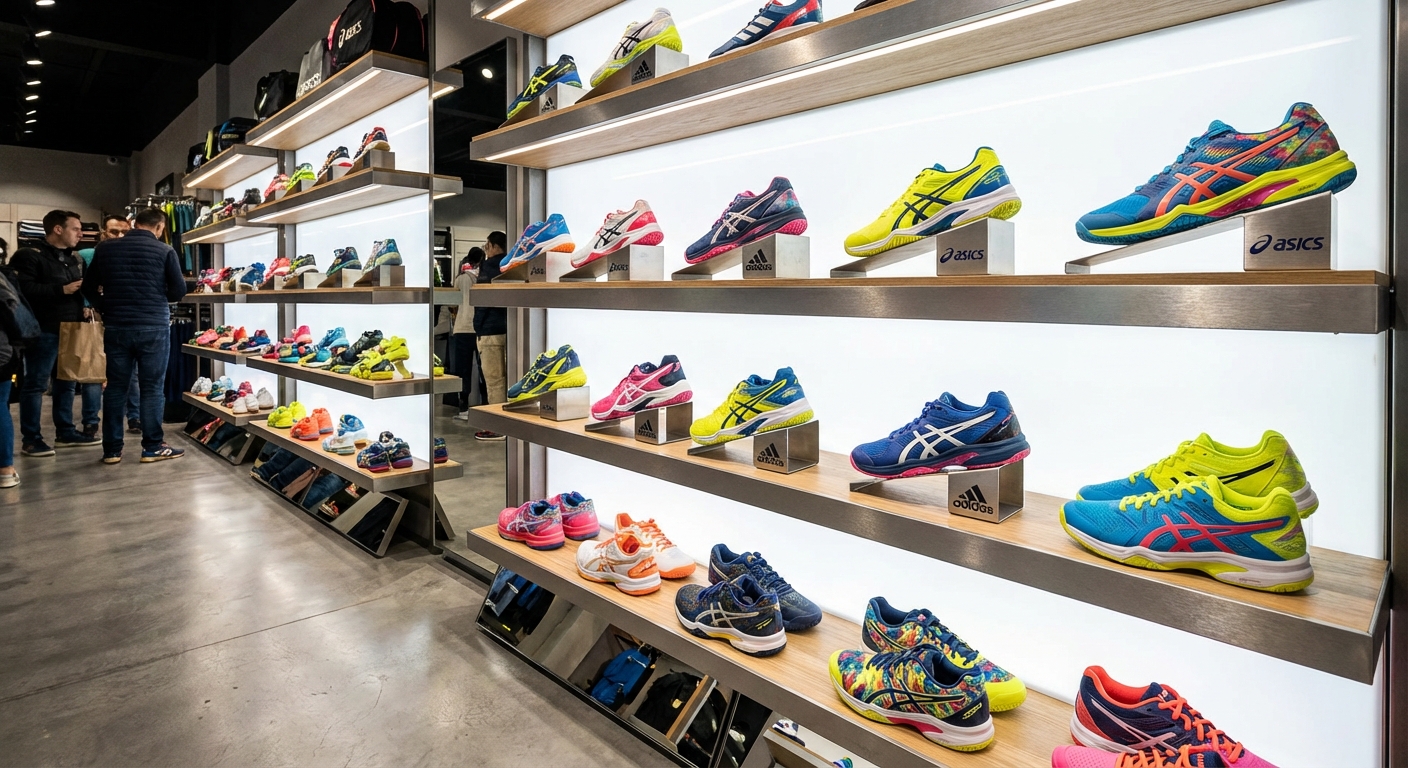
While everyone benefits from the specialized design of tenis para padel, frequent players will see the highest ROI in terms of injury prevention. Whether you are a casual weekend warrior or a professional athlete, the court does not distinguish between skill levels when it comes to friction and impact.
Amateur vs. Professional requirements
You might be surprised:
- Amateurs actually need more cushioning to compensate for less efficient movement patterns.
- Pros require a “tighter,” more responsive feel for maximum energy transfer.
- Daily players need the highest durability ratings to avoid monthly replacements.
But wait, there’s more:
Using the right gear from day one prevents the development of chronic issues like plantar fasciitis.
Why facility managers should care
The secret is:
- Promoting proper footwear reduces the maintenance load on your artificial turf.
- Providing expert gear advice builds deep trust with your club members.
- Reducing on-site injuries lowers your facility’s liability and insurance concerns.
It gets better:
A club where players are geared correctly is a club that plays more often and with higher satisfaction.
Key Takeaway: Professional-grade footwear is a necessary investment for any player looking to avoid long-term joint damage and maximize their enjoyment of the sport.
| Player Type | Primary Need | Recommended Gear |
|---|---|---|
| Beginner | Shock absorption | High-cushion models |
| Advanced | Agility & Pivot | Lightweight/Vortex soles |
| Club Owner | Court Longevity | Mandated Padel Soles |
Educating players at your facility ensures that the climate-controlled turf and Padel Glass remain in peak condition for years to come.
How to select the right tenis para padel?
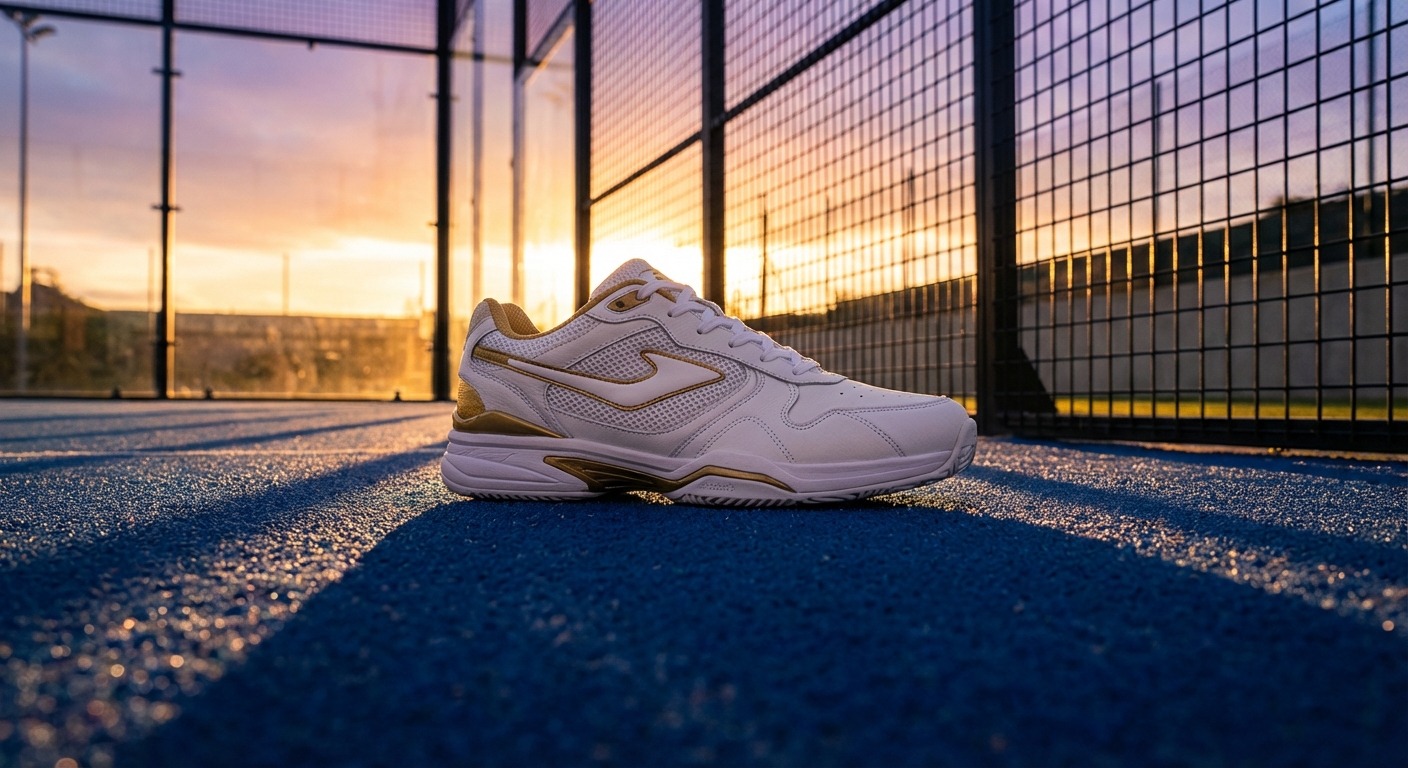
Selecting tenis para padel requires matching the sole pattern to the specific friction level of your local court. A mismatch between the sole and the surface is the leading cause of both “slips” and “stuck feet” injuries.
Matching the shoe to the court surface
Don’t overlook this:
- Use deep herringbone (clay) soles for sandy, older-generation courts to allow for sliding.
- Select circular (vortex) patterns for modern, sand-less Mondo-style professional turf.
- Opt for hybrid designs if you frequently play at multiple different clubs.
But here is the kicker:
Always check the amount of sand on your local court before making a purchase.
The “Rule of Thumb” for fitting
Follow these steps:
- Always try shoes on in the afternoon when your feet are slightly swollen from the day.
- Ensure there is a half-inch of space at the toe to prevent “black toe” from sudden stops.
- Test the lateral lock by mimicking a side-step or pivot in the store.
It gets better:
A perfect fit eliminates the internal friction that causes blisters during long tournament days.
Key Takeaway: Success in shoe selection is 50% technical sole choice and 50% ensuring a secure, anatomical fit that prevents foot movement inside the shoe.
| Surface Type | Recommended Sole | Why? |
|---|---|---|
| High Sand | Clay/Herringbone | Displaces sand for grip |
| No Sand | Omni/Vortex | Prevents over-gripping |
| Mixed/Unknown | Hybrid | Versatile across both |
A perfect equipment setup starts with the shoes and ends with selecting the Mejores Palas Padel to match your playing style.
FAQ: Essential Player Inquiries
- Can I use regular tennis shoes for padel?
While possible, tennis shoes often lack the specific pivot points and grip density needed for turf, leading to slips on sandy courts or excessive grip on dry ones. - What’s the best way to clean my tenis para padel?
Use a soft brush to remove sand after every match. Never machine wash; use damp cloths and mild soap to maintain the integrity of the technical glues. - Can I play padel in running shoes?
No. Running shoes lack lateral support and have a high center of gravity, which almost guarantees an ankle sprain during a quick side-step. - What’s the best sole for a sand-less court?
A “vortex” or circular pattern is superior for sand-less surfaces, as it provides grip without the “clogging” issues of deep herringbone. - Can I use padel shoes for other sports?
They are specialized for turf and court. Using them on asphalt will destroy the soft rubber compound very quickly.
Conclusion
Understanding tenis para padel is not just about fashion; it is about engineering the perfect contact point between the athlete and the sport. From the specialized rubber compounds of the outsole to the lateral reinforcement of the upper, every element is designed to facilitate speed, safety, and durability. Whether you are building a professional facility or looking to improve your personal game, investing in the right footwear is the most effective way to protect your body and the court surface.
At Superbpadel, we are dedicated to providing the infrastructure and insights that make this sport great. Our vision is to empower every player with the highest quality gear and courts available. Ready to elevate your facility with world-class equipment? Contact us today to explore our range of professional-grade court solutions and accessories.