
A standard padel court size in feet is 65.6 feet long by 32.8 feet wide, providing the essential dimensions for professional gameplay. To ensure your facility meets international standards and offers the best player experience, you must adhere to the specific metric-to-imperial conversions used by top-tier manufacturers. Precision in the padel court size in feet is not merely a recommendation; it is a structural requirement that affects ball physics, safety protocols, and the overall longevity of your investment.
What is the official padel court size in feet?
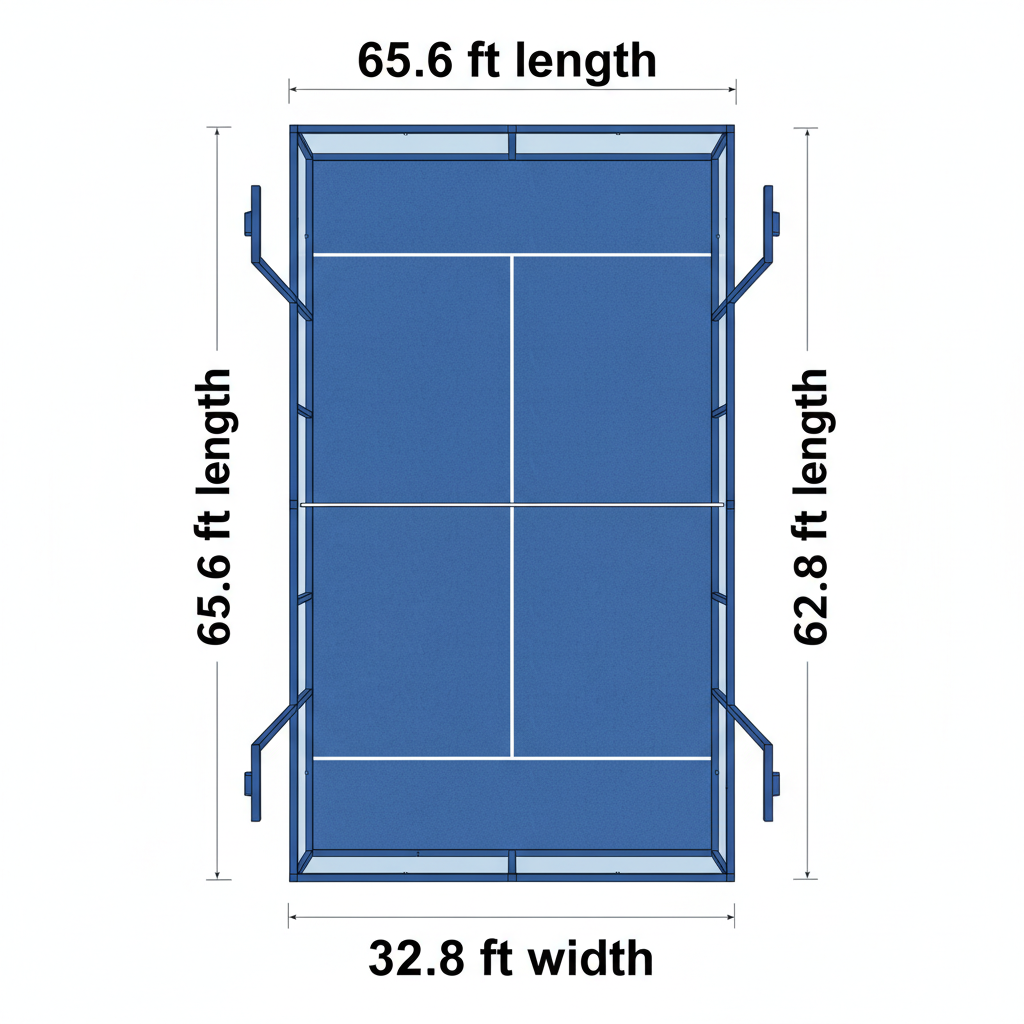
The standard padel court size in feet for doubles play follows a strict 20m x 10m ratio. In the imperial system, this translates to 65.62 feet in length and 32.81 feet in width. Professional builders typically round these to one decimal point for framing purposes, ensuring the internal playing surface remains exactly 2,152 square feet.
Key dimension breakdowns
When planning your site, you must consider the internal clear space rather than the outer edge of the structural pillars.
Look:
- Total internal length: 65.6 feet.
- Total internal width: 32.8 feet.
- Net height at center: 34.6 inches.
The geometry of the service box
The service lines are the most critical markings on the turf. They must be placed with millimeter precision to maintain the integrity of the serve-and-volley game.
Believe it or not:
- Service lines are 22.8 feet from the net.
- The center service line divides the court into two 16.4-foot halves.
- All lines must be 2 inches wide.
Key Takeaway
The 65.6′ x 32.8′ footprint is the non-negotiable foundation for any court seeking FIP certification.
Summary Table
| Feature | Measurement (Feet) | Measurement (Meters) |
|---|---|---|
| Playing Length | 65.6 ft | 20 m |
| Playing Width | 32.8 ft | 10 m |
| Surface Area | 2,152 sq ft | 200 sq m |
Why is the 2:1 ratio so strictly enforced across global tournament circuits?
Why does the padel court size in feet affect your game?
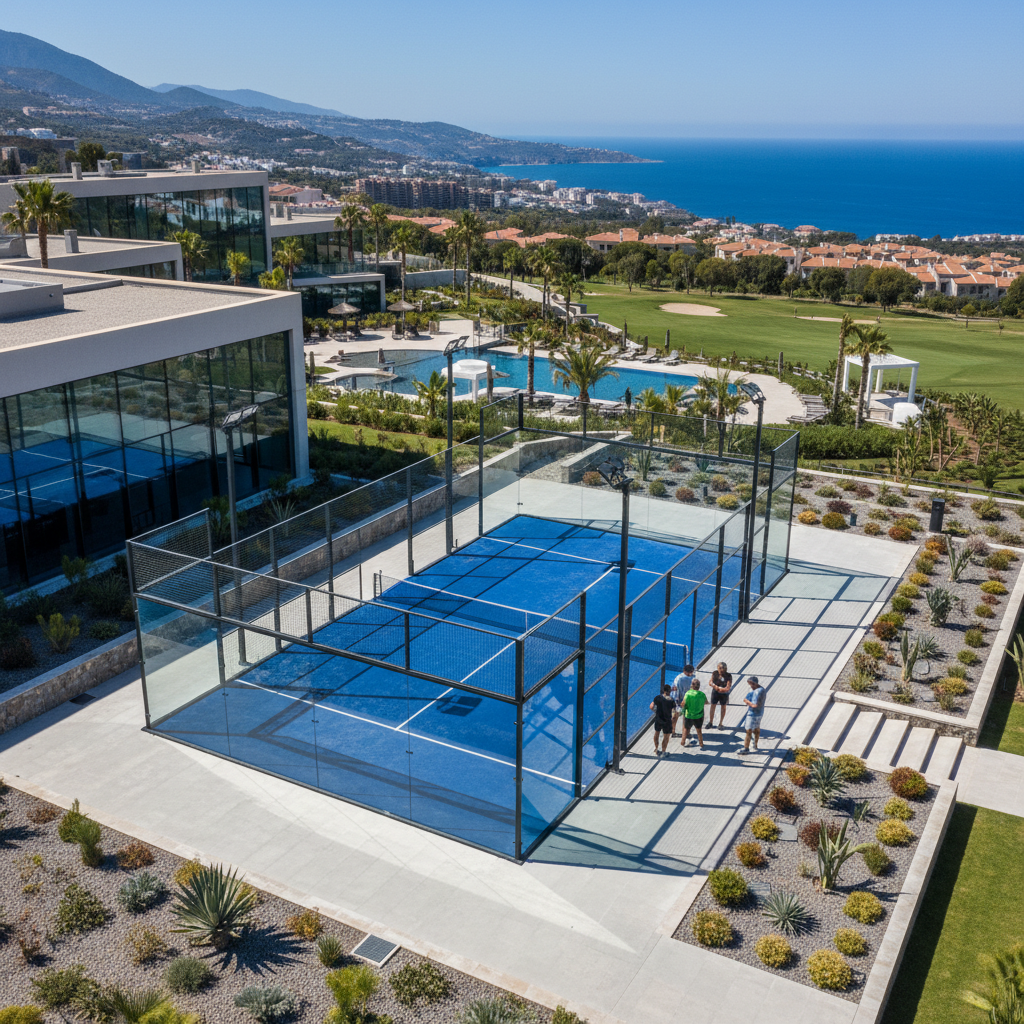
The padel court size in feet is specifically designed to facilitate the “fast-twitch” nature of the sport. Because the area is smaller than a tennis court, the game relies on rapid transitions and strategic wall usage.
Strategic movement and spacing
In doubles play, each player is responsible for a 16.4-foot wide lane. If the court width varies even slightly, the “no-man’s land” in the center becomes too large or too small for effective coverage.
The truth is:
- Correct width prevents partner collisions.
- Standard length ensures the lob remains a viable defensive tool.
- Consistent sizing allows players to develop reliable muscle memory.
Impact on ball rebound physics
Padel is unique because of its glass walls. The distance from the net to the back glass determines how much speed the ball retains before a player must strike it on the rebound.
Think about this:
- Back walls are 32.8 feet from the net.
- Angle of incidence is predictable only on a perfectly square court.
- Inaccurate sizing ruins the “feel” of the glass game.
Key Takeaway
Exact dimensions are the primary driver of tactical consistency and fair play in competitive matches.
Summary Table
| Gameplay Element | Dimension | Strategic Result |
|---|---|---|
| Net Transition | 32.8 ft (half court) | Optimized for quick volleys |
| Wall Play | 90-degree corners | Predictable rebound angles |
| Coverage | 16.4 ft per player | Balanced doubles positioning |
How does a variation of just 2 inches in width fundamentally change the defensive strategy of a professional player?
How to accurately measure padel court size in feet?
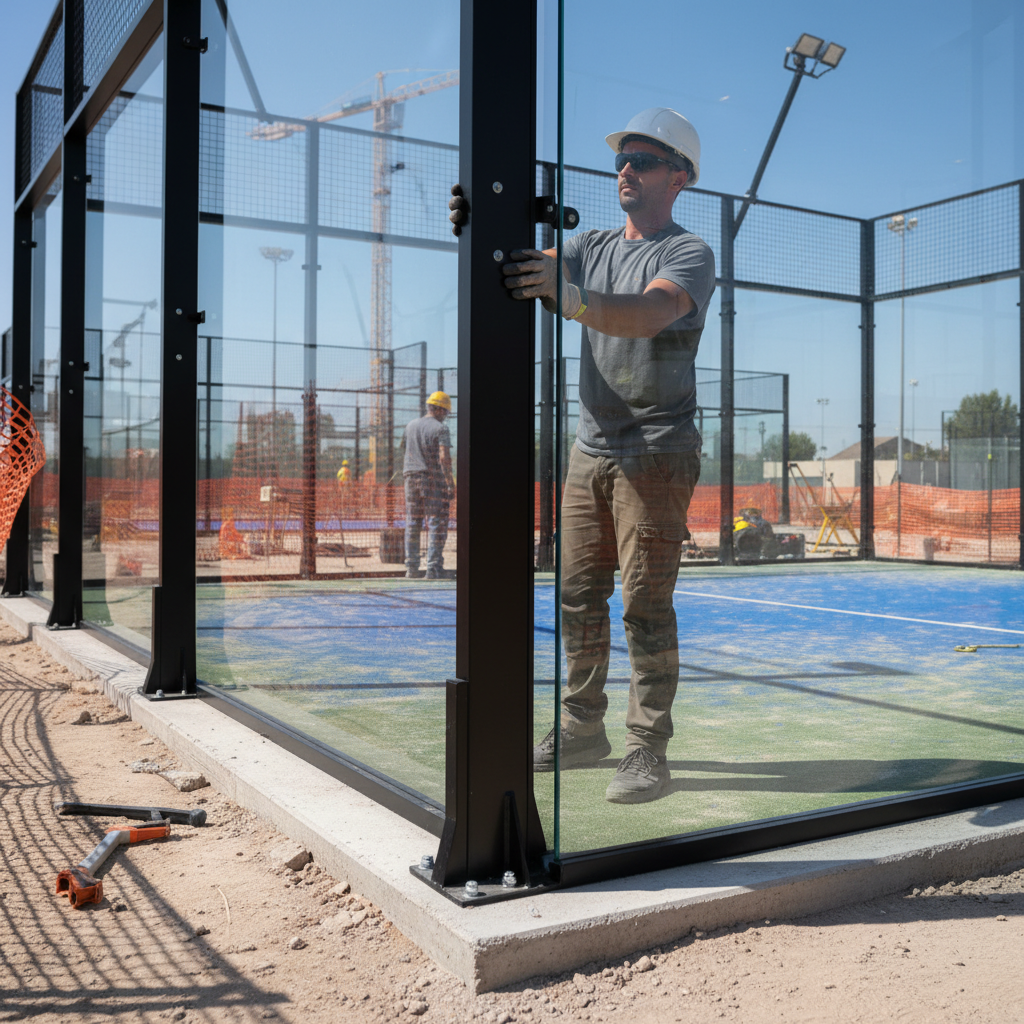
To verify the padel court size in feet, you must measure from the internal face of the glass and mesh. Using external structural measurements will often result in a court that is 6-10 inches too small.
Measuring the internal perimeter
The internal playing area must be a perfect rectangle. If the court is slightly “rhombus” shaped, the ball will bounce erratically off the side walls.
Look:
- Always use a laser measure for precision.
- Measure at three points along the width: back, net, and front.
- Verify that the diagonal distance is exactly 73.34 feet.
Line placement and thickness
Service lines must be integrated into the turf during installation. If lines are painted or taped afterward, they may not adhere to the 2-inch thickness standard.
The bottom line:
- Measure 22.8 feet from the center of the net post.
- Ensure the center service line is equidistant from both side walls.
- Lines must be included within the calculated playing area.
Key Takeaway
Internal measurements and diagonal checks are the only ways to confirm structural squareness.
Summary Table
| Measurement Type | Target Dimension | Tolerance |
|---|---|---|
| Longitudinal | 65.6 ft | +/- 0.5 inches |
| Transversal | 32.8 ft | +/- 0.3 inches |
| Diagonal | 73.34 ft | +/- 1.0 inch |
Why do most construction errors occur during the transition from the concrete slab to the glass panel placement?
Is a singles padel court size in feet different?
While doubles is the standard, a singles padel court size in feet is 65.6 feet long by 19.7 feet wide. This narrower format is becoming popular for residential installations where space is a premium.
Singles court vs. doubles court
The length remains identical to a doubles court, but the width is reduced by approximately 40%. This creates a high-intensity environment for 1-on-1 training.
Here is the kicker:
- Width is only 19.7 feet.
- Total area is 1,292 sq ft.
- All wall heights and net specifications remain the same.
Benefits of a smaller footprint
For homeowners, the singles court offers a way to play professional-grade padel without requiring a massive backyard.
Wait, there’s more:
- Requires 40% less concrete for the base.
- Fits into narrow side-yards or long driveways.
- Ideal for professional technical drills.
Key Takeaway
Singles courts provide the same tactical experience in a much more compact, space-saving footprint.
Summary Table
| Court Type | Length (ft) | Width (ft) | Area (sq ft) |
|---|---|---|---|
| Standard Doubles | 65.6 ft | 32.8 ft | 2,152 |
| Private Singles | 65.6 ft | 19.7 ft | 1,292 |
| Savings | 0 ft | 13.1 ft | 860 |
Could a singles court be the strategic solution for sports clubs with irregular land parcels?
Calculating the total padel court size in feet with runoff?
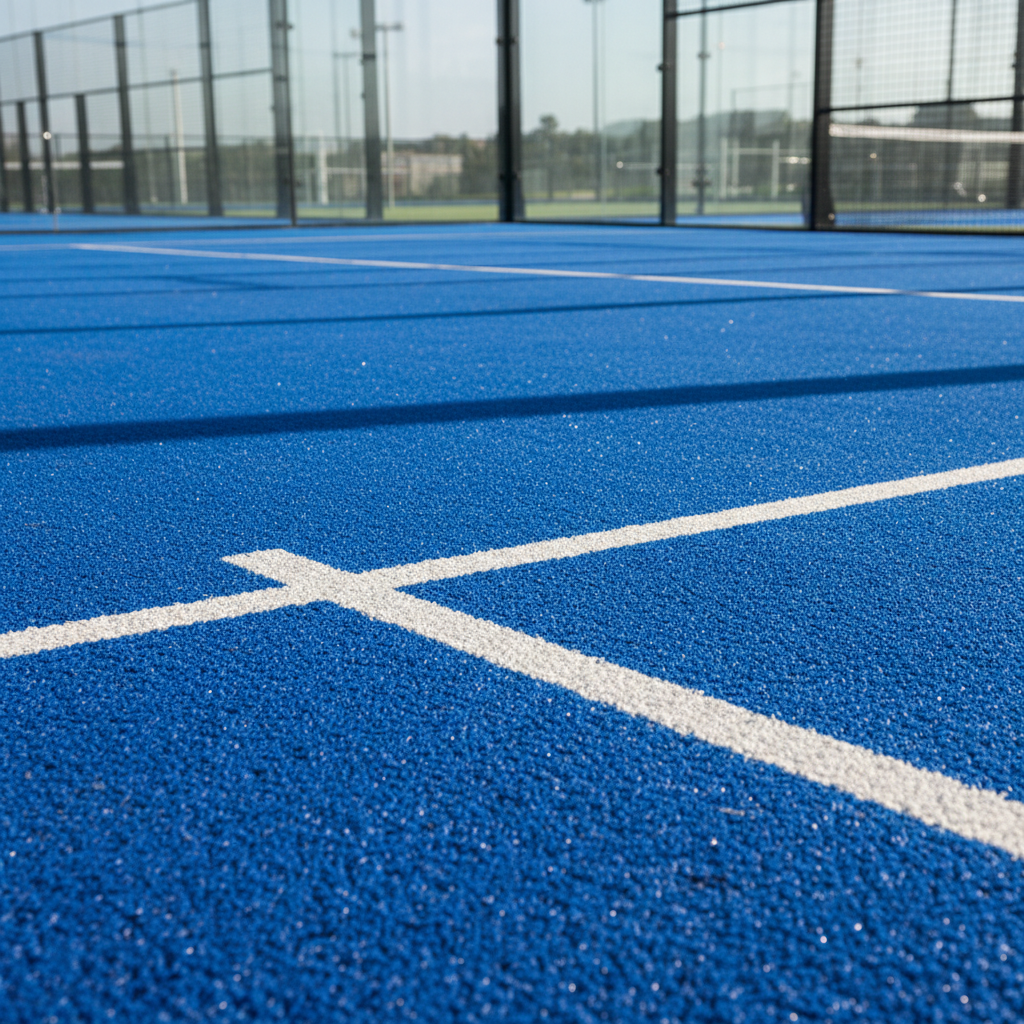
The padel court size in feet for the playing area is only one part of the equation. For safety and professional tournament play, you must account for “out-of-court” runoff zones.
Recommended safety zones
Runoff zones allow players to exit the court through the side doors to retrieve balls that have bounced over the wall. Without this space, the game is restricted to “indoor-style” play.
Check this out:
- Minimum side clearance: 3.3 feet.
- Professional standard side clearance: 6.6 feet.
- Total required footprint: 75.5 feet by 45.9 feet.
Walkways and spectator areas
Commercial clubs must also consider the flow of traffic. Crowded walkways between courts lead to noise disruptions and safety hazards.
Listen:
- Leave 5-8 feet between adjacent courts.
- Account for 10 feet of depth for spectator seating.
- Total site width for two courts is roughly 85-90 feet.
Key Takeaway
The total project footprint must include safety runoff to allow for the full “out-of-court” professional gameplay experience.
Summary Table
| Setup Type | Total Length (ft) | Total Width (ft) | Footprint (sq ft) |
|---|---|---|---|
| Internal Only | 65.6 ft | 32.8 ft | 2,152 |
| Safety Minimum | 72.2 ft | 39.4 ft | 2,845 |
| Pro Tournament | 75.5 ft | 45.9 ft | 3,465 |
Is the additional cost of a 6.6-foot runoff zone worth the premium gameplay experience it provides for advanced players?
Does indoor padel court size in feet change the height?

While the floor dimensions remain 65.6′ x 32.8′, the padel court size in feet for indoor facilities is defined by its vertical clearance. If your ceiling is too low, you effectively remove the “lob” from the game.
Minimum ceiling height standards
The International Padel Federation (FIP) requires a minimum height to ensure that high-arcing lobs do not strike the ceiling or lighting fixtures.
The truth is:
- Absolute minimum height: 19.7 feet (6 meters).
- Recommended professional height: 26.2 feet (8 meters).
- Elite tournament height: 29.5+ feet (9 meters).
Lighting and HVAC obstructions
You must ensure that no structural beams, ducts, or light poles encroach into the playing cylinder. Any object below the 20-foot mark is a “let” hazard.
Look:
- Lights should be mounted at 23 feet minimum.
- Use side-mounted LEDs to avoid glare and ceiling height issues.
- HVAC ducts must be positioned outside the 32.8-foot court width.
Key Takeaway
Vertical volume is just as critical as floor area for a functional indoor padel facility.
Summary Table
| Facility Grade | Min Height (ft) | Recommended Height (ft) |
|---|---|---|
| Recreational | 19.7 ft | 23.0 ft |
| Professional | 26.2 ft | 29.5 ft |
| World Padel Tour | 30.0 ft | 32.8 ft |
What is the hidden cost of retrofitting a warehouse that only offers 18 feet of vertical clearance?
How the padel court size in feet influences your budget?

The padel court size in feet is the primary variable in your cost estimation. Because materials like artificial turf and tempered glass are priced by the square foot or unit, every inch of the footprint impacts the bottom line.
Material volume and logistics
A standard 2,152 sq ft court requires a specific bill of materials that cannot be easily reduced without compromising structural integrity.
Look:
- 18 to 20 tempered glass panels (10mm or 12mm).
- 2,152 sq ft of monofilament turf.
- 3 tons of specialized silica sand.
Foundation and drainage costs
The concrete slab must be slightly larger than the court (typically 67′ x 34′) to allow the metal pillars to be bolted securely. Excavation and drainage for this area represent 30-40% of the total budget.
The bottom line:
- Concrete thickness: 4-6 inches.
- Perimeter drainage adds 5-10% to groundworks.
- Larger slabs require more expansive soil stabilization.
Key Takeaway
Budgeting is an exercise in managing the 2,152 sq ft playing surface and its required 2,300+ sq ft foundation.
Summary Table
| Expense Category | Metric Impact | Budget Weight |
|---|---|---|
| Groundworks | 2,300 sq ft slab | High |
| Court Kit | 197 ft perimeter | High |
| Infill | 3 tons of sand | Low |
How can a minor shift in site orientation save thousands in excavation costs for a 65.6-foot court?
Planning for padel court size in feet for USA sites?
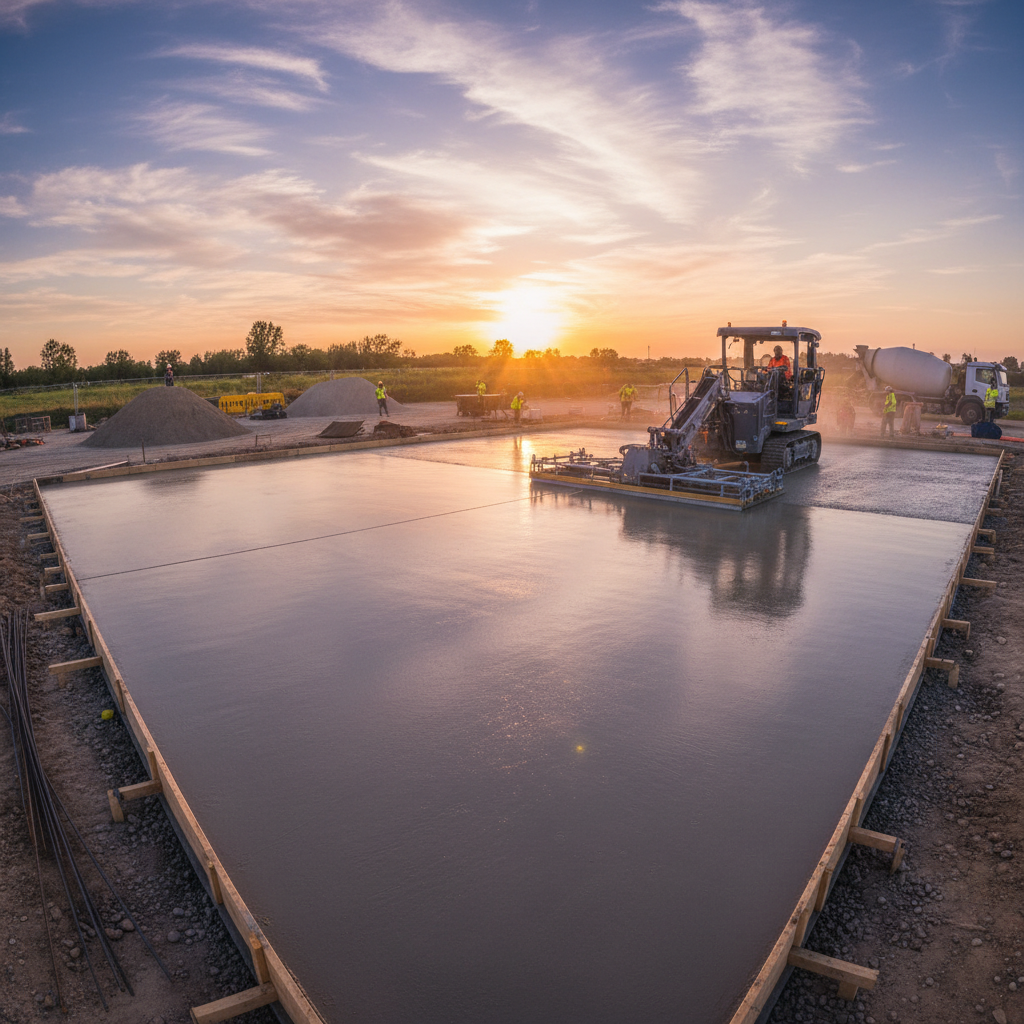
When planning padel court size in feet in the United States, the biggest challenge isn’t the court itself—it’s the zoning and permit requirements.
USA zoning and setbacks
Most US municipalities require a “setback” from property lines. If you plan a 65.6′ x 32.8′ court, you may actually need a 80′ x 50′ lot to clear legal hurdles.
Think about this:
- Residential setbacks: often 10-15 feet.
- Commercial setbacks: can be 20+ feet.
- Impermeable surface limits: check your local lot coverage ratio.
Soil and climate considerations
From the humidity of Florida to the frost lines of New York, the 32.8-foot wide slab must be engineered for local soil movement.
Wait, there’s more:
- Frost-protected shallow foundations (FPSF) in the North.
- High-drainage sub-bases in the Southeast.
- Wind load engineering for glass in hurricane zones.
Key Takeaway
USA projects require a site that is significantly larger than the court itself to accommodate local building codes.
Summary Table
| Planning Phase | Requirement | Impact on Site Size |
|---|---|---|
| Permitting | Property Setbacks | Adds 15-30 ft |
| Engineering | Drainage Swales | Adds 5-10 ft |
| Access | ADA Compliance | Adds 4-6 ft walkways |
Why do many US residential projects fail at the permit stage due to “impermeable surface” violations?
Who defines the standard padel court size in feet?
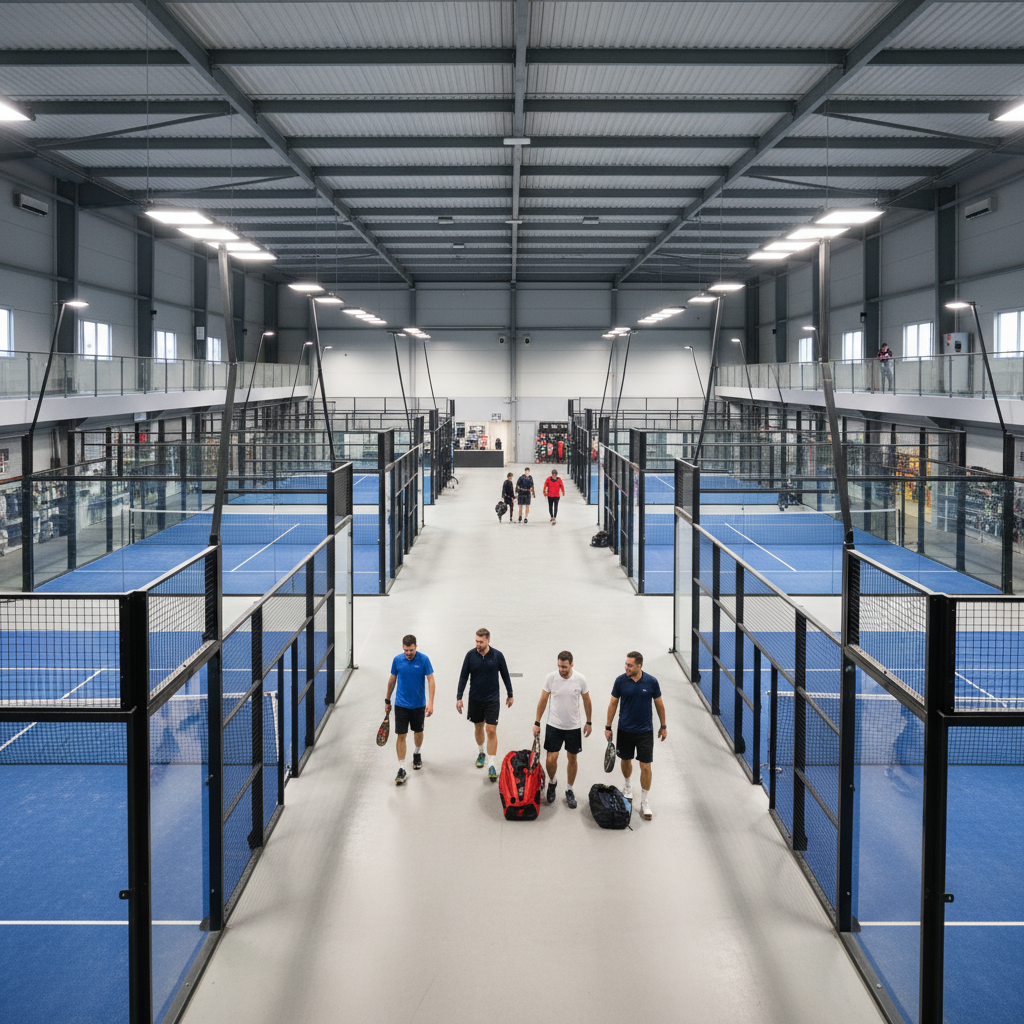
The International Padel Federation (FIP) is the global authority. While they use the metric system, they provide the official conversion standards for the padel court size in feet used in North America.
The FIP rulebook
The rulebook mandates the 20m x 10m area with a tolerance of only a few centimeters. Any court built outside these tolerances cannot host sanctioned tournaments.
Believe it or not:
- Net height must be 34.6 inches at the center.
- Back wall glass must be 9.8 feet high.
- Side mesh must be 9.8 feet high for the first 2 meters from the back wall.
Global uniformity
The reason for these strict rules is to ensure that a player from Spain can play in the USA with zero adjustment to their game.
Here is the kicker:
- Ball bounce must be consistent across all FIP courts.
- Turf pile height is regulated (typically 10mm-12mm).
- Glass must be tempered and meet specific safety impact tests.
Key Takeaway
FIP compliance is the “gold standard” that ensures your court has resale value and tournament potential.
Summary Table
| Component | FIP Standard | Imperial Equivalent |
|---|---|---|
| Width | 10.00 m | 32.81 ft |
| Length | 20.00 m | 65.62 ft |
| Back Wall Height | 3.00 m | 9.84 ft |
If FIP standards are essentially metric, why should US builders never round down to 32 feet?
How to audit your padel court size in feet after installation?
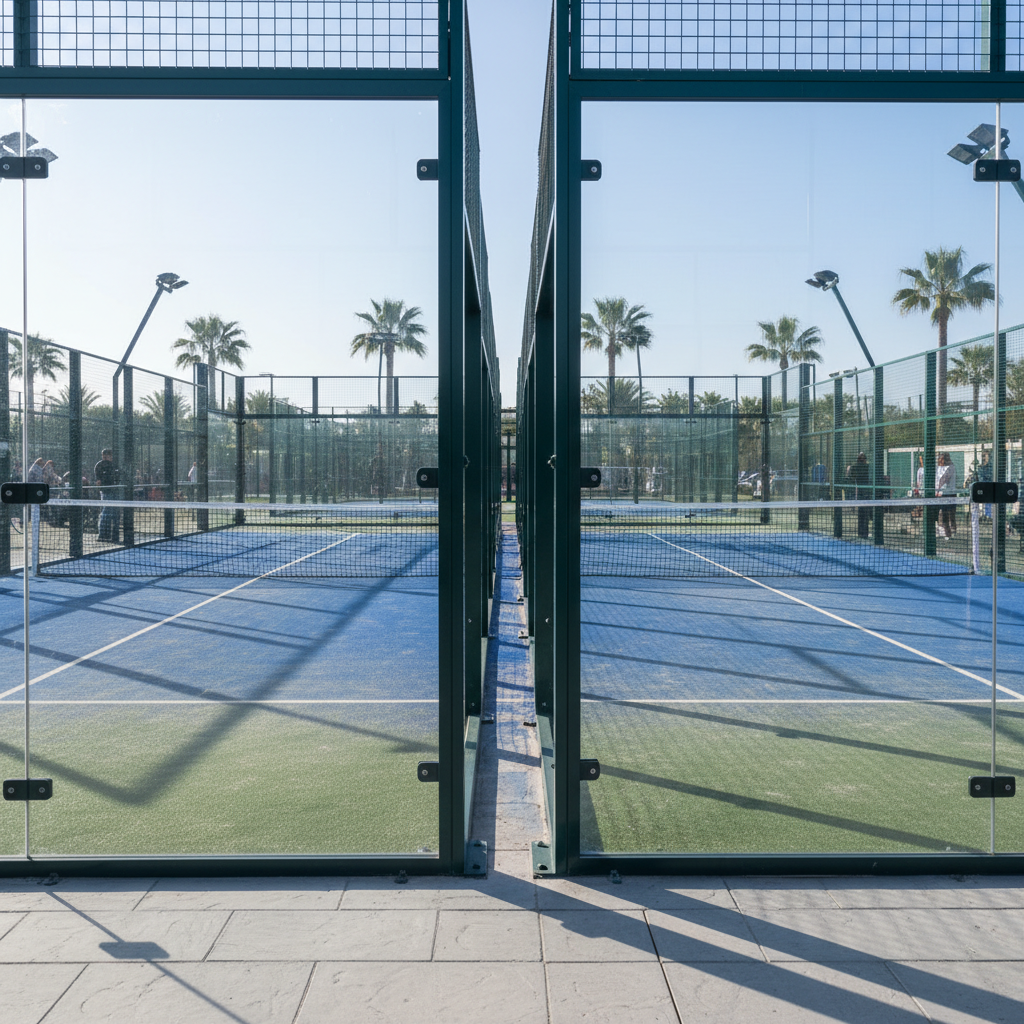
Once construction is finished, you must perform a final audit of the padel court size in feet. A court that is “off” by even 2 inches can cause the glass to crack under thermal expansion or structural stress.
The 3-point width check
Measure the width at the back glass, the service line, and the net. If these measurements are not identical, the court is “tapered.”
Check this out:
- Tapering ruins the parallel bounce of the ball.
- It puts uneven pressure on the corner connectors.
- Variance should be less than 0.25 inches.
Net tension and center strap
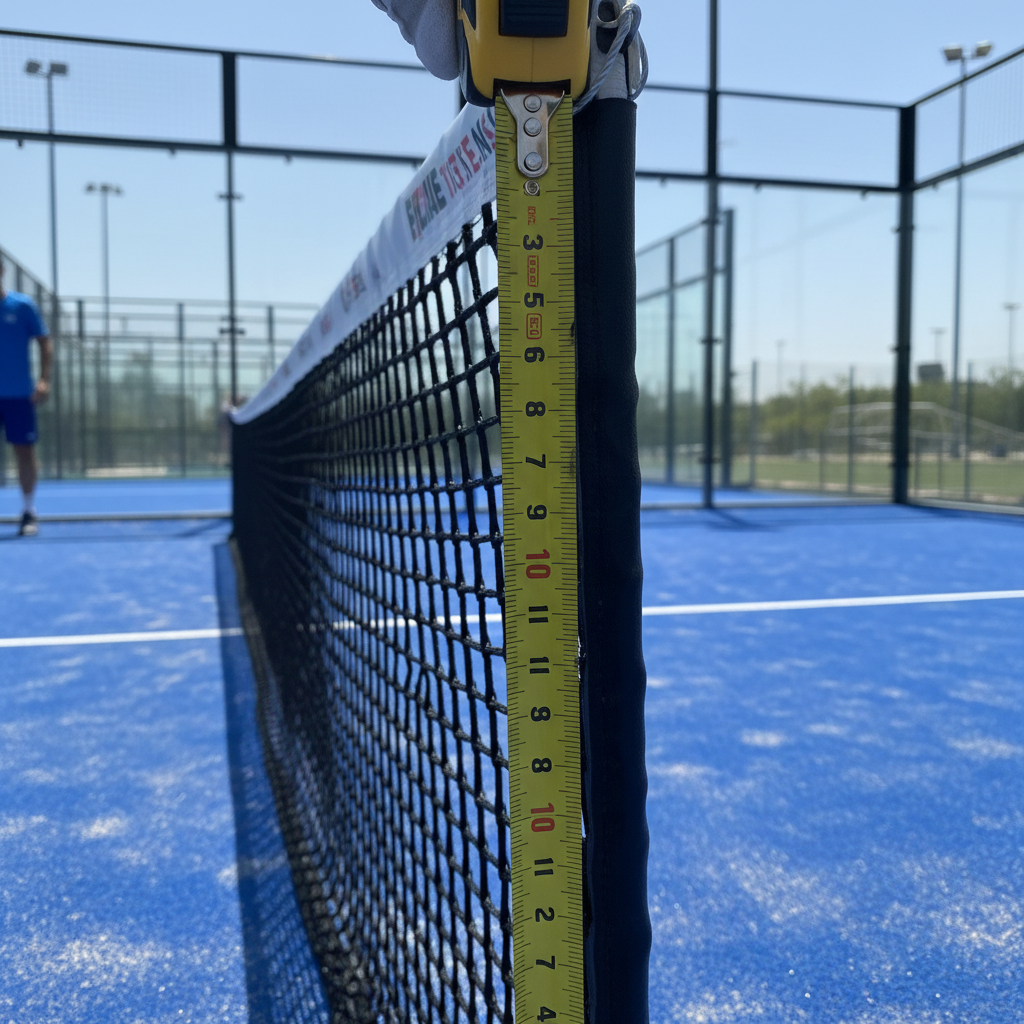
The final piece of the audit is the net. It must be exactly 34.6 inches high at the center, maintained by a white center strap.
It gets better:
- Measure at the posts: 36.2 inches.
- Measure at the center: 34.6 inches.
- Ensure the net is tight enough that a ball cannot pass through the mesh.
Key Takeaway
Post-build verification is the final quality gate to ensure your court is safe and professional.
Summary Table
| Audit Step | Target Value | Pass/Fail Criteria |
|---|---|---|
| Diagonal Squareness | 73.34 ft | +/- 1 inch |
| Center Net Height | 34.6 inches | +/- 0.2 inches |
| Back Wall Verticality | 90 degrees | No visible lean |
Is a “perfectly square” court actually possible given the thermal expansion of glass and steel?
*
FAQ: Common Questions About Padel Court Dimensions
Can I build a padel court in a space smaller than 66 feet?
Technically, you can reduce the runoff, but the internal playing area must remain 65.6 feet to be considered a regulation padel court. Any smaller, and the game’s timing and ball physics will be fundamentally broken.
What’s the best way to fit a court on a narrow lot?
Consider a singles court, which requires a width of only 19.7 feet instead of the standard 32.8 feet. This allows you to maintain professional length while fitting into tight residential spaces.
How do I know if my ceiling is high enough for an indoor court?
Measure the lowest point of your ceiling (beams or lights). If it is below 19.7 feet, you will struggle with lobs. For a truly professional experience, you should aim for a clearance of at least 26.2 feet.
Can I use a tennis court footprint for padel?
A standard tennis court is 78′ x 36′ for singles and much wider for doubles. You can easily fit one padel court into the space of one tennis court, and in many cases, you can fit two padel courts if you remove the tennis runoff zones.
What is the minimum land area required for a commercial padel club?
For a single court with proper runoff and walkways, you should budget for at least 3,500 square feet of land. For a multi-court club, you should calculate approximately 4,000 square feet per court to include amenities.
Ready to build your professional facility? For expert guidance on design, materials, and installation, contact us today.