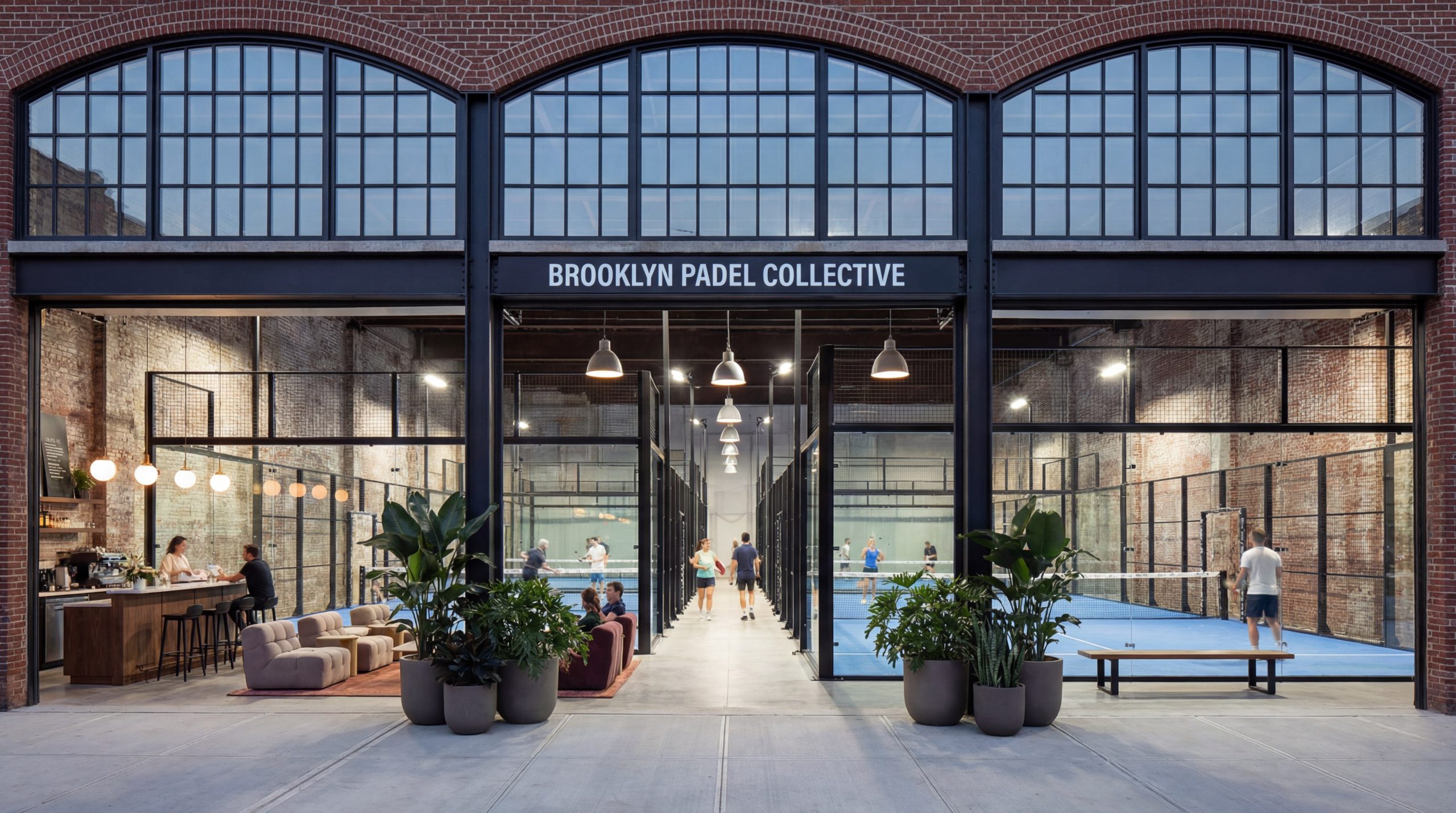
The urban athlete in New York City faces a persistent challenge: finding a sport that combines high-intensity competition with a sophisticated social atmosphere. Most traditional racquet clubs feel outdated, and finding a court in the concrete jungle of Brooklyn is often a logistical nightmare. This scarcity creates a frustrating barrier for those eager to join the fastest-growing sport in the world. However, the emergence of the “Haus” concept has revolutionized the local landscape, proving that with the right padel court construction expertise, it is possible to transform industrial warehouses into premier sporting destinations.
What is Padel Haus Williamsburg and why is it popular?
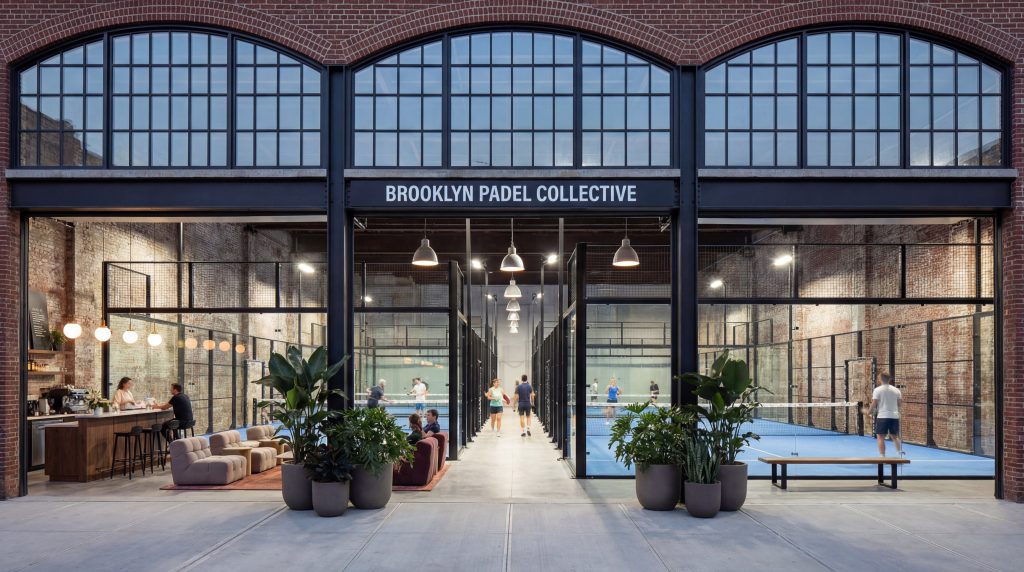
Padel Haus Williamsburg represents the pinnacle of the modern padel movement in the United States. It isn’t just a sports facility; it is a lifestyle ecosystem that blends the thrill of the game with the aesthetic of a high-end social club. Located in the heart of Brooklyn, it serves as a blueprint for how to successfully introduce a niche European sport to a discerning American audience.
The popularity of this concept stems from several key factors:
- Community-Centric Design: Unlike traditional gyms, the focus is on “open-play” and social mixing.
- Industrial Chic Aesthetic: Utilizing the raw architecture of Williamsburg to create a unique playing environment.
- Premium Amenities: Incorporating juice bars, luxury locker rooms, and co-working spaces.
- Accessibility: Offering a “pay-to-play” model that appeals to the flexible schedules of urban professionals.
The facility has successfully tapped into the “third space” trend—a location between work and home where people can foster genuine connections. By focusing on the social experience as much as the sport itself, it has built a brand loyalty that transcends mere court rentals.
Key Takeaways: The Williamsburg Appeal
| Feature | Impact on Popularity |
|---|---|
| Location | High foot traffic and proximity to target demographic. |
| Atmosphere | Sophisticated “clubhouse” vibe rather than a sterile sports center. |
| Exclusivity | High-demand courts create a sense of belonging and community pride. |
How much does a padel court cost in New York?
When planning a project in a high-cost environment like New York, understanding the financial landscape is critical. The padel court construction cost USA generally ranges between $28,000 and $110,000 per court, but New York City often sits at the higher end of that spectrum due to logistical complexities.
Here is the kicker: in an urban setting, the “hard costs” of the court materials are often eclipsed by the “soft costs” of labor, permitting, and site preparation. You aren’t just buying a court; you are navigating the most complex real estate market in the world.
Detailed Budget Breakdown for NYC Padel Projects:
- Court Materials: High-quality panoramic glass and structural steel (Approx. $25,000 – $45,000).
- Labor and Installation: Skilled technicians required for precise assembly (Approx. $15,000 – $30,000).
- Foundation and Site Prep: Reinforced concrete and leveling, which is notoriously expensive in Brooklyn (Approx. $20,000 – $40,000).
- Logistics: Freight, cranage for indoor facilities, and temporary storage.
To stay within budget, it is essential to look at the total padel court price holistically. Cutting corners on materials in a high-traffic urban environment is a recipe for expensive repairs down the road.
What are the technical specifications for building a padel court?
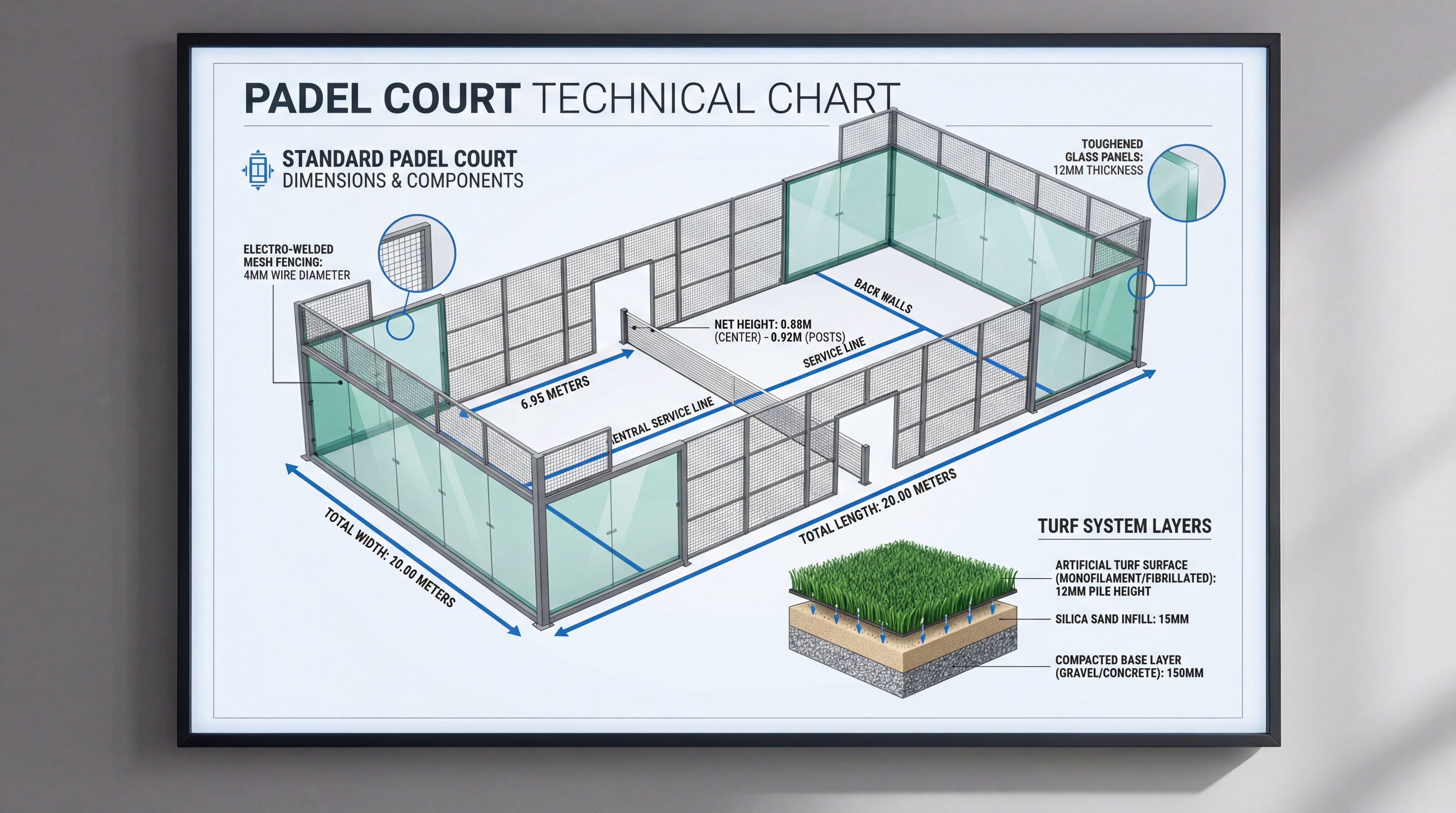
Building a world-class facility requires strict adherence to technical dimensions. A standard padel court is 10 meters wide by 20 meters long, but the structure surrounding those dimensions determines the quality of play.
Think about it: the glass is not just a wall; it is a primary playing surface. In a professional “Haus” style setup, you should prioritize:
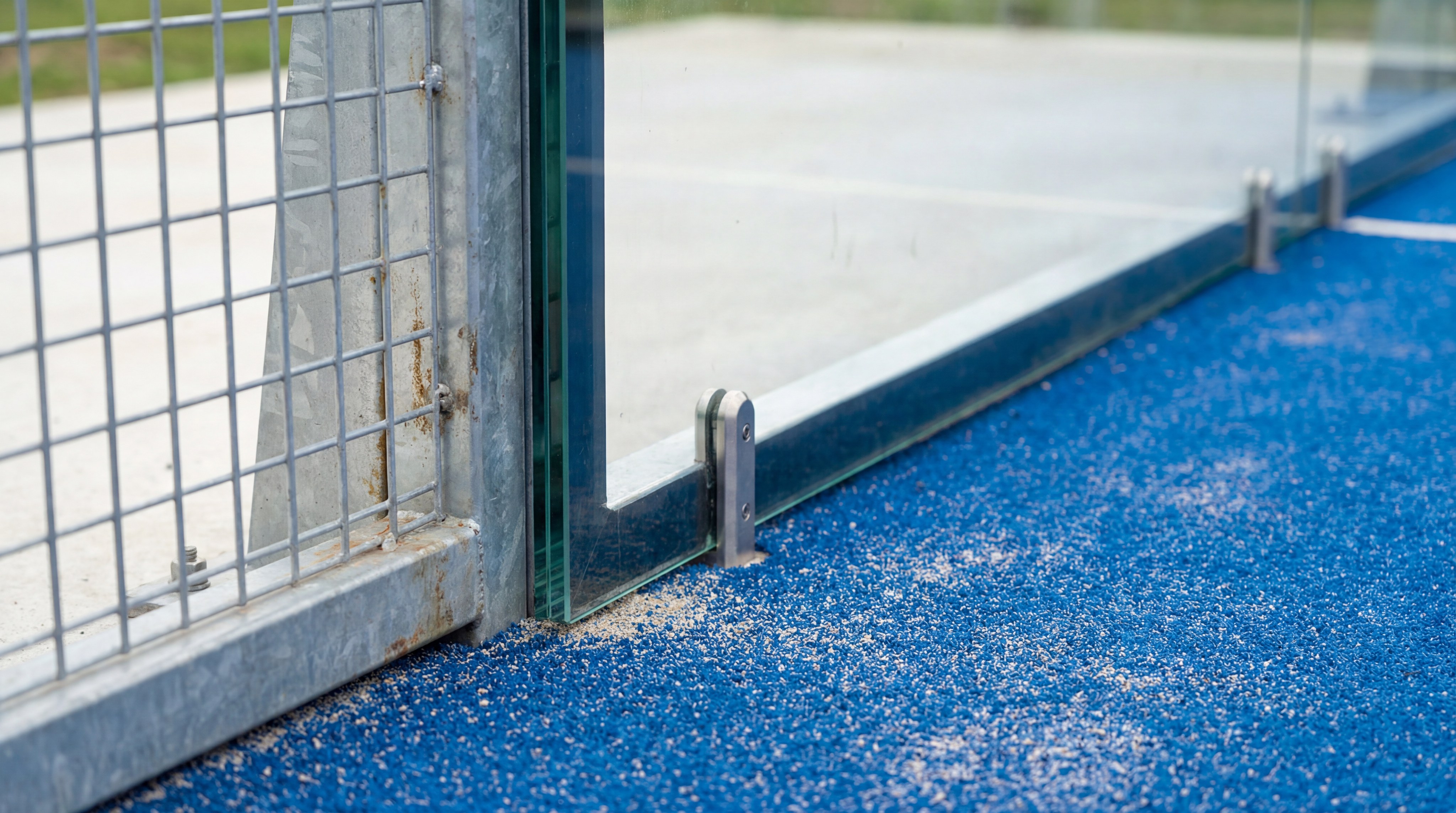
- Tempered Glass: 12mm thickness is the industry standard for safety and consistent ball rebound.
- Structural Frame: Electro-galvanized steel with powder coating to prevent rust, especially in humid or indoor environments.
- Turf Quality: Monofilament or textured polyethylene turf with a specific sand infill ratio (usually 8-10kg per square meter).
Technical Specification Checklist:
- Total Area Required: Minimum 11m x 21m per court to allow for the structure.
- Ceiling Height: For indoor clubs, a minimum of 6 meters is required, though 8-10 meters is preferred for high-level “lobs.”
- Net Height: 0.88 meters at the center, increasing to 0.92 meters at the posts.
Let’s dive into the structural integrity. The “panoramic” style, which removes vertical pillars from the back glass, is the preferred choice for clubs that want to offer the best spectator experience. While more expensive, it provides a seamless view that is essential for high-end branding.
How do you design an urban padel club foundation?
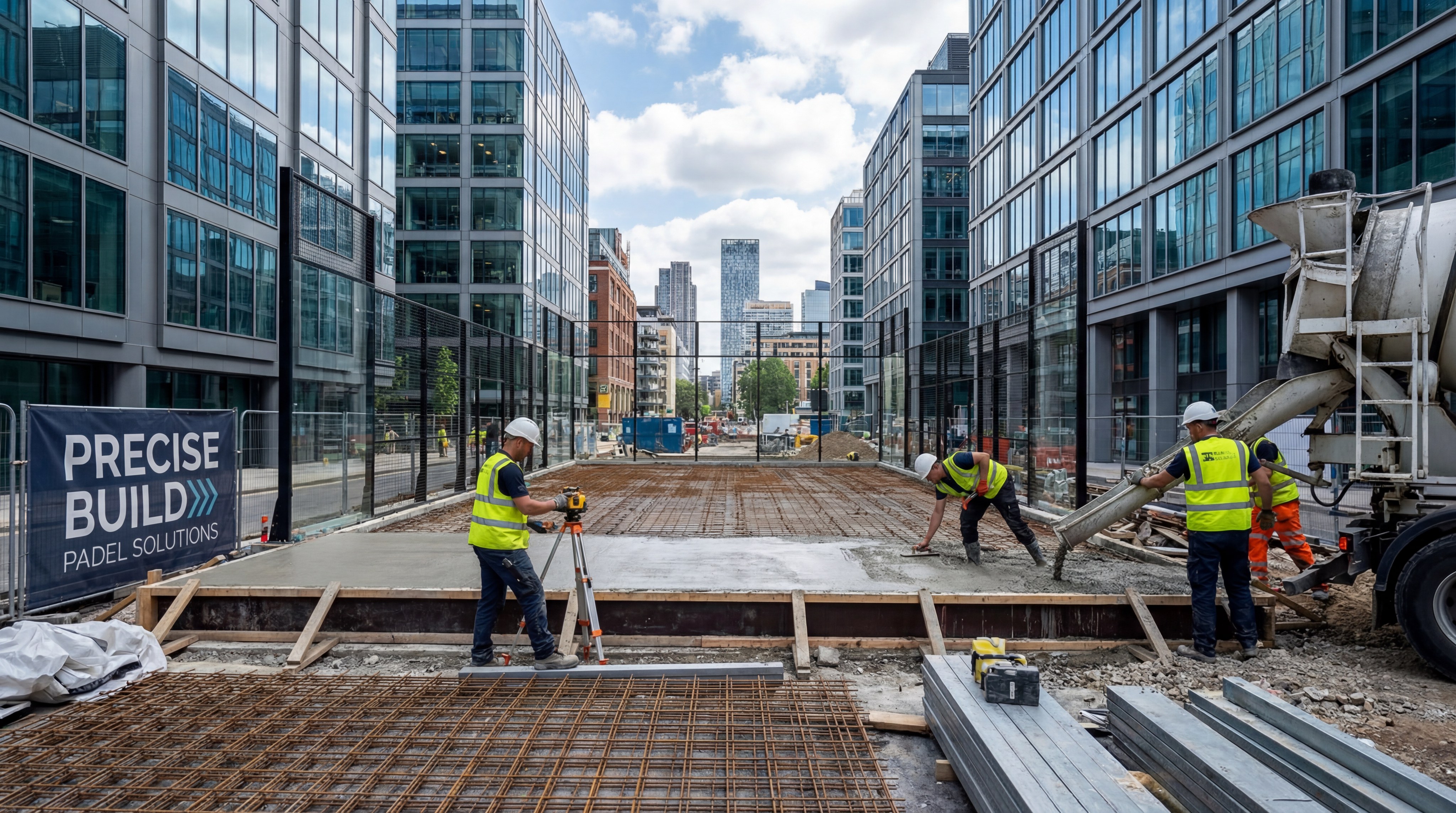
The foundation is the most overlooked part of any sports facility, yet it is the most vital. In an urban environment like Williamsburg, you are often dealing with old industrial floors or uneven outdoor lots. A slight tilt in the foundation can ruin the entire playing experience.
Essential Foundation Steps:
- Excavation and Leveling: Ensuring the ground is perfectly flat.
- Reinforced Concrete Slab: A 15cm to 20cm thickness of reinforced concrete (H25 grade or higher) is necessary to support the weight of the glass walls.
- Slope for Drainage: For outdoor courts, a 1% slope is mandatory to prevent water pooling.
- Anchoring Points: Precision-drilled holes for the chemical anchors that hold the steel pillars.
But wait, there’s more. If you are building inside an existing warehouse, you must verify the load-bearing capacity of the existing slab. Most industrial warehouses can handle the weight, but the vibration from intense play can cause cracks if the slab is not properly reinforced or separated from the main building structure.
“A padel court is only as good as the ground it sits on. In New York, the foundation represents nearly 40% of the long-term structural value of the facility.”
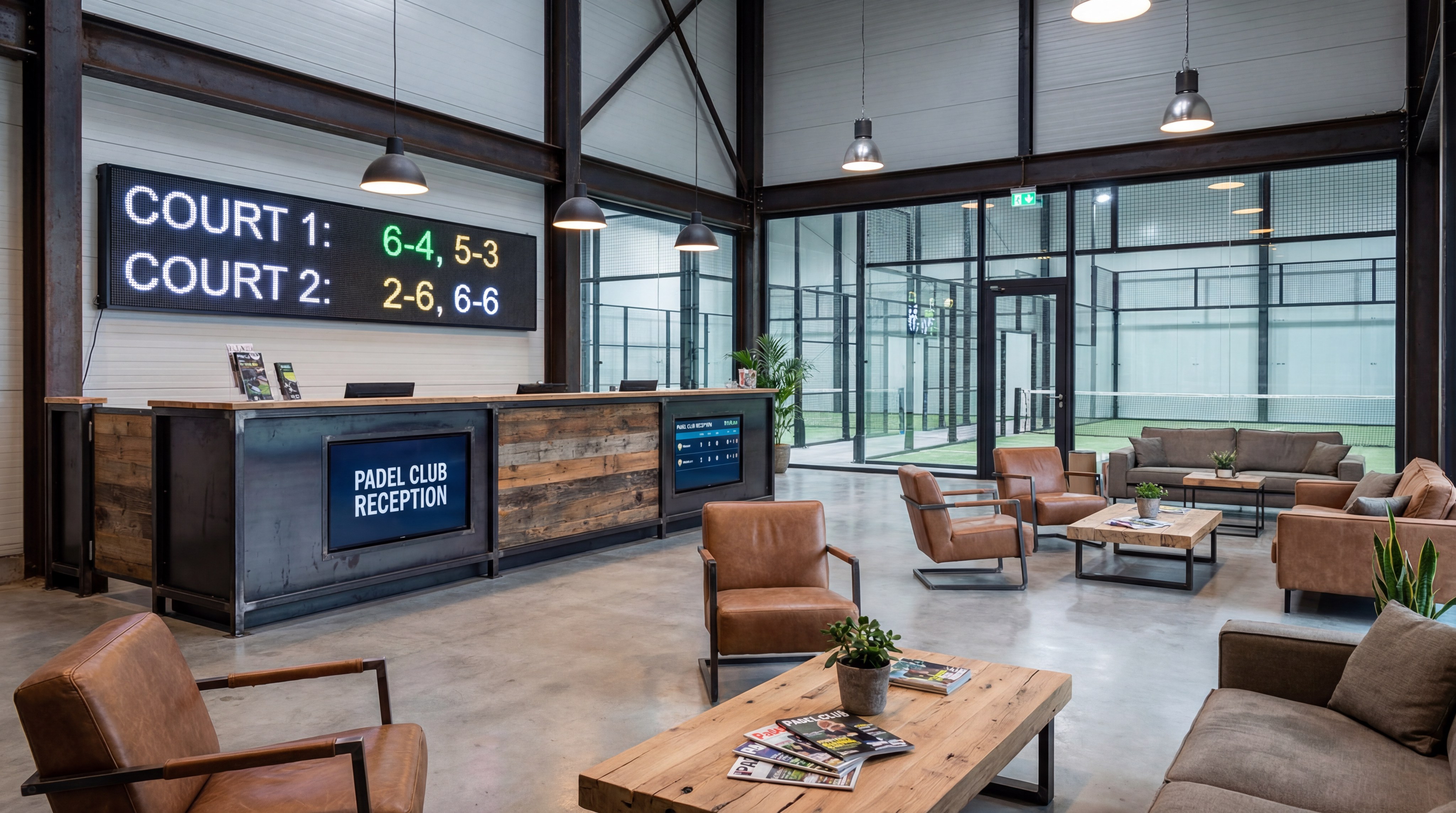
What sets a “Haus” apart from a standard sports center is the emphasis on the “off-court” experience. In Brooklyn, the competition for leisure time is fierce. If your facility only offers courts, you are a commodity. If you offer a community, you are a destination.
The Social Ecosystem Components:
- The Lounge: Comfortable seating that encourages players to stay before and after their matches.
- Retail Integration: A pro-shop that offers high-end apparel and equipment.
- Events and Mixers: Organized tournaments, “Americano” style round-robins, and corporate networking events.
The best part? This model significantly increases the average revenue per user (ARPU). While court fees might cover the overhead, the ancillary services—memberships, coaching, food, and beverage—drive the profit margins. When you calculate the budget for building a padel court, you must allocate at least 20% of your space to these social “revenue zones.”
What are the zoning requirements for padel in Brooklyn?
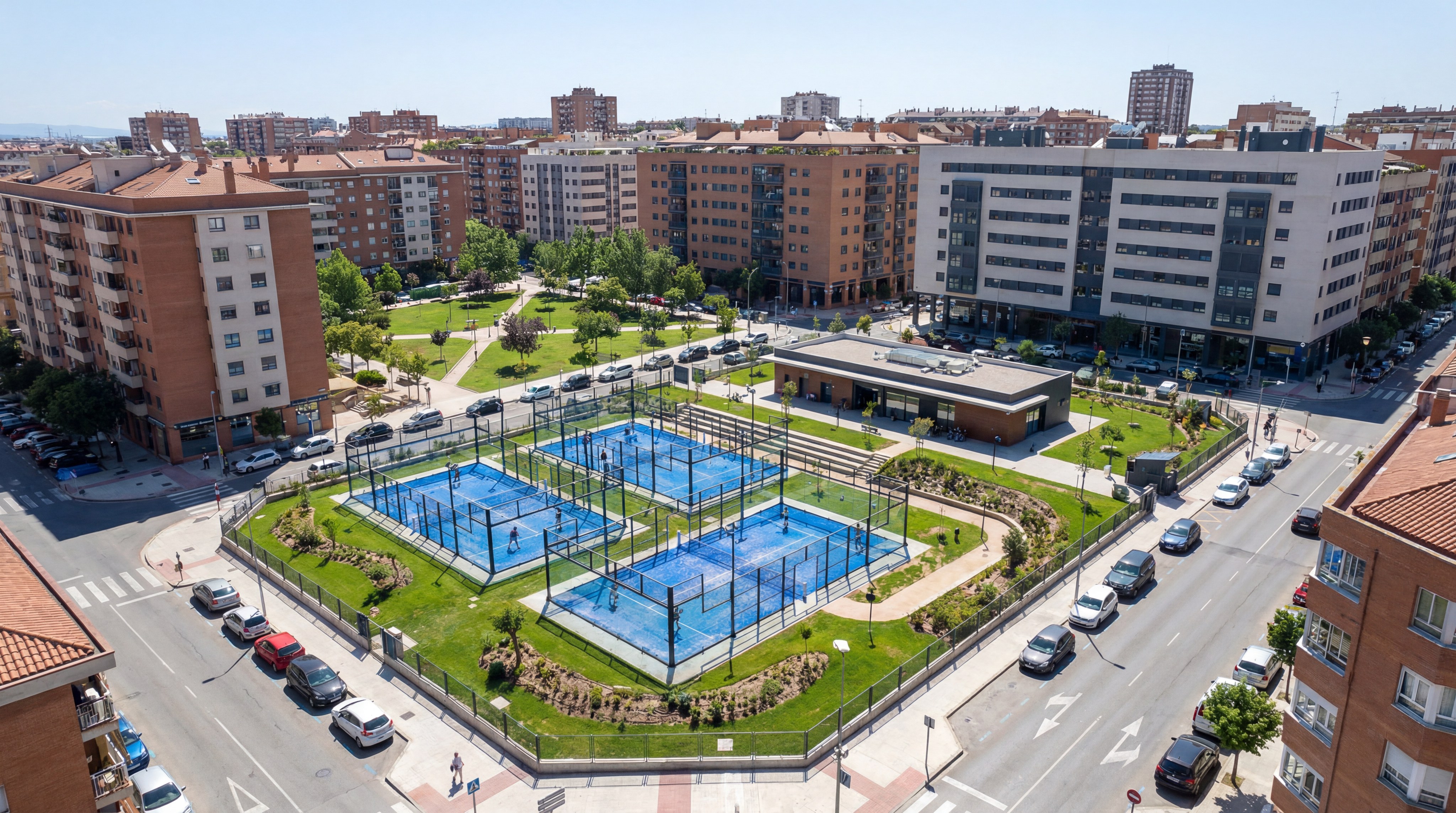
Navigating the New York City Department of Buildings (DOB) is a marathon, not a sprint. To build a facility like Padel Haus, you must ensure the zoning of your chosen lot allows for “Physical Culture Establishments” or commercial recreation.
Critical Regulatory Hurdles:
- Use Groups: Most padel clubs fall under Use Group 4 or 6, but this varies by specific neighborhood sub-districts.
- Egress and Fire Safety: Indoor clubs must have clear fire exits and sprinkler systems that meet modern NYC codes.
- ADA Compliance: Every facility must be fully accessible to individuals with disabilities, including court entryways and locker rooms.
- Noise Ordinances: If building an outdoor court near residential areas, acoustic studies may be required to prove the “pop” of the ball won’t violate noise codes.
It is highly recommended to hire a local “expeditor” who understands the specific quirks of Brooklyn zoning. This can save months of delays. Remember, a vacant warehouse might look perfect, but if the Certificate of Occupancy doesn’t align with your vision, the project could be dead on arrival.
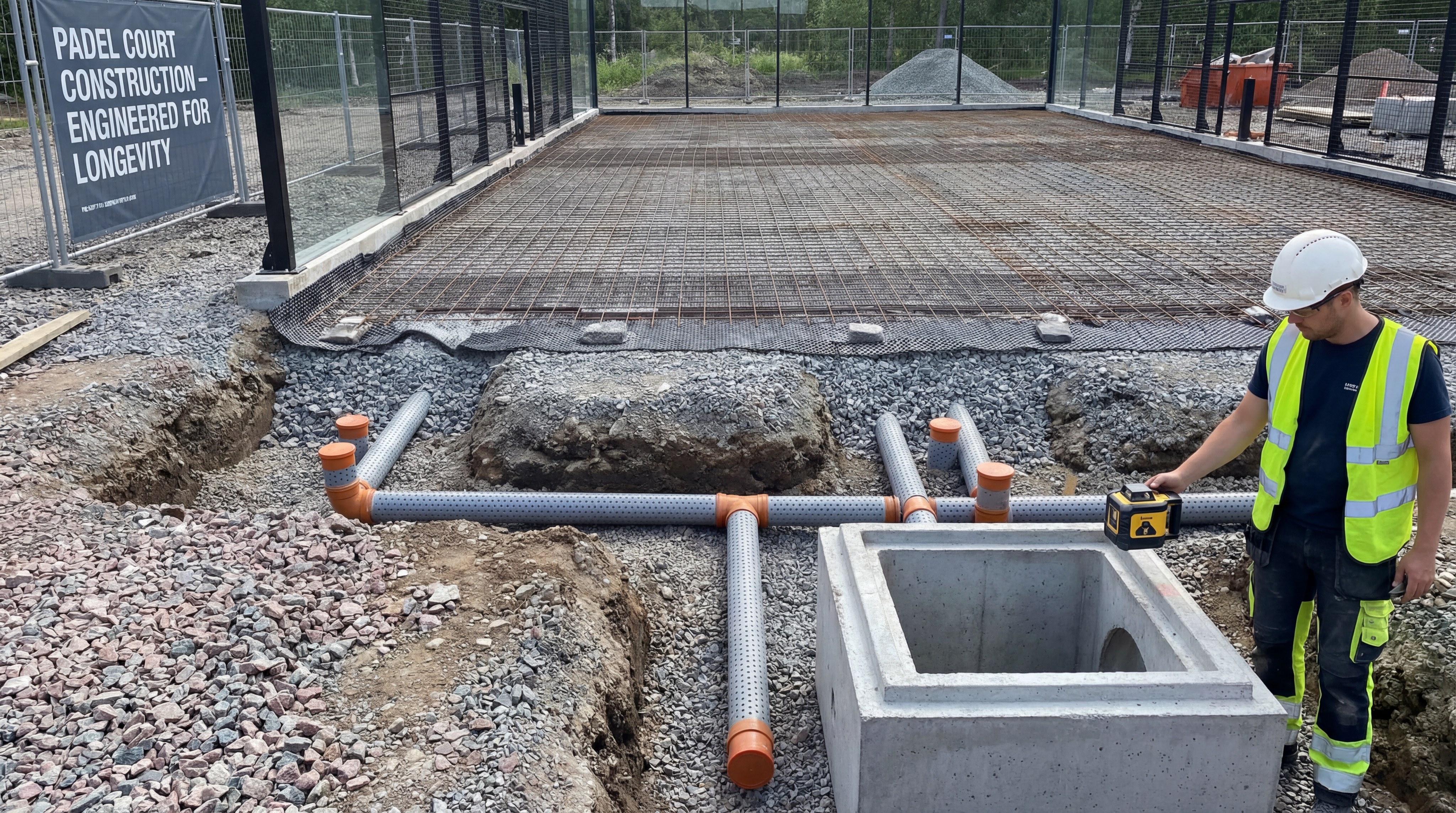
Materials are where your brand’s quality is felt—literally. Players interact with the turf and glass every second of the game. In a premium club, you cannot afford “generic” materials.
Material Quality Comparison:
| Component | Standard Grade | Premium “Haus” Grade |
|---|---|---|
| Glass | 10mm Tempered | 12mm Heat-Soaked Tempered |
| Turf | Fibrillated (Requires more sand) | Textured Monofilament (Better grip, less sand) |
| Lighting | 4x 150W LED | 8x 200W LED (Asymmetric distribution) |
| Frame | Standard Steel | Hot-dip Galvanized + Anti-corrosion Coating |
The choice of turf is particularly important for player safety. High-quality textured turf reduces the risk of “turf toe” and knee injuries by allowing for controlled slides. Furthermore, it maintains its aesthetic appeal longer under heavy use, which is vital for a club that prides itself on its look. Selecting the right materials is the most effective way to control costs when building over a 10-year period, as maintenance costs will be significantly lower.
What are the indoor lighting standards for padel courts?
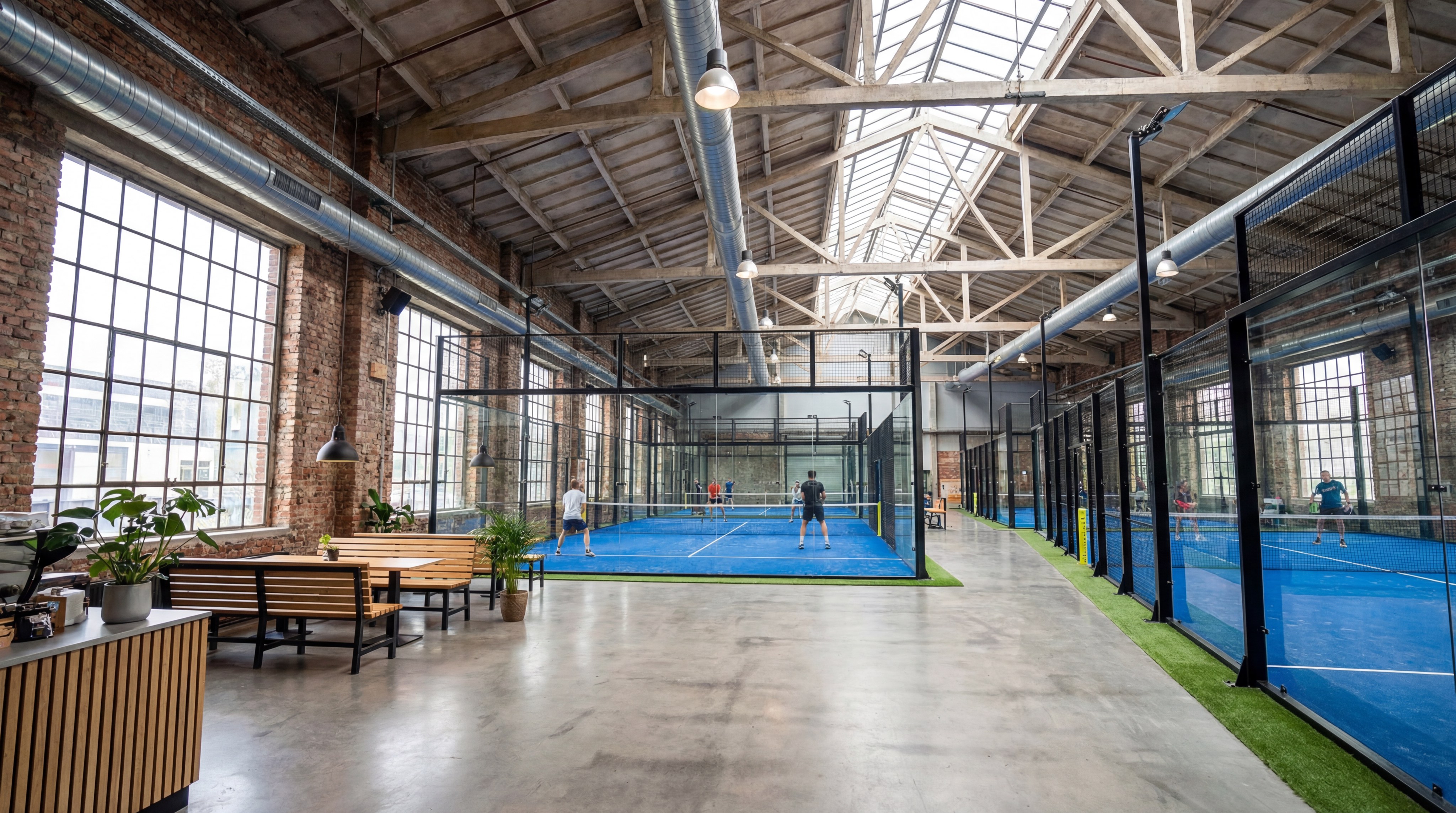
In an indoor facility, lighting is the difference between a professional match and a frustrating experience. Because padel involves many overhead shots, the lights must be positioned to avoid blinding the players.
Lighting Requirements for Pro-Clubs:
- Illuminance: A minimum of 500-750 Lux is required for professional play.
- Uniformity: The ratio between minimum and average illuminance should be at least 0.7.
- Positioning: Lights should be placed outside the court’s perimeter or at the posts, never directly over the center of the court.
- Flicker-Free: Essential for clubs that plan to record or live-stream matches for social media.
Modern LED systems are the only viable choice today. They consume 60% less energy than old metal halide bulbs and offer “instant-on” capability. For a high-traffic Brooklyn club, this energy efficiency translates to thousands of dollars in monthly savings.
How can you optimize the ROI of a padel facility?
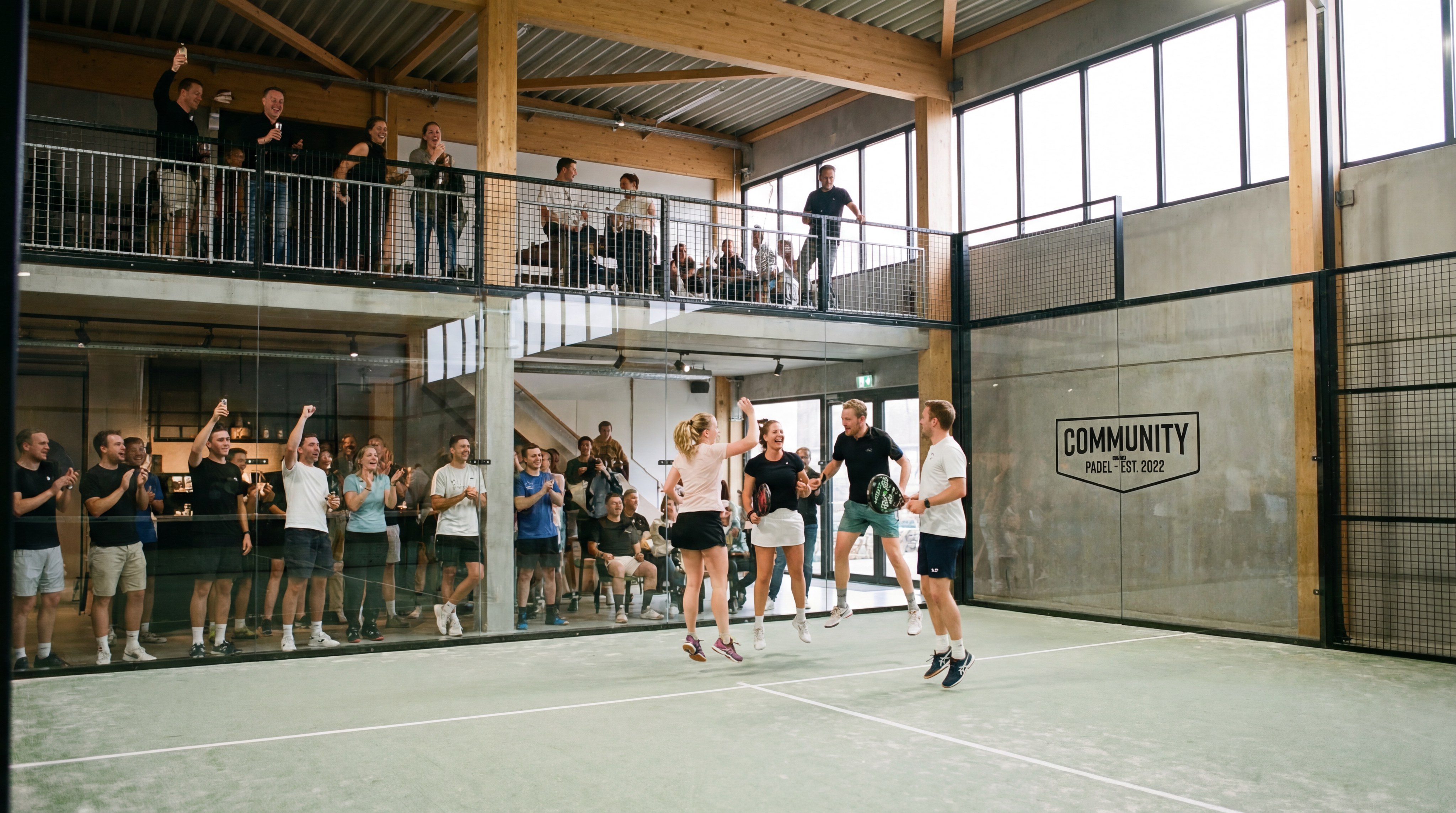
The business case for padel is strong, but the real estate costs in New York demand high efficiency. To maximize Return on Investment (ROI), you must treat every square foot as a revenue generator.
Revenue Stream Optimization:
- Dynamic Pricing: Higher rates during “peak” hours (weeknights and weekend mornings).
- Academy Programs: High-margin group clinics and private coaching.
- Sponsorships: Selling naming rights for courts or branding on the glass walls.
- Membership Tiers: Providing a base of recurring revenue while keeping “open play” available for new customer acquisition.
Think of it this way: a single padel court occupies roughly one-third the space of a tennis court but hosts four players per match. This density is the secret to padel’s profitability. By offering a premium experience, you can justify premium pricing that offsets the high Brooklyn rent.
ROI Calculation Factors:
- Occupancy Rate Goal: 70%+.
- Average Court Fee: $120 – $200 per hour (divided by 4 players).
- Ancillary Spend: Goal of $15 – $25 per player on food/gear.
How do you build a padel court that meets FIP standards?
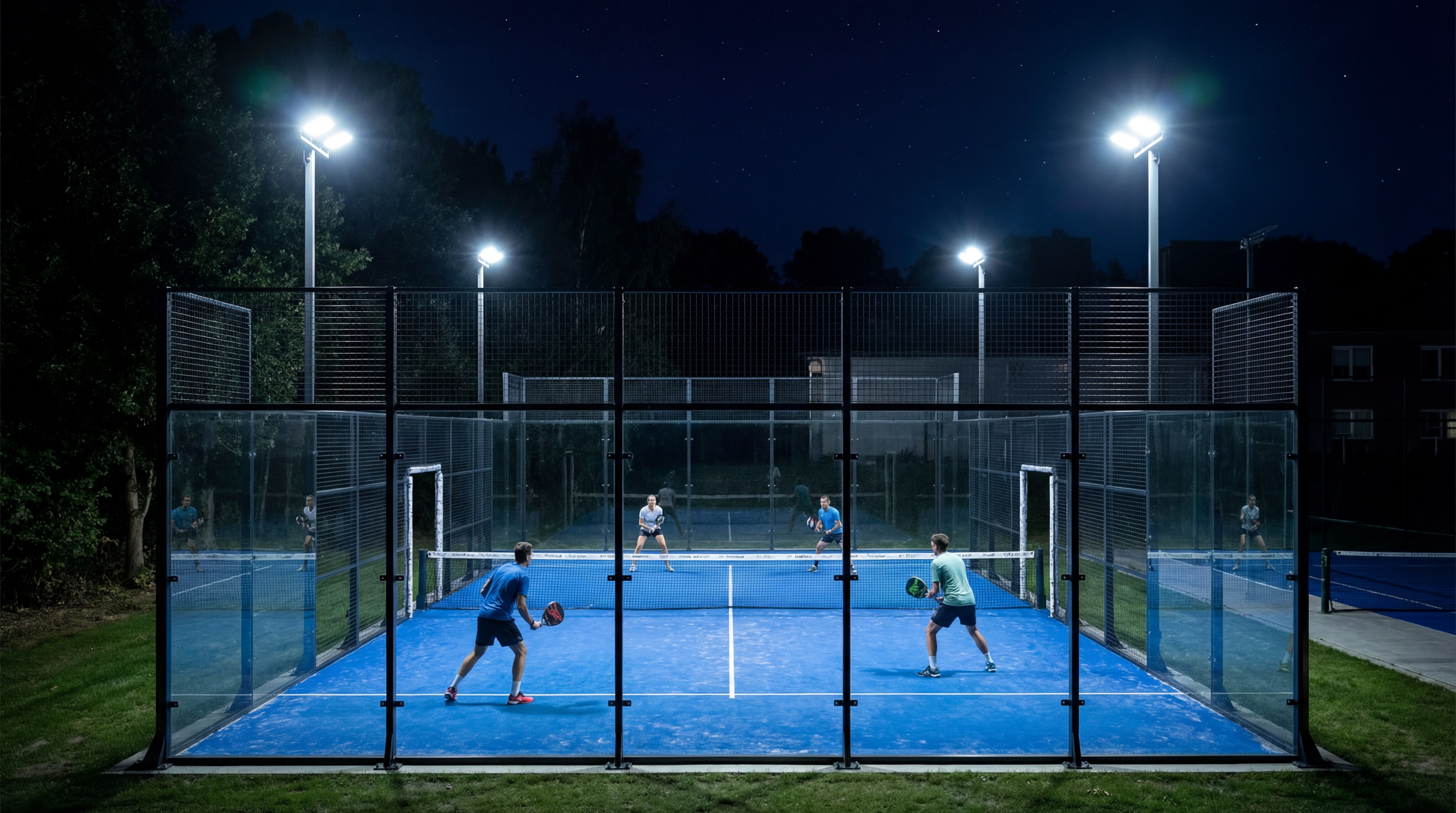
If you want to host sanctioned tournaments or attract the best players, your facility must meets FIP standards (International Padel Federation). These standards ensure that the court provides a “true” game, where the ball behaves exactly as it would in Madrid or Buenos Aires.
FIP Compliance Checklist:
- Tolerance: The internal dimensions must be accurate to within 0.5%.
- Bounce Test: The ball must bounce to a specific height (between 135cm and 147cm) when dropped from 2.54m.
- Mesh Tension: The electro-welded mesh must be rigid enough to prevent the ball from “deadening” when it hits the fence.
- Safety Zone: A minimum of 2 meters of clear space outside the side doors is required for professional “out-of-court” play.
By building to these standards, you future-proof your investment. As the sport professionalizes in the USA, clubs that meet international specs will be the ones selected for national tours and professional exhibitions.
Summary of Padel Club Construction Essentials
| Phase | Critical Success Factor | Expert Tip |
|---|---|---|
| Planning | Zoning and Use Permits | Hire a Brooklyn-based expeditor early. |
| Design | Social vs. Play Space Ratio | Allocate 20% of floor plan to lounge/retail. |
| Construction | Foundation Precision | Use laser-leveling for the concrete slab. |
| Operations | Community Building | Hire “Community Managers” instead of just clerks. |
Frequently Asked Questions
- Can I build a padel court on a rooftop in Brooklyn?
Yes, but it requires a rigorous structural engineering audit. The weight of the 12mm glass and the wind load on the structure are significant. You will likely need to anchor the court to the building’s primary steel frame. - How long does the construction process take?
Once the foundation is cured, the actual assembly of a court takes 3-5 days. However, the lead time for high-quality materials and the permitting process in NYC can take 4 to 8 months. - Is indoor or outdoor padel better for the NYC market?
Indoor facilities are generally more successful in New York because they offer year-round revenue. The winter months are often the busiest for indoor clubs, whereas outdoor courts lose significant playing days to snow and rain. - What is the lifespan of a professional padel court?
With proper maintenance, a high-quality court frame will last 20+ years. The turf usually needs replacement every 4-7 years depending on usage volume, and the glass is permanent unless broken by extreme impact. - Do I need a special license to operate a padel club in Williamsburg?
Beyond standard business licenses, you need a Certificate of Occupancy that allows for “Physical Culture” or “Recreation.” You will also need specific permits for food and beverage if you plan to operate a café or bar.
Building a facility inspired by the success of Padel Haus Williamsburg is an ambitious undertaking, but it is one of the most rewarding investments in the current sports landscape. By focusing on technical excellence and the “Haus” social philosophy, you can create a community hub that thrives in the heart of the city.