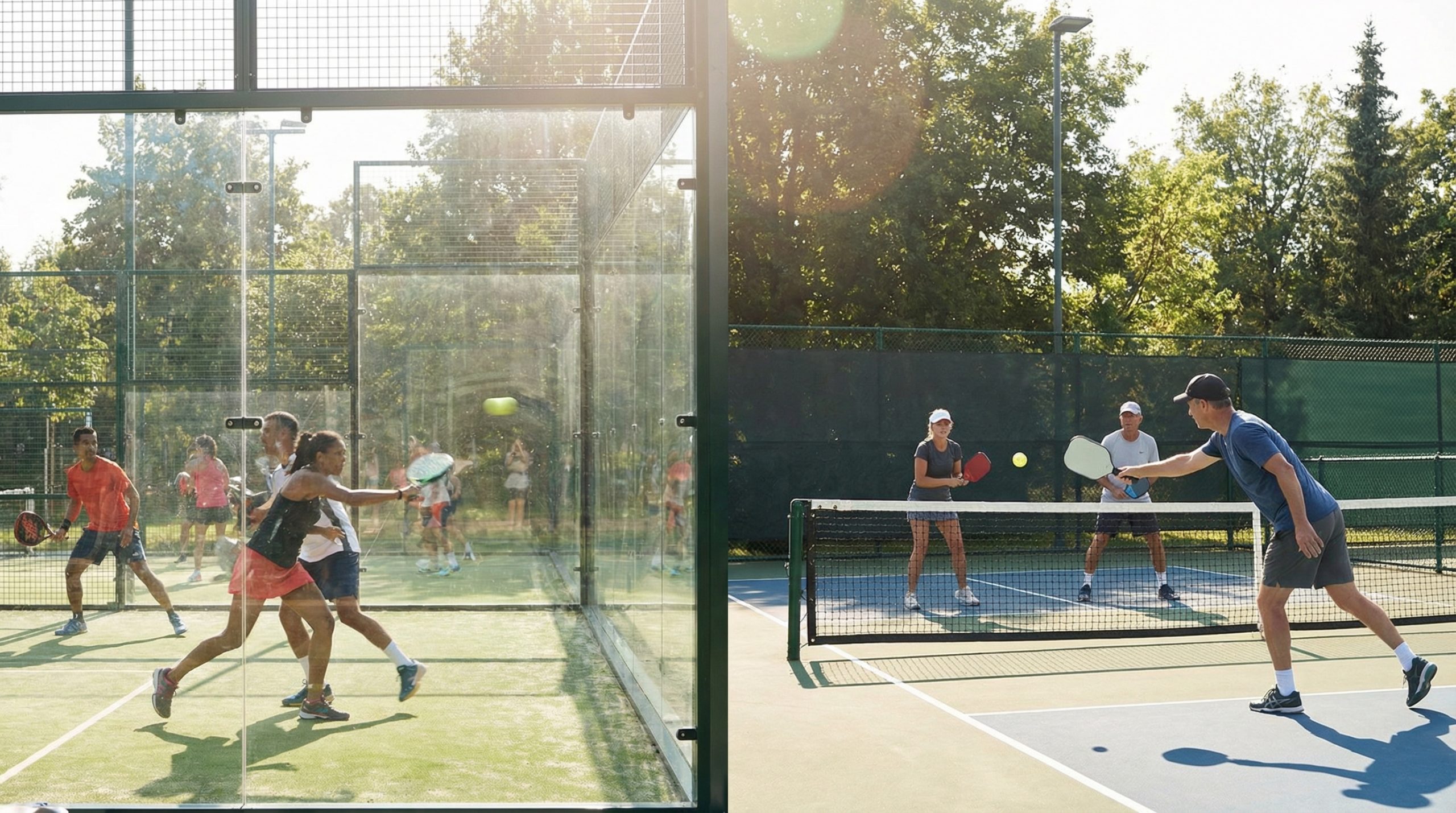
Determining whether to invest in padel or pickleball depends on your available footprint, budget, and desired player demographic, as one offers an enclosed strategic wall-game while the other provides a fast-paced open-court social experience. Many facility owners struggle with choosing between these two booming racket sports because they often underestimate the technical requirements of the foundations and enclosures. This lack of clarity can lead to expensive construction delays or courts that don’t meet international standards. This guide provides the ultimate roadmap to understanding the equipment, rules, and technical construction phases required to build world-class facilities.
What is the difference in padel or pickleball?
The primary distinction between the two sports lies in the physical environment; padel is essentially “tennis meets squash” in a glass cage, whereas pickleball is a scaled-down version of tennis played with a plastic ball. Here is the deal: padel is almost exclusively played in doubles on a court with glass walls that allow for strategic rebounds. Pickleball, on the other hand, utilizes a smaller, open court and a perforated ball that significantly slows down the pace of play.
The Origin and Evolution of Play
Padel was born in Mexico in the 1960s when Enrique Corcuera built walls around his court to keep balls from flying into his neighbor’s yard. It has since exploded across Europe and the Middle East as a high-end social sport. Pickleball started on a rainy day in Washington state when three fathers wanted a game the whole family could play with mismatched gear. It has now become the fastest-growing sport in North America due to its extreme accessibility and low barrier to entry.
Tactical and Physical Demands
Padel requires a high degree of spatial awareness because the ball remains in play after hitting the glass. Players must master the “patience game,” waiting for the right moment to strike. Pickleball is often called a “game of dinks” because of its emphasis on net play and soft touches. While both are easier on the joints than tennis, padel offers a more vertical, high-octane experience, while pickleball focuses on lateral movement and quick reflexes at the kitchen line.
Key Takeaways:
- Padel uses glass walls as active participants in the game.
- Pickleball relies on a “non-volley zone” to prevent aggressive net smashes.
- Both sports are social-first and typically played in doubles.
- The learning curve for both is significantly shorter than traditional tennis.
| Feature | Padel Sport | Pickleball Sport |
|---|---|---|
| Primary Vibe | Strategic & High-Action | Social & Reflex-Based |
| Court Type | Fully Enclosed (Glass/Mesh) | Open or Fenced |
| Ball Speed | Moderate (Pressurized) | Slow (Perforated Plastic) |
| Game Duration | 60–90 Minutes | 15–30 Minutes |
What are dimensions for padel or pickleball courts?
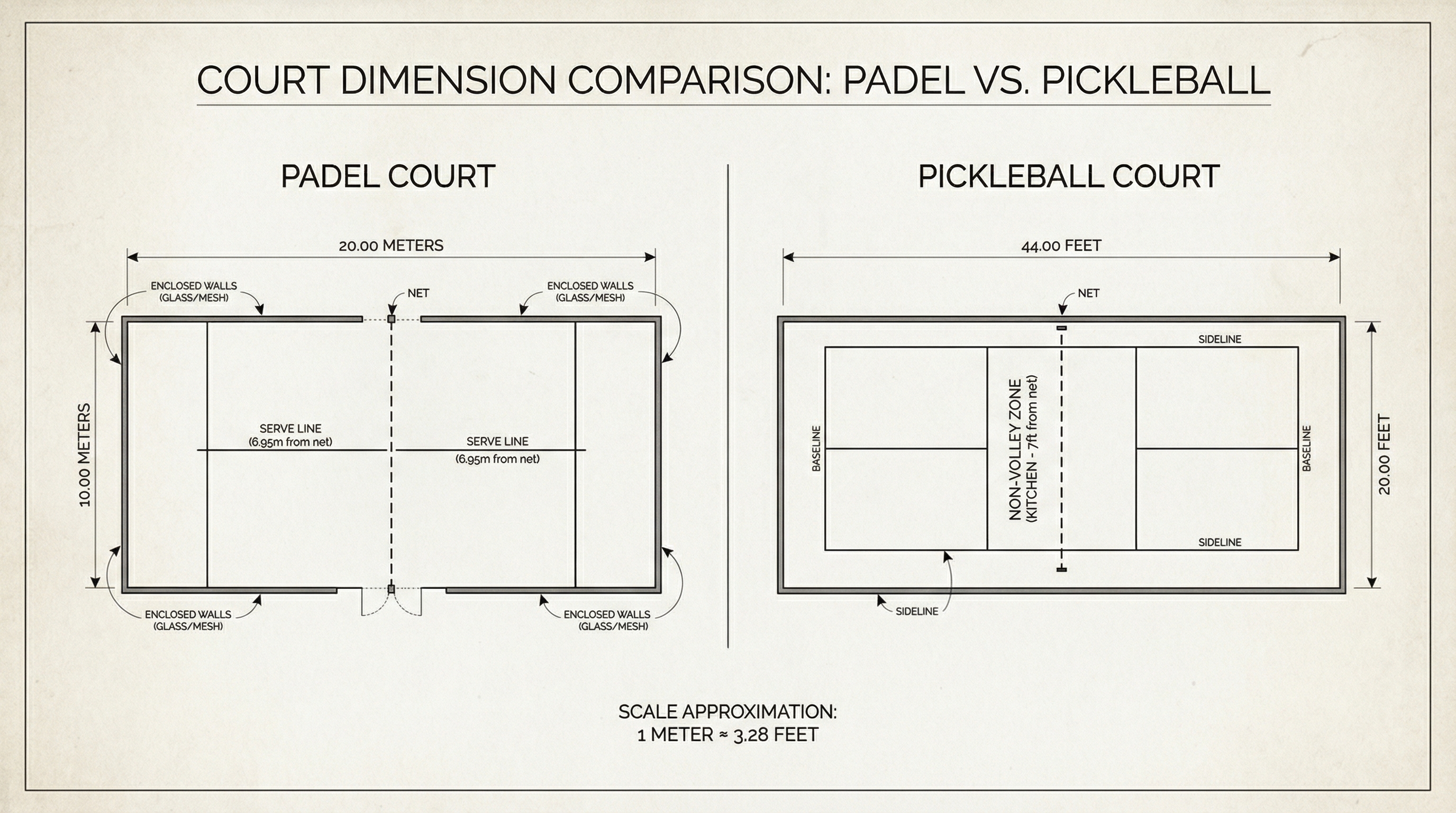
Understanding the exact dimensions of a court is the first step in any feasibility study, as padel requires a 20m x 10m footprint while pickleball fits into a much smaller 44ft x 20ft space. But wait, there is more: you also have to account for the “out-of-court” play zones and the vertical clearance needed for overhead smashes and lobs. Padel courts need at least 6 meters of clear height, though professional clubs aim for 8 meters or more.
Standard Footprint Specifications
A padel court is roughly one-third the size of a tennis court, which allows facility owners to maximize their revenue per square meter. The 20-meter length is divided by a net, with service lines located 6.95 meters from the center. Pickleball courts are even more space-efficient, with the same dimensions as a doubles badminton court. You can comfortably fit four pickleball courts into the space of a single traditional tennis court.
Clearance and Safety Zones
For padel, the total construction area should ideally be 21m x 11m to allow for the structural beams and glass supports. If the club intends to host professional tournaments, extra space is required for “off-court” play where players can run out of the side door. Pickleball safety zones require at least 10 feet of buffer on the baselines and 7 feet on the sidelines. This ensures players don’t collide with fences or adjacent players during intense rallies.
Key Takeaways:
- Padel courts are measured in meters; pickleball in feet.
- Vertical space is non-negotiable for indoor padel facilities.
- Space efficiency is the primary driver for the ROI of these sports.
- Accurate marking is vital for the “Kitchen” zone in pickleball.
| Dimension | Padel Standard | Pickleball Standard |
|---|---|---|
| Length | 20.00 Meters | 44.00 Feet |
| Width | 10.00 Meters | 20.00 Feet |
| Total Area | 200 sq. meters | 880 sq. feet |
| Min. Ceiling | 6.00 Meters | 18.00 Feet |
What gear is used for padel or pickleball?
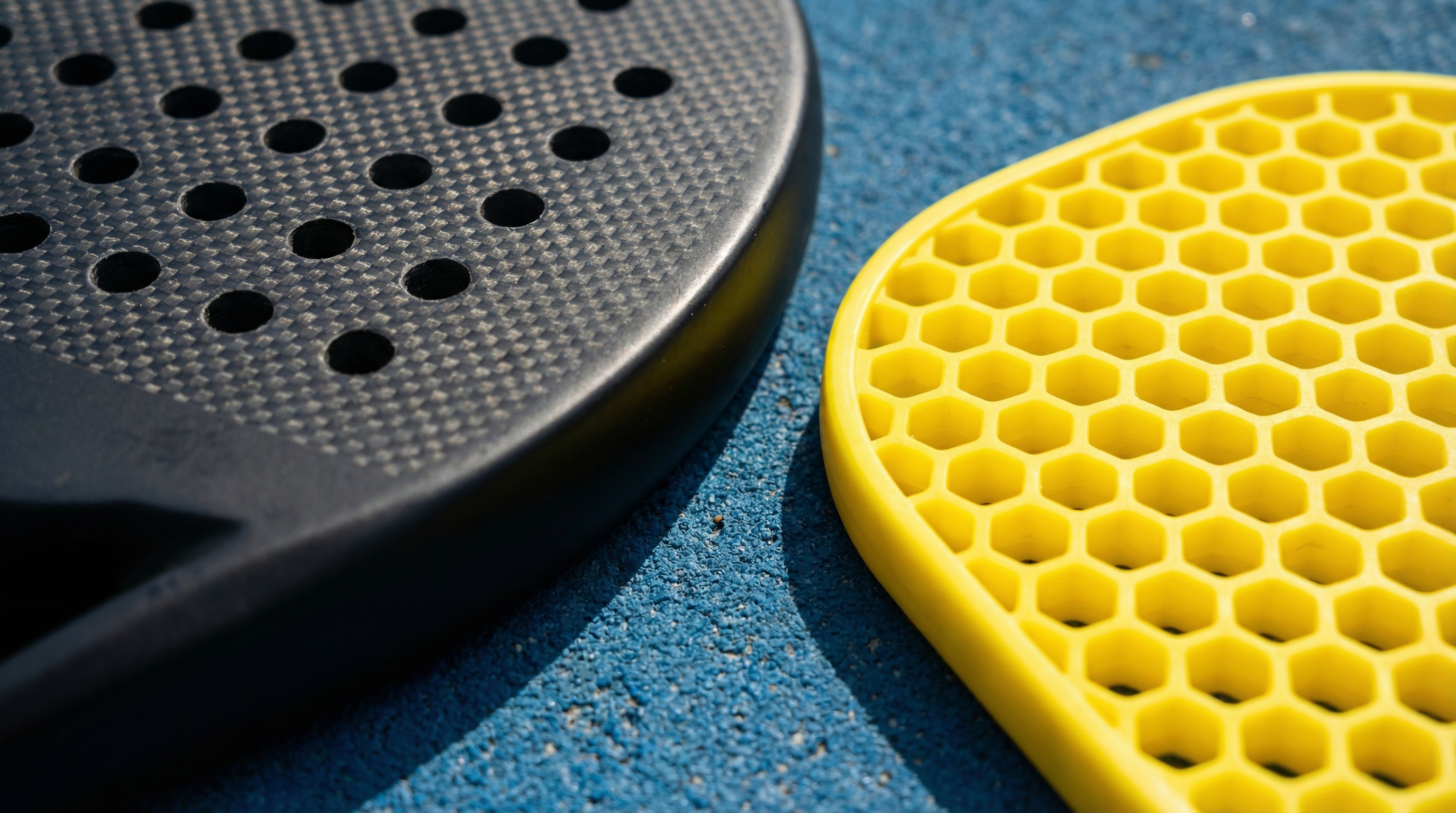
Choosing the right equipment for padel or pickleball is crucial for player safety and performance, as the solid carbon-fiber “palas” of padel are designed for power, while pickleball paddles focus on lightweight control. Think about this: the ball is the most underrated component of these sports. A padel ball looks like a tennis ball but has lower internal pressure, while a pickleball is a hard plastic sphere that behaves more like a wiffle ball.
Paddle Material Science
Padel rackets are thick, stringless, and usually feature a core made of EVA foam or polyethylene. The surface is often reinforced with carbon fiber or fiberglass to provide a mix of “pop” and durability. Pickleball paddles are much thinner and utilize a honeycomb core, often made of polymer or aluminum. The face of a pickleball paddle is typically textured to allow players to generate massive amounts of spin on the ball.
The Role of Footwear and Balls
Because padel involves sliding on sand-filled turf, players need shoes with an “omni” or clay-court sole for maximum grip. Using standard running shoes can lead to ankle injuries on the synthetic grass surface. Pickleball is played on hard acrylic surfaces, meaning players should opt for court shoes with lateral support and non-marking soles. The ball choice also matters; indoor pickleballs have fewer, larger holes, while outdoor balls are heavier and more aerodynamic.
Key Takeaways:
- Padel rackets must have a safety wrist strap by regulation.
- Pickleball balls are categorized by the number of holes (26 to 40).
- Foam cores in padel rackets vary in density for power vs. control.
- Never use a tennis ball for padel, as the bounce will be too high for the walls.
| Equipment Item | Padel Specs | Pickleball Specs |
|---|---|---|
| Hitting Surface | Perforated Solid (38mm thick) | Flat Rigid (approx. 13-16mm) |
| Core Material | EVA / Polyethylene Foam | Polymer Honeycomb |
| Ball Material | Pressurized Felt/Rubber | Perforated Plastic |
| Typical Weight | 350g – 380g | 200g – 250g |
How do you play padel or pickleball correctly?

Mastering the rules of padel or pickleball requires shifting your mindset away from the “power game” of tennis and toward a game of tactical positioning and patience. Here is the kicker: in padel, the glass wall is your best friend, allowing you to return shots that have already passed you. In pickleball, the “Kitchen” zone is the most important rule to learn, as it prevents players from standing at the net and smashing every ball.
Scoring Systems and Service
Padel follows the traditional tennis scoring of 15, 30, 40, and game, often using the “Golden Point” (No-Ad) at deuce to keep matches moving quickly. Pickleball uses a unique “side-out” scoring system where you can only score points when your team is serving. Matches are typically played to 11 points, and you must win by a margin of two. Both sports require an underhand serve, which keeps the game accessible for beginners.
The Dynamics of Volleys and Rebounds
In padel, the ball must bounce on the ground before hitting the wall to remain “in,” but players can hit the ball against their own glass to send it over the net. This creates infinite angles and keeps the ball in play much longer than other racket sports. Pickleball features the “Two-Bounce Rule,” meaning the ball must bounce once on the serve and once on the return before anyone can volley. This rule levels the playing field by neutralizing the advantage of a powerful serve.
Key Takeaways:
- All padel serves must be hit at or below waist level.
- You cannot volley in the pickleball kitchen unless the ball bounces there.
- Padel is almost always played in a 2v2 doubles format.
- Only the serving team scores in standard pickleball play.
| Rule Category | Padel Mechanics | Pickleball Mechanics |
|---|---|---|
| Service | Underhand (Must bounce first) | Underhand (Directly to air) |
| Kitchen Zone | None (Volley anywhere) | 7-foot Non-Volley Zone |
| Scoring | 15-30-40-Game | 1-2-3… to 11 |
| Wall Play | Glass is in-play after bounce | No walls / Out of bounds |
How to build a padel or pickleball foundation?
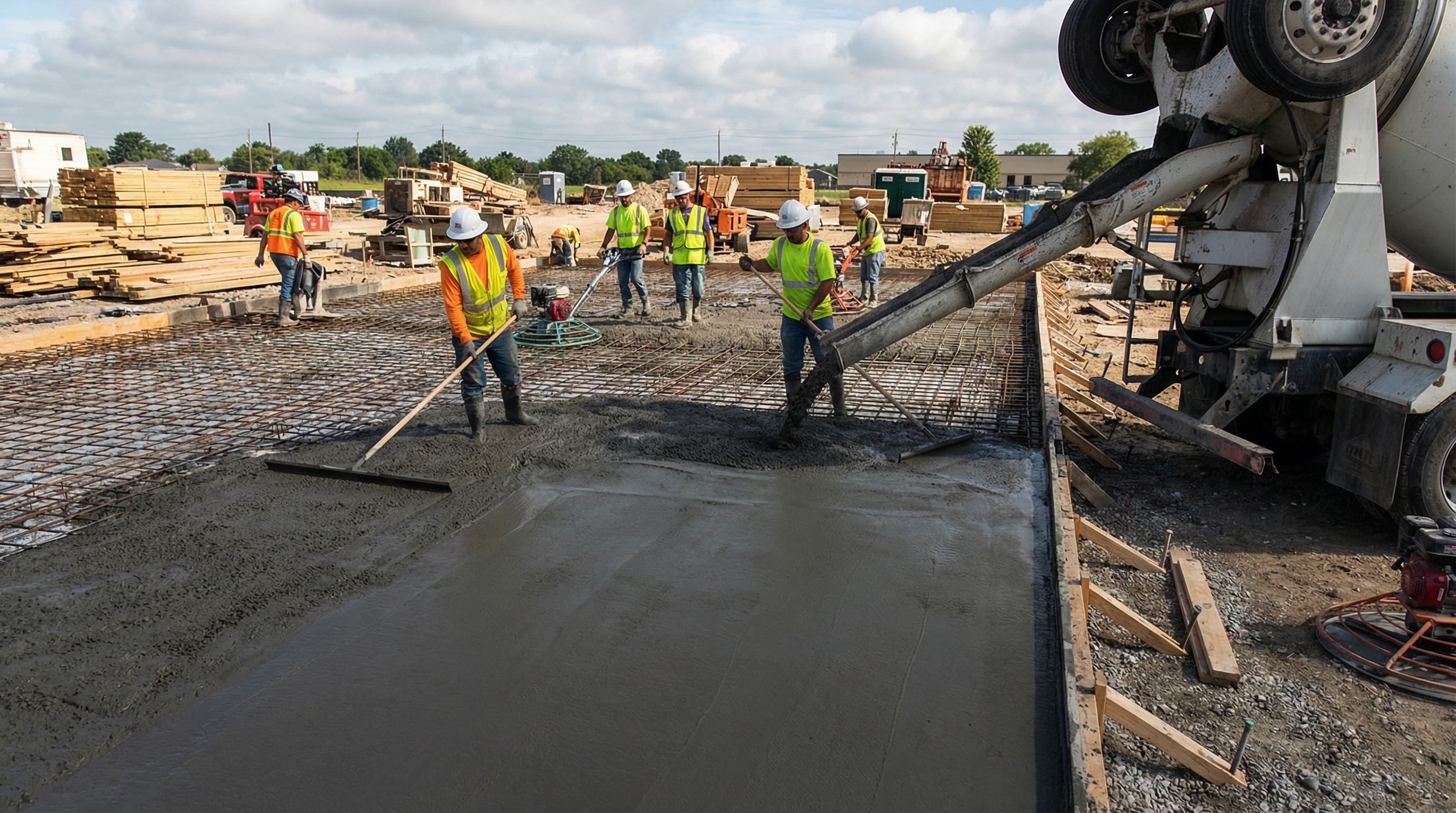
The longevity of your sports facility depends entirely on the quality of the padel-court-construction, specifically the reinforced concrete slab that prevents shifting and cracking over time. Bottom line: a court is only as good as what lies beneath the surface. For padel, the foundation must be perfectly level to ensure that the 10mm or 12mm tempered glass panels fit into the steel frame without tension.
Soil Preparation and Compaction
Before pouring any concrete, the site must be excavated and cleared of all organic material that could rot and cause sinkholes. A sub-base of at least 15cm of compacted stone is required to provide stable support and proper drainage. In regions with freezing temperatures, the foundation must extend below the frost line to prevent “heaving” which can shatter the glass walls of a padel court.
Concrete Specifications and Curing
We recommend a reinforced concrete slab (H25/30) with a thickness of at least 15cm for residential courts and 20cm for high-traffic clubs. Steel mesh should be used throughout to provide tensile strength against the weight of the steel pillars and glass. It is vital to allow the concrete to cure for at least 21 to 28 days before installing the turf or acrylic layers. Moisture escaping from “green” concrete can cause the surface paint or adhesive to bubble and fail.
Key Takeaways:
- Padel slabs require higher precision for glass alignment.
- Laser-leveling is mandatory to ensure a consistent ball bounce.
- Perimeter drainage is essential for outdoor courts.
- Expansion joints must be placed strategically to avoid surface cracking.
| Phase | Padel Requirements | Pickleball Requirements |
|---|---|---|
| Concrete Type | Reinforced Steel Mesh | Standard Fiber-Reinforced |
| Thickness | 15cm – 20cm | 10cm – 15cm |
| Leveling Tolerance | < 3mm over 3 meters | < 6mm over 3 meters |
| Drainage System | Porous concrete or 1% slope | 1% slope (side to side) |
What surfaces suit padel or pickleball courts?
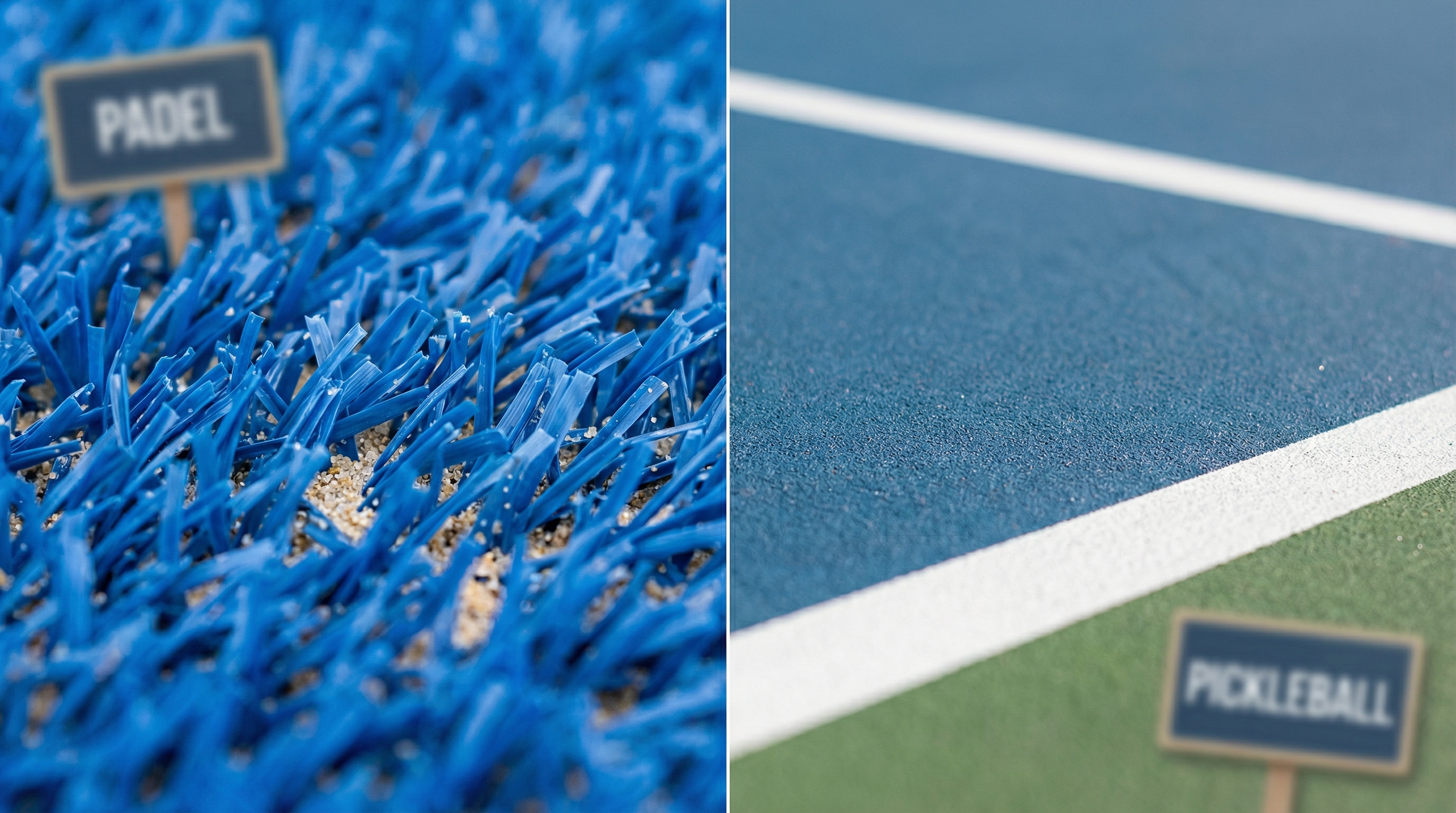
Selecting the right surface for your padel or pickleball project is a balance between player comfort, ball performance, and long-term maintenance costs. But wait, there is more: the surfaces are not interchangeable. Padel requires a synthetic turf with sand infill to allow for the characteristic “slide,” while pickleball needs a gritty acrylic coating to provide the high friction necessary for the plastic ball’s bounce.
Synthetic Turf for Padel
The industry standard for padel is a monofilament or textured synthetic grass with a pile height of 10mm to 12mm. This turf is filled with kiln-dried silica sand, which settles between the fibers to hold them upright and provide a consistent bounce. Premium “World Padel Tour” style turf uses less sand and more textured fibers, which makes the court look better on camera and reduces the risk of players slipping.
Acrylic and Cushioned Pickleball Surfaces
Pickleball courts are typically finished with a multi-layered acrylic system, similar to what you find on professional tennis courts. You can choose between a standard “hard” court or a “cushioned” system that includes a rubber mat underlay. While cushioned courts are more expensive, they are highly recommended for older demographics as they significantly reduce the impact on knees and hips during long play sessions.
Key Takeaways:
- Blue is the most popular color for both sports due to high visibility.
- Padel sand must be brushed regularly to avoid “dead spots.”
- Acrylic surfaces for pickleball require specialized grit for slip resistance.
- UV-resistant pigments are crucial for outdoor courts to prevent fading.
| Surface Layer | Padel Choice | Pickleball Choice |
|---|---|---|
| Top Material | Polyethylene Grass | Acrylic Latex |
| Infill/Grit | Silica Sand (8-10kg/m2) | Silica Sand (Mixed in paint) |
| Feel | Soft / Slippery | Hard / Grippy |
| Lifespan | 5–8 Years | 4–6 Years (Resurface) |
How much to build padel or pickleball courts?
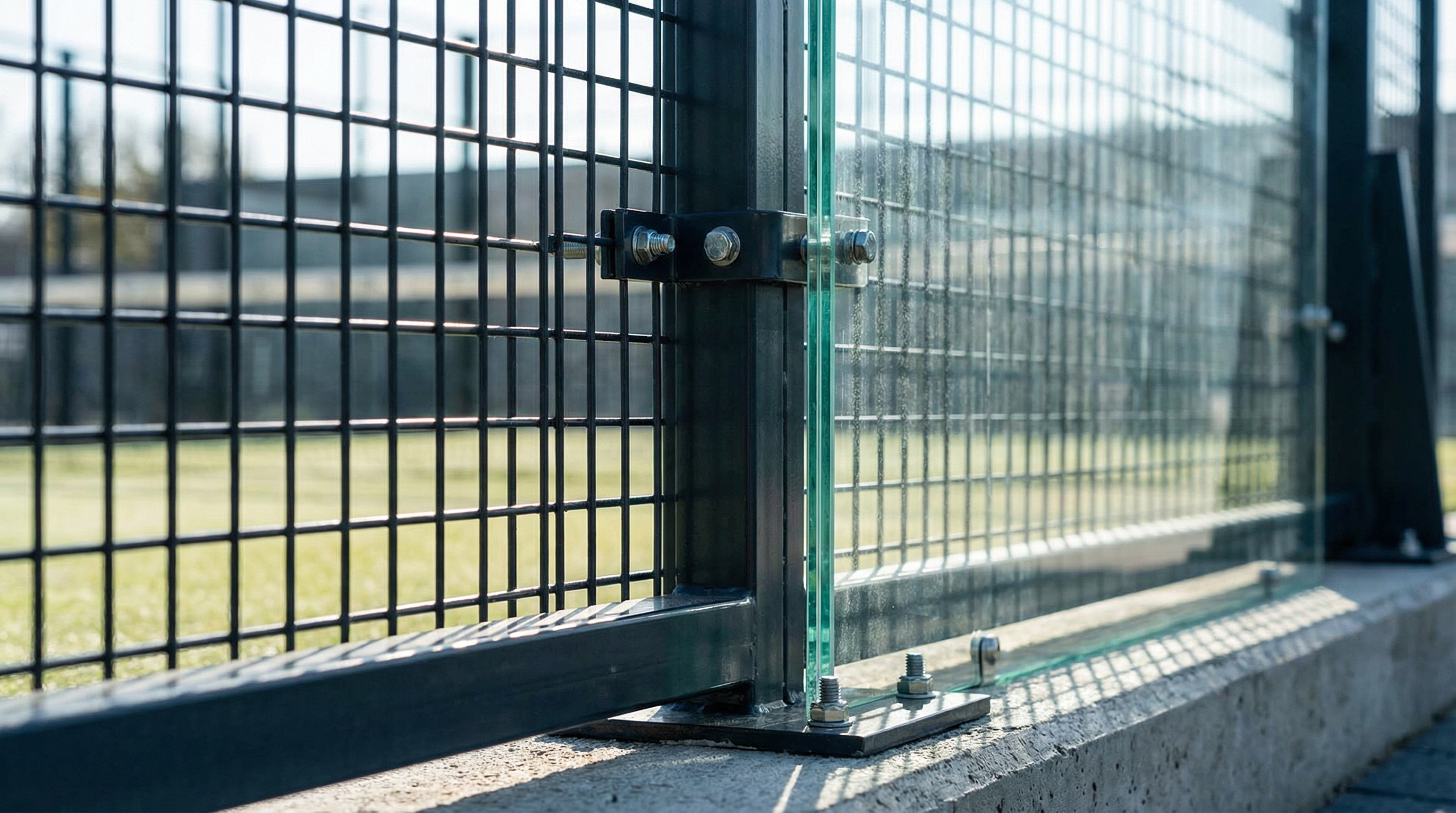
When calculating the costs of your sports facility, you must account for the significant structural engineering required for padel versus the simpler fencing of pickleball. Here is the deal: a single padel court can cost between $25,000 and $50,000 for materials alone, excluding the foundation. Pickleball is much more affordable to build from scratch, especially if you are repurposing an existing asphalt or concrete area.
Padel Structural Expenses
The most expensive components of a padel court are the 10mm or 12mm tempered glass panels and the electro-welded steel frame. These materials must be treated for corrosion, especially if the court is located near the ocean. Shipping and logistics also play a large role in the price, as the heavy glass requires specialized handling and shipping containers. Installation requires a team of at least 3-4 experts with glass-suction equipment.
Pickleball Budgeting Factors
Building a pickleball court is largely an exercise in surfacing and fencing. If you already have a level concrete pad, you can install a high-quality acrylic surface and a permanent net system for under $10,000. The main costs come from the fencing (usually chain-link) and the specialized lighting required for night play. Because you can fit more courts in the same space, the “per-player” cost of pickleball is significantly lower than padel.
Key Takeaways:
- Padel is a “premium” investment with higher upfront costs.
- Foundation work usually accounts for 40-50% of the total budget.
- Economies of scale apply: building 4 courts is cheaper per unit than building 1.
- Indoor facilities save on “weatherproofing” but add to HVAC and lighting costs.
| Cost Component | Padel (Avg. USD) | Pickleball (Avg. USD) |
|---|---|---|
| Materials | $25k – $45k | $5k – $15k |
| Foundation | $15k – $25k | $10k – $15k |
| Installation | $8k – $12k | $2k – $5k |
| Total Project | $48k – $82k | $17k – $35k |
How to light padel or pickleball courts?
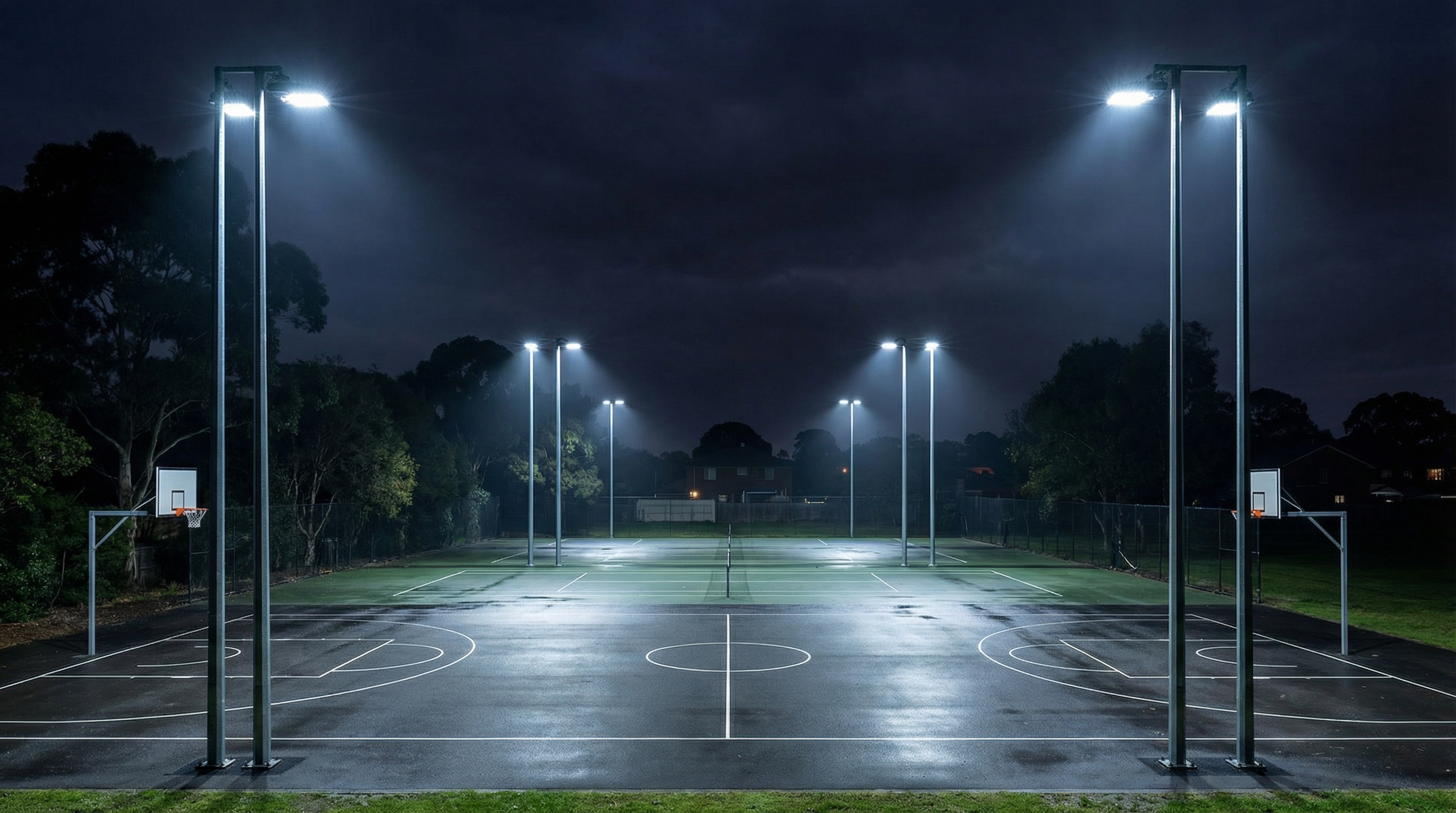
Professional lighting for padel or pickleball is not just about brightness; it’s about uniformity and glare reduction to ensure players can track a high-speed ball against a dark sky. Think about this: shadows on a court are a safety hazard. For padel, the lighting must be mounted on 6-meter poles and angled away from the glass to prevent reflections that can blind the players or spectators.
LED Technology and Lux Levels
Modern sports facilities exclusively use LED floodlights because they offer instant-on capabilities and consume 50% less energy than old metal-halide lamps. For recreational play, a lighting level of 300 lux is sufficient, but professional clubs should aim for 500-750 lux. The “uniformity ratio” is equally important; you want the light to be evenly distributed across the entire playing surface without dark spots in the corners.
Pole Placement and Glare Control
In padel, the four light poles are usually integrated into the steel structure of the court at the corners. For pickleball, poles are typically placed on the sidelines to avoid interfering with the players’ vision during lobs. Using “asymmetric” lenses on the LEDs allows the light to be directed onto the court while minimizing “light spill” into neighboring properties. This is a crucial factor in getting zoning approval for residential areas.
Key Takeaways:
- Use flicker-free LEDs if you plan to record matches for social media.
- 8 floodlights per court offer better uniformity than 4.
- Poles should be powder-coated to match the court’s aesthetic.
- Smart timers and dimmers can significantly reduce operating costs.
| Feature | Recreational Lighting | Professional Lighting |
|---|---|---|
| Average Lux | 200 – 300 Lux | 500 – 750 Lux |
| Number of LEDs | 4 x 200W | 8 x 200W or 300W |
| Mounting Height | 6 Meters | 7 – 8 Meters |
| Color Temp | 4000K – 5000K | 5000K – 5500K |
Why choose indoor padel or pickleball courts?
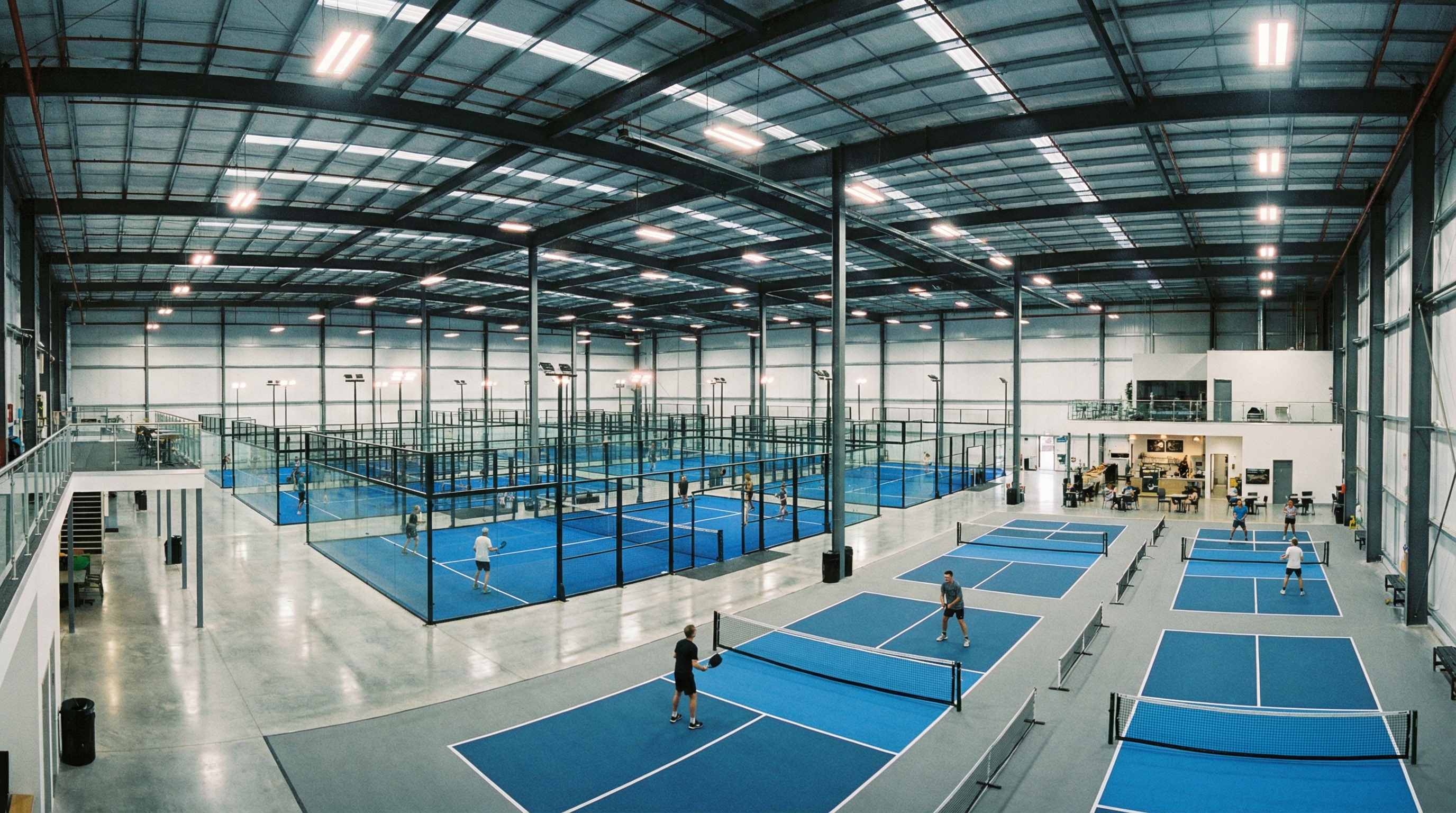
Operating an indoor facility for padel or pickleball guarantees year-round revenue and protects your expensive infrastructure from the elements. It gets better: indoor environments allow you to control the acoustics and temperature, creating a premium “country club” feel that justifies higher membership fees. However, the biggest challenge for indoor construction is finding a building with enough clear height for the sports’ vertical requirements.
Managing Climate and Humidity
Synthetic turf and acrylic surfaces perform best in a controlled environment where humidity is kept between 40% and 60%. High humidity can make the padel turf “slow” and the pickleball court “slick,” affecting the integrity of the game. Furthermore, protecting the steel frames of a padel court from rain and UV rays can double the lifespan of the paint and prevent rust in the glass clips.
Acoustic Engineering and Space Utilization
The “pop” of a pickleball hitting a paddle and the “thud” of a padel ball hitting glass can be extremely loud in an empty warehouse. Facility owners should invest in acoustic baffles or wall panels to absorb sound and prevent echoes. From a business perspective, indoor clubs often include amenities like pro shops, cafes, and lounges, which provide additional revenue streams that aren’t feasible for outdoor-only setups.
Key Takeaways:
- Minimum indoor height for padel is 6m (7-8m preferred).
- Insulation is key to keeping heating and cooling costs manageable.
- Indoor courts allow for high-quality video recording and streaming.
- Locker rooms and social spaces drive member retention.
| Factor | Indoor Facility | Outdoor Facility |
|---|---|---|
| Utilization | 365 Days / Year | ~200 Days (Weather-dependant) |
| Initial Cost | High (Rent/HVAC) | Lower |
| Surface Aging | Slow (UV protected) | Fast (Sun/Rain) |
| Player Comfort | High (Climate control) | Variable |
Which is better: padel or pickleball for you?
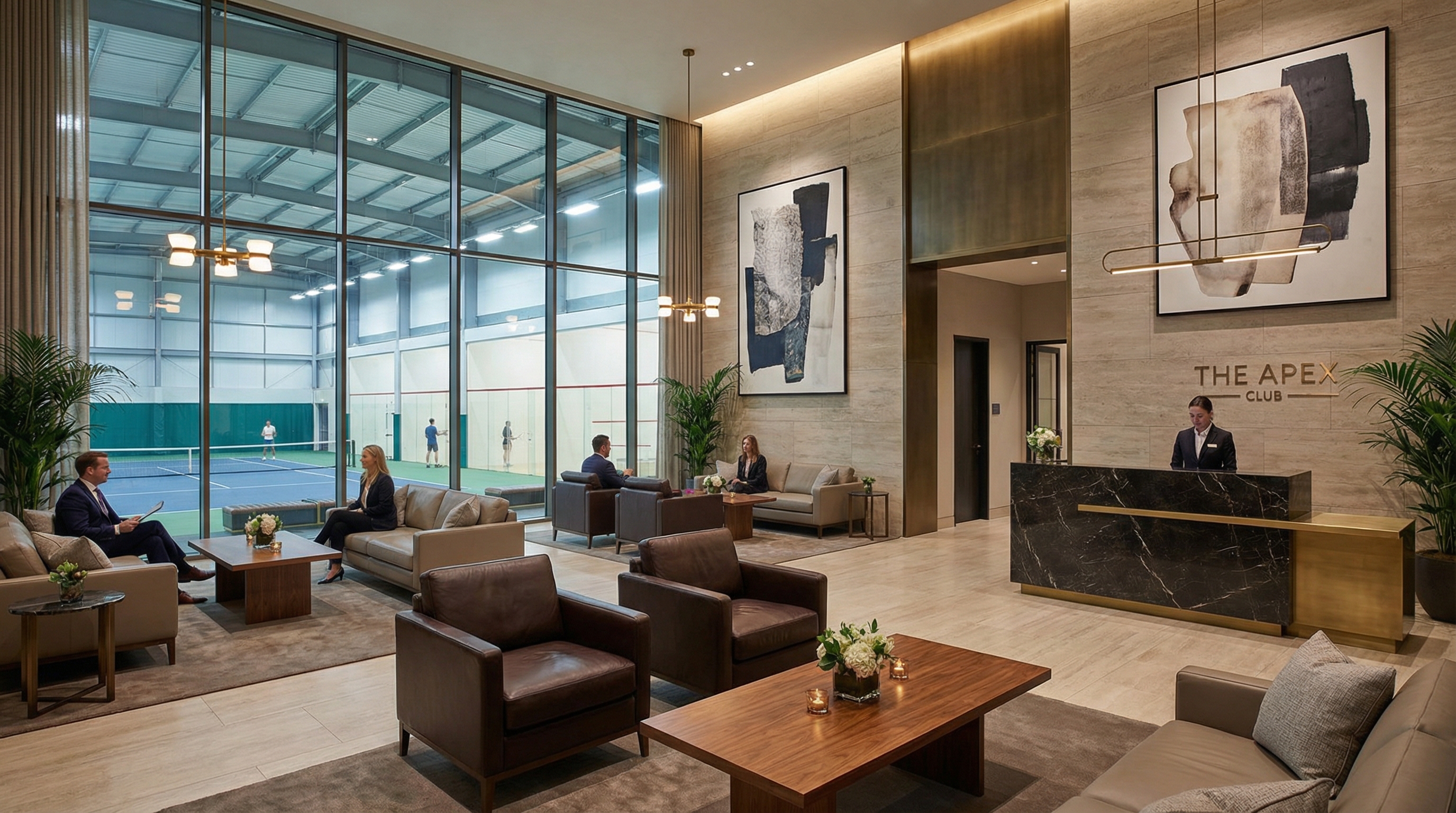
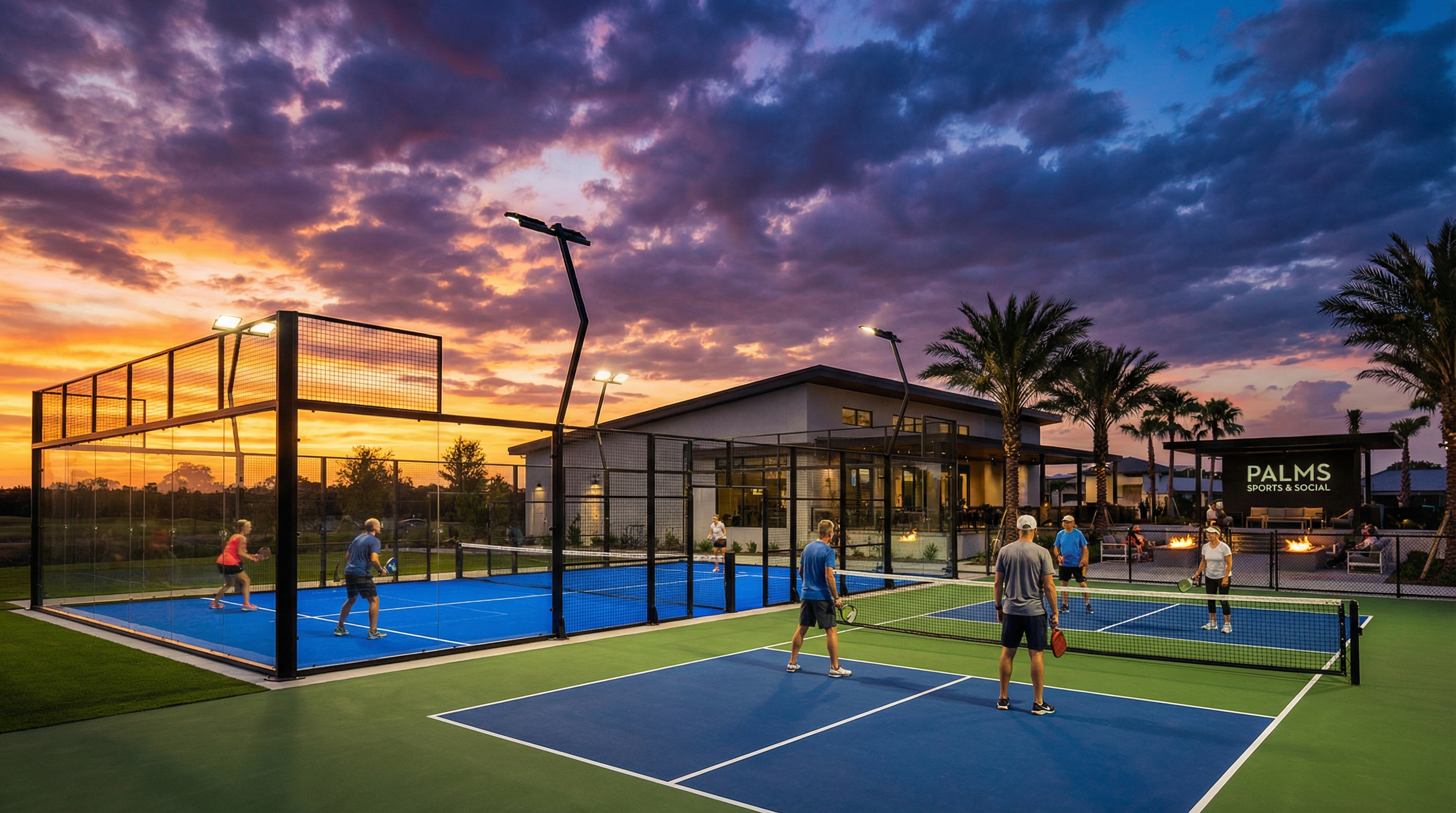
Deciding to build how-to-build-a-facility-after-understanding-pickleball-padel depends on your long-term business goals and the demographic you want to attract to your club. But wait, there is more: many modern clubs are now building “hybrid” facilities that offer both sports to capture the widest possible market. Padel tends to attract a younger, competitive, and more affluent crowd, while pickleball has a massive appeal across all ages and fitness levels.
Market ROI and Space Efficiency
From a pure revenue perspective, pickleball is hard to beat because you can fit four times as many players in the same square footage as a tennis court. However, padel courts often command higher hourly rental rates because of their “spectacle” and premium positioning. If you have a large warehouse, a mix of 4 padel courts and 4 pickleball courts creates a vibrant community hub where players can transition between sports.
Community and Long-Term Trends
Both sports are social by nature, but they build community in different ways. Padel is often seen as the “new golf,” where business deals are closed on the court. Pickleball is more grassroots and community-focused, often becoming the social heart of a neighborhood. Ultimately, the best choice is the one that fits your local competition and player demand.
Key Takeaways:
- Padel offers a higher “premium” brand image.
- Pickleball provides the highest “player density” per square foot.
- Hybrid facilities mitigate the risk of one sport’s popularity dipping.
- Both sports are sustainable investments with a 5-10 year growth horizon.
| Business Metric | Padel Court | Pickleball Court |
|---|---|---|
| Build Difficulty | High (Structural) | Low (Painting/Fencing) |
| Target Audience | Young Prof. / Athletes | All Ages / Seniors |
| Hourly Rate | $$$ (High) | $$ (Moderate) |
| Maintenance | Weekly Cleaning | Monthly Cleaning |
To get a custom quote for your facility or start your project today, contact us today for expert guidance.
FAQ
What is the minimum space needed to build a padel court?
The standard playing area is 20m x 10m, but you should allow for at least 21m x 11m to accommodate the structural pillars and safety run-off zones.
Can I convert my old tennis court into padel or pickleball?
Yes! A single tennis court can be converted into two padel courts or up to four pickleball courts, making it a highly profitable upgrade for aging clubs.
How long does it take to build a court?
Once the foundation is cured, the installation of a padel court typically takes 7-10 days. A pickleball court can be surfaced and fenced in about 3-5 days.
Is it possible to play padel or pickleball in the rain?
Pickleball is very difficult to play in the rain as the ball skids and the court becomes slippery. Padel can be played in light rain, but the wet glass and heavy ball significantly change the game’s physics.
Do I need a building permit for a sports court?
In most jurisdictions, yes. You will need to check local zoning laws regarding “impermeable surfaces” (the concrete slab), noise levels, and light spill for night play.